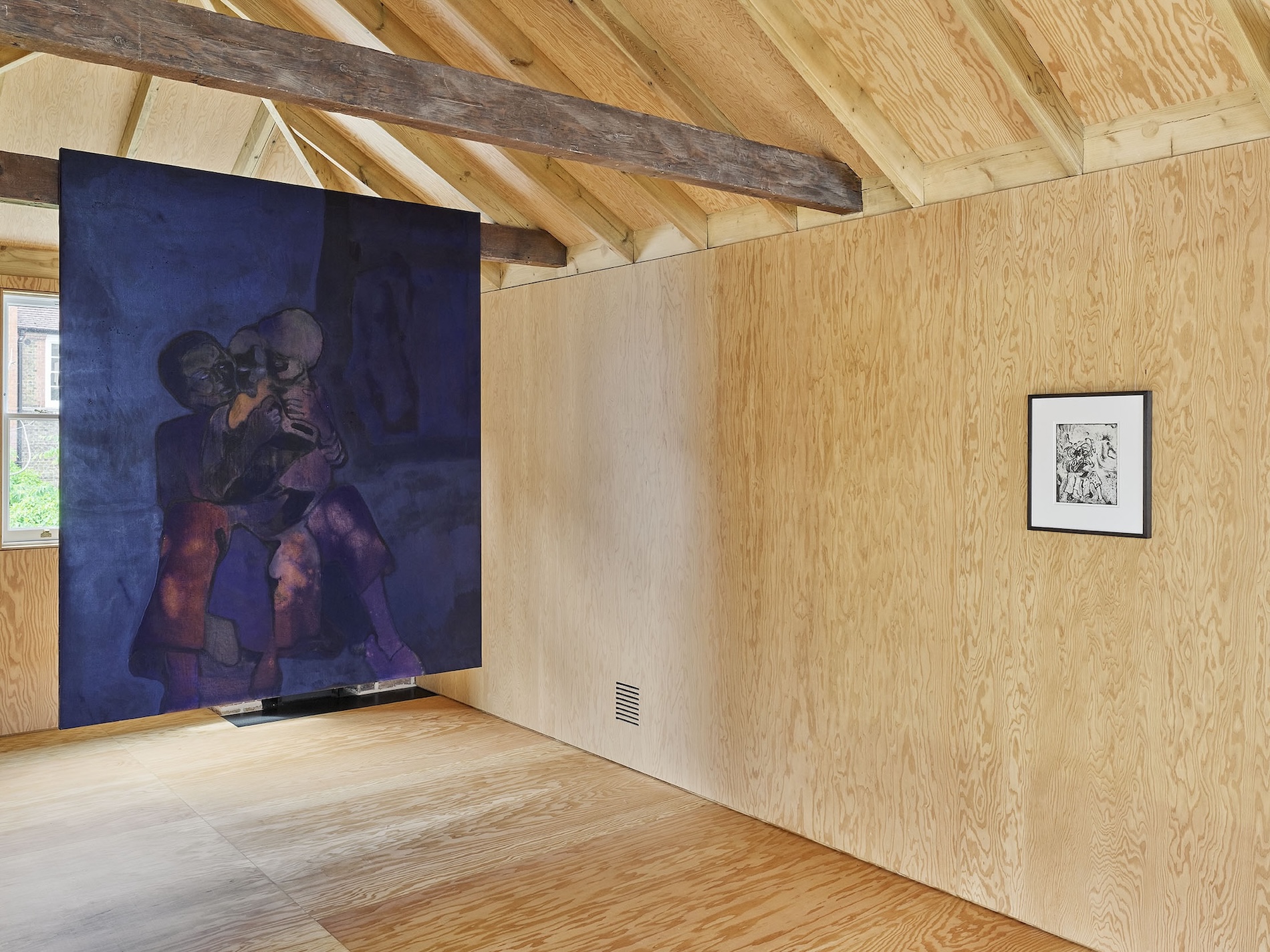
Tim Breuer at Champ Lacombe and TRAMPS
Review
The contrast between the crisp white walls of NORR COHAN Gallery and the vibrant paintings of Ilana Savdie and Chaïm Soutine is nothing short of striking. Savdie / Soutine, a duo exhibition inaugurating the newly renovated and rebranded gallery under the leadership of David Norr, marks an ambitious new chapter for the Tribeca mainstay, venturing out from the gallery’s strong roster to make a remarkable cross-historical pairing.
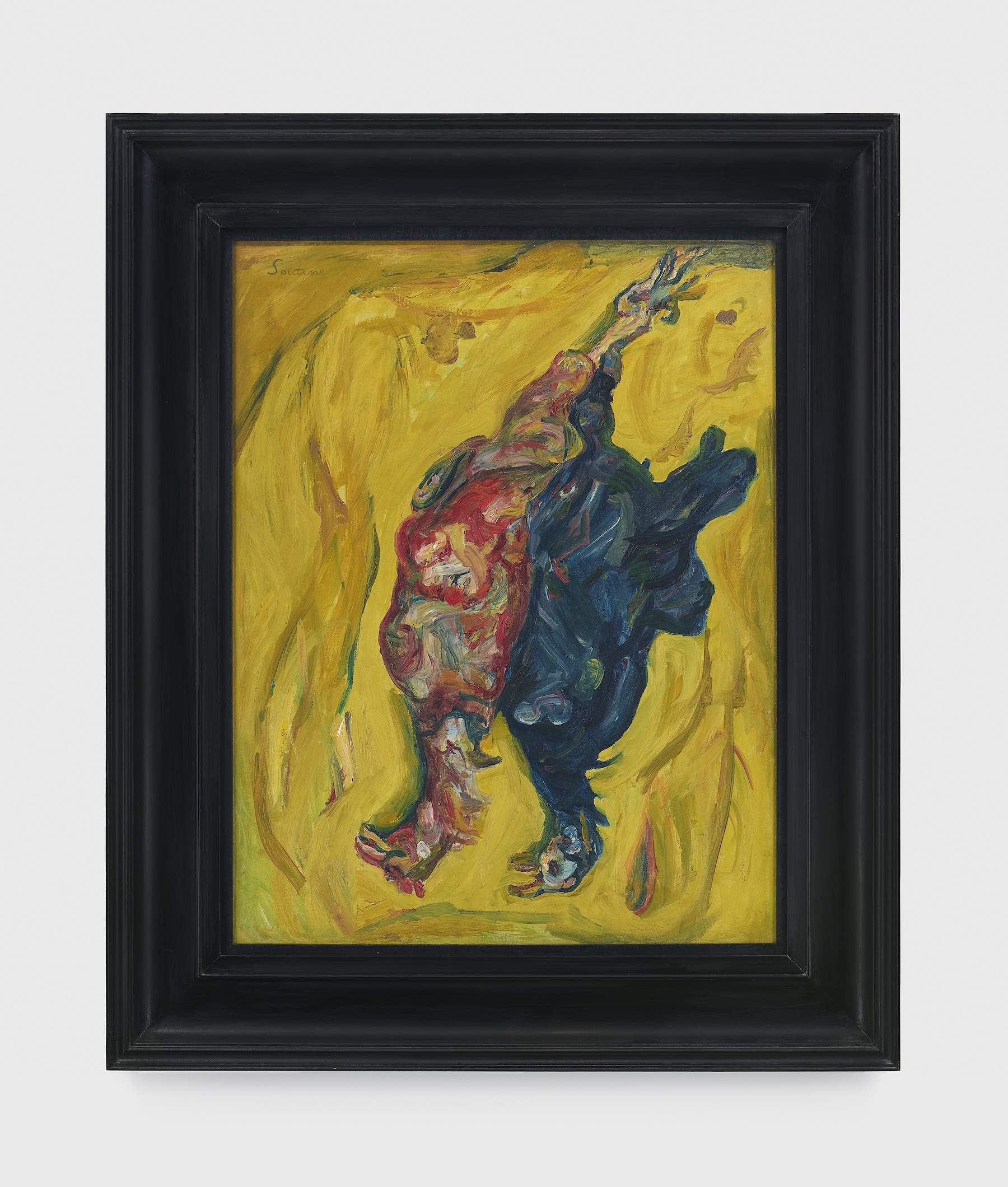
Chaïm Soutine (1893–1943) was a Russian-Jewish painter based in France who is perhaps best known for his still lifes of butchered animals and the posthumous influence of his work on artists such as Francis Bacon and Willem de Kooning. Coming of age in the avant-garde Parisian immigrant artist community of La Ruche, Soutine expressed the innovations of early 20th-century European art movements such as Cubism and Fauvism through cropped, distorted compositions, expressive brushstrokes, and occasionally off-putting color choices. However, the disorienting, even twisted emotional tenor of Soutine’s work is uniquely his own. Brace of Pheasants (c. 1926) is a consummate example, featuring two dead birds plainly suspended by their ankles from the upper right corner of the canvas against a mustard yellow background. The painting is simultaneously compelling and repulsive. Soutine renders the pheasants’ plucked and feathered bodies in the cool red and blue tones of veins and viscera seen through pale skin; but here, it is unclear which strokes are on the surface and which lie underneath.
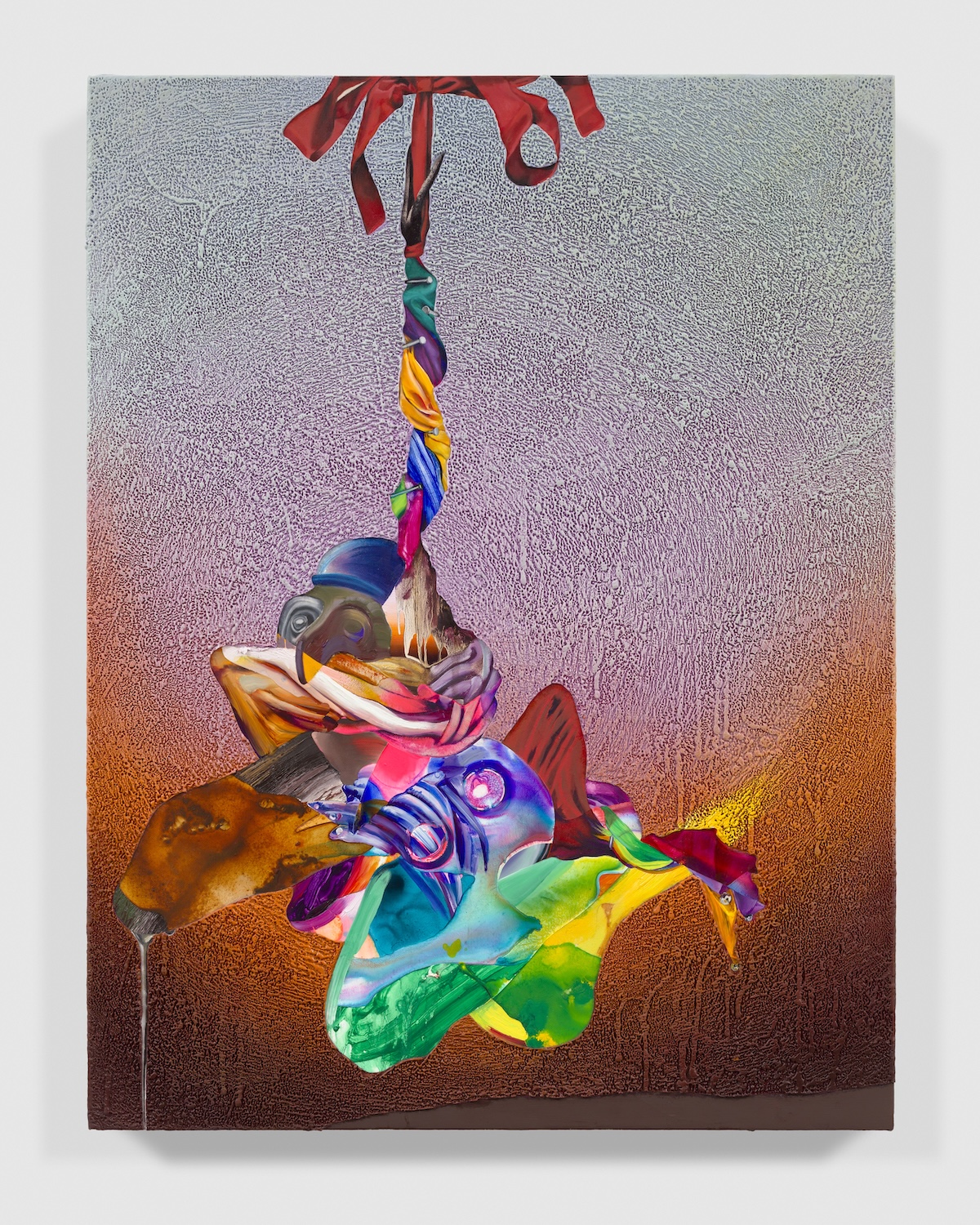
Savdie, too, is interested in exposing what lies beneath the surface, a theme that recurs throughout her paintings on view. The small painting Pulcinella (2026), at the front of the exhibition, serves as a thematic cipher for the larger canvases within. Compositionally similar to Brace of Pheasants, Pulcinella centers a multicolored mass hanging from a trompe l’œil red ribbon. The mass’ contents flicker between abstractions and recognizable motifs, such as the twisted pink, blue, and yellow fabric of the Monocuco costume from the Colombian Barranquilla Carnival, and the grey-brown, long-nosed mask of Italian commedia dell’arte character Pulcinella. Both Monocuco and Pulcinella are characters that sow political discord by concealing their identities—as the powerful masquerading as the powerless, or the colonizer infiltrating the colonized. As Savdie explains, “Pulcinella’s secret” is “a secret that everybody knows,” an unspoken truth just beneath the surface; the audience knows the character is lying about their allegiances and intentions, but cannot stop them.
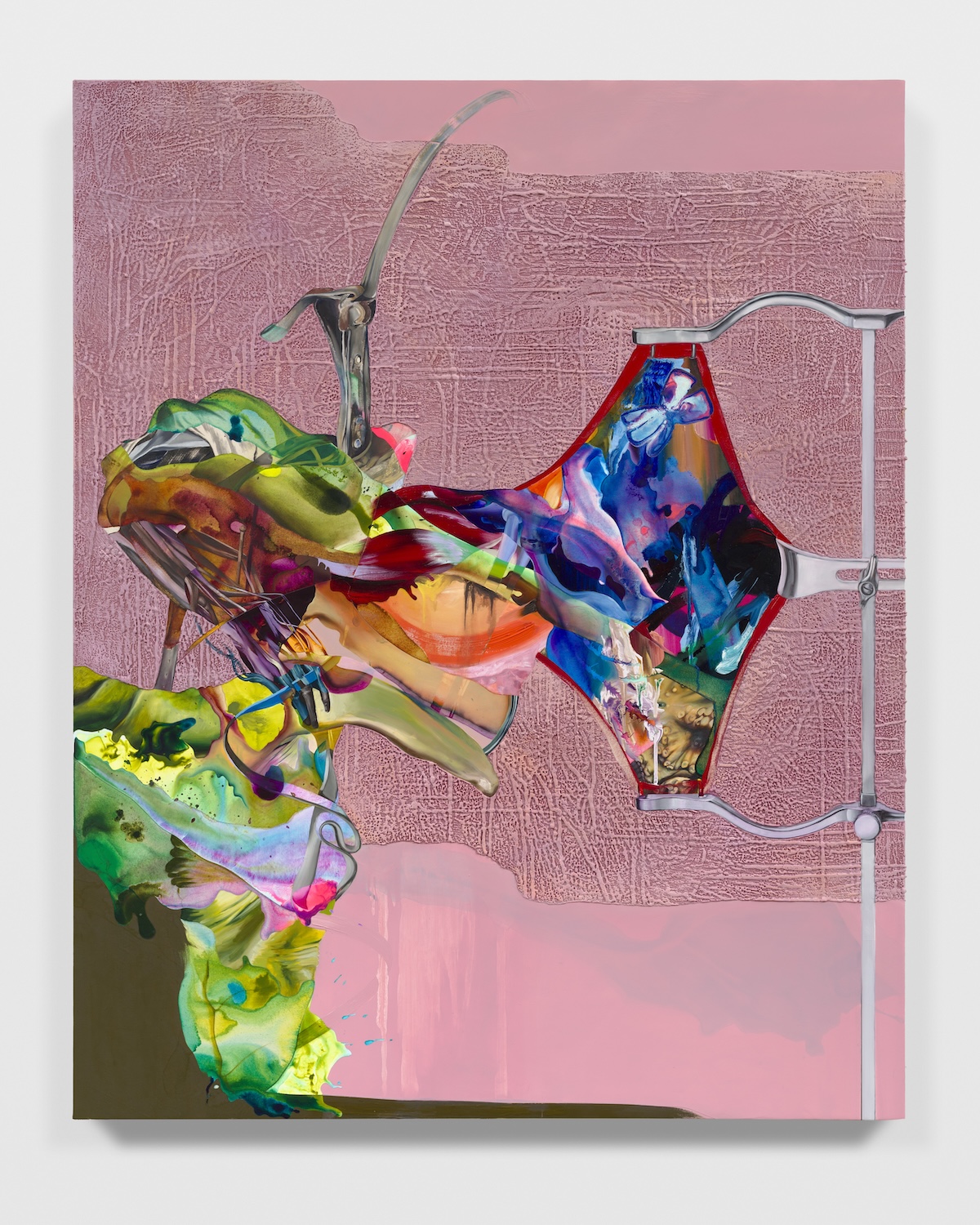
On a more literal level, Savdie uses the visual language of medical diagrams and surgical tools to express thematic preoccupations with concealment and revelation. A Most Favored Delicacy (2026) features areas of color labeled with cryptic letters (A, H, and P on teal; G, M, and an ampersand on violet). Foul Architect, Teeming Queen of Rot (2026) contains calipers and line drawings of bodily systems. In Retractor (2026), the titular silver pliers hold open a wound in the pink, fleshy beeswax surface; a mess of abstract color, bilious, blue-green, and splattering, spills out from its blood-red borders. These medical interventions are no match for Savdie’s explosive colors: the letters in A Most Favored Delicacy are without referents, and some, like G and P, are clearly drawn backwards; the volume in Retractor spills and spills and still seems infinite beneath the surface.
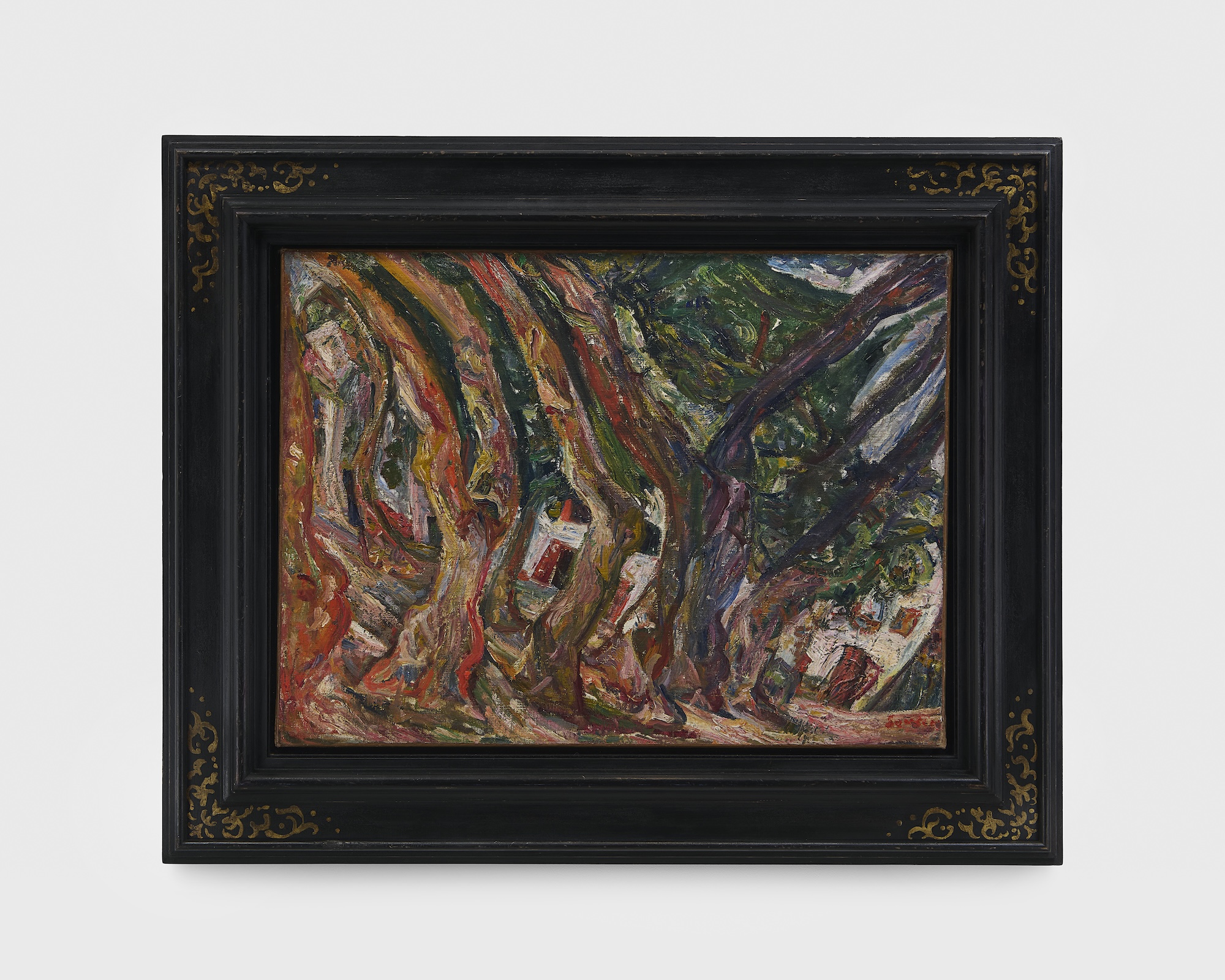
For both Savdie and Soutine, the transformative potential of the body—or in more abstracted terms, the bodily—underscores the precarity of the current world order. For Soutine, this potential is not limited to his depictions of animal and human bodies. Even in his landscapes, land becomes body, with the plane tree trunks of the town square in Les Platanes à Céret (c. 1920) reading like a rib cage, and the winding cliffside staircase of Escalier à Cagnes (c. 1923–24) evoking the texture and turn of the large intestine (a motif repeated in Savdie’s Foul Architect, Teeming Queen of Rot around the corner). These works were painted in the aftermath of World War I and the Spanish influenza outbreak; over 1.6 million French people died in just six years, and some of the most violent and destructive battles of the war were fought on French soil. Given this context, Soutine’s elision of bodies and land holds a sobering emotional resonance.
But if Soutine’s bodies evoke the Old Testament line “for dust thou art, and unto dust shalt thou return,” then Savdie’s bodies offer a passage out of that cycle. In Savdie’s hands, the body transforms. Her twisting, limb-like gestures sprout fingernails and fur; they shed masks and skins, passing through historical and contemporary references and associations, becoming something hybrid and unknowable. There is something new underneath each surface for those who are brave enough to see it.
Savdie / Soutine is on view at NORR COHAN Gallery from September 10 to October 24, 2026.