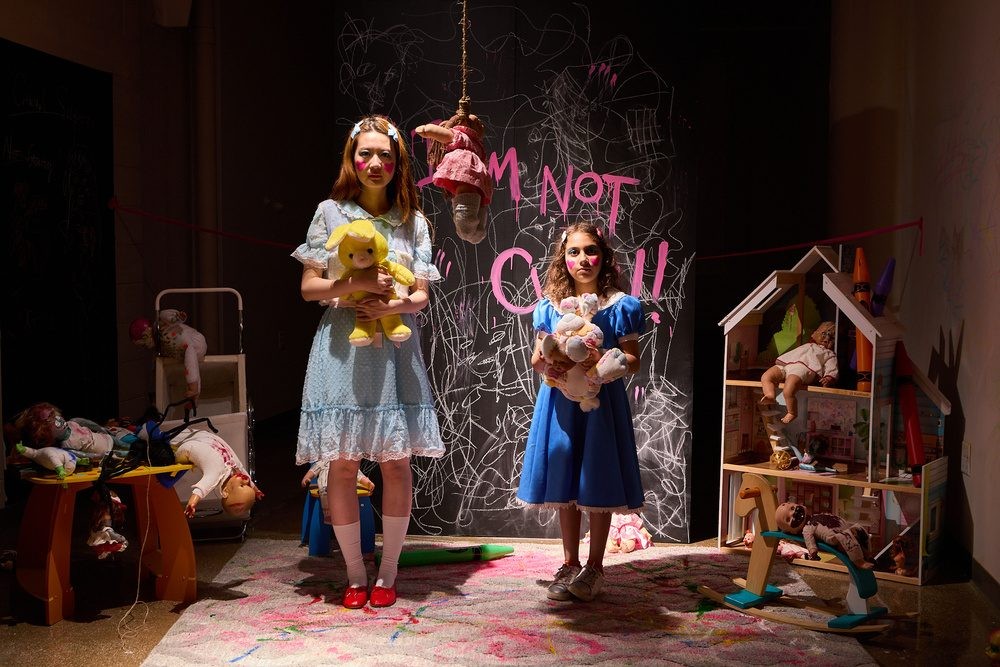
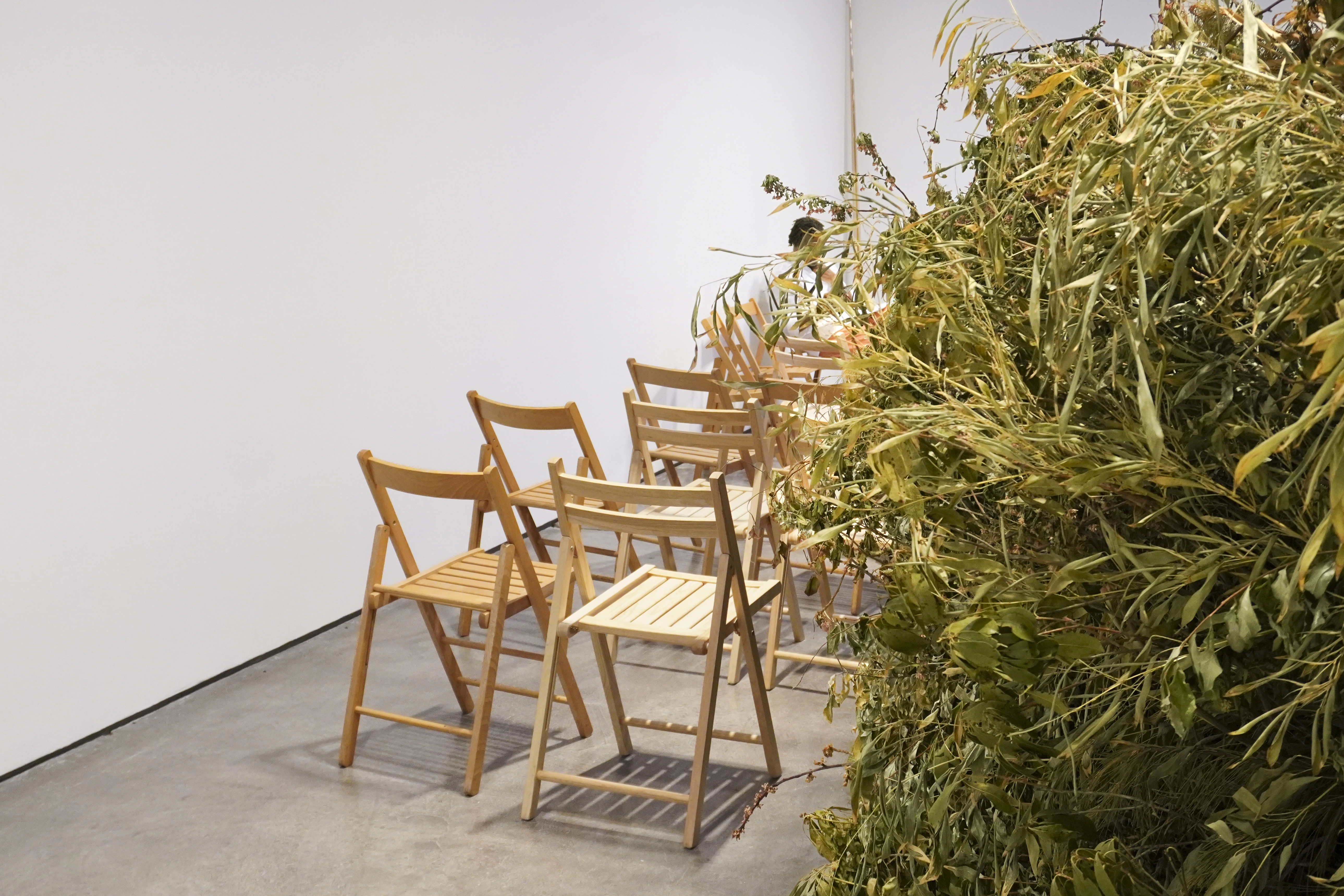

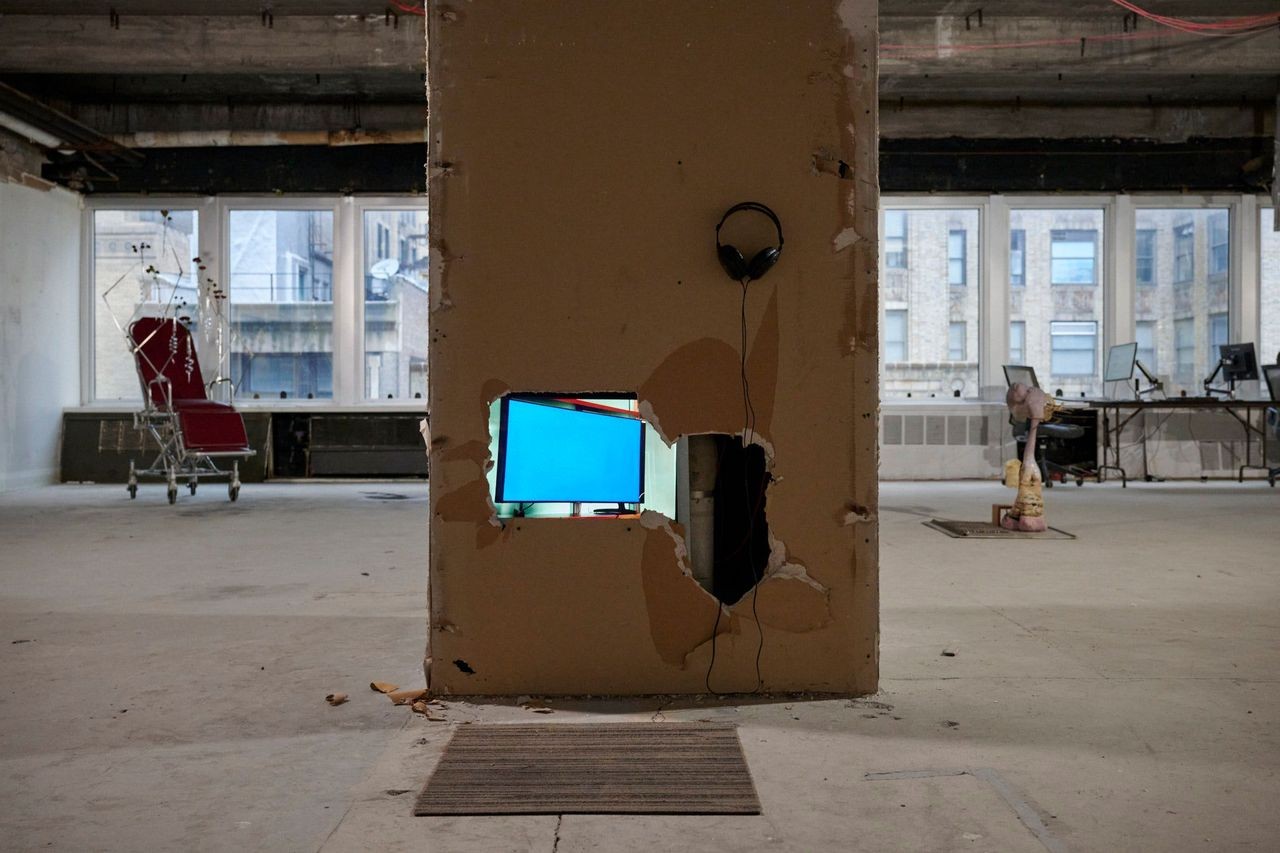
"260 Madison" curated by Demonlovers Inc. and Shaina Tabak
Review
The ancient Greek courtesan Phryne was being tried for her life when the orator Hypereides exposed her breasts to the jury in an attempt to evoke a correlation between Phryne’s beauty and that of Aphrodite. Some accounts speculated that Phryne’s extraordinary beauty had moved the jury so much that they considered it divine-like and thus acquitted her of the impiety charges that she was tried for. Whether or not the episode occurred as described, its appeal to posterity rests on the simultaneous sexualization and sanctification of the female body, identifying the male gaze as a convenient vantage point of consumption and judgment.
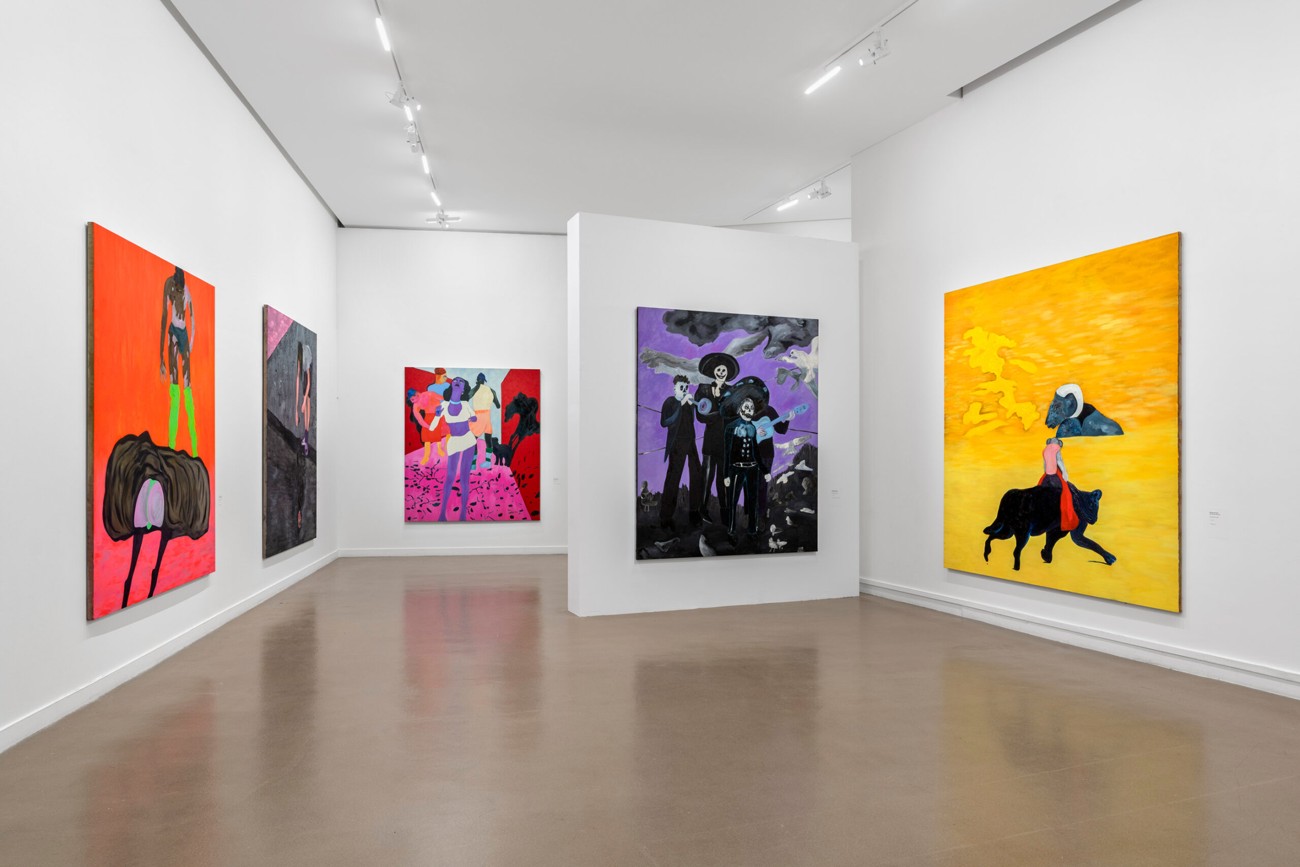
At Petzel Gallery, Emily Mae Smith’s solo exhibition, Transit of Venus, is insistent on situating feminine portrayal and metamorphosis outside of frameworks of eroticism, curiosity, or entertainment. Her paintings are deeply interior but not domestic, whimsical but remain firm in the engagement with social realities. When asked about how her art functions, Smith says: “My imagination wants to wander from meditation on my medium to what's happening in society, to how it’s reflected back in art. Other things I'm interested in include feminism or the politics of labor—I want people to see more of what it takes in the world to make a painting, and how a painting belongs in the world.”

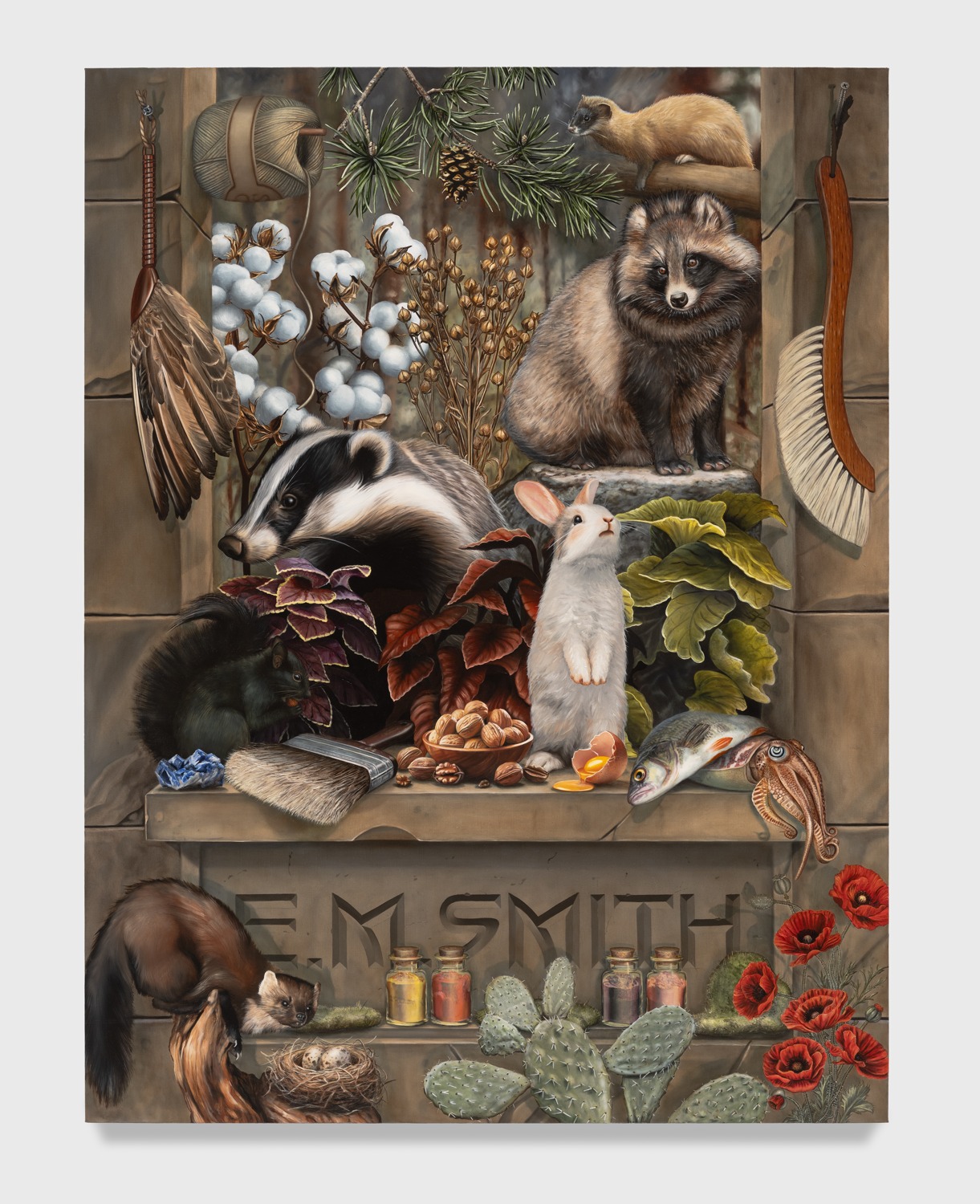
The most emblematic of this sentiment is Sacred Conversation (2026), which portrays an altar- or window-like construction with all the animals and plants that contribute to the anatomy and process of a painting: cotton, badger, cuttlefish, rabbit, flax, walnut, etc. Nodding to both the art historical logic of sacra conversazione and Duchamp’s argument that painting is “readymade aided,” the painting’s affect extends beyond the mere deconstruction of its own medium and instead takes on a devotional quality. Smith’s name is engraved under the ledge of the altar, offering a wide range of interpretations: an indication of authorship, a historical claim to recognition, or a self-conscious citation of monumentality. Yet paradoxically, the laboring painter’s body is withheld from view, for a moment slipping away from the bargain of representation altogether.
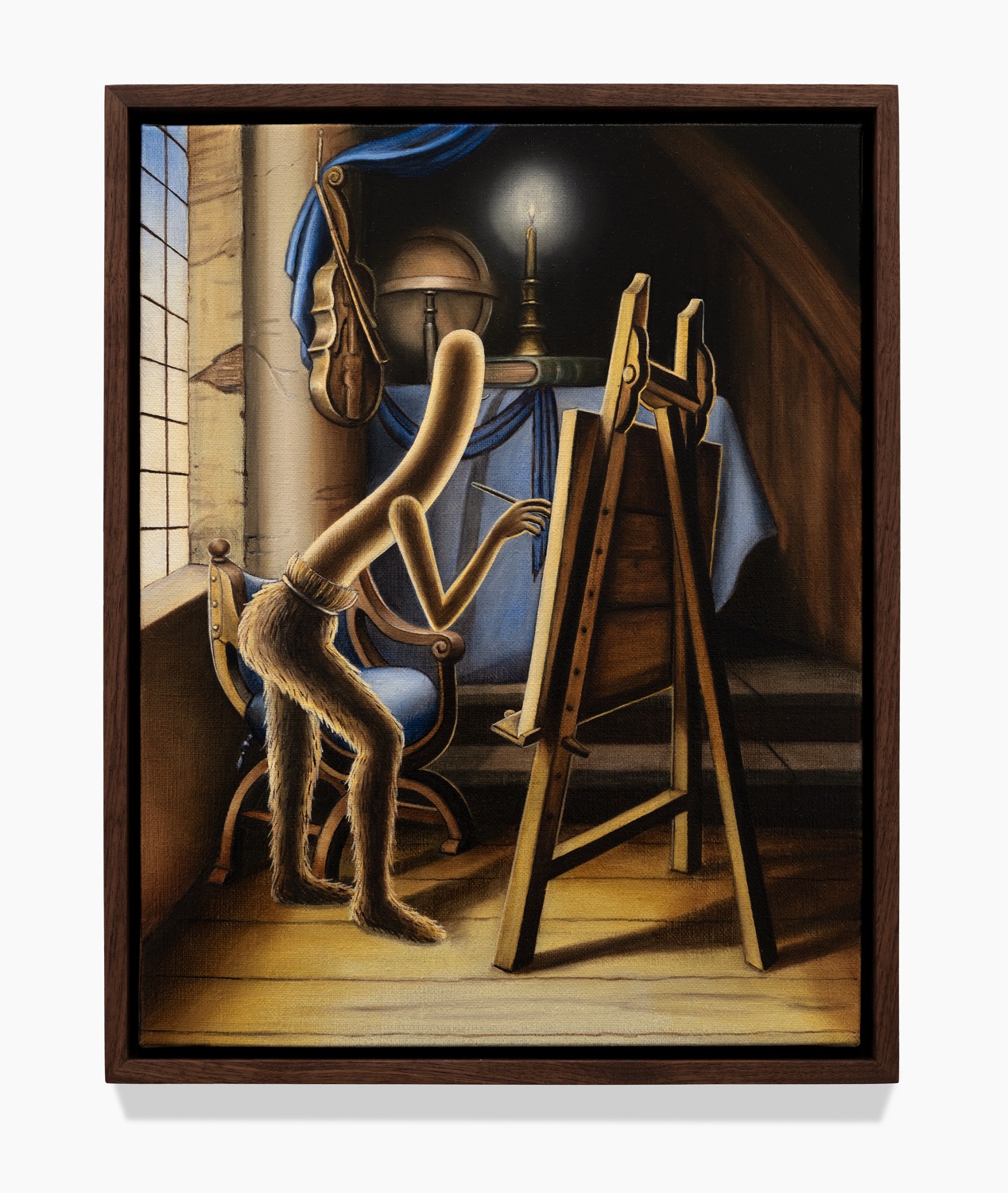
Self-representation, however, proves to be inevitable. The strawwoman motif central to Mae’s visual vocabulary recurs throughout the show. Smith was working as an artist’s assistant when she started using the hybrid figure (which is also a nod to the magic broom in The Sorcerer’s Apprentice) as a humorous stand-in for herself and her overlooked labor. Straw Woman Problem (2026) places the central figure in a state of stillness and maybe passivity. Where she fails to scare away the crows, labor becomes sidelined and futile. Petite Muse at Work (2026), however, renders the protagonist as having her own creative agency, humorously defying assumptions around the otherwise diminutive-sounding title. The Locust II (2026) and Transit of Venus (2026) take the iconography to a more sinister register, evoking female metamorphoses as camouflage—a trope in Greco-Roman mythology that’s often linked to self-preservation in the face of unwanted advances or the loss of bodily autonomy, with the most famous example being Daphne’s transformation into a laurel tree to escape Apollo’s pursuit. The figures in these two paintings seem aware of their subjugated state, meeting the viewer’s gaze at eye level in acknowledgment, confrontation, and resignation. The scythe in The Locust II separating the figure from the viewer lends another layer of precarity to the power dynamics between the seeing and the seen. Taken together, these paintings contend with the danger of self-exposure and the discontent of erasure when inhabiting a feminine body.
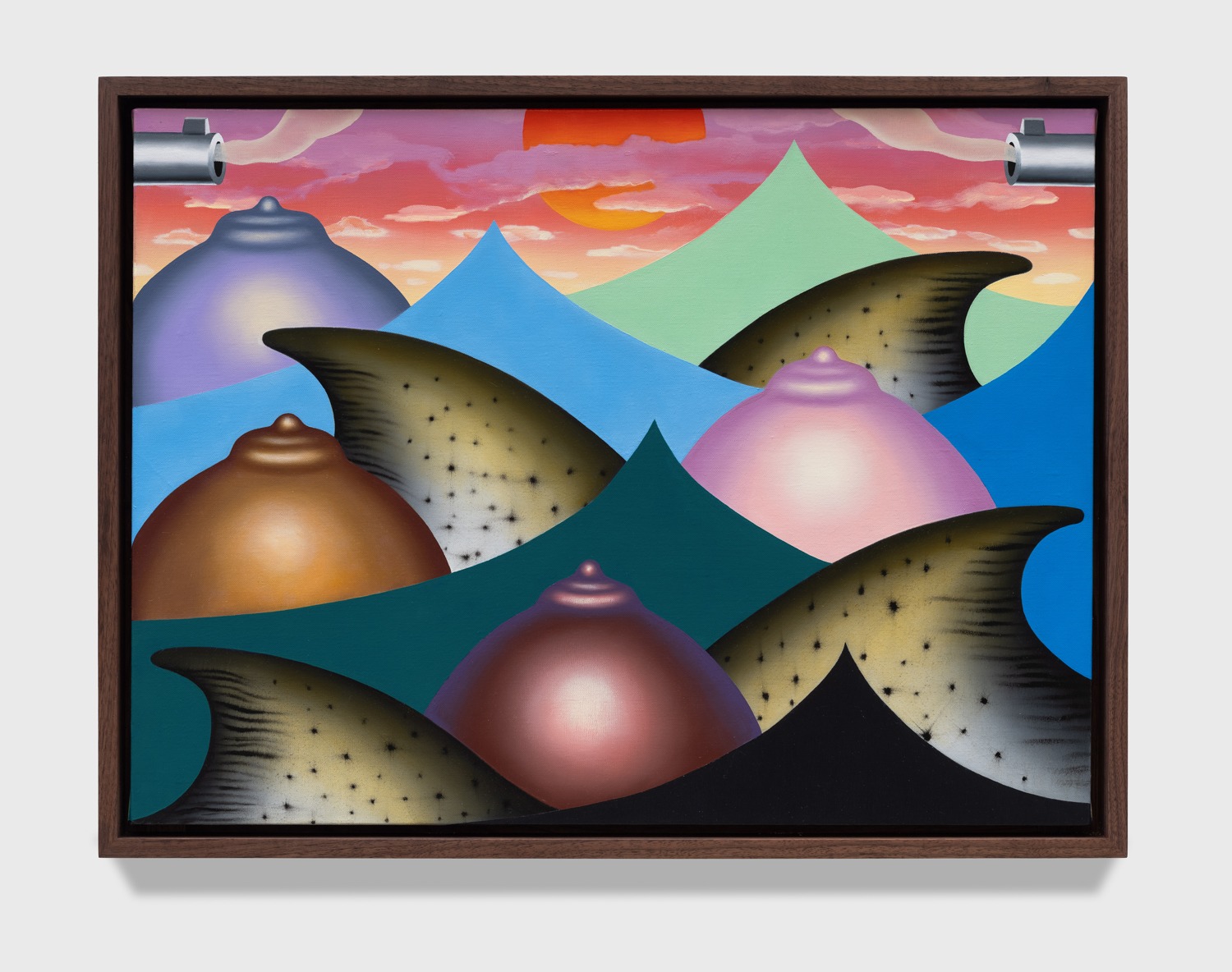
Earlier this summer during a studio visit, an artist spoke to me about the frustration of viewers treating the phallus as a default reference or framework for interpreting art. Somewhere on Smith’s canvas, there seems to be a similar kind of frustration. But instead of sterilizing the paintings of anything sensuous or bodily, Smith proposes, with salient humor, that any kind of pictorial imagination emerges from broader theses of power—be they gendered, material, or socioeconomic. “I think I’m reacting to life being algorithmic, very coded, and overly concerned with the image at the surface. I want people to engage with painting at a deeper level,” Smith says. And as a result, meaning-making becomes an ambiguous matter in her work. Only Human (2026), for instance, depicts see-through grapes with eyeballs preserved in each fruit. Roulette (2026) even more so—bell/breast-like shapes, shark fins, and abstract waves coalesce into a skyline under rifle barrels. In making familiar things strange, or rather, in allowing otherwise illegible narratives to disintegrate into seemingly recognizable components, Smith hints at a feminist reorientation of cosmic horror. She reverses the Lovecraftian terror of the unknowable into the feminine subject’s experience of being made knowable, offering no straightforward promise of liberation from the tyranny of language or linear, historical time.
The exhibition’s title, then, returns as an apt metaphor for the paradox of visibility. During astronomical transits, celestial bodies appear as dark silhouettes, their presence marked precisely by what they obscure. In the same way, Smith’s paintings resist the demand that feminine existence be justified through its recognizability.
Emily Mae Smith: Transit of Venus was on view at Petzel Gallery through October 31, 2026.