
Delcy Morelos: “Ombligo” at MOCA Toronto
Review
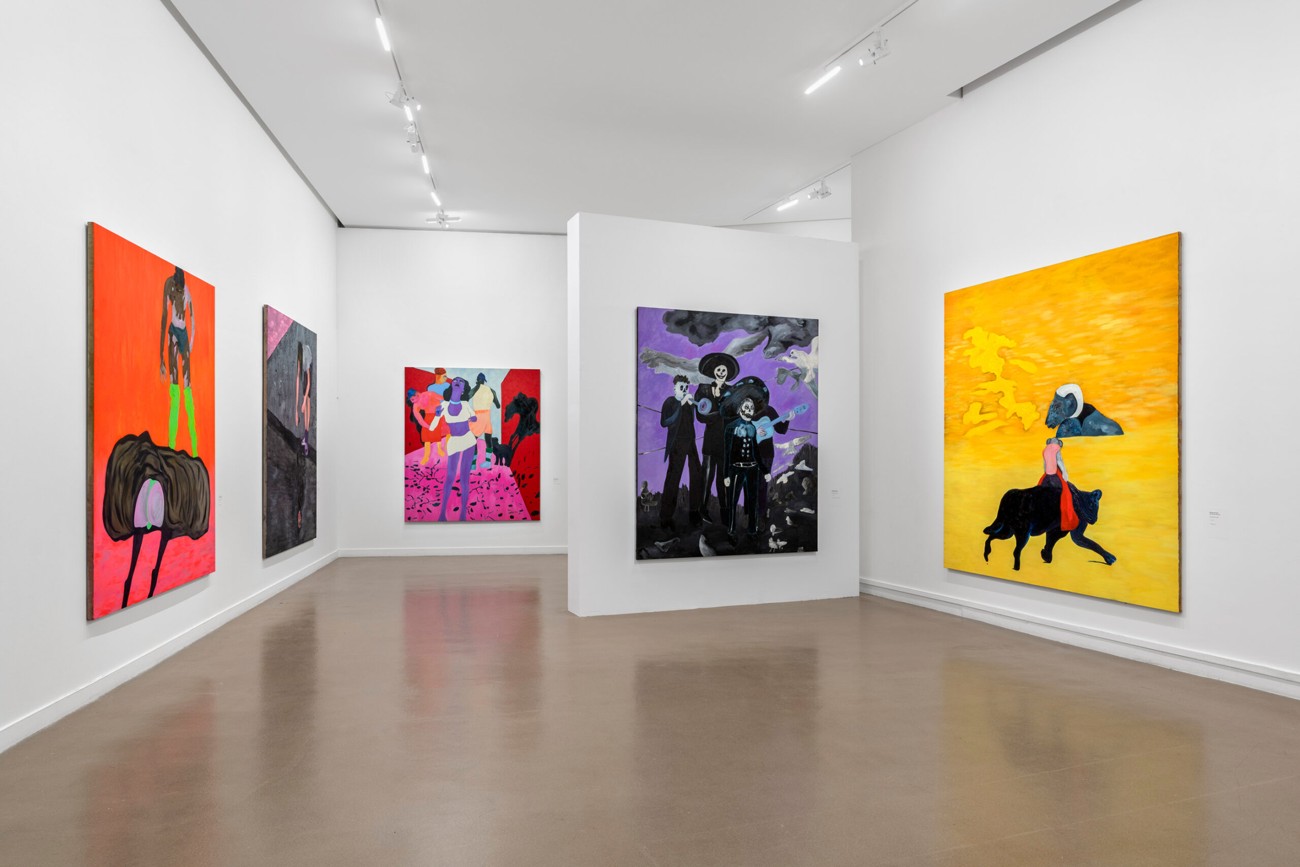
In the basement of the Musée d’Art Moderne de Paris, woven thin marks Florian Krewer’s first solo exhibition in France. Based in New York’s South Bronx, the German-born artist draws much of his inspiration from the people around him, particularly a younger generation forced to come of age in an increasingly uncertain and violent world. Against the backdrop of France’s own wave of youth-led protests, the connection feels palpable. Through monumental canvases bursting with color, Krewer paints a feverish portrait of a generation on fire.
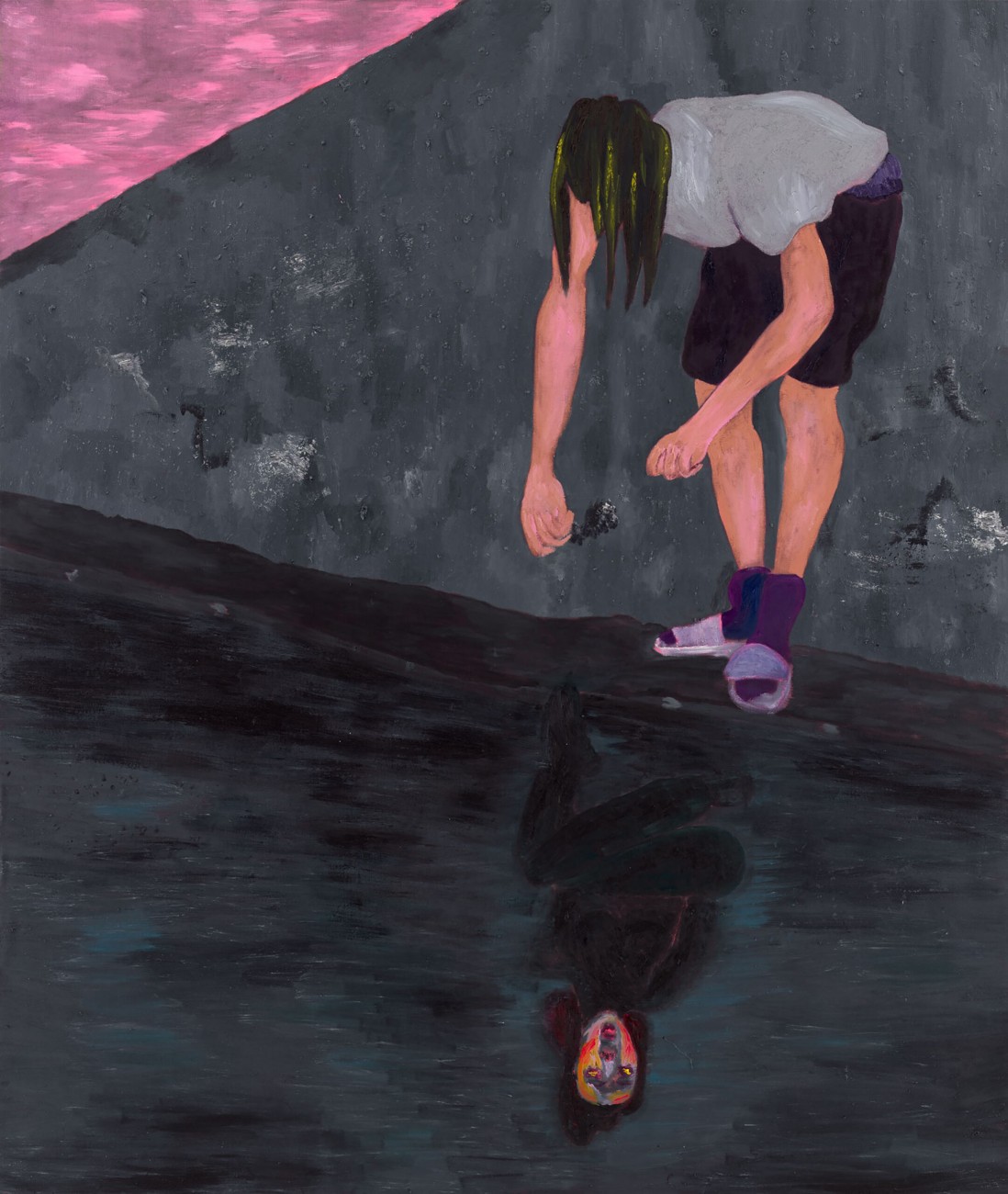
The density of the installation is immediately striking. Sixteen large-scale paintings hang close together, as though the scenes unfolding within them were engaged in a restless conversation. Drawing on mythological motifs and familiar archetypes, Krewer infuses them with an unmistakably contemporary sensibility. Rather than constructing coherent narratives of individual or collective experience, he embraces the contradictions of everyday life, allowing interpretation to remain as unruly as his brushwork. Cabaret scenes, street celebrations, and ancient myths collide in a motley crowd where mystery, violence, and joy coexist, often within the same frame. Near the entrance, house of hope (2026) depicts a gathering of figures raising flags amid a riot of luminous colors. No nation can be identified, no face clearly distinguished. Stripped of recognizable political symbols, the scene suggests something both more fragile and more universal: the possibility of solidarity, of people coming together without necessarily belonging to the same place. Nearby, no endz (2023) revisits the myth of Narcissus. A figure leans over the water, their face visible only in a dark reflection, streaked with bloody tears. The juxtaposition sets the tone for the exhibition: the political and the intimate are inseparable, and the search for identity is less a matter of narcissistic self-regard than a struggle for self-acceptance.
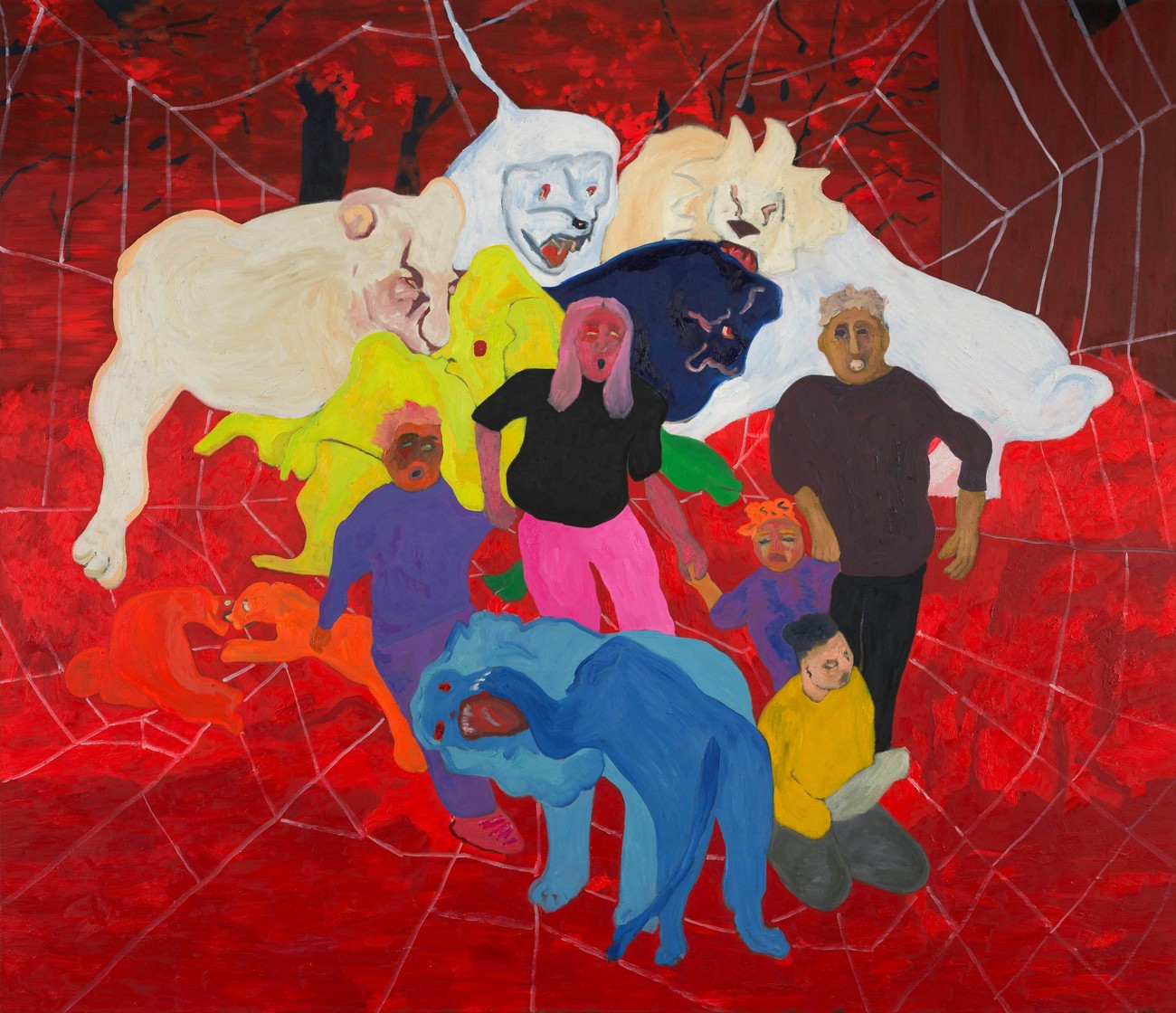
This tension runs throughout the exhibition, often grounded in recognizable fragments of American urban life: a liquor store in stargazing (2026), a playground enclosed by apartment buildings in handball (2026). Yet these settings are never merely documentary. They become stages for psychological dramas in which the ordinary takes on an almost hallucinatory intensity. In the echo (2026), humans and animals alike are caught in an enormous spiderweb, their faces distorted by gaping mouths. Edvard Munch’s The Scream (1893) inevitably comes to mind, but where Munch's figure embodies an intensely solitary anguish, Krewer makes existential dread a collective condition. No one is spared, not even the children. A family holds hands while white, yellow, and blue lions appear to roar in pain, their bodies twisted into a nightmarish vortex. The deformation of these figures speaks directly to the artist’s expressionist sensibility: recognizable situations coexist with an immersive vision of the artist’s inner anxieties.
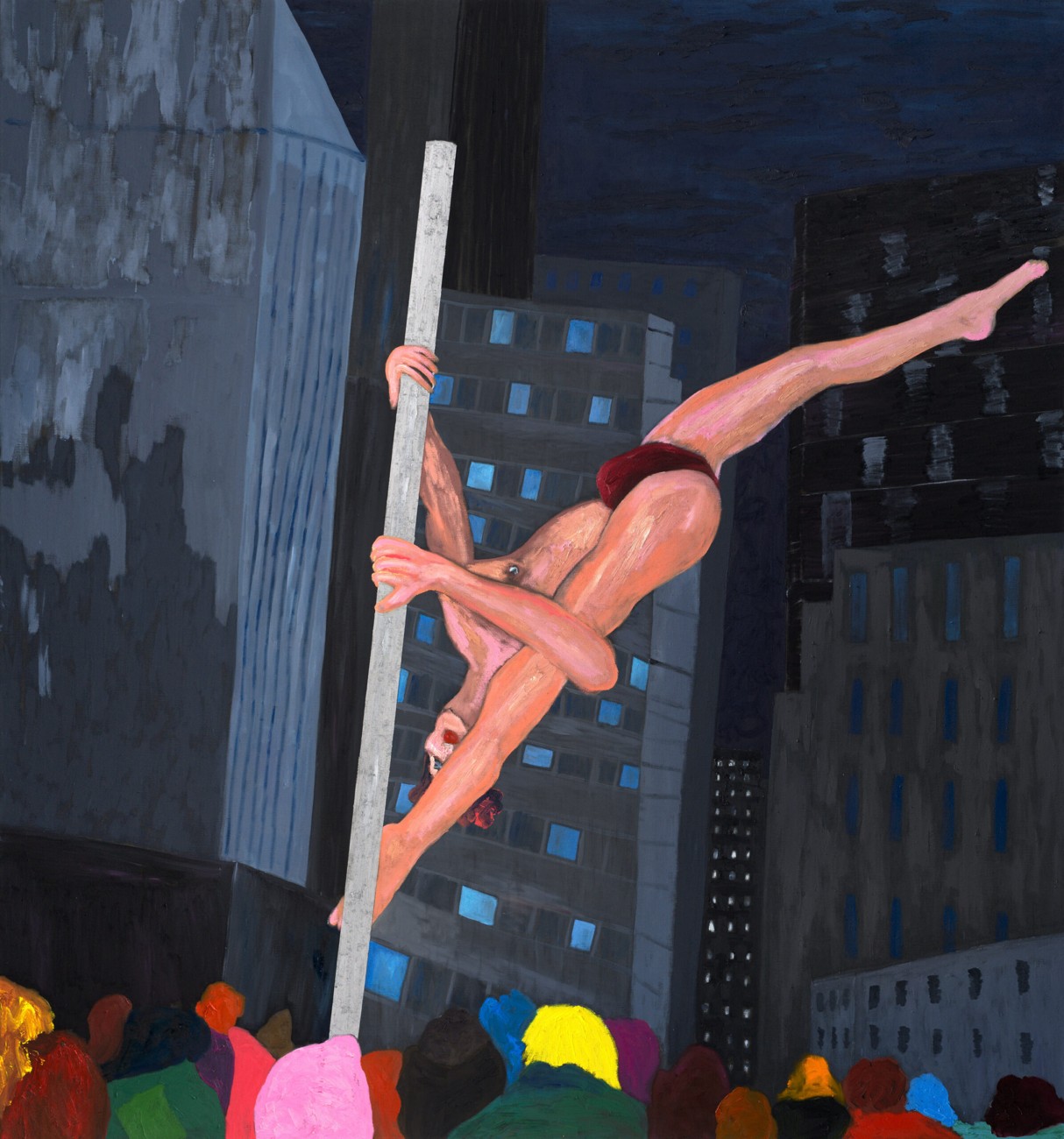
Color and texture are central to the force of these paintings. Against broad expanses of pink, orange, fluorescent yellow, and green, figures emerge as distinct yet strangely weightless silhouettes. The intensity of his palette produces striking contrasts, allowing bodies to stand apart from their surroundings without ever fully escaping them. In only one life peace (2024), a Black man dressed in pink strides across an orange landscape reminiscent of Beijing’s Forbidden City. Caught mid-step, one foot suspended in the air, he flashes peace signs with his hands. The painting’s richly layered surfaces give the figure an almost sculptural presence, while the ambiguity of the setting opens the image beyond any single geographical or political context. He could be anywhere his presence carries political weight, which is to say, almost any public space. His freedom of movement becomes both an ordinary gesture and a quietly radical assertion. That sense of suspended motion is one of Krewer’s most compelling devices. His figures seem to inhabit a world in which gravity has loosened its grip, leaving them somewhere between falling and flying. In cold roses, a man dressed entirely in black struggles through the snow wearing pink high heels. His awkward, almost balletic movement evokes figure skating, transforming a seemingly mundane scene into a delicate negotiation with gender and self-expression. The figure also suggests a more intimate struggle with gender expression, as the freedom to embrace femininity becomes inseparable from the difficulty of doing so. In fireman (2024), a firefighter becomes a fantastical stripper in the middle of the city, one leg raised against a pole before a crowd. Wearing makeup and little more than red briefs, he turns a traditionally masculine figure of public service into an exuberant performance of desire. The painting asks who is allowed to occupy public space, and under what conditions.
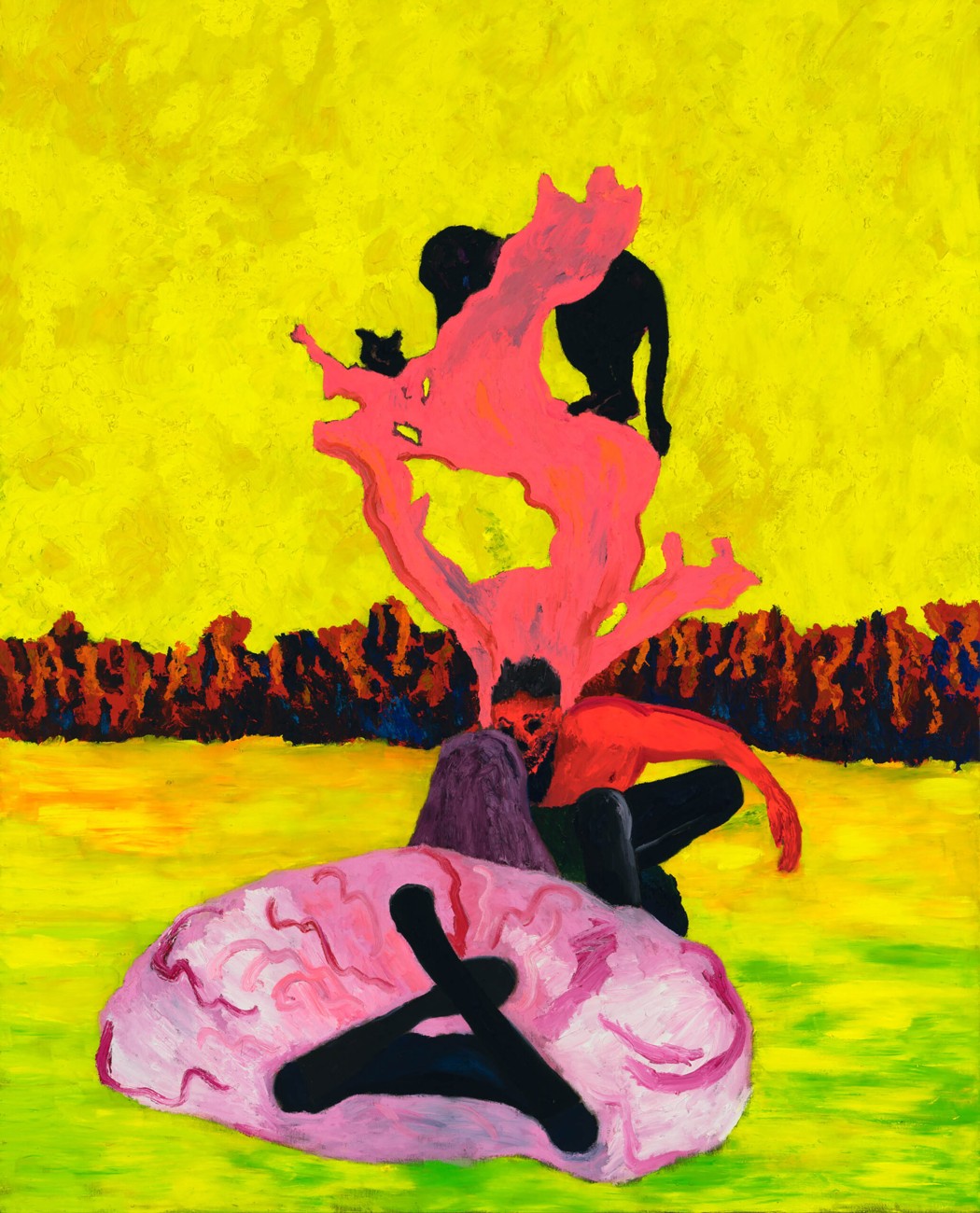
There is something liberating about these bodies, whose identities resist easy categorization. Yet their weightlessness is also a source of unease. Krewer’s figures are frequently bent forward, their balance precarious, as though nothing could prevent them from tumbling into an unknown space or state of being. The freedom to transform oneself is never entirely separate from the fear of losing control. In crossed legs (2022), a red-skinned man with a devilish grin leans over a young woman in a pink tutu, her legs crossed beneath her. Behind them, an immense field of green and yellow gives way to a wall of flames. An unidentified shape rises from the man's shoulders, somewhere between a crown and a pair of antlers, lending him the appearance of a creature drawn from a fever dream. The painter’s uncanny universe emerges from precisely this collision of the familiar and the fantastic: humans and animals remain recognizable, yet seem to have wandered in from a parallel reality. His paintings do not offer a stable boundary between the everyday and the monstrous. Instead, they suggest how easily one can slip into the other. Nearby, everybody wants to rule the world (2025) brings this instability into sharper political focus. Against a gray background, several figures, adults and children alike, are crying. Tears disrupt the broad fields of color that usually structure Krewer’s compositions, spreading into stains that seem to dissolve everything in their path. There is something bitterly comic about this procession of weeping figures, particularly under a title that invokes the desire for power.
Throughout woven thin, this oscillation between tenderness and brutality, absurdity and despair, gives the paintings their peculiar emotional charge. Krewer’s characters are frightened, exposed, sometimes grotesque, but they continue to dance, embrace, march, and reach toward one another. Their bodies may be on the verge of collapse, yet they remain animated by the stubborn desire to exist freely. The exhibition’s title evokes a fabric stretched thin, a fragile weave of lives, identities, and experiences held together despite the forces threatening to pull them apart. The tightly packed installation makes this metaphor almost physical: individual paintings bleed into a larger, restless portrait of contemporary existence. What emerges is neither a celebration of youthful rebellion nor a lament for a generation deprived of its future, but something more contradictory and ultimately more moving. Krewer paints the anxiety of living in a world that offers little reassurance, alongside the reckless, necessary hope of those who refuse to surrender to it.
woven thin by Florian Krewer is on view as part of the permanent collection of the Musée d'Art Moderne de Paris through January 4, 2027.