
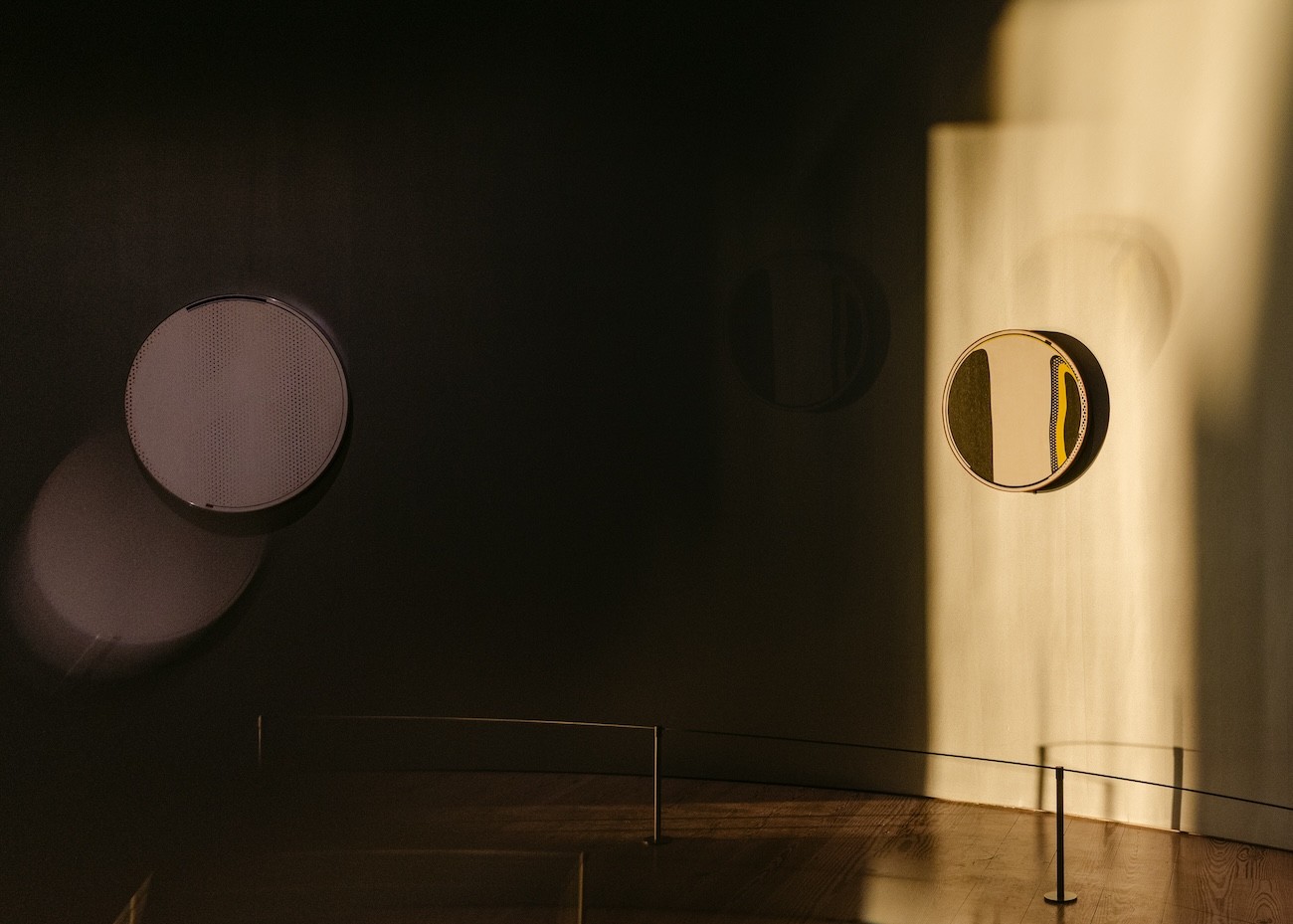
Roy Lichtenstein’s Mirror Paintings
Voice
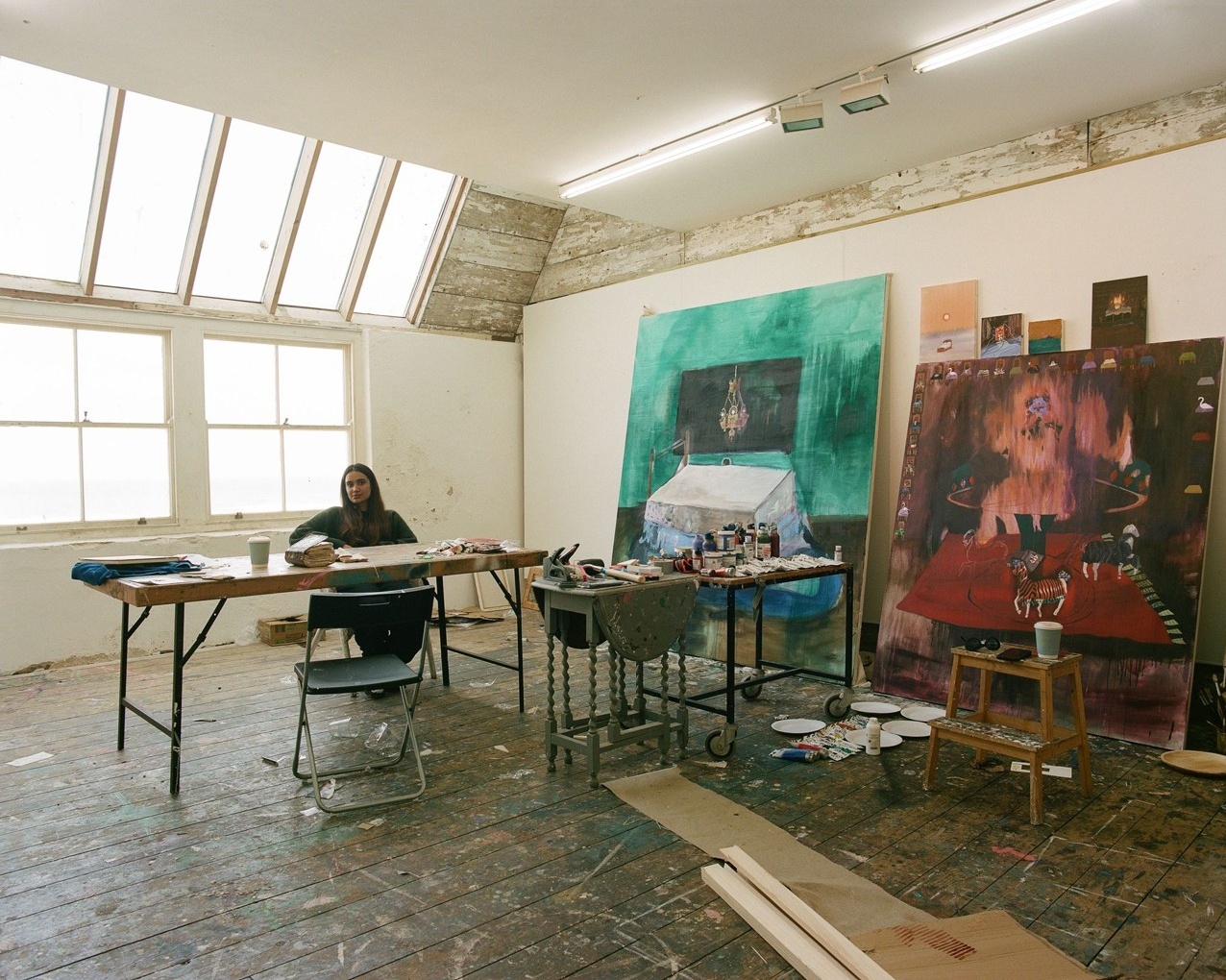
Rolling hills in mossy greens and deep violets are scattered with horses and dotted with cottages in Noorain Inam’s canvases. Waves surge and lightning strikes between rows of flames, while goats graze, swans parade, and hummingbirds flutter at ease. Despite the natural forces that occupy these landscapes, the animals appear unperturbed. The Karachi-born, London-based artist, trained in Indo-Persian miniature painting, creates intricate portals to otherworldly, spiritual realms, where order and disorder coexist.
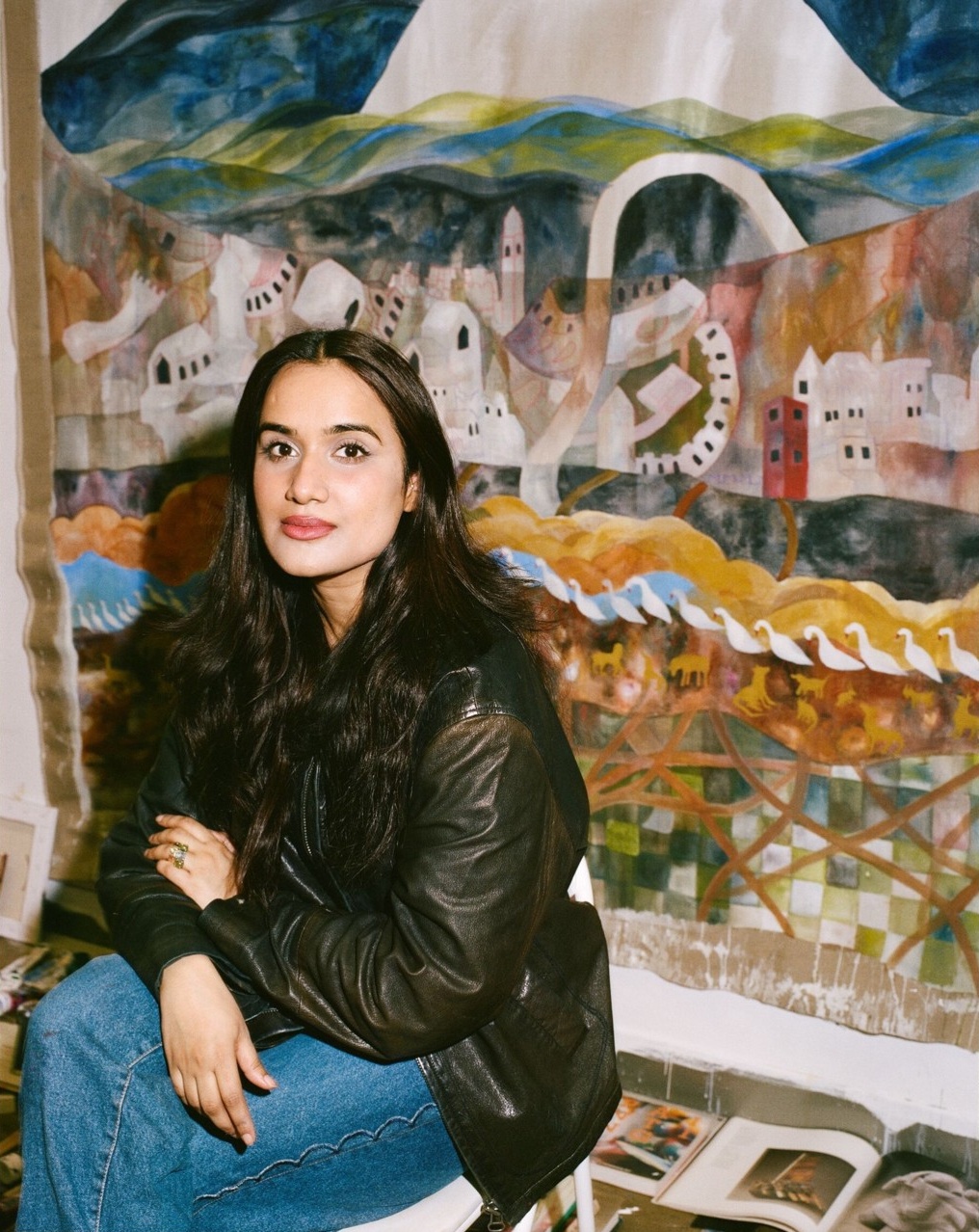
I first met Noorain in 2024, during her second solo exhibition with London gallery Indigo+Madder, Go back to sleep, it’s just the wind. Noorain had spent the preceding two months at Studio 5 on the Cornish coast directly following a three-month stint at Porthmeor Studios, after receiving the Wilhelmina Barns-Graham Residency Award for Emerging Artists. During her stay in St Ives, she immersed herself in the town’s pagan folklore and mystical traditions. Working from as early as seven in the morning into the evenings, Noorain recalled the “blue haze” that fell upon the secluded land in the moments after sunset. With her phone switched off, Noorain became attentive to the changing light and the natural rhythms of the day, learning “how to observe time differently.” Her walks into the town offered a counterpoint to the solitude of her studio, allowing her to meet local residents, many of whom had lived in Cornwall for decades.
Through these interactions, Noorain began imagining her life and practice shaped by a slower, more attentive way of seeing, along with a more intimate relationship to the natural environment. Perhaps it is no surprise that the Slade School of Fine Art graduate (MFA ’22) felt so at home in Cornwall’s solitude. A true night owl, Noorain is similarly drawn to the quieter hours of London, whether catching the last screening of a horror film or working late in her studio: “I really enjoy the energy of seeing a very noisy city come to a complete standstill, stepping outside and being the only one in the street.”
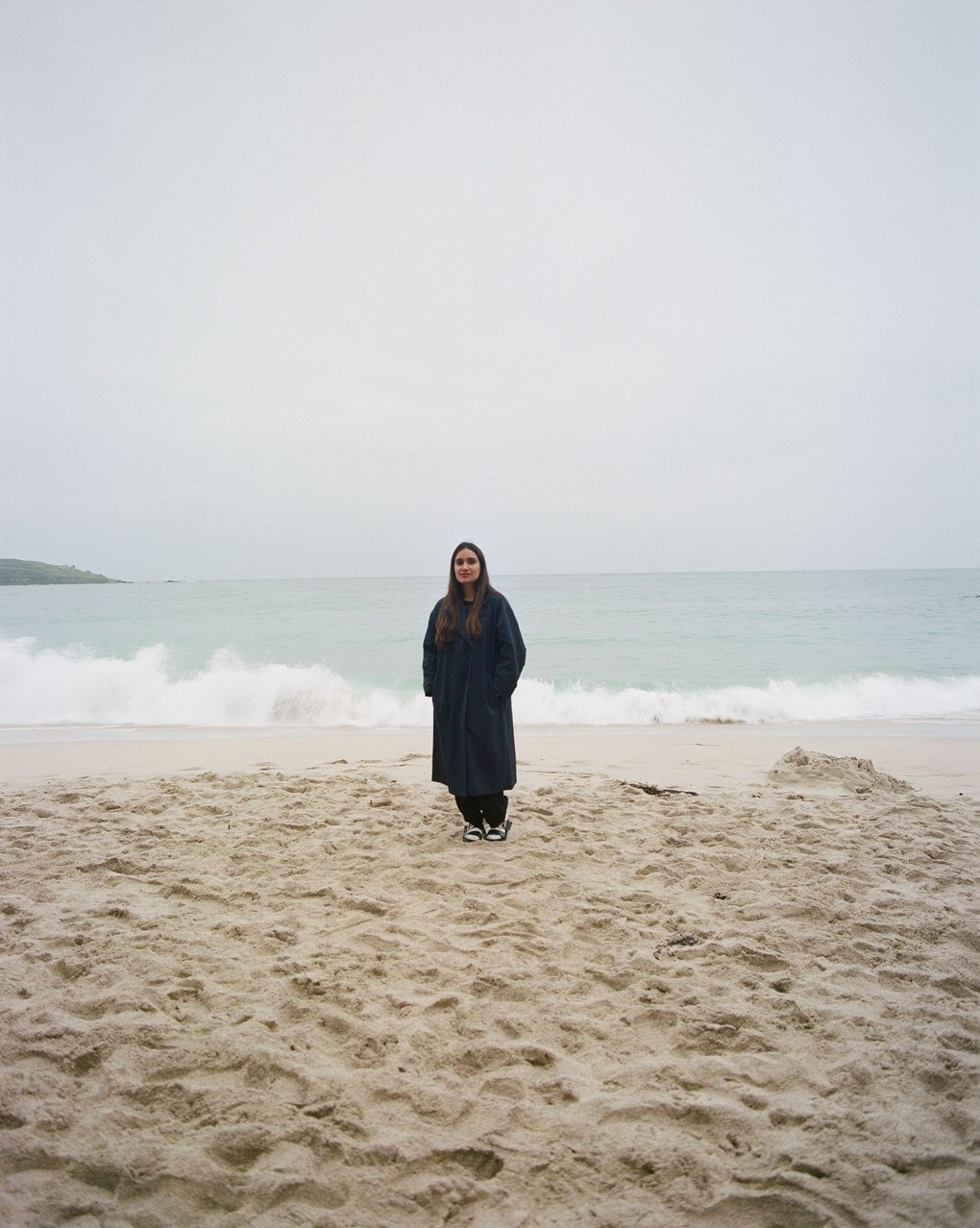
During the residency, Noorain also turned to literature inspired by the sea, recalling in particular Alice Oswald’s Nobody (2019). In the novel, Oswald reimagines the sea as a central character in Homer’s Odyssey, underscoring the contrast in treatment of the subject as something to be conquered versus something to inhabit. This distinction, with its gendered nuances, resonated with Noorain, who was only twenty-five at the time. “With residencies, you try to force the spiritual experiences and moments when you realize you've got to surrender to the space, and let it come to you,” she explained.
Noorain became drawn to the history of the seaside town as a haven for artists. British artists like Wilhelmina Barns-Graham and Ben Nicholson moved to St Ives during the Second World War. Noorain was surprised to discover American painter Mark Rothko’s connection to the town, having spent three days there in 1959 while taking a break from his Seagram Murals. Rothko’s fields of deep crimson and blue offered a point of reference for Noorain’s own treatment of the backgrounds in her compositions, where layered color creates a sense of depth and atmosphere.

A self-proclaimed “motif hoarder,” Noorain finds inspiration in a variety of sources before she begins a painting. Her early training in miniature painting introduced her to the Basholi school, an early eighteenth-century style of Pahari painting known for its vibrant colors and architectural borders. She has credited the school’s celebrated painting The Birth of Evil (c. 1730–40) as an inspiration for her own paintings, specifically its floating creatures that emerge from dark, smoky clouds. More recently, Noorain has looked to early Kandinsky for the artist’s mastery of rhythm and movement, alongside the energetic mark-making of Cy Twombly and Joan Mitchell. Rather than quoting these influences directly, she allows them to accumulate during this “incubation period,” combining art historical research with contemporary gallery openings, film screenings and plenty of reading.

This process of absorbing and gathering imagery was something I came to appreciate firsthand when Noorain and I traveled to Florence together last spring. While walking past the ornate early Renaissance paintings at the Uffizi one day, she pointed out a row of flattened cubic buildings. She immediately recognized the grouping from a snippet she had found online months prior, while locating source imagery for one of her paintings. Seeing the entire composition felt like a revelation, one she compared to “watching a movie for the first time or liking someone for the first time.” It was a characteristically Noorain comparison: a romantic treatment of seeing and understanding the world, one perhaps only the eye of a trained miniature painter can identify and appreciate.
That same feeling runs through Noorain’s upcoming solo show at Slip House, her first in the United States, following presentations with Indigo+Madder at NADA Miami and Liste Art Basel. Lone subjects and furniture turn up in unexpected places; houses tilt, stars fall, fires blaze, and empty movie theatres sit waiting for an audience. Noorain captures the moment before a story wraps itself up or before a movie comes to a conclusion, when motifs may appear recognizable but nothing feels settled.
Noorain Inam’s solo exhibition will open at Slip House in New York on November 18th, 2026.