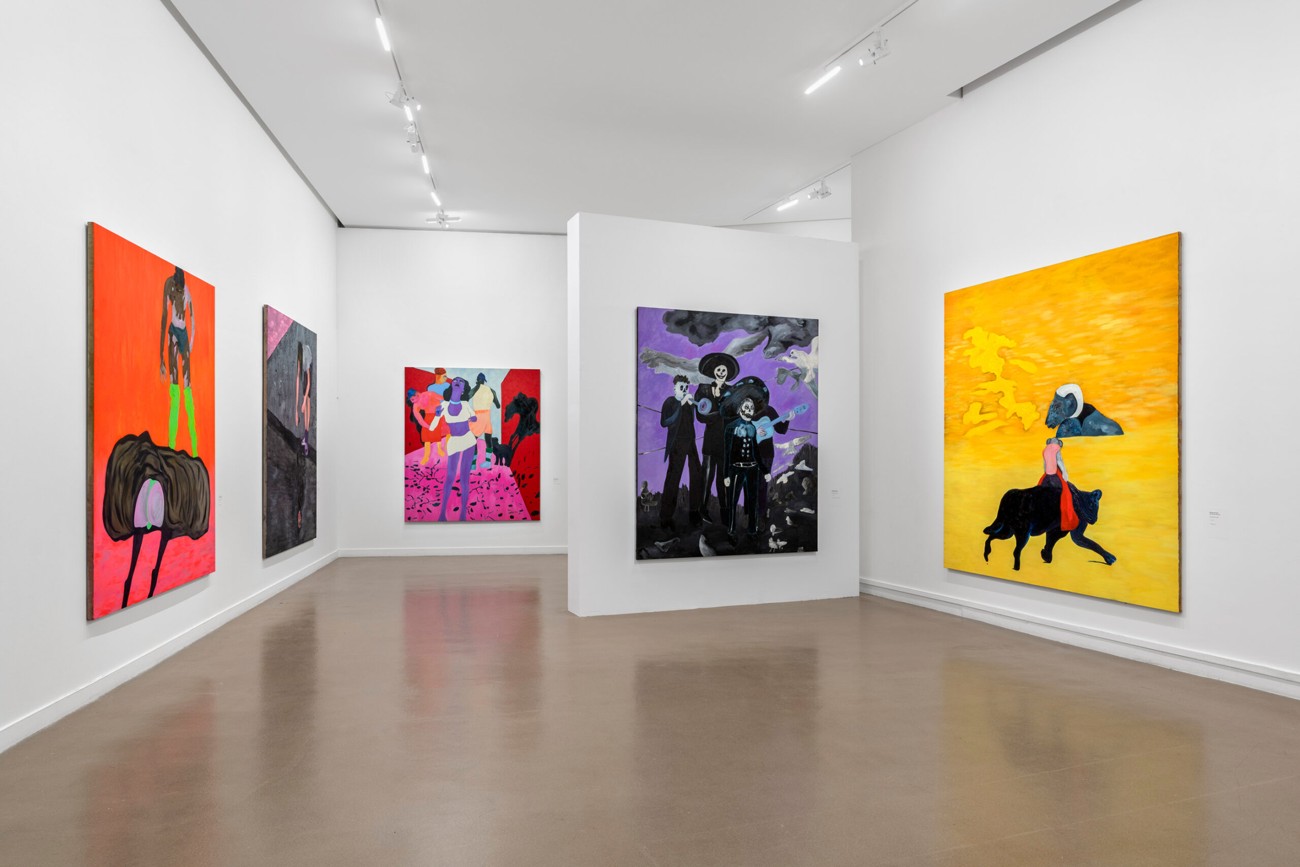



Florian Krewer: “woven thin” at the Musée d’Art Moderne de Paris
Review
In an intimate artist talk at the Museum of Contemporary Art in Toronto, Delcy Morelos reflects on the weather. She has just walked through the rain to reach the museum. Bad weather is a part of life, she says. But the plants are happy, and the birds are happy, so she is happy, too. She feels as though she has been fertilized by the rain.
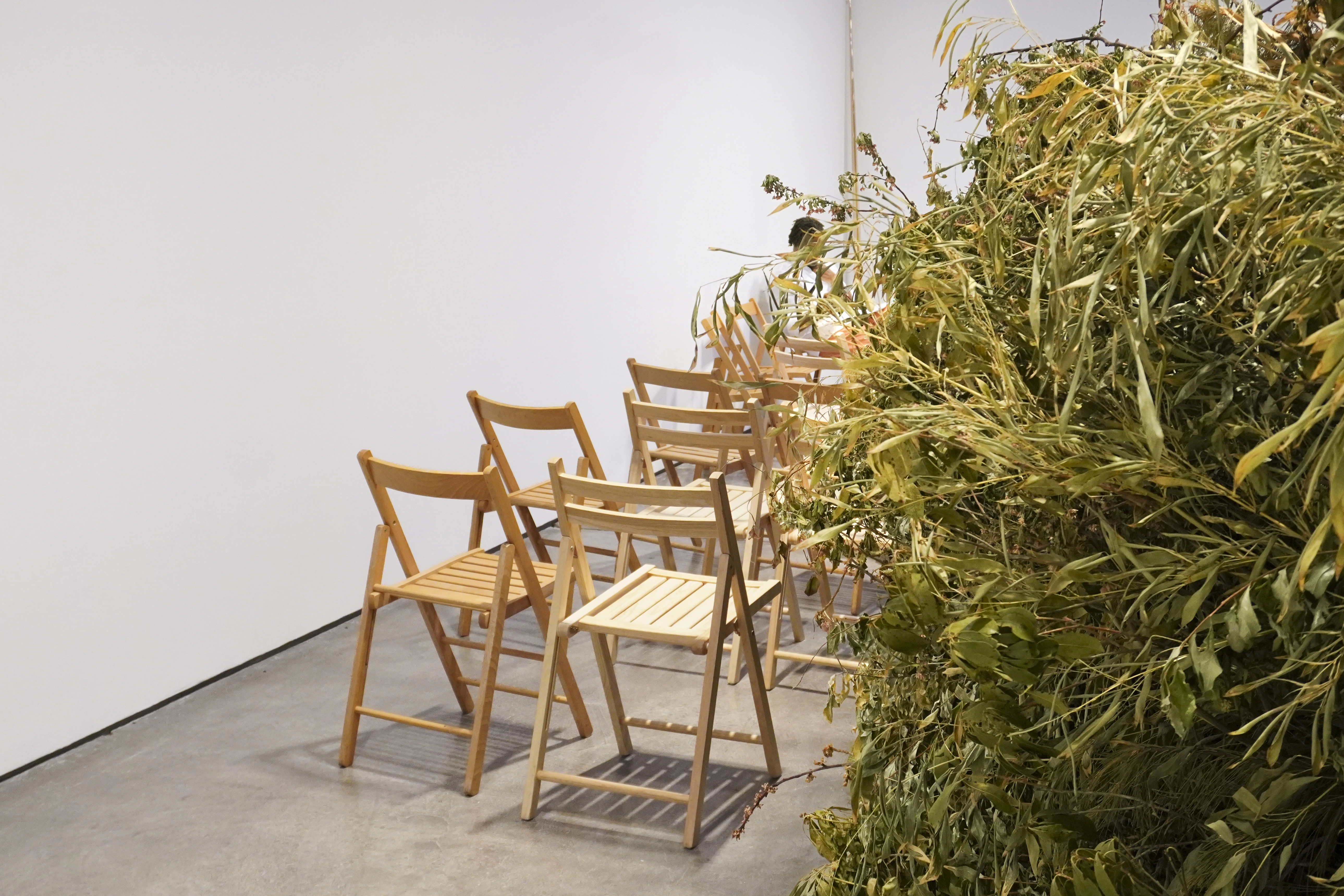
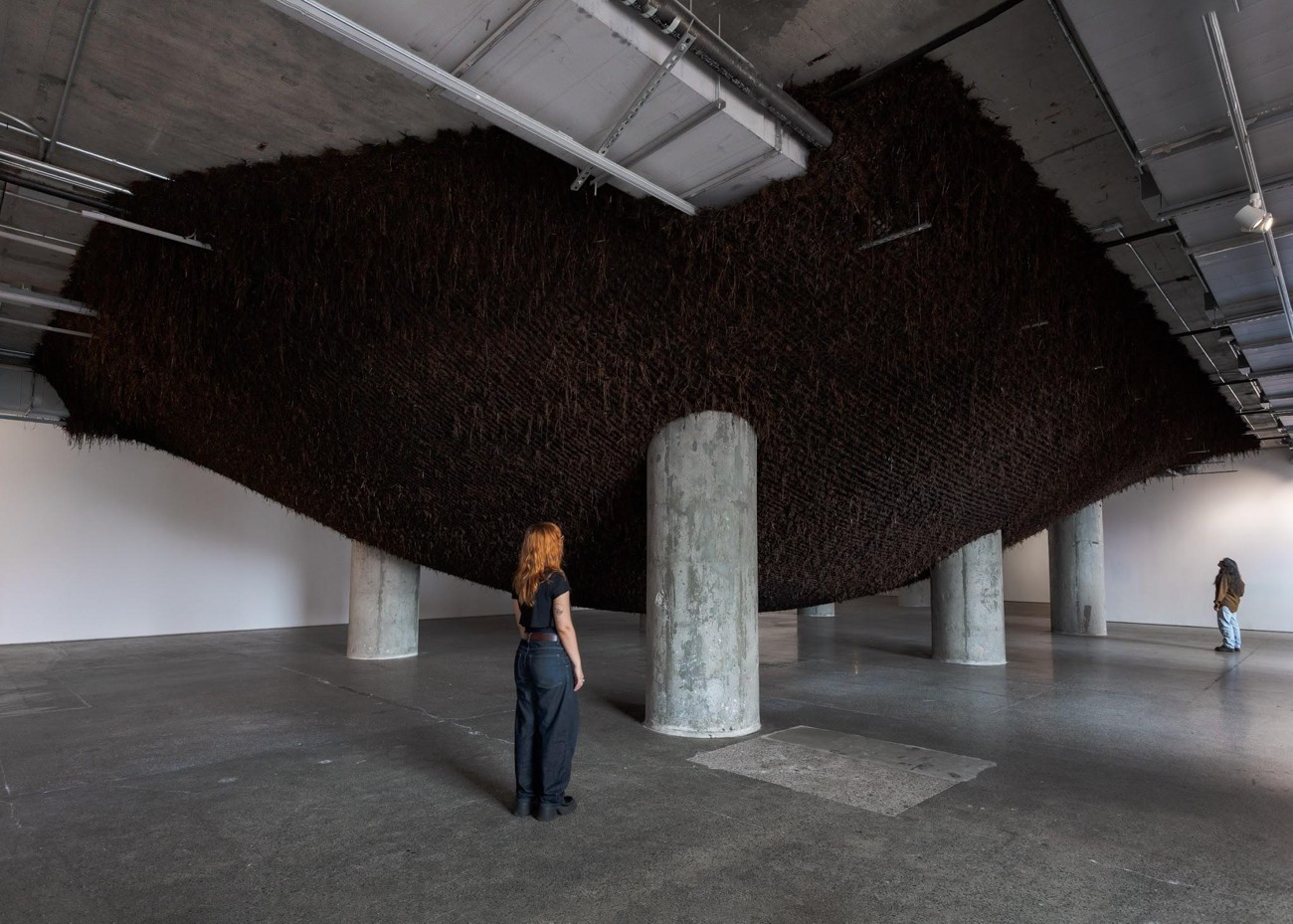
Behind her, a tapestry hangs heavy from the ceiling. Made of rope, soil, and roots, Ombligo is a site-specific commission by Bogotá-based artist Delcy Morelos. From afar, its semicircular form resembles the lower half of a dome, bringing to mind a full belly, a pregnant womb, a hammock, or a sling.
Its seemingly simple form belies the complexity of its construction. Sisal rope, made from agave grown in Yucatán, provides the foundation. The cords, varying in length, intertwine to create a structure that holds its shape. The open weave forms a grid of squares approximately three inches across, creating a mesh that alternately obscures and reveals as one circumambulates the space. The weaving is non-hierarchical: each strand, whether long or short, is essential to the architecture of the whole. The work is at once minimalist and feminist: Morelos adopts and subverts one of minimalism’s defining structures—the grid—imbuing its rigid geometry with a softness. After all, did the basket weavers not explore the grid before the minimalists? And the spiders before the weavers?
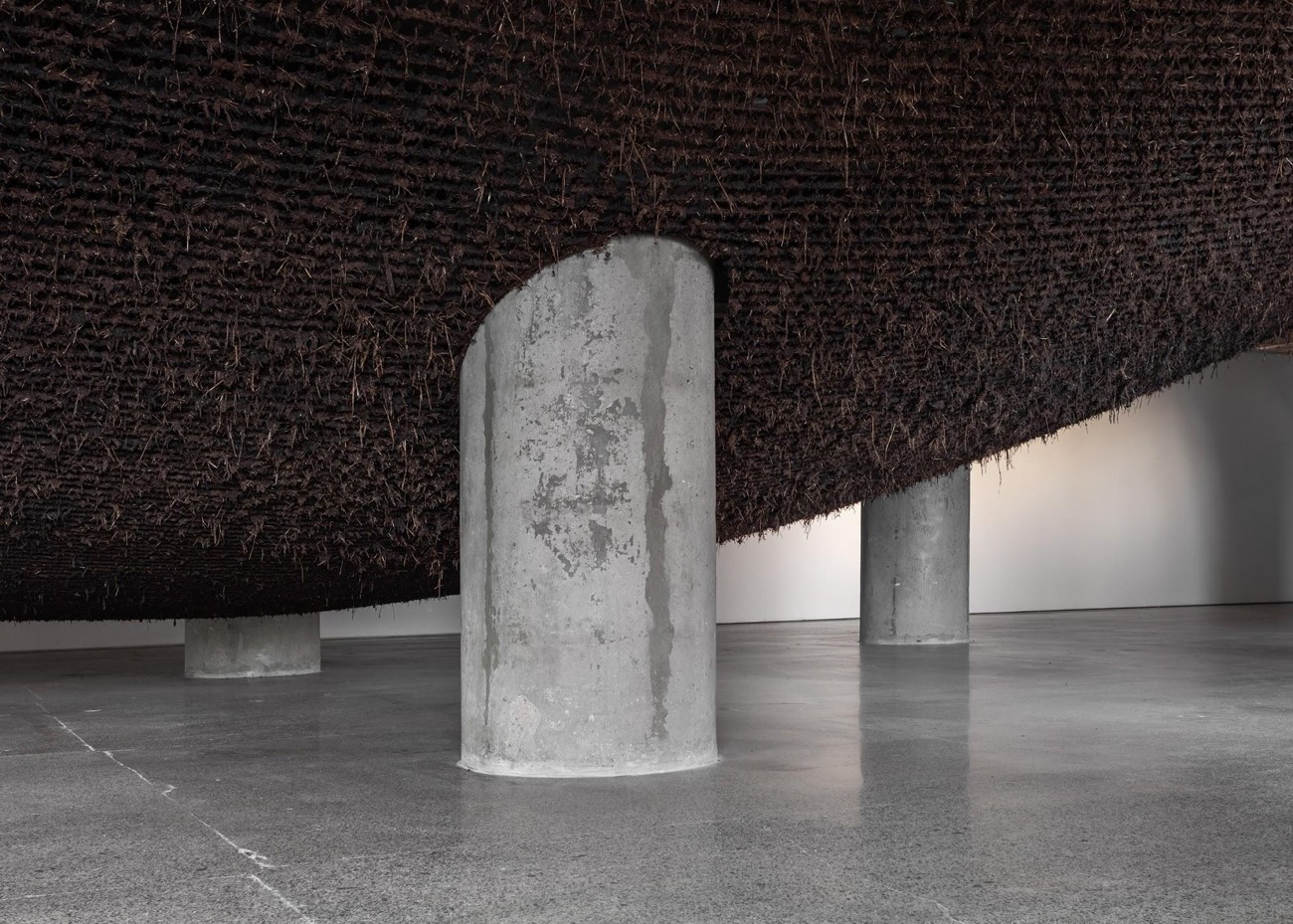
The ropes are covered in locally-sourced soil and corn roots. Soil carries information, serving as the material from which we cultivate gardens, build homes and shape vessels. In Ombligo, Morelos elevates the earth, inviting us to reconsider our relationship with the ground beneath us. Rather than something that we habitually look down upon, soil is brought to eye level, where its particularities become objects of curiosity and contemplation. The earth shifts in tone and texture. In some areas, it appears darker and denser, clinging to the ropes in thick, muddy clumps. Elsewhere, it is lighter, drier and more granular, almost sandy. Perhaps these variations are a result of its exposure to sunlight from the uncovered windows, or perhaps they carry the traces of the landscapes from which the soil was gathered.
Like the umbilical cords of fruit, corn roots hang from the soil embedded in the ropes. First domesticated in what is now Mexico, corn has sustained life throughout the Americas across millennia. Both sacred and utilitarian, it has provided nourishment across generations, carrying with it histories of cultivation, migration and exchange. In Ombligo, the corn roots appear almost sentient as they reach downward, searching for some solid ground in which to anchor themselves. Suspended between earth and air, they seem to inhabit a state of perpetual longing, reaching toward the ground from which they have been lifted.
And, of course, there is the smell. The smell that visitors and critics so often remark upon when entering a Morelos installation: a mixture of tobacco, tapioca, cinnamon, clove, and aromatic herbs that permeates the space. Morelos points out that smell is among the senses most closely tied to memory, and one of our most primal tools for survival: the jaguar stalking its prey can move in near-complete silence, but it cannot conceal its scent. Smell communicates something that the conscious mind may not register, but the body knows.

Ombligo translates to navel. The navel is a reminder of our connection to our birth and the site of our first scar. There is a kind of knowledge that precedes language, one that resides in the body rather than the intellect. In Ombligo, Morelos makes space for this knowledge to surface. Perhaps this is what Morelos gets at when she says that she has been fertilized by the rain: that the boundary between the body and the natural world is more porous than we might imagine.
Delcy Morelos: Ombligo is on view at the Museum of Contemporary Art in Toronto from October 4, 2026 through February 14, 2027.