


Anh Vo: “Phoenix Forever” at The Immigrant Artist Biennial
Review
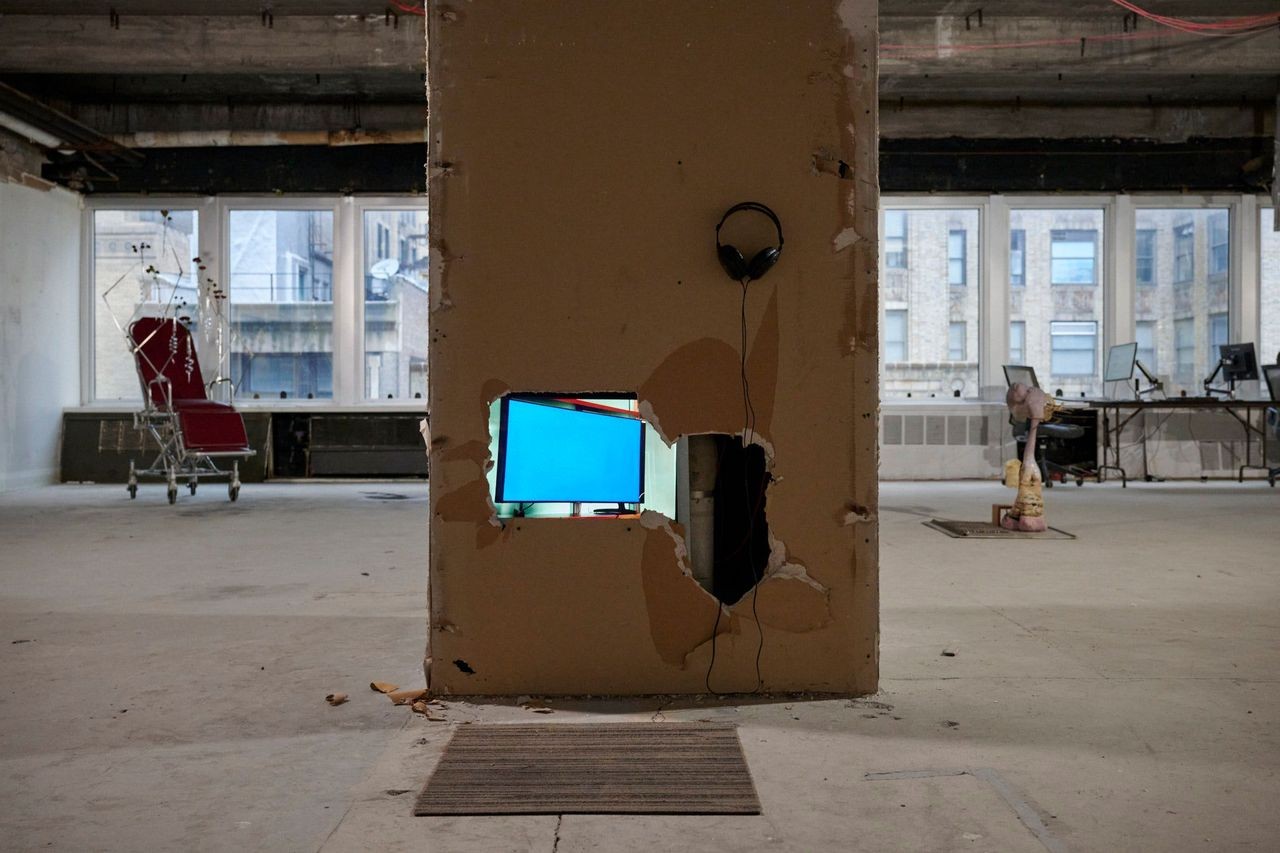
260 Madison is an aptly named tribute to its host site. Co-curated by Demonlovers Inc. and Shaina Tabak, the exhibition brings together over fifty artists working across sculpture, installation, video, painting, sound, and digital media. Visitors enter through a Chase Bank at the ground level of a Midtown Manhattan commercial building before ascending to a gutted 23,000-square-foot former office on the fourteenth floor.

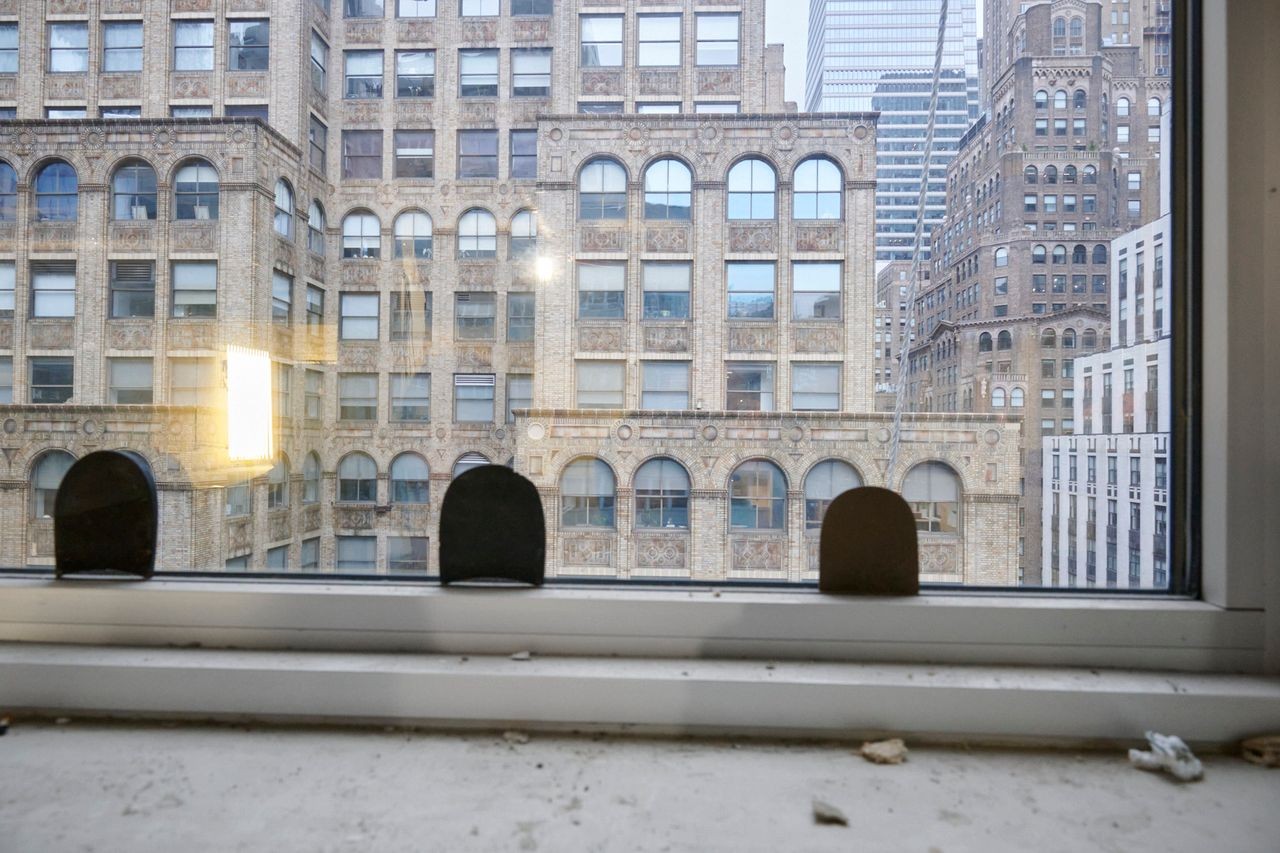
Construction debris, discarded office furnishings, and other found materials appear across works that blend into the derelict surroundings. Words written by construction workers appear on the walls alongside site-specific installations such as Matt Mullican’s Representing The Work (2026), a graphite drawing mapping his life through an intricate symbolic vocabulary. In Greg Carideo’s Goodyear (2026), the tattered soles of dress shoes line the windowsills, their placement echoing the arches of the buildings visible outside. Through this responsive mode of curation, the artworks are presented as inextricable from the social context they inhabit: a space structured by capitalist power and privilege.
Across the exhibition, technological systems are deployed as objects of aesthetic contemplation, framing human experience as increasingly mediated by automated processes. Eva and Franco Mattes’ taxidermied Long Cat (2026) recalls one of the Internet’s most famous early cat memes. Dana Dawud’s Spielraum (2026) and Ruba Al-Sweel’s Angelheaded towers (2026) consider video-making and generative AI in relation to emerging online cultures, particularly the ways that digital networks inform worldviews and facilitate the formation of community. Although many of these works reference AI, reactionary internet culture, and corporate worship, they often merely acknowledge or describe consumer desensitization, falling short of examining systemic ramifications.
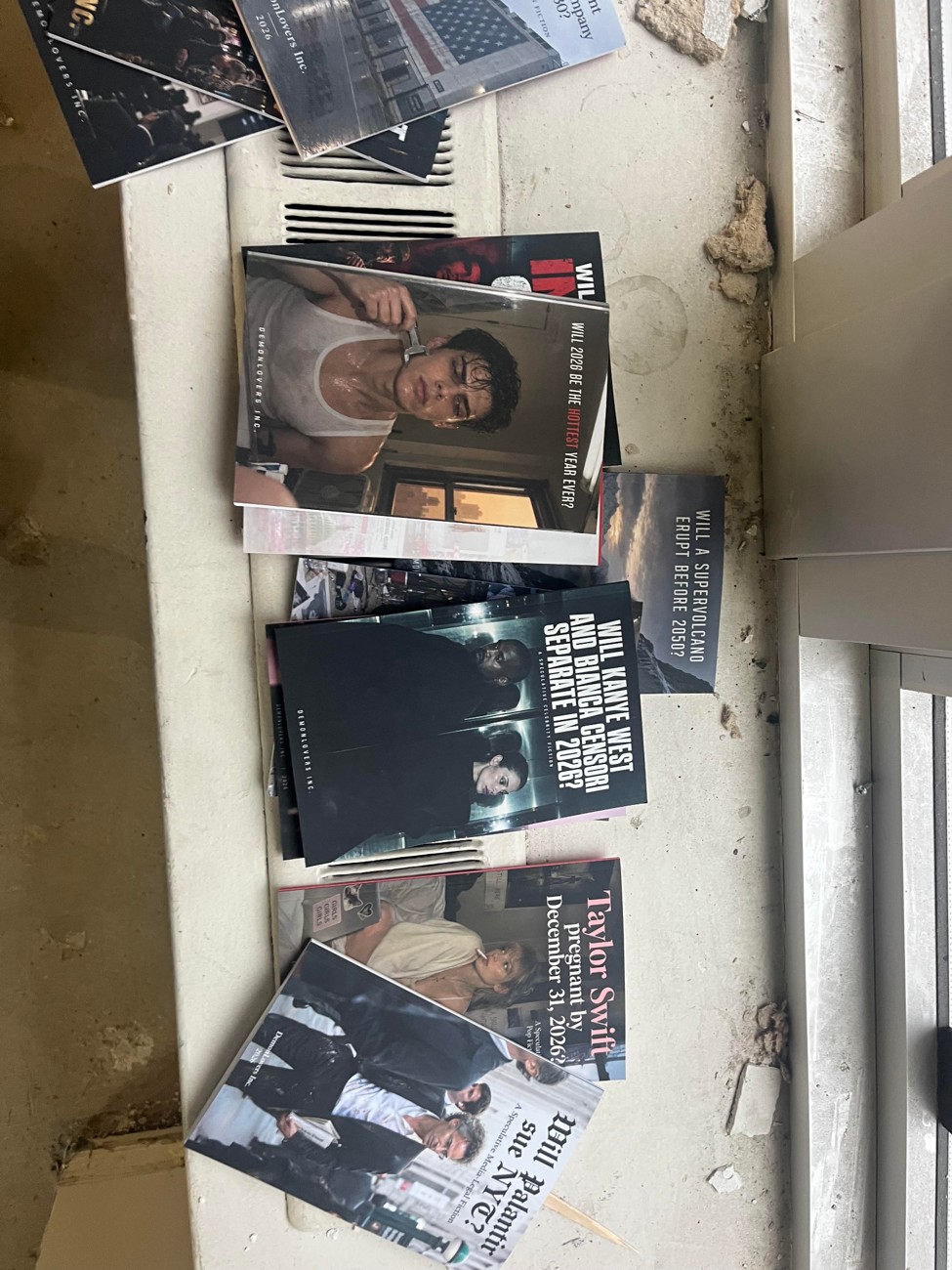
When asked about their inclusion of AI, particularly the distinction between criticism and normalization, Edson Niebla and Dayana Matasheva of Demonlovers Inc. responded that artistic commentary is inherently critical. Referring to AI as an “elephant in the room that the art world refuses to engage with fully,” they frame its inclusion in art as essential to any serious consideration of the relationship between human life and technological change. There is a key distinction between representation and critical engagement, however. Demonlovers Inc.’s Hyperstitioning the end of the world (2026)—a collection of twenty-four genre pulp novels commissioned from ghostwriters on Fiverr and inspired by Polymarket bets on future events—makes this distinction particularly tangible. The artists’ intervention seems to be commissioning, purchasing, and placing the novels, without overtly questioning the financialization, automated distortion, or humanitarian shortcomings of such procedures. This artwork epitomizes Demonlovers Inc.’s curatorial premise, which operates as a sort of conceptual readymade, presenting the products of digital capitalism without questioning or protesting the underlying power structures.
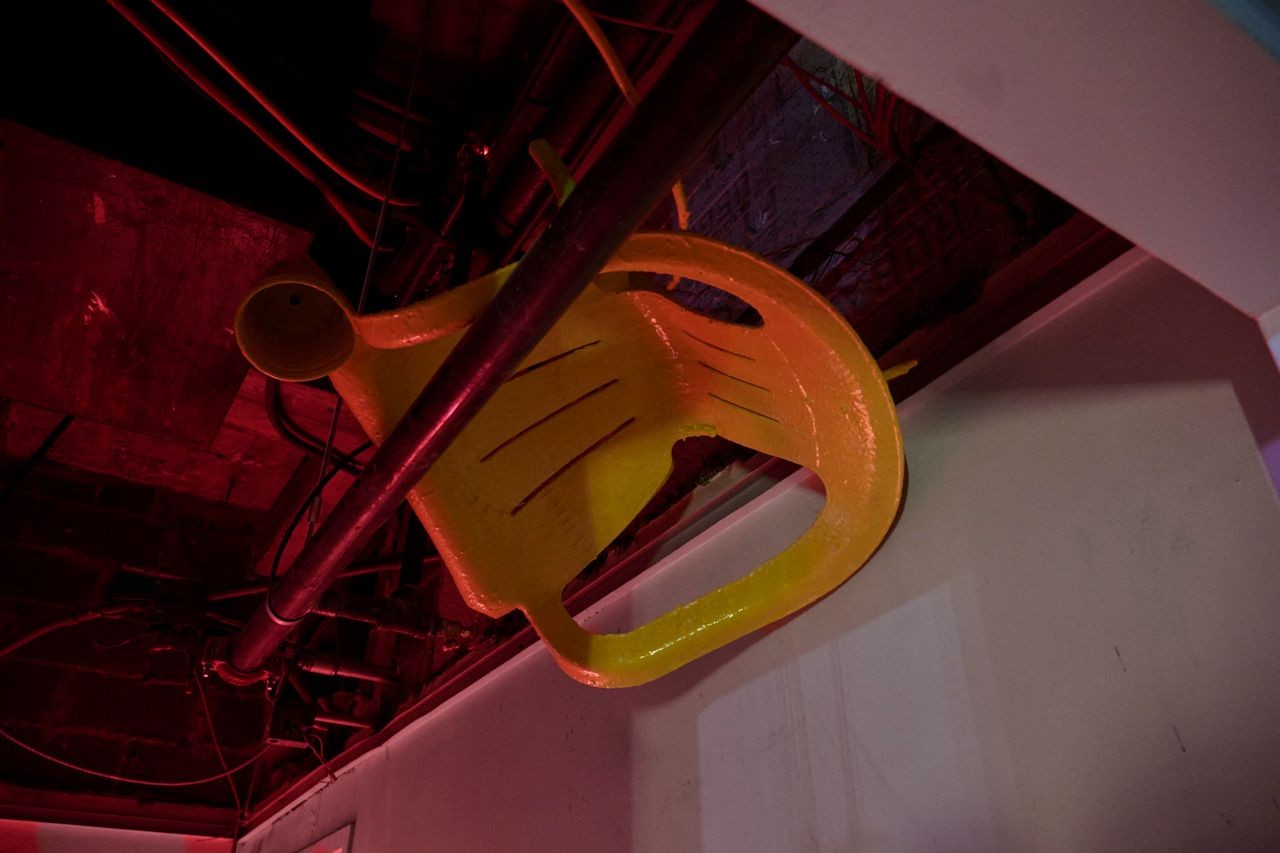
The exhibition’s representation of social context through vanguardist aesthetics without critical interrogation is not new. This is a tendency that is often associated with the Redscare-adjacent, reactionary online counterculture that emerged from the hyper-specific COVID-era “dirtbag left” scene in Manhattan’s Chinatown and Lower East Side. The exhibition features a number of the scene’s microcelebrities, among them Angelicism01, or Jonty Tiplady, a writer and filmmaker known for his violently racist Substack newsletter and cultish online presence. In an online interview, Tiplady argues that the “end of the world” negates “the will to power,” leaving an experience of “residual beauty.” This thesis is visually translated at 260 Madison. With the participants absolved of their responsibility to change anything, they busy themselves with refracting their surroundings. Grayson Cox’s Crowd Surf (2022)—reportedly a favorite of the building’s CEO—depicts a corporate worker crowdsurfing, with a celestial glow cast onto the work from above. Framed within a house-shaped window set into an expansive panel painted with a dark, empty landscape, the work renders corporate labor an image of transcendence. Michael Ballou’s Geech Chair with Power Bar (2026) recasts a found chair lodged in the rafters as fine art, priced at $8,000, converting the site’s discarded material into luxury commodity. Set amid a technological wasteland choked with the slop of the present, the artworks collapse the distinction between their individual substance, material environment, and the atmosphere of contemporary digital culture itself. The exhibition thus elevates to the status of art the very systems that many have challenged on ethical grounds, defining culture as acquiescence to the systemic and technological foundations of exploitation that constitute its surroundings.
New York has a long history of artists reclaiming dilapidated or abandoned commercial spaces, often due to economic necessity and exclusion from more conventional exhibition venues. By contrast, this exhibition collaborates with a corporate space to aestheticize it. The office is being renovated; it has not fallen into disrepair. The multi-billion-dollar real estate company that owns the building is tagged as a collaborator in the exhibition announcement. The construction workers, whose “piss bottles” Demonlovers Inc. describe excitedly in an opening-night Instagram post, are left otherwise unacknowledged as participants. As a result, the working-class labor upon which the space is dependent is exploited and fetishized, rather than granted authorship. In another post, Demonlovers Inc. complains that the exhibition was frequently "displaced" to other floors during its production due to various bureaucratic processes. Their statement sits uneasily alongside their affiliation with Columbia University, like a quarter of the participating artists. The Columbia MFA program’s location on 125th Street might have forced the curators to be closely familiar with the historical and continued institutional displacement of New York City residents, perhaps moving them to include underrepresented artists from the local community. Instead, the exhibition includes remarkably few artists of color. For a group show of more than fifty artists in the heart of New York City, this lack of diversity is difficult to dismiss as coincidence. It illustrates how the curators, even as they invoke corporate-driven displacement for witty rhetorical effect, stop short of confronting its consequences.
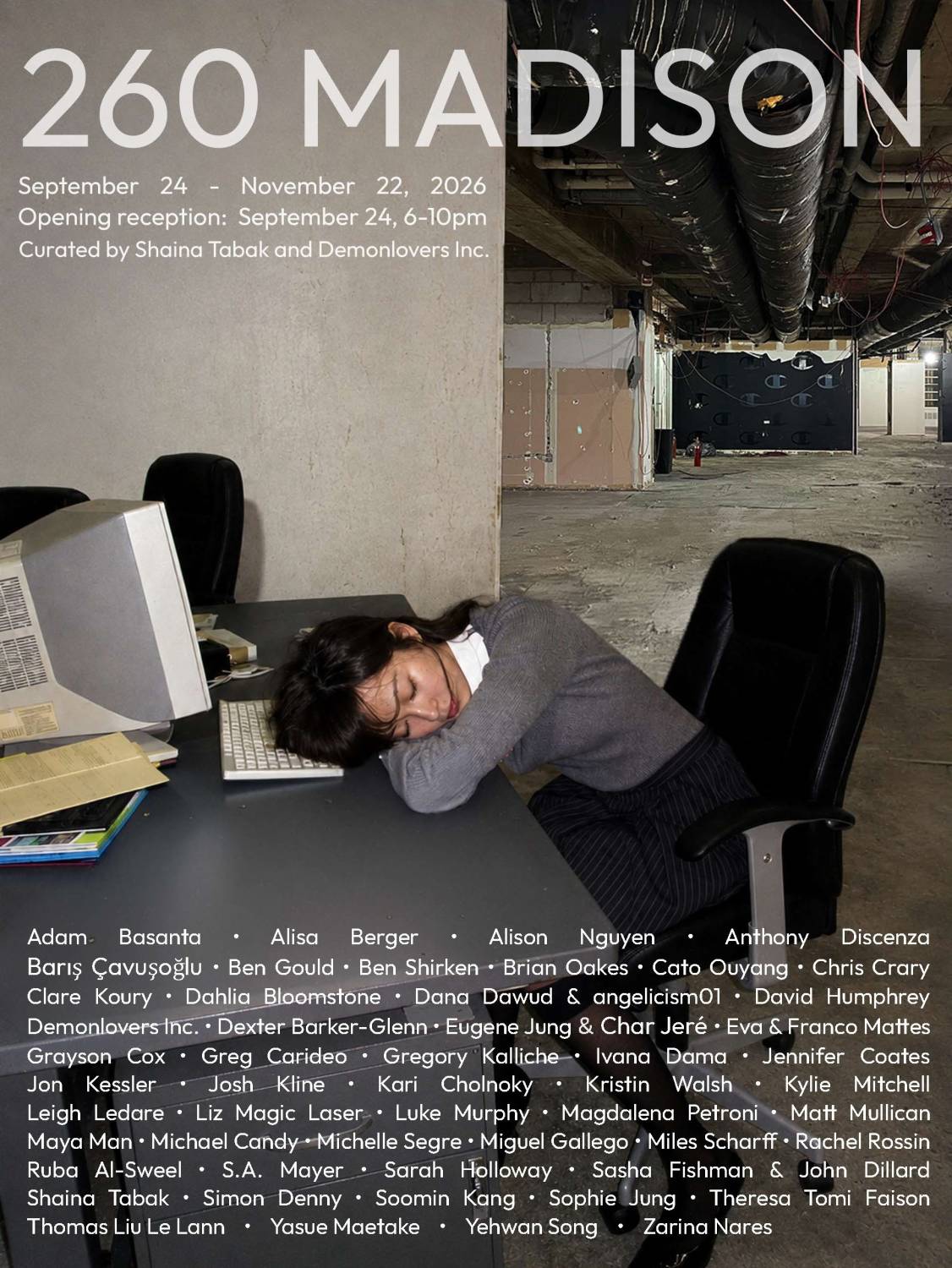
The exhibition poster pictures a young woman in corporate workwear asleep at a found desk on the fourteenth floor. In the exhibition text, Naeem Mohaiemen argues this imagery serves to “hint at small forms of rebellion that are still possible” under capitalism, in that “without the worker, nothing can function, gigantic data centers be damned.” The woman’s sleepiness might be more accurately read as passivity, given the exhibition’s submission to the system it inhabits. Demonlovers Inc. privately mentioned that it feels the white cube of the gallery and museum space is “the new empire,” representative of what it once rallied against, and that they seek to instead find new meaning within the contexts of new spaces. In this respect, the exhibition recalls a return to empire, where the accumulation of art confers cultural legitimacy on existing power structures. In its attempt to distance itself from the institutional context of gallery and museum spaces, the exhibition becomes nearly propagandistic, presenting itself as anti-institutional through avant-garde visual language while reproducing the authority of the corporate landlord to which it owes its opportunity. Such an exhibition raises questions: Where is the line between observational critique and aesthetic reproduction? Does witnessing bear implicit responsibility? Office siren to what end?
260 Madison is on view through November 22, 2026.