
In Conversation with Gabriela Rangel
Interview
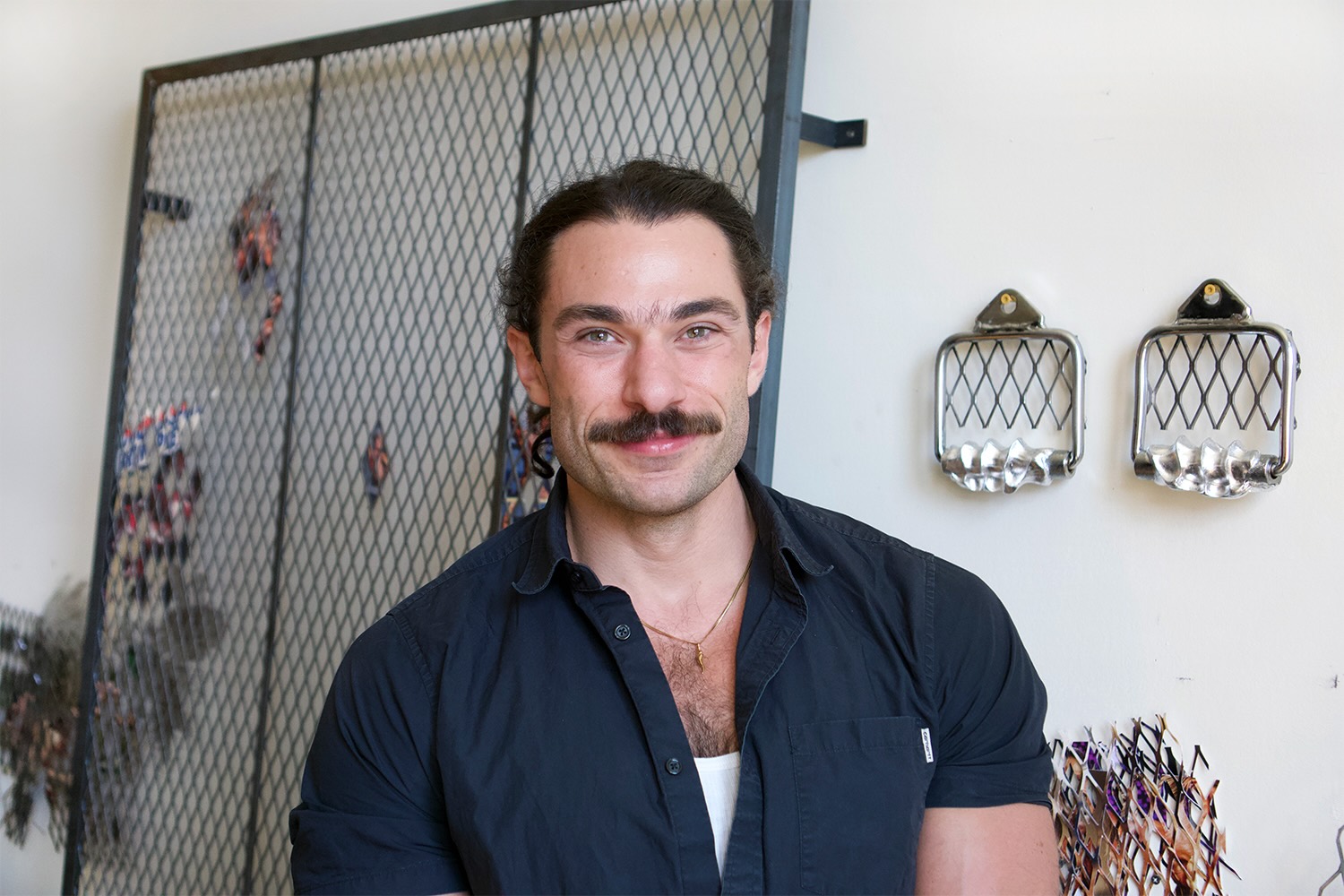
I first catch sight of Philadelphia from I-95, looking out across the AdvanSix Frankford Chemical Plant. The facility is an impressive tangle of industrial metal and chain-link fencing; it makes for a fitting prelude before sitting down with Philly-based artist Nicolo Gentile. Gentile’s work is heavy in every sense: from massive curtains of metal beads to repurposed gym equipment and, more recently, industrial fencing, his sculptures all carry the unavoidable weight of history. “My practice is an effort to untease latent meanings,” Gentile says. “It’s about self-discovery, by understanding the connections, networks, and histories that I’m a part of, informed by, or implicated by.”
Gentile’s studio is nestled in a sunny, former classroom of The Crane Old School. The 19th-century schoolhouse-turned-community-center now hosts several artists, in studio spaces that still have the same slate chalkboard and hardwood floors from when the school first opened over 150 years ago. Most of Gentile’s current-day workspace is given over to dozens of boxes, each filled with hundreds of metal beads. Gentile hand-paints each bead, evidenced by the sequence of black marks all up the wall where they have been hanging. He’s all too aware that each box weighs a whopping 45 pounds, though lugging them around his studio only partly explains why Gentile himself is decidedly ripped.
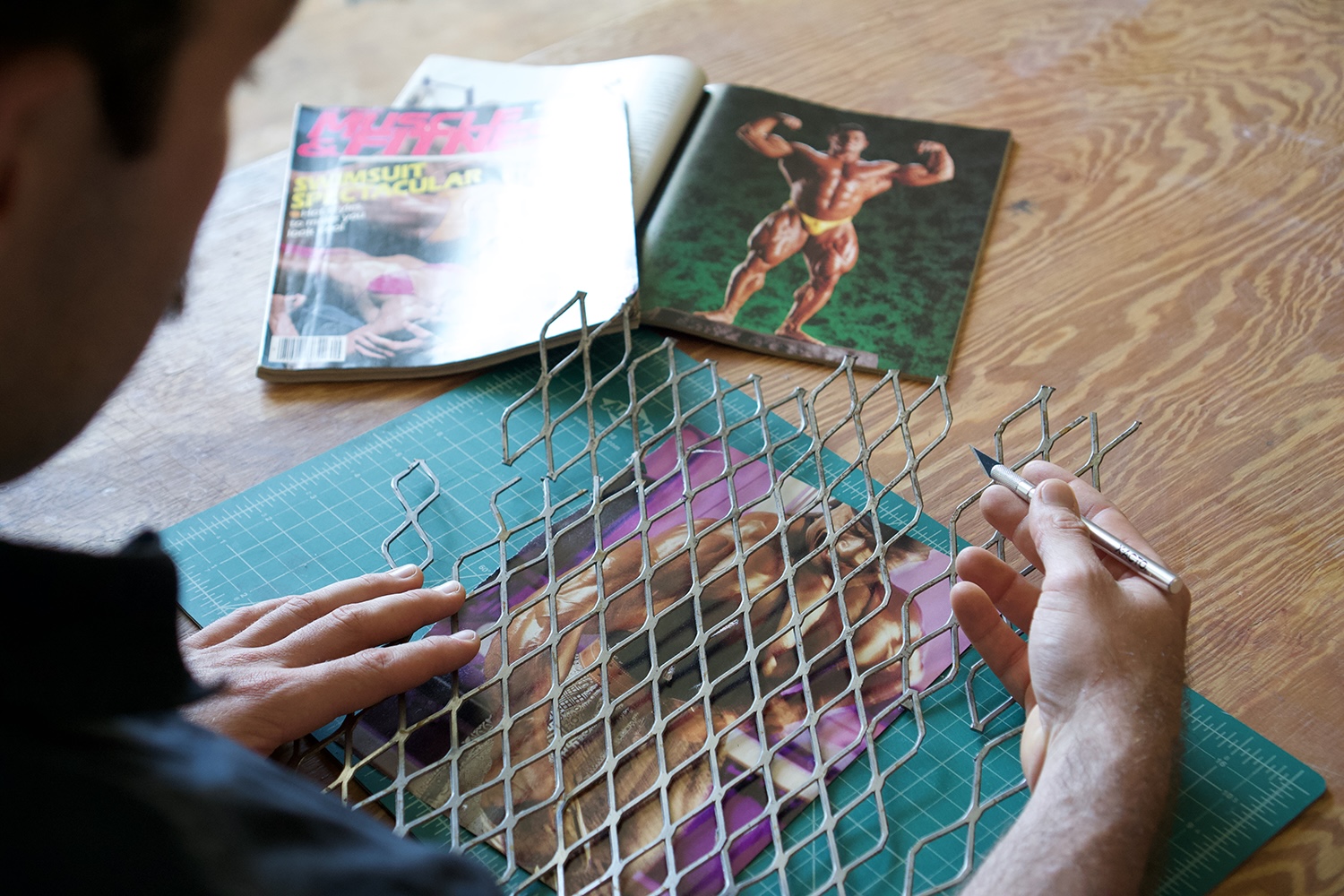
As an undergraduate, Gentile competed in a bodybuilding competition, and today he cuts a softer figure, with a sweet face, a mane of dark curly hair, and a golden cornicello hanging around his neck; his body, health, and sense of self remain ongoing preoccupations. Much like the muscle, these themes seem to have stuck around. On a shelf above his workbench, Gentile collects vintage copies of Muscle and Fitness, Iron Man, and Natural Magazine. He’s keen to finally own triples of these archival magazines, and I suggest that he can rest easy if he has to use a copy for one of his infamous chain-link mosaic sculptures. On the contrary, Gentile makes a clear distinction. “I started using magazines less for image engagement and more for object engagement,” he explains. “Just re-archiving them isn’t the goal … I mean some of these still have the centerfolds in them. They’re not being used … It made me wonder why they aren't being used. How can these magazines that have this purpose for this specific community be so readily available to me now?”
Gentile frequently positions himself at the intersection between a lost generation of queer culture and his own. It’s no wonder that weight plays such a role in the work. How does one orient themselves without an anchor? How does one prove real existence if not through extant, undeniable presence? “My work makes me feel like a part of something, that I’m not alone. It’s like sending out these pings. It’s the unearthing, the search for these shared moments across time [… ] that’s where my work happens. It's a momentary distillation of that ping—it makes me feel alive.”
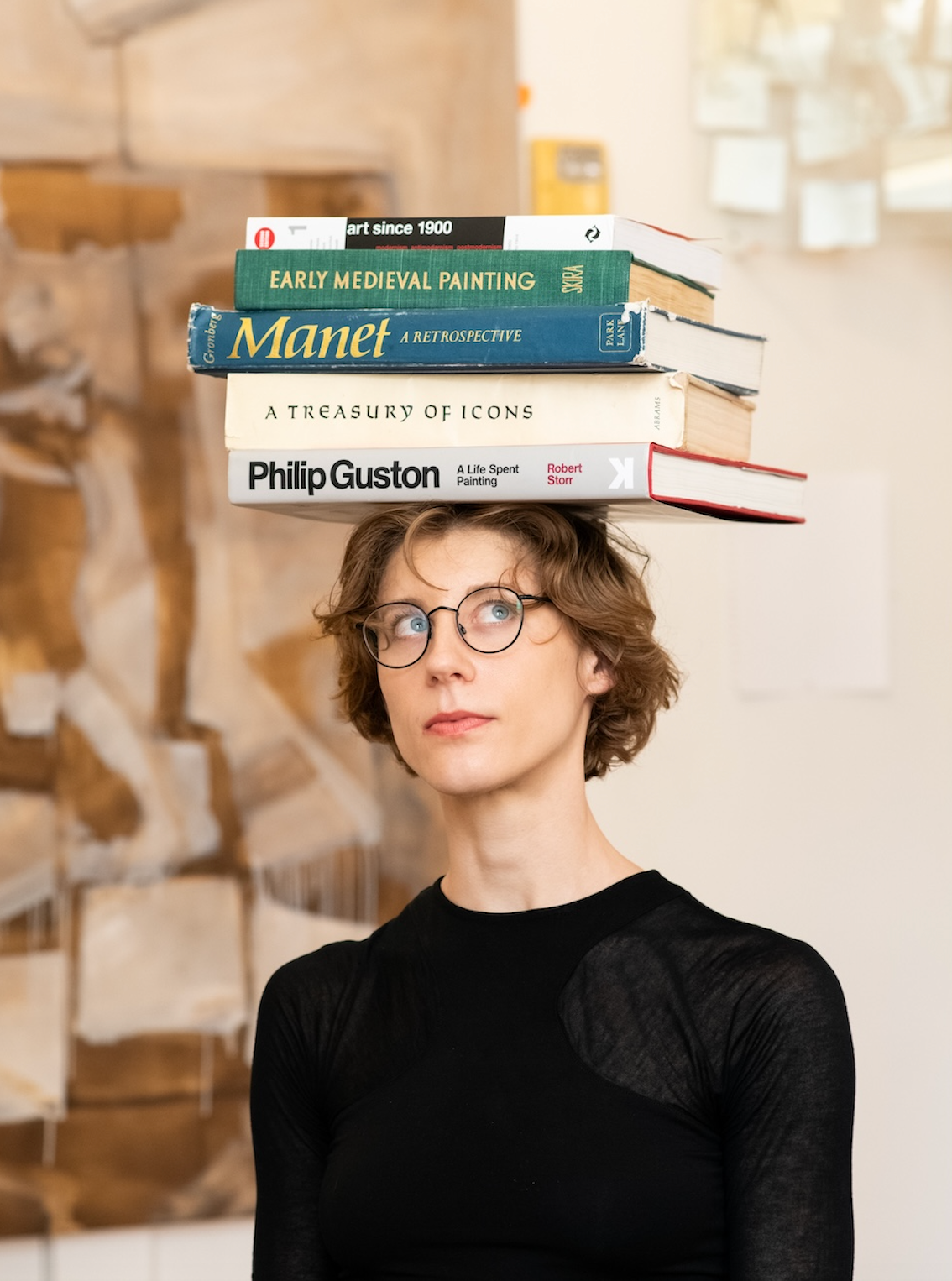
At first glance, Anna Gregor’s studio space appears meticulously regimented: orange tape marks where she places her canvases, mirrors, and even her feet. It is precisely through this arrangement that Gregor creates room for her practice—when the physical conditions of observation remain constant, perception itself becomes the shifting variable.
Almost three years ago, Gregor encountered a gold-glass medallion during a visit to the Met. Struck by its intricate craftsmanship, she began studying the technique, which eventually evolved into her own silver-leaf-gilded glass mirrors. Gregor attaches silverleaf fragments to found glass panels, etching paintings seen in New York museums into them. She places these handmade mirrors around her studio, then translates their fragmented reflections onto canvas with oil paint. By fixing the positions of both mirror and canvas, Gregor is able to return to a consistent perspective day after day, and as she renders the reflected elements onto her canvas, previously overlooked details, patterns, and textures emerge within the familiar composition. The result is a series of paintings that oscillate between abstraction and representation, difficult to perceive at first glance, but that gradually reveal themselves through sustained looking.
Gregor, who is also a writer, views painting as a form of close reading. She explains that while we readily accept that reading a book demands sustained attention, “we tend to approach a painting assuming that its image can be fully absorbed at a glance”. In an age when we consume and discard images in seconds, Gregor's paintings resist the assumption of visual immediacy.
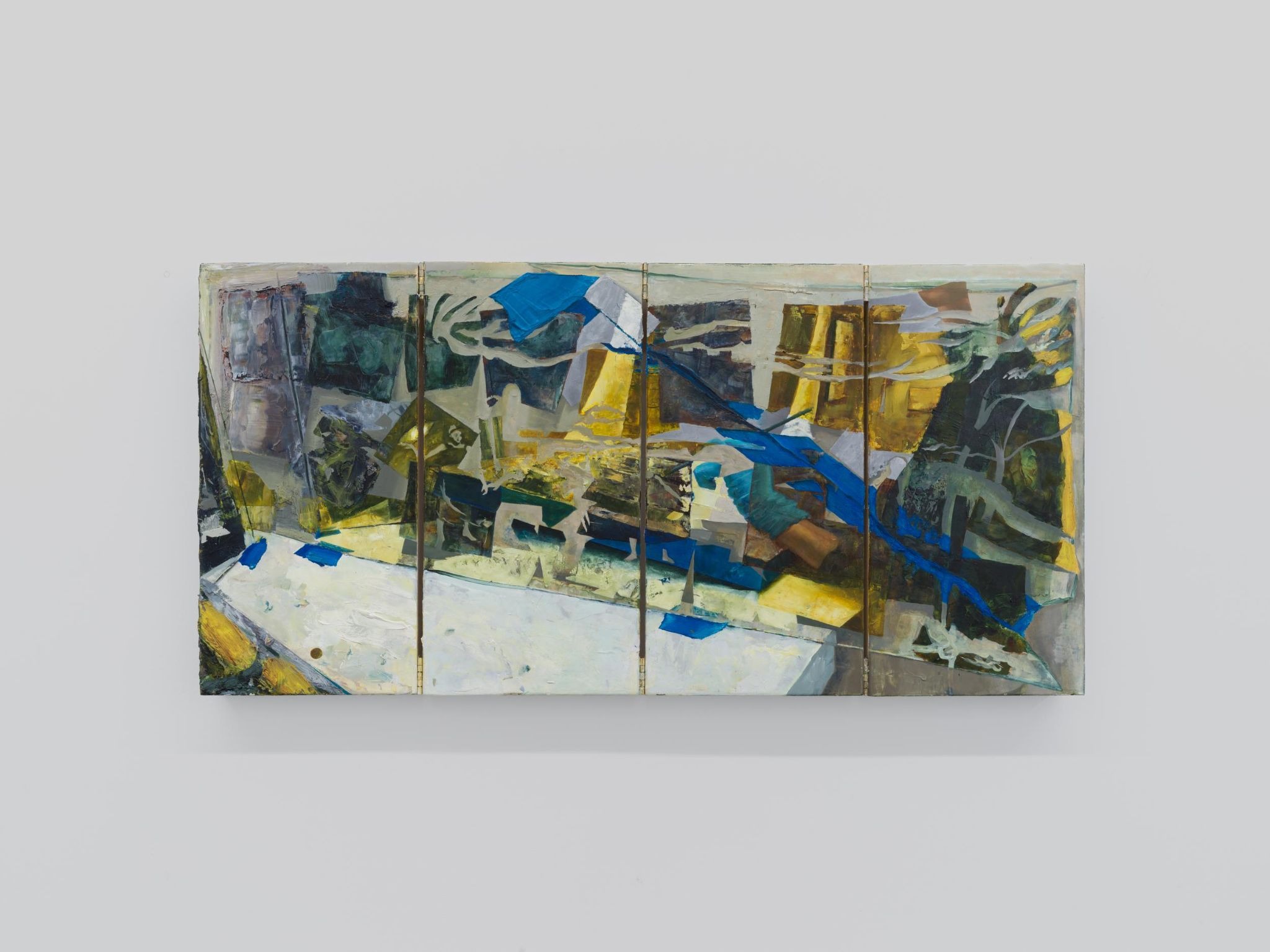
Looking closely at her paintings, fragments of Seurat, Rothko, and Cimabue emerge like scattered utterances across her canvases. Gregor etches compositions borrowed from paintings in major New York museum collections into her silverleaf-gilded mirrors, with reproductions of these paintings taped onto the opposite wall. At certain angles, the reflected reproductions blend with their etched counterparts, while elsewhere, their forms compete with one another. Rather than merely reproducing art-historical references, Gregor lets them interact with her studio environment, generating new visual relationships through superimposition.
For Gregor, painting rests on a paradox: she systematically maintains the conditions of observation to reveal the instability of perception. As she gradually constructs her paintings through repeated observation and reinterpretation of reflections in her mirrors, viewers must similarly try to make sense of the fragmented landscapes in her finished paintings. Thus, her practice echoes the process of how an image gradually becomes legible to its maker and, eventually, its viewer.
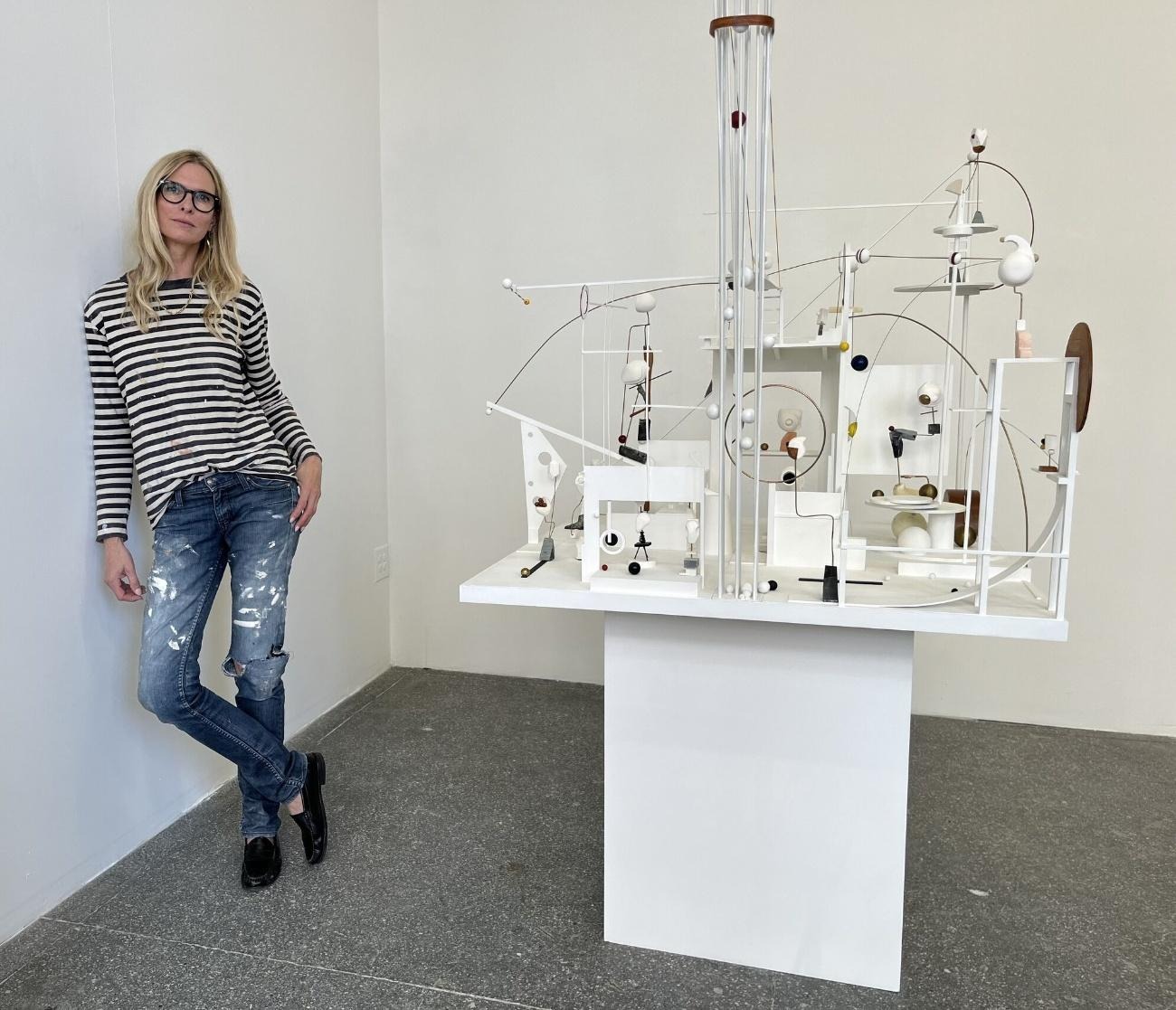
Seven years ago, Christina Kruse began exhibiting her sculptures, having turned to the medium two years earlier to explore the structural challenge of existence. During that two-year adjustment period, she studied with architects and master craftsmen. Inspired by grids, civic infrastructure, and the organizing values of her social and urban landscapes, she developed a sculptural practice that became her framework for negotiating life’s pressures and demands—organizing, arranging, and crucially, finding ways not to topple over.
Her studio is filled with work from her recent spring solo exhibition, Field Agents at New Discretions, a body of work that conveys a sense of precarious equilibrium. Her sculptures and wall reliefs bring together geometric forms, stacked volumes, and carefully balanced elements in wood, hydrocal, stone, wax, and bronze. Among the standouts is Wolli’s Figuren (Wolli’s Figures) (2024), in which a procession of abstracted, almost figurative forms seems to march against a vivid red background punctuated by brass and bronze spheres.
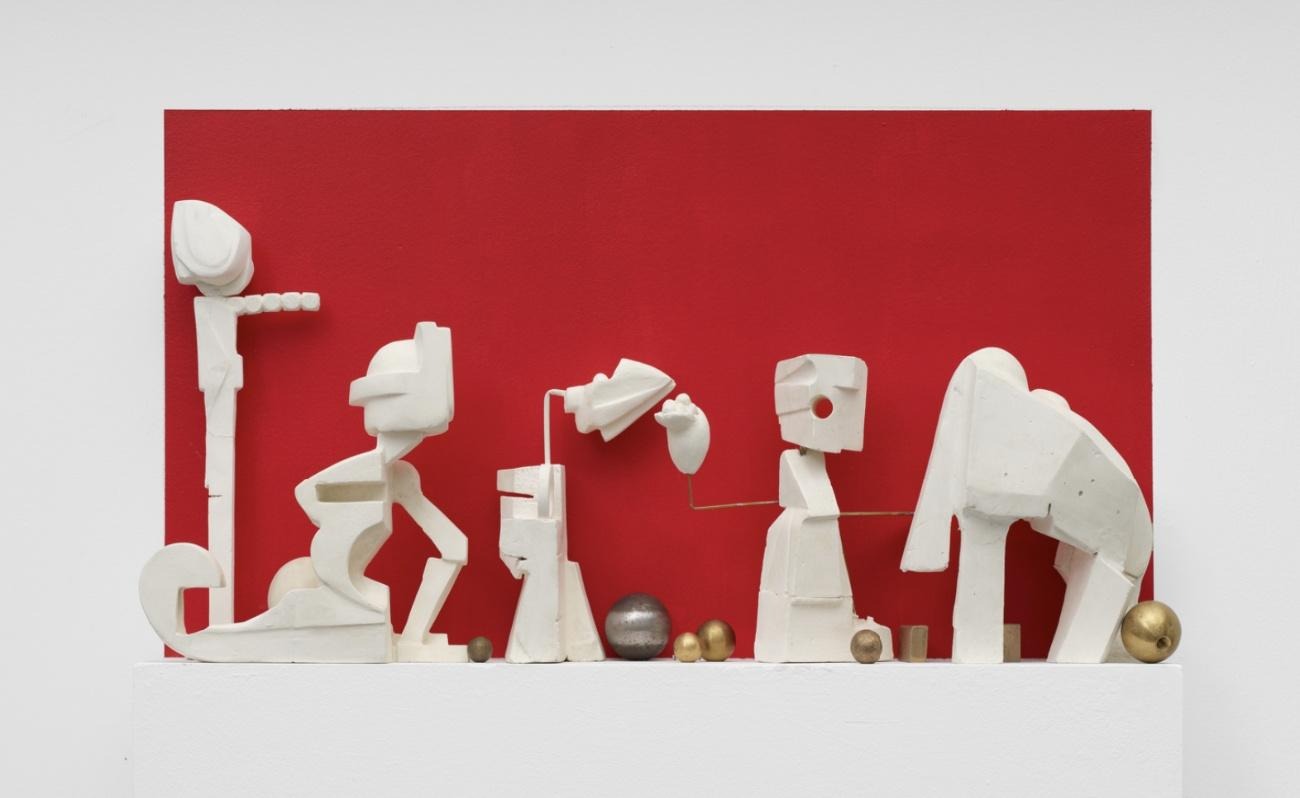
Her work draws its character from the contrasting qualities of her materials: the grain and warmth of wood offset the white, chalky surfaces of hydrocal, and the translucency of alabaster counters the solidity of metal and stone. Kruse builds just enough structure to suggest both containment and the possibility of change, making negative space vital to her approach. Like a spatial equivalent of the psychological idea of holding space, the openness allows processing and connection. The resulting harmony is visually serene, but Kruse’s process is driven by the quest for balance, not beauty.
Kruse consistently returns to the idea that “every environment is loaded with values.” Balance is one of her defining values. Her work begins with an attempt to identify the principles that govern her life, distinguishing those she has chosen from those absorbed from culture and society. The compartments in her sculptures give physical form to this process of organizing and seeking stability through structure. Kruse’s idea of building and maintaining structure is a personal, living process that retains intuition, warmth, and flow. This is seen in her sculptures’ interplay between load-bearing blocks and airy curvature. Fittingly, many of her forms read both as buildings and bodies.
Seeking to trace some of the values and materials that guide her daily life to their classical origins, she is setting her next horizon on the ancient world. This November, Kruse will take part in a research program in Athens focused on mythology, infrastructure, and ecology. This will be her first major engagement with a historical perspective in her practice. She is seeking a common denominator between the forms and ideals of ancient Greece and the forces driving contemporary life in New York, guided by the fundamental inquiry: What has been packaged differently, yet remains the same?