


Face to Face: October 2026
Interview
Venezuelan painter Oswaldo Vigas occupies a distinctive place in the history of Latin American modern art. Across seven decades, he developed a body of work that defies easy categorization, engaging with the visual and cultural histories of the Americas while participating in the broader developments of twentieth-century modernism. His practice invites a reconsideration of how modern art took shape beyond its established European centers.
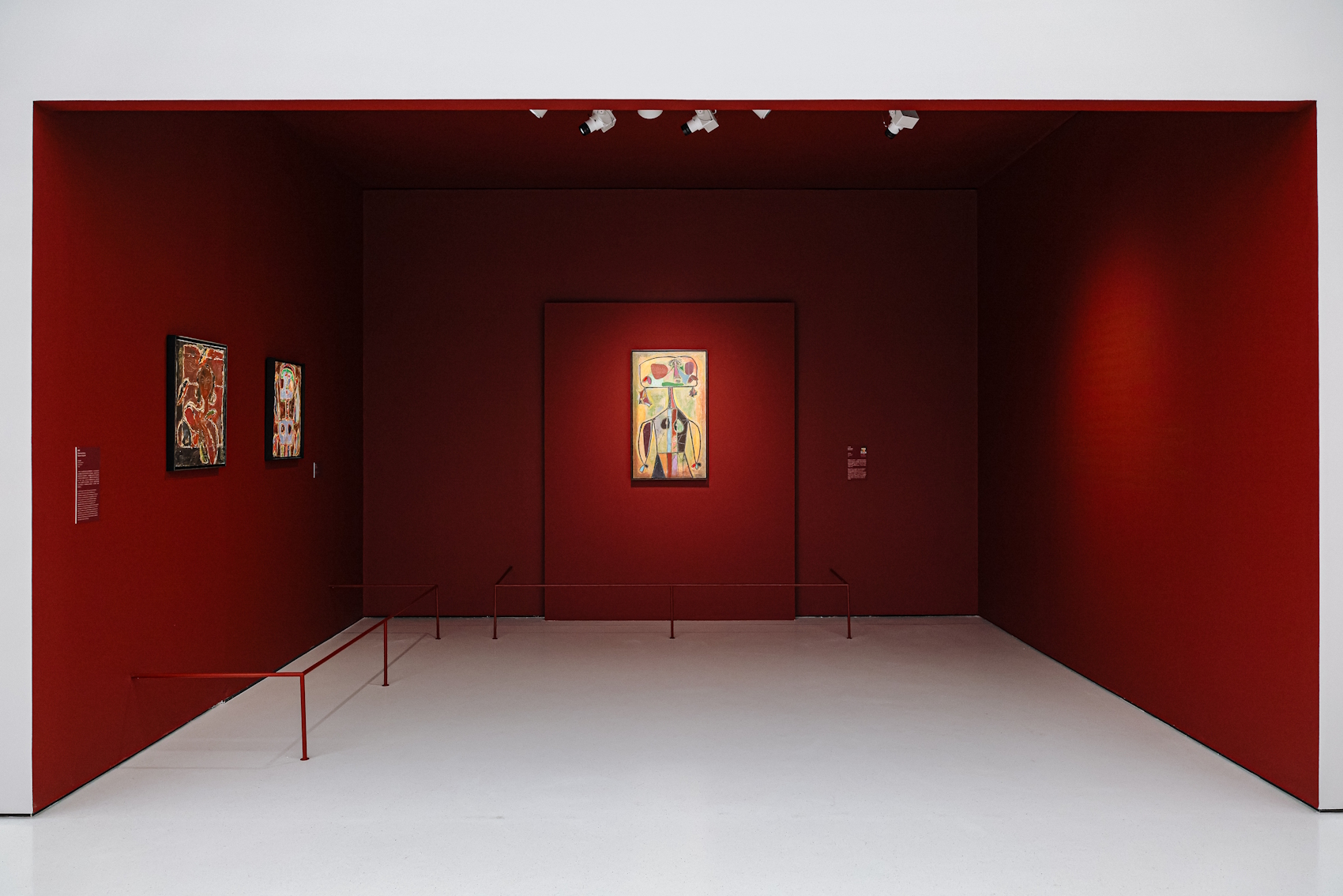
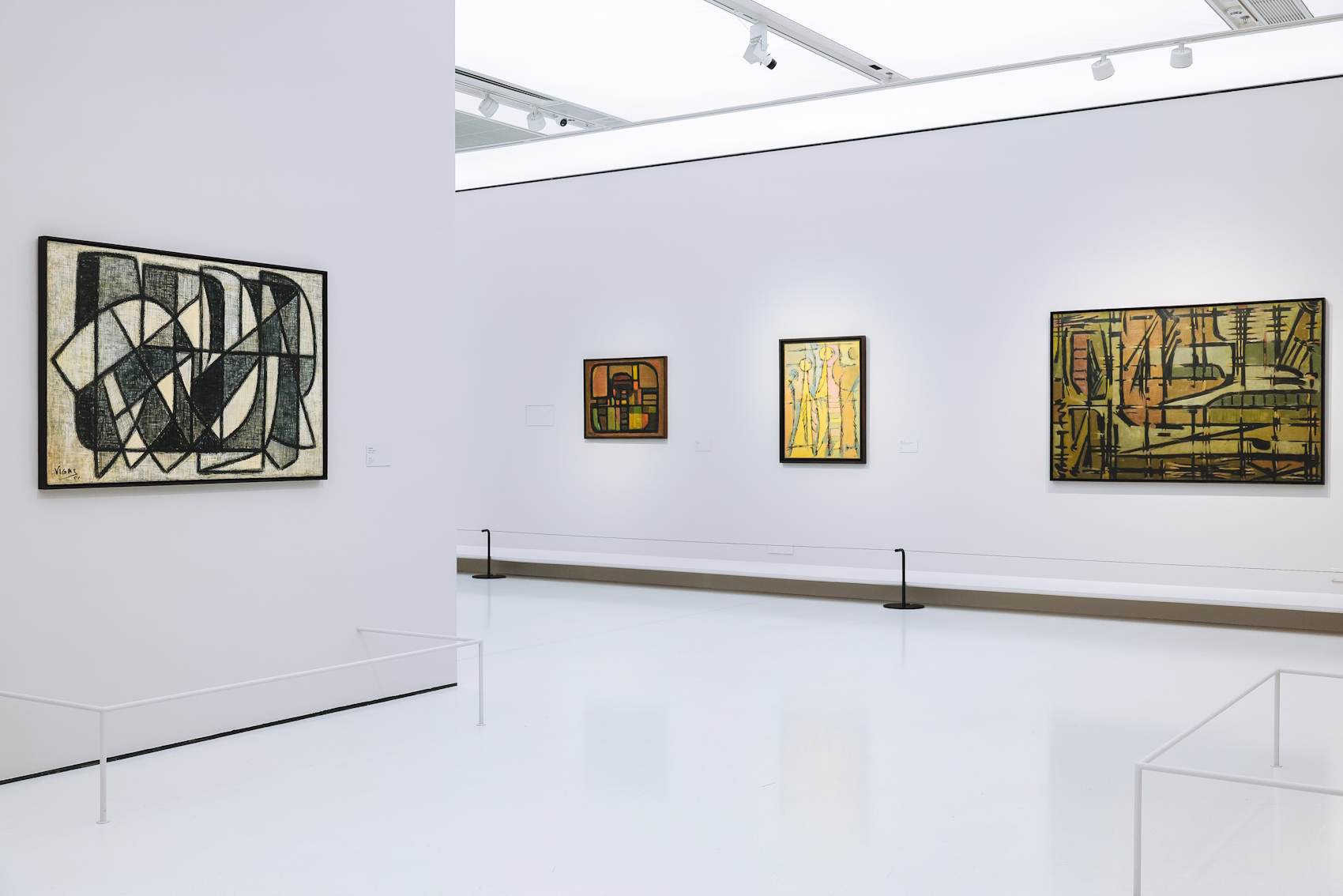
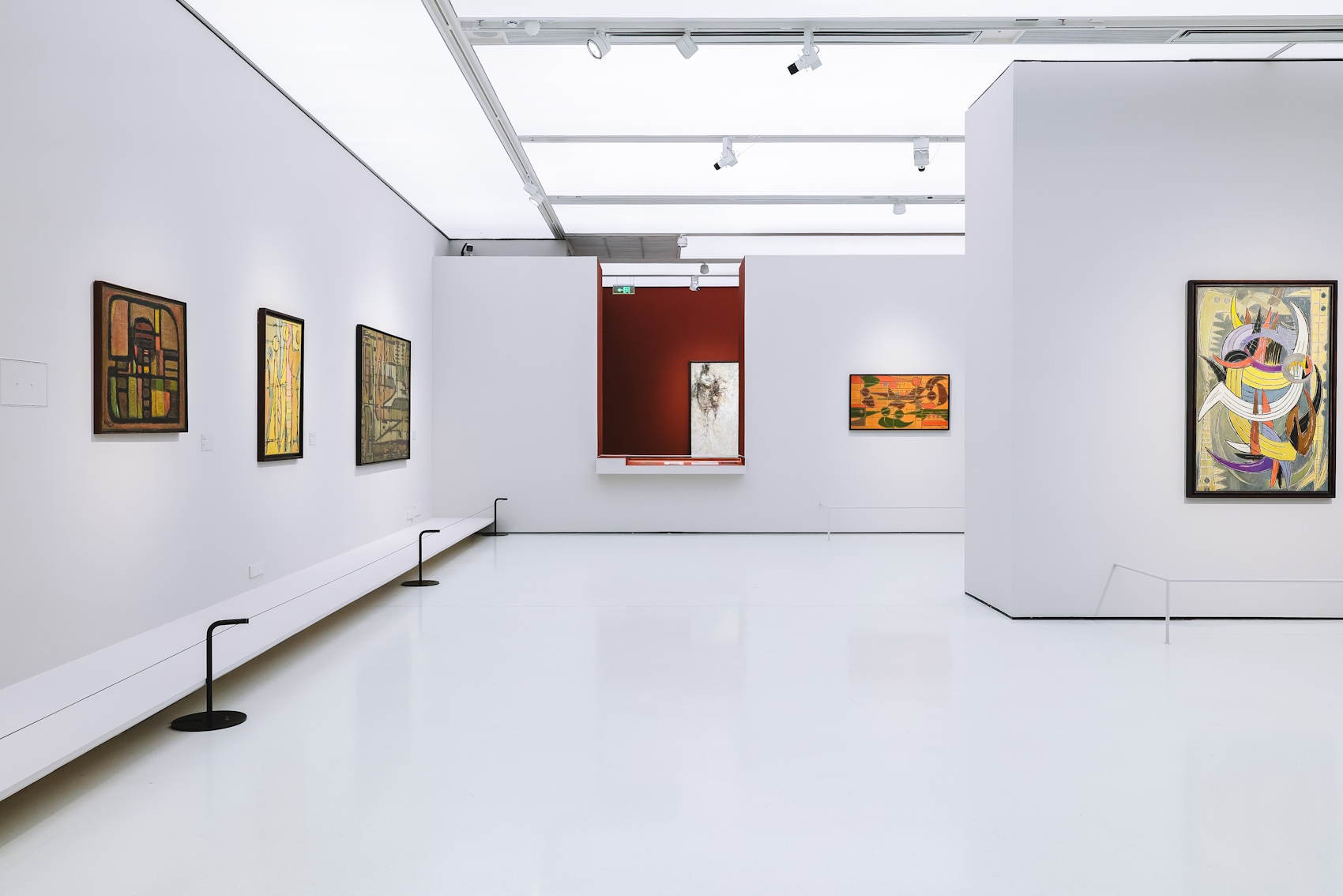
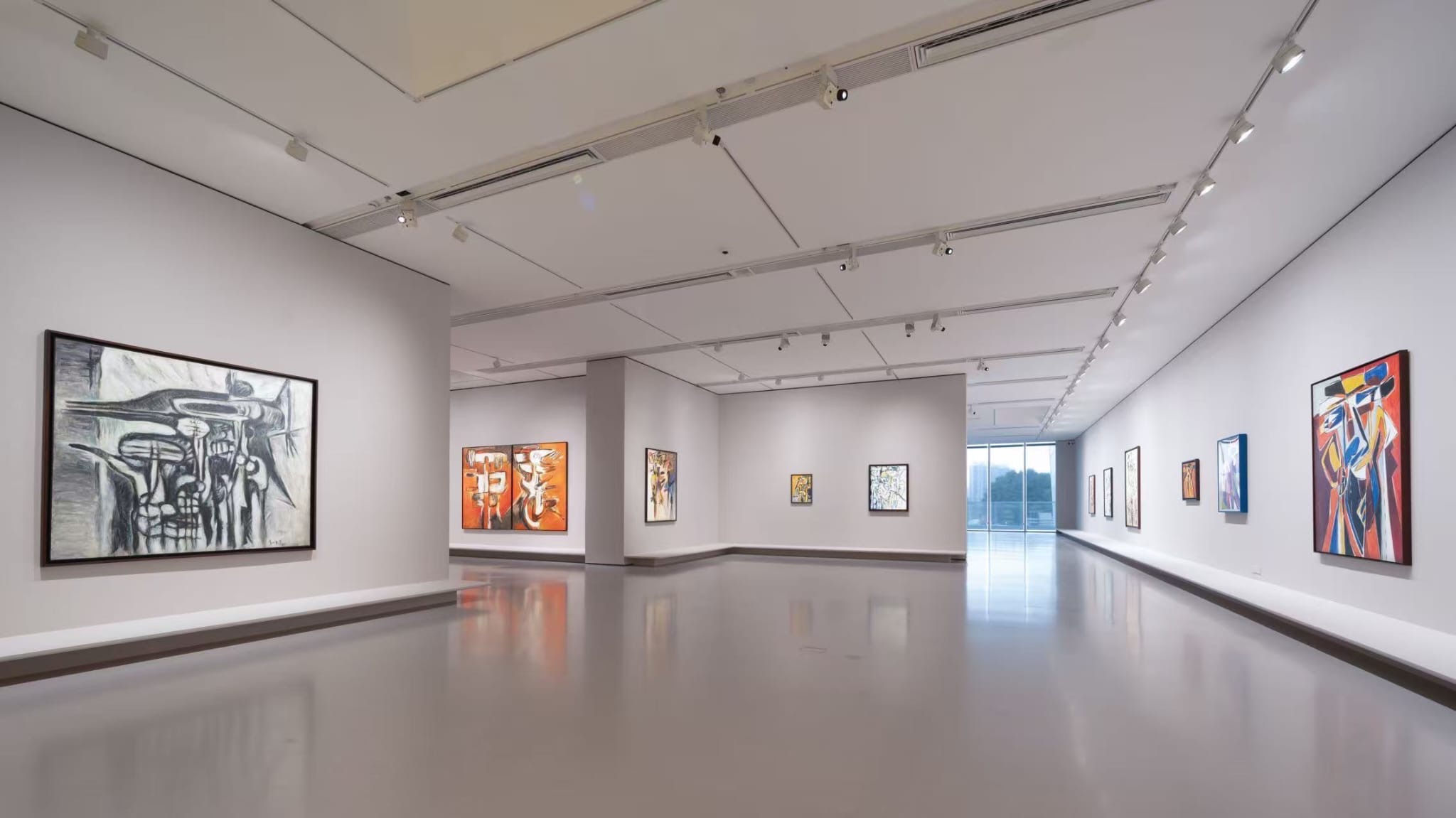
Currently on view at the Guangdong Museum of Art in Guangzhou, Oswaldo Vigas: Reality Is What I Imagine marks the artist's first major museum retrospective in Asia. Co-curated by Gabriela Rangel and Jiang Jun, the exhibition brings together works and archival materials spanning his career, opening a dialogue between Latin American and Chinese perspectives on modernism. IMPULSE sat down with Rangel on the occasion of the exhibition do discuss the curation of Vigas's legacy.
Xumeng Zhang: Over the course of Vigas's seventy-year career, his style and visual language changed considerably. What do you think remained consistent throughout his work? What were the central concerns that continued to drive his practice?
Gabriela Rangel: I think there was a decision to be free from any particular style. Oswaldo Vigas was a studious, self-taught painter who had originally trained to become a medical doctor. He devoted himself seriously to his medical studies, but he was also obsessed with painting. In 1952, he received some very important awards as a painter, which I think changed his mind. He decided to become a professional painter and fully embrace art. Vigas had a profound devotion to historical modernism, but there was another impulse in his research, which was his interest in non-Western art. He was always pivoting between Western modernism and non-Western manifestations of art.
XZ: Vigas's work draws on a wide range of visual traditions, from European modernism to pre-Columbian art. How do you understand the relationship between these different influences in his practice?
GR: Vigas was Venezuelan—he wasn’t born in Paris. When you're born on the margins of the Western world, you're in this in-between space. We in Latin America believe that we are Western, but we're not considered Western. That's what I call the amphibian modernism that he practiced. Vigas’s breath is like an amphibious creature, living both in the sea and on land. He was trying to bring something that was very important to him as a person born in South America. Vigas was obsessed with the history of painting, but he was also deeply engaged with his own context, history, and past. In the sea, we have the history of slavery and the diaspora. On land, we have the plantation system and, afterward, oil extractivism in Venezuela.
When Vigas was young, the country was undergoing a very rapid process of modernization because of oil. I think he was very smart not to engage with something like geometric abstraction. For him, the landscape was much more complex than that. He didn't want to be the obedient student who went to Paris to learn modernism; he really wanted to bring his own culture there. That's part of his bifurcated character.
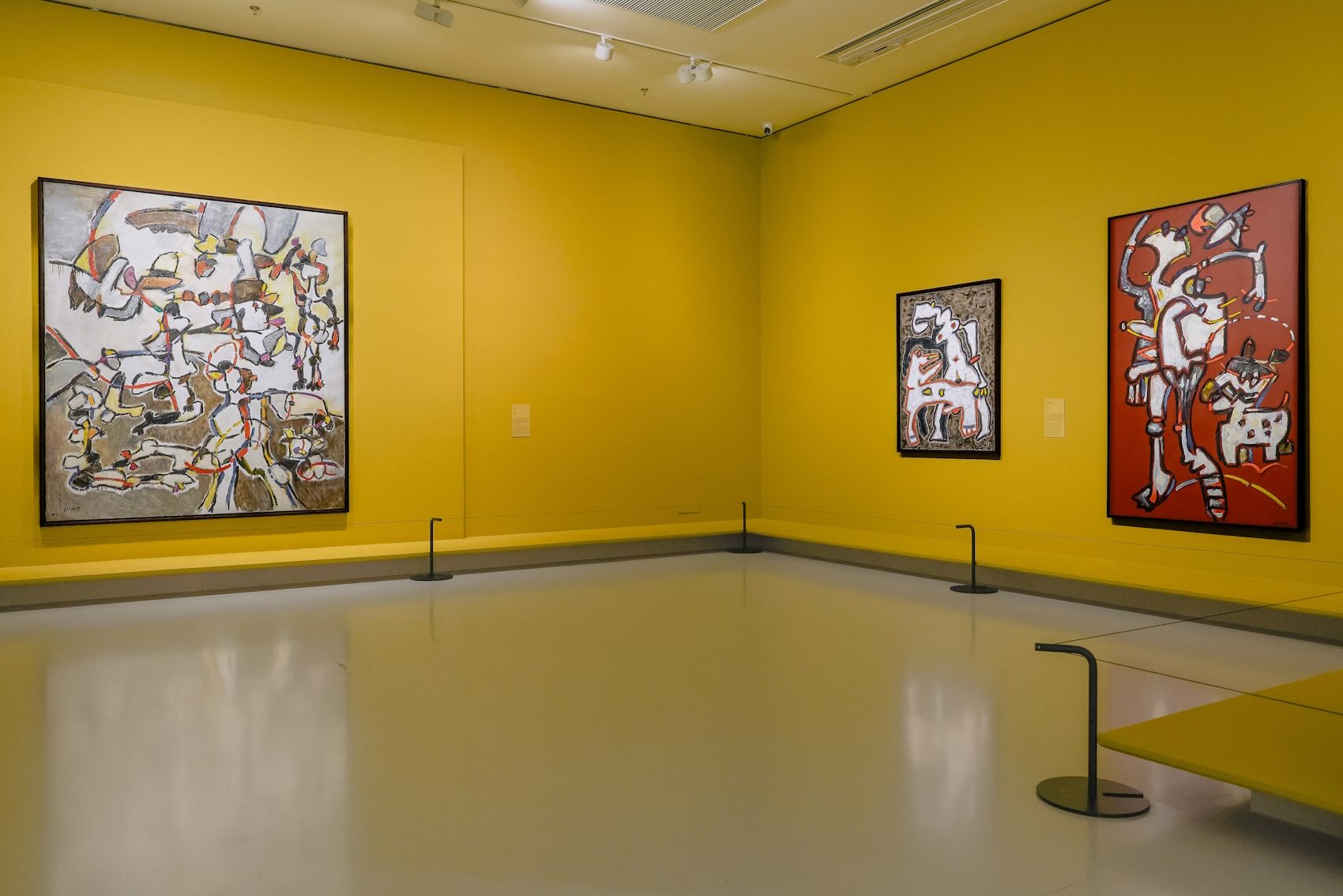
XZ: Yet his work was, and still is, frequently compared to Western modernism, particularly cubism.
GR: It's inevitable, but who was accusing Picasso of stealing African sculpture at the time? Nobody.
XZ: Was there a particular work or period in Vigas's career that you came to see differently while putting this retrospective together?
GR: I'm interested in all the different periods of his career. I think he always goes back to the beginning, particularly to the witches, which were a very important subject for him. In the artist's archive, I found correspondence between Vigas and an important Jungian psychoanalyst, a Cuban psychiatrist who was the director of the Jungian Institute in London. I hadn't known about this relationship, and the discovery opened my mind to other connections that existed. He was also very close to an important Surrealist poet and to a psychiatrist who worked in France in the 1940s and treated Antonin Artaud.
After discovering these connections, everything started to make sense and come together: Jung, psychoanalysis, surrealism, and madness. I realized how coherent his work actually was, despite all the different directions he explored. I particularly love his paintings that are not entirely abstract or entirely figurative. I like the works in which he seems almost to be sketching, where the forms are more expressive.
XZ: I'm interested in your collaboration with Jiang Jun. Coming from different art-historical backgrounds, did you find yourselves looking at Vigas's work differently? Did those perspectives influence how you approached the exhibition?
GR: It was a fascinating process for me. I relied on Jiang Jun's interpretation of Chinese history because I don't know it well enough, while he relied on my understanding of South American modernism and how we understand modernity in South America. We were constantly comparing the two situations.
For example, in China, it doesn't make sense to talk about the dichotomy between abstraction and figuration in the same way. Those debates didn't exist in the same historical context. In Latin America, the opposition between figuration and abstraction was very important in avant-garde art, especially during the 1940s and 1950s. You had artists in Argentina, as well as groups like Grupo Frente and Grupo Ruptura in Brazil. Mexico was different because revolutionary muralism was so dominant. It shaped Mexican art for decades. So even starting with the distinction between abstraction and figuration was complicated. It required a lot of explanation because Vigas's work is very much concerned with these notions.
One of my main priorities in the exhibition was to include the intermediate sections. Initially, there was some hesitation, but I insisted because I thought the case studies were very important. Eventually, Jiang agreed, and we discussed which examples would be relevant to include in those sections. I relied on his knowledge of China and his understanding of what would make sense in that context.
XZ: You mentioned the importance of including these intermediate sections. Given the complexity of Vigas's practice, how did you balance a chronological structure with these additional case studies?
GR: In a way, we had to follow a chronological pattern because it was also a pedagogical exercise for audiences in China. But we also selected examples of encounters and experiences that helped shape Vigas's artistic research.
For example, we started with pre-Columbian figurines. In Venezuela, the figurines that he looked at have very prominent heads, and that's where you can see a connection to the witches. Those objects were part of his research, although his paintings were not simply illustrations of them. We also considered the Universidad Central de Venezuela, a seminal public project in South America, which focused on the integration of the arts. Vigas was invited by its designer-architect, Carlos Raúl Villanueva, to create three murals for the Ciudad Universitaria de Caracas, a project that also involved Calder, Léger, Vasarely, Hans Arp, and Pevsner, amongst others.
Another example we selected was his disappointment with Robert Rauschenberg over the ROCI project. Vigas was also a writer. He regularly contributed to newspapers and sometimes adopted the public persona of an art critic. He wrote several columns criticizing Rauschenberg for carrying out the project through the State Department. He said, “He's a great artist. Why is he doing this through the State Department? He doesn't need the State Department. We need Rauschenberg as he is.” This sparked a public debate, and Vigas wrote another response, entering into a dispute with another artist. Today, we might call this soft power. At the time, we used expressions like propaganda or state propaganda. Vigas was questioning why Rauschenberg needed to rely on something like that when he was already such an extraordinary artist.
We selected these examples because they show moments when Vigas was developing something interesting, both in public discourse and in his own art.
XZ: When presenting Vigas's work in China, do you think there's a risk of placing too much emphasis on his cultural identity?
GR: Maybe that's a risk, but how do you solve the problem? How do you present Vigas as a case study when he is already one in the West? Vigas is not only a case study in China.
His work is not easy to understand unless you look at it in light of today's changing canon. We don't have a canon anymore. Modernism used to be much more rigid, less elastic, but now we see modernism differently. We see different types of modernism. That's why I call it amphibian modernity, because this is a type of modernism that falls outside many people's understanding of modernism.
This interview has been edited for clarity and length.
Oswaldo Vigas: Reality Is What I Imagine is on view at Guangdong Museum of Art from August 15 through November 22, 2026.