
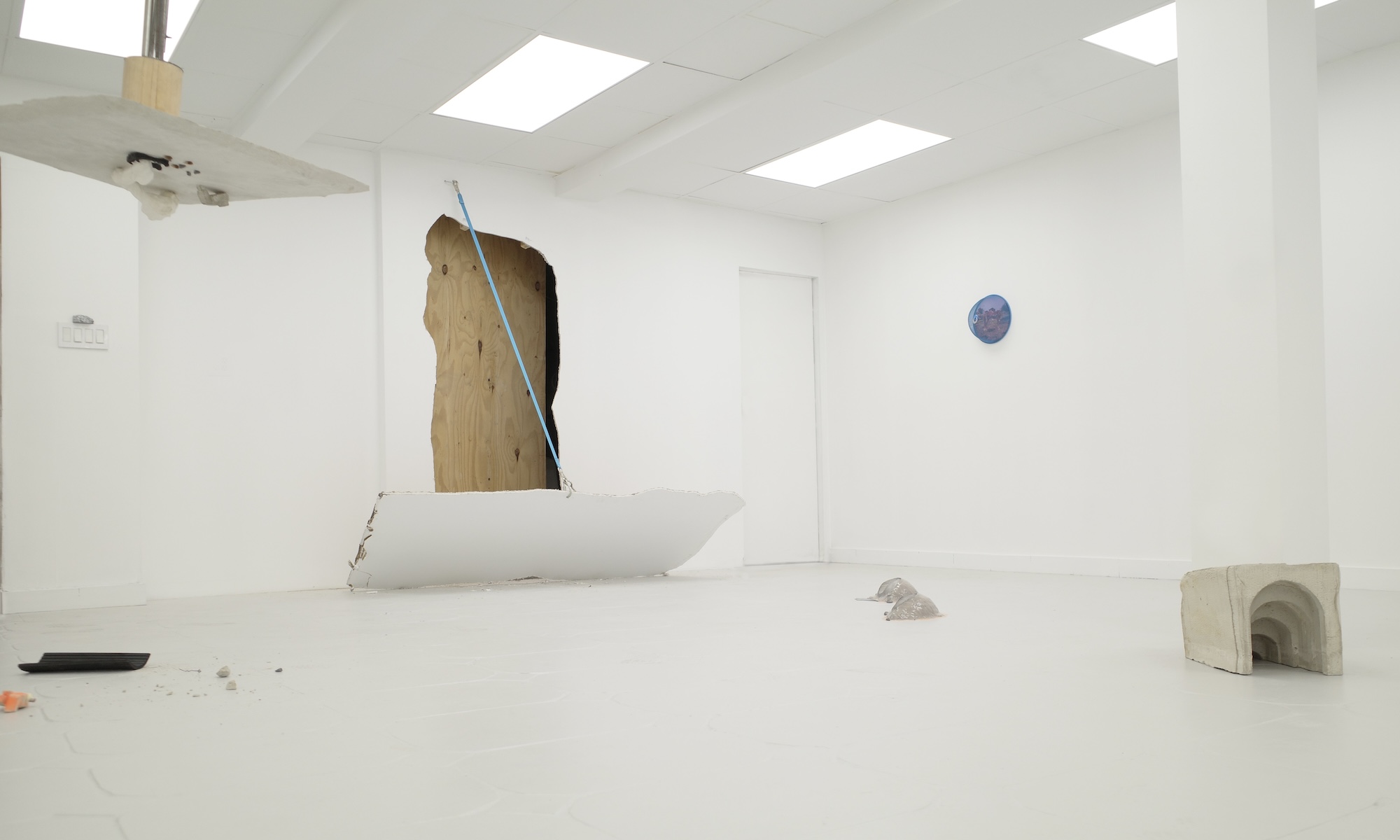
Paz Sher: “Dumb Luck”
Review
The art world runs on fashion and forgetting. Perhaps this condition partly accounts for the enduring appeal of historical recovery and citation in art, or what was diagnosed over twenty years ago as the archival impulse. Nowadays, acts of retrieving historical information or lending its countermemories presence appear at once indispensable and banal. And certainly, there is much to remember, particularly as the effects of digital culture and right-wing revanchism have expanded and eroded our collective capacity to do so. Walking around galleries this fall, one encounters work with aims to read the past as tea leaves for the present, to disturb its myths, or to critically reevaluate what was lost or overlooked.
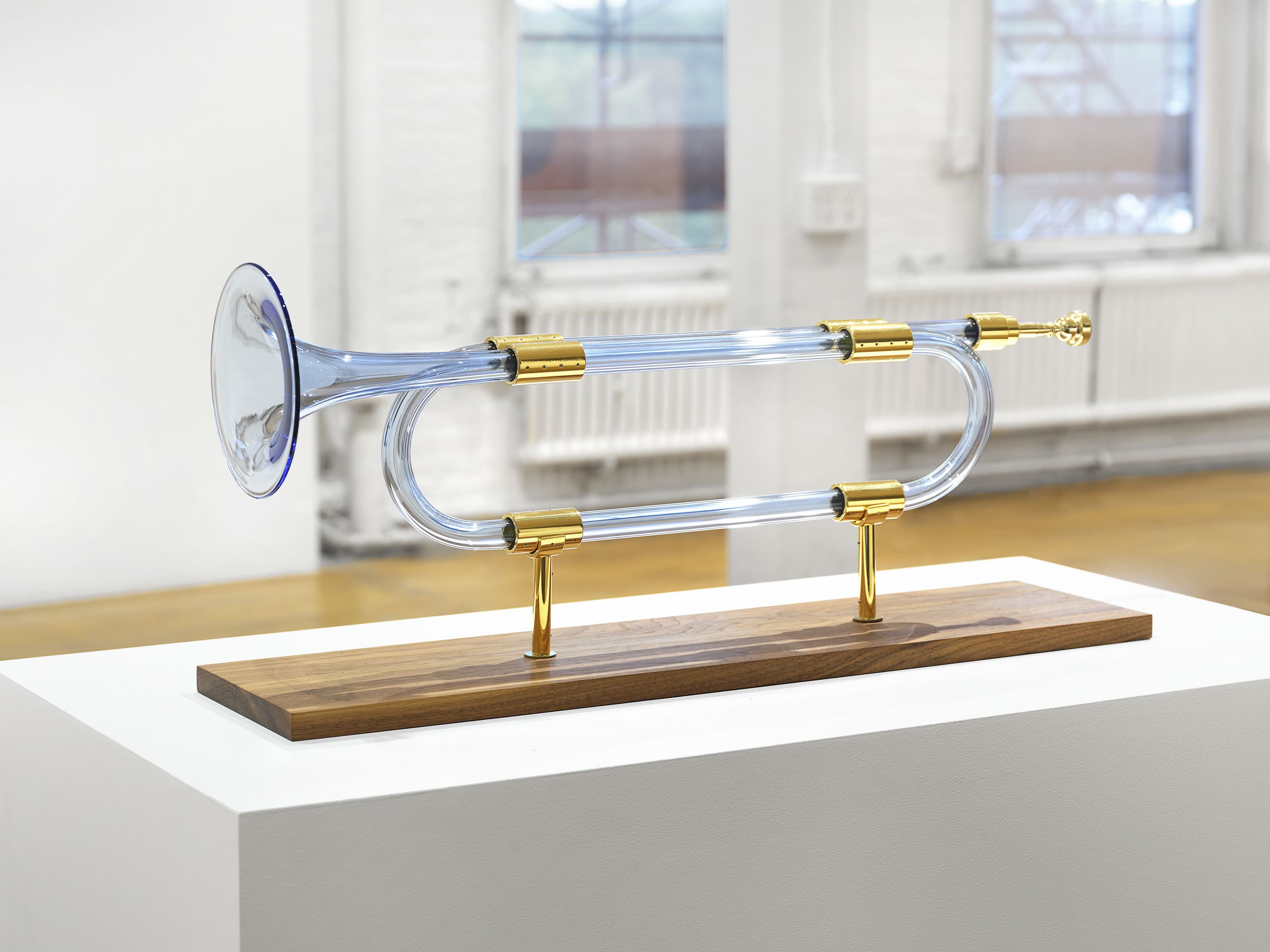
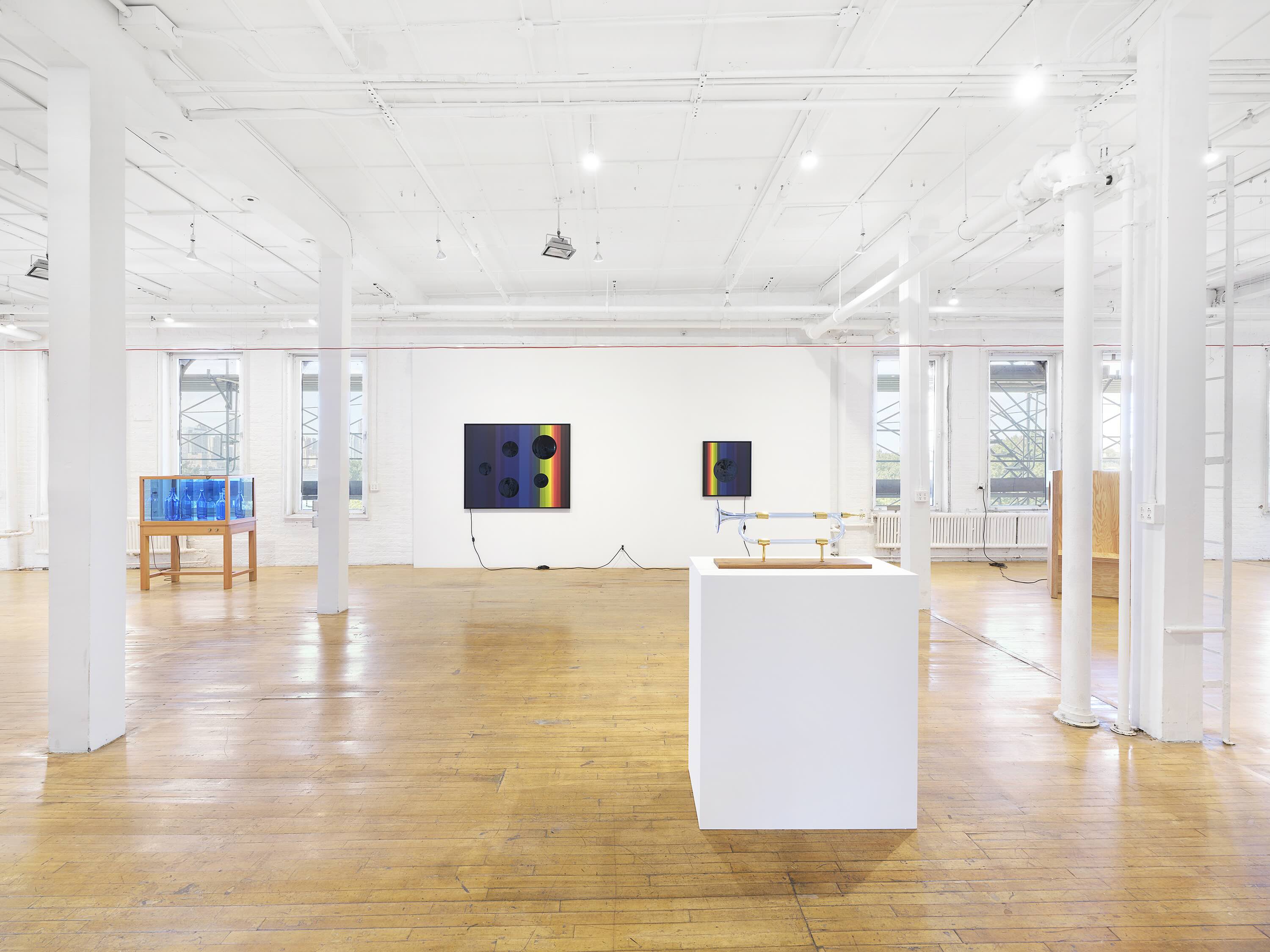
Even within this context of perpetual return, the works in Josiah McElheny’s show at The Kitchen, Instrument Object, appear as wonderfully quixotic oddities. Comprising glass sculptures animated by sound or movement, they pay homage to the ideas of musicians and composers across what could be called experimental music’s color line. In Imaginary Landscape No. 2 (2014), a tribute to John Cage, five transparent glass cylinders whirl on turntables emitting a metallic hum. Color Time – Model One (2014), dedicated to Sun Ra, features a mottled glass pyramid containing a lightbulb, throwing off luminous shards of color as it spins. Cosmic Trumpet (2018), a pale blue glass trumpet for Joe McPhee, a friend of the artist’s, is formed with such sensitivity and grace that one feels moved to believe in the sufficiency of beauty. In their virtuosity and delicacy, the works seem to offer the promise of enchantment in a material form. Yet their seduction comes with a purpose, for McElheny would like to convince his visitors to stay a while and listen, lest one take in the beauty of his objects but miss their message.
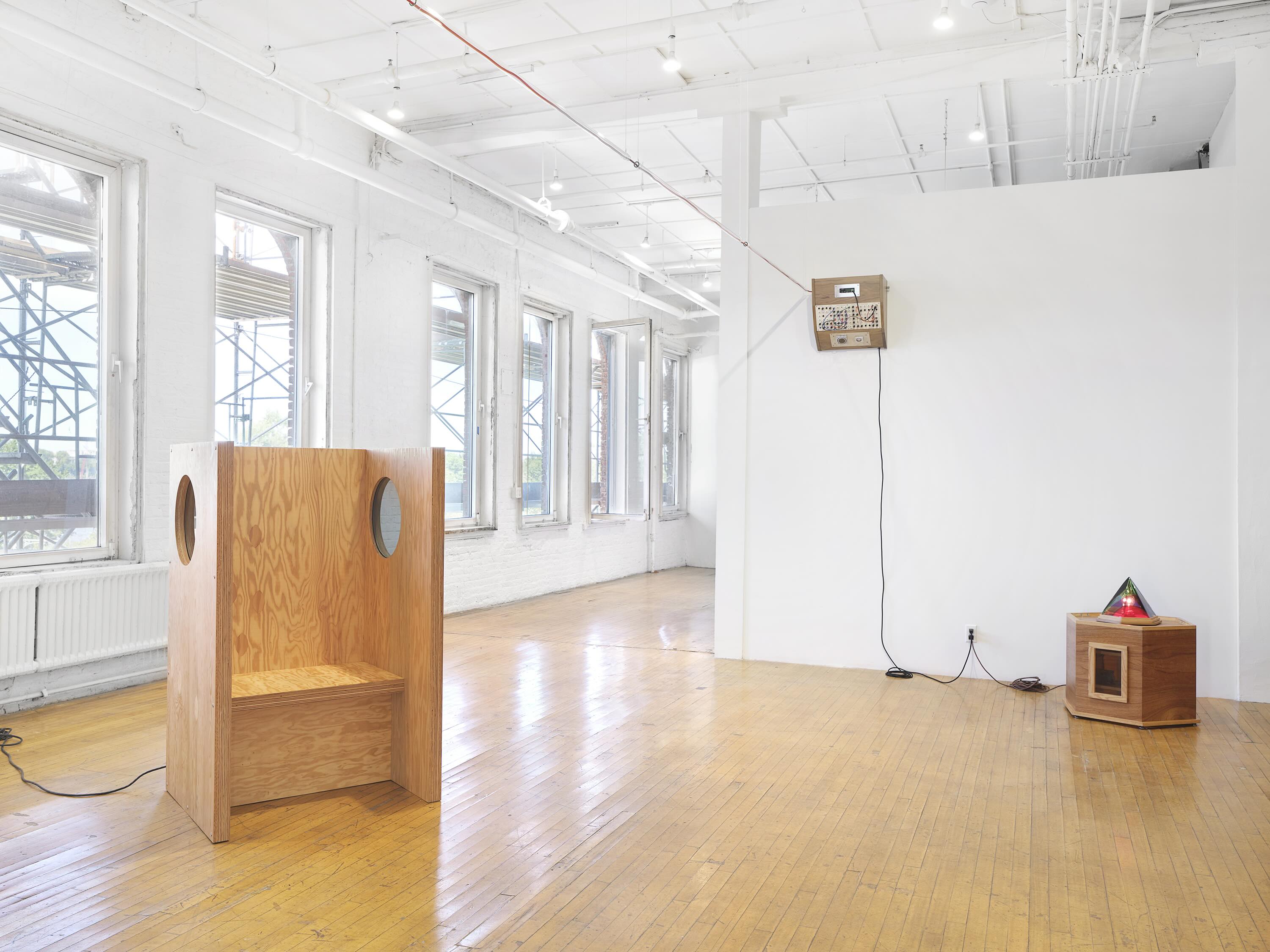
McElheny is interested in the history of ideas, and if not in utopia itself, then at least the worthiness of pursuing such a thing. Like a lepidopterist traipsing through the past, he has netted and illuminated rarities that the common itinerant overlooks—modernist experiments that are simply too weird, incomplete, or unclassifiable to be assimilated into the canon. His work is paradigmatic of the archival impulse as Hal Foster described it, making “historical information, often lost or displaced, physically present” through objects which redirect the desires invested in aesthetic experience towards the romance of inquiry.1 At The Kitchen, the ideas he engages range from idiosyncratic to timeless: the effects of color on perception and time; the utopian power of music (and of love); the relationship between animacy, presence, and memory.
One of the show’s implicit questions regards sociality: how might one be both separate from and together with others? The works adopt the form of homages, even trophies. They valorize individuals. Yet collaboration, one of the hallmarks of McElheny’s practice, enters through the collective production of the sculptures, where the artist’s glassblowing becomes both an expression of singular virtuosity and an embodiment of the musical ideas and compositions of others. The works are passionately social objects, in both their production and presentation. Upon entering the space, visitors are greeted by the collective hum of vibrations issuing from the show’s symposium of works, and one has the sense of entering a conversation that has been proceeding leisurely for quite some time. Draw closer to a sculpture and the sound it emits becomes distinct but not discrete, surfacing from yet still tangled up with the background of sonic activity. One might call this difference without separability, where “difference is not a manifestation of an unresolvable estrangement, but the expression of an elementary entanglement.”2 And entanglement (or what Fred Moten calls “blur”) is the sort of social relation that music is particularly adept at modeling in its many polyvocal forms, such as counterpoint, ensemble, polyrhythm, and fugue.
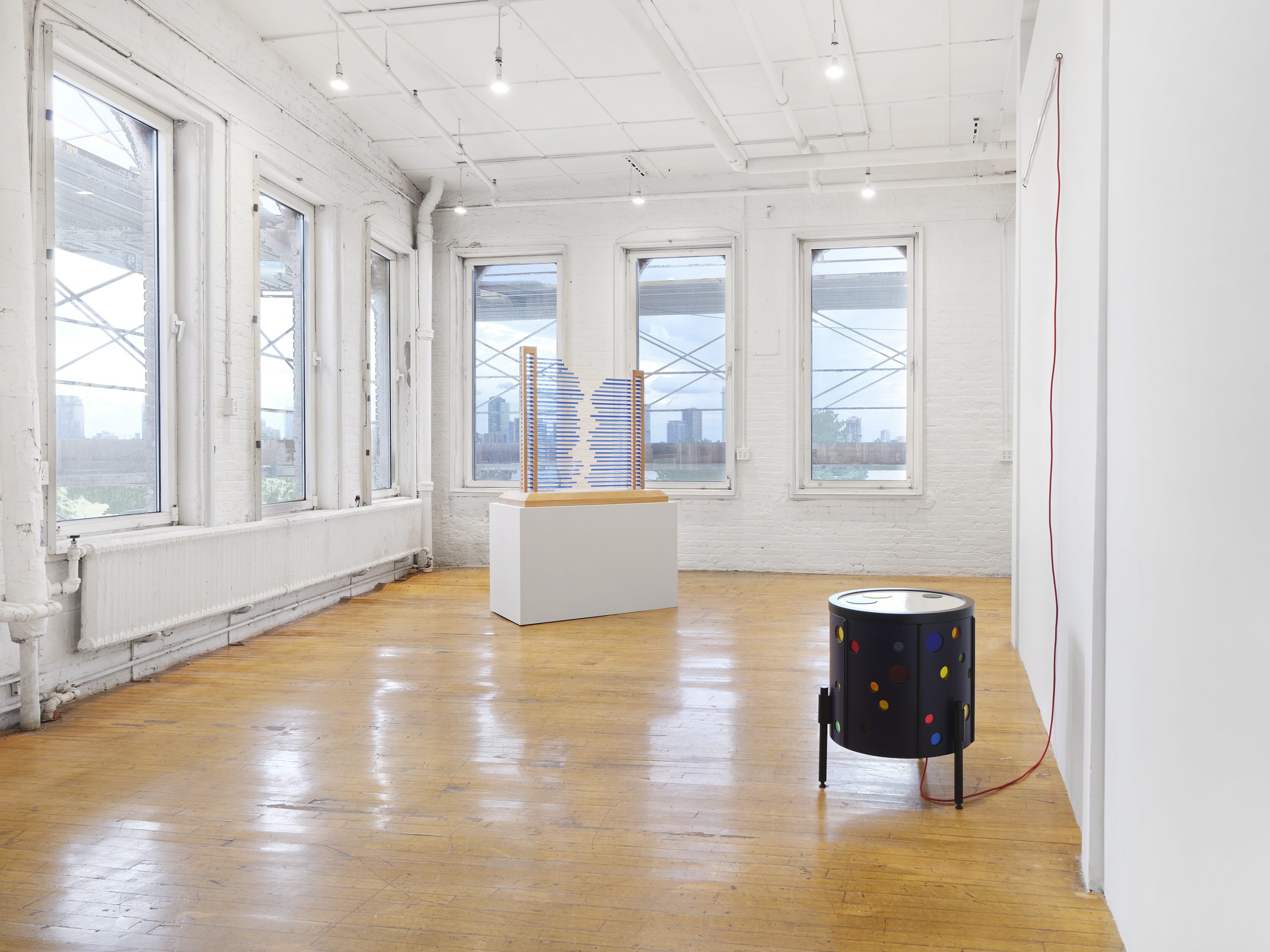
Yet at times, the show’s idealism and celebratory tone can feel stifling. Difference—intellectual, personal, political—is subdued in favor of enthusiasm for great minds and ideas. There is little room for ambiguity or antagonism in what sometimes too closely resembles a hall of fame. Still, the sheer earnestness of McElheny’s faith in his interlocutors wins over a viewer willing to listen. Perhaps the most affecting work in the show, Heartline (2023), is devoted to the late percussionist Milford Graves. A series of glass tubes struck through with a red electrical cable float across the space, connecting a synthesizer mounted on one side of the room to a drum with colored glass roundels tucked behind a wall on the other. A piece composed by guitarist David Grubbs in honor of Graves’s research into the connections between polyrhythms and the irregular beat of the human heart emanates from the drum. It recalls the fragility of the human body, of glass, and the ability of both to produce sound, conduct it, and be broken by it. The “artery” suspended across the room, transmitting the synthesizer’s signal, is a reminder of sound’s perpetual condition of dependency. More plainly than the objects of vision, sound is reliant upon and changed by its medium, inseparable from and inflected by the context which carries it.
It is to McElheny’s credit that leaving the show is like emptying a dream. And what more could one want? To spend time with friends, to talk languorously for hours, to devote one’s days to making beautiful things with and for others.