.webp)
Visual Grammar: In Conversation with Bryce Kroll
Interview
The banal ubiquity of the phrases “formal language” or “visual language” in art writing implies a natural connection between art and diction. In Rosa Barba’s presentation Drawing Vocabularies at Lisbon’s Centro de Arte Moderna Gulbenkian (CAM), the artist excavates the complexities of translation and navigates its mechanics, (im)possibilities, failures, and miracles. A certain alchemy runs throughout: celluloid becomes light and color, as well as a structural component, often pulled taut or left slack to draw images and shapes on two- and three-dimensional planes. The artworks and exhibition design follow the logics of metamorphosis; materials are transmuted across states of matter, and ideas take shape and dissolve as they travel from artist to object to viewer, alluding to the continuous formation of language and its unfixedness.
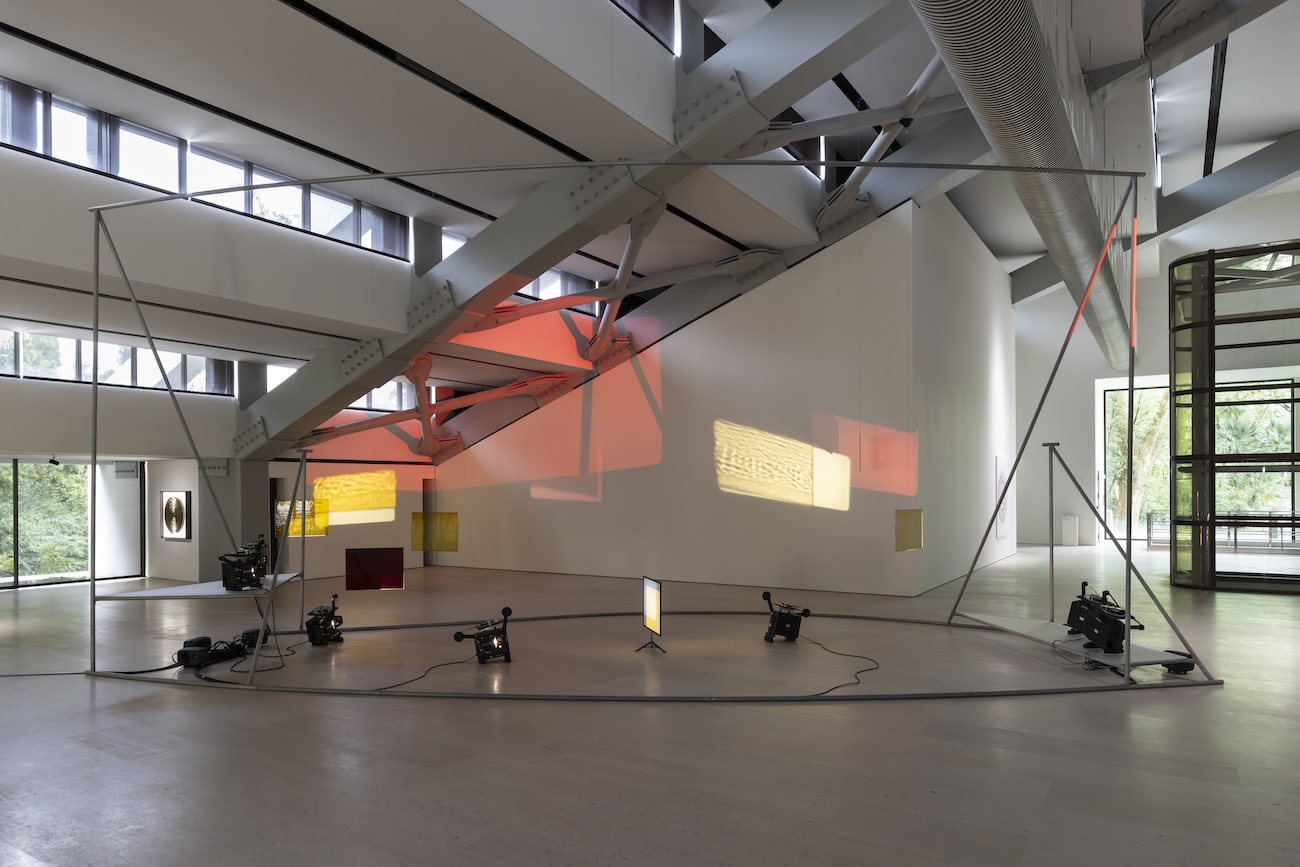
The main space of Drawing Vocabularies is a sprawling installation of twenty-five artworks, many of which include celluloid film, modified projectors, typewriters, and motors, among other materials. The exhibition continues Barba’s explorations with space and time through the materiality of film in a well-orchestrated array of antonymic forces. The heavy whir of old projectors positioned on the floor, complemented by exposed steel skeletons and support wires, conjures a gravitational grounding. In contrast, lights dance across exhibition walls, refracted through suspended panes of glass that rotate according to imperceptible forces.
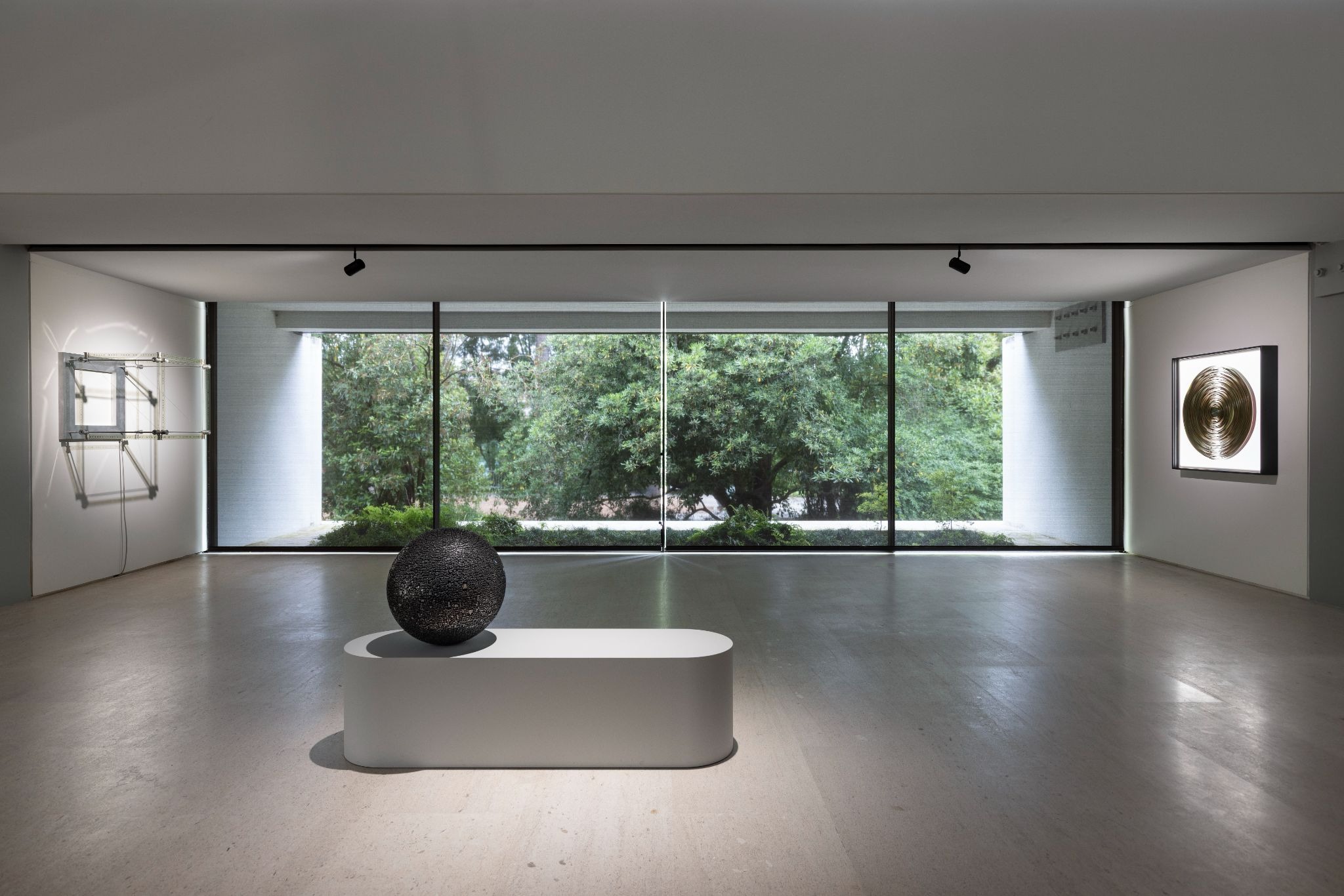
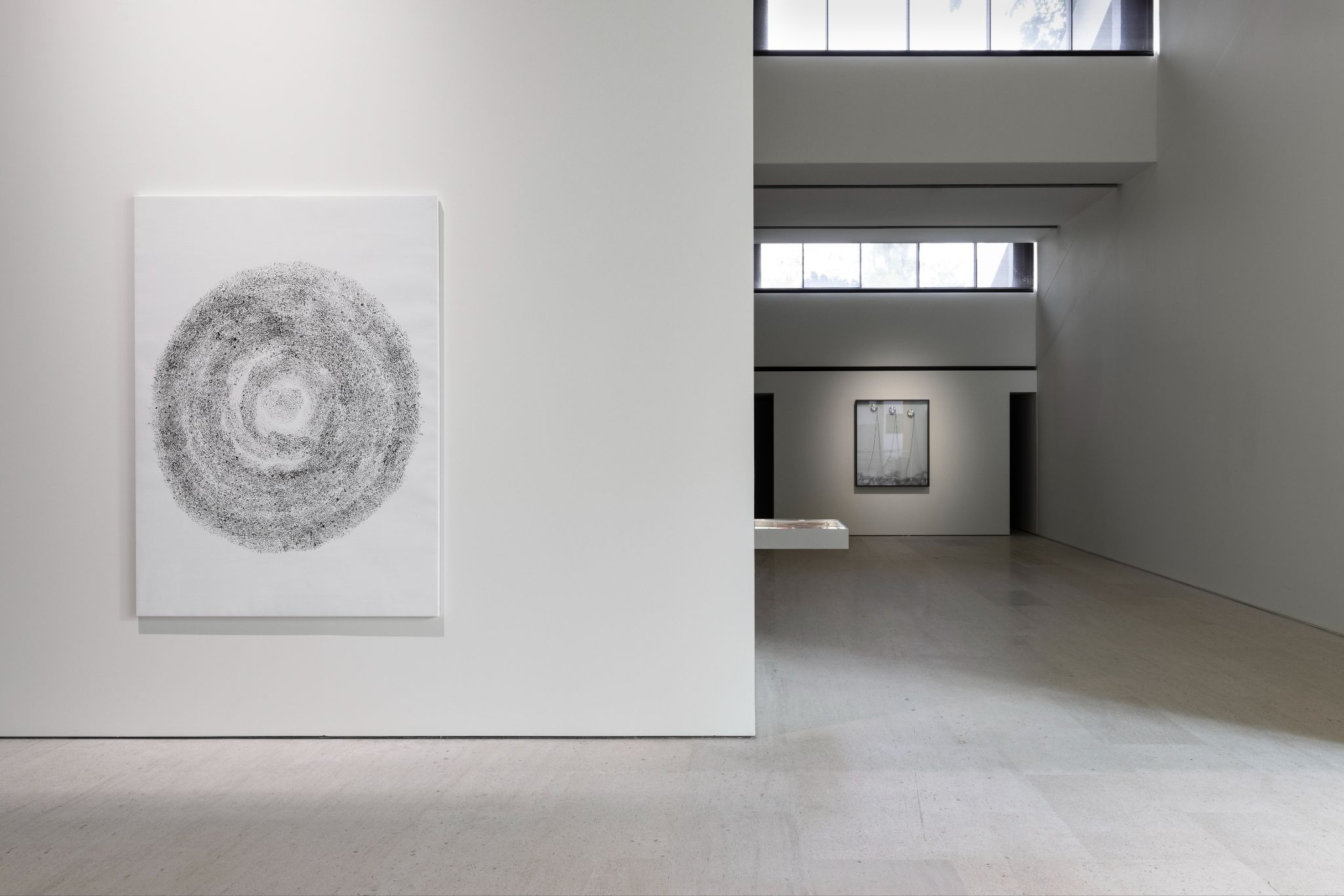
In one spot, Language Infinity Sphere (2018), a steel ball coming up to hip height, made of thousands of tightly packed vintage letterpress blocks, carries an intense visual weight, while a few steps away, a print on canvas titled Language Infinity Sphere (Recording) (2018) communicates levity. To create the wall piece, the ball has been rolled around on the canvas, creating an imprecise whorl on its surface, with small letterpress blocks leaving behind a smattering of letters and symbols in the vein of the pointillist tradition. These tensions, the impossible weight of the lead and steel ball and the pristine canvas marked by delicate metal pieces, are punctuated by the close conceptual relation between the object and its index.
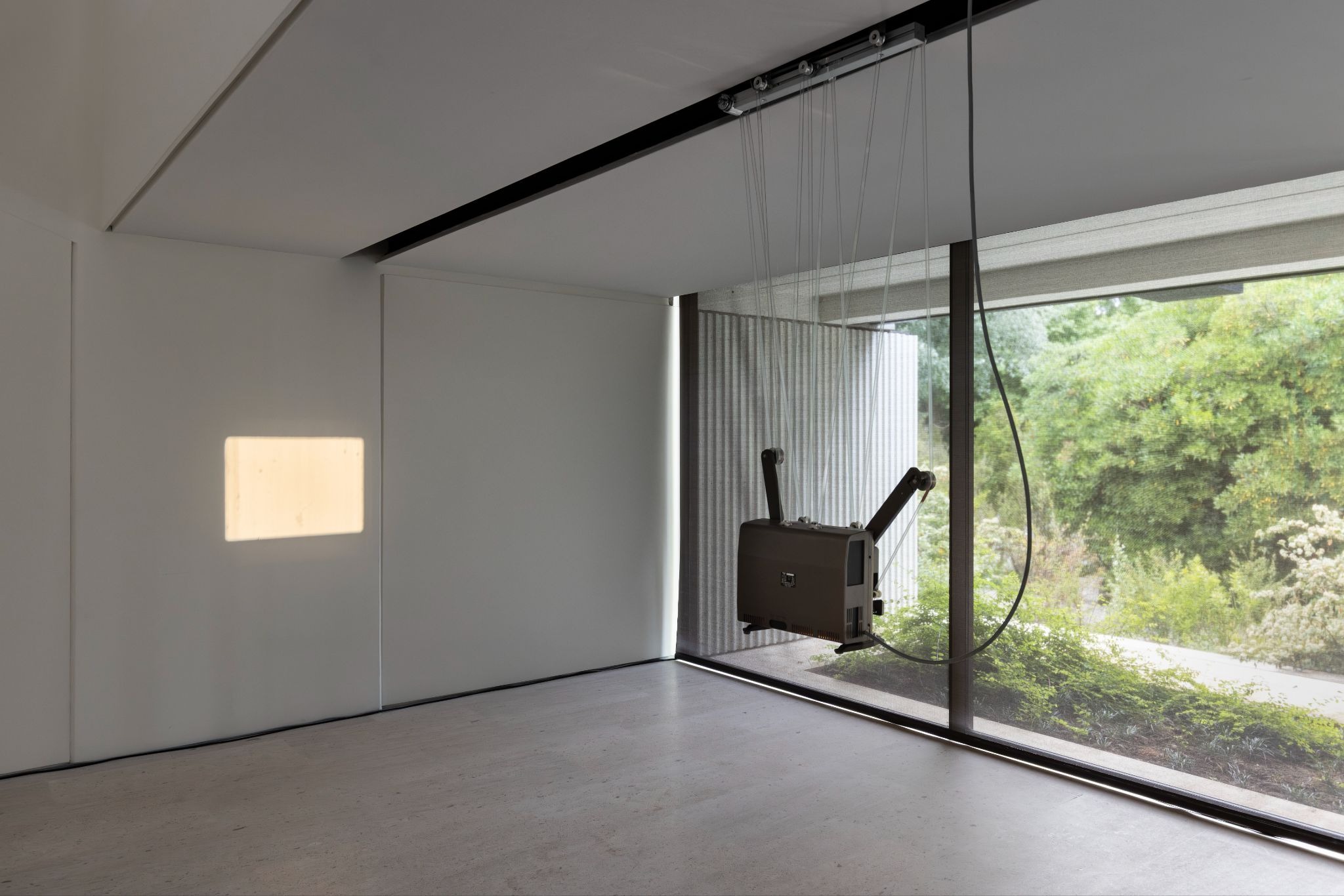
Barba’s ingenious material transmutations are well illustrated in Stating the Real Sublime (2009). A projector suspends from the ceiling, held up only, it seems, by a running line of transparent celluloid film. The machine continuously wobbles, repeatedly destabilized and steadied by the movement of film through its inner mechanics. Most striking in this work is the illusion of impossibility. The film's flashing as it catches the exhibition lighting serves as a smokescreen for a support wire at the machine's front end. The celluloid film is decorative, immaterial, structural, and conceptual, all at once. As the projector bobs and sways, one cannot help but worry about the stability of the single wire, the film's frailty in its proximity to nothingness: a running track of null image, pure light.
Ironically, the use of language that frames the exhibition falters. An accompanying booklet, with individual object entries, constellates an array of disparate references and themes. To be sure, the explanation of certain allusions in the work—an echo of Donna Haraway here, a nod to the Turing machine there—provides more depth to the works on view and historicizes Barba’s practice. However, as grounding as it is, the booklet and writing fail to capture what stands out most brilliantly in this exhibition: the miracles of language, understanding, and communication that abound.
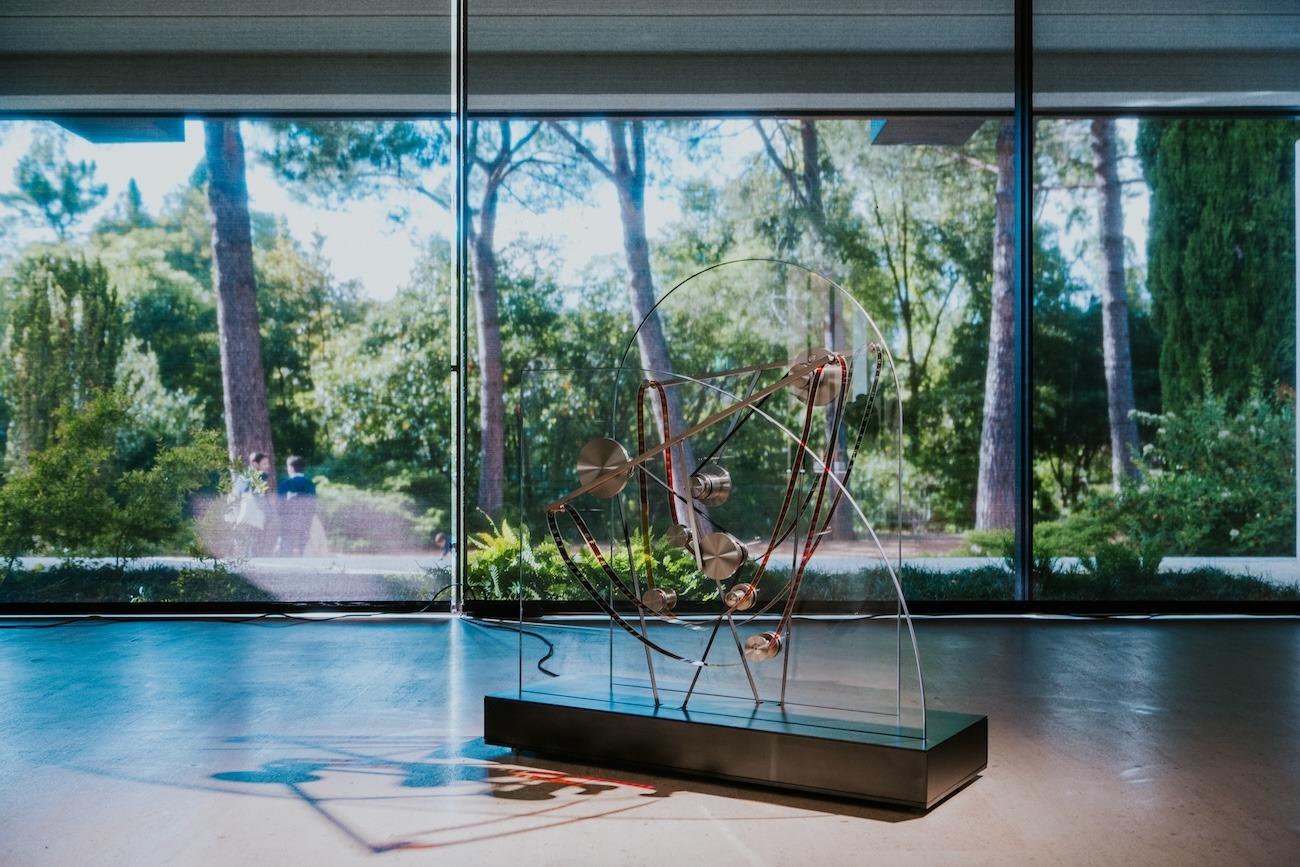
Inherent to the concepts of language and translation, the fundamental desire to understand and be understood is embodied in As Fixed in Flux (2025), which is composed of gently rotating metal spools and loose loops of film. The film and wheels move between two panes of glass, atop a large black base. Barba’s discursive text reveals that As Fixed in Flux harkens to the “time-keeping and time-challenging devices at the intersection of astronomy and cinema”; however, I am instead reminded of the complications of translation: minute split-second calculations that happen while putting together ill-fitting pieces of language. On the surface of the film, a sentence reads: “AS FIXED IN FLUX IN ABSOLUTE MAGNITUDES." However, the letters in the sentence are flipped on their axes or rotated, demanding mental acrobatics to be deciphered. The artwork’s concealed motors, much like the hidden workings of language, belie the easy rotation and movement of the spools, offering an illusion of fluency.
Magic and romance pervade this exhibition. The constant churning of machines and modulations of light illustrate the ongoing processes of language formation as something that shapeshifts and grows to fit our needs. It is a process that is as primordial as it is miraculous, holding meaning as deep as feeling.
Rosa Barba: Drawing Vocabularies is on view at Centro de Arte Moderna Gulbenkian from May 16 to September 28, 2026.