Clare Koury: “The New Era of Manifestations Ascending the Bounds of Millennial Law” at lower_cavity
Review
What becomes of a picture as the world around it moves on? In October, the eighth FotoFocus Biennial pursues this question across 74 exhibitions at 65 venues in Greater Cincinnati, Dayton, Columbus, and Northern Kentucky. Its theme, “The Long View,” considers how photographs carry the past forward, subjecting them to the desires and judgments of each successive present. Across museum galleries, a former library, and the rooms preserved inside the pictures themselves, the question follows us from private memories to military archives, asking what changes when an image outlives the moment and the purpose for which it was made.
Nancy Rexroth: Secrets of My Power, Cincinnati Art Museum
On view through January 3, 2027
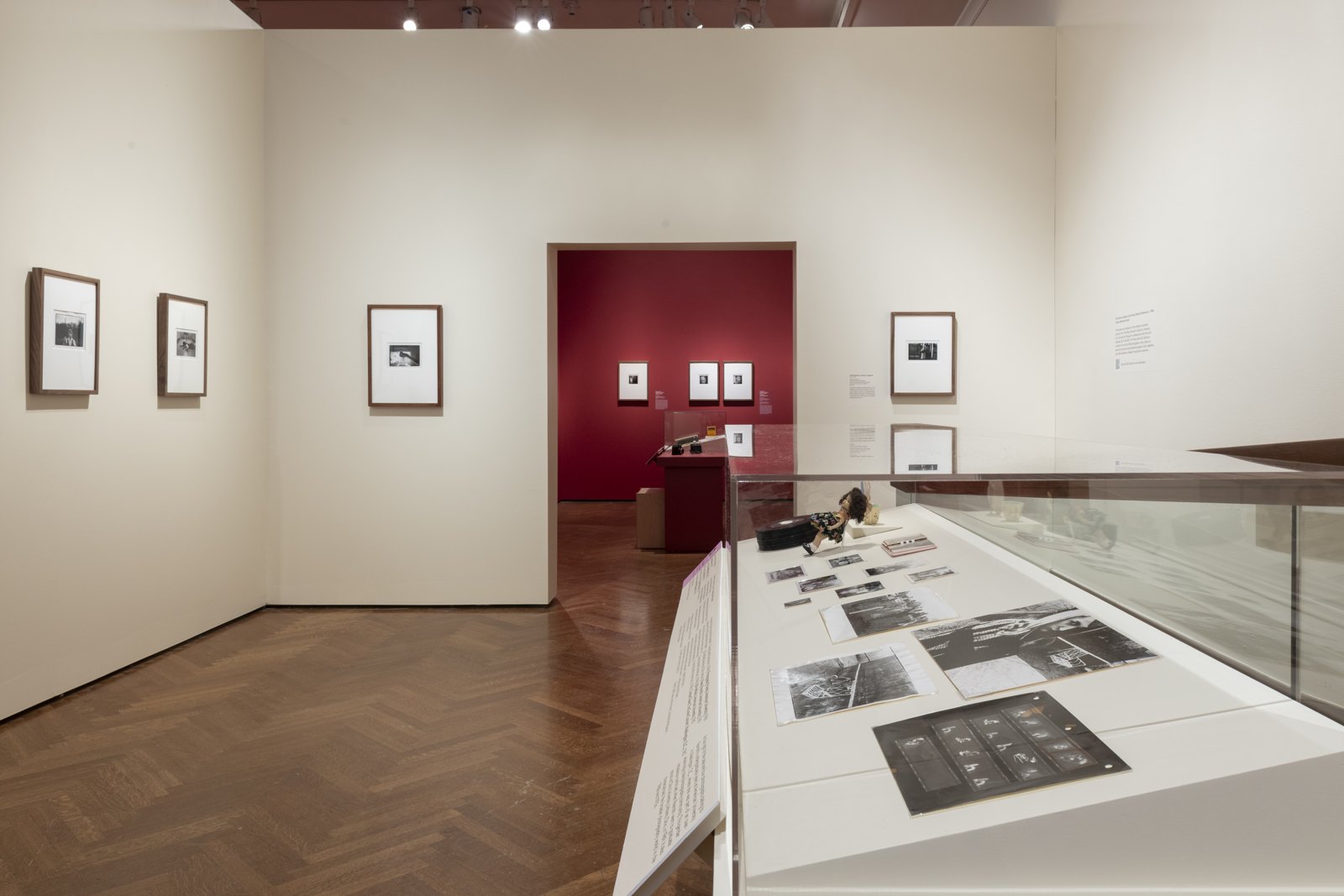
Nancy Rexroth’s first career retrospective, Secrets of My Power, at the Cincinnati Art Museum pays homage to the Ohio-based photographer whose 1977 book IOWA inspired photographers including Sally Mann and Alec Soth. Made with a cheap plastic toy camera called the Diana, mostly in southeastern Ohio, its photographs of houses, bedrooms, and passing figures seem to belong to a place remembered rather than visited. The exhibition extends well beyond those formative pictures, with rare platinum prints from the 1970s, including her “Women of Yellow Springs” portraits of 1978; research notes and test prints; a folding camera and telephoto lens; a printing frame with its last negative still inside; the recreated smell of darkroom chemicals; and recordings of Rexroth explaining how a picture comes into being.
The exhibition grew out of a relationship begun nine years ago, when curator of photography Nathaniel M. Stein joined the museum and started working with Rexroth to find a permanent home for her archive. Completed in 2021, the acquisition brought together more than 400 vintage prints, including a nearly complete set of photographs from both editions of IOWA, unpublished experiments, platinum prints, Polaroid transfers, and digital works. On opening night, Stein and Rexroth spoke before an audience, their conversation giving some measure of the familiarity behind the exhibition.
Stein identifies light as a thread running through Rexroth’s work, from the Diana pictures to her early digital experiments. Two versions of Curtains, Pomeroy, Ohio (1970) make this sensibility visible: one printed in the darkroom in the 1970s, the other returned to in Photoshop around 2016. More than forty years later, Rexroth was still finding new possibilities. But illumination here has little to do with making a subject clearer or more flattering. There is something magical about the way Rexroth’s photographs make an inconspicuous corner of a room, the shadow of a hand, or a foggy windowpane come alive, as though the visible world were giving up a little of its private meaning. Rexroth herself describes photography as the pleasure of “knowing secrets nobody else ever would.”
Trevor Paglen: the most merciful thing in the world, FotoFocus Center
On view through January 23, 2027
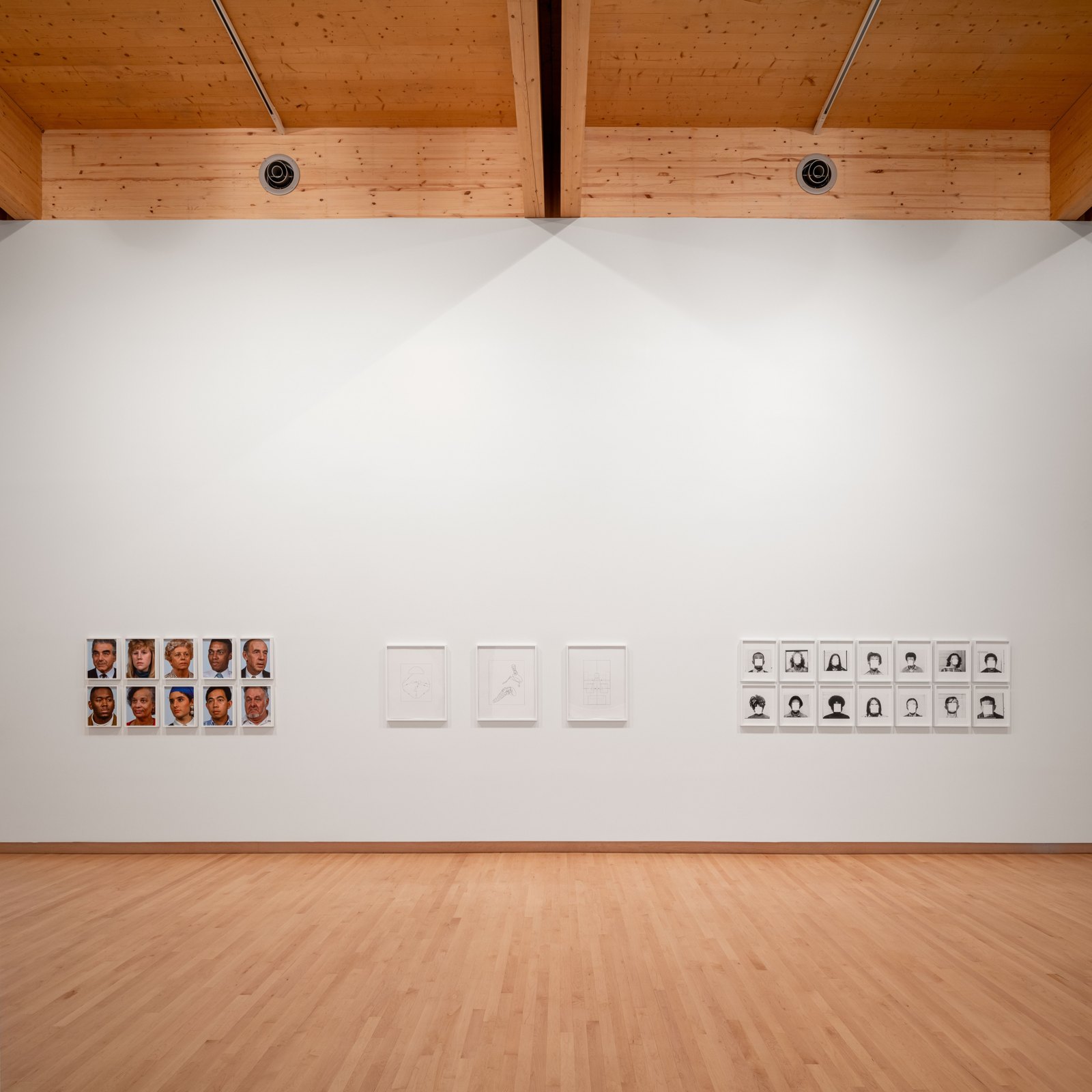
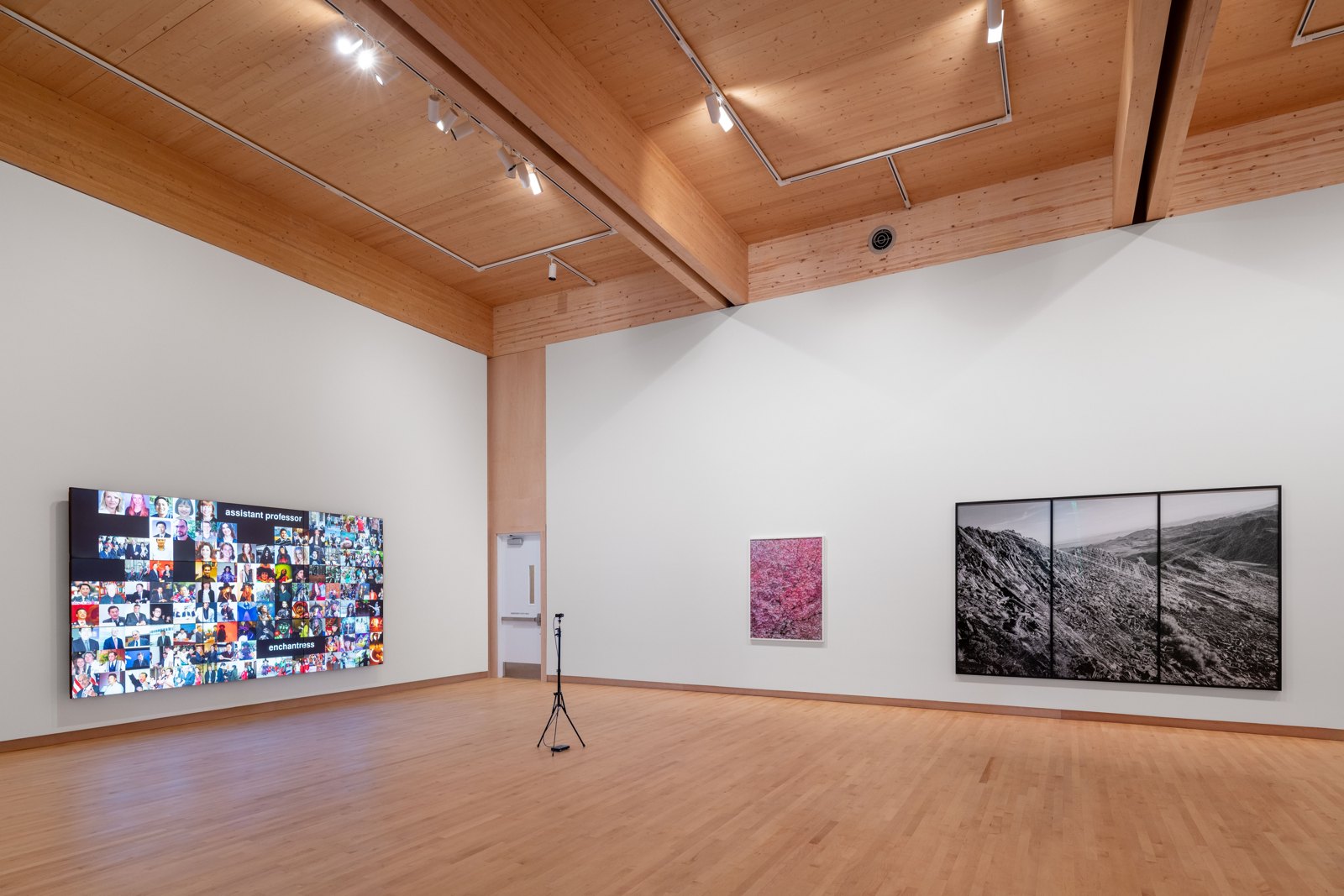
Trevor Paglen’s subjects keep secrets of a different kind. Curated by Kevin Moore, the most merciful thing in the world brings together two decades of photographs, video, and sculpture concerned with the hidden machinery of surveillance: spy satellites, secret military sites, and systems trained to recognize our faces. Over the years, Paglen has photographed a weapons proving ground in Utah from roughly 42 miles away and a National Reconnaissance Office ground station in New Mexico from about 16 miles away, using telescopes to see across territory closed to him. At such distances, the atmosphere itself interferes. Haze and distortion enter the picture, giving visible form to the difficulty of getting a clear view. The exhibition’s KEYHOLE 12-3 (IMPROVED CRYSTAL) Optical Reconnaissance Satellite Near Scorpio (USA 129) (2007) looks to the sky, locating an instrument of surveillance in the same heavens we might otherwise regard with wonder.
The direction of scrutiny reverses in Faces of ImageNet (2022): the installation photographs visitors and uses an image-classification system to assign their faces labels, exposing prejudices embedded in its training data. The apparent intimacy of recognition gives way to the sterility and coldness of a category. Nearby, It Began as a Military Experiment (2017) traces this technology back to photographs collected for early facial-recognition research. Paglen selected 10 portraits from the military-funded FERET database, adjusted their color, and processed them through an algorithm that identifies points on a face. A portrait usually invites us to consider the person pictured. Here, the face becomes a set of features from which a system learns to recognize and replicate other faces.
Paul Mpagi Sepuya: Compressed Tenses, Alice F. and Harris K. Weston Art Gallery
On view through December 21, 2026
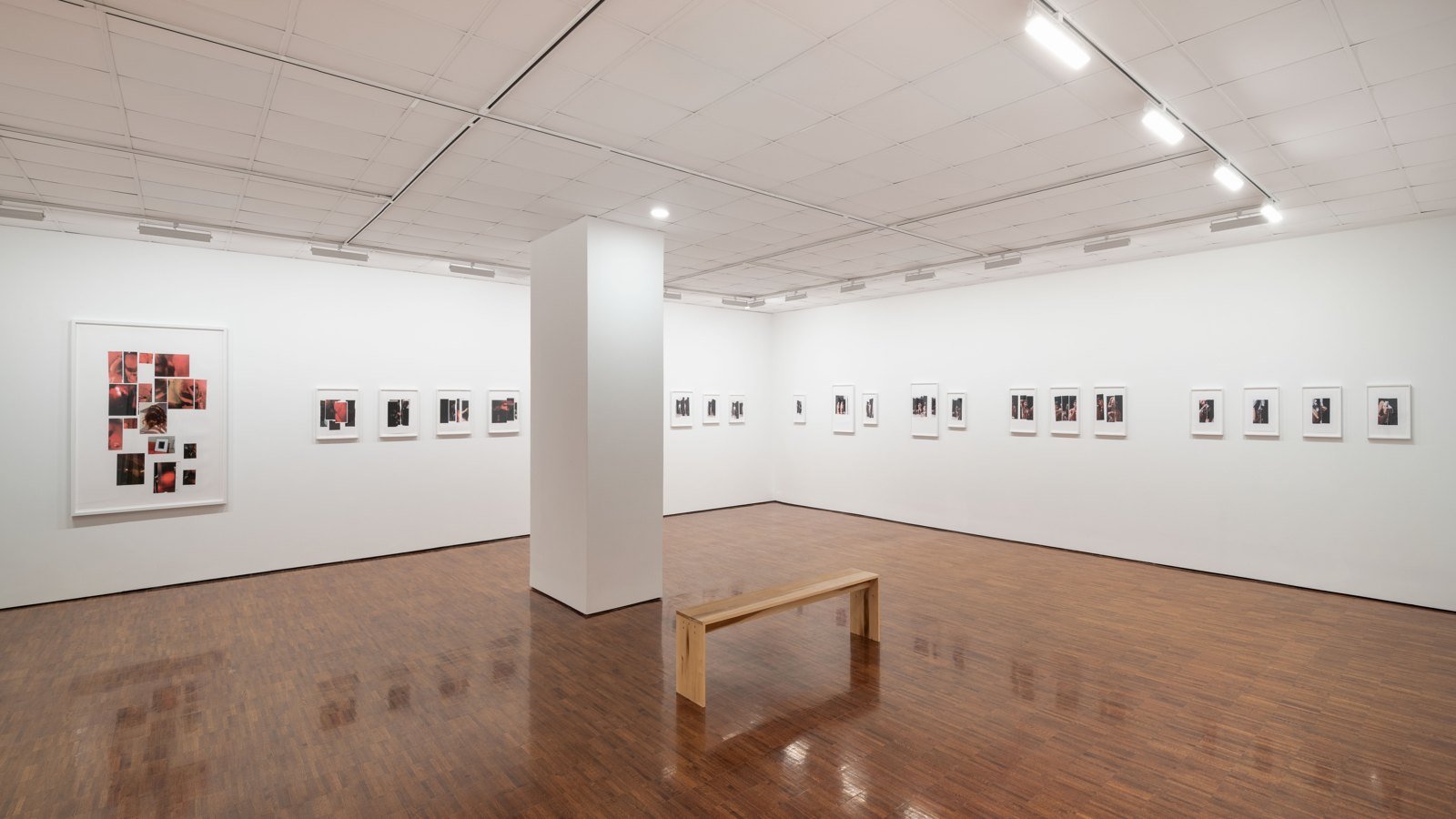
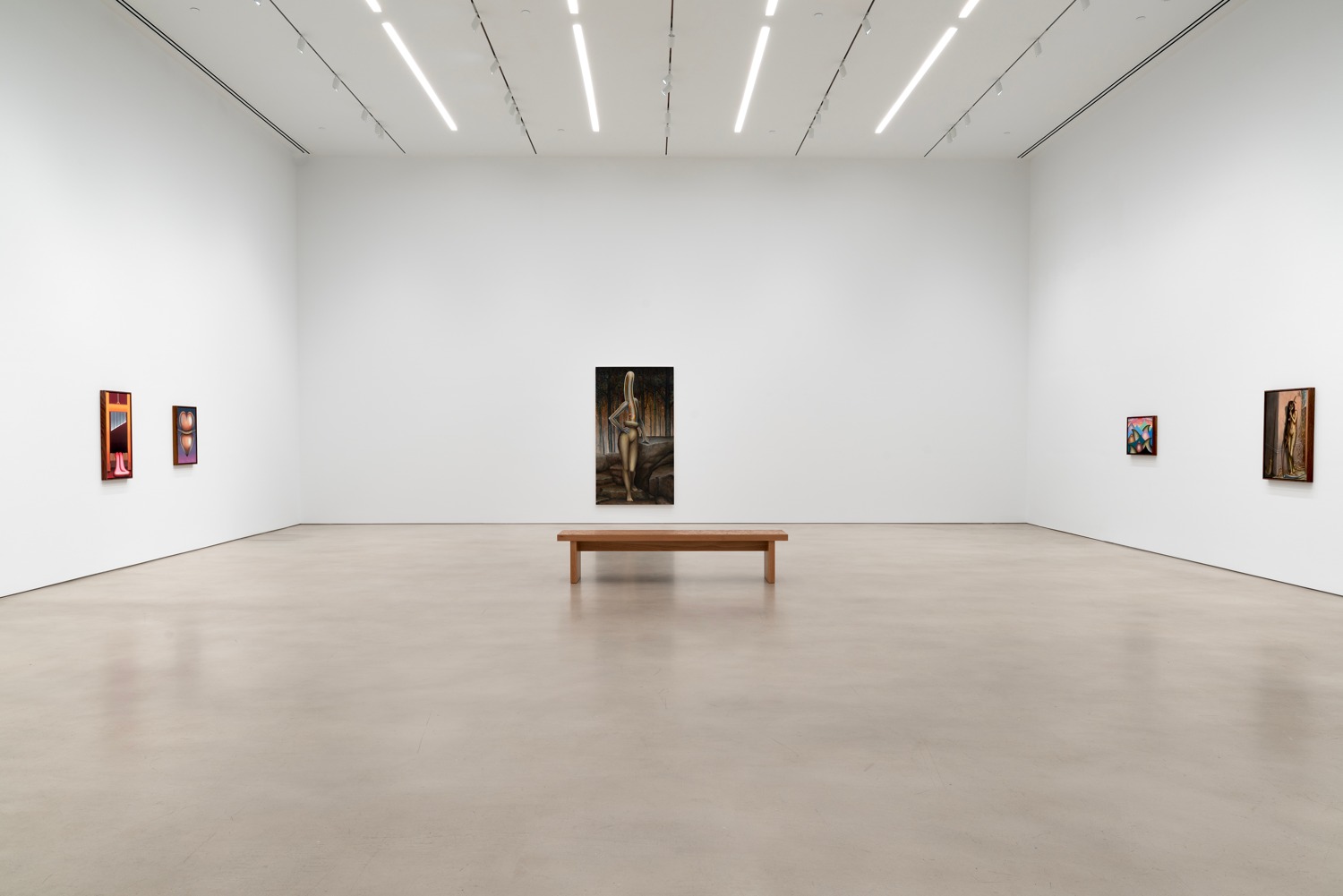
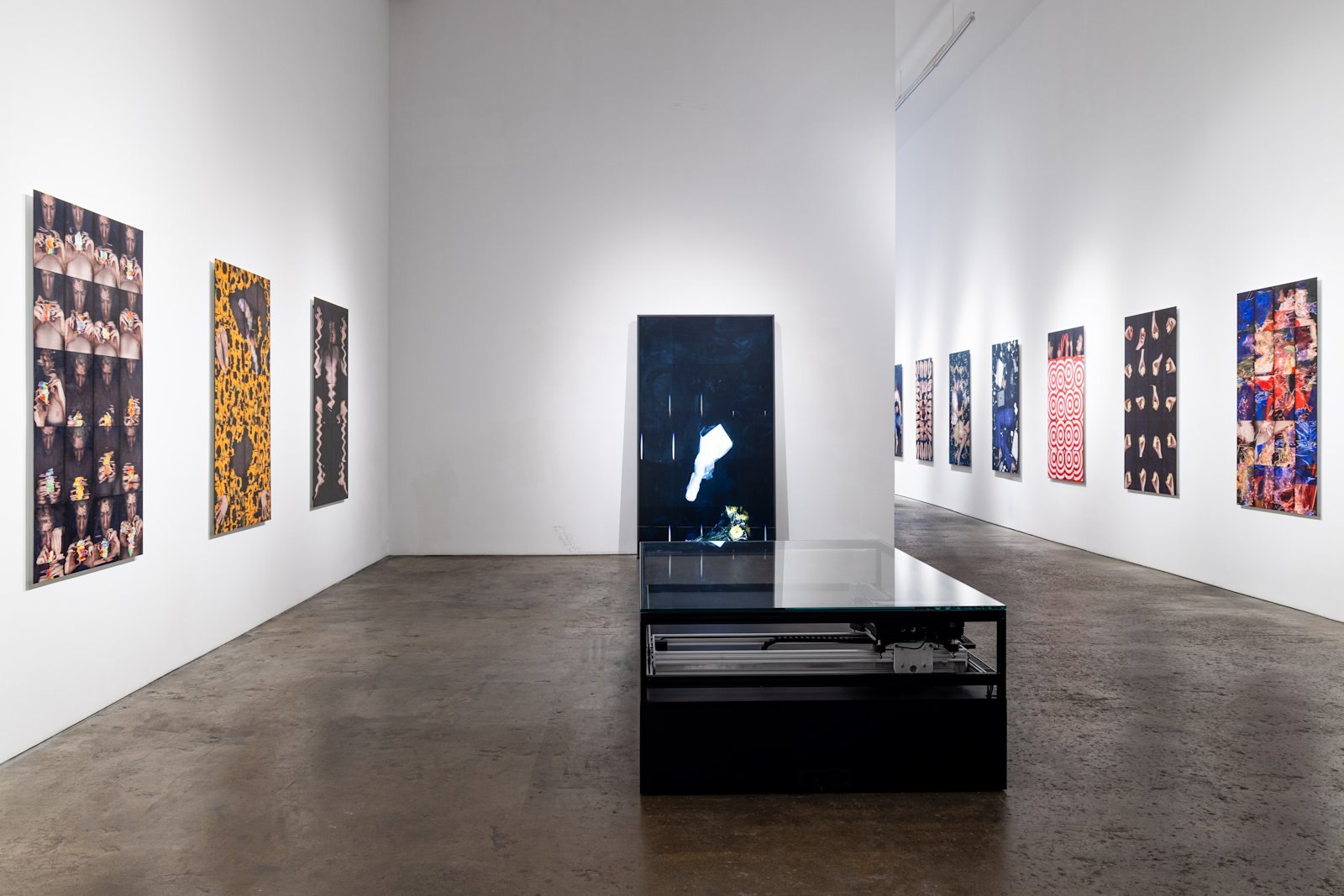
A photograph’s life after it is taken becomes material for Los Angeles–based artist Paul Mpagi Sepuya. Curated by Michael Goodson, Compressed Tenses gathers collages made between 2018 and 2025 alongside photographs made in his studio, where mirrors bring the artist, his camera, and his subjects into the same frame. Friends, lovers, and collaborators share this space, which serves as both a workplace and a record of their encounters. Fingerprints and smudges linger on the glass, recording another kind of presence alongside the figures reflected there.
Works such as Collage 2020-038 (2020), made from color laser prints on Bristol paper, give the studio photographs a second life as objects to be handled. Sepuya tells me he tears prints at the reflected lens, using it as a fixed point to align fragments from different images. The camera stays in place while the room and its occupants shift around it, bringing separate moments into the same frame. The photograph carries the original encounter and the later work of his hands, allowing us to see both the past and what he has made of it.
Widline Cadet: Seremoni Disparisyon (Ritual [Dis]Appearance), Contemporary Arts Center
On view through February 7, 2027
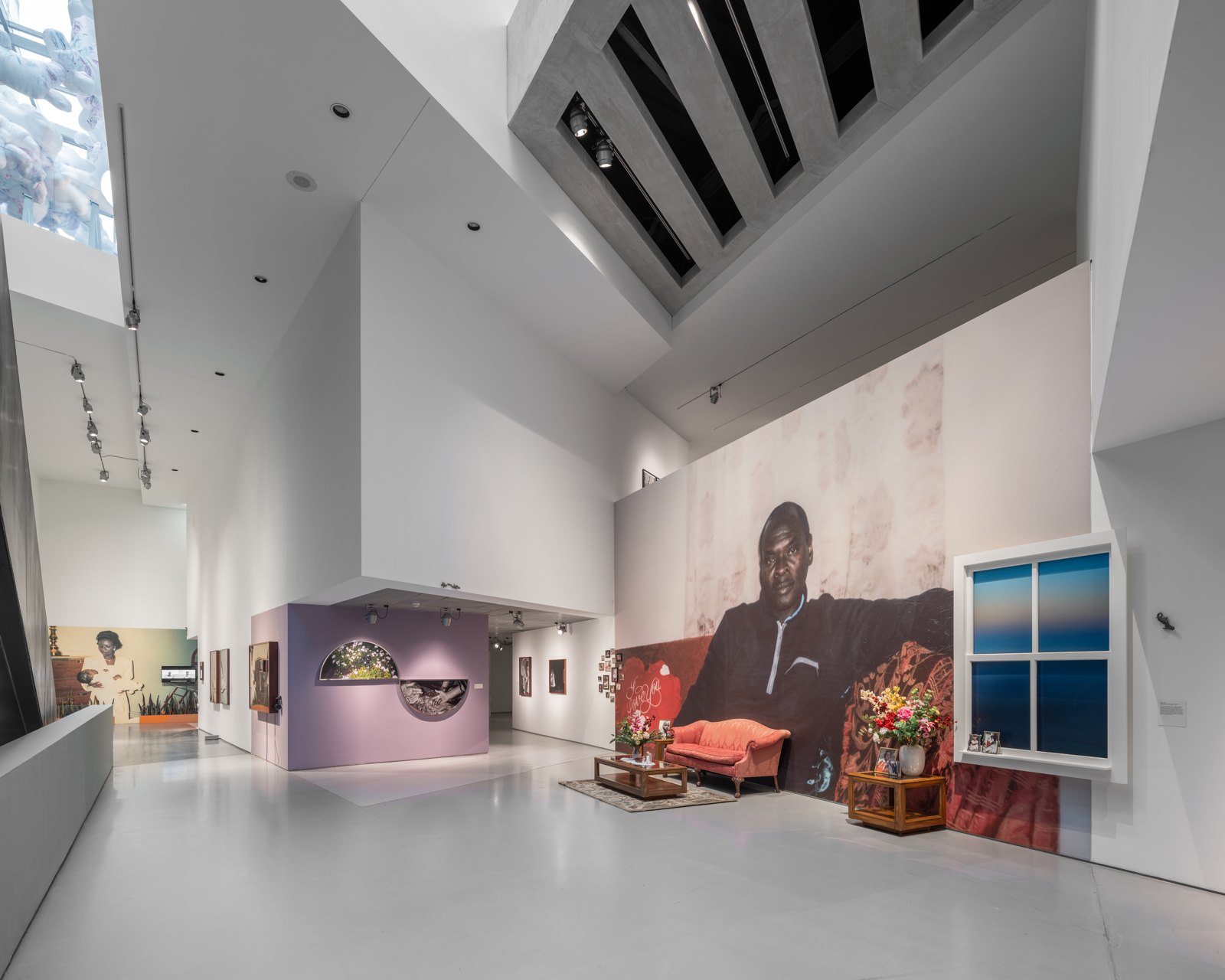
Inside the Contemporary Arts Center, Haitian-born, Los Angeles–based artist Widline Cadet brings together photographs, video, ceramics, and installation tracing her family’s migration to the United States. Curated by Kristen Gaylord, Seremoni Disparisyon (Ritual [Dis]Appearance) gathers nearly a decade of work, begun partly in response to how few photographs of her ancestors survived. At the center of the exhibition, Altar #2 (2026) recreates a version of her family’s living room. A photograph of her father, enlarged and printed on vinyl, fills the wall behind a rose-colored couch, while artificial bouquets, small ornaments, and other familiar objects recall the decorations of her mother’s Washington Heights apartment. Here, furniture and tchotchkes become their own kind of family record, carrying something of Haiti into a home made in New York.
Across photographs such as I Put All My Hopes on You #2 and #3 (2021), whose titles repeat her mother’s words to her children, and the video Views from Home (2023), which pairs footage from Haiti and relatives’ homes in the United States with her mother’s voice messages in Kreyòl, Cadet traces the ways memory travels through images, objects, and domestic space. The room belongs specifically to her family, but its details may feel familiar to others across the Haitian diaspora, where one home is often assembled from the memories and habits of another.
Natural Fictions, The Carnegie
On view through March 6, 2027
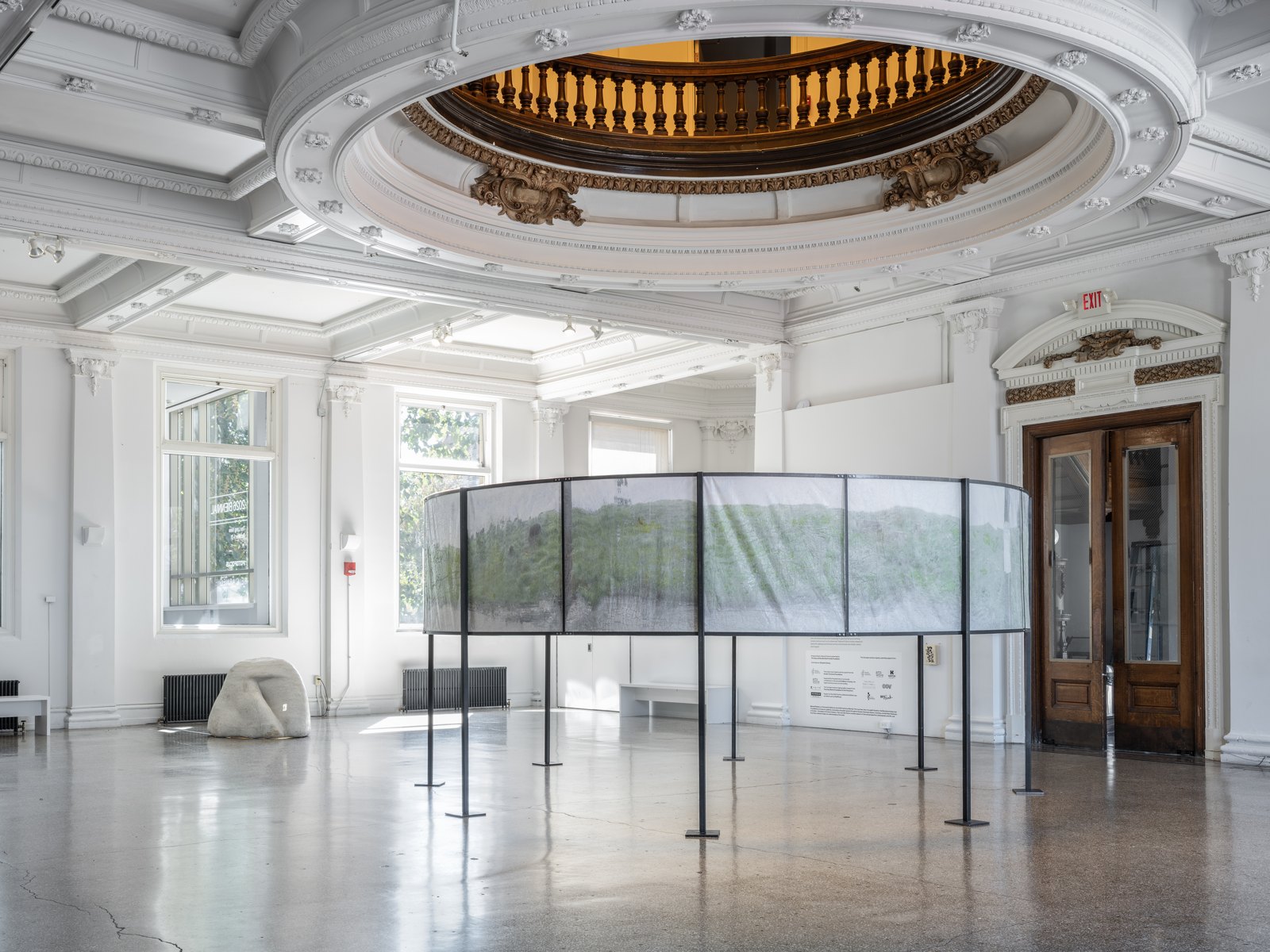
Across the Ohio River, Natural Fictions occupies the Carnegie’s former library building in Covington. Curated by Lindsay Albert and Sso-Rha Kang, the exhibition brings together seven artists working between photography, sculpture, and moving images. Lydia Smith’s Cyclorama (Norwood Mound) (2026) follows the rotunda’s curve, surrounding the viewer with a panoramic image of a nearby Indigenous earthwork. In Mareiwa Miller’s Alone forms a world (2024), a photographic negative, glass, and LED light are incorporated into a ceramic form. The photograph becomes something to peer into, its light held inside the sculpture. Joshua Berg’s Licking River (2020) brings us back to the waterways surrounding Covington, where he lives.
Upstairs, a man jogs in a loop on a Barcelona rooftop in Phillip Maisel’s Seeing Is and Is Not Believing (2020). Nearby, Ruby Que’s Travelogue II (2025) sends a model train around a track with a projector on top, casting images of empty terrain as it moves. Each circuit brings the images back into view, giving us another chance to notice something before it passes. After a weekend spent considering how places are remembered and imagined, these loops leave us with the peculiar familiarity of coming back to something changed by our time away—however brief.