.webp)

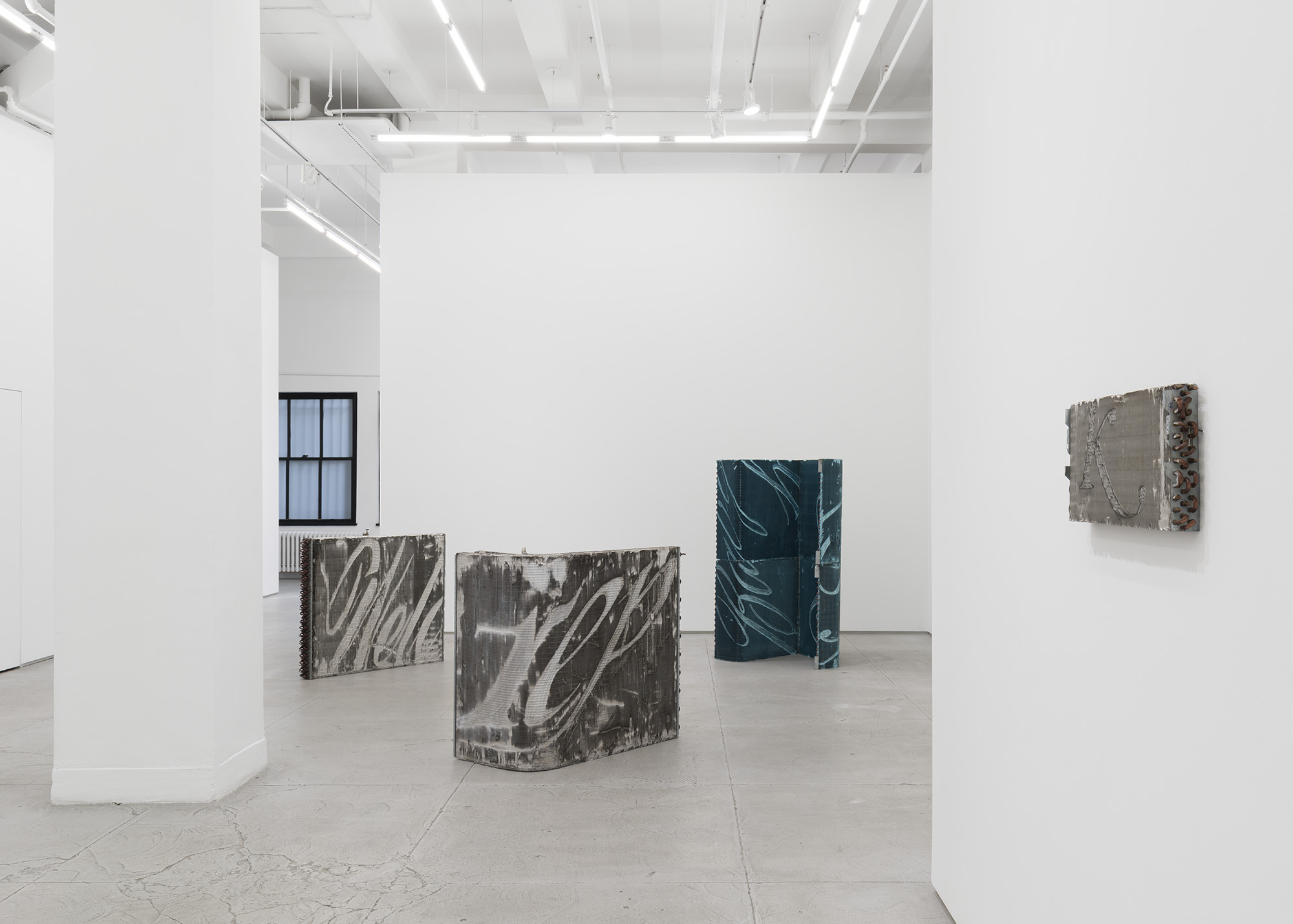
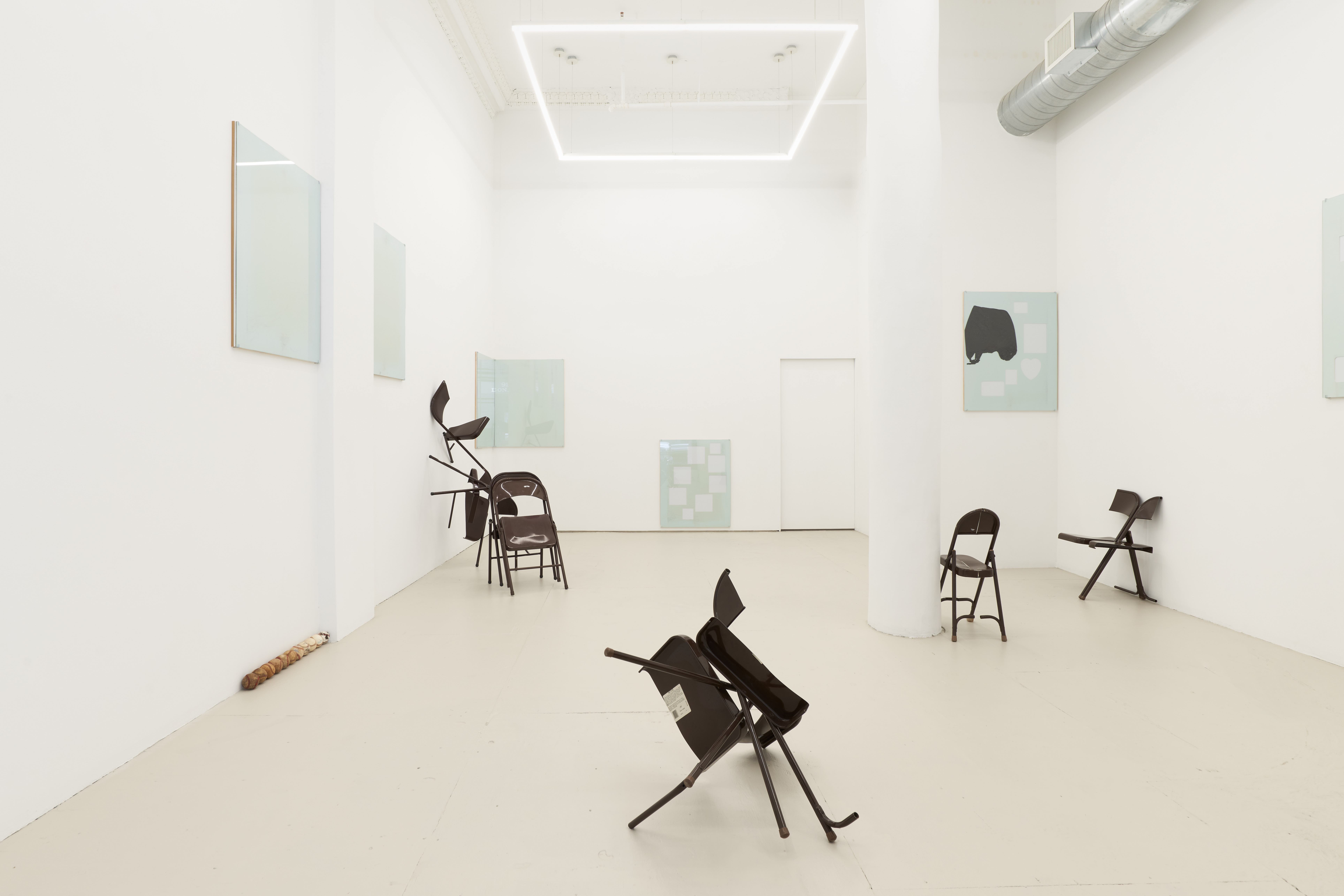
Alix Vernet: “LANDMARKS” at Chapter NY
Review
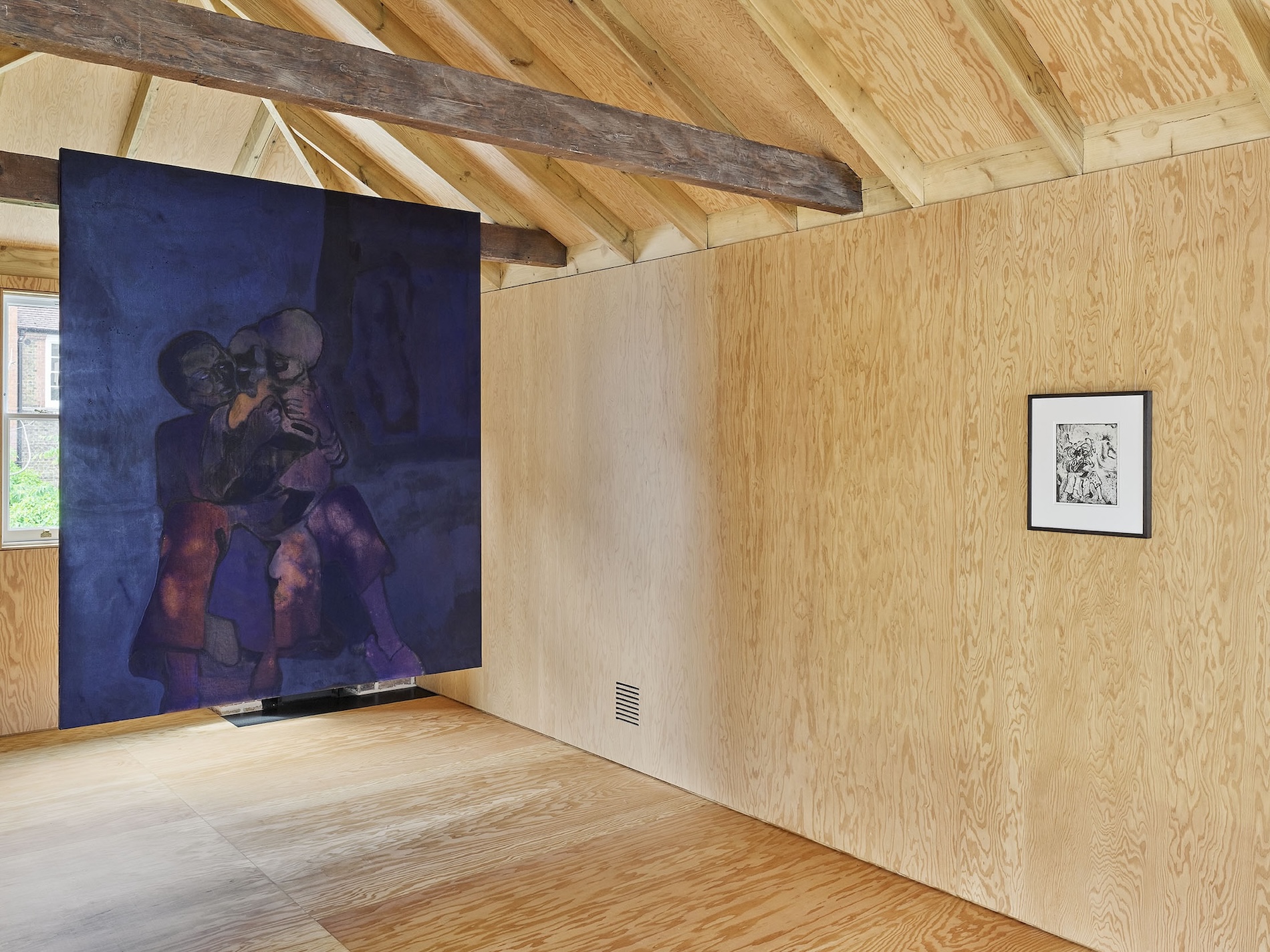
In a tightly focused exhibition of nine works, Kern Samuel considers what materials remember and what they become when subjected to repetition, alteration, and use. IM, Samuel’s third solo exhibition with Derosia, takes its title from the Individual Medley, the swimming event in which a competitor completes four strokes in a single race. The analogy is less a programmatic key than a formal proposition: IM is an exhibition organized by shifts between distinct modes of making, each work arriving with its own rhythm while remaining implicated in that of the others. The result is an unusually attentive meditation on how form accumulates through process.
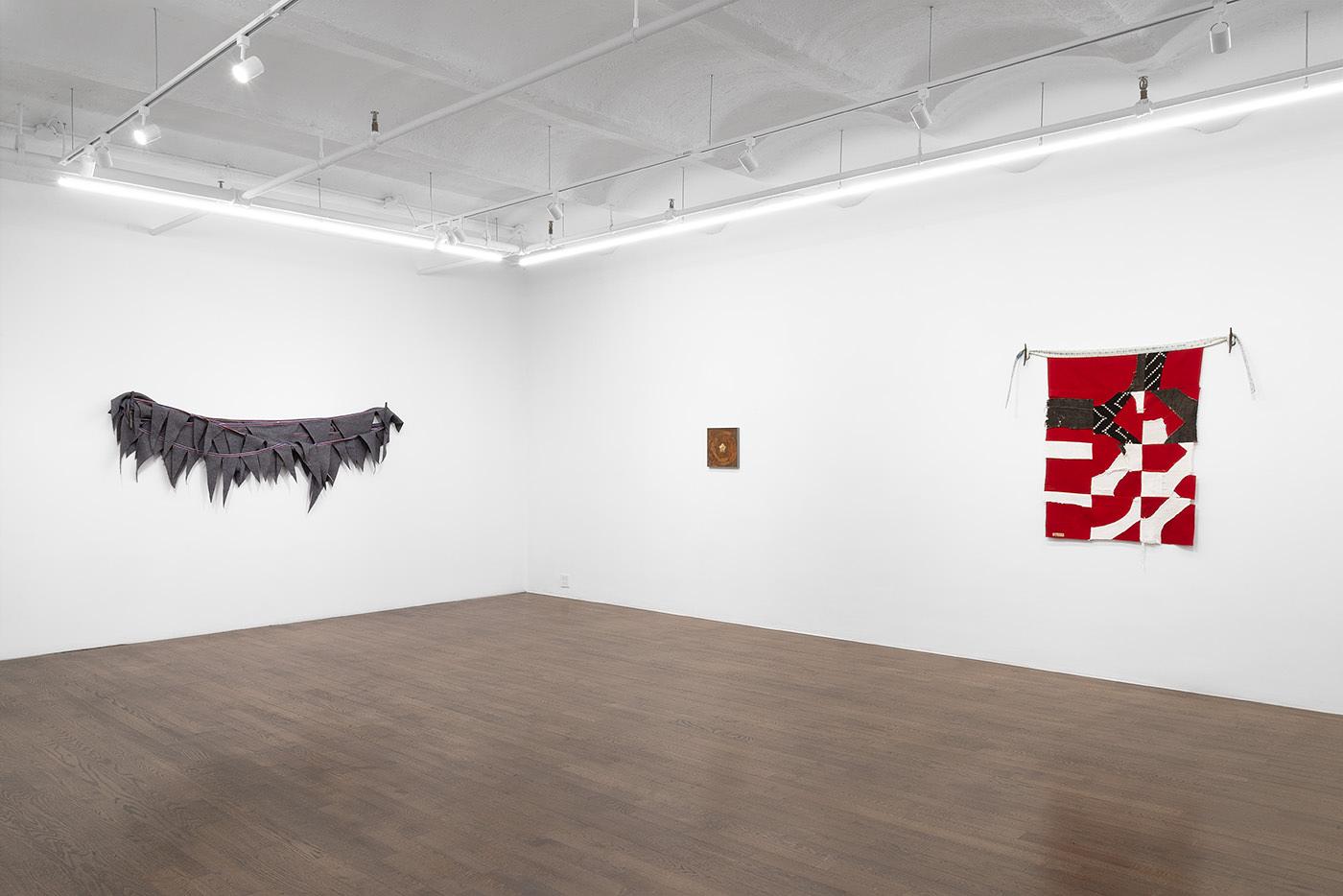
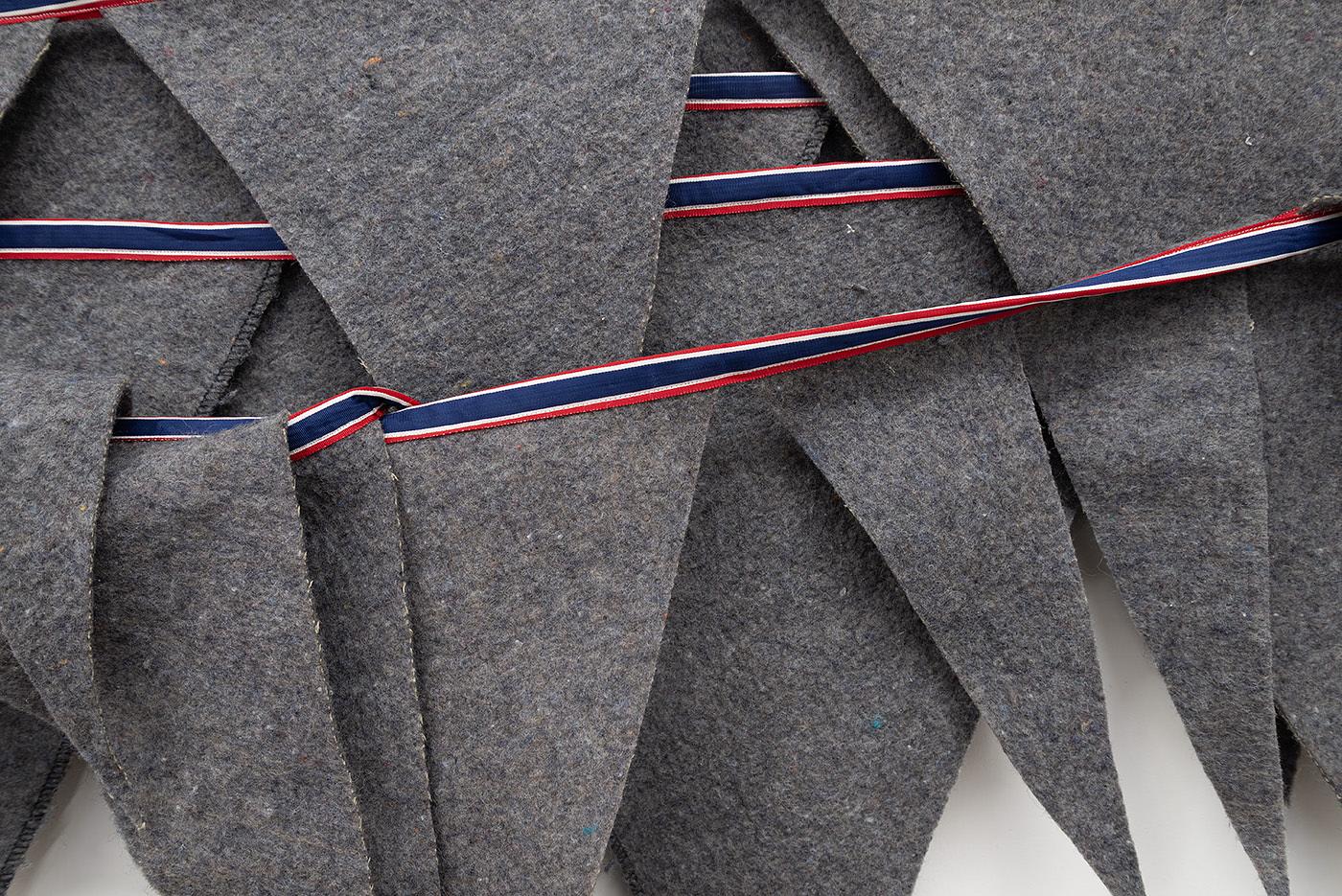
Hanging from nautical cleats—a pun on the picture-hanging mechanism—three unframed textile works refuse the stability of the conventional picture plane. In Backstroke (2026), triangles of grey wool safety blanket attached to military grosgrain ribbon recall the flags strung above swimming lanes. Suspended in a continuous loop and wrapped around itself in a figure eight, the textile seems at once diagrammatic and bodily. Its repetition is rigorous without becoming mechanical: each fold, twist, and accumulation of fabric produces a slightly different register of weight and tension. The swimming reference is consequently less illustrative than structural. The work asks viewers to consider movement as something that can be held in matter, even after the departure of the body.
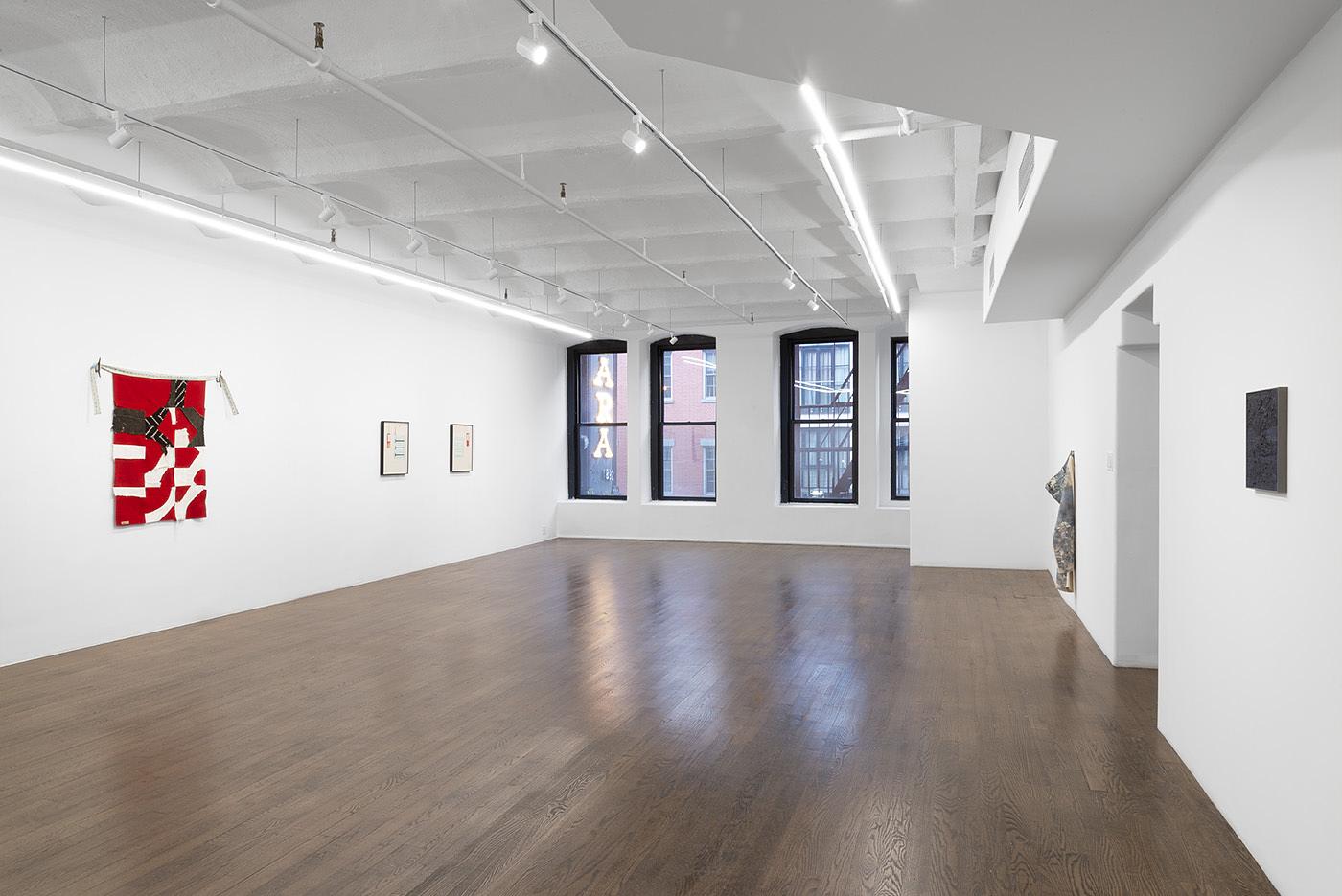
On an adjacent wall, Red Banner (2026) gathers wool and mud cloth into a patchwork attached to an indigo-dyed shibori banner likewise suspended from metal cleats. Each material carries distinct histories, but Samuel does not attempt to reconcile them into a singular visual language. Instead, their differences remain legible within the work’s construction. The patchwork is, in this sense, less an image of cultural synthesis than an enactment of it: pieces are cut, joined, displaced, and made to coexist without losing the traces of their former lives.
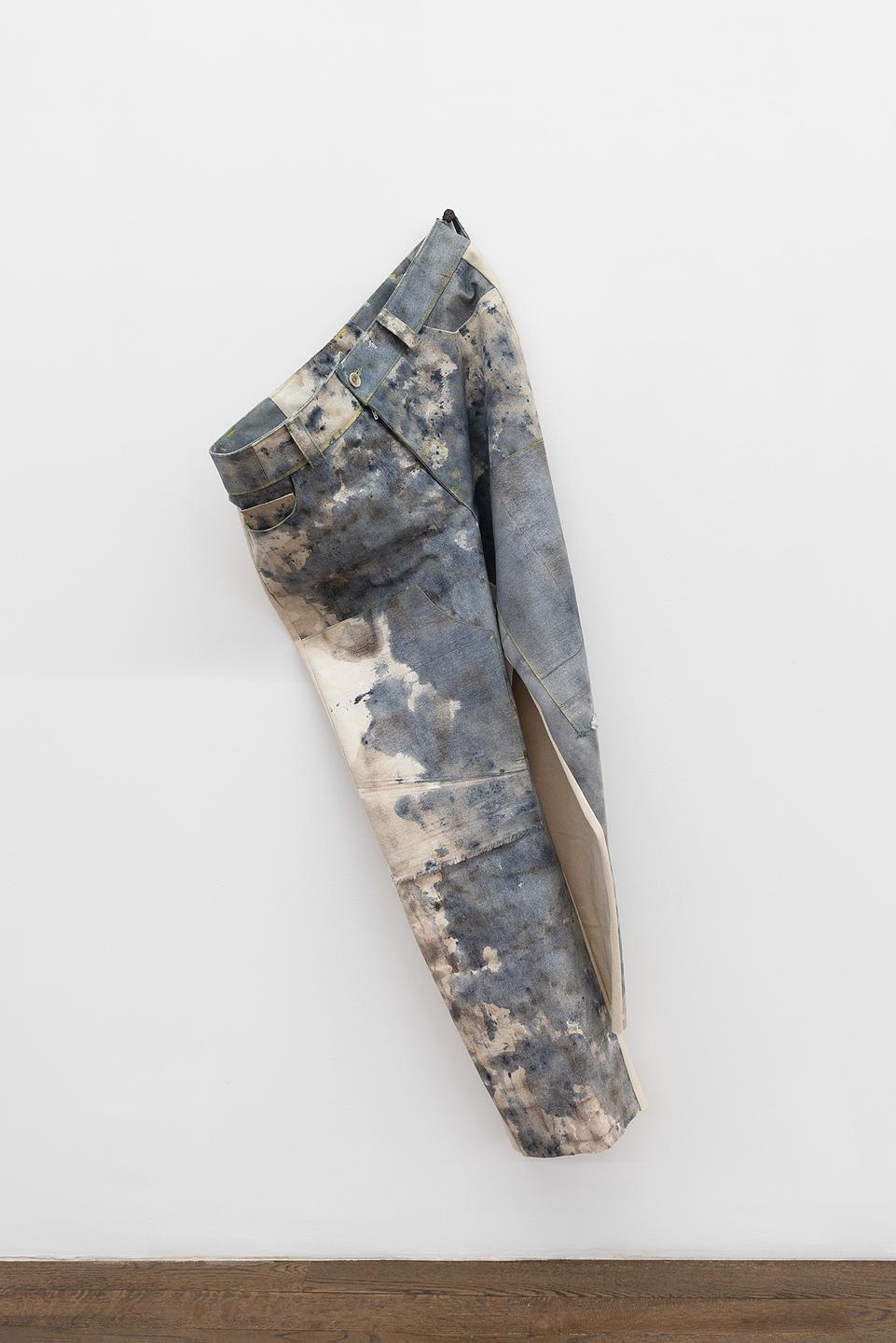
If Red Banner concerns the accumulation of histories, Double Knee (2026) turns toward the body as a site where labor becomes visible. The work, which began as scraps of coated canvas that Samuel acquired in the English countryside, was constructed using an existing pair of pants as a visual reference. The canvas was dyed with indigo and raw umber, taking on the appearance of denim. Raw canvas and salvaged fasteners complete what the original scrap material could not do on its own. The resulting garment hangs from a single nail, its weight seemingly pulling against the wall. The object is recognizably a pair of pants, but no longer entirely belongs to the category of clothing. The work has been emptied of the body it was made to contain, yet the body remains strangely present. One can imagine the knees, hips, and thighs that might have occupied its folds; the pressure of movement recorded in the ridges of fabric; the peculiar shape a garment retains after being worn. Samuel’s intervention makes the pants less a representation of labor than a residue of it. The garment appears to have been worn, worked in, discarded, and only afterward understood as an object.
This attention to residue extends into Death Mask (2026), Another Spiral (2026), and Gateway (2026), three small works on panel that feel like laboratories of material possibility. DuPont styrofoam, pink moiré taffeta, expired insects, iron metallic surfacer, compostable produce bags, orange pith, and pigment are collapsed together to produce images that hover between intention and accident. Their marks are neither wholly gestural nor entirely diagrammatic. Lines wander, intersect, thicken, and disappear. Shapes begin to resemble routes, passages, or topographies, but never settle into a legible map. Against fields of deep reds, blues, yellows, and blacks, neutral passages complicate the distinction between figure and ground. What initially looks like abstraction begins to feel more like evidence of the decisions that brought the work into being.
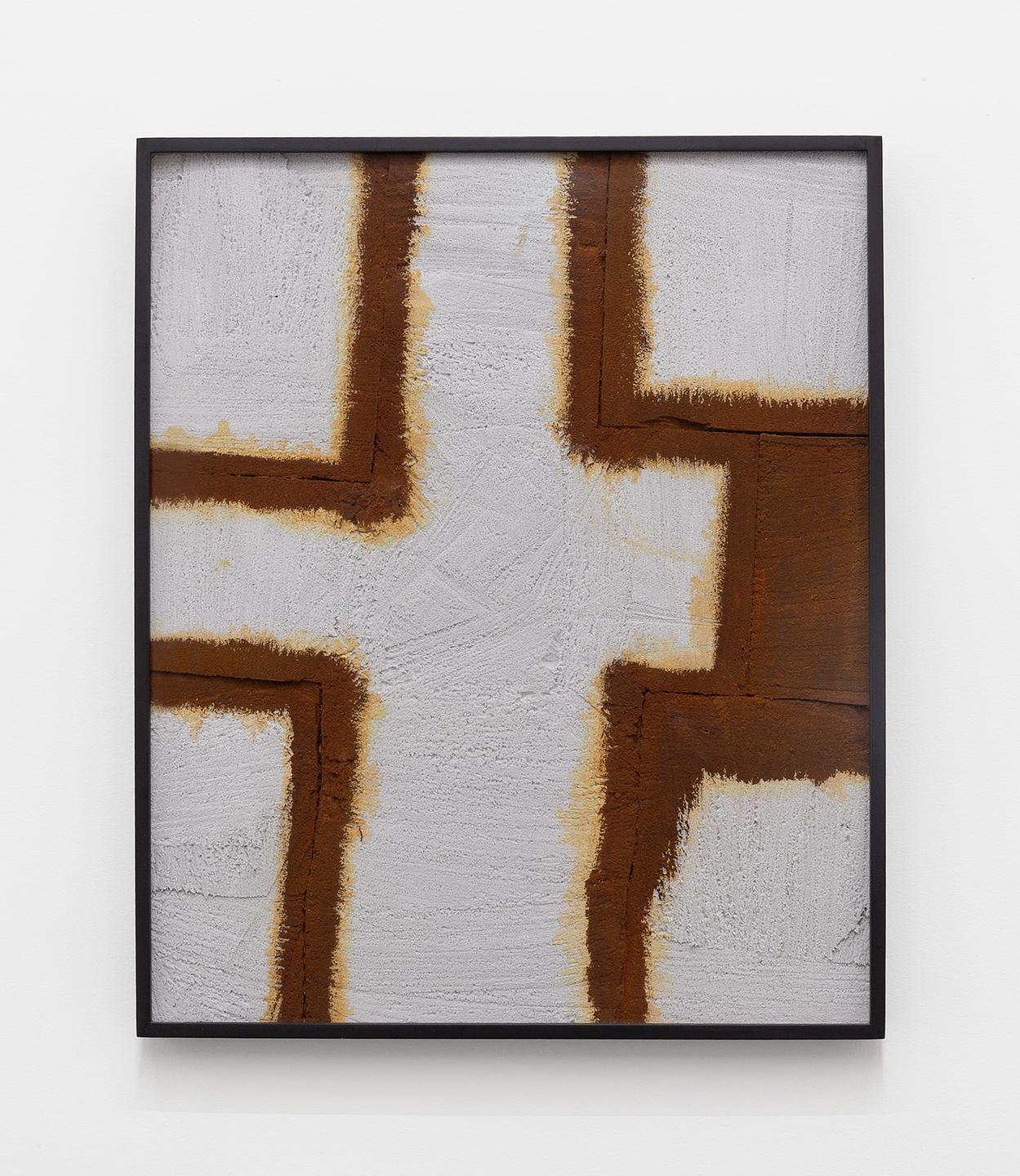
The final framed work, Lifeguard (2026), offers the exhibition one of its most concentrated images. DuPont styrofoam was thinned by hand until it fit precisely within a preexisting frame. Painted and rusted edges gather around the forms, emphasizing the shape of a cross at the center of the composition. The image carries an almost prophetic stillness. Yet its force comes less from the symbolism of the cross than from the peculiar violence of its construction: a synthetic material has been pared down, altered, and forced into an inherited structure until the two seem to belong to one another.
The swimming references throughout IM could easily have become a governing metaphor, reducing the exhibition to an extended analogy between bodies, water, and movement. And refreshingly, Samuel resists that kind of coherence. The swimming pool remains present as a conceptual architecture, but the works continually exceed it—that tension gives IM its particular intelligence. The works do not ask to be unified so much as held together in difference. A safety blanket, a hunting jacket, mud cloth, canvas, styrofoam, paper, pigment: each arrives with a prior life, and none is completely stripped of it. Samuel’s practice makes an argument for contingency without making contingency feel accidental. What emerges is a conception of artistic labor in which making means remaining responsive to what matter can and cannot do.
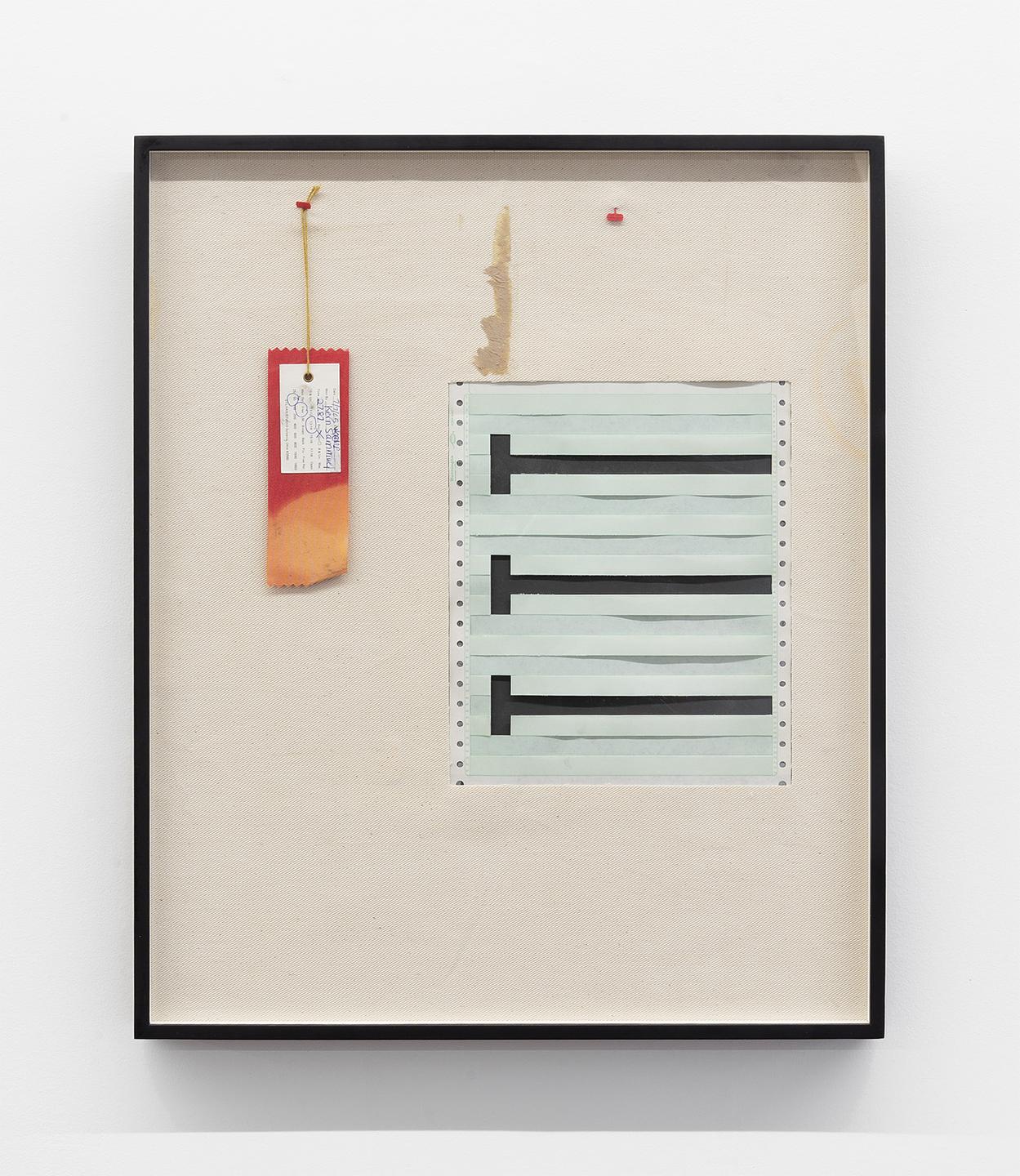
Nine works might ordinarily feel insufficient for understanding an artist’s practice. One might want more: more indication of an oeuvre, more evidence of the gallery’s larger investment, more material from which to construct a stable account of the artist. But IM operates according to another logic. Its spareness is not a lack of information but a condition of attention. Each work holds several temporalities at once: what its materials were before entering the studio, what they became through the act of making, and what they might become afterward. Samuel does not resolve these histories so much as allow them to remain in contact. The result is an exhibition in which matter becomes a record of what has passed through it—labor, use, inheritance, accident—while remaining open to what it has yet to become.
Kern Samuel: IM is on view at Derosia from September 9 through October 10, 2026.