

Sonia Boyce: “Demonstrate” at the Queens Museum
Review
Miao Ying: Come, Sit, Stay
Belvedere 21 | Arsenalstraße 1/21 Haus, 1030 Vienna
July 10 – October 4, 2026
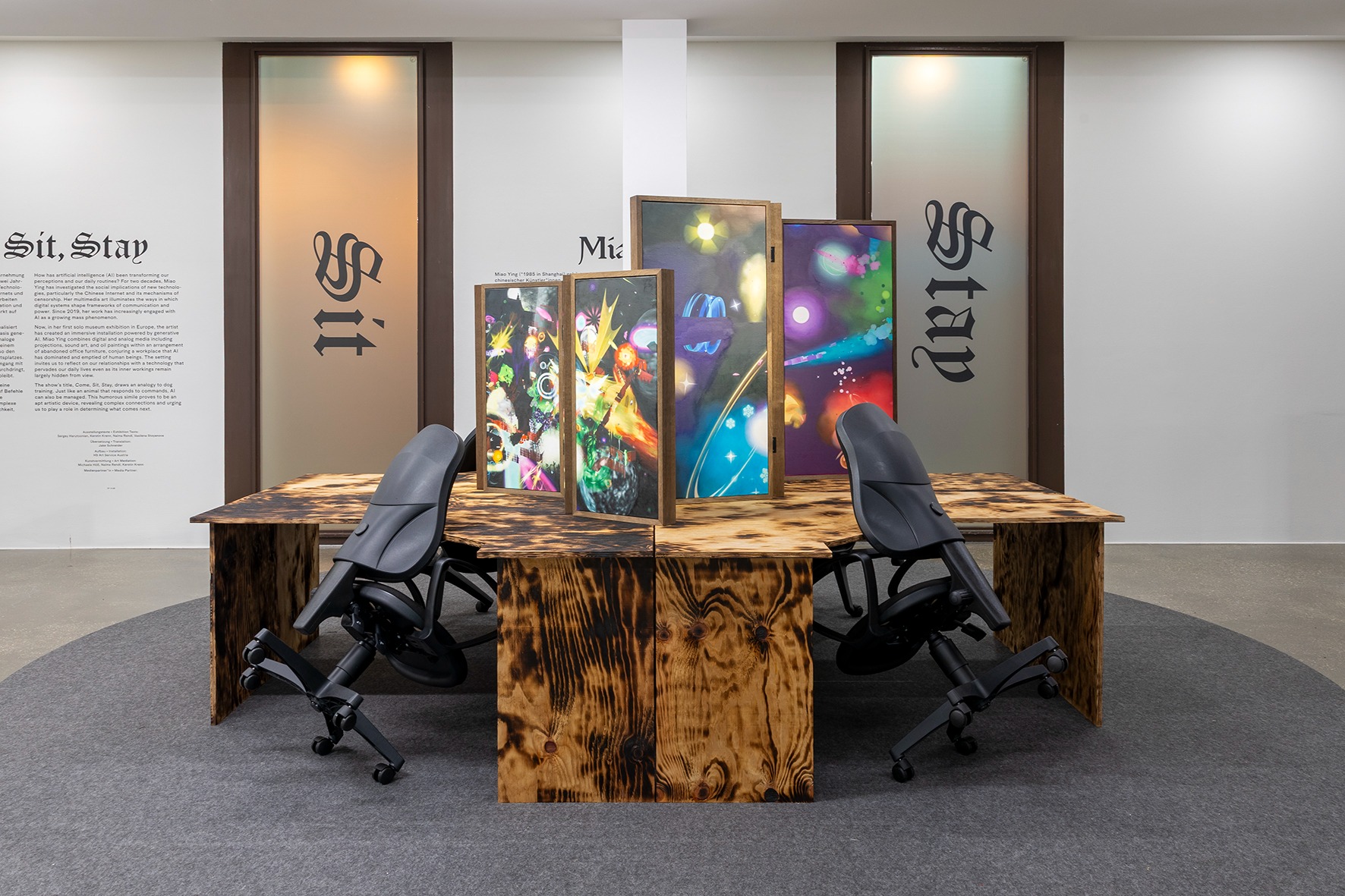
In the lower level of Belvedere 21 in Vienna, Miao Ying proposes a reconsideration of artificial intelligence through an infrastructural format. In Come, Sit, Stay, the viewer first comes across an installation of desk chairs leaned against a cubicle, which becomes a platform for a set of hinged canvases that zigzag across the desk like monitors. The canvases may appear like digital prints or even screens at first, but upon closer observation they reveal themselves as oil paintings. These canvases are brimming with content that triggers recognition of digital media without a clear reference point. They are composed of brightly colored explosions, rays of light, fire, atmospheric effects, abstract shapes, and an overall aesthetic that appears like the renderings of an iPhone game, except multiplied exponentially and scrambled to bits.
There are more canvases nearby which stand on custom frames that are set on rotating wheels, like office chairs. Ying appropriates the ubiquity of office furniture into unique, aestheticized structures. The traditional medium of her paintings and their precise technical execution create a stark contrast with the hedonic digital world they represent: an infinitely expanding universe of cheap, flaccid images. There is a sonic environment within the gallery which emanates from two large LED screens that are playing a video of the same painted world but animated, constantly shifting with strange effects, half-rendered environments, and little floating icons. This live simulation, Perfect Sameness Makes Difference, 2026, is the result of a constantly regenerating AI system that Ying developed with scientists at Cornell. The audio is generated by a second AI system which responds to the visuals of the first. The voices you hear are not human, but an uncanny mimesis of whispers, narration, and song. The seemingly artificial words create a kind of absurd poetry which nonetheless spurts out some intoxicating phrases like “You see this magical white energy sweeping the cluttered desk. It is the ultimate fantasy of the Big Other, performing our belief and enjoyment for us.”
The simulation is running from a gaming PC nearby, which is inset into a kind of wooden bureau or altarpiece, with blank doors opening from either side. On its top surface, black-and-white pictures of dogs in vintage golden frames are stationed, gazing expectantly out at us and calling back to the title Come, Sit, Stay, in reference to the process of training a dog. We can easily connect AI training with animal domestication, but Ying’s installation also feels like a training setup for humans. The desk with its office chairs leaned against it conjures all of the business and jobs lost because of AI, the once productive monitors replaced by an autonomous universe of pleasure. Ying handles these large-scale existential and economic threats with delicacy, representing the ultimate abstraction of artificial intelligence as a tangible form, and therefore opening a pathway to reconsider its cultural and infrastructural position.
Dozie Kanu: grass roots – hinges
anonymous gallery |
September 17 – October 31, 2026
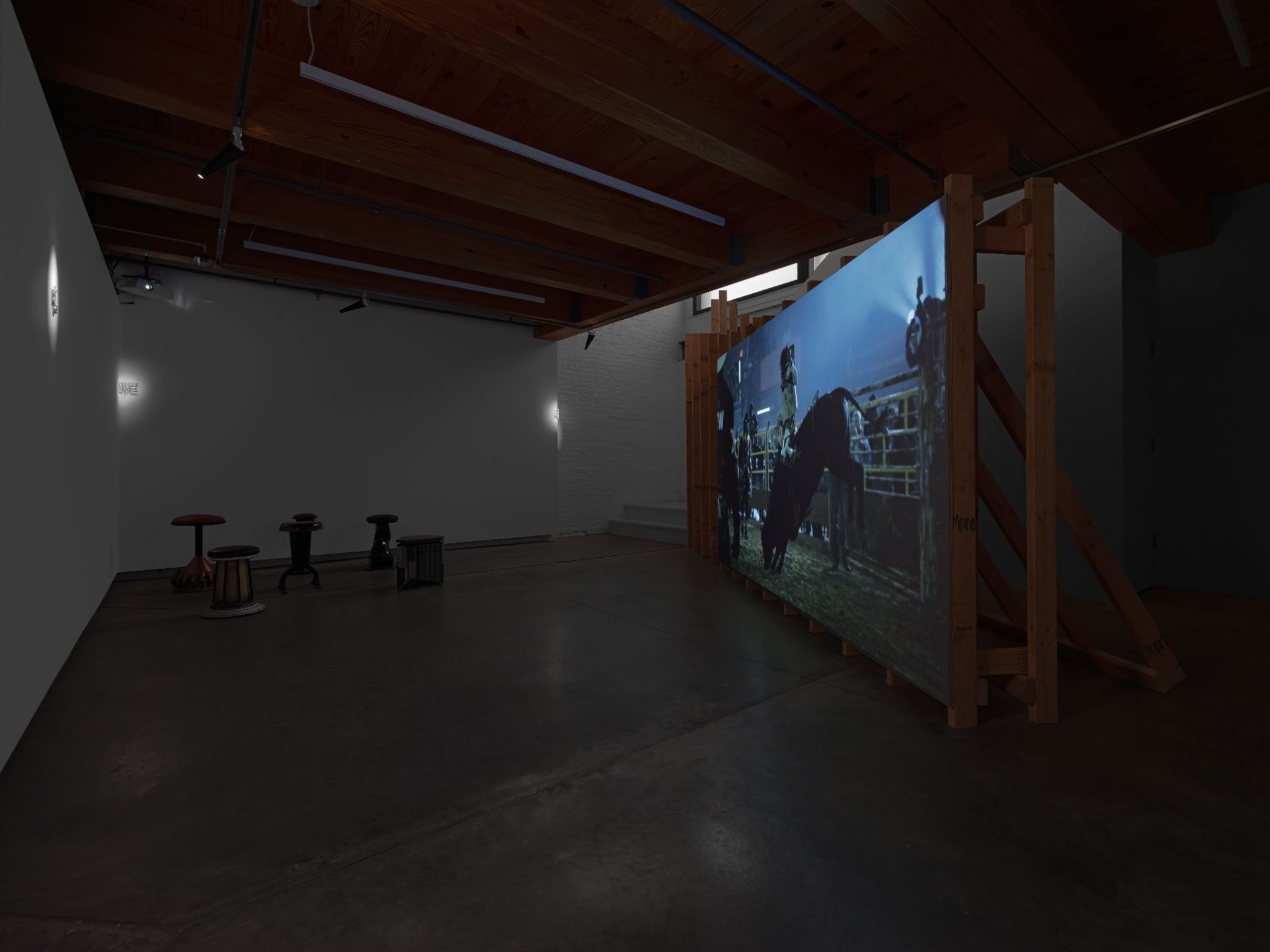
grass roots – hinges, a solo exhibition by Dozie Kanu at anonymous gallery, is full of promise—not least the artist’s trajectory is pitching internationally with an impressive record of solo and group exhibitions across Europe and the US. The show so elegantly demonstrates Kanu’s multi-pronged artistic practice rooted in design. A grouping of Kanu’s familiar sculptural stools is stationed alongside the artist’s new short film titled Cowboy (2026), which swings out into the middle of the room on a wooden gate-like structure. On the gallery walls, Kanu debuts a new series of milled steel hinges, taking on forms that reference Nigerian geometric motifs and symbols.
The series of hinges are acutely spotlit and secured with screws arranged in countersunk holes. Hinge [ ii ] (2026) hugs the outside corner of the wall closest to the entrance, its spine aligning with the architectural edges of the room. Another, Hinge [iii] (2026), is installed inversely, in an inside corner of the gallery where the hinge pin accentuates the seam between two adjoining walls. In contrast to the stools, whose function is officiated by the artist’s synthesis of materials, Kanu abandons the utility of the hinge. The rest of the hinges in the show are mounted flatly. In these instances, Kanu overrides the mobility typically afforded by a hinge with this splayed presentation—so much so that the objects resemble pinned insect specimens more than builder’s hardware. Themes of preservation and transformation are ushered in, compounding with the cultural patterns the metal objects take after to rethink the vertical transmission of heritage intergenerationally.
Kanu's film Cowboy (2026), projected onto an ample wooden structure, addresses this in the context of Black rodeos, specifically the Bill Pickett Invitational Rodeo, inaugurated in Denver, Colorado, in 1984. Kanu’s portrayal of the equestrian sport is as veritable as it is cinematic. Scenes from bucking events deliver on the dynamism of the sport; the artist harnesses the animal’s wildness and sublimates it into action-packed festivity. More poignantly, though, Kanu highlights moments of care between rodeo hands and their horses. In one scene from the film, the camera moves between a group of kids as they laughingly share the origins of their horses' names. Another depicts a young woman hosing down a shimmering white horse whilst standing on a hoverboard. Through these acts of stewardship, Kanu demonstrates how contemporary life is closely roped to long-standing Black Western traditions.
Like promises, hinges are mechanisms that bring two things into relation. The anatomy of the hinge implicates the human body in this process: a hinge’s knuckles protect the interlocking mechanism that unites its twin components. Kanu examines the act of holding on, tight-fisted: to saddle riggings, to traditions, and to manifold histories. Meanwhile, his sculptures attest to a material’s promise to become something else—something more. In grass roots – hinges, Kanu allows letting go to be just as meaningful, and certain, as holding on.
Mike Cloud: Suitcase Portraits
Thomas Erben | 526 W 26 St, Floor 4, New York
September 17 – October 24, 2026
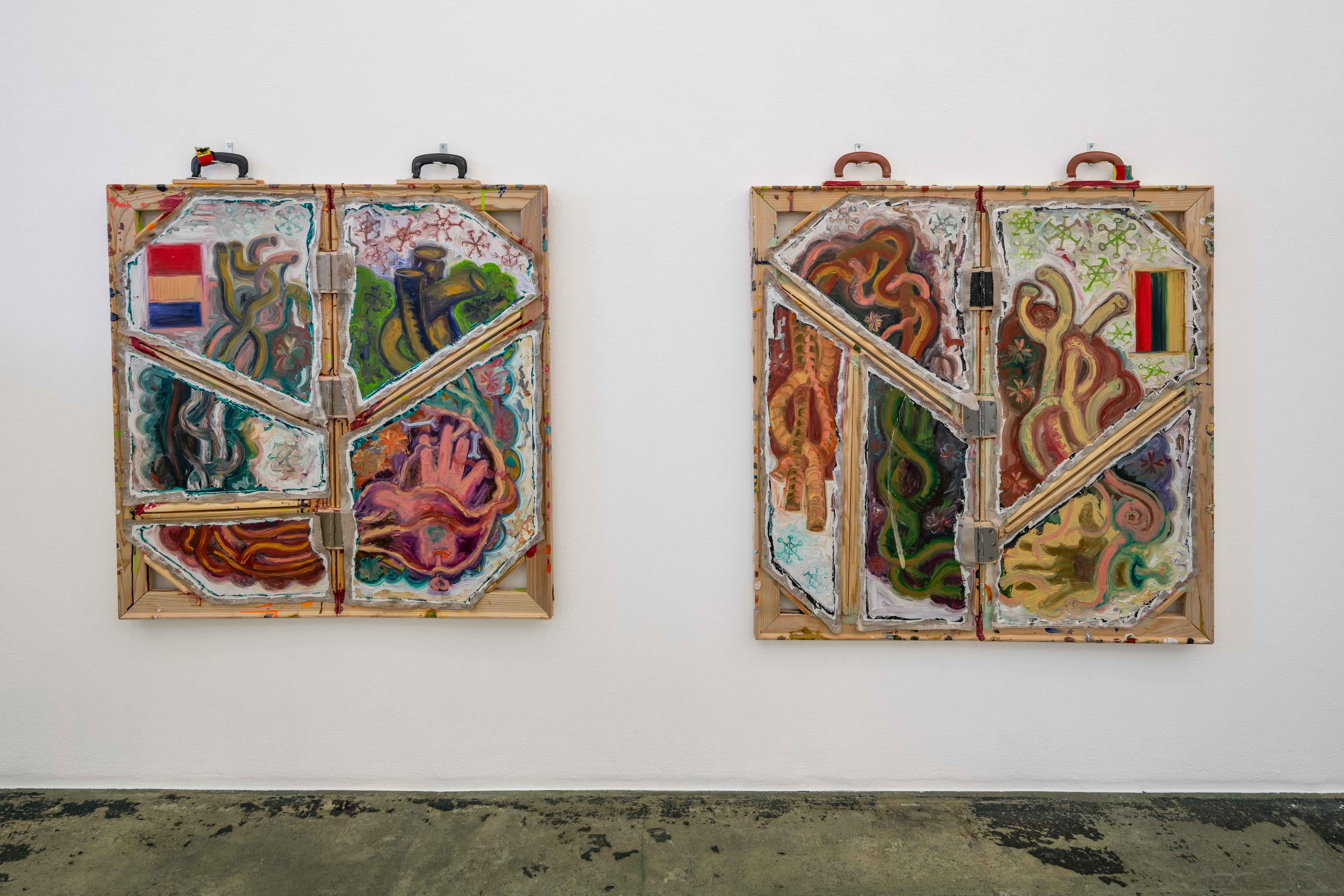
Death punctuates Suitcase Portraits, Mike Cloud’s ninth exhibition with Chelsea’s Thomas Erben Gallery. Continuing his expansive exploration of painting, Cloud returns to his enduring link between the terminus and painting. Following the exhibition’s opening, Cloud met artist Peter Halley for a discussion of Yve-Alain Bois’s seminal 1986 essay Painting: The Task of Mourning—outlining the conceptual death of painting alongside the corporeal deaths within each object. In his essay, Bois claims, “The pure beginning, the liberation from tradition, the ‘zero degree’ that was searched for by the first generation of abstract painters could not but function as an omen of the end."1 From modernism’s inception, the idea that conceptual explorations of abstract painting could be optimized and directed towards a hypothetical endpoint tacitly anticipated the medium’s eventual demise.
When thinking of the modernists and Mike Cloud, there is an easy link to the constructivists. His subjects often seem arbitrary—as with the constructivists, shapes, text, and colors are primarily at the service of composition and formal arrangement rather than specific conceptual function. Cloud, though, deviates from the constructivists as a storyteller; his distinctive narrative technique operates heavily through subtlety and mystery. His complex symbology begets associative provocations, sometimes dead ends and sometimes not. The levity of snowflakes and shamrocks evokes seasonal crafts or decorations. National flags charge paintings with the national, ethnic, and colonial histories of each country. The most prominent subjects are obliterated corpses. The titles of his paintings (e.g., Unidentified Suitcase Portrait Nigeria [2026]) and the inclusion of the aforementioned national flags disperse the disemboweled innards and decapitated limbs across the globe, as in the myth of Osiris’s mummification. The store-bought handles attached to Cloud’s signature asymmetrical stretchers evoke countless true crime stories culminating in decapitated corpses stuffed into suitcases and thrown into a river. These associations have varying degrees of relevance to the actual work, but are described to illustrate the painter’s allusive storytelling capacity.
Cloud’s interest in symbols is oriented primarily towards their function in a painting’s composition. This imbues his subjects with a special sort of mundanity, poignant in itself. In depictions of abject worldwide violence, a sense of mundanity is crushingly timely. In the past, Cloud has painted URLs, a digital object that so inundates our contemporary visual plane that to see them painted lovingly by a human hand is undeniably jarring. For most people with smartphones, film and photographs of abhorrent violence through colonial warfare have now similarly penetrated our consciousness. The horrors of mass human suffering are now an unavoidable feature of the digital media landscape. By seeing this violence decoupled from the standard channels of digital image circulation, Cloud calls attention to the channels themselves: their function, the systems in place connecting them to us, to painting, to each other.
Autumn Knight: I Can’t Complain
Institute of Contemporary Arts | The Mall, London SW1Y 5AH
September 29 – November 29, 2026
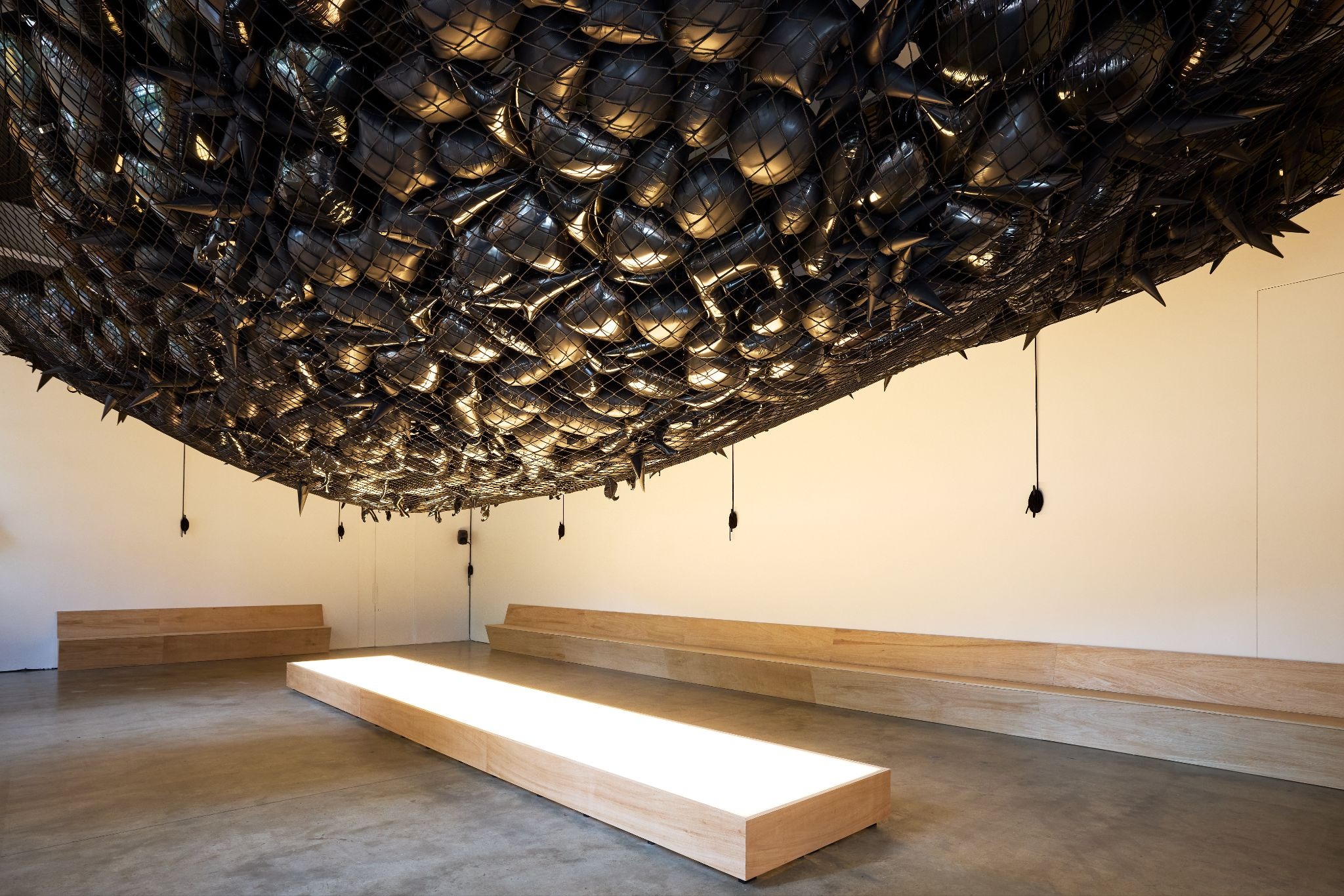
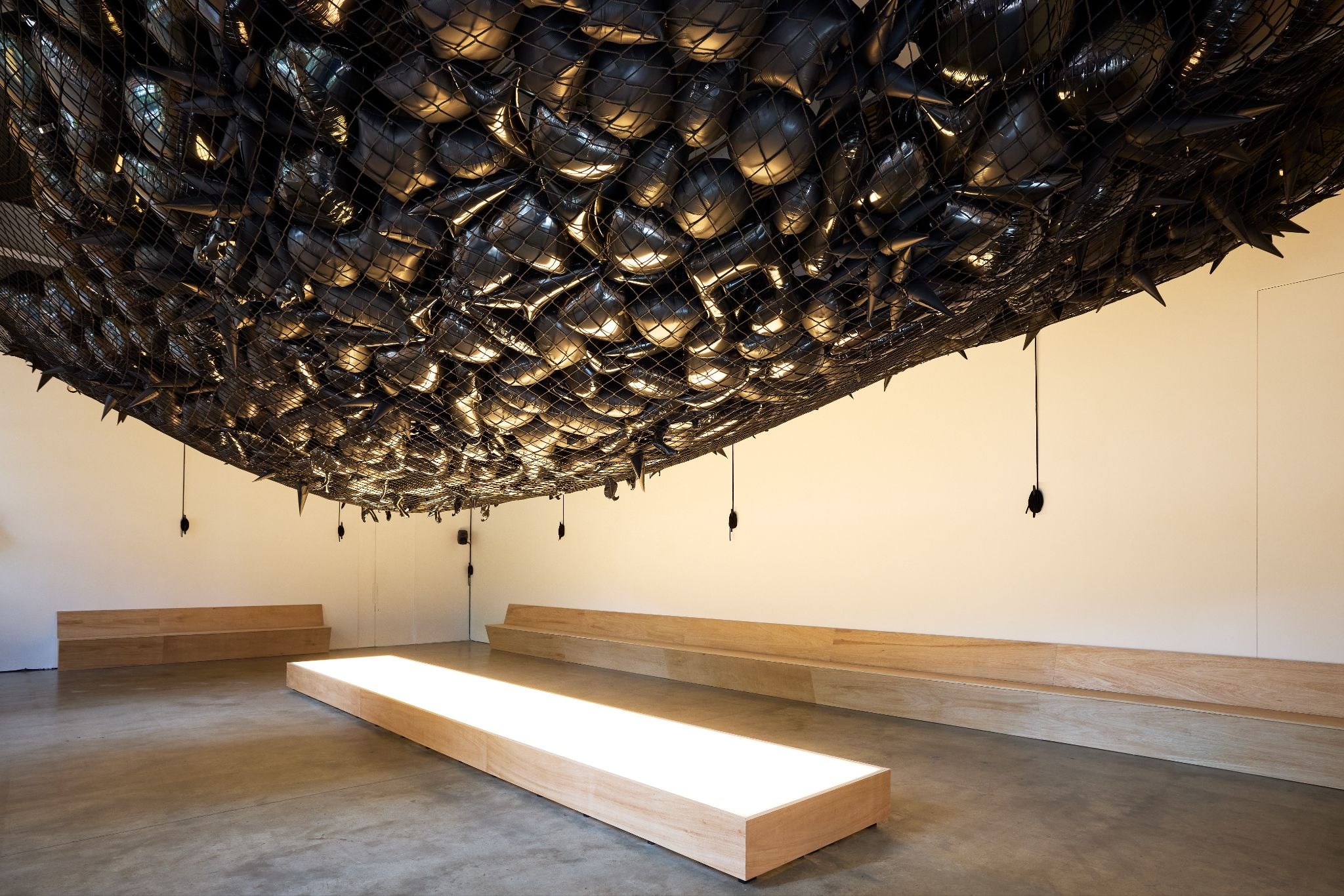
Autumn Knight’s large-scale installation I Can’t Complain transforms London's Institute of Contemporary Arts main gallery into a site of liveliness. Corralled by a cargo net, an unwieldy canopy of black balloons compresses and sprawls, sagging from the ceiling like a giant underbelly from the ceiling. Underneath, a long, rectangular lightbox emanates gradient light from cool fluorescence to warm orange. Both balloons and the lightbox have been motifs in Knight’s past practice, both enlarged into a demanding presence on this occasion. While larger-than-life sculpture often inspires awe due to scale, I Can’t Complain’s affective impact goes beyond its sheer monumentality. The work reflects Knight’s ongoing conviction: bringing together objects and people that would otherwise stay apart.
For years, this New York–based artist has excavated situations that expose societal norms and mechanisms of power through time-based practice. These situations, culled from everyday life or the immediate cultural zeitgeist, are often entwined with elements of humor, absurdity, and surprise. For this installation, Knight invited a circle of five friends to complain over the phone. Edited together with field recordings and music tracks, their calls form a two-channel audio work in which the voices blur and fold into a kind of cacophony. They dwell on everyday irritants—food prices, intimate dynamics, and public transport confrontations—that resonate with visitors. Listening closely to these complaints is at once an intimate and collective experience.
To name an irritation is a political act. Scholar and critic Sianne Ngai describes irritation as a “non-cathartic emotion,”2 defined by an ongoingness and flatness that lacks immediate release. While these everyday irritants often remain overlooked or dismissed as irreverence or killjoys, they reveal larger infrastructural failings and obstacles. By creating the space for participants to identify, if not indulge in, complaints’ various forms of expression, such as dissatisfaction, frustration, and grief, Knight creates a condition of togetherness for catharsis. In this sense, Knight’s work has always functioned as a form: a social-gathering practice that prompts the question: what powers do we hold, and how do we wield them?
I Can’t Complain also prompts a rethink of how liveliness is usually understood in exhibition-making. Liveliness should not only be constituted by movement-based happenings that activate an inert gallery space. It can also come from clashing forms, material vitality, and how images, objects, or sound function as an apparatus to orchestrate social relations.
Torkwase Dyson: Seeing in Blue
Pace Gallery | 540 W 25 St, New York
September 11 – October 24, 2026
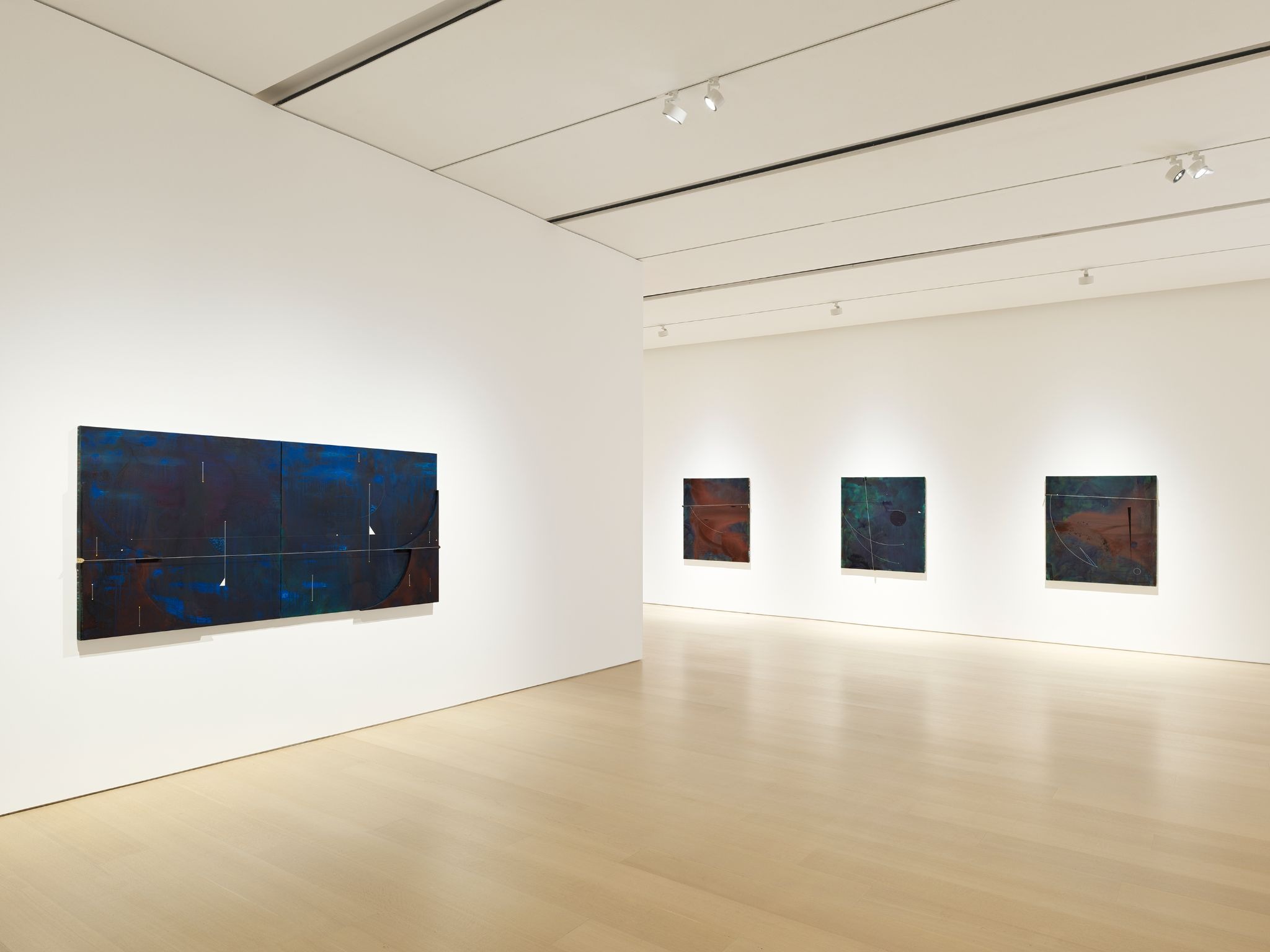
Sometimes, art is about getting lost: in being dispatched to a new location, or, in this case, into several paintings, one searches for something familiar, searching until it’s found. Torkwase Dyson is among the best in the ever-widening group of contemporary artists who can replicate this sensation. Being lost often has a bad reputation, but this lostness—the searching for, the being swallowed whole that one encounters with Dyson’s work—never elicits panic. This holds true across the artist’s oeuvre. Universal and unique, however paradoxical that description might be, it feels as if you have been gently seized, as if her works want to be cast adrift and carry you with them.
In Seeing in Blue, the artist’s current solo show at Pace, Dyson has brought these works into reality from memories of deep-sea diving. To create them, Dyson works from the floor, washing paint over and over again, letting material spill across the canvases, then tipping the edges one way, then the other; liquids run, settle, pool, and evaporate. The process, which takes weeks of building layer upon layer, results in richly stained surfaces. Dyson becomes a powerful source of energy, much like the ocean, allowing acrylic waves to ebb and flow, the pictorial field shaped by errant painterly tides passing over them. Largely because of this atmospheric construction, the many present colors interact in combinatory force. It is rare that a single hue alone stands out. Instead, it is always a mix, a terrific display of how interaction occurs and then captivates: terracotta with sea moss, a suite of blues in green. Over these abstractions, Dyson returns, tracing precise white geometries, floating against vast backgrounds. With each work, brass anchors secured on the edges of the canvases attach cotton strings in tight suspension over the painted plane.
These spectacular works open up a multitude of critical channels about how Dyson’s visions reference the architectures of oil rigs from beneath the surface of undulating waters; about how it is a Black woman deep underwater and far off the coast that sees how capitalism has insidiously devised yet another machine to extract from bodies (here the Earth); about how abstraction and not representation exposes the physics of space and place, recalling topographies of location, meaning, and memory through the ingenuity of those like Sylvia Wynter, Katherine McKittrick, Paul Gilroy, and Édouard Glissant, among many others. Sometimes, art is about getting lost—here, it is a necessary requirement, to see the blues in all its blurs.
Catherine Murphy: Recent Work
Sadie Coles HQ | 8 Bury Street, London SW1Y
September 2 – November 7, 2026
Sometimes, if you say a word too often, it can seem to lose all meaning, becoming strange and elastic, something other than what it was the first time you made the sound. In her recent solo show, Recent Work at Sadie Coles HQ, Catherine Murphy seems to be interrogating just how possible it is for an image to take on this almost surreal openness. It is as if, at a certain point, her paintings of everyday domestic objects—a load of laundry, the tray of a TV dinner, a flannel shirt—might transform into something otherworldly.
Murphy’s work, then, is constantly challenging the perspective of the viewer: exactly what it is they’re looking at, but more importantly, where they’re looking from. In Nine over Nine (2024), a snowy landscape, observed through a window. Murphy places an emphasis on the window itself; it's richly detailed and feels like a 3-D illusion, as if it might extend beyond the canvas itself. The question of whether one is supposed to look at or through this window is never answered; instead, Murphy’s work rewards patience, as if its perspective might shift the more time one spends looking at it.
While Tumbleweed (2025) seems like a domestic still life at first glance, a load of laundry waiting to be taken out of a washing machine, there’s a sense of something surreal lingering within the everyday. The centre of the washing machine is framed like an eye, meeting the viewer’s gaze. There’s a tension that runs through Murphy’s work: what at first seems like everyday objects rendered in great detail becomes something else, which challenges the ways in which one might look at the paintings, with something surreal lingering beneath the surface. It might be tempting to approach Murphy’s work exclusively through this surreal, off-centre angle which seems to unfold the more time one spends looking at it. But what remains is her exceptional eye for detail, one that captures the everyday both as it is and as it could be.
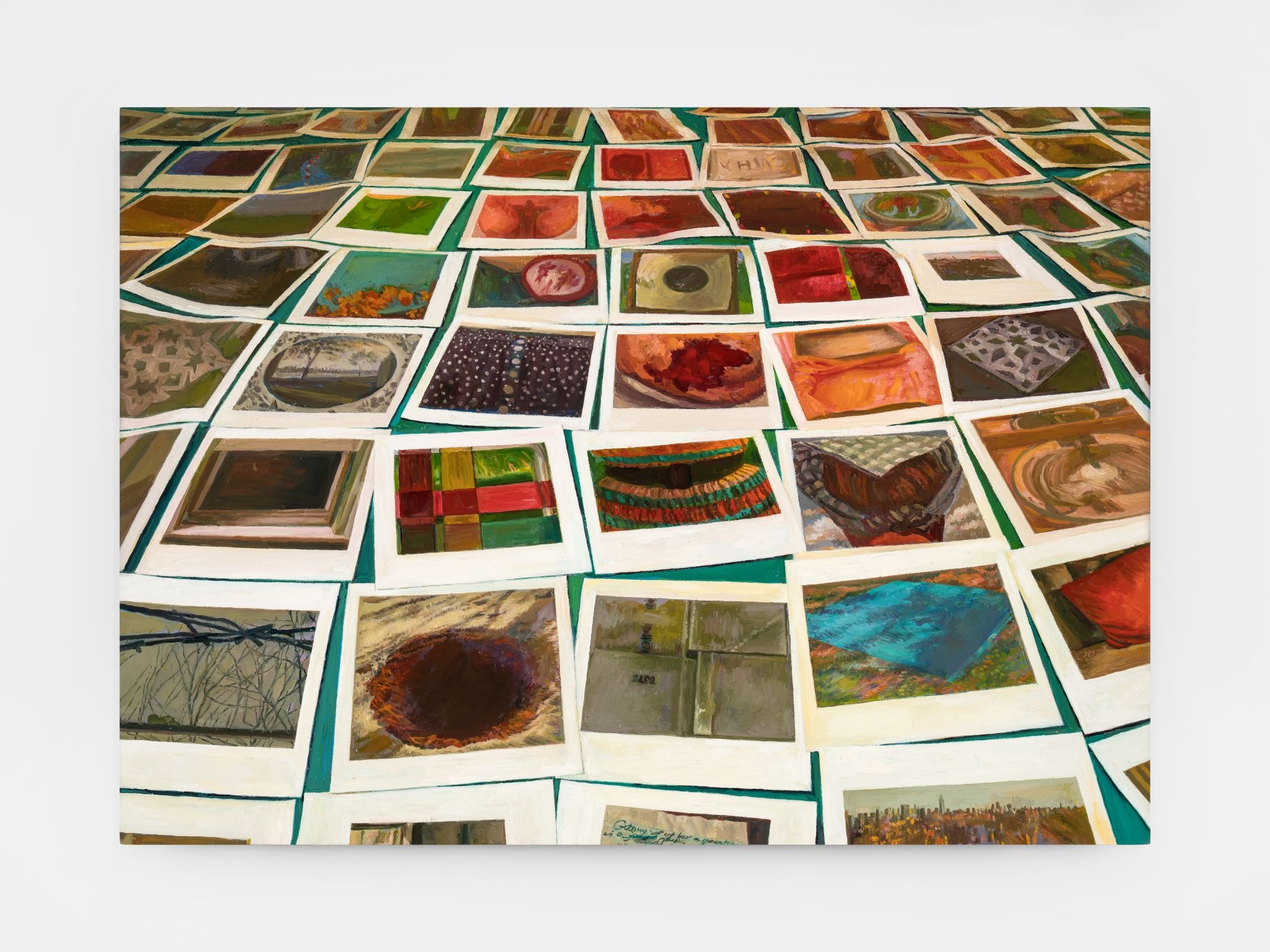
Central to the show, the postmodern Selected Work (2025), is the first thing that appears after stepping into the gallery. The artist paints polaroids of her own earlier art and places the show into a context that doesn’t always cohere, somewhere between a retrospective and an exhibition of new work, sometimes threatening to pull it in too many directions. But, perhaps ironically, each work offers more than enough as new levels of detail and possibility are revealed.
Jesús Hilario-Reyes: Scores
Tala | 1644 W Chicago, #1 Chicago, 60622
September 17 – November 21, 2026
Heels clack their cheers, a choreography that Jesús Hilario-Reyes urgently materializes. Both composer and conductor, their hypnotic sculptural portraits queer characters along their ephemeral sensorial memories. It's a mistake to confine a DJ like Hilario-Reyes to a dance floor. Constantly evolving, Hilario-Reyes's Scores at Tala speculatively records music as a cultural object and builds monuments to freedom. In both restoration and blur, they negotiate tension and release in a remarkably clean ode to the club space.
Smoke wafts faintly from a wall-mounted sculpture, and delicate lineworks emerge like tattoos from the surrounding wood-framed drawings. These cultural aesthetics displace the viewer within Hilario-Reyes’s disappearing acts. Antithetical to the conservatory methodology of art history, the exhibition plays with transparency to reveal the veil of double consciousness. In the sculpture When I see you (2026), Chauvet Dj Hurricane 1200 machines alternate spewing fog into a divided mahogany case displaying a flickering left-adjusted light on each side, controlled by a Perfect Storm 2.0. Mahogany—native to the Americas, cultivated with slave labor in the Caribbean and used in ships of the transatlantic slave trade—fails to contain the smoke. The gallery swallows the dissipating wisps, the entire presentation ever so softly blanketed in glycerin that a sensitive nose knows to identify.
In the artist's new series of drawings, sharp cybersigillistic tips point the end of arching gestural connections. The thin paths emerge, sometimes curiously wandering from bubbles like directions or mischievously pulled by arrows. Following the lines through their completion is a feat of attention as they circuitously convene into others of similar weights. Mystical aesthetics lead the viewer through the exhibition as futuristic symbols and signs as Hilario-Reyes pens an emergent undercurrent. In no particular order, Hilario-Reyes’s series of drawings conspire within Tala. Arranged variably, sometimes in corners or as diptychs, their coiled interiors abstract history. Scenarios spin the lines like time. Tossed, contemplating, turning back, commingled, aching, they erupt. Black arrows cut absolute on milky vellum. Layers of these translucent sheets of skin breathe focus through their depths. Hilario-Reyes reclaims an almost Art Nouveau style within this frenzied enchantment. The drawings align visceral lines into a wider bouquet that grows to varying sizes in their wooden frames. These outlined characters resist condensation, gracefully offering templates for their audience's improvisation.
From oral tradition to sheet music to physical disks to digital files, technology collapsed song transmission. This scientific preservation and abjection of music into its precise sonic dimension forgets a body of material realized in Scores. Utilizing graphic notation at the same time as effects technology, Jesús Hilario-Reyes lyrically cracks liberating club sensibilities against the tacit singularity of hegemony.
settle for a good fantasy
Luhring Augustine | 531 W 24 Street, New York
September 11 – October 24, 2026
From November 1975 to September 1976, conceptual painter and photographer Roy Colmer captured over 3,000 facades in New York City as part of his Doors, NYC project. Working with a familiar and quotidian subject, Colmer set up his shot, clicked, and moved to the next, indifferent to the architecture, history, and importance of these places. This series, held in the collection of NYPL, became a portrait of New York City in parts, filled with New Yorkers wandering into frame, 70s advertisements, and spaces now lost to time. Colmer’s project is a form of serial portraiture as much as a performance of walking New York.
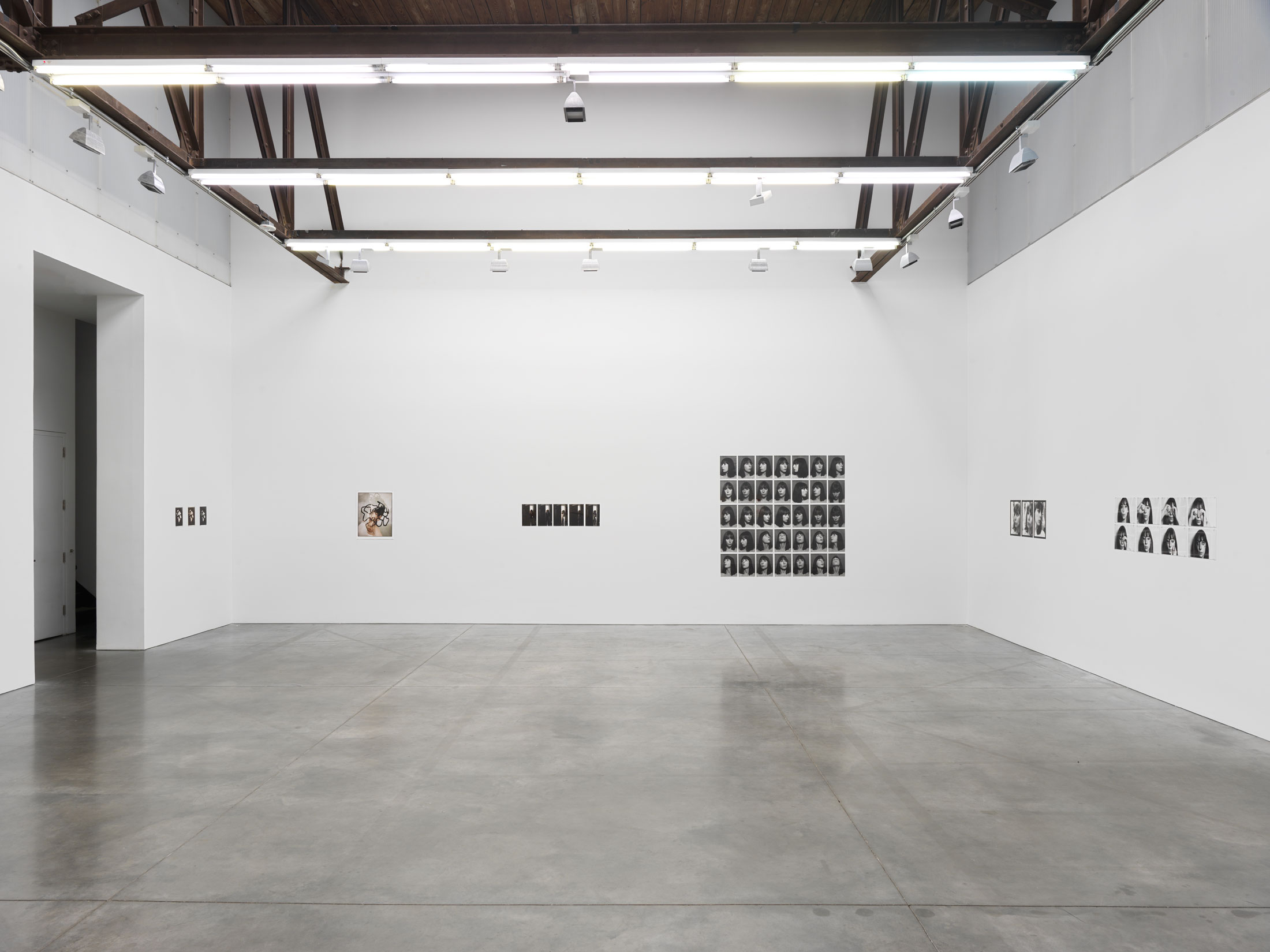
Today in Chelsea, photographic portraiture is the subject of Luhring Augustine’s group show, settle for a good fantasy. The exhibition is informed by the Fran Lebowitz quote, “Abandon the search for Truth; settle for a good fantasy.” Unlike Colmer’s classificatory photography constrained by the idea of documentation, each of the four photographers bring an erotic—and sometimes elegiac—quality to their patchwork portraits. Where Colmer's frames stay cool, these four warm into desire and, at times, loss.
In the same decade as Colmer, Janice Guy was working in Düsseldorf with her own body as a material to produce performances, documented through photography as conceptual work. Though she was invited to the Kunstakademie by her friends, Bernd and Hilla Becher, her work distinctly does not follow their Neue Sachlichkeit (New Objectivity) tradition, instead using the grid for serial performance. In her 1977 eight-print sequence, she captured herself rubbing her eyes, leaving traces of smudged eyeliner.
Joe Mama-Nitzberg builds self-portraits from commercial imagery, advertising posters that serve as reliquaries for people lost to AIDS. A detailed handout accompanies the work in the gallery space, naming the places, people, and years behind each. Each is a requiem to unravel. Say Hello/Wave Goodbye (2026), makes a movie poster from AI-aged photos of young gay men lost to HIV and hate crimes, Ryan White, Pedro Zamora, and Matthew Shepard, all dead before the age of 22. Shaun Pierson starts with anonymous subjects, their faces and bodies obscured into soft tableaux against red velvet. Bodies are often intertwined, straddling, holding, pressed together. In Untitled (Heads) (2026), two men rest back to back, heads touching and angled slightly up, and eyes and face just out of view in a brief moment of either longing or compunction. David Seidner, who died in 1999 at 42, is represented by fragments of the fashion work he was known for, assembled so the portraits never tighten into one body: in Fragments of woman’s face with accessories (1986), stacked pearl necklaces, metal bracelets, an eye, and lips hang within the shadow of a figure manipulated with developer during printing to appear erased.
As with Colmer’s three thousand facades, the eye reaches to parse these portraits, tracing the gaps in each work to assemble a whole. Colmer’s grid added up to a city. Here, the frames sit side by side and don't quite add up to a person. These portraits remain fantasies.
1 Yve-Alain Bois, "Painting: The Task of Mourning," in Painting as Model (MIT Press, 1993), 230.
2 Sianne Ngai, Ugly Feelings (Harvard University Press, 2007).