

.webp)


Wenfei Quan: “Contemporary Hominin” at TaThaTa
Review
In MoMA PS1’s recent Greater New York survey, Marc Kokopeli is perhaps best known for his installation with three LCD cabinets housing South Park characters sculpted from fabric and resin. Kokopeli animated them with LED screens that overlaid moving, cartoonish facial features, in addition to voicing conversations about accounting tips and artistic patronage.
The piece later graced the summer cover of Artforum, where Theo Belci framed Kokopeli’s practice as an attempt to “make contact with the consumer and media cultures of [his generation’s] youth.” While not entirely incorrect, foregrounding nostalgia or identity formation through (media) consumption ignores the broader elasticity of Kokopeli’s career.
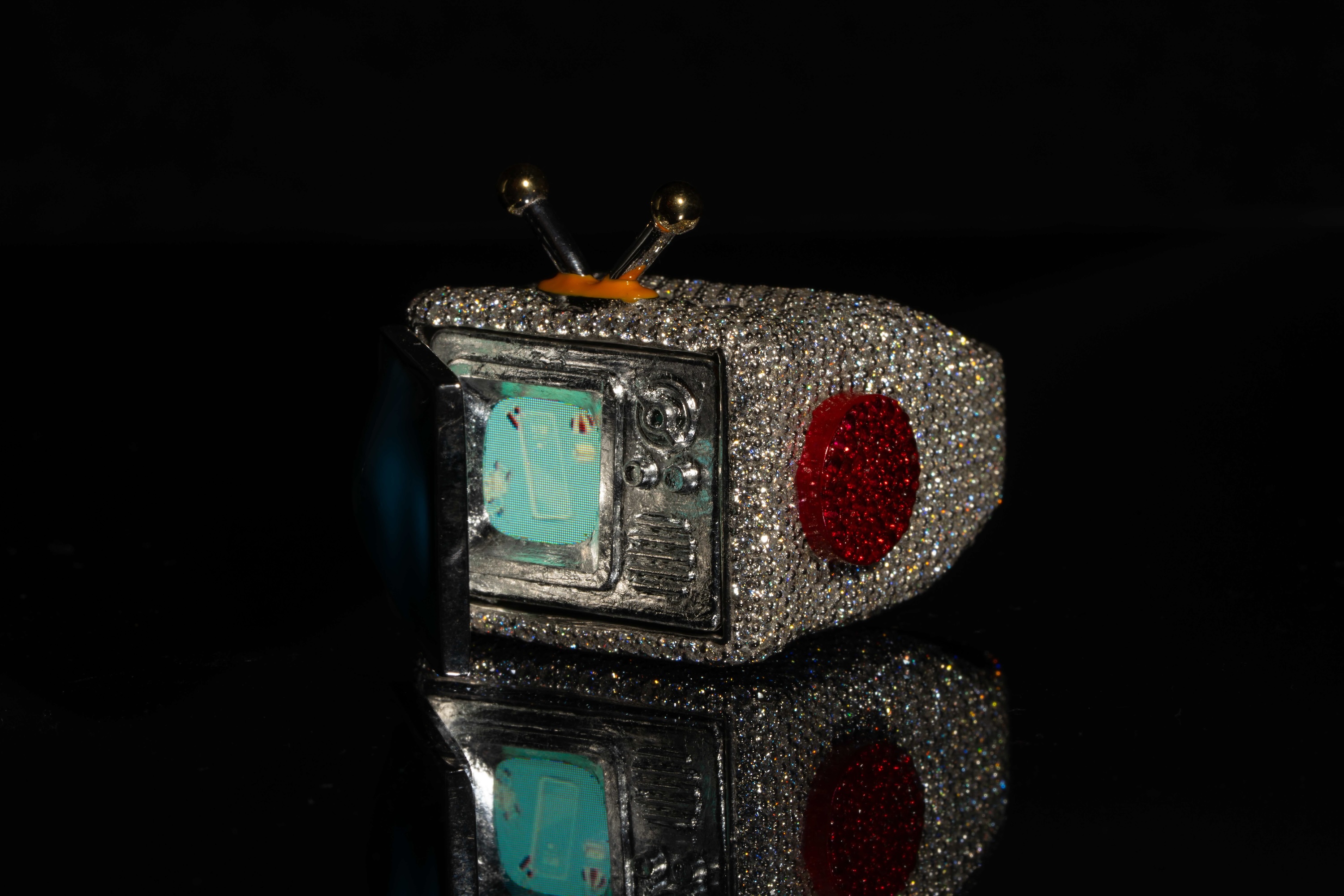
His newest New York solo exhibition, M.Kokopeli CURSED/01 at Gladstone Gallery, shifts focus to the hand: specifically, its adornment via the ring. The exhibition’s press release conceptualizes the hand as an “articulate region of the body that can be said to actually ‘talk.’” In response, Kokopeli crafts rings designed to inflect these gestural sentences. Occupying a space “between intrinsic and instrumental value,” the ring operates here as a linguistic device that punctuates our speech and physical persona in the world.
While one could argue the new works at Gladstone merely extend the artist’s interest in identity-formation noted by Belci, Kokopeli’s engagement with material excess opens up another possible reading. Of course, familiar motifs from Kokopeli’s past exhibitions return: a glass vitrine echoing the PS1 installation, modded televisions displaying video works, and the playful elevation of ordinary objects (diapers, rings) into surreal assemblages. Yet, where he previously restrained his compositional gestures to feign a minimalist aesthetic, CURSED/01 fully indulges in sheer abundance.
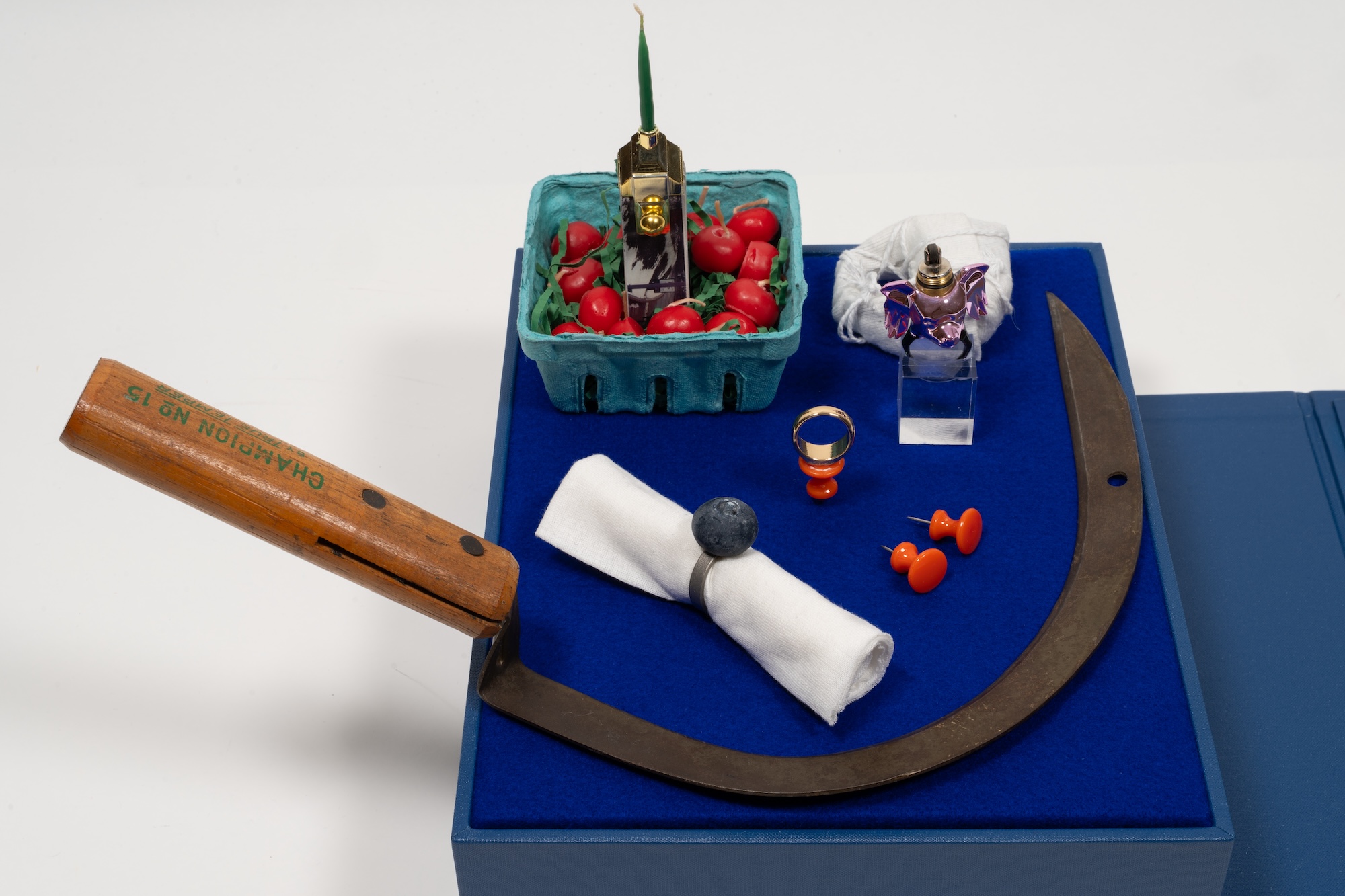
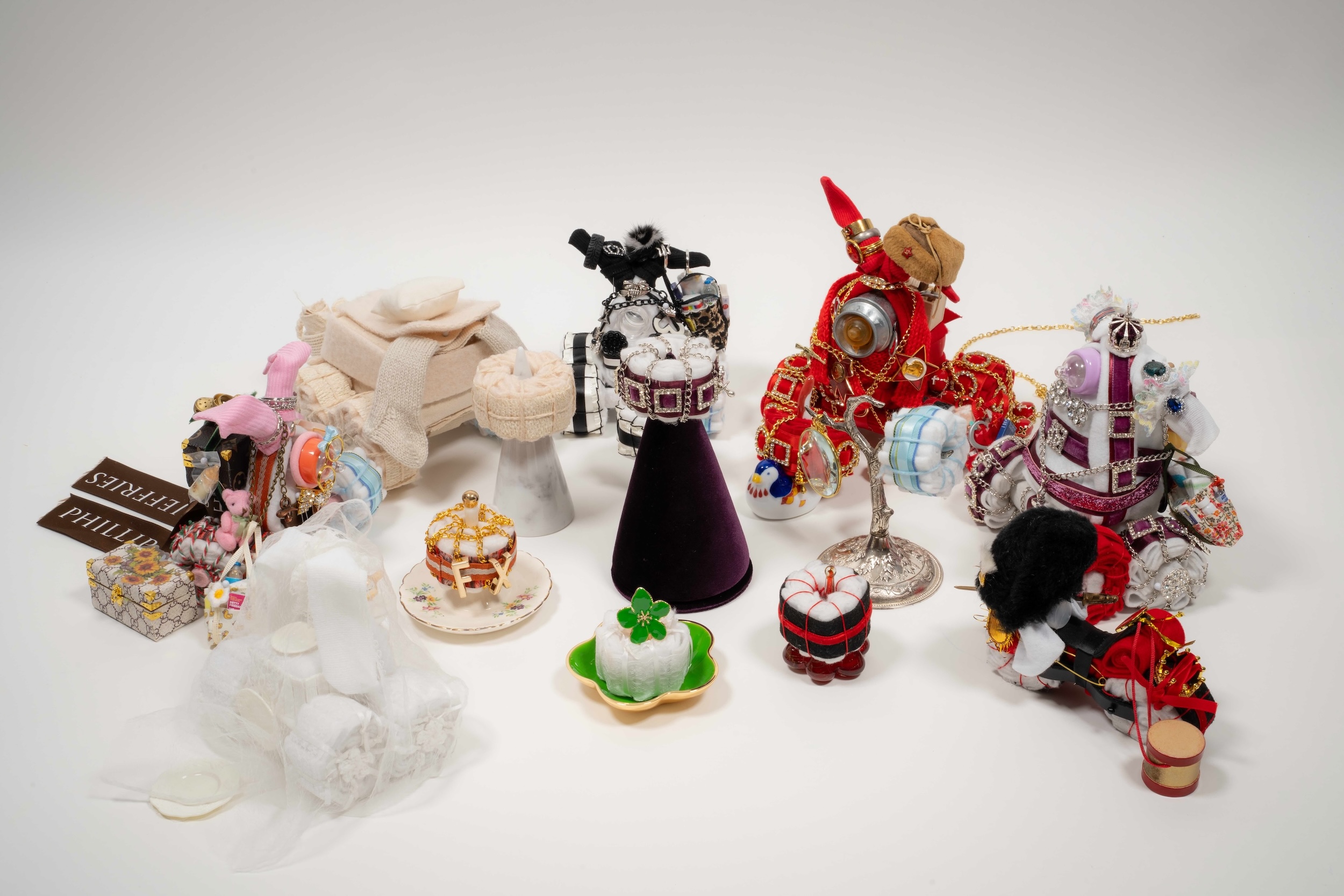
Consider some of the titles populating Gladstone’s three galleries: The World makes a Ring (Hav-is-ham, Miss Misshape, Grenadine, Dozer, T negative 2, Royally Obsessed, Bearskin); A big day out ring set (Born ring, Accident, Plastic, Der fan ring, Jackie’s Non-ring, Injured child ring, Reproduction); or Instruments (Intelligence ring, Mood ring, Abundance ring, My chihuahua lighter). Each consists of ring-shaped objects whose material density defies simple description. The World Makes a Ring, for instance, features an ATV-like object constructed entirely from miniature objects: a crown, a baby bottle, chains, belts, rolled-fabric wheels, and a designer bag containing a Purell hand sanitizer and Stephen King’s novel It. And this is merely a single “ring” object within the larger sprawling The World Makes A Ring assemblage which includes several more such “rings.”
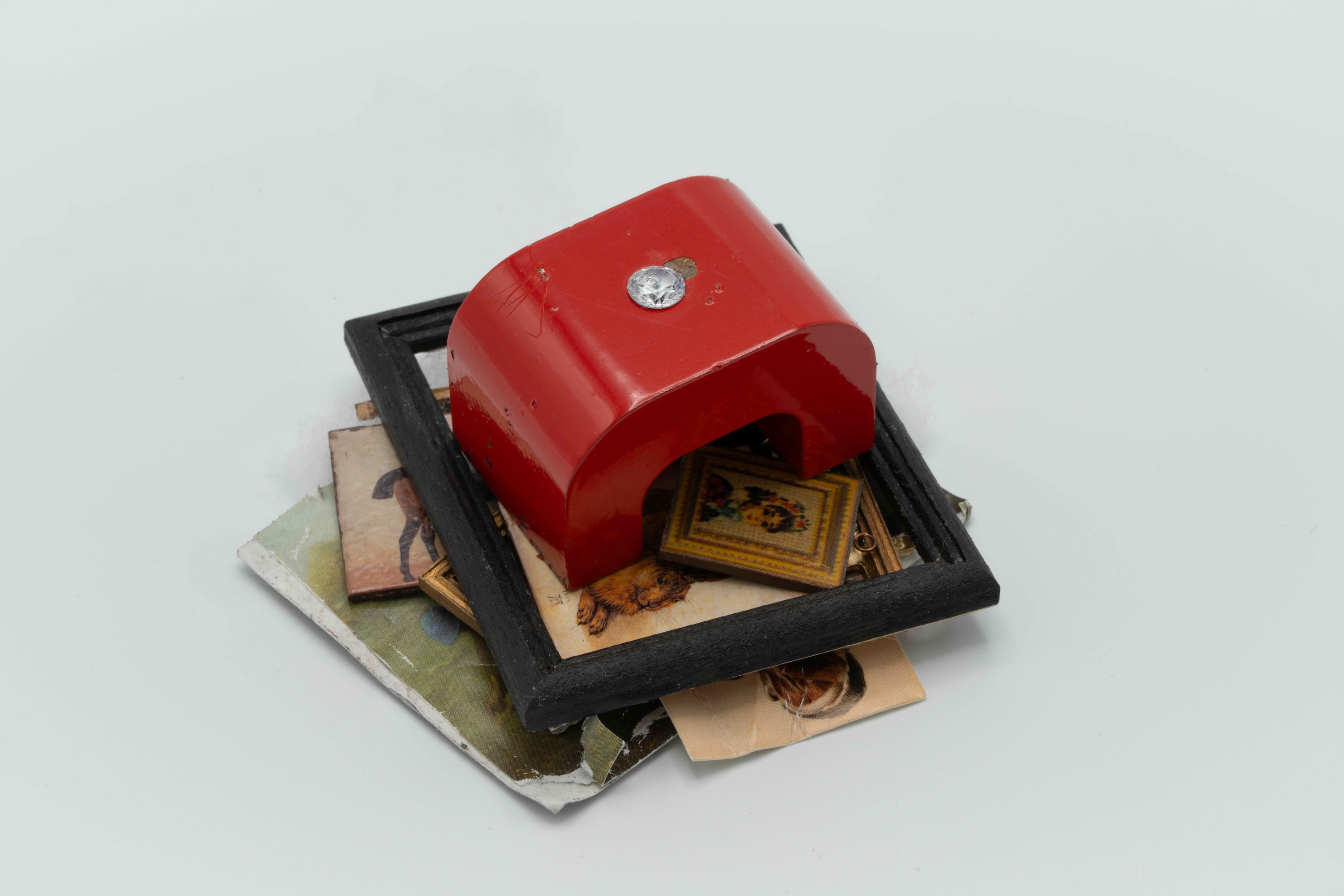
Kokopeli’s strategy persists throughout the show: recursively loading each sculpture with endless miniature components, each of which constitutes but one detail of the overarching composition. Surprisingly, these encyclopedic works do not overwhelm the viewer. Through a masterful manipulation of scale, their material density becomes dedifferentiated, and the sculptures appear as singular, cohesive objects. For example, the aforementioned ATV “ring” is roughly 3 x 3 x 5 inches, rendering its tiny Stephen King novel no larger than a centimeter.
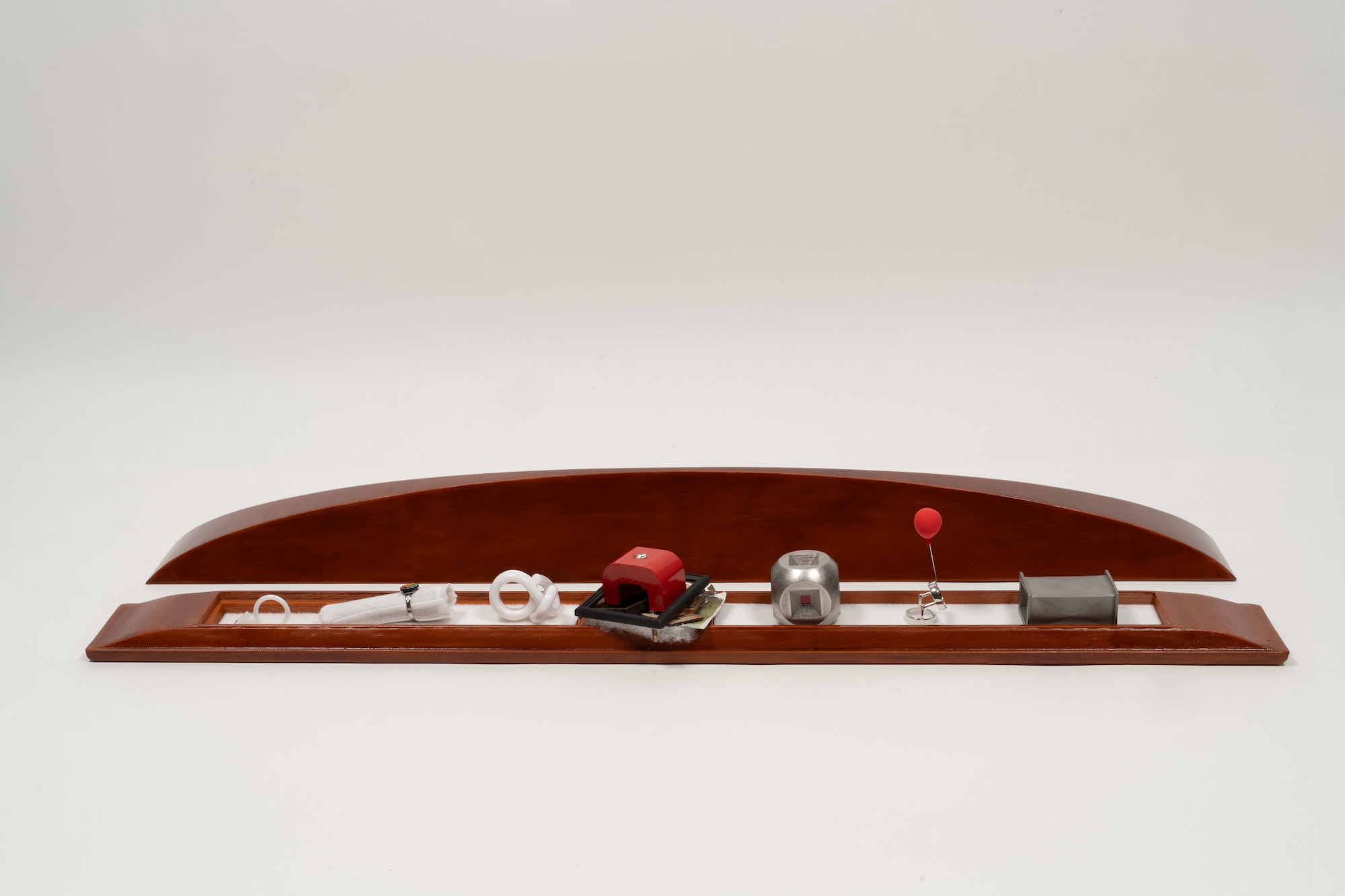
But Kokopeli’s imaginative rings offer more than aesthetic appeal; they harbor an uncanny omen, already signaled by the cryptic title CURSED/01. To parse the danger lurking within the works’ extreme material density, we can turn to Georges Bataille’s “The Notion of Expenditure.”1 Bataille argues that expending excess energy toward non-productive, communal ends is vital for a healthy society. However, he identifies the bourgeoisie as a group that “has consented to only spend on itself” (124), hoarding wealth rather than releasing it through public spectacle or shared sacrifice. By maintaining “sterility in regard to expenditure,” the bourgeoisie develops a “universal meanness” that enforces class segregation and generates deep social resentment (125).
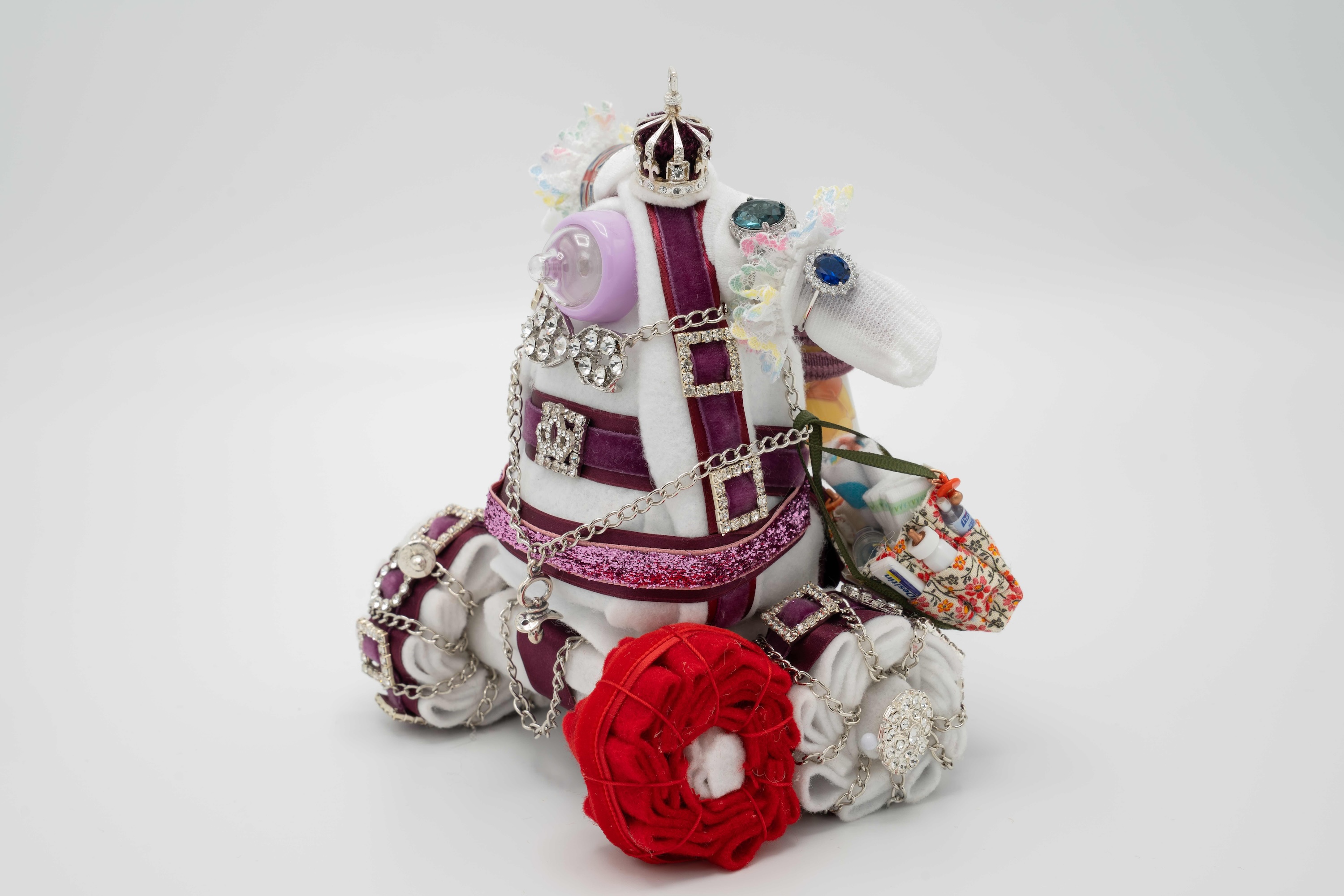
Read through this lens, Kokopeli’s rings are not just playful sculptures; they are monuments to bourgeois hoarding. By centering his new body of work on excessive variations of the ring—the ultimate symbol of individualized, private wealth—Kokopeli visualizes the pathology of accumulation. The heavier the adornment, the wider the social fracture. Kokopeli’s impossibly dense rings function as a bleak material reminder: the private stockpiling of the few is always subsidized by the absolute depletion of everyone else.
Marc Kokopeli’s solo exhibition, M.Kokopeli CURSED/01, is on view at Gladstone’s 64th Street location in New York from September 12 to October 24, 2026.
Reference:
1 Bataille, Georges. Visions of Excess: Selected Writings, 1927-1939. Edited by Allan Stoekl. Translated by Donald M. Jr Leslie and Carl R Lovitt, University of Minnesota Press, 1985.