

.webp)
Teresa Margolles: "En el lugar de los hechos (At the Scene)"
Review
An image is like being alive twice.
They are not ideas,
They lack that explanatory power.
They are stiller than that.
They are not always metaphors either.
Images, they haunt,
But they are not myth.
They simply say:
‘Here I AM,’
And that
That is enough.
About halfway up the spiraling rotunda of the Guggenheim Museum, in Taryn Simon’s Father Country I Do Love You, visitors encounter a three-part narrative about one of two “DC Snipers,” Lee Malvo. An ostensibly objective text describes Malvo’s relationship with his father-figure John Muhammad, his conviction for ten murders, and his eventual turn to writing poetry in prison. Opposite this, excerpts from interviews with an unidentified federal agent portray, in first person, the atmosphere in D.C. during the pair’s spree in 2002. Between these two texts, a grid of photocopied images sent to Malvo in prison depict the things he misses from Jamaica—a gecko, a white bird, the sunset. An accompanying poem that he wrote for Simon ruminates on the nature of images: they do not explain, but simply are. Mythologization comes later.
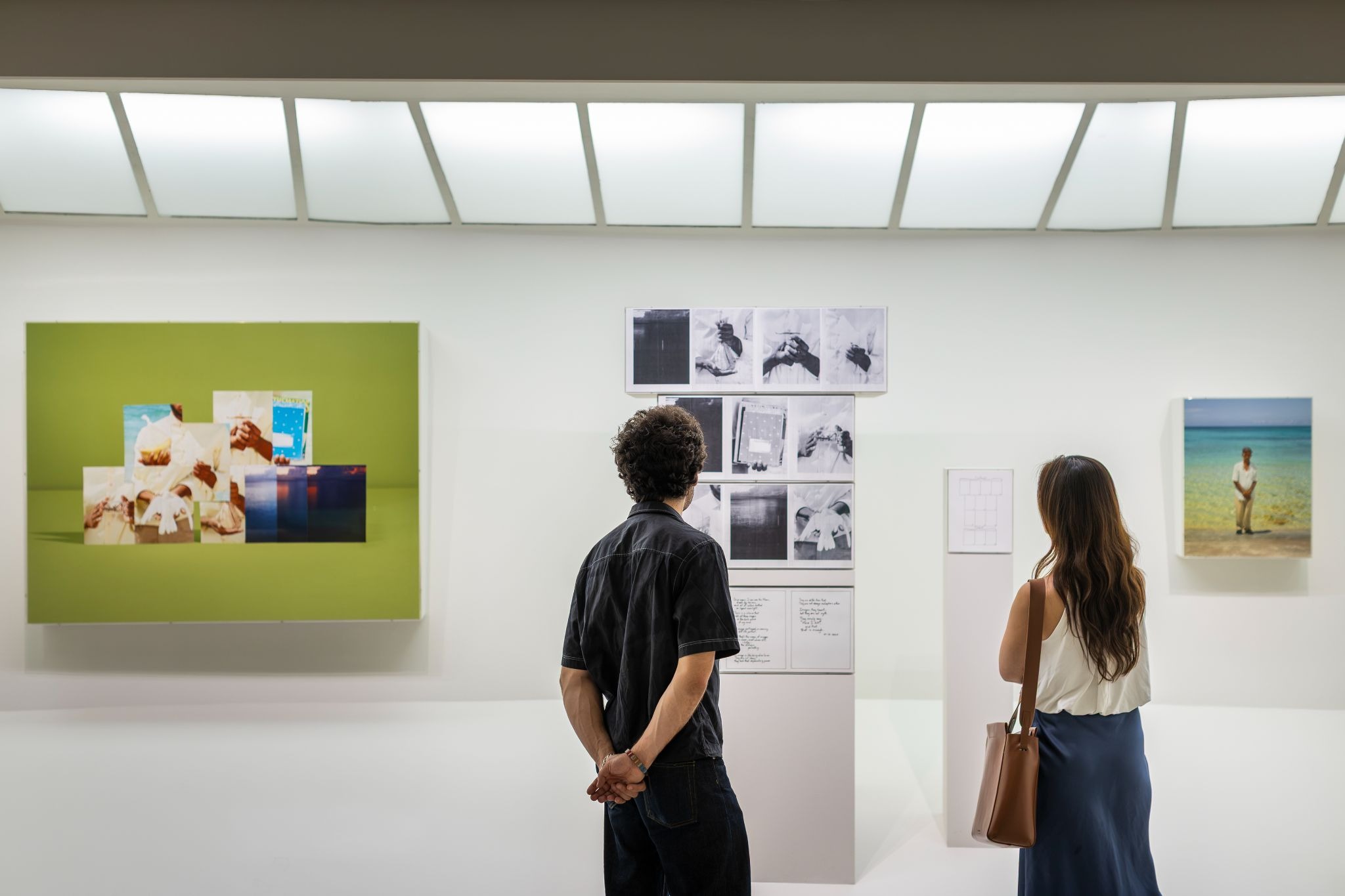
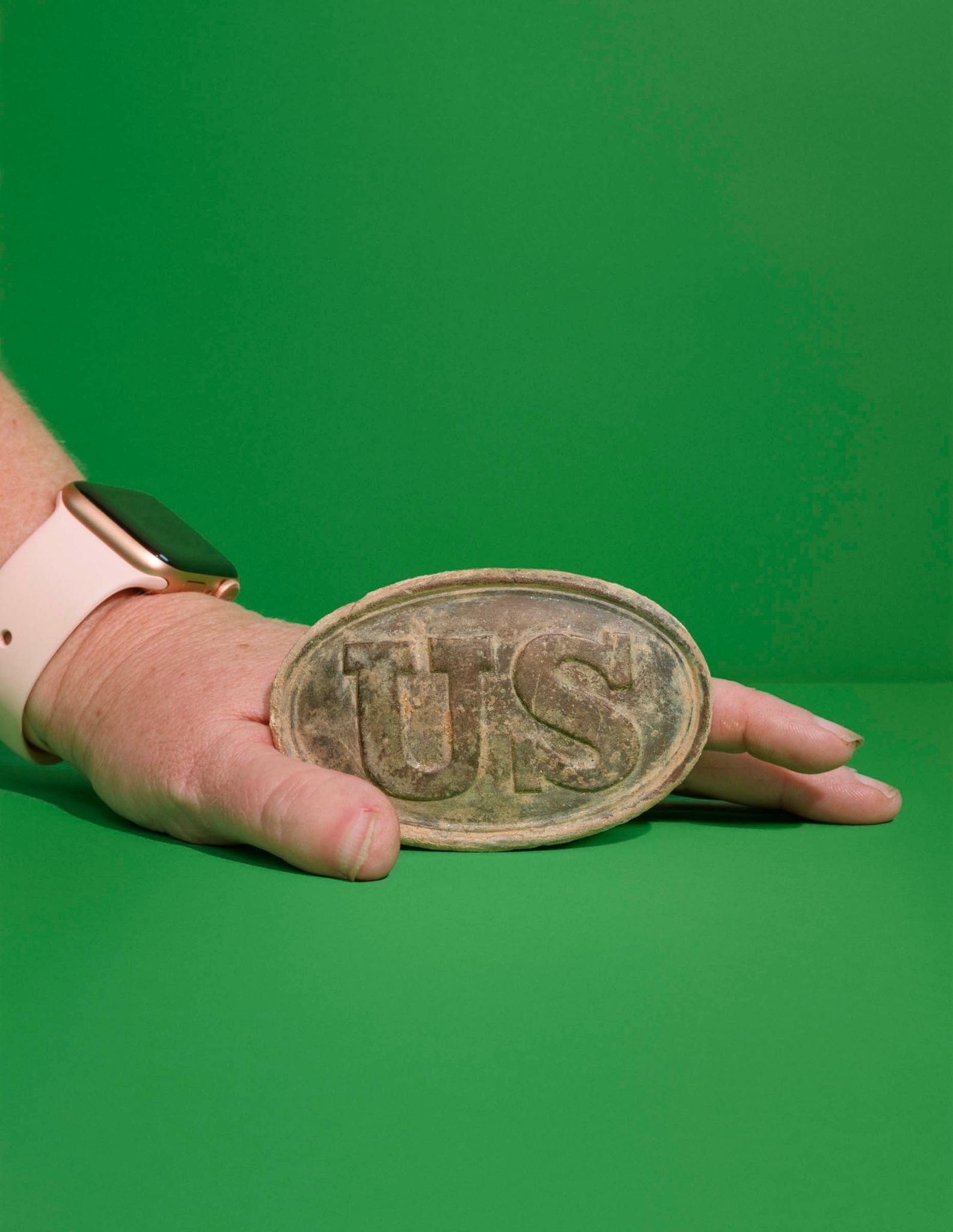
The poem—and the moment of tenderness it creates between Malvo and Simon—offers a valuable key for reading Father Country I Do Love You. The exhibition consists of forty-two such vignettes or “chapters,” each telling a story from the career of the same unnamed FBI agent. Drawing on the agent’s own words, Simon reconstructs each narrative rhizomatically, through the stories of the people, places, and objects affected by his career. Simon’s striking images, often shot against solid-colored backdrops, build on the multiple pages of text associated with each work. Both Simon’s subject matter and her methodology were inspired by her own father’s career in the United States government, a narrative that he was never able to fully tell due to his Alzheimer’s. Here, the unnamed agent perhaps offers a clearer counterpart to her father’s story, which she can only glimpse through the thousands of photographs he took while abroad.
Much of the anticipation for this show centered on Simon’s tendency to “peek behind the curtain” into unseen parts of American culture. As expected, Father Country I Do Love You is framed as such. The exhibition opens with a line from her father: “America, he said, was the best story on earth, if you could find someone to tell it,” immediately suggesting that Simon and her operative collaborator have taken on revelatory roles, perhaps akin to whistleblowers.1 And indeed, the stories are compelling in their proximity to major events, including the January 6, 2021 insurrection, the filming of Silence of the Lambs, and the impeachment of Bill Clinton, in addition to lesser-known events. But it is neither the secrecy nor the narratives themselves that are most striking; it is the highly structured connection underscored by Simon between image-making, political violence, and truth.
This layered connection is present throughout the chapters. One chapter, I confiscated her film (2026), recounts how Dame Johnnie Melinda Walker, passing through D.C. on a family vacation on September 11, 2001, stopped to photograph the destruction at the Pentagon, leading the FBI to seize the film. Simon recovered and developed that undeveloped roll of film, which also included photographs from Walker’s trip to Martha’s Vineyard. The installation presents a photograph of those images arranged against a black background, next to a photograph of the roll of film itself.
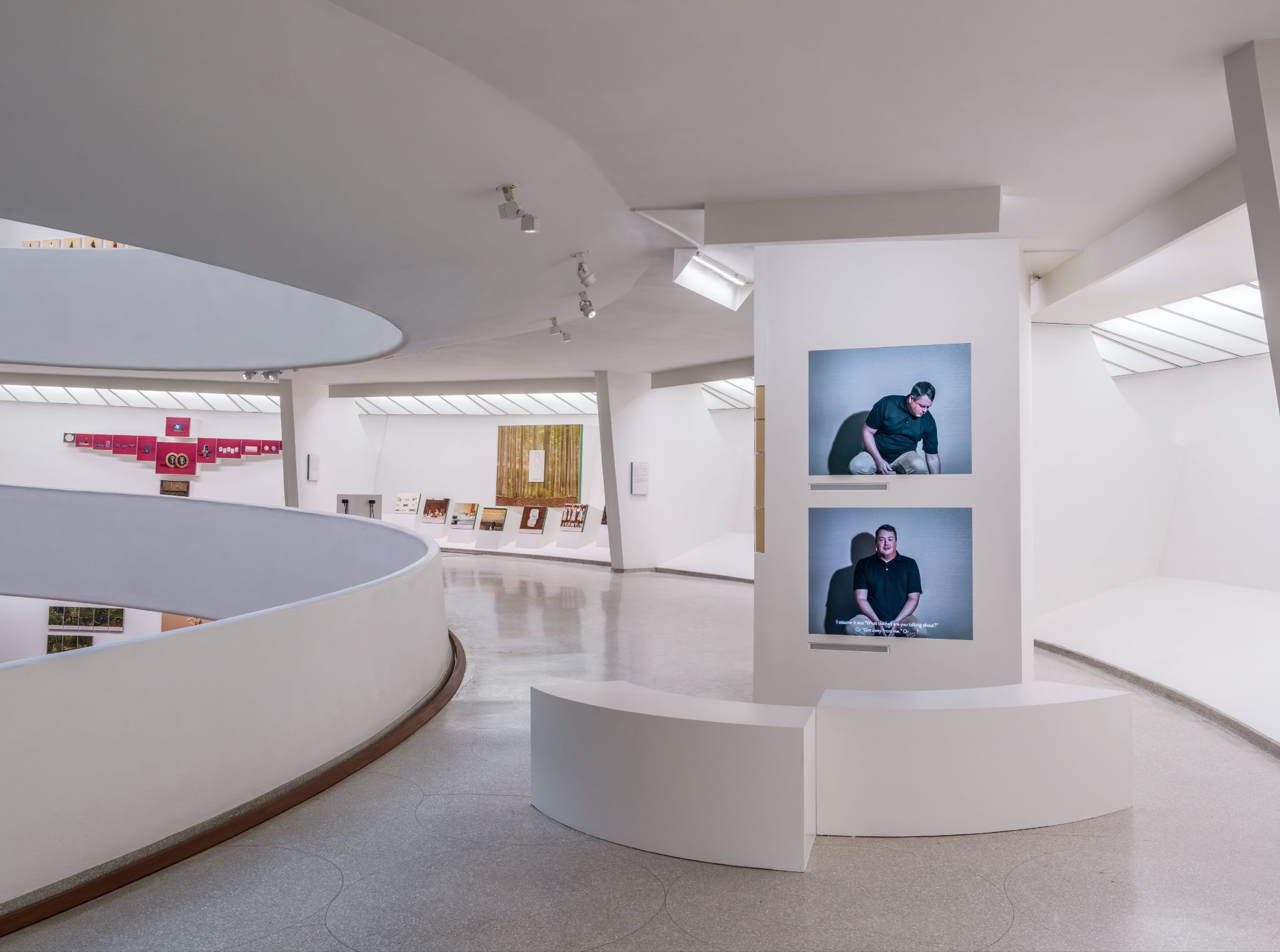
Elsewhere, an eagle-shaped assemblage of images (Medals he shouldn’t have been wearing [2026]) speaks to the government’s highly regulated approach to heraldry and symbolism, with the chapter centering on a Navy Admiral who committed suicide when he was caught wearing a medal he was not authorized to wear. Another chapter, Take whatever you want (2026), features a two-channel video of a man speaking to the camera, responding to questions that viewers can’t hear, while giving answers about shutting down conspiracies. The adjacent description identifies him as Jake Joy, an employee at Defense Logistics Agency Disposition Services, who “repeatedly injured himself and threatened Taryn Simon and her crew during a photo shoot at a warehouse in Fort Meade where excess Department of Defense property is stored.”2 Each of these chapters refracts the government’s obsession with its image, and the lengths it will go to control it.
Rather than presenting her own interpretation of these events, Simon’s work projects a stance of neutrality. This constructed objectivity is part of the work—Simon doesn’t seem to take a side in presenting a mountain of images that are tied together by the government’s secretive activity, showing that those covert operations are not as distant from the average person as they may once have seemed. Simon’s strategy recalls Egyptian scholar Iman Mersal’s understanding of archival research: “the purpose of following the trace in the archive is not to search for the ‘truth’ (this is the work of the dedicated police officer), nor to give a voice to the voiceless (why do we not see that such an impulse is in essence an authoritarian one, and often leads to the act of ventriloquizing the voiceless?).”3 Simon’s project functions similarly as an archive compiled over a decade with traces that offer glimpses of government oversight and overreach. Father Country I Do Love You is thus not inherently evidentiary so much as archival. Simon does not purport to speak for these people, nor does she seek to make a statement about culpability. Rather, she casts viewers in the doubled role of researcher and grand juror. In the viewers’ hands, the narrative’s details and gaps become potential evidence in a case against the United States. In an age saturated by images of violence and violence spurred by images, Simon’s push to read photography in context without assuming any inherent meaning feels especially vital.
Photography does not tell the full story on its own. Much of Simon’s career has been spent testing photography’s claims to truth, and that inquiry remains central to this exhibition. At the top of the rotunda, the piece Earth two (2026) in particular demonstrates the centrality of this investigation: a close-up video shows her father’s trembling hand holding Kodachrome slides as he voices disjointed elements of a story. The fact that the story is illegible—potentially even to Simon’s father—is perhaps the crux of the exhibition. Photographs do not necessarily tell a comprehensible truth, but that doesn’t mean that they can’t be interpreted, alter perspectives, and act as political agents in and of themselves. Her father says, “No, you can’t separate anything,” and in the case of the show, it's true.4 Every element must be read together, for images can simply say: “Here I AM.”5
Taryn Simon: Father Country I Do Love You is on view at the Guggenheim from September 18, 2026 through March 14, 2027.
References:
1 Taryn Simon, Jim Thompson’s Bangkok Living Room in Our Home.
2 Simon, Take Whatever You Want.
3 Iman Mersal, Archives and Crimes, pg. 16.
4 Simon, Earth Two.
5 Simon, A Child Soldier.