

.webp)

Wenfei Quan: “Contemporary Hominin” at TaThaTa
Review
Founded in 1996, Rhizome is an organization that supports and preserves new media art through exhibitions, education, and collaborations. For its 30th anniversary, Rhizome relaunched its digital art archive, ArtBase, and has planned exhibits and programming to celebrate the past three decades of digital culture, art, and community. IMPULSE sat down with Michael Connor, Rhizome’s executive director, to discuss the poetics and politics of digital preservation, especially today.

Andrea Hu: Happy 30th to Rhizome! Rhizome has always centered community since its inception. With the rise of LLMs and AI-powered bots, where does Rhizome stand in the contemporary digital landscape increasingly populated by machine-generated content? Is there more emphasis on in-person events?
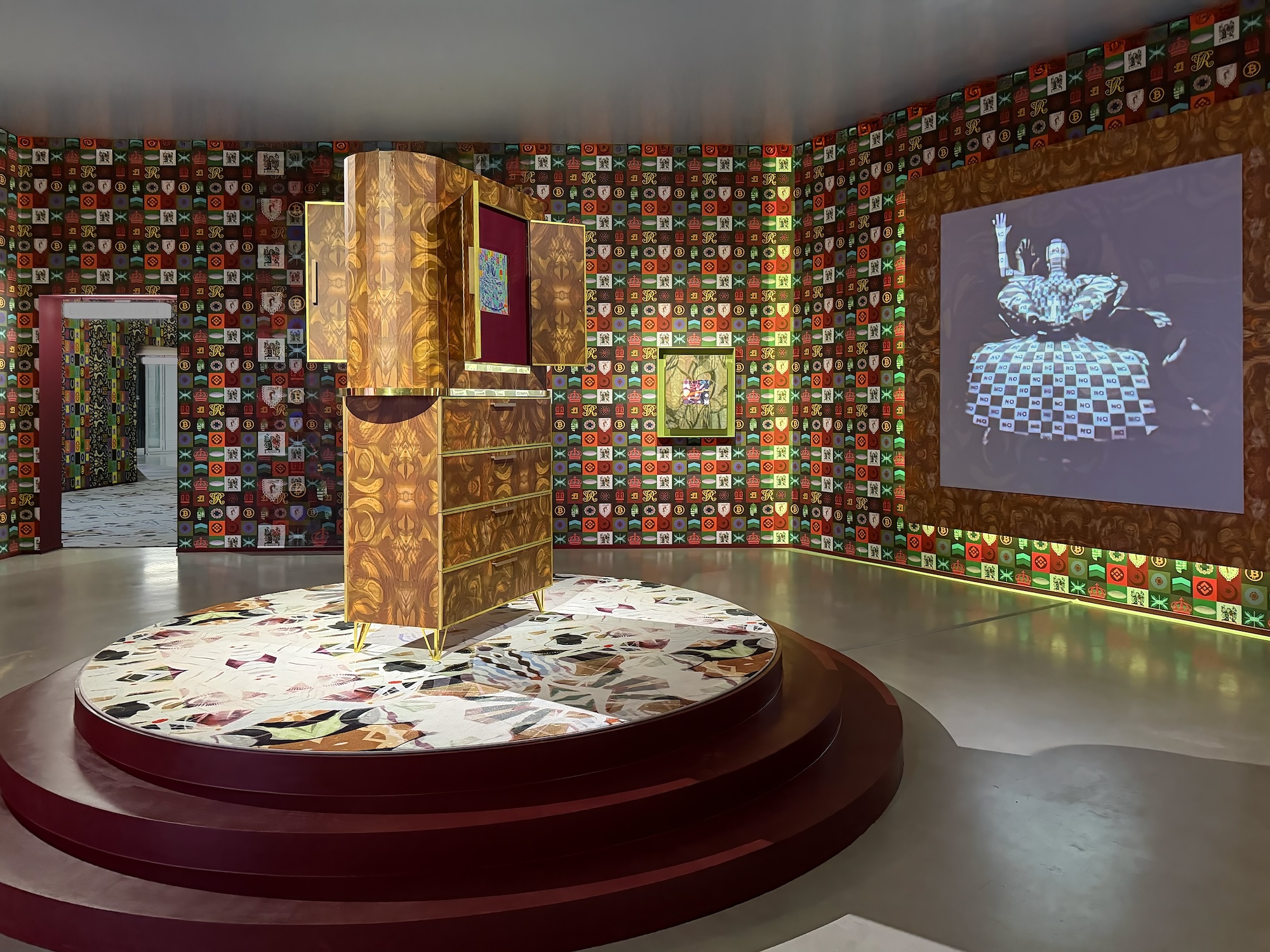
Michael Connor: That's a good question. The ways of finding things on the internet have changed a lot. Forming community online has become more complicated as these spaces are increasingly targeted by bots and advertising, with platforms prioritizing profit over the people who actually use them. IRL events have become crucial for organizations like Rhizome that work primarily online. When I think back on Rhizome's past couple of years, our in-person gatherings have been really fun. Last year we hosted a month-long exhibition and pop-up in Manhattan’s Financial District called Rhizome World. In the wake of our 30th anniversary, we have been thinking about how we can best serve our audience in a way that allows more people to experience and feel connected to digital art. To start, we are relaunching our archive of digital art, ArtBase. It is going to put a lot of emphasis on the distribution of digital art so people can understand that Rhizome is not only an important resource for digital art conservation, but also a place to discover digital art. We can be a source for all of that and get a lot of artists' work out into the world. I think of Rhizome as an interface for audiences to find this work.
AH: Why is digital art preservation important?
MC: Within digital culture, planned obsolescence is something that greatly contributes to the impression that digital objects are inherently ephemeral. There's almost a concerted effort to make technological accessibility difficult for people to hold onto the things that have meant a lot to them digitally. Over time, having access to software, web-based works—or even something as simple and universal as our own photos—gets really complex. That vulnerability means that it's harder to gain an understanding of ourselves, how we've gotten here, and how the events of the past have shaped the present. Digital conservation allows us to have a better relationship with our digital cultural legacy. One example is a DAW (Digital Audio Workstation). For musicians, this digital tool encodes so many assumptions about what computer music is supposed to be. Knowing how this tool evolved allows us to understand that it is a contingent outcome, that it could have taken any number of alternate paths; it allows us to know how people have imagined other modes of computer music in the past, and gives us more of a sense of freedom to experiment with other ways of making music. It's empowering to look back at what has been important in the past. Not everything needs to be preserved, but we're so far on the other side of the pendulum: given the scale of digital culture, too few concerted efforts offer ongoing access to it. A favorite YouTube channel; a Tumblr that changed your life; the social media post that changed the way you thought about politics: when you look back, is it still there?
The Internet Archive does important work here, but it’s limited by its all-encompassing scope. It takes embedded community members to really know what is important within digital culture, and those community members are disempowered, unable to safeguard media that is locked in platforms or encrypted formats.
From a personal perspective, it's been powerful to be involved in processes of looking back at digital works of the past, within an art context. There are histories that survived, and they tell you what is meaningful and good and what works. Being able to look at the work itself, to engage with a legacy software context firsthand, gives you a different relationship with it. Understanding how different a narrative and a source can be is a good way of learning how the work we have in the present is being understood, and how that might change in the future.
AH: As technological and software development advances at a lightning pace, Rhizome has provided accessible, working infrastructure for preserving many web- and software-based works from the last 30 years. How is preservation going to change for digital art in the next 30 years?
MC: If you asked me this a few years ago, I would never have guessed how quickly the prices of servers would rise. Computation has become costly because people are trying to gobble up more and more of it. The weirdly perverse aspect of this is it's given people a new relationship with obsolete technology. Suddenly, your old computer is worth something again. Given the way that technology is evolving, I think we're more and more likely to see a big delineation between hyper-powerful computing platforms, maybe including quantum computing at some point, and a larger culture around the reuse of more minimal platforms and technologies. So, the lightweight web will thrive while the very high-end web or high-end-something-else continues to develop. I think the low-end web, the people's web, will be an interesting place in the next 30 years.
AH: Yes, especially with Claude and vibe-coding, it feels like Web 1.0 and HTML coding are coming back not only aesthetically, but also democratically. What are your thoughts on digital tools, like AI, becoming instruments of institutional critique? How does Rhizome balance supporting new technological use in art with the cultural, political, and economic weight it carries?
MC: With something like AI, there's a real conversation to be had about what we want our relationships with platforms to be, and what we think of underlying technologies and their capabilities. On the platform side, there's the political economy of the different kinds of outlets that people can look to for AI usage. On the individual side, AI is a tool and a system. It is a different kind of entity in terms of the creative process, and everybody will need to understand how to engage with it in ways that feel supportive and expressive. It should not lock people into a process that will make them go down a different path in the future.
AH: Where is Rhizome heading in the next 30 years?
MC: There are a couple of answers. Number one is that we will be a place that more and more people will look to as the source for digital art. We will be in people’s homes, in classrooms, and in museums. Number two is that Rhizome will be a place where conversations between tech and art continue to play out, which I think will become especially valuable, contested, difficult, and rare. Even though it feels like technology and art are everywhere, it is going to be really hard to stay in meaningful conversations as the tendency to group users into incompatible filter bubbles becomes more pronounced. Number three is that we will continue our role as stewards of cultural legacies as the work becomes increasingly important. Something that we have always wanted is to support a whole ecosystem of memory work around digital art, and that will continue. As part of that, we want to look to the history of software and software art and its role in shaping art history over the past 30 years or more.
Overall, we will always continue to support experimental and weird work by artists and things that are not even recognized as art by other institutions yet. In doing so, we will also continue to be an engine for cultural renewal and transformation.
This interview has been edited for clarity and length.