





"The Scout" (2025) dir. Paula Andrea Gonzalez-Nasser
Review
Does Elizabeth Holmes know how to beat eggs? Who cares, you might think, given that she’s known for Theranos, known for her lie that her company could run hundreds of medical tests using just a few drops of blood. But in You Can See Everything, the new documentary that follows the fraudster leading up to and during her prison sentence, the question of eggs becomes more central than whether or not she knew her tech didn’t work.
The premise of You Can See Everything is simple. About a month before the start of Holmes’ prison sentence, she and her partner Billy Evans invited two filmmakers to capture the “real Elizabeth.” The public has painted her as a villain, Elizabeth and Billy tell us. We have the wrong idea about her, they tell us. So they granted the filmmakers Nathan Fielder and Lance Oppenheim essentially unrestricted access to them. These artists were unconventional and risky choices. Fielder—creator and star of the television shows Nathan For You, The Rehearsal, and The Curse—is known for reveling in awkward, often unflattering moments, questioning the limits of truth and reality more than revealing them. Oppenheim just released Primetime, which paints To Catch a Predator’s Chris Hansen as an unethical, fame-hungry maniac. These are two filmmakers who had unique potential to skewer her.
Instead, they’ve crafted a brilliantly deceptive film that plays like a seductive mystery. On the surface, You Can See Everything hopes to answer the question, “Who is the real Elizabeth Holmes?” To do this, Fielder assumes the role of detective, spending more time on screen than his subjects. He begins asking them questions, like any good documentarian. He asks Holmes, who still claims total innocence, where she thinks things went wrong. But something quickly changes as Holmes and Evans fail to provide big answers, often leaving the interviews for meetings or family obligations instead of allowing their thinking to be pinned down in any satisfying way. Fielder starts asking smaller and smaller questions. He asks about the word choices in Holmes’s past interviews. Then when Evans brutishly takes a bowl of eggs out of Holmes’s hands to beat himself, Fielder asks why he did that.
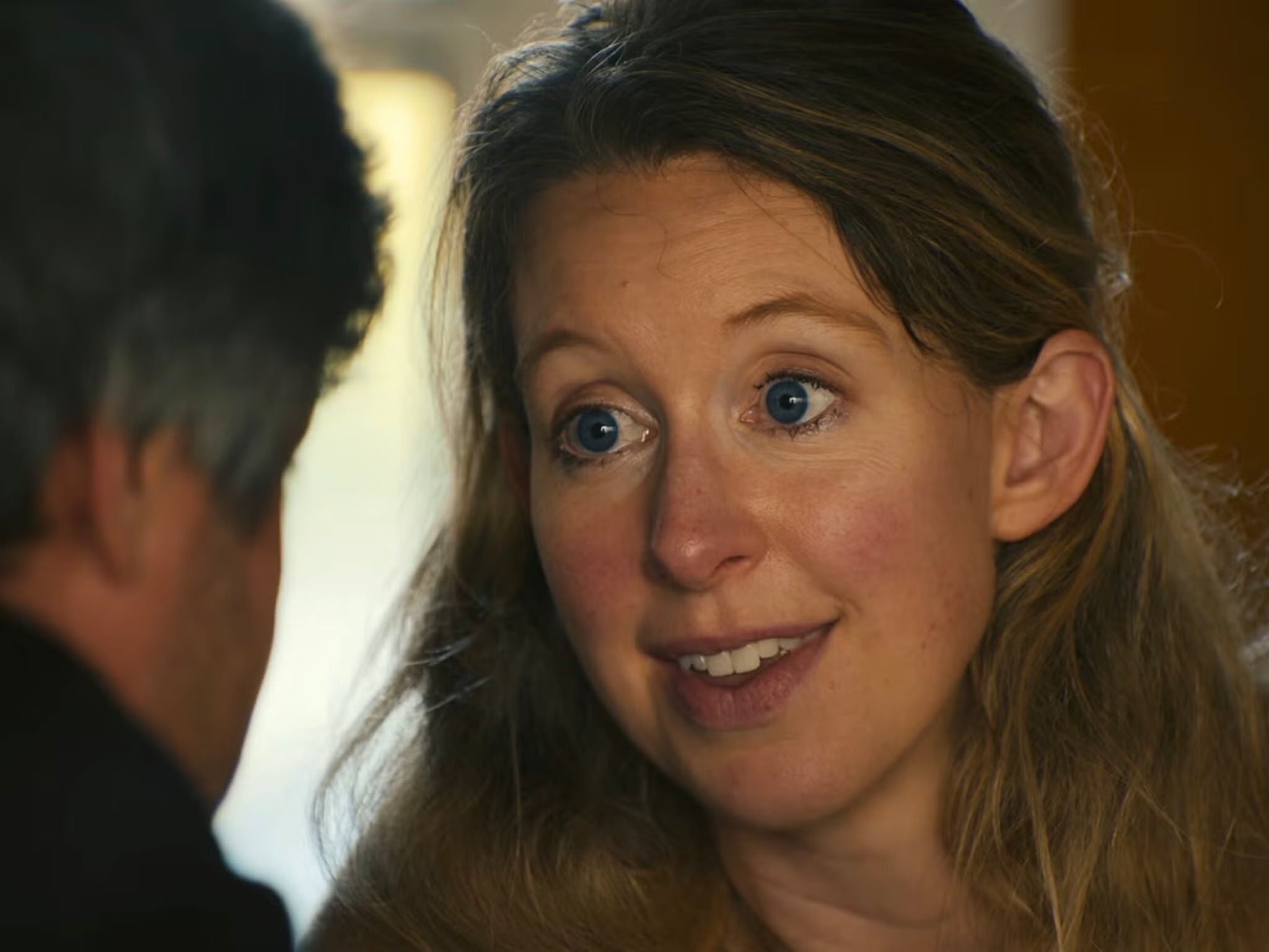
The film frames the egg beating as a major turning point in Fielder’s investigation. More questions come up. Is Evans manipulating Holmes? Is she hiding behind him? Fielder begins following these questions. And this turns into the film’s most provocative but easy-to-miss aspect. Fielder loses sight of the evidence against Holmes, of the patients her technology harmed, of the people who have proven her guilt in court.
It’s as if, empowered as a quasi-detective to ask any questions he wants, Fielder allowed himself to inch further and further afield from the core of Holmes’ crimes. Perhaps this is because the film is dealing with a case that was already solved in court. James Baldwin said that the artist “must drive to the heart of every answer and expose the question the answer hides.”1 This attitude has led to an incredible amount of wonderful art. But in You Can See Everything, this stance becomes malicious in enticing and suspenseful ways; the act of asking questions pulls the documentary off-course away from any tangible truth that could be revealed in the questions it poses.
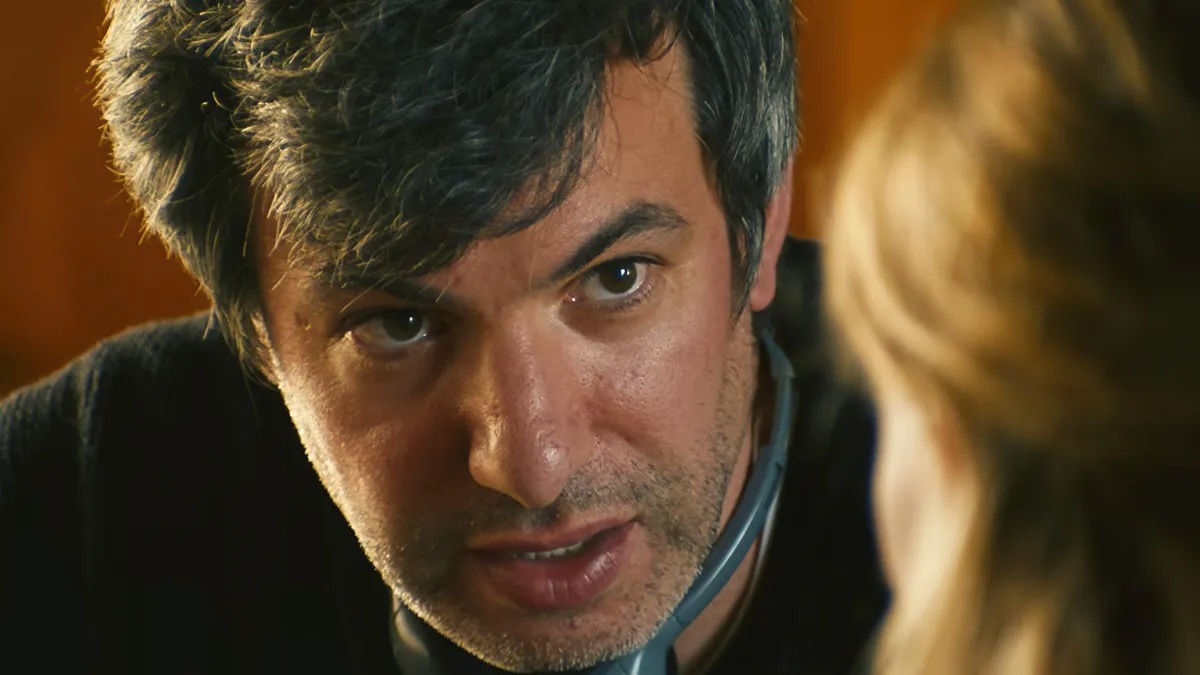
This leads to another key question: Does Fielder know he’s doing this? Is this part of the planned narrative or is this just what can happen when you’re allowed to ask many, many questions without receiving satisfying answers? Does the mind start to tug on distracting threads and try to connect them like a conspiracy theorist instead of an investigator? Fielder’s on-screen persona is interesting in this respect. In this film, he’s less purposefully comedic than usual, less distractingly awkward. And because of this, he comes across as truthful, as if he’s probing Holmes’s story as best he can. Yet perhaps this more relaxed persona is the documentary’s real ruse, demonstrating how deceptive an air of honesty can be. That we can’t know which parts are intentional obfuscation by Fielder, and that some people won’t even know to want to know, is where the film shows its true complexity.
Some will compare You Can See Everything to Orson Welles’s F for Fake (1973), the experimental documentary that explores the sexiness of its lies and the ease of tricking its audience, even an audience that Wells had deceived in the past. But at the end of F for Fake, Welles reveals his tricks. He presents reality as something that can be clarified. Whereas You Can See Everything, in its souped-up fashion, does away with this idea. In the film, there is no truth. There are no answers to be found.
And perhaps this is why Fielder never asks Holmes a question like, “How can you be innocent when your team ran blood tests using other companies’ machines and claimed the results came from your own?” Such a question would’ve interjected a realm of fact and reality that the film seems to find uninteresting. Like much of Fielder’s other brilliant work, You Can See Everything is disorienting and cagey and fascinating, never letting the audience know what the film is really thinking because what it’s really thinking could be anything at all.
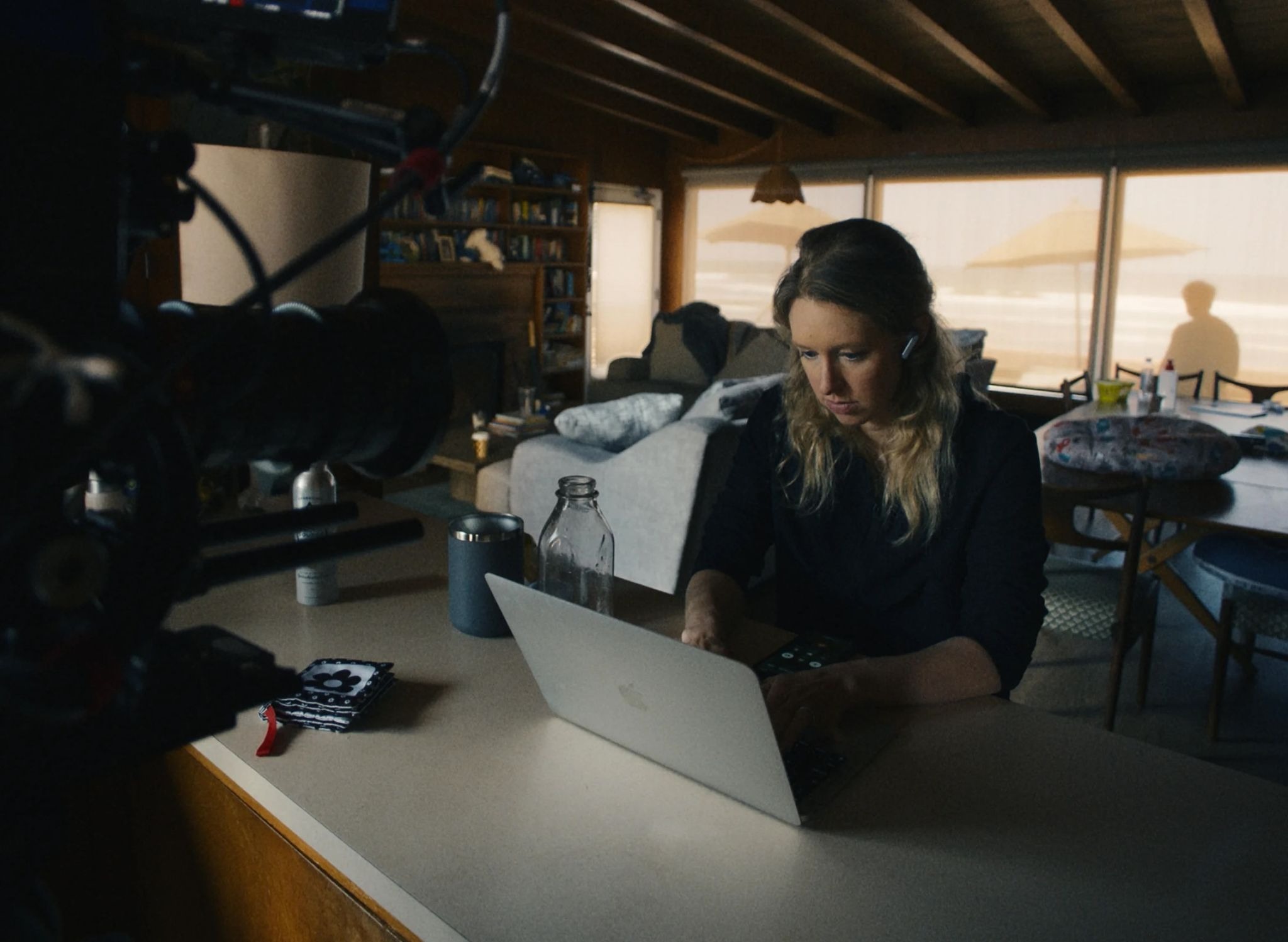
You Can See Everything is now playing in theaters around the United States.
1 James Baldwin, "The Creative Process," in Creative America (Ridge Press, 1962).