
"The Ballad of Little Jo" (1993) dir. Maggie Greenwald at Anthology Film Archives
Review
The truth, Plato suggests, can be painful. In Allegory of the Cave, prisoners mistake shadows cast on the wall for reality until one escapes and encounters the blinding light of the sun. That prisoner eventually returns to the cave to enlighten the others, only to meet their reproach. Bernardo Bertolucci’s The Conformist (Il Conformista) (1970) channels this ancient dilemma into a modern political drama set at the height of Mussolini’s reign in 1938. This adaptation of Alberto Moravia’s 1951 novel follows fascist flunky Marcello Clerici (Jean-Louis Trintignant) as he sets out to assassinate his former philosophy professor, the exiled anti-fascist dissident Quadri (Enzo Tarascio). The film dissects the psychological mechanisms through which political authority inoculates individuals, anchoring its examination of political truth in Allegory of the Cave—the subject of Marcello’s thesis. When the protagonist sees the sun, so to speak, he cannot bear the painful force of illumination and instead chooses to remain a prisoner—to obey the Fascist state. By situating viewers within this quandary, The Conformist prompts them to consider the potential for violence within themselves, thereby instigating reflection on the consequences of conformity.
Although the film is set in pre-war Fascist Italy, the milieu of its production in the 1970s was similarly turbulent. From the late 1960s through the 1980s, Italy experienced the Years of Lead, a period of intense political violence and terrorism perpetrated by radical left-wing and right-wing factions. This atmosphere of conspiracy and paranoia permeated Italian art: as giallo filmmaker Lucio Fulci declared, “Violence is an Italian art!” Bertolucci—a protégé of Pier Paolo Pasolini—emerged in cinema d’impegno, a politically charged strain of Italian filmmaking that merged thriller conventions with contemporary issues through a sociological, often psychosexual approach. This interest in sexual repression and perversity as symptoms of governmental oppression can be traced to Sigmund Freud’s Civilization and Its Discontents (1930) and Wilhelm Reich’s The Mass Psychology of Fascism (1933).
The Conformist begins in a bleak Italy as Marcello recounts to his blind friend Italo (José Quaglio)—symbolic of the Italian spirit—his desire to conform by joining the Fascist state and marrying the simple, petite-bourgeois Giulia (Stefania Sandrelli). As Marcello prepares for his initiation and union, Bertolucci reveals the origins of his repression. Marcello’s father is institutionalized, tormented by guilt over the torture and mass murder he committed as a prison guard, while his mother is a morphine addict having an affair with her chauffeur and drug pusher. This is compounded because Marcello, as a child, was sexually abused by a chauffeur, Lino, whom he shot and presumed dead.
Marcello’s psychic inhibition is a funhouse mirror of his parents’ dysfunction. In a quasi-Oedipal act, he incites his handler to beat his mother’s lover—a chauffeur like Lino—revealing how he sublimates his unresolved trauma. Because Marcello cannot face his internal disorder, he needs the external authority of the Fascist state to impose order. Reich described the conversion of private repression into public allegiance as a mass psychological precondition for fascism. “Normality” is Marcello’s specific word for what fascism offers: heterosexual marriage, bourgeois comfort, and party membership. His desire was shaped by his conditioned understanding of his homosexuality, college education, and wealth as deformities. For Marcello, the murder of Professor Quadri is a final rite before he can join the Fascist state and satisfy his desire to be deemed normal.
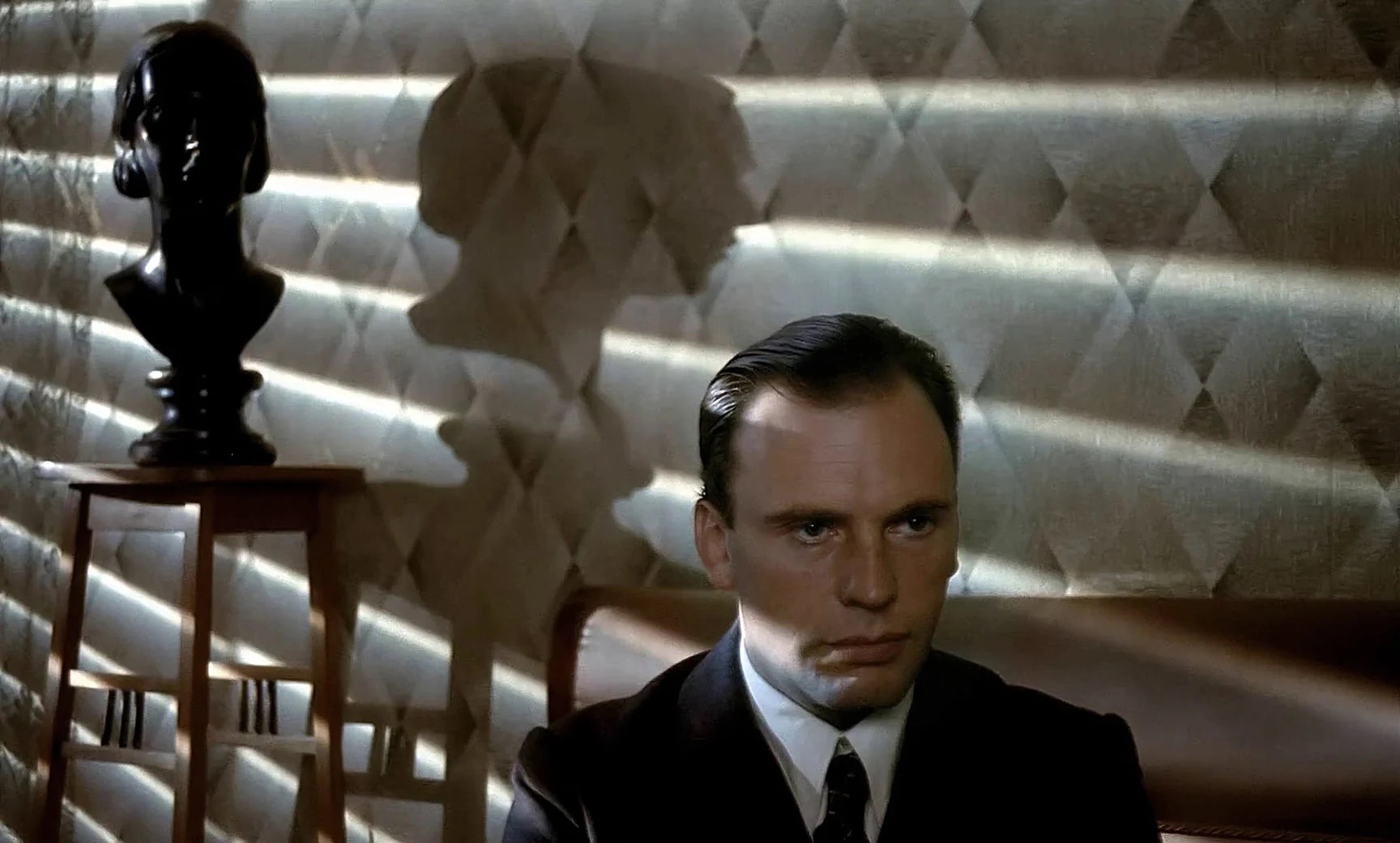
Aptly for a film concerned with sight, Bertolucci’s longtime cinematographer Vittorio Storaro crafts a visual experience that parallels the trajectory of Plato’s allegory. Vibrant colors and asymmetric compositions emblematize light and freedom, while distanced camera angles, geometric lighting, and a washed-out color palette evoke the despotism that binds the prisoners to the cave. The long tracking shots that follow Marcello with an air of surveillance allude to the aesthetics of German cinema associated with totalitarian imagery, from the looming, dehumanizing architecture of Fritz Lang’s earlier Metropolis (1927) to the choreographed mass spectacle of Leni Riefenstahl's Triumph of the Will (1935). As Storaro notes in an interview with American Cinematographer, the goal was to create a cage around Marcello, for example, by using wax paper to block the light and efface any evidence of an outside.
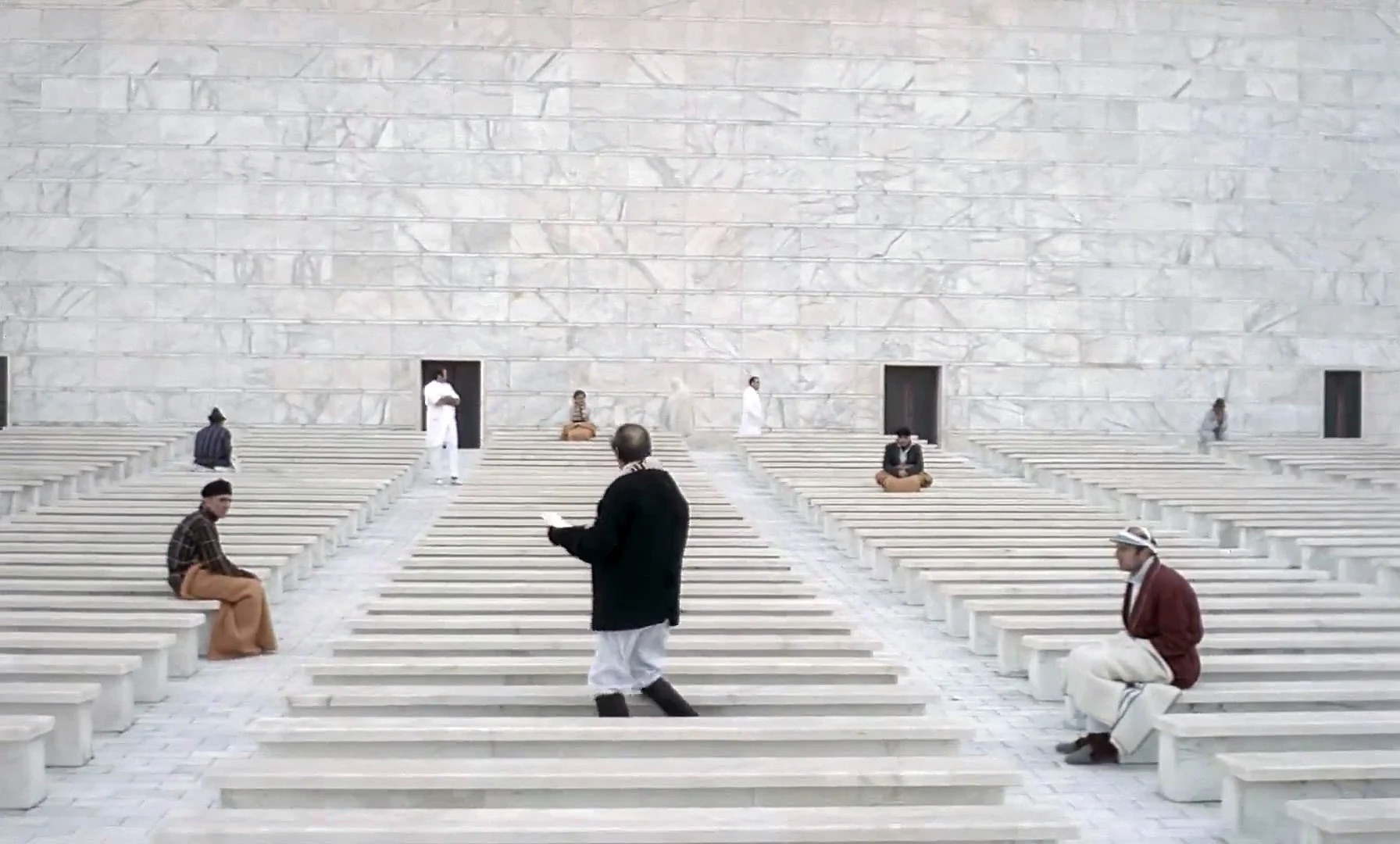
Scenes at the party headquarters and his father’s institution were filmed at the Palazzo dei Congressi, a building with white marble revetment that embodies the monumental aesthetic of Fascism. The site epitomizes Mussolini’s vision of a new Roman city center designed according to principles of Fascist rational planning. The architecture combines references to antiquity with the sleek modernism associated with Italian Futurism and its celebration of speed and the glory of war, as articulated in F.T. Marinetti’s Futurist Manifesto (1909). Alongside the lighting and camerawork, the cold, utilitarian buildings deemphasize the individual to foreground collectivity. Marcello’s apartment echoes this geometric language of authoritarian control, with its angular Art Deco wallpaper and horizontal bars of light flooding through the window. The extension of this visual language into his home signals his yearning to erase his individual aberrations and become one of the many.
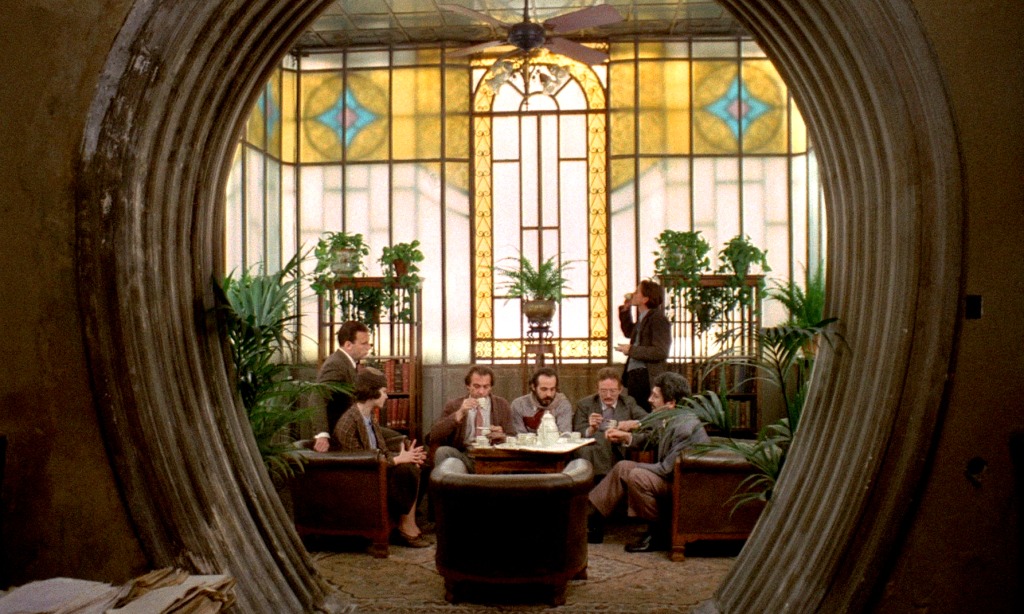
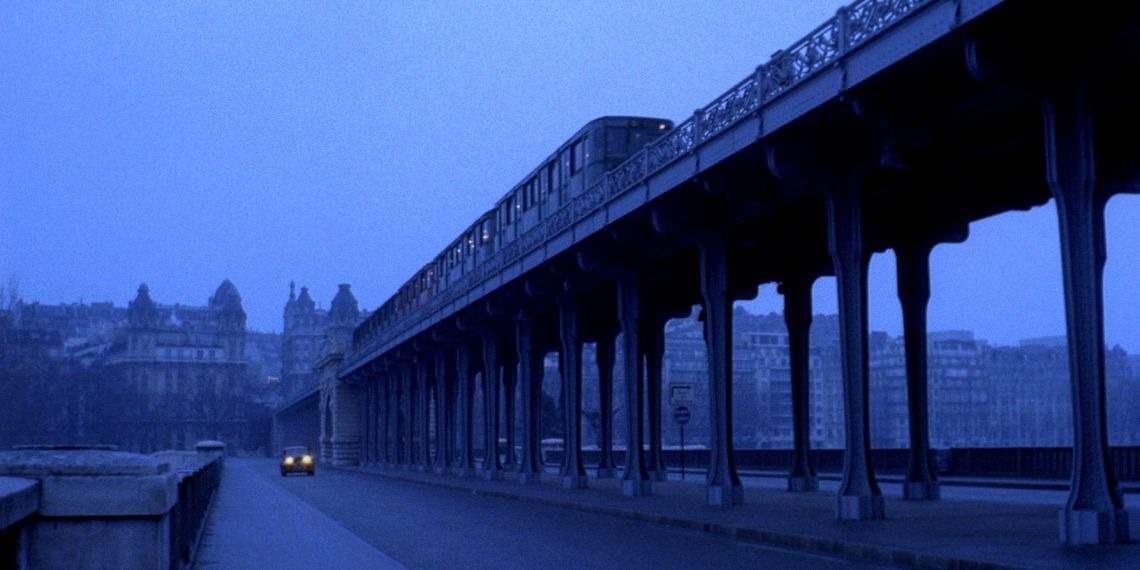
When the film transitions to Paris, the screen is saturated with color, specifically blues that suggest a sense of liberation. Marcello meets Professor Quadri and his wife Anna (Dominique Sanda), whose apartment is filled with books and suffused with light—the antithesis of state architecture. Although the couple knows that Marcello is a spy, he nevertheless pursues an affair with Anna, who resembles a prostitute he saw at the start of the film. Anna—whose name is changed from the book’s Lina, the feminine variant of Lino—remains uninterested in Marcello and instead tries to seduce Giulia. Watching the romance between the two women, Marcello becomes a voyeur of the very intimacy his repression thwarts and perverts. The state, whose oppression is the seed of his complex, drives his pent-up rage into political action.
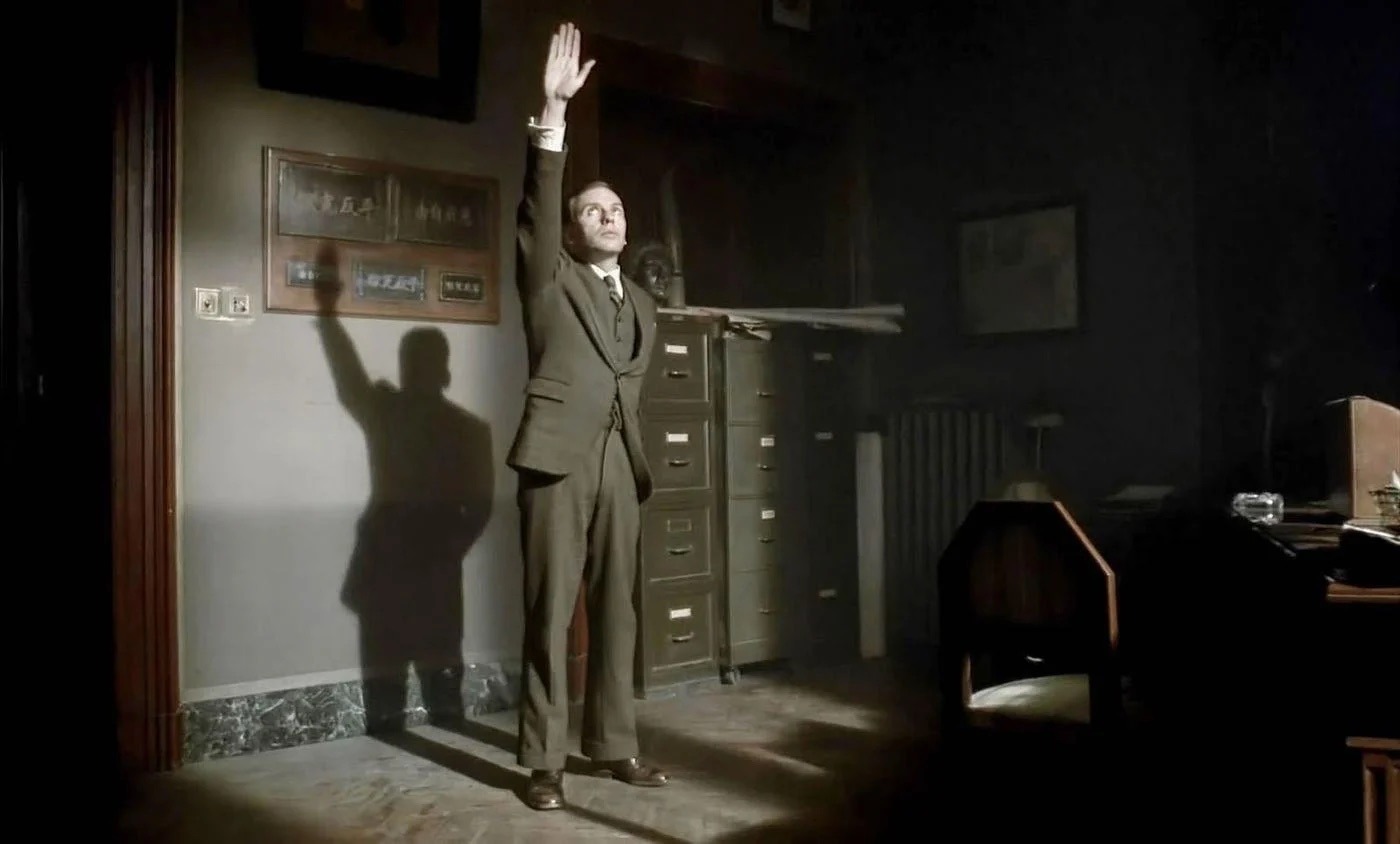
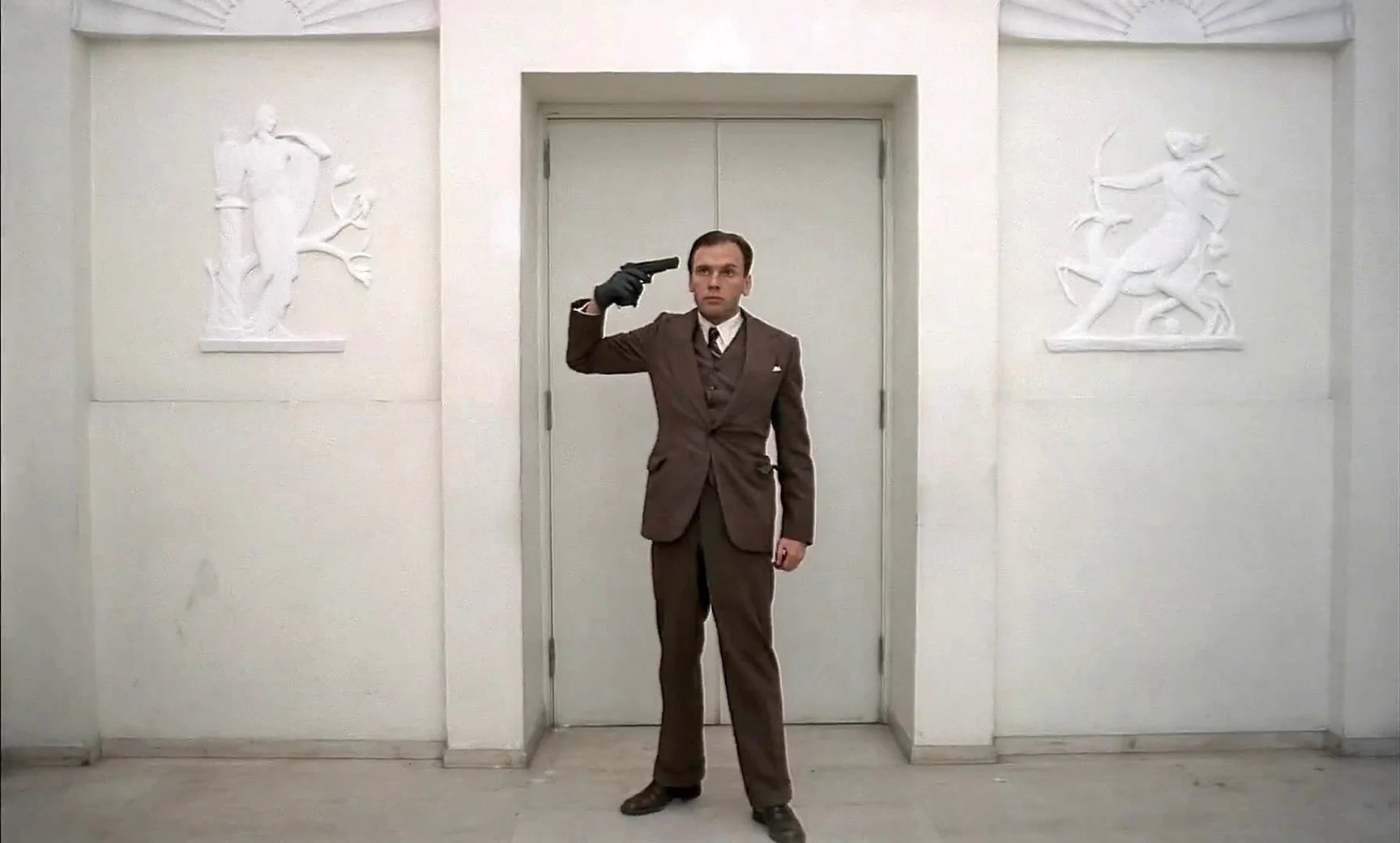
Marcello revisits his thesis on Plato with his former professor. When discussing the sun, Marcello raises his hand to block his eyes from the imaginary rays. His pose echoes a Nazi salute, a physical manifestation of his unconscious allegiance. Like a Freudian slip, the motion suggests that his body might reveal what his active mind refuses to admit. This scene recalls an earlier moment when Marcello poses with his gun like an actor playing a role after learning of his assignment to murder Quadri. Marcello never successfully fires a weapon in the film; his mimed suicide at the end of the sequence instead suggests that his subservience has deprived him of agency.
At the conclusion of the film, on the way to murder Quadri, Marcello recounts his previous night’s dream: the philosophy professor and Anna operate on his blind eyes so he can finally see. For Freud, dreams can serve as a form of wish fulfillment; here, Marcello’s dream represents a choice he will never be able to make, regardless of his subconscious hopes. In the fatal sequence, Storaro’s overhead shots juxtapose the snowy woods with the diagonal lines of the trees, reinforcing the bleakness of the situation. Marcello cannot follow through with his crime and requires others to do so, repeating his evasion of culpability after his attempted assassination of his childhood chauffeur, Lino. Conformity is inevitable due to his conditioning, as the dream reveals the alternative he can never take.
In the coda, the film jumps to the fall of Fascism. Marcello and Giulia’s once pristine apartment, paid for in installments, is in disrepair as children trample over their honeymoon finery, treating it as a relic of the distant past. Ironically, Marcello guides his blind and loyal friend Italo through the boisterous streets of Rome: the metaphorically blind guides the literal blind. There, he discovers Lino—whom he thought he had murdered—alive, shattering the false premise of his guilt. Rather than feeling freed, Marcello interprets the revelation as a threat: without the original crime to explain his flight into conformity, the murder of Quadri loses its only justification—one that depended on fascism’s existence to authorize it. He responds by turning the mob on Lino and obliterating the man who could expose his fraudulence. He then denounces and incites the crowd against Italo. As he destroys all witnesses to his crime—the Greek mártys, from which “martyr” derives, originally meant “witness”—the shadows effectively become him and his only reality.
In Giulia and Marcello’s otherwise derelict, colorless apartment, their baby’s nursery is decorated with blue cloud-patterned wallpaper—the leitmotif for freedom. Yet the room may be more of an enclosure than a window to the child’s future: as with Marcello’s own upbringing, his child inherits the cage their parents mistook for open sky. Willful ignorance—and its ensuing violence—may persist across generations.
The Conformist serves as an oblique critique of the neo-fascist resurgence during the Years of Lead. For Bertolucci, Marcello’s conformity marks a desire for order as a means of eluding personal responsibility that outlives any particular regime. The Conformist resists letting the audience dismiss Marcello as merely monstrous, casting his cowardice as an ordinary self-serving form of evasion by which complicity disguises itself as circumstance. The film then leaves its audience to ask whether, once outside the cave, they can bear to keep their eyes open in the blinding light of responsibility—or whether they will, like Marcello, turn back toward the dark.






.jpeg)