“Call me gravity” at WIELS
Review
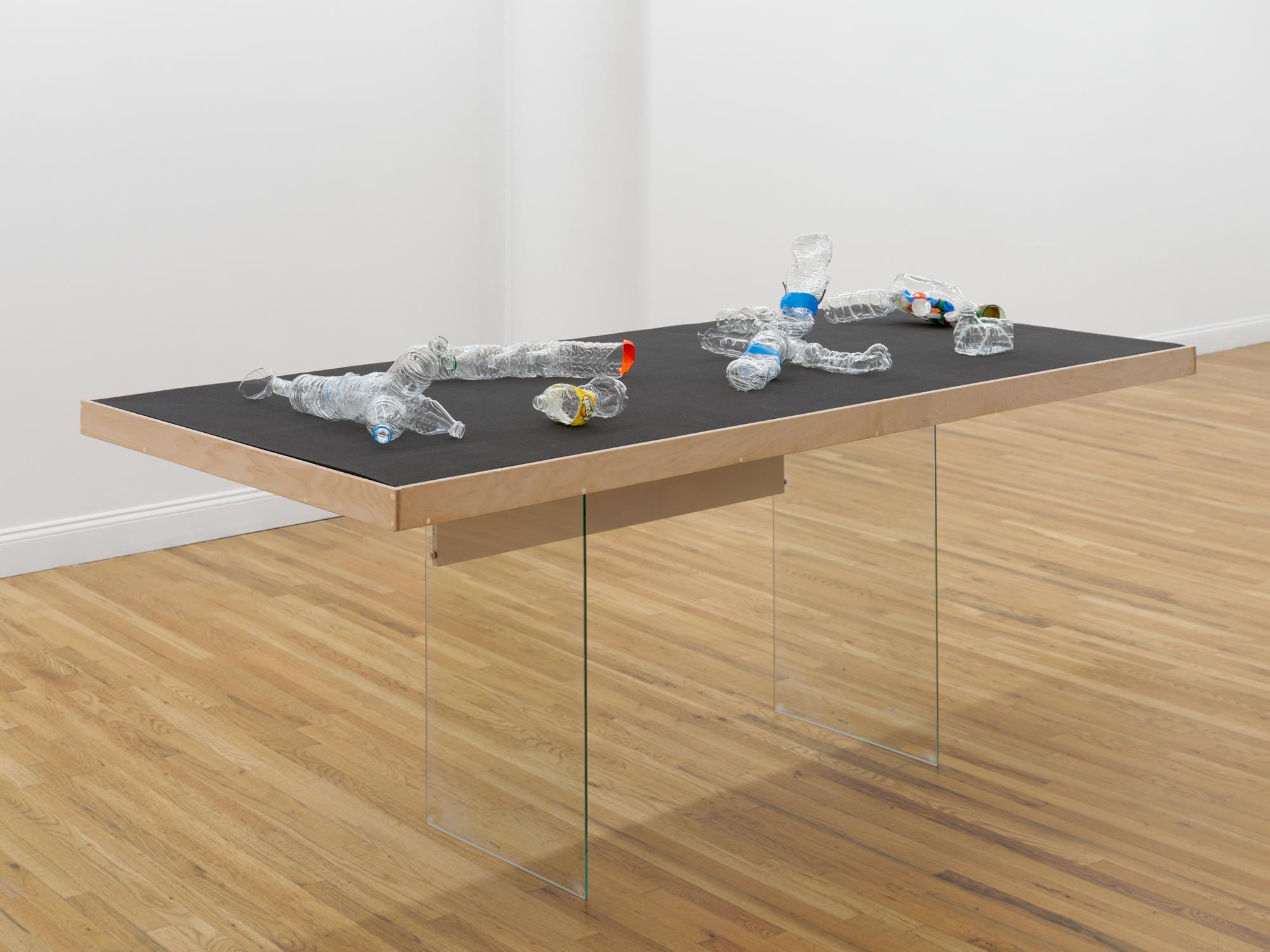
Before the eye settles on any object in Wetware, the sounds of flowing water, calling birds, and trilling insects envelop the gallery, unsettling its expected quiet. The soundscape soon shifts. Deep, steady breathing mingles with a baby’s coo; somewhere, a plane passes overhead. Each sound hovers at the edge of recognition, becoming identifiable only as another arrives to displace it. The source is Tishan Hsu’s Folds of Oil (2005), installed beside the entrance, easy to miss when walking straight into the room. Instead, your eyes land on Patty Chang’s Glass Urinary Devices (2017), spread across a long black makeshift table in the center of the gallery. From afar, the vessels look like scrunched-up plastic bottles, an illusion Chang sustains with bottle caps and plastic wrappers. Up close, they turn out to be borosilicate glass, modeled after the makeshift urinary funnels Chang used while traveling along China’s South–North Water Transfer Project. That uncertainty follows you through Wetware, where objects have a habit of slipping out of their anticipated categories.
The title Wetware gives that slipperiness a framework because “wetware” comes from the language of systems: hardware, software, and then the biological matter doing the processing. Yet the exhibition becomes more interesting when that analogy starts to break down. Chang’s devices exist because a body leaks. Hsu’s sound leaves the screen before the screen itself is visible. Even his relief New Portable (1988), hanging nearby, looks like a machine whose purpose has been forgotten. It is enormous for something called portable. A silver bar projects from its surface like an enlarged handle or restraint, while a red glow emanates from painted material rather than technological circuitry. It looks functional without ever revealing what it does.
Opposite Hsu hang Faith Icecold’s Jacquard tapestries, which initially feel softer, almost like a release from his heavy wall-mounted form. That distinction does not last, for Icecold begins with photographs of a workbench, builds them into digital collages, then sends the images through a Jacquard loom into thread. The loom already carries its own computational history where punched cards instructed which threads would lift row by row, a system that later informed Charles Babbage’s Analytical Engine. Icecold’s images therefore pass through digital technology before returning to a material already intertwined with the history of computation.
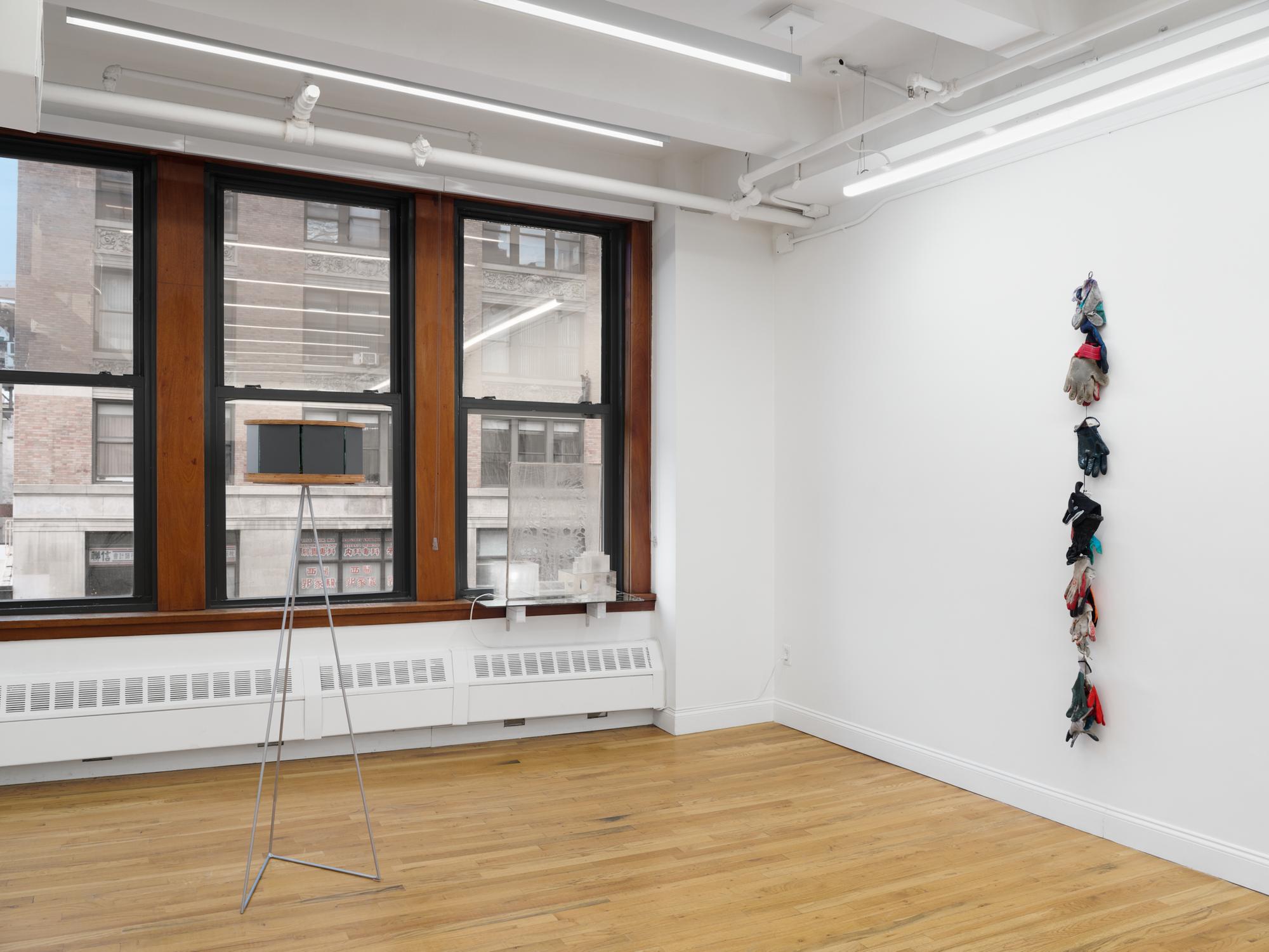
Those exchanges also happen across time. Wetware is the inaugural exhibition by Spine, the curatorial entity of Aidan Chisholm and Laura Audrey Brown, whose developing practice places New York at its center. The nine artists presented in the show span several generations, from figures connected to Fluxus and conceptual movements to those still in graduate school. But what matters more is how each registers a different New York and a different technological moment. Rather than laying those histories out chronologically, the exhibition lets several versions of the city converse in the same room.
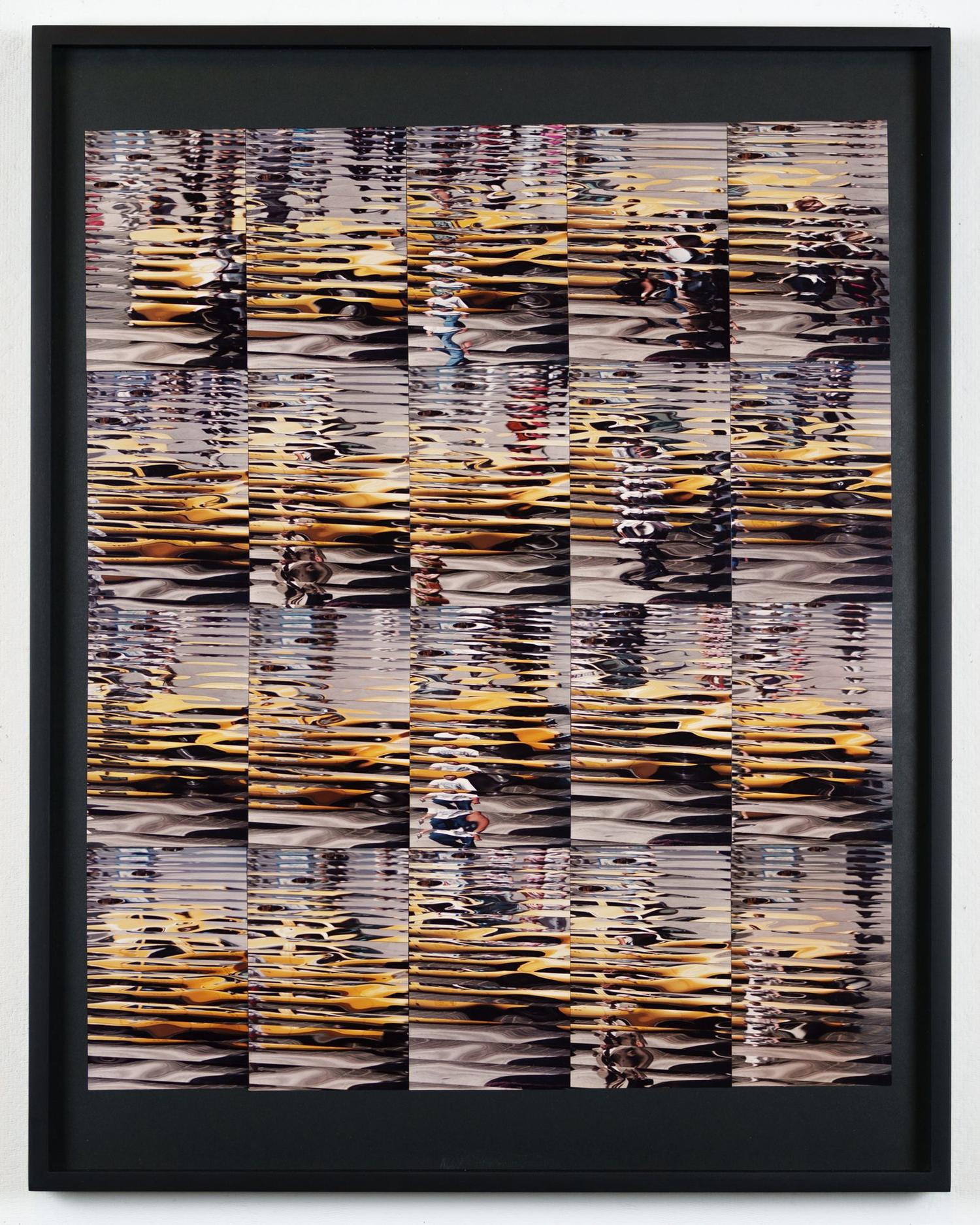
Bettina’s Phenomenological New York (1972–77) photographs extend this instability into the still image. Organized in a grid that should, in theory, straighten things out, the images don’t. Reflected buildings bend and liquefy, and moments of the street almost line up before splitting off. There is no digital manipulation behind the distortion; it happens through the encounter between camera, reflective architecture, and the moving city. Shown is a New York that keeps slipping out of shape. Nearby, Rafael Sánchez’s The Honey Jar (2003) photographs obsolete technologies submerged in honey, while Aviva Silverman’s Drifters (2026) suspends rosary beads inside resin. Honey and resin keep these objects intact yet deprive them of their function. Sánchez’s devices can no longer operate, while Silverman’s rosary cannot move through the hand as it is counted in prayer. What remains visible is a trace of objects rendered unusable.
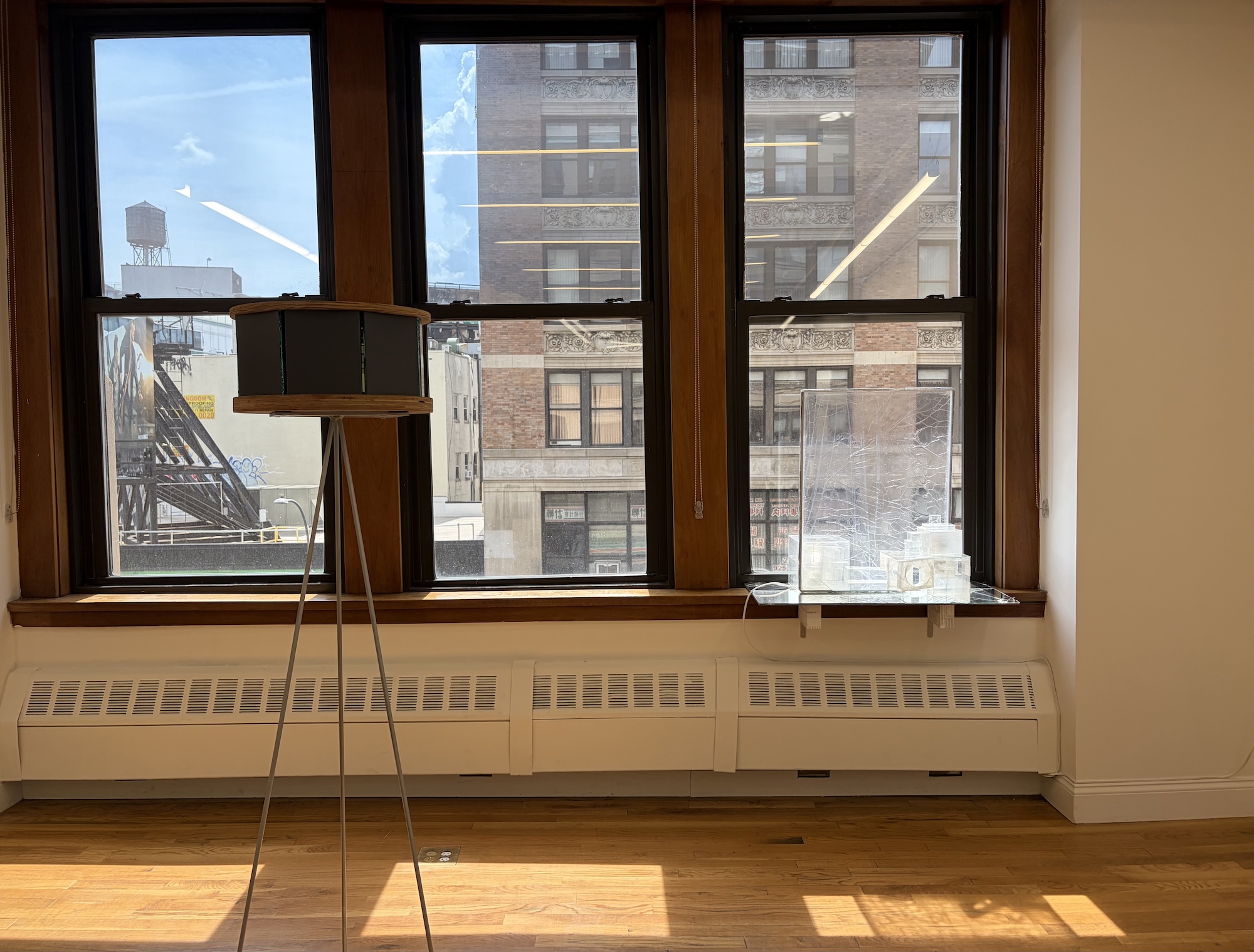
Near the window, Silverman and Emily Shinada’s Is terraforming reincarnation? (2015) draws the viewer toward an enclosed chamber balanced on a steel mount. Viewers must move close and peer through narrow slits, where mirrors multiply a finite photographic image until it seems to extend beyond the object itself. The work recalls the nineteenth-century optical devices Jonathan Crary examines in Techniques of the Observer, where the viewer is not outside the apparatus but part of how it works.1 Silverman and Shinada make that relationship oddly intimate. To see the image, you have to opt in, move close, and deliberately look.
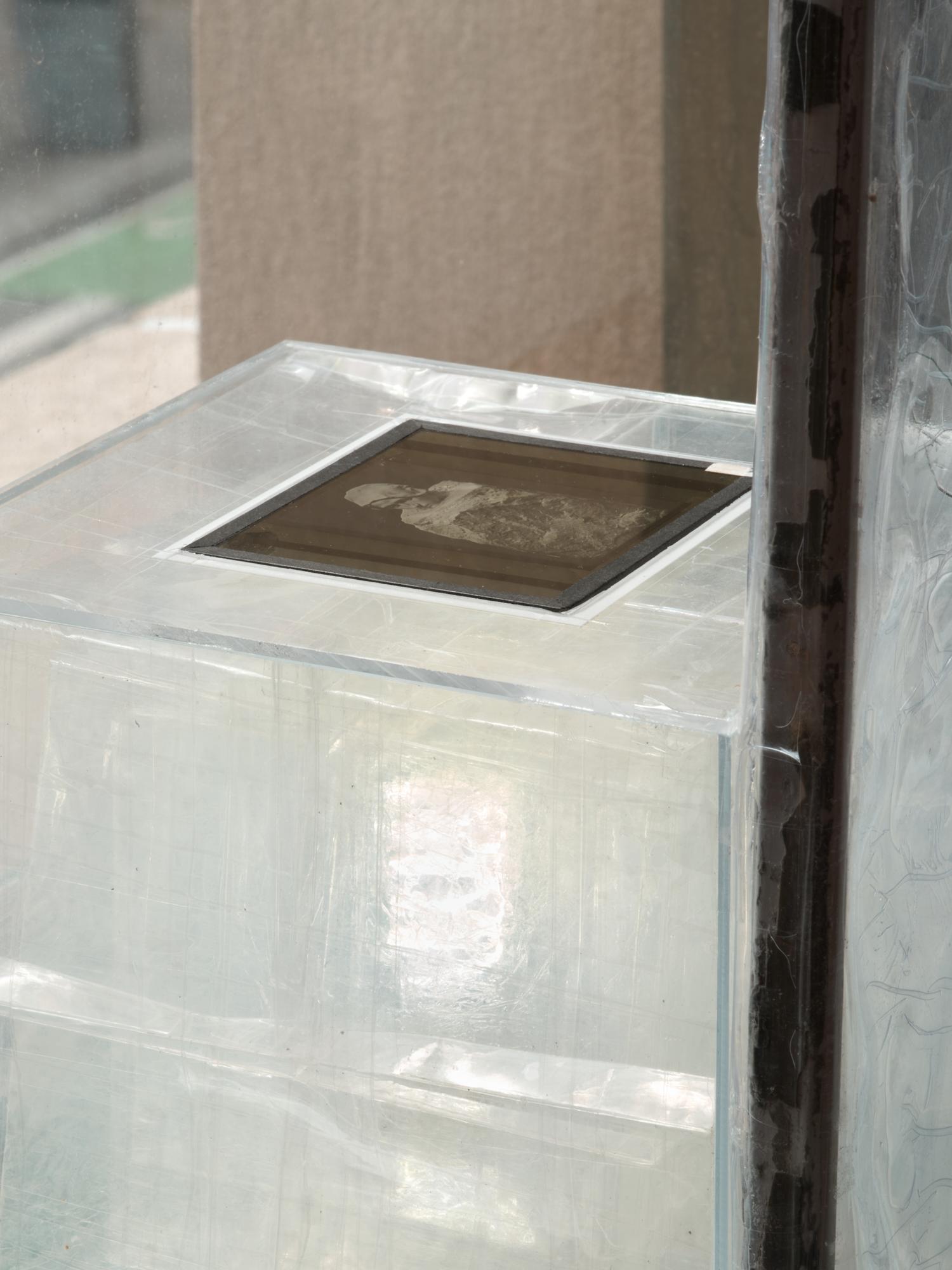
Khia Hong’s Lest We Perish of the Truth (2026), a few feet away, asks for almost the opposite. When I visited, sunlight poured through the gallery window and turned parts of its transparent structure unexpectedly milky. More light made it harder, not easier, to see through. At one point, two pigeons crossed the window and were briefly caught in the work’s reflections. Unlike Silverman and Shinada’s enclosed chamber, Hong’s sculpture has no single focal point. Its modular components recall an early computer or three-dimensional diagram. Between its transparent layers, Hong smears Vaseline, introducing a gooeyness into the otherwise clean, angular structure. This is “wetware” made literal: goo lodged inside a rigid structure. Lean in and a photographic slide of Rodin’s La Pensée appears, lit against the window, an unexpected delight. While Silverman and Shinada draw the viewer inward, Hong invites the city into the work.
Across Spine’s first exhibition, New York is shown to never settle into one image. It appears across Alison Knowles’s string of street-found gloves and enters Hong’s sculpture as changing daylight. That resistance is what makes Wetware an exceptional debut, where the materials are seen leaking through the structures supposedly meant to contain them. By the end, Wetware starts to feel like a stratigraphy of New York, with different moments of the city layered together, slowly building yet none completely covering the one beneath it.
Wetware, curated by Spine, was on view at RAINRAIN Gallery from July 9 to August 7, 2026.
Reference:
1 Jonathan Crary, Techniques of the Observer: On Vision and Modernity in the Nineteenth Century (Cambridge, MA: MIT Press, 1990).