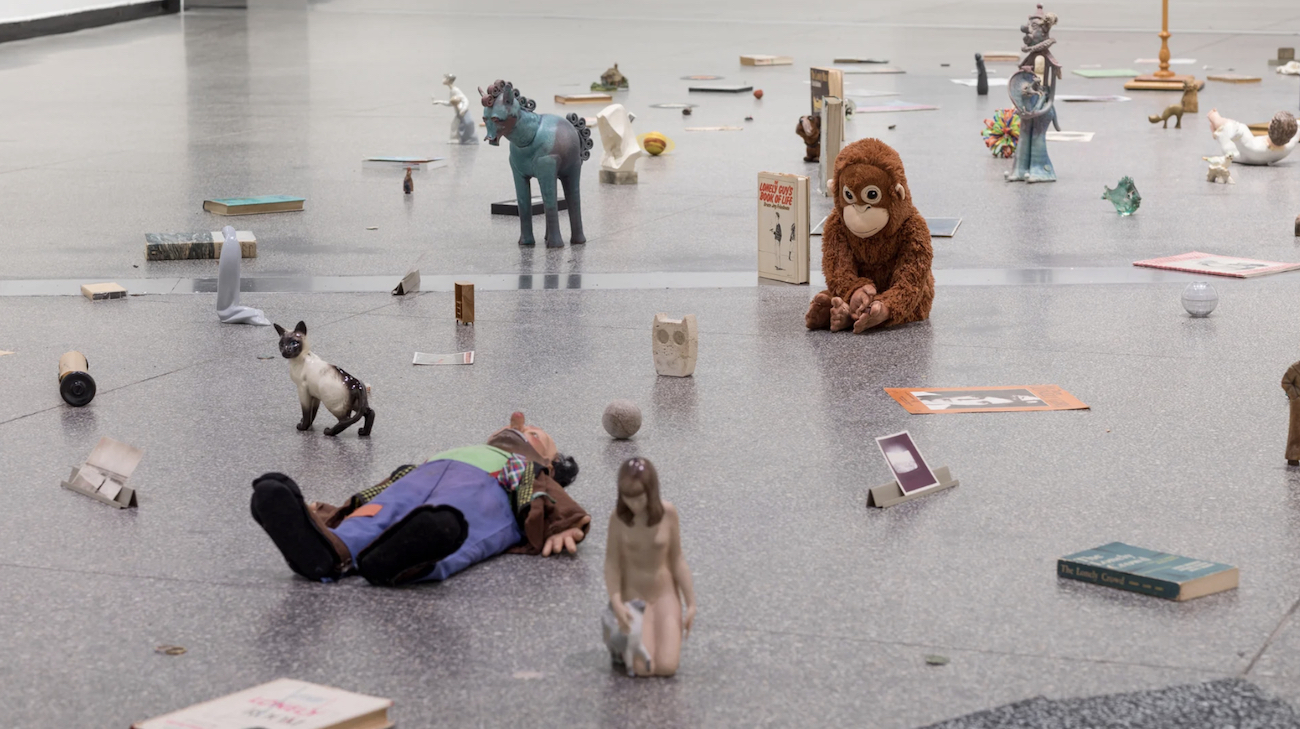

“Are you lonely tonight?” at the Australian Centre for Contemporary Art
Review
If I want to reach the moon, I must first decide where to begin. I seem to be in an empty gallery with the walls painted white. I measure the floor and count the corners, speaking aloud to hear my voice echo, but none of it gets me anywhere, so I step outside to question passersby. Where is the moon? I ask. How do we get there? What will we find? No one knows anything, but that doesn’t stop them from talking, and by triangulating their nonsense I just about get off the ground. I am a human being on earth, I determine, and the moon is round, flat, and equidistant from any starting point. Sometimes it is silvery-white and sometimes buttery yellow, and if I try to grab it too quickly it will smear on my fingertips.
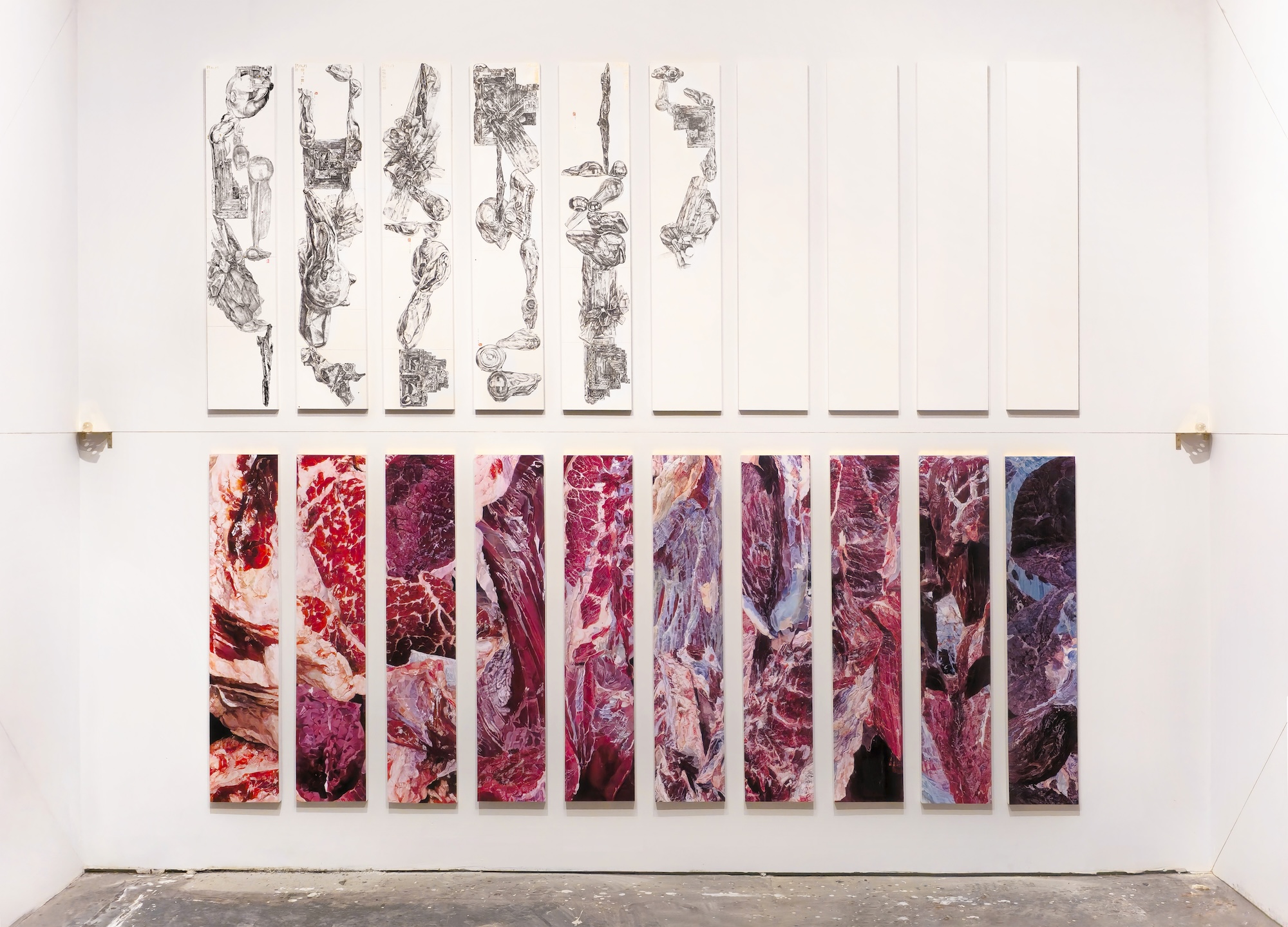
At some point I begin making drawings of my subjects. My purpose is only to focus my attention, but the rapid accumulation of pages reminds me of a staircase, so I hang them in a line on the wall and try to ascend. It’s then, when my crown is just brushing the ceiling, that I have my chief realization: What we say is less revealing than how we say it. Bearing that in mind, I try to say less. I take down the drawings. I even scrape the walls. I’m astonished at the complexities I discover beneath the surface—wires, pipes, fiberglass insulation. Before long I forget the distinction between medium and message, and along with it the distinctions between literal and figurative or direct and indirect. I no longer know if describing my forehead as brushing the ceiling was a metaphor, or a fantasy, or a reference to an ancient Roman poet. I don’t know how to determine the difference or whether the difference matters.
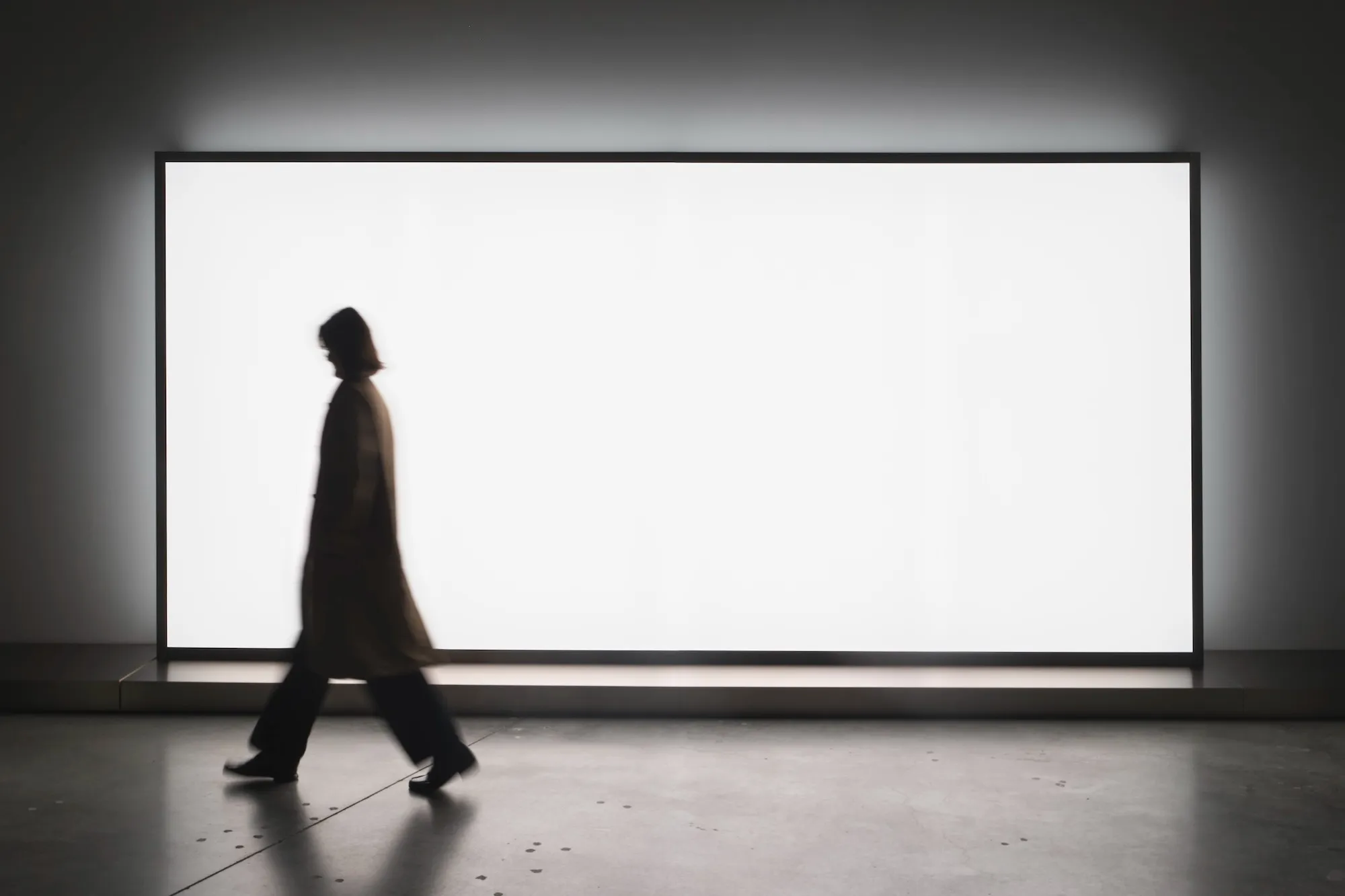
I set up a film projector with no film. I build a lightbox with no imagery. I set up a line of televisions and tune them all to static. I even lose the distinction between distinction and synthesis, building paintings with right angles to join the wall to the floor and painting them such dazzling colors that the corners just disappear. If anyone bothers me at this point, I say that I’m working. If they ask what I’m working on, I say I’m an artist, which is the only loophole I can find. If they ask where the art is, I answer, You’re in it.
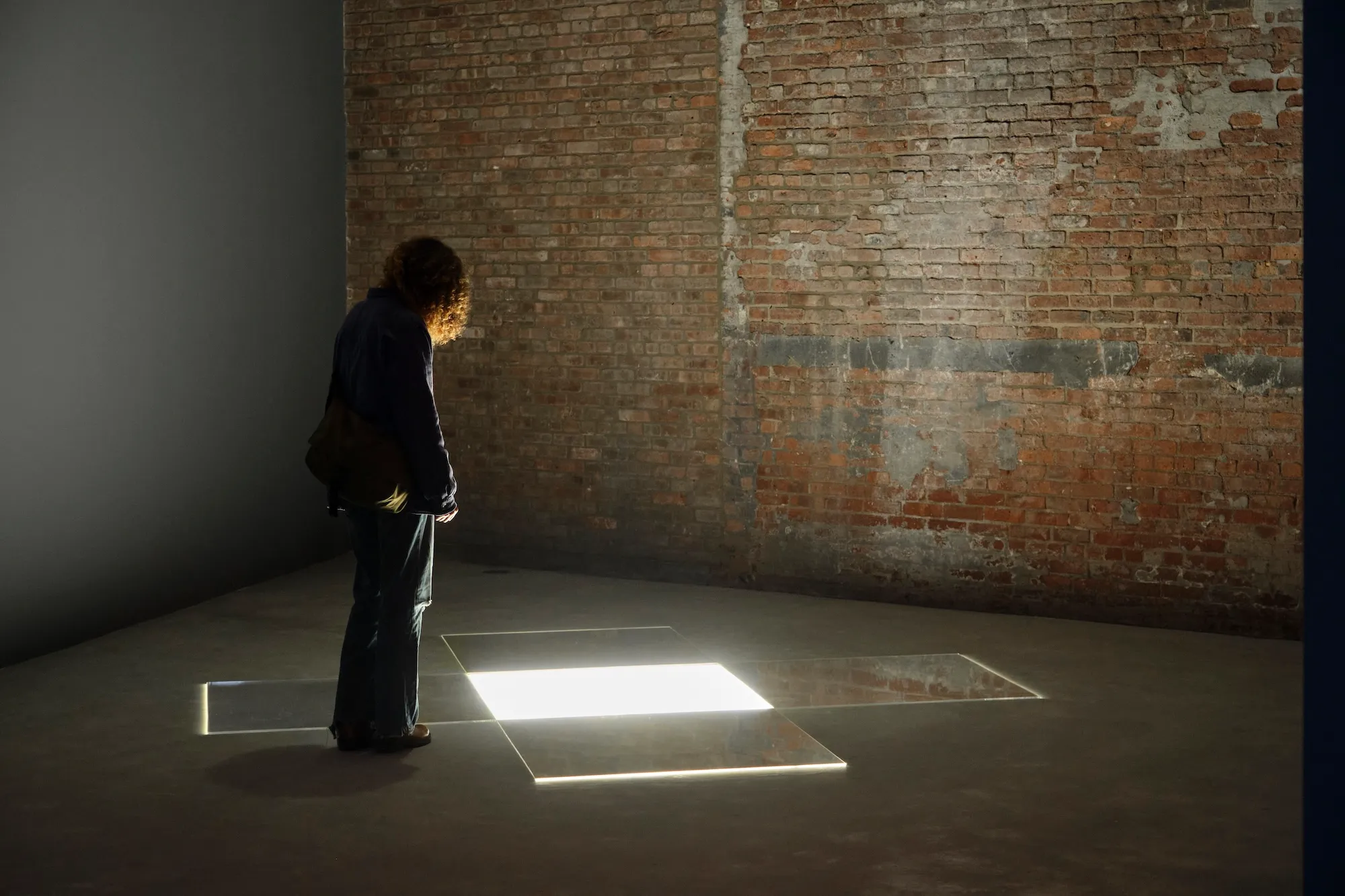
Most often, though, I work in silence, accompanied only by the ticking of the clock. It’s the only distinction that never fades, the ticking of the clock, because the violent ticks can’t be mistaken for the intervals of stillness between them. Nor, for that reason, can I forget my captivity to the progress of time. I begin to think that the moon must be a place of liberation from that tyrannical progress, an endless landscape of eternally unbroken silence. And the more that I think that, the more I realize that the silence on earth is never unbroken. In fact, the more attentively I listen, the more I discover that any silence I open is immediately filled by people screaming—or, conversely, by grunting strongmen rushing to stifle them. The more I hear these cries, the more obliged I feel to take notice of them. At the same time nothing ever changes, so instead of fixing my notice to any particular cry, I attempt to abstract it, to shine my light on structures, not details. A sprinkling of square metal plates in the grass can stand for the death-like footsteps of an authoritarian yearning to suppress the free-flowing chaos of reality. A newsroom behind glass, dispersing live information about an imperial murder spree, aims to rupture the silence of the gallery visitors, to force them to listen as I do.
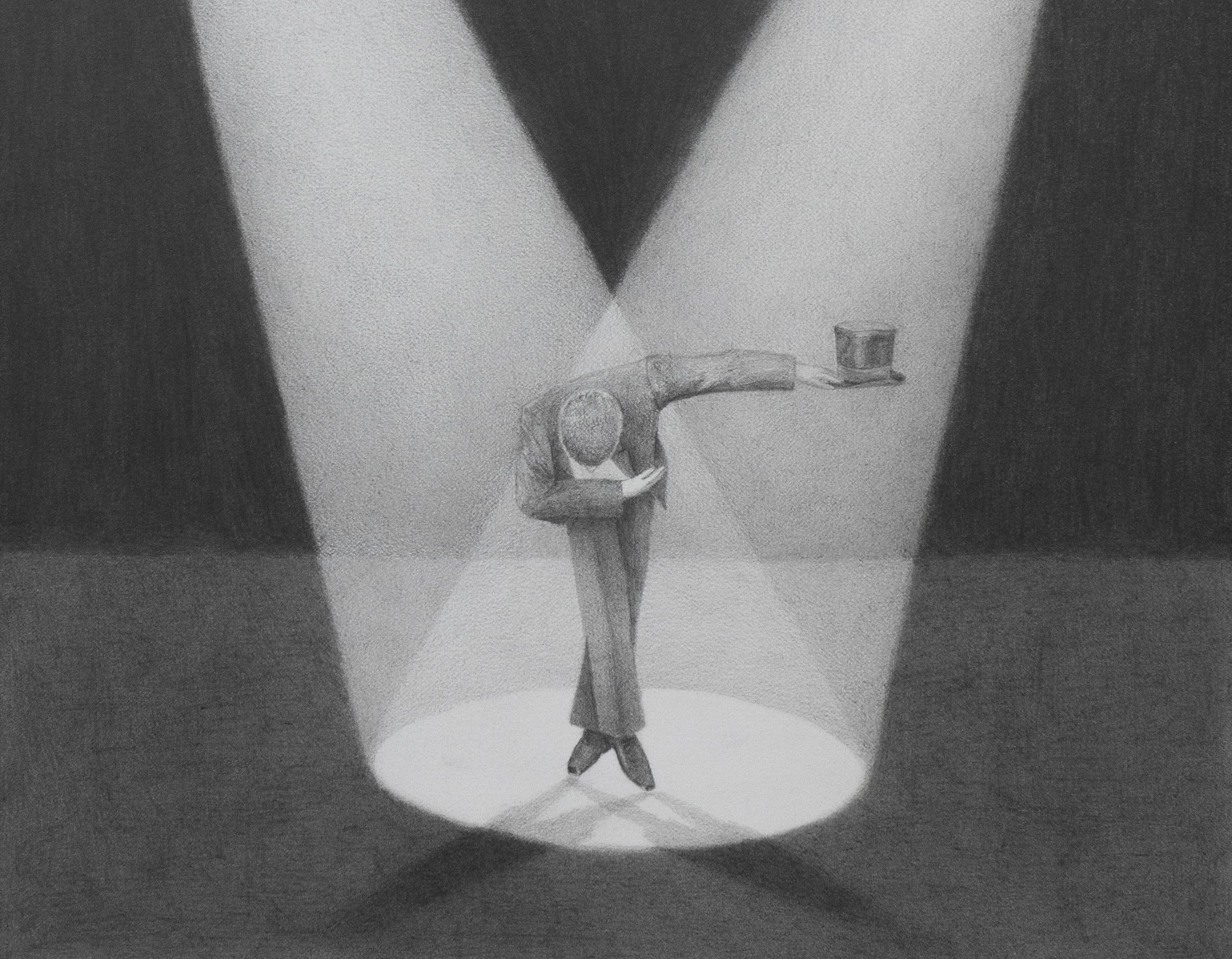
But the more I listen to them listening, the more do I realize that they carry the same structures within them. Or, conversely, the more I realize that our larger social structures are just projections of our smaller ones. If the leader is a clown, then a clown is also a leader, and it is our psyches, not our politics, to blame. Sometimes I feel that I’m standing on the moon already just by noticing this. But then sometimes I hear nothing but the ticking of my heart, and I find the moon receding steadily however I try to reach it, equidistant from any moment or starting point, and I remember the words of Walter Benjamin, who defined the aura of a natural object as “the unique phenomenon of a distance, however close it may be.”
“To Reach the Moon” is a postscript to David Lamelas’s solo exhibition: The Machine at Dia Chelsea. Machine is on view from March 6 to January 16, 2027.
Installation views: