Tim Breuer at Champ Lacombe and TRAMPS
Review
In 1975, Mao Ishikawa took a job at a bar in Koza City that served Black American GIs stationed at Camp Hansen, a major United States Marine Corps base in Okinawa.1 She was in her early twenties, recently returned home from Shōmei Tōmatsu’s photography workshop in Tokyo, with a 35mm camera slung on her shoulder. She worked in bars in Koza and nearby Kin Town for the next two and a half years, photographing her local coworkers and their serviceman boyfriends with the instinct and honesty of writing in a diary—the late nights and early mornings, the beach trips and cramped apartments, moments of intimacy and exuberance. The images Ishikawa produced during those years formed the series now known as Red Flower: The Women of Okinawa (Akabanaa), first published as Hot Days in Camp Hansen!! in 1982, and they remain one of the most radical bodies of photographic work produced in postwar Japan.
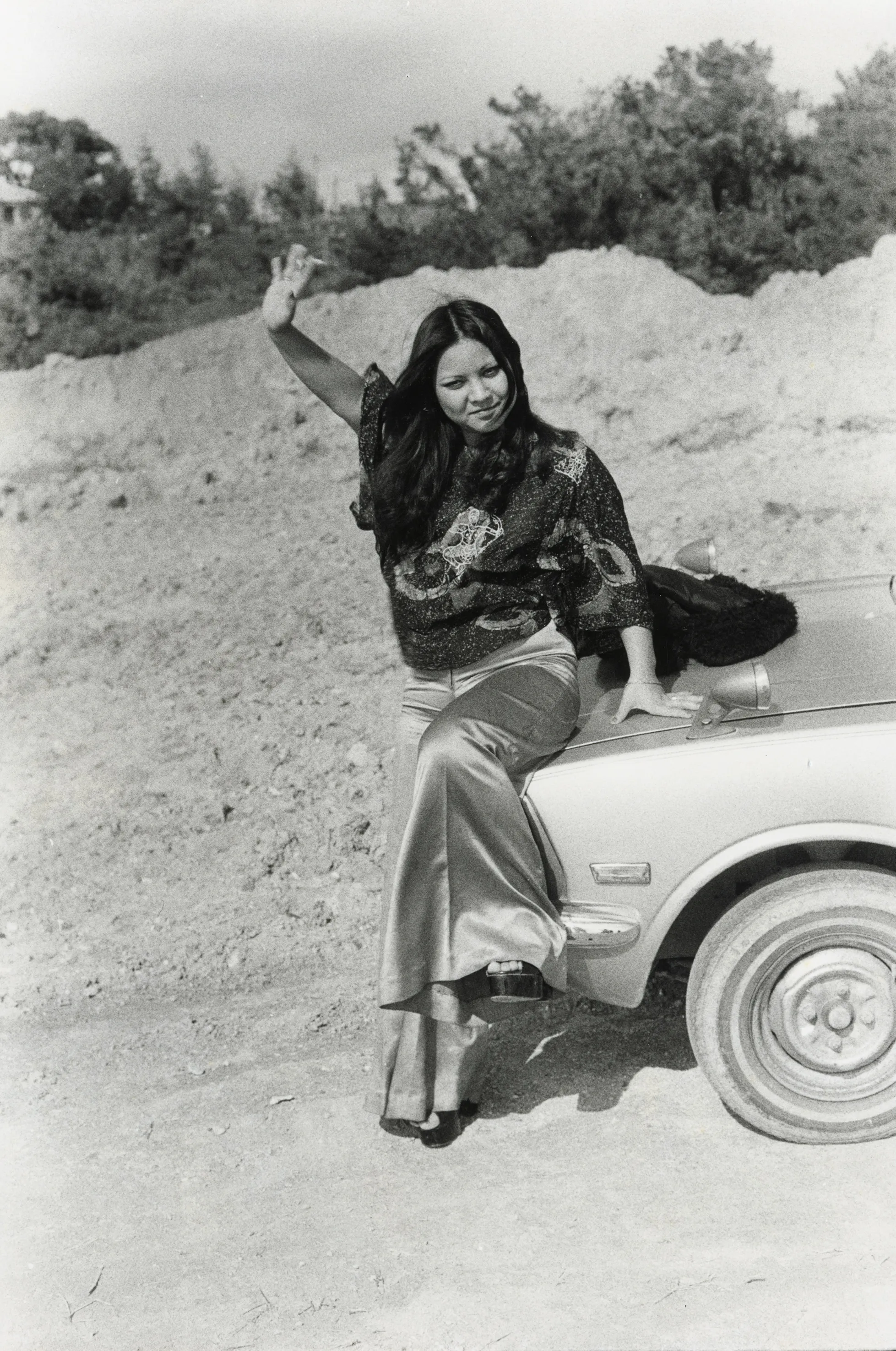
“I fell in love at the bar. I enjoyed myself a hell of a lot, which is why I ended up getting great photos. It’s my life. What’s wrong with the storyteller becoming part of the story?”2
Ishikawa’s photographs reflect sustained relationships built over time—friendships, romances, shared labor, and everyday interactions. “Because I wanted to take photos of human beings, it became my working style to go see the people and get to know them before photographing them,” she later recalled. “This process takes time, and it matches my personality perfectly. I cannot take a photograph unless I connect with my subject in person. I want to express the person.”3 Unlike male mainland photographers such as Tōmatsu and Takuma Nakahira, whose outside position registered an unbridgeable distance between themselves and their subjects, Ishikawa was always already inside the worlds she photographed.4 What emerged is something rare: images that are raw, unexpectedly tender, and full of joy.
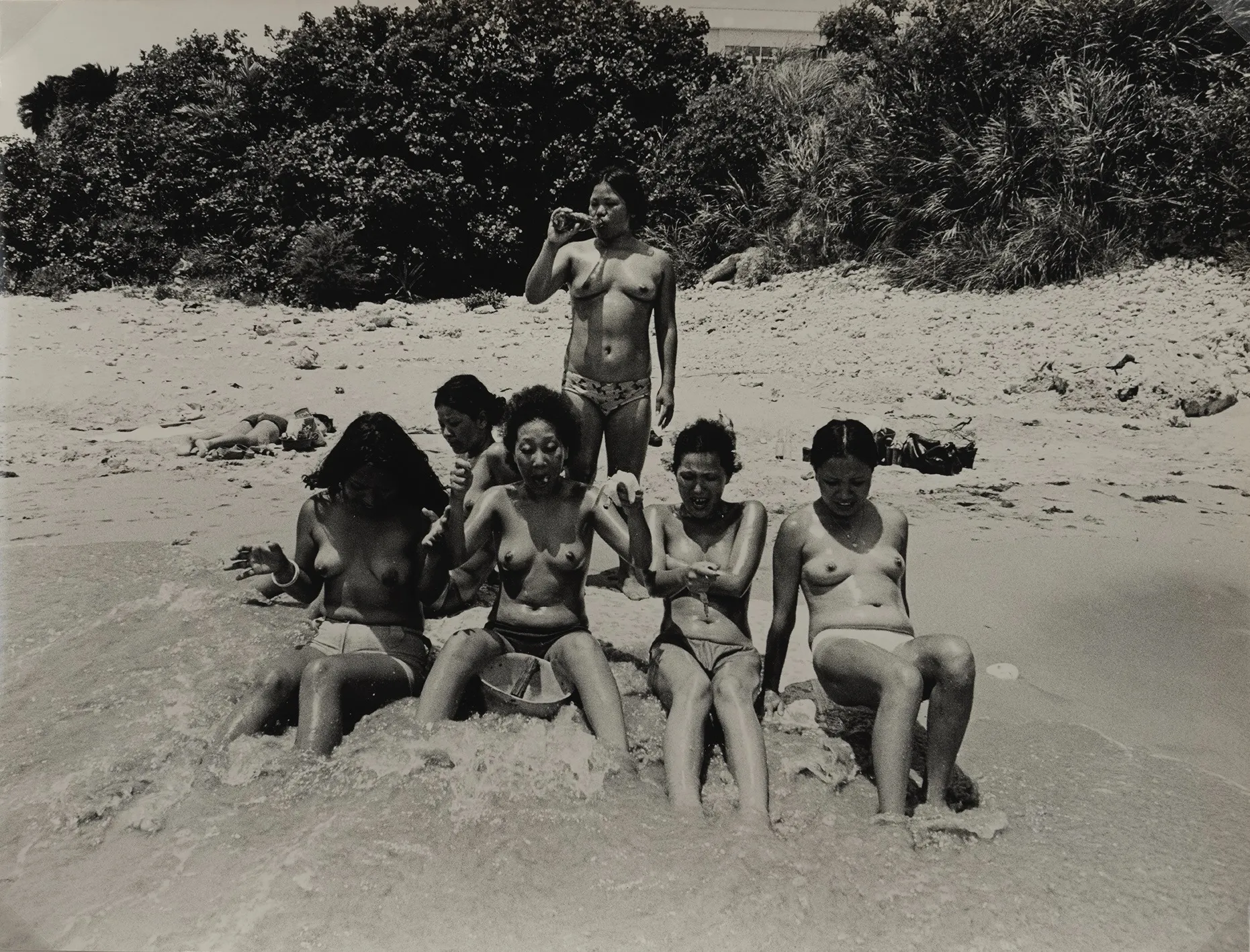
Okinawa has long been defined by its militarized position, and narratives of wartime devastation, sexual violence, and economic exploitation often dominate accounts of its history. Annexed by Japan in 1879 and occupied by the United States from 1945 to 1972, the island chain that was once the Ryūkyū Kingdom has remained caught within overlapping systems of colonial control, never fully belonging to either nation yet bearing the impacts of both. To this day, Okinawa hosts the overwhelming majority of American military infrastructure in Japan.5 Ishikawa has actively engaged with these realities since coming of age during the anti-reversion protests for self-determination, but her photographic practice consistently refuses the reduction of Okinawan life to narratives of victimhood or suffering.6 Her work instead insists, often forcefully, on the depth and abundance of relationships that have also emerged from these conditions.
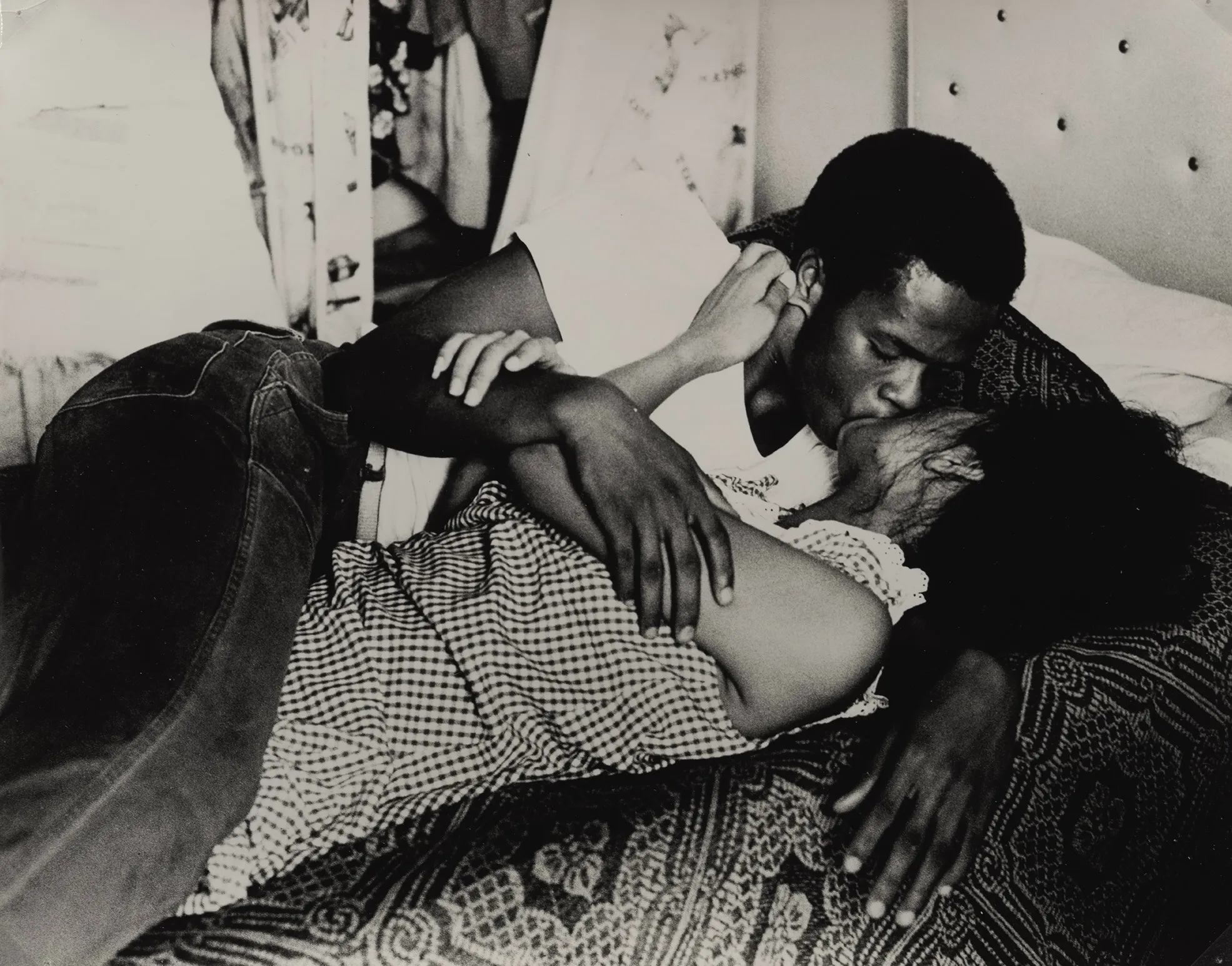
The taboo nature of cross-racial relationships between local women and Black American servicemen attracted scrutiny from both Okinawan society and the Japanese press, and women who worked in these environments were routinely dismissed as pan-pan, or prostitutes.7 Although Ishikawa initially entered this world to photograph American soldiers, she soon shifted her attention toward the women who formed relationships with them, recognizing that their lives revealed a far more complex social reality than prevailing narratives of occupation suggested.8 Her chosen title Akabanaa, which refers to the vivid red hibiscus flower in Uchinaaguchi, the Okinawan language, was a metaphor for the women she photographed—“a gaudy red flower . . . a weed that survives no matter how much it is trampled on."9 The women in her photographs appear as full, self-possessed individuals—laughing with friends, resting between shifts, holding their partners, looking directly back at the camera.
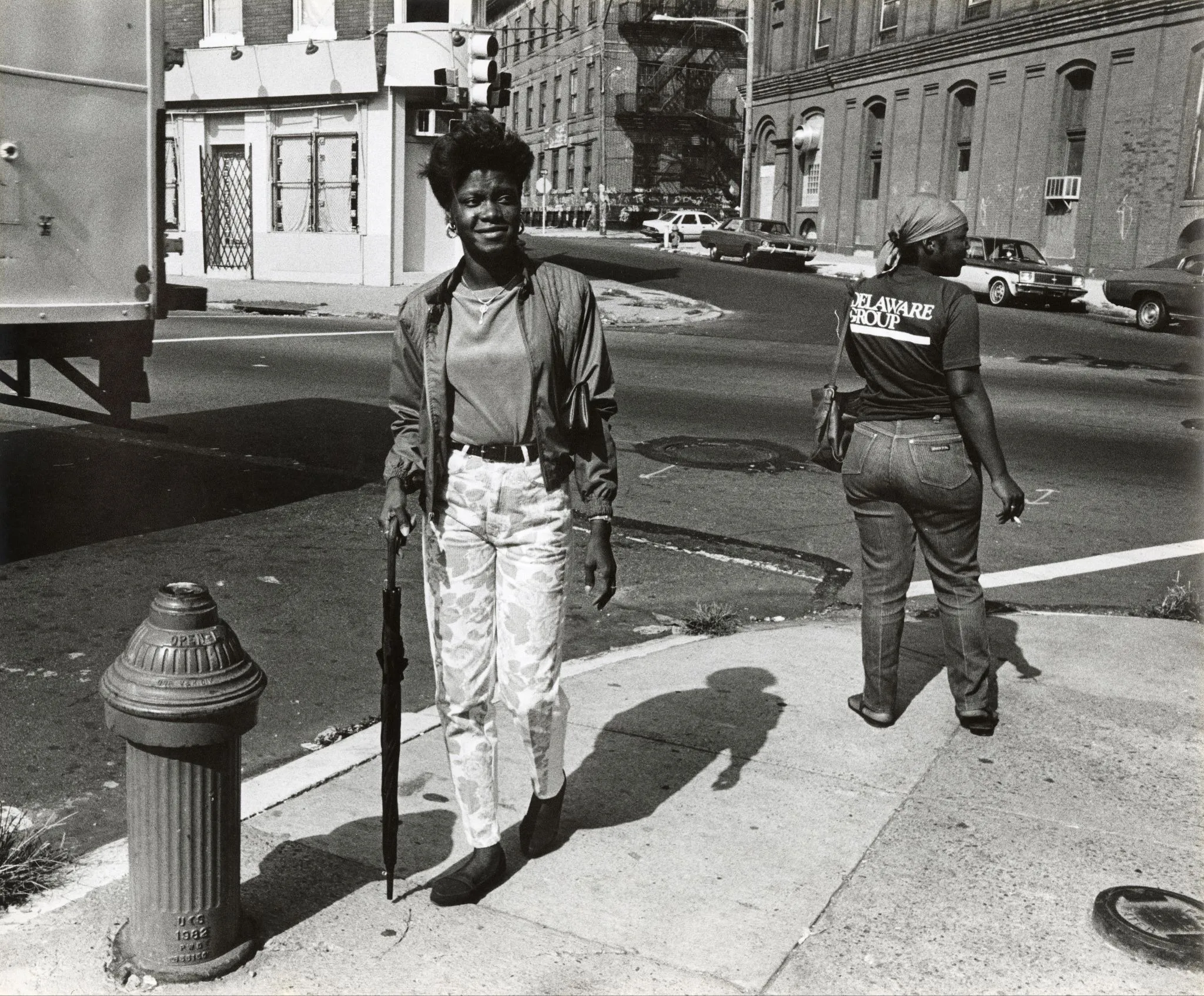
The relationships Ishikawa built in Koza and Kin Town did not end when the men shipped home. When her friend Myron Carr, a Black marine stationed at Camp Hansen, returned to Philadelphia, she told him she wanted to visit someday: “I want to see the roots of the guys who were raised in poor families, became GIs, and came to Okinawa.”10 More than a decade later, she kept her promise, spending two months in Carr’s downtown Philadelphia neighborhood. With the same playful attentiveness that shaped her work back home, Ishikawa immersed herself in his community, photographing the friends and families she encountered during her stay. The resulting series, Life in Philly (1986), is a testament to the longevity of friendships that endured across years and an ocean, allowing her to navigate Philadelphia with a sense of familiarity.
Ishikawa has described recognizing an affinity between Okinawan experiences of marginalization within the Japanese nation-state and the racial dynamics faced by Black American GIs. She “felt that there was some similarity between Okinawan history and that of Black Americans, comparing the dehumanization of Okinawans by the [Japanese] mainlanders to that of Black people by white Americans.”11 This understanding came from years of firsthand experience, and her photographs capture the racial politics circulating through these transnational, military-dependent social worlds. Ishikawa identified with her subjects and photographed their lives without apology, brazenly declaring, "What's wrong with loving a black man! What's wrong with working at a black bar! What's wrong with celebrating our freedom! What's wrong with enjoying sex!"12
A Port Town Elegy (1983–86) extends Ishikawa's method into another community living at the margins. Following her divorce at the age of 30, Ishikawa opened a bar near Aja New Port in Naha to support herself and her daughter. Through the bar, she came to know its regulars: port workers, fishermen, and unhoused day laborers who primarily spoke Uchinaaguchi, drank hard, and fought.13 “They were fascinatingly raw, honest, and rough, but tremendously sweet," she later recalled. "They were really human.”14 She fell in love with one of them, and through him discovered the nearby yaagwaa, a small, dilapidated house where a group gathered daily. Ishikawa photographed their gatherings for over three years, describing the yaagwaa as a “true paradise for freedom seekers,” a characterization that connects these men to the same spirit that animated the women of Koza and Kin Town.15
In her later self-portraits presented as part of the series My Family (2001–05), Ishikawa turned the camera toward herself with the same unflinching attention. Following surgeries for kidney and rectal cancer, the latter resulting in a stoma, Ishikawa looked at her changed body in a hospital mirror and did what she has always done—she picked up her camera. Upon waking from surgery, her first concern was whether she would still be able to have sex.16 It is a characteristically Ishikawa response: unabashed, bodily, refusing the diminishment that illness is assumed to impose.
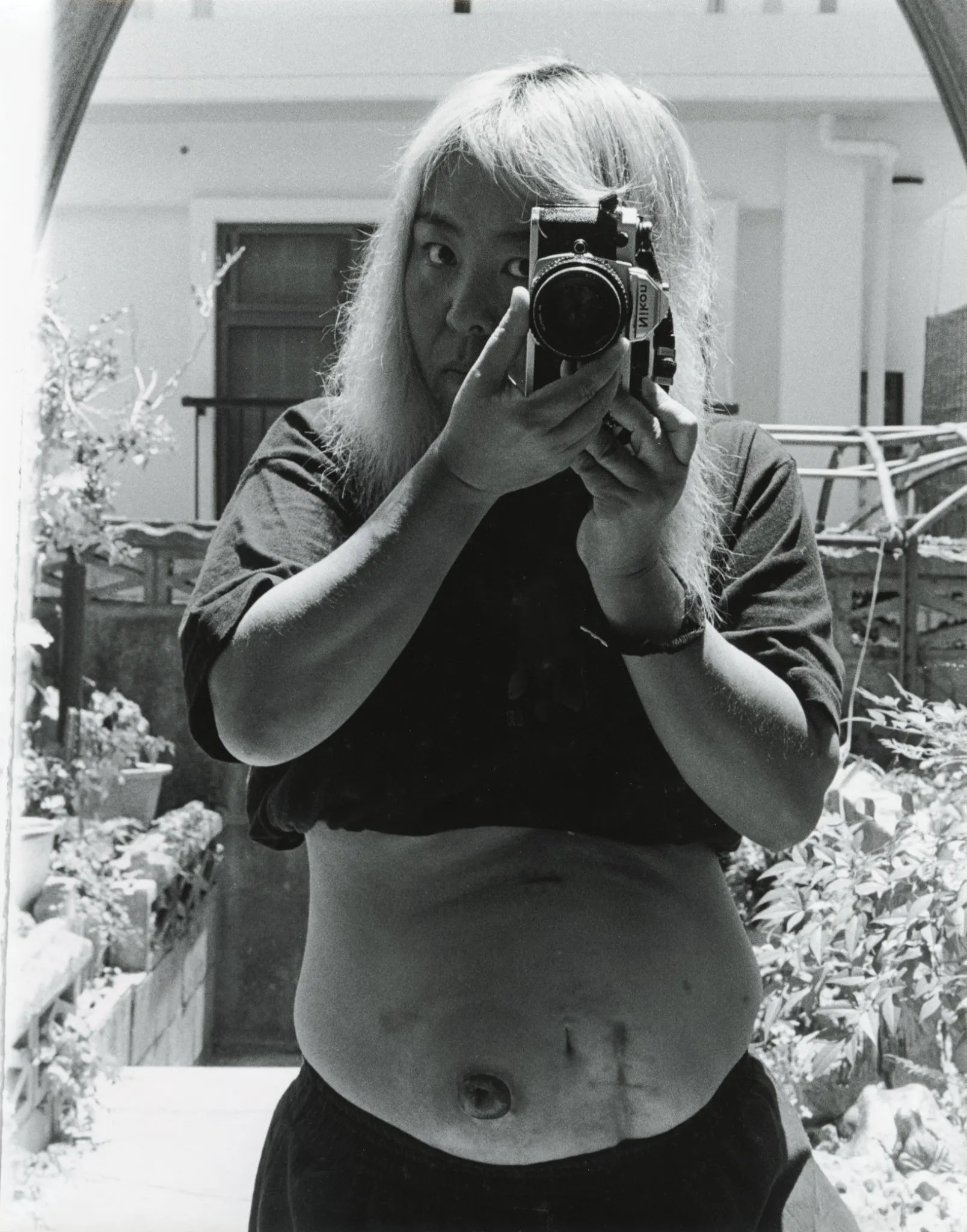
This empowered sense of refusal runs through the selection of photographs included in Mao Ishikawa: ROGUE, spanning three decades and two continents. Ishikawa’s defiant gaze took root in Okinawa’s base town bars, and it connects her early photographs to the streets of Philadelphia, the port town of Naha, and to the hospital mirror. “I had never cared much about what others thought of me,” she wrote of those early years, “but their ethos of ‘let's live free, do what we want, and trust ourselves’ made me care even less."17
This year, Ishikawa’s work enters a significant American institutional context through her inclusion in the first Whitney Biennial to incorporate artwork produced under US occupation, confronting a reality that our institutions have largely looked away from. Seen from within this frame, Ishikawa’s work gains new political significance. Her photographs return a gaze that is neither Japanese nor American, exposing the triangulated structure of complicity in which Okinawa has long been suspended between the two powers. Ishikawa has never kept the people she photographs at a distance, and she does not spare her viewers either. For an American audience, these entanglements are not distant—they are ongoing.
Mao Ishikawa: ROGUE is on view at Alison Bradley Projects from April 16 to June 6, 2026.
References:
[1] Amano Taro, "About the Exhibition 'Ishikawa Mao—What Can I Do?'" in Ishikawa Mao: What Can I Do? (Tokyo Opera City Art Gallery, 2023), pp. 356–358.
[2] Ishikawa Mao, interview by Kamegai Fumiaki, Cho Sun Hye, and Nakamura Fumiko, in Ishikawa Mao: Bad Ass and Beauty—One Love (T&M Projects, 2021), p. 15.
[3] Ishikawa, interview, Bad Ass and Beauty, p. 14.
[4] Nakamura Fumiko, "Akabanaa as a Beginning," in Ishikawa Mao: Bad Ass and Beauty — One Love (T&M Projects, 2021), pp. 280–281.
[5] For more context on Okinawa's geopolitical history and the ongoing US military presence, see Annmaria M. Shimabuku, Alegal: Biopolitics and the Unintelligibility of Okinawan Life (Fordham University Press, 2019); and Gavin McCormack and Satoko Oka Nishimura, Resistant Islands: Okinawa Confronts Japan and the United States (Rowman & Littlefield, 2012).
[6] The anti-reversion movement was led primarily by Okinawan leftists who opposed the terms of the 1972 reversion agreement, under which the US returned administrative control of Okinawa to Japan while retaining its active military bases. For many Okinawans, this represented a continuation of US occupation—not liberation but a transfer of colonial administration and the foreclosure of self-determination.
[7] Hiroshi Sunairi, "From Okinawa with Love," in Visual Representations of the Cold War and Postcolonial Struggles: Art in East and Southeast Asia, ed. Yamamura Midori and Li Yu-Chieh (Taylor & Francis Group, 2021), p. 141.
[8] Ishikawa, interview, Bad Ass and Beauty, p. 15. See also Ishikawa Mao, artist statement, Red Flower: The Women of Okinawa, trans. Sato Jun (Session Press, 2017).
[9] Sunairi, "From Okinawa with Love," p. 143.
[10] Ishikawa, interview, Bad Ass and Beauty, p. 16.
[11] Ishikawa, interview, Bad Ass and Beauty, p. 15.
[12] Ishikawa Mao, artist statement, Red Flower: The Women of Okinawa, trans. Sato Jun (Session Press, 2017).
[13] Ishikawa Mao, artist statement, A Port Town Elegy (Zen Foto Gallery, 2015; originally self-published, 1990).
[14] Ishikawa, interview, Bad Ass and Beauty, p. 15.
[15] Kamegai Fumiaki, "The Photography of Ishikawa Mao," in Ishikawa Mao: Bad Ass and Beauty — One Love (T&M Projects, 2021), p. 276.
[16] Ishikawa, interview, Bad Ass and Beauty, p.18.
[17] Ishikawa Mao, artist statement, Red Flower: The Women of Okinawa.
Bibliography
Amano, Taro. "About the Exhibition 'Ishikawa Mao—What Can I Do?'" In Ishikawa Mao: What Can I Do?, 356–358. Tokyo Opera City Art Gallery, 2023.
Ishikawa, Mao. Artist statement. A Port Town Elegy. Zen Foto Gallery, 2015. Originally self-published, 1990.
Ishikawa, Mao. Artist statement. Red Flower: The Women of Okinawa. Translated by Sato Jun. Session Press, 2017.
Ishikawa, Mao. Interview by Kamegai Fumiaki, Cho Sun Hye, and Nakamura Fumiko. In Ishikawa Mao: Bad Ass and Beauty—One Love, 13–20. T&M Projects, 2021.
Kamegai, Fumiaki. "The Photography of Ishikawa Mao." In Ishikawa Mao: Bad Ass and Beauty—One Love, 275–279. T&M Projects, 2021.
McCormack, Gavin, and Satoko Oka Nishimura. Resistant Islands: Okinawa Confronts Japan and the United States. Rowman & Littlefield, 2012.
Nakamura, Fumiko. "Akabanaa as a Beginning." In Ishikawa Mao: Bad Ass and Beauty—One Love, 280–283. T&M Projects, 2021.
Shimabuku, Annmaria M. Alegal: Biopolitics and the Unintelligibility of Okinawan Life. Fordham University Press, 2019.
Sunairi, Hiroshi. "From Okinawa with Love." In Visual Representations of the Cold War and Postcolonial Struggles: Art in East and Southeast Asia, edited by Yamamura Midori and Li Yu-Chieh, 139–152. Taylor & Francis Group, 2021.
Tokyo Opera City Art Gallery. Ishikawa Mao: What Can I Do? Exhibition catalogue. Tokyo Opera City Art Gallery, 2023.