
.webp)
SPLIT LEVEL 2026
Review
It would be an understatement to say that academic-styled photorealism in paintings has been in vogue as of late. Whether that may be attributed to our aversion to the doom-sayer rhetoric du jour on the pending death of creativity due to AI is yet to be determined, but what is clear is that humanist yearning in tactile form has come to the fore, which is not only desirable as elevated collectibles, but also aspirationally romantic. Much like the reactive nature of late nineteenth-century romanticism confronting naturalist tendencies, which no doubt was informed and animated by the advent of silver plate photography, so too have more gestural, and revamped Euro-American-styled domestic paintings come back into full swing to combat the machinization of recognizable aesthetic practices.
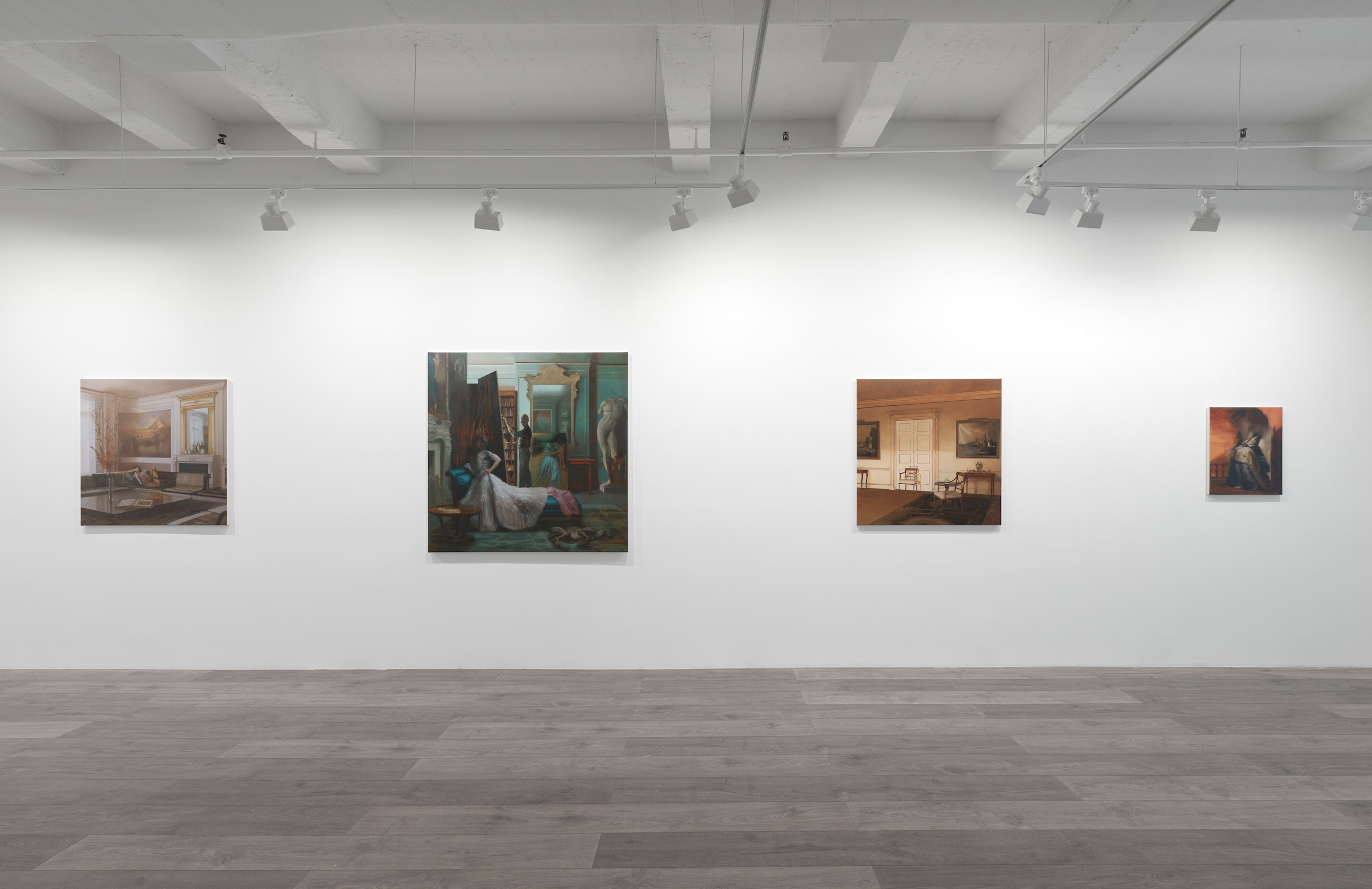
One such example emblematic of this trend is Tim Kent’s solo show, Sojourn, at Hollis Taggart Chelsea, where the female figures in domestic settings not only anchor the viewing experience, but are, perhaps, necessary as the prerequisite trope to situate our uncomfortable resemblance to the past century’s social and political stagnation. Though inspired by the artist’s personal history, the collection appears to be keeping in line with that reactive tradition of Émile Zola’s La Curée (1871–72) or Leopoldo Alas (Clarín)’s La Regenta (1884–85), whereby the architectural scenes are replete with social and philosophical commentary involving the static female body framed against respectable facades that obfuscate an insidious underbelly. Kent’s usage of established oil painting techniques makes nods and is a subtle but disquieting treatment of our fascination with the depiction of fin de siècle imperial decadence. While more far-flung from the ideologically questionable depiction of the nude feminine body of, say, Eugène Delacroix, this collection by no doubt holds a certain virile impartiality of a particular late twentieth-century sentimentality of off-brand feminine orientalism in ostentatious spaces of confinement.
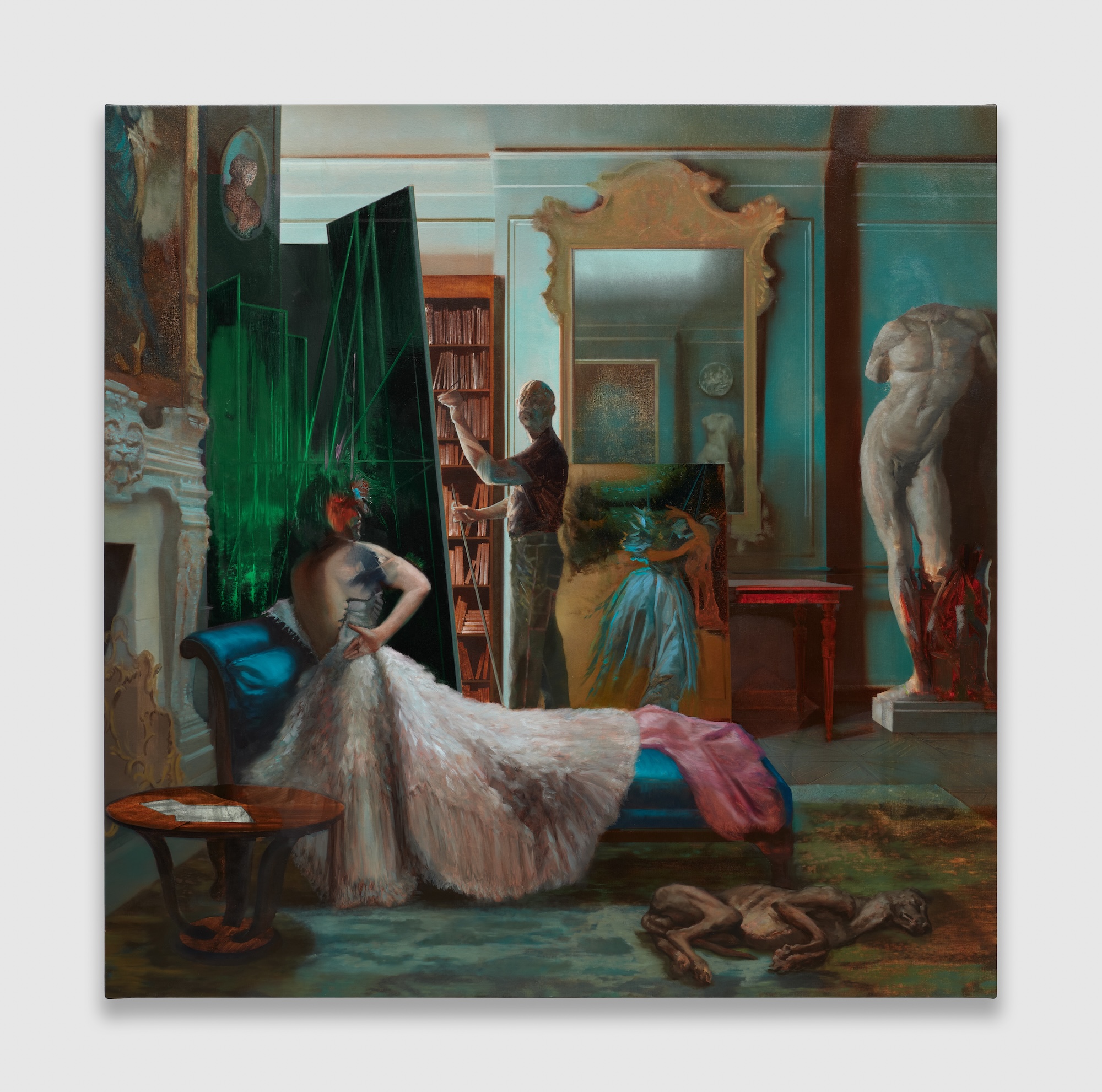
Starting with the show’s titular piece, Sojourn (2026), Kent draws on established references to the male studio artist’s reflection of the feminine subject, playing with familiar tropes. Admirers of Diego Valásquez’s Las Meninas (1656) might appreciate the compositional references, whether direct or indirect, to the Spanish Baroque master who dared to place his own height above his lauded patrons in a cheeky self-portrait. Even the languid canine figure in the foreground, placed as a diagonal counterweight to the brightness of the hidden light source, detracts from the obvious demand of the central female subject. Here, male activity is dramatically contrasted with female passivity, whereby the subject depicted is divorced from identity, given that her face is hollowed out and replaced with splattered abstraction, and thus background becomes foreground, and vice versa.
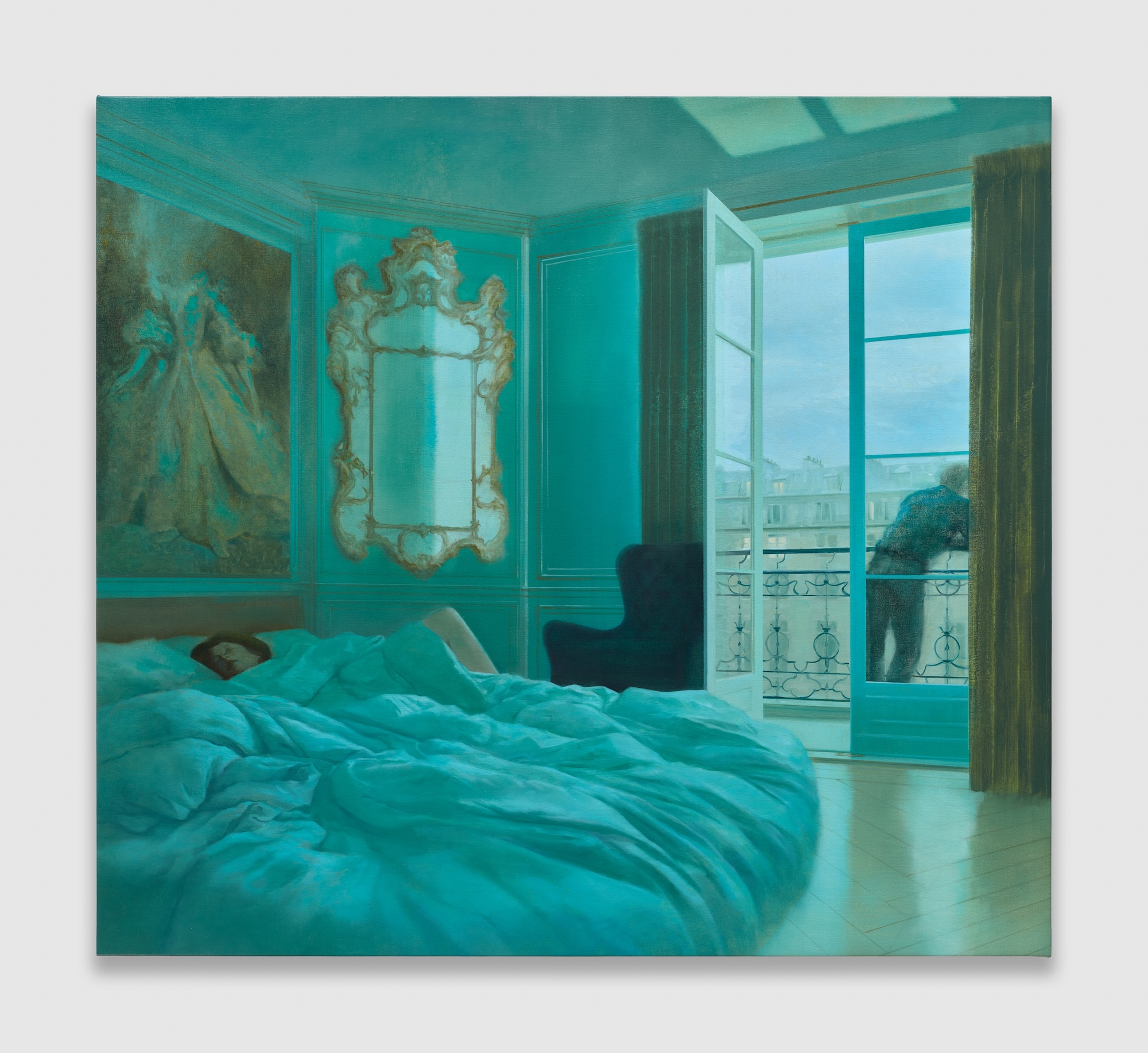
In a more chromatically muted piece, Passy (2026), this highly gendered dynamic is re-employed once more to double down on a recognizable scene of, perhaps too emphatically, post-coital melancholy. Draped in a haze of aquamarine, the background male figure’s gaze toward the teasing Parisian Mansard roofs beyond view suggests an otherly longing exceeding the sleeping damsel. Here, once more, the horizontal female figure’s partial nudity plays in high contrast with the standing male figure’s clothed introspection.
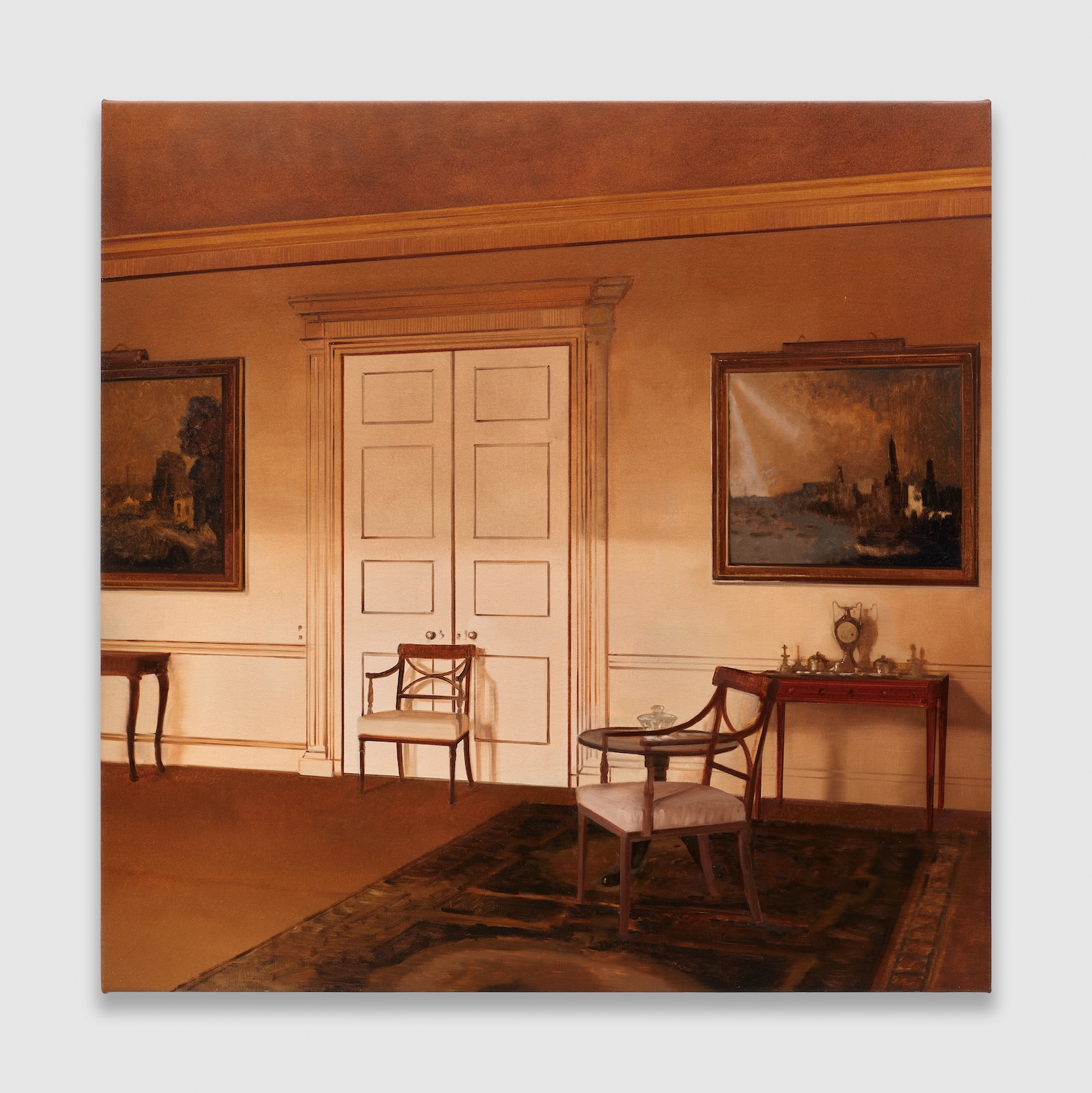
A personal highlight, and possibly the most suggestive in the series without being overly referential, is Sussex (2026), where all bodily figures, male or female, have been removed, leaving an eerily empty room. Basking in late-afternoon amber, the emptied siesta scene seems more lively than immediately visible. Even in the corporal absence, however, the painting is not entirely bereft of the apparently obscured eroticism behind the purposely reinforced doors, a sign of furtive intimacy. Earlier fans of Kent will appreciate his academic attention to tonal shifts, chromatic palette, and uncontested architectural fealty to a particular rung of Western urbanite.
Tonally, Kent’s latest series feels complete to the extent that the ranges between warm and cool hues are all present. As expected, the painter’s background in architectural design remains evident with his mastery of light rendering, reminiscent of something between late nineteenth-century romanticism and cheeky, high naturalism. And while never to the point of total disembodiment, the female figures’ lack of facial specificity indicates a willful presence of the feminine without personalization. In that vein, these figures are more akin to the mood produced by Lana Del Rey’s lustful, yearning sultresses languishing in their bourgeois decadence fantasy than the more social-realist, emboldened, Angela Davis-esque gallantry.
Tim Kent: Sojourn is on view at Hollis Taggart Chelsea from September 10 to October 17, 2026.






%20.jpeg)