
.webp)

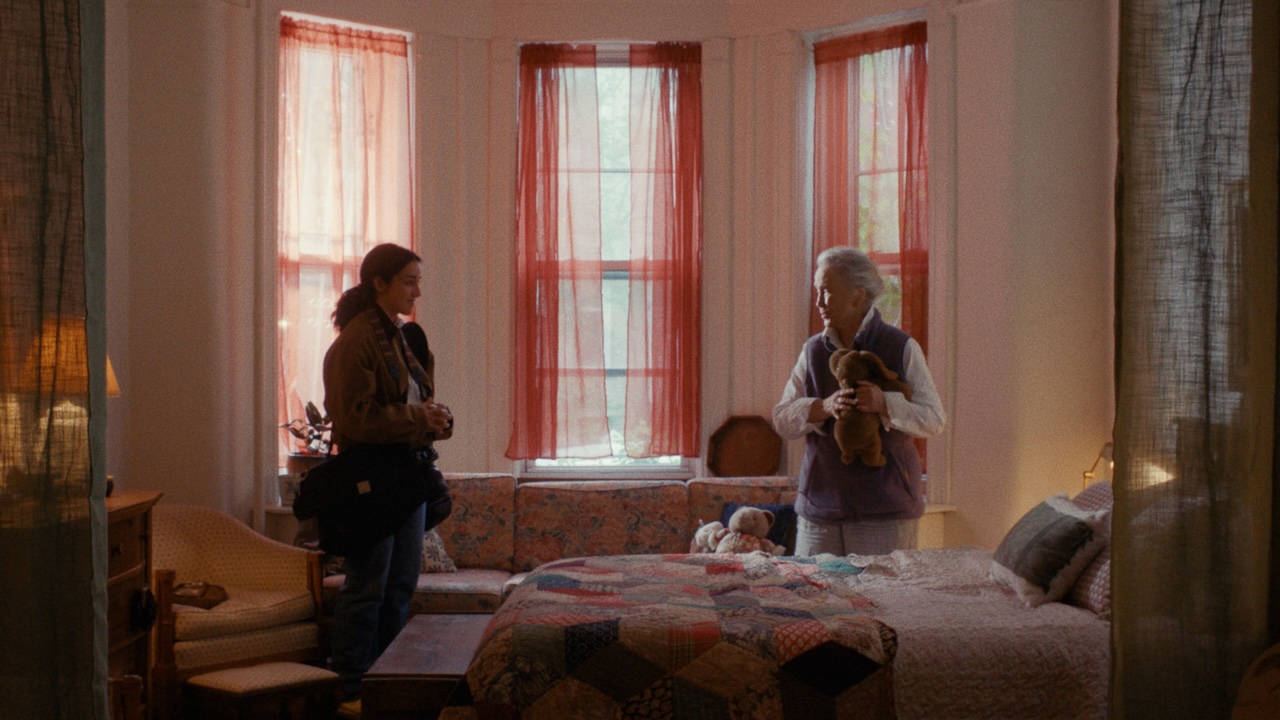
"The Scout" (2025) dir. Paula Andrea Gonzalez-Nasser
Review
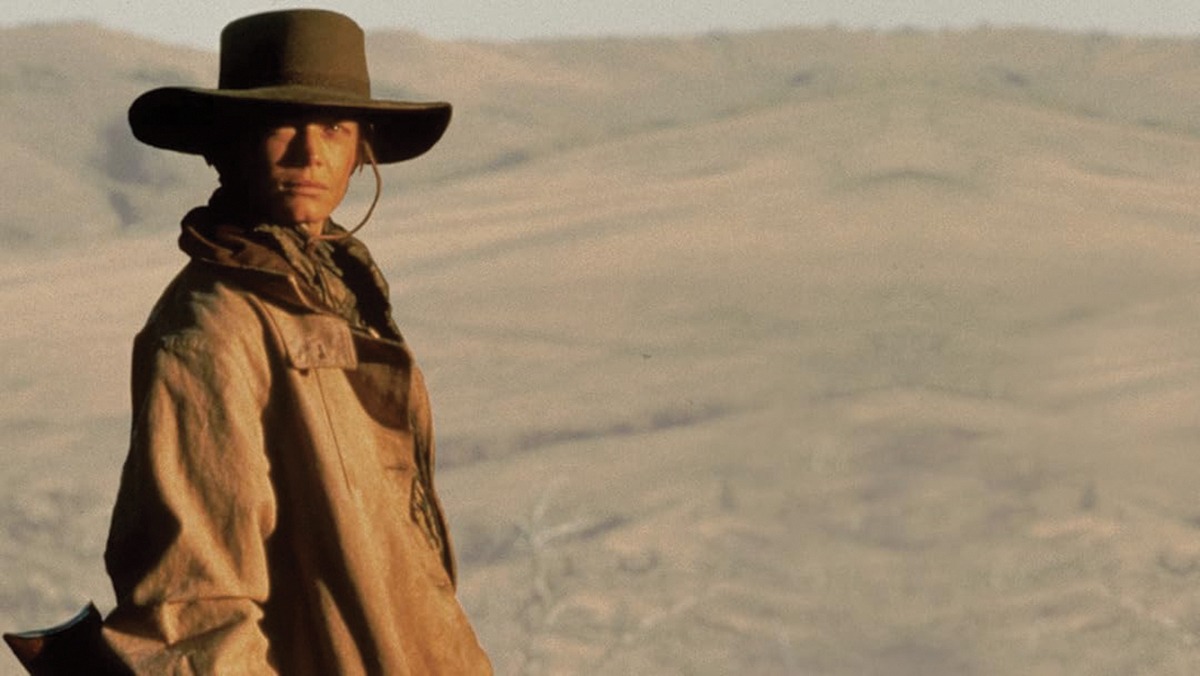
The Western, with its taciturn cowboys, dogged lawmen, and brave pioneers taming the rough frontier, has been held up as the epitome of the American story in narrative form. This month, Anthology Film Archives, through their series Experimental Westerns, interrogates that narrative by showing works that one way or another destabilize the genre and the iconography Westerns have thoroughly braided into the culture. And with the series featuring recognizable titles (Meek’s Cutoff and Dead Man) and offbeat ones too (Man with a Shotgun and A Girl is a Gun), it would be easy to overlook an understated gem like The Ballad of Little Jo.
When Little Jo was released in 1993, it came and went without much fanfare. But Maggie Greenwald’s overlooked film deserves to be reconsidered as a major entry in what’s glibly called cross-dressing movies. More than 30 years after its release, Little Jo resonates as a subtly knowing tale about gender and its relationship to privacy and survival (two major themes in many Westerns), disguising a woman in a man’s clothes to explore what it really takes to persist in the world.
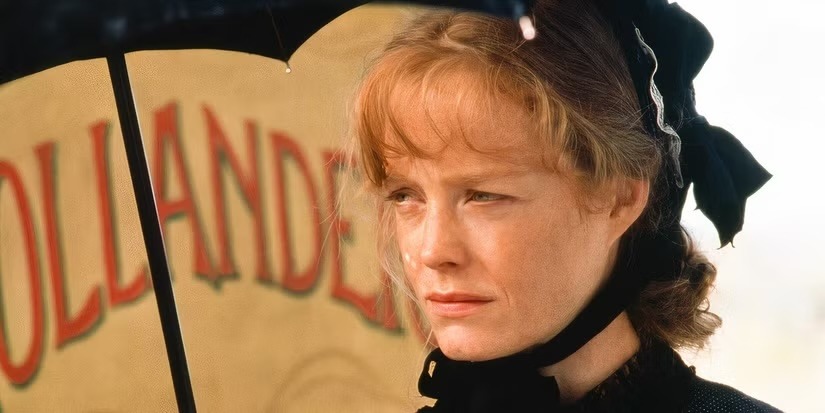
Loosely inspired by the real life of the person known in the West as Little Joe Monahan, The Ballad of Little Jo begins in the late 1800s after its protagonist is kicked out of the eastern United States. Disgraced for bearing a bastard child, Jo (Suzy Amis) is forced to leave her newborn behind. But she soon faces a grim awakening, realizing she has traded the horrors of the “civilized” East for the overtly brutal horrors of the West. Almost immediately, two soldiers try to buy and rape Jo. After escaping, she disguises herself as a man and continues. Her disguise affords her various rights: bodily autonomy, a chance to work, a chance to eventually vote. Yet not only is she never free from the constant threat of discovery, but she must also navigate the sadistic treatment of the other unfortunate women of the West.
One of the most remarkable qualities of Greenwald’s film is the gravity it gives to the cross-dressing trope. Gaining popularity in Shakespeare’s time but far from innovative even then, cross-dressing narratives frequently involve a socially hierarchical impetus behind the gender swap. Mulan, for example, must dress as a man to join the Imperial Army and save her father. In Shakespeare in Love, Viola de Lesseps must disguise herself as a man if she wants to audition for Shakespeare. And like Little Jo, numerous Shakespeare heroines don masculine clothing to enjoy safer maneuverability in unsafe areas. Yet unlike these cases, Little Jo is never able to revert to her more feminine appearance for the rest of her life. Cornered into an impossible situation, she had to dress as a man to stay safe and alive; however, if anyone exposed her, she’d have been in an equally terrible situation, punished for lying, hunted down, and most likely killed.
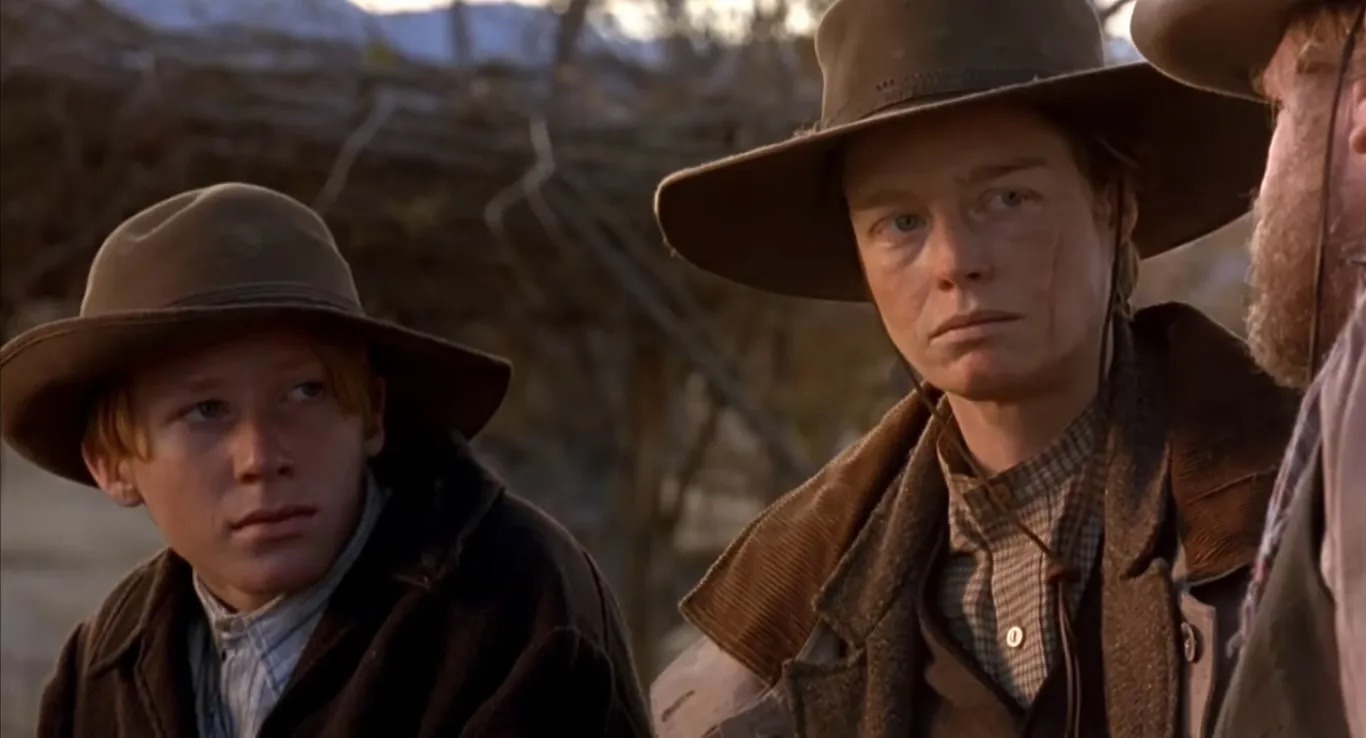
The power of Little Jo lies in its presentation of cross-dressing as the best of a slate of bad solutions, not something inherently clever or transgressive. Jo herself grasps this. She rarely feels safe, staying in disguise while moving into increasingly isolated jobs and remote tracts of land. This is the film’s most political and bleakly relevant idea. Disguise doesn’t allow Jo to join society in a new way but grants her the opportunity to retreat from it, leaving the world’s barbaric norms undisturbed. In that sense, Little Jo can be said to be a tale about conditioned silence, perfect for our age where people’s pasts, innocuous or not, are used against them, where revealing who you are to the wrong person could permanently derail your life.
Greenwald is able to prevent the horrors of the West from weighing down the film. And she also keeps them from powering the film, instead opting for the more tender and patient tone of the everyday. This tone is one of Greenwald’s most interesting subversions of the Western. Little Jo is full of gorgeous, almost classic cinematography from Declan Quinn. Particularly striking for their expansiveness are the shots of Jo on her horse against the vast, untouched lands, her large coat cloaking her body almost like a mysterious bandit’s. These are shots that could signify the hope or even the greed of a more typical Western protagonist on their course to alter or subdue the American frontier. Yet Greenwald beautifully drains these images of their stock meanings, freezing Little Jo within the immensity of the landscape. Jo seems content to be frozen there.
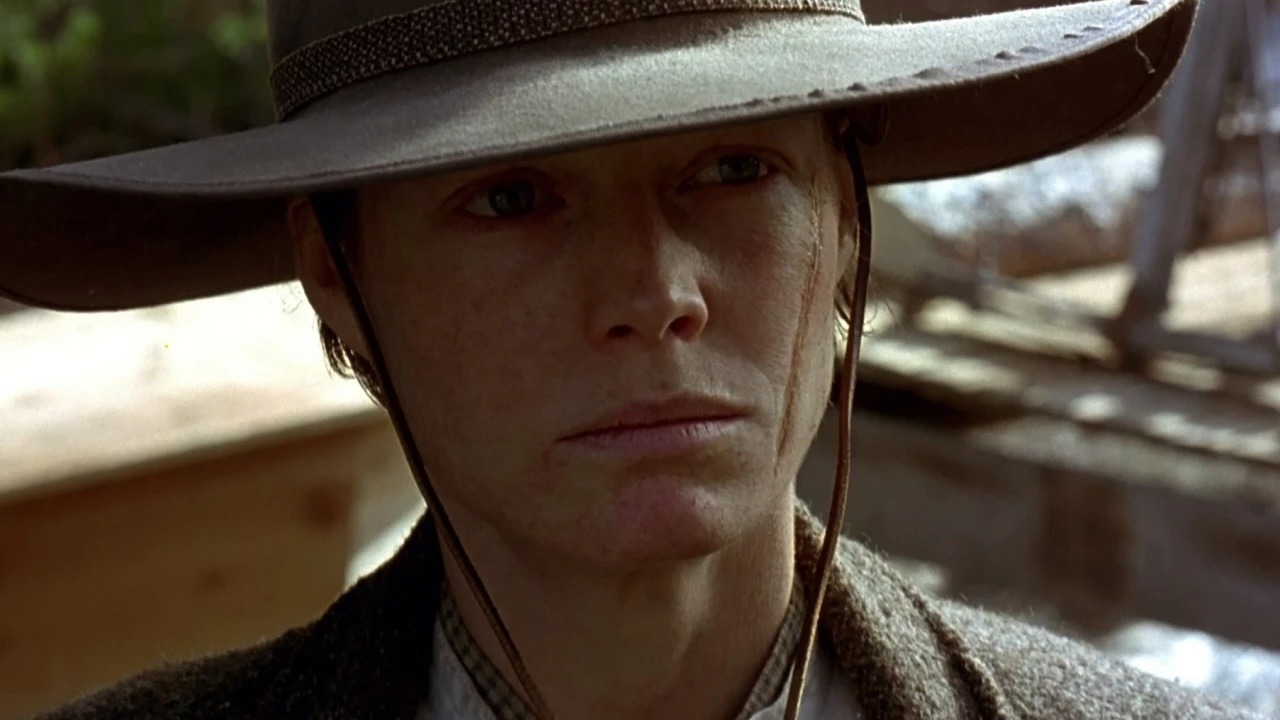
Through Amis’ portrayal of Little Jo, this subversion never becomes stagnant. Amis finds little pleasures in every scene, allowing us to be carried through the film by her joy of guiding a flock of sheep or the subtle pride she discovers in maintaining her dignity in an unwieldy world. Equally wonderful performances surround Amis. David Chung plays Jo’s eventual lover with as much sensitivity and persistence as Amis. Olinda Turturro, as the mining town’s sex worker, sinks into the horror inflicted on her character, reminding us with one distressing scene of the life that a female-presenting Jo might’ve met in the West. And in perhaps the film’s best performance, Bo Hopkins portrays a sometimes sweet, frequently small-minded rancher as a man who would likely be best friends with Jo were she a biological male.
Little Jo is a film that grazes around the Wild West rather than trampling through it. In Greenwald’s restrained, poetic vision, each new frontier simply presents one with another chance to be tortured, especially those with the least power, although not only them. Shooting a Western that is slyly skeptical about the world’s ability to change fundamentally has a potent effect. Little Jo challenges not only the genre’s ideas about progress but core American narratives about our advancement as well, in the end questioning how much we’ve truly grown and how much of that progress has only been a facade.
Anthology Film Archives’ series Experimental Westerns, Part 2: Acid + International Westerns runs through August 31. The Ballad of Little Jo screens at Anthology on August 29 and 30.






%2C%20dir%20(2).%20Brydie%20O%E2%80%99Connor%20-%201.jpeg)