
.webp)
Teresa Margolles: "En el lugar de los hechos (At the Scene)"
Review
In the heart of New York City rest some of the most exogenous residents: Rwandan gorillas, Kenyan giraffes, Alaskan moose, Galápagos tortoises. The American Museum of Natural History has one of the world’s largest collections of dioramas, three-dimensional, life-size display cases that contain taxidermied animals, sculpted foregrounds, and hand-painted background murals to recreate an ideal version of wildlife habitats. In their video work Teddy Bear (2026), Sunny Leerasanthanah stitches together clips of different dioramas at the AMNH, and each clip begins with close-ups of the taxidermied animals’ faces, then zooms out to the full staging.
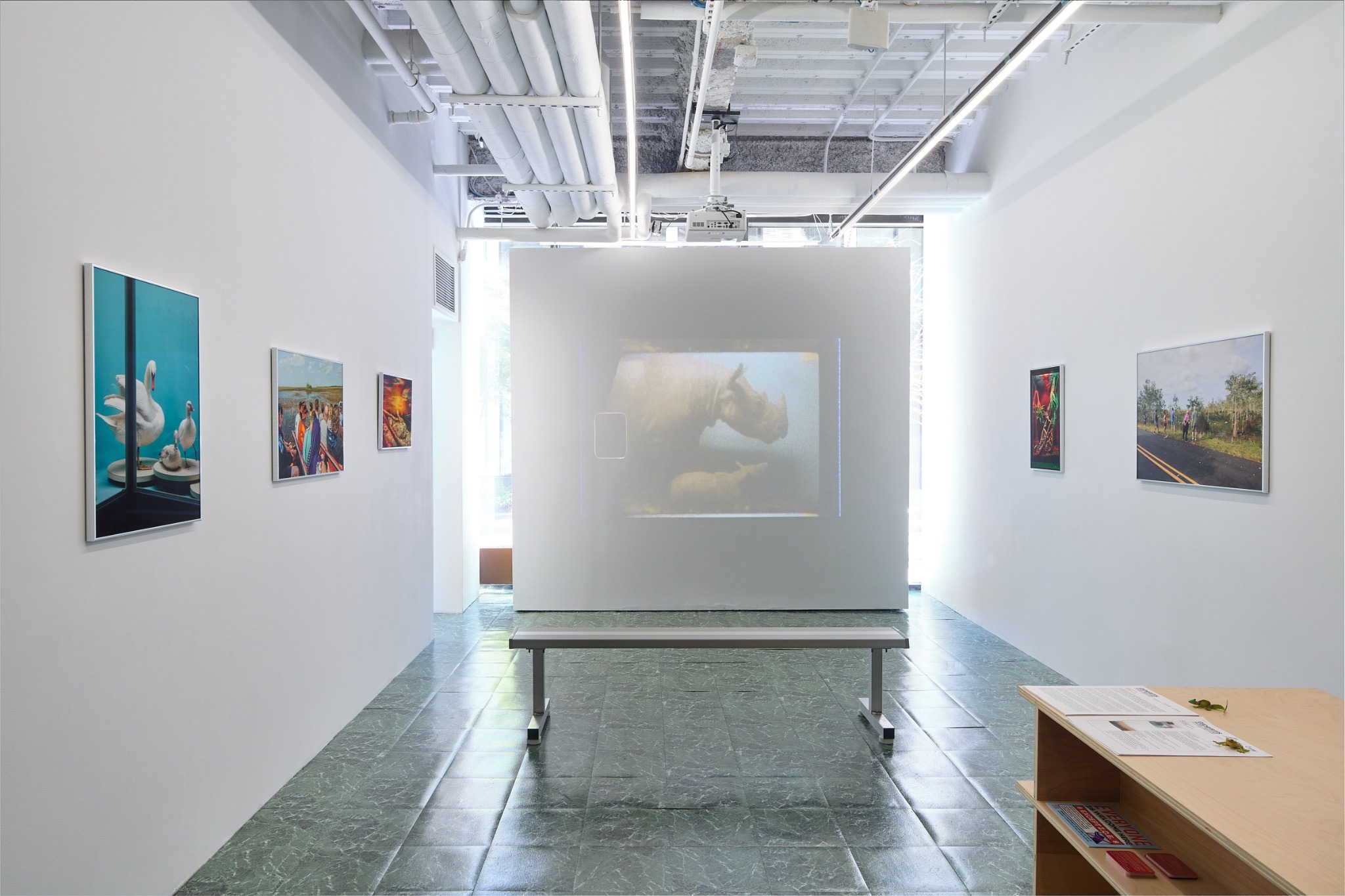
Leerasanthanah, Bangkok-born and Brooklyn-based, captures the unsettling, liminal experience of seeing these animals—perfectly reconstructed yet dead, rendered in native habitats that are actually fictions, and transplanted into a city foreign to them. This unsettling, liminal experience also lies at the core of the immigrant experience in America—it is the incessant interrogation of who can be “American”, “naturalized”, and “local” and who is “alien”, “foreign”, and “invasive”. Leerasanthanah’s solo exhibition, Wild Things at Cuchifritos Gallery, interrogates exactly this fault line.
Taxidermied animals, stuffed animal toys, and animal miniatures placed throughout the gallery space alike carry with them a crude process of naturalization: taking unfamiliar or foreign bodies and rendering them miniaturized and, therefore, docile, legible, easy to maneuver. Historian and feminist theorist Donna Haraway identifies the violence in this process in her seminal 1984 essay, “Teddy Bear Patriarchy: Taxidermy in the Garden of Eden, New York City, 1908–1936”. Haraway argues that the dioramas at the AMNH are built on “Teddy Bear patriarchy”—the idea that the museum’s famed diorama-maker Carl Akeley and its patron saint Theodore Roosevelt’s projects of killing exotic animals, removing them from native habitats, and staging “pure,” idealized nature in the museum are machines for constructing white, heterosexual, eugenics-centered American manhood. The teddy bear itself takes its name from a story of Roosevelt, an avid hunter, refusing to shoot a tied-up bear on a hunting trip—the softening of violent hunting and extraction into an innocent toy is exactly the kind of miniaturization that Leerasanthanah’s exhibition interrogates.
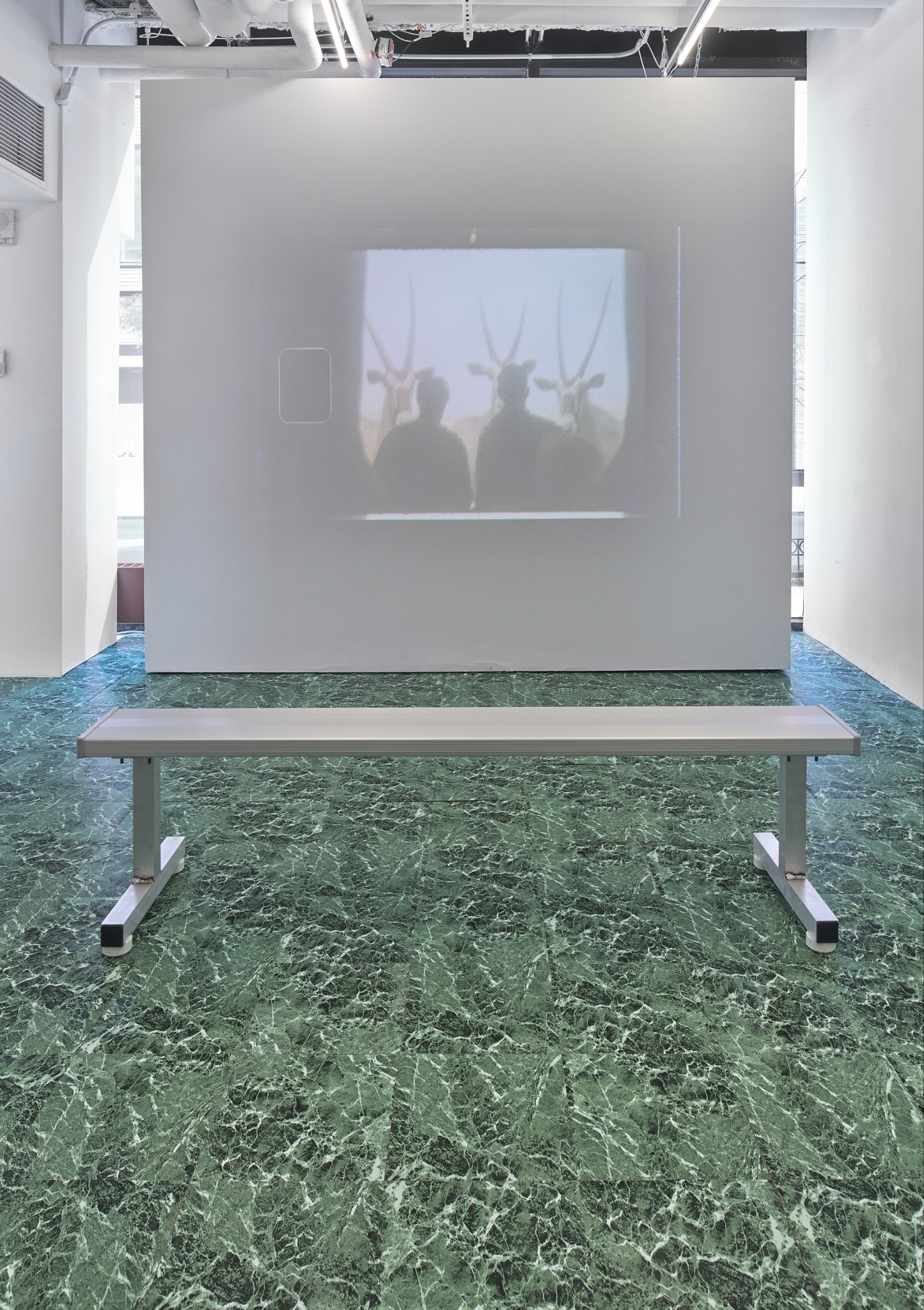
In Teddy Bear, projected onto the central wall, Leerasanthanah’s constant zooming out mirrors the innate miniaturization in the AMNH’s diorama-making. From the close-up of the taxidermied animals’ faces, perfectly rendered yet with lifeless gazes, the camera repeatedly zooms out to the full dioramas. The zooming out acts as a playback of Akeley’s diorama-making—a process of killing, extracting, restaging exotic animals to render them legible, beautiful, and contained—a process often forgotten when one browses through the AMNH. The zooming out also retraces the immigrant experience of naturalizing, miniaturizing, and Americanizing oneself to become a perfectly rendered face, limb, or torso in the diorama that is the United States.
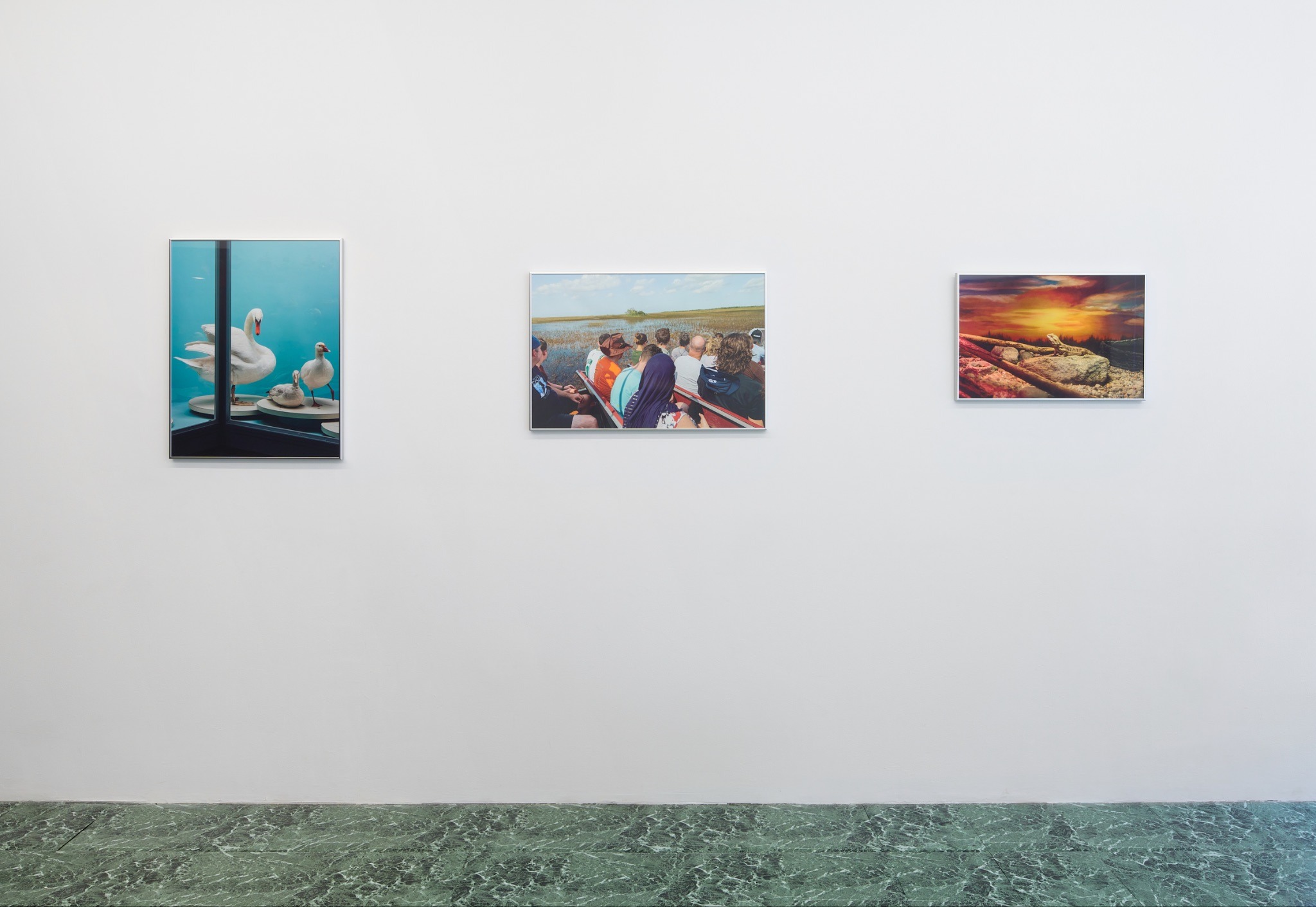
On the adjacent walls is a series of photos that continue to challenge the fault line between the indigenous and the foreign, the natural and the unnatural, the human and the specimen. Leerasanthanah alternates photos of taxidermied swans and ducks, live bearded dragon and meerkat, and visitors touring Shark Valley in Florida. In Swan (2019/2026), Leerasanthanah intentionally carves out a dark corner below a well-lit taxidermy display case. The dark corner creates a magnetic pull toward the viewers, shifting the positions between the viewer and the photo in the gallery, the visitor and the taxidermied birds in the museum, the live and dead, and the observing and the observed. By juxtaposing different subjects (humans and animals, dead and alive), perspectives (looking into enclosures and looking out from vehicles), and lighting (natural daylight and dramatic museum lighting), Leerasanthanah situates the viewers along this precarious fault line where one moment you are observant, agentive, and righteously looking and the next you become taxidermied, contained, and looked at.
In the annex room, Leerasanthanah concludes the exhibition with its titular short film, Wild Things (2026). In a humorous yet chilling satire, the film combines footage from the opening ceremony of Florida’s Python Challenge, actors fighting a pet python, and a speech by Roosevelt. Just like the AMNH dioramas, the Python Challenge, a 10-day competition with a $10,000 cash prize to reward the participant killing the most invasive Burmese pythons, is a violent hunting event disguised as conservation. “I'm tackling these different American myths [and] ideologies around [ ... ] the attempt to capture and eradicate this like in a slithery kind of way, this outsider, but also through fiction and [ ... ] acting out on an empty stage, I want to push the absurdism to a level that's humorous to point out its own contradictions,” Leerasanthanah explains. By combining news, historical, and fictional clips in Wild Things, the artist reenacts the interrogation of what kind of animal, what kind of human, can be “American”, “conservation-worthy” and what and who is “alien”, “foreign”, and “invasive”.
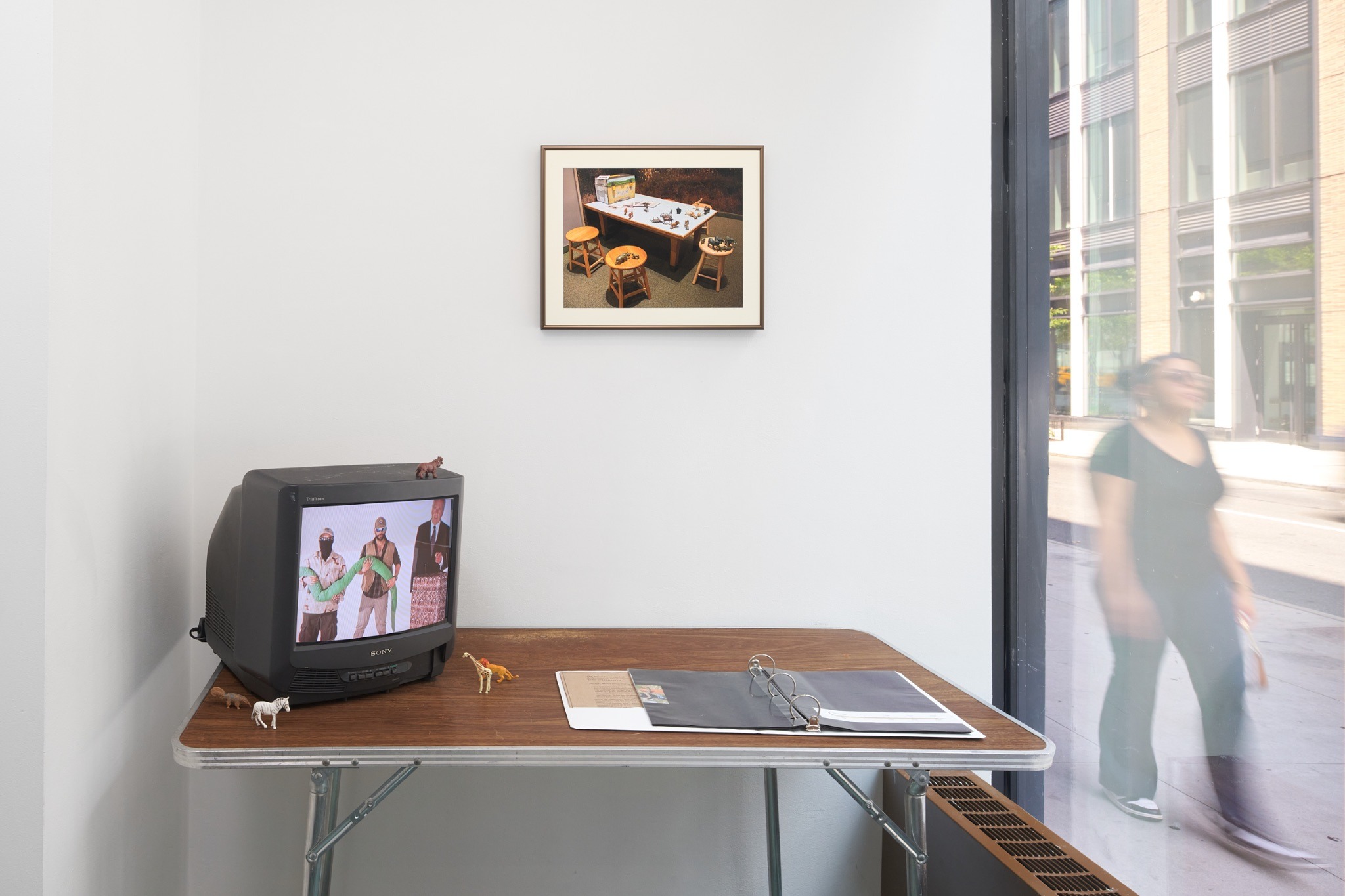
In a clip from the opening ceremony of the Python Challenge included in Wild Things, Florida governor Ron DeSantis enthusiastically announces: “It’s a bad day to be a python.” In this cultural landscape where hunting, extraction, and violence are desired and celebrated, exemplified in this exhibition by the AMNH dioramas and Python Challenge, Leerasanthanah asks us to reflect: is it also a bad day to be foreign, to be other, to be an immigrant?
Sunny Leerasanthanah: Wild Things is on view at Cuchifritos Gallery from June 26 through October 17, 2026.