

.webp)

Sonia Boyce: “Demonstrate” at the Queens Museum
Review
I first watched Night Stroll (2024–25), a 22-minute animation by Taiwanese artist Poyen Wang, over a year ago on my laptop at home, through a Vimeo link. It was a late winter night, and I was unprepared for how unsettling the video would be: a puppet-like adolescent lingers around an abandoned home and deserted construction site, his body often contorted as he squats around the moldy, cluttered rooms, settling into the night. Sharp, dissonant chords accompany chilling whistles and a muffled voice narrating an existential monologue. In the final scene, the character sings Fragrance of the Night, a 1944 hit by Japanese singer Yoshiko Yamaguchi, which was temporarily banned in the Republic of China for “spiritual pollution” and accused of being Japanese wartime propaganda. In Night Stroll, Wang tells me the song is a loose reference to explore repression, longing, and queer desire, while serving as a framework for the animation to be directed as a musical with the genre tropes of Asian ghost films.
These cinematic references became more evident the second time I watched Night Stroll, during a screening where it was projected against a large wall. The music, too, was more pronounced, as it had been professionally remastered, adding depth and texture to the film’s sonic landscape. In a dimmed room with a live audience, the world of Night Stroll grew expansive and uncanny with its enlarged scale and refined acoustics. What was visually and sonically arresting in the suspenseful countdown sequence of light flashes where the camera panned around the desolate space became striking as the light glares and audio intensified in this shared viewing.
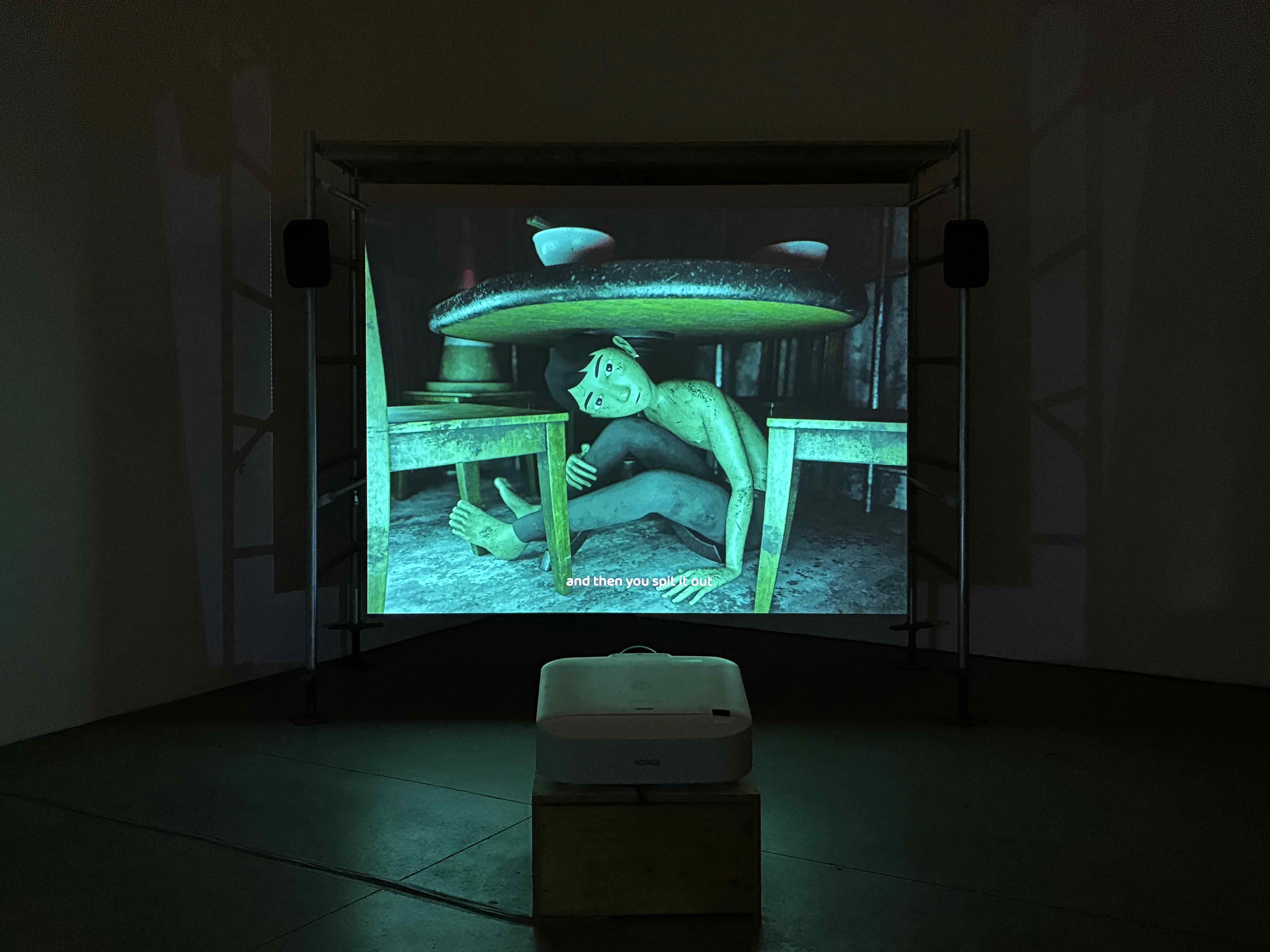
Four months later, in October—and over half a year since I first saw Night Stroll—I encountered the work again in a one-night installation at 99Canal, an artist-run space where Wang was concluding a residency. The viewing experience began at the entrance, where an usher informed visitors to take six flights of stairs up to the gallery, entering through the emergency exit. Up a narrow, unmaintained, and graffitied stairwell, this entry experience was unpleasant but effectively situated the viewer in the general discomfort and suspense of Night Stroll.
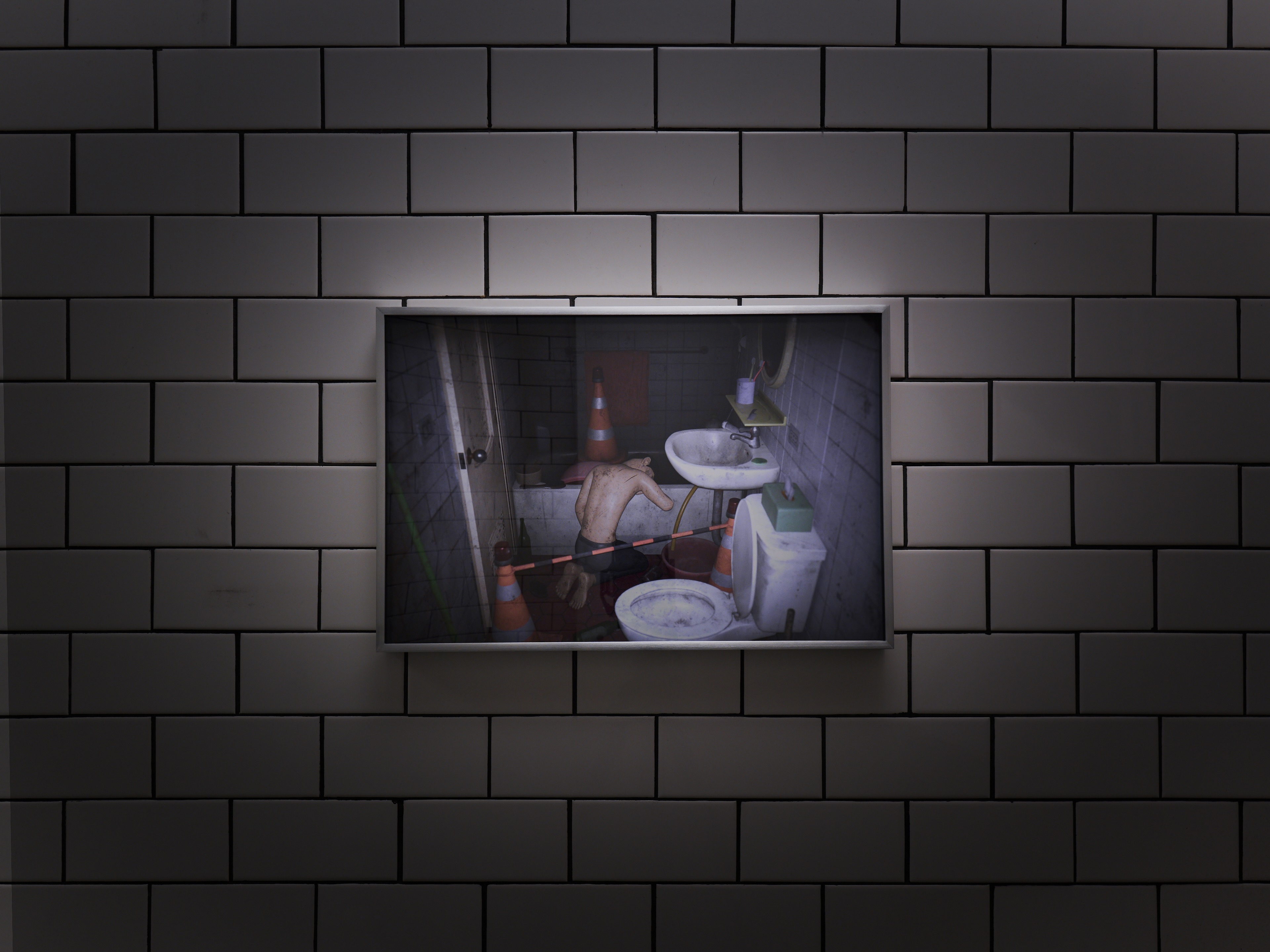
At 99Canal, the animation was projected on a suspended screen in an empty room, with night views of the city’s concrete jungle—often unruly, and always under construction. Eight framed still images accompany the projection, spotlit and displayed sparsely throughout the entire space, including the hallway and a backroom basked in the same siren red that punctuates throughout Night Stroll on traffic cones. They first appeared to be film stills (with titles excerpted from the narrator’s lines), but reveal themselves to be new scenes entirely, featuring Night Stroll’s character in positions of despair or resignation, turning away from the viewer or covering his eyes with his arm. Wang regards these as photos and “supplementary material to the moving image,” used to contextualize the domestic space of Night Stroll. “[I wanted to] reimagine 99Canal's entire floor as an empty apartment to invite audiences to engage in a transgressive act within someone else's property,” Wang says, “to create a more complete and effective spatial experience.” This is reflected in the placement of the images: each room in Night Stroll corresponds to how the apartment here might be laid out—the bedroom leads to the kitchen, a bathroom on the side—layering past, present, and fictional spaces onto one another, blurring the threshold between space and place.
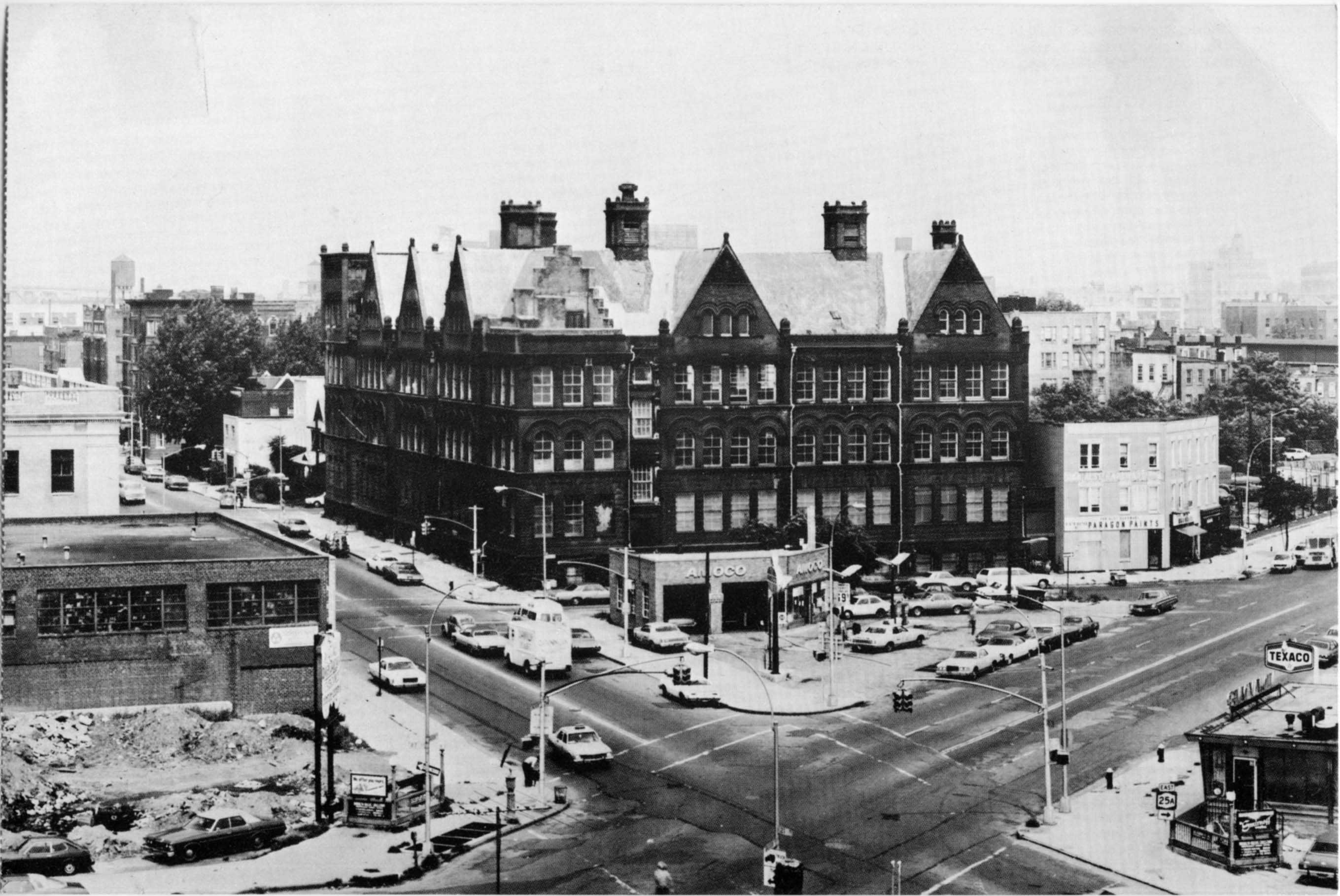
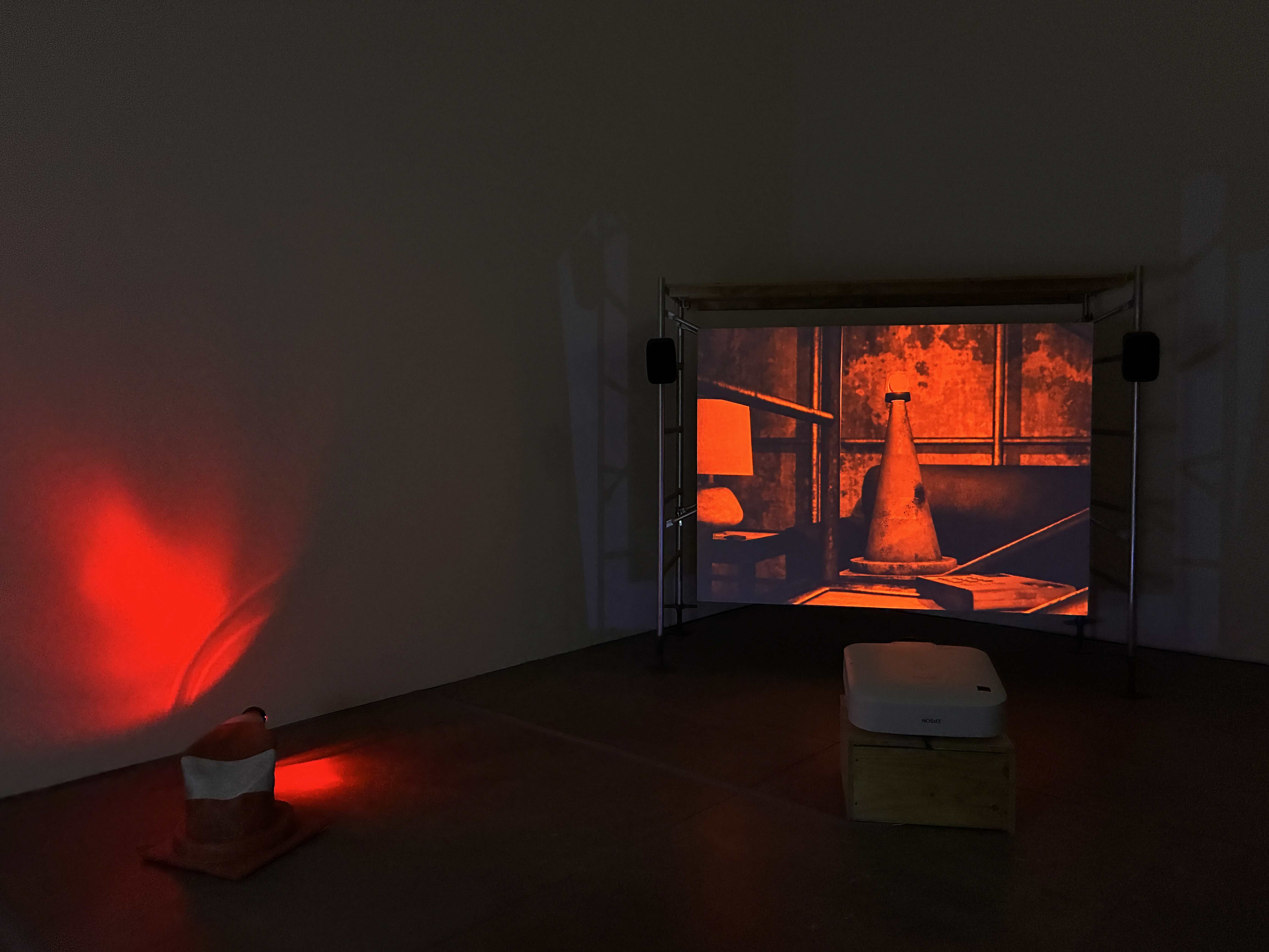
As of April 2026, Night Stroll has taken on the form of a two-channel video installation, included in MoMA PS1’s Greater New York 2026, a major survey exhibition of artists living and working in New York City. Wang’s Night Stroll is a seductive introduction to the group exhibition spanning all floors of the repurposed public-school building. Displayed on the basement level but first viewed on the ground floor balcony, the animation’s color and sound reverberate dramatically in the high-ceiling space, luring viewers to linger. Departing from the 99Canal presentation focusing on the domestic interior of Night Stroll, this installation staged the construction details that obscure much of the rooms in the animation: plastic sheets cover the rails on the balcony and stairs leading down to the basement, and a damaged traffic cone with a red siren sits between two scaffolding structures that frame the video projections. Wang explains, “There wasn’t too much I could change within the PS1 space, but I knew it needed to be theatrical.” With benches and the upper-level viewing, the space allowed for this approach and even accommodated simple stage magic: the siren mounted on the traffic cone lit up and spun in sync with the animated sirens, tinting the floors and walls in scarlet, signaling high alert for a climactic scene. This was engrossing, as was the countdown sequence that flashed through both screens, about half a second apart from each other, creating a rhythmic tension on the verge of visual collapse.
It is surprising to learn that Wang had originally conceptualized Night Stroll to be a two-channel installation, finally realized over a year later, after three iterations (he had spent his residency at 99 Canal reanimating the video). Encountering Night Stroll each time has been a confrontation with abjection and the uncanny. While each format was intentional, resolved in its own manner, and spoke to different aspects of the work, the final two installations demonstrated Wang’s scenographic sensibility as an artist and filmmaker. Wang describes Night Stroll and its medium of animation as a “stage” he can keep revisiting. For me, it’s a place I’ll be returning to.
Greater New York is on view at MoMA PS1 from April 16 through August 17, 2026.