.webp)
Tim Kent: “Sojourn” at Hollis Taggart
Review
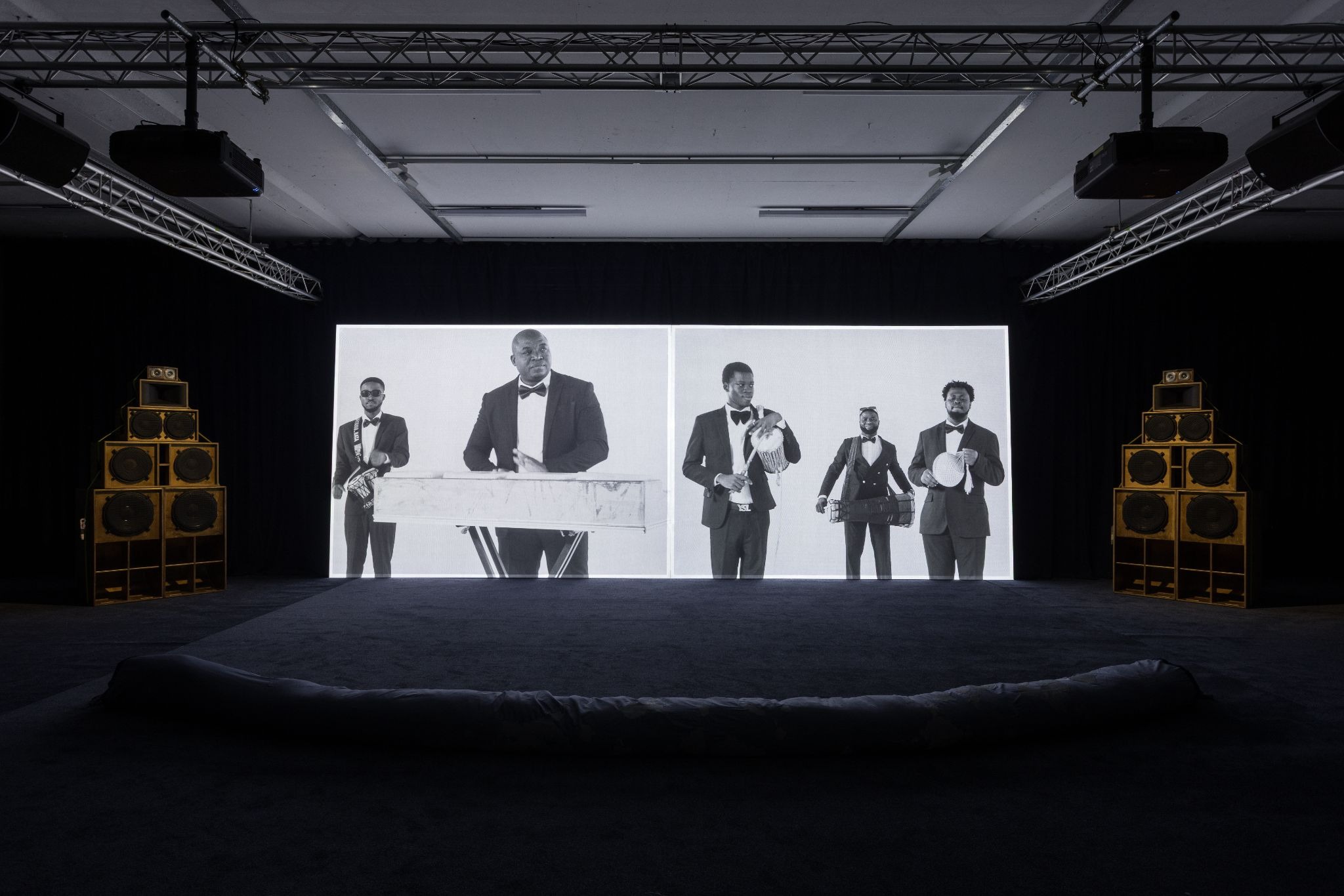
A jazz drum solo pulsates throughout the room, reverberating through Bristol’s Ramsham Hi-Fi sound system, accompanying video footage of an ice skater spinning around in an eternal circle. The feedback loop is, as ever, unbroken.
At Spike Island in Bristol, Feedback—Olukemi Lijadu’s largest institutional solo exhibition yet—centers on the Nigerian-British artist’s newly commissioned film that traces the transmission of West African musical traditions through electronic music in Chicago and the United Kingdom. The concept of audio feedback serves here as a metaphor for the circulation of memory and cultural codes within the African diaspora.
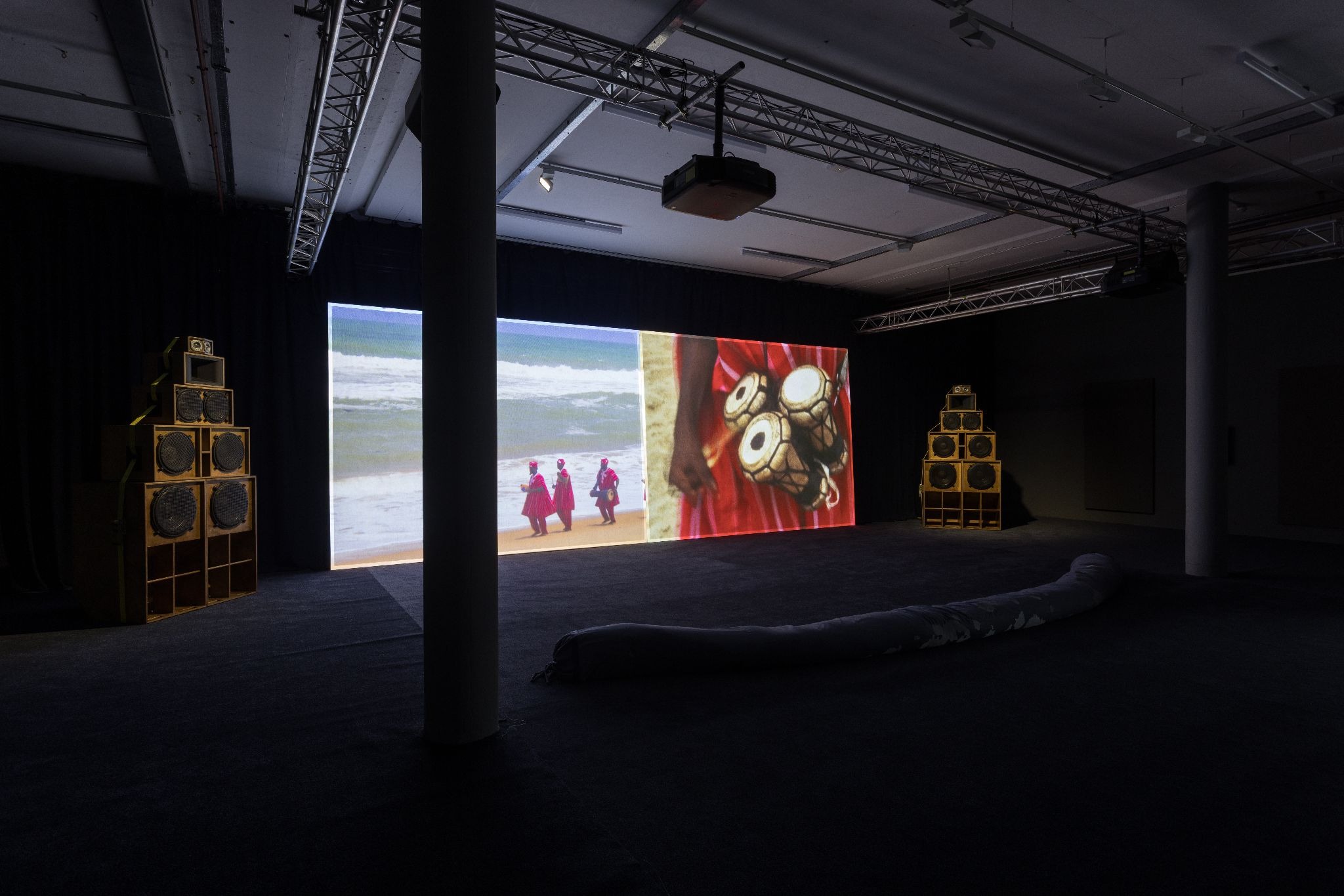
It all begins with the drum—the most potent of sonic technologies, from the ancient talking drum to the 808 drum machine. Its relentless vibrations furnish a mode of communication across the Black Atlantic, transcending time and cultures. The drum acts as master of ceremonies, guiding congregations from the beaches of Lagos to the South Side of Chicago to the streets of St Paul’s in Bristol.
A visually poetic moment in the film perfectly encapsulates this mapping: a Zaouli dancer from Côte d’Ivoire with impossibly rapid footwork is mirrored by a seasoned Footwork dancer in a Chicago club, the two virtually indistinguishable in their response to the beat. Feedback suggests that the legacy and the future of Black sonic production cannot be contained within a singular historical timeline of traditional West African music to gospel, jazz, soul, house, techno and beyond. Instead, Lijadu foregrounds the connective force of the drum and its beat—that feeling.
Rooted in the body and soul, this feeling can move a dancer beyond the limits of the self, momentarily freeing the body from the constraints of everyday life. This feeling encapsulates collective memories that dismantle linear timelines and geographies, producing moments of rhythmic connectivity that continue to spill out from the feedback loop, defiantly overcoming hundreds of years of forced migration, separation, and segregation. Feedback explores how the body can become a living archive for the beat, carrying the feeling as it continues in spite of ongoing attempts at cultural erasure.
The visual motif of the Atlantic’s mighty waves crashing onto Lagos’s beaches reaffirms the centrality of this body of water within this network of exchange. Throughout the film, currents act as transmitters, carrying vital lines of sonic communication that brought funk to Fela and Fela to Kerri Chandler. Situated amongst Bristol’s dockyards, whose waterways open onto the ocean, Spike Island now doesn’t seem so far away from Lagos’s beaches.
The symbolic synergies between church and club, DJ and pastor—both with their congregations—echo throughout Feedback. Lijadu demonstrates how movement within a crowd charged with bass frequencies can be a cathartic, out-of-body experience. The film reflects the very literal relationship between sound and spirit as inextricably linked from the beginning.
One of the most resonant moments in the film is a clip from a conversation between Lijadu and Chicago native DJ Duane Powell, who recounts a moment during a function when a dancer lost herself completely to the power of the music—a moment akin to divine revelation at church. Powell explains how the dancer then asked for the name of the track: Josh Milan’s “Acts 2 and 4,” which references the Bible in its title. Powell then describes a revelation of his own that these moments—these feelings—are not just coincidences based on sonic and aesthetic similarities, but rather all connect through a very real spiritual sonic history that forms the foundation of the feedback loop.
In another scene, Lijadu interviews an off-screen speaker in Detroit. The anonymous voice explains that everyone in Detroit is a musician—not because they taught themselves guitar, but because they grew up in the church. A sonic sensibility cultivated from childhood, embedded deep within the spiritual subconscious. In a tender moment later in the film, the voice of Lijadu’s grandfather also recalls how his first musical experiences were through church 6,000 miles across the Atlantic.
Feedback demonstrates that this spiritual sonic education is in the DNA of Black electronic music. Its torchbearers—whether The Belleville Three in Detroit, Frankie Knuckles in Chicago, or Larry Levan in New York—drove this musical sensibility from the church into every thumping beat. It is no surprise then that the “amen break” became the foundation of the UK’s jungle and drum and bass explosion in the 1990s.
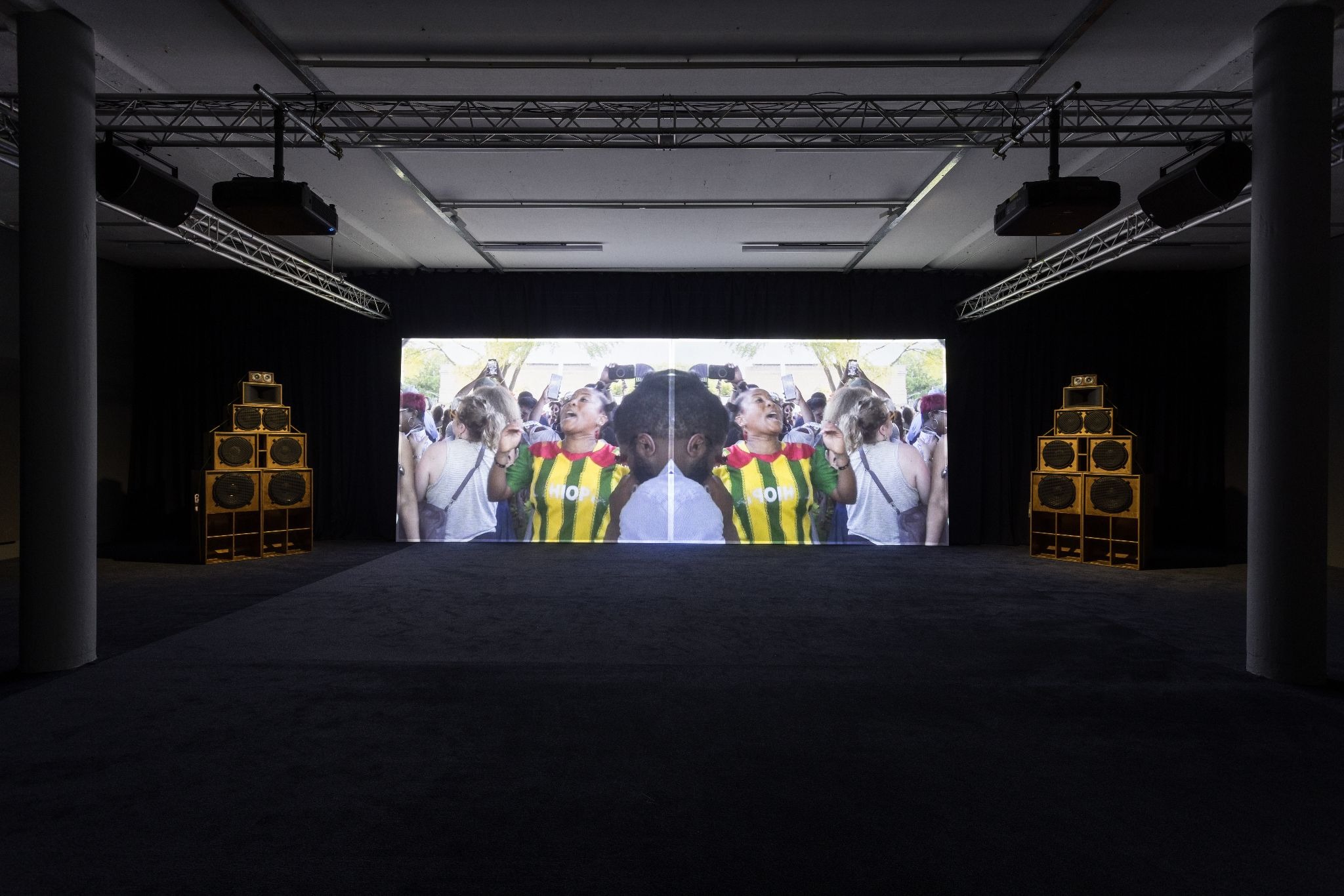
When archival footage of a celestial chorus of a Black church congregation abruptly gives way to jungle breaks that hurtle viewers into the melee of a Bristol sound system function, Lijadu establishes that sound, self, and spirit are tied together by that beat—that feeling—a vessel of stories and histories, continuously expanding as it ricochets between each corner of the Black Atlantic.
Feedback was on view at Spike Island from January 31 to May 10, 2026.