

.webp)

Marc Kokopeli: “M.Kokopeli CURSED/01” at Gladstone
Review
Spanning nearly sixty years of work, Huxley-Parlour's solo exhibition reveals how Joel Meyerowitz continually reimagined everyday observation through photography.
Huxley-Parlour’s fourth exhibition spotlighting Joel Meyerowitz functions as a retrospective of the photographer’s career over six decades. Select Works, 1962-2019 brings together twenty-nine photographs ranging from street photography to landscapes to interior shots. The selection, arranged loosely by categories, effectively displays the breadth of his practice in its evolution.
Born in the Bronx in 1938, Meyerowitz spent his childhood roaming the city streets, which taught him to tune into the changing cultural landscape around him. In 1962, after working with Robert Frank on a photography booklet, Meyerowitz quit his job at an advertising agency and gave up on his practice as an Abstract Expressionist painter. His career as a photographer then began when he picked up a 35mm camera. Meyerowitz captured the charged cultural fabric in this era of the 1960s and 1970s marked by heightened political engagement in New York City in particular, with protests against the Vietnam war, campaigns for gender equality, and movements promoting gay and lesbian rights. He considered this period to be a prime age of photography, given the shifting complexities of the social environment. Additionally, he describes a “group innocence” during this time when the general public was relatively unfamiliar with the power of the photographic medium, which allowed him to work freely on the streets.

The exhibition presents Meyerowitz’s early black-and-white photographs in a row, which renders clear how he developed an eye for the absurdities of everyday life early in his career. Through carefully calibrated viewpoints and precise timing, he rendered the familiar uncanny and often comedic. Times Square (1963) captures a woman in a ticket booth with her face entirely obscured by the speaker grille, a composition recalling René Magritte’s famed The Son of Man (1964) completed one year later. Similarly, Meyerowitz’s Man Cartoon Yawn (1965) achieves a surreal quality through layering, with the humorous juxtaposition of a tired man and a cartoon character on the television glimpsed through the window.
The presentation additionally pays homage to Meyerowitz as an early proponent of color photography, which was largely considered an amateur format associated with advertisement in the 1960s. He advanced color photography as a serious art form with heightened affective potential, as he believed that people project themselves through colors. The selection of street photographs in color displayed in the main exhibition space renders apparent the evolution of his subject matter. Most of the pieces before the mid-1970s focus on a single detail such as the back of a woman’s neck or a part of a car. Meyerowitz described his process during this period as waiting for an incident that would speak to him. More nuances emerge in his works after 1974, as he broadened his focus, effectively taking a step back to capture chaotic environments more holistically.
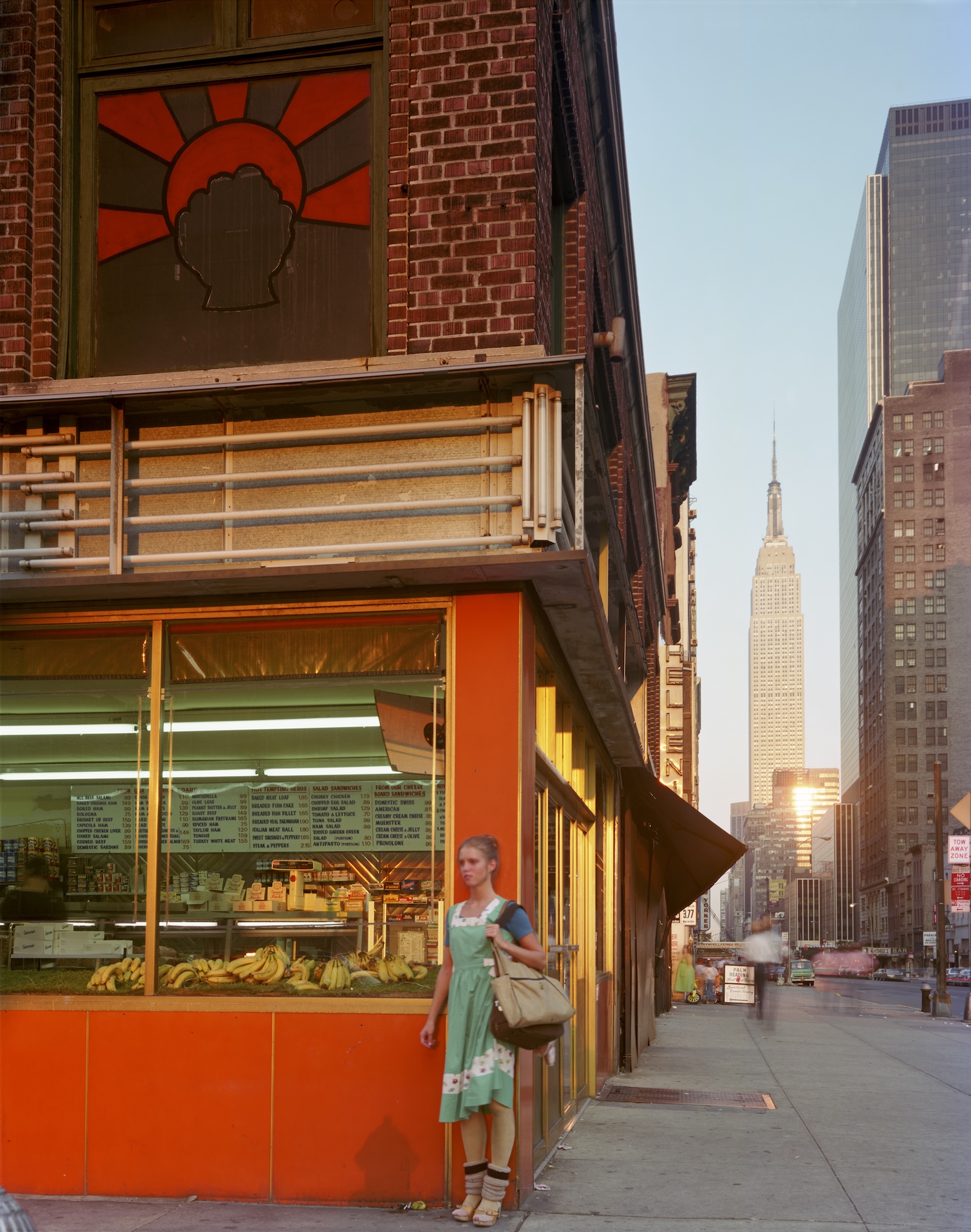
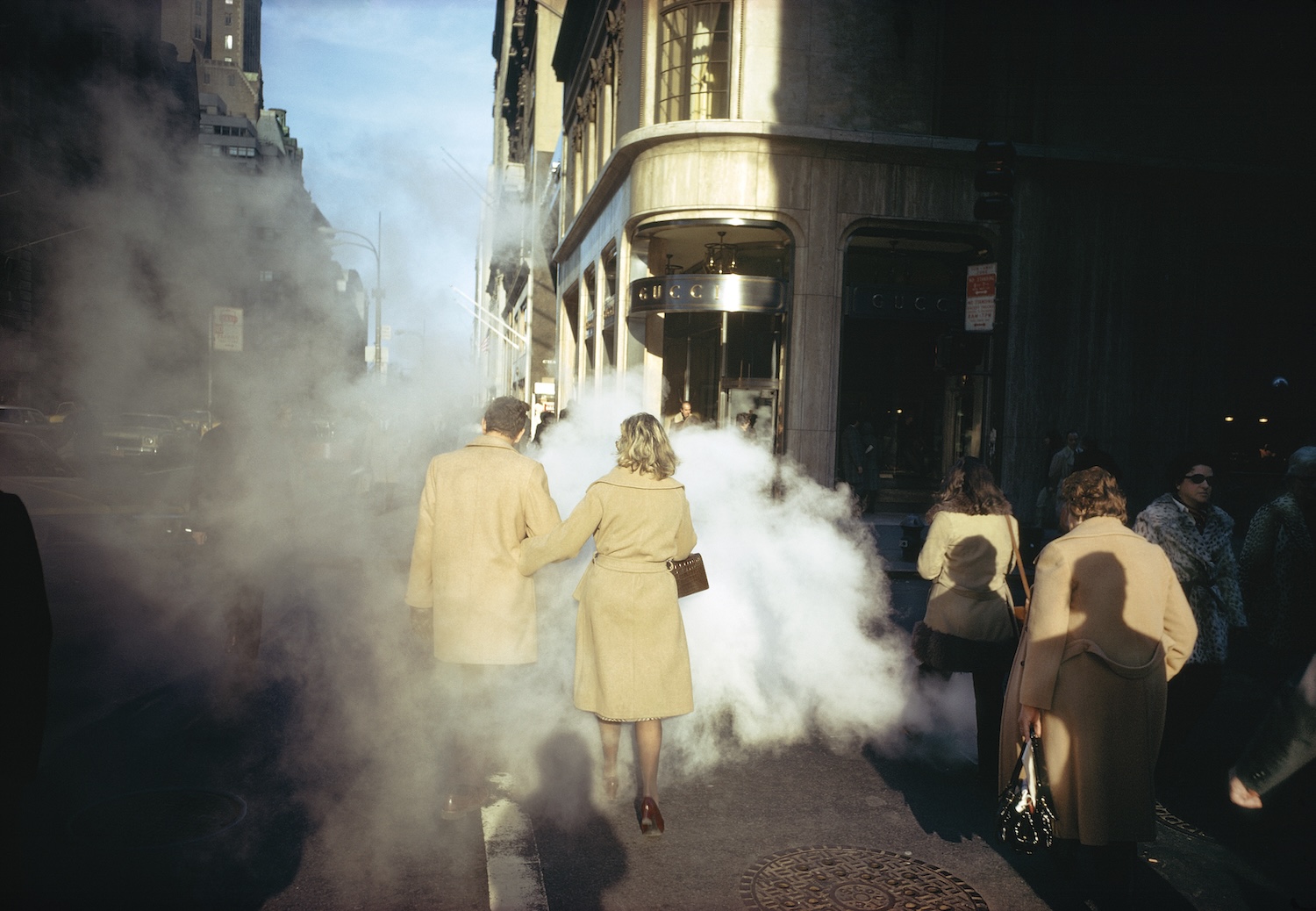
One of Meyerowitz’s most well-known photographs, Camel Coats (1975), is emblematic of his astute timing, together with the role of chance in his practice. He captured four individuals in a crowded street, all wearing camel-colored coats, all with their backs turned, walking into a theatrical cloud of steam. The snapshot distills the liveliness of this enigmatic urban atmosphere. Similarly, in Young Dancer (1978), the protagonist situated in the center of the composition stands out due to the contrasting colors, yet the buildings and surrounding activities simultaneously overwhelm the lone figure. During this period, Meyerowitz increasingly emphasized the vibrant, at times discordant rhythms of reality, developing a textured quality that was articulated less in his earlier series. This body of work reveals the tensions and emotions that animate the streets, evoking everyday experiences recognizable for many viewers. Perhaps in part due to declining “group innocence,” most of the street photographs included in the exhibition pre-date the turn of the century, except for one shot in Brooklyn (2001) in which peas scattered across the sidewalk look like green marbles, a composition leaving plenty of room for imagination.
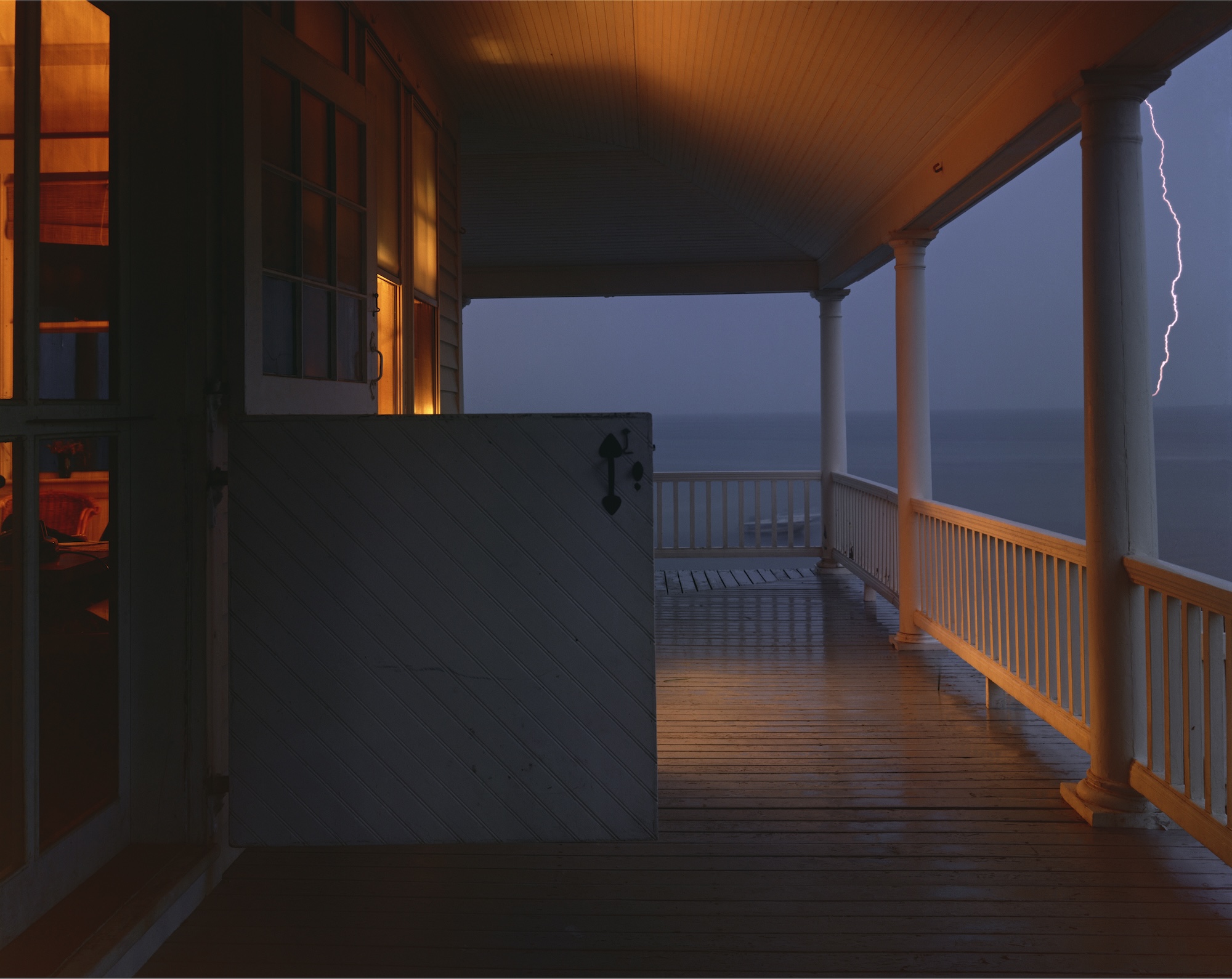
Beyond street photography, Meyerowitz established a reputation photographing landscapes, several of which are shown in the main exhibition space and the side room. The inclusion of these landscapes alongside his human-centered works demonstrates his consistent sense of immediacy, together with his keen ability to render familiar moments subtly strange. In Porch (1977), a lightning strike animates the cold exterior, which juxtaposes the warm indoor lighting. That same year, likewise in Provincetown, he photographed colorful sheets flying under the washed blue sky. By embracing the wind, an element beyond his control, he transformed an ordinary New England scene into a dynamic dream-like moment.
In contrast to the movement that typically animates his landscapes and street scenes, Meyerowitz’s domestic interiors appear to revel in certain stillness, capturing fragmented elements such as a doorway or bathtub. Most of these indoor vignettes feature muted colors and in compositions vaguely reminiscent of classical paintings from the Dutch Golden Age. These carefully staged photographs enrich the breadth of the retrospective, complementing his seemingly improvised, instantaneous shots.
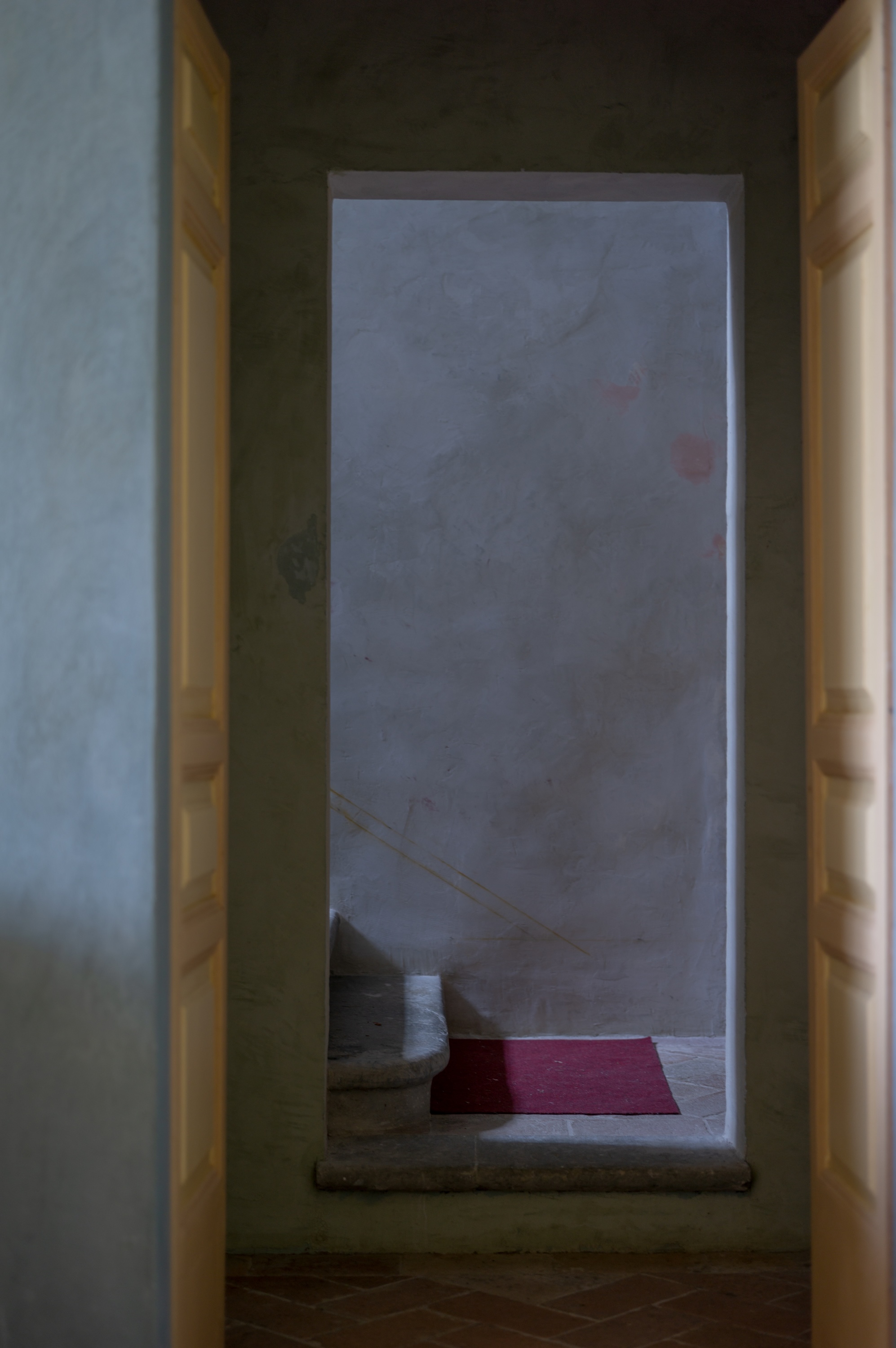
The exhibition enables appreciation of how external changes coincided with internal shifts in his techniques and interests over decades. Consistently, though, he manages to obtain an unique sense of immediacy while elevating the ordinary, drawing attention to overlooked moments of everyday life.
Joel Meyerowitz: Select works, 1962–2019 was on view at Huxley Parlour from June 5th to July 11th, 2026.