
“Are you lonely tonight?” at the Australian Centre for Contemporary Art
Review
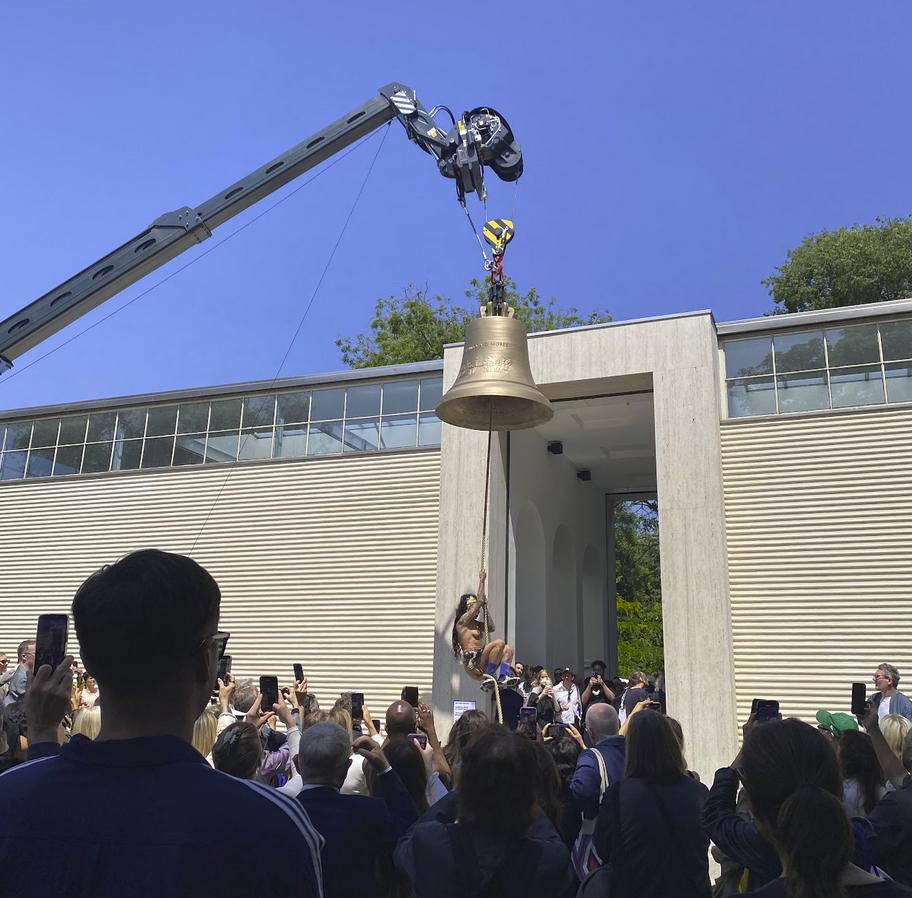
A bell tolls on the 61st Venice Biennale, titled In Minor Keys: it’s Florentina Holzinger’s nude performer hanging from the inside of a massive bell acting as its clapper. If one doesn’t catch the performer’s ascent up the rope and into the instrument, which reveals a large, padded waistband, it looks as though their hip bones smashing against metal is what creates the deafening thud. The audience, with arms outstretched like antennas, experience the performance both by ear and behind their smartphone. The salacious image of the nude female further disseminates out from the Giardini: in one hit of the record button, the performance proliferates, adding to the already hours-long queue outside the Austrian Pavilion.
It’s a surprise, then, to hear that the focus of Holzinger’s work wasn’t femininity, censorship, or even sound—it was the environment and overtourism, hence the title SEAWORLD VENICE. The hype and the shock surrounding this performance partially obfuscated the artist’s message, and maybe that was the point. The leveraging of spectacle, the amusement park nature of the work, sparked several conversations. Admittedly, though, the conversations are centered more around who was shitting in the exhibition’s porta-potties and less about how to reduce the millions of visitors (arts workers not excluded), whose burgeoning presence detrimentally affects the city.
But the virality of Holzinger’s gesture, especially given the Biennale’s thematic emphasis on subtlety, was a kind of harbinger of what was to come: when the pavilions finally opened, Instagram feeds were awash with huge bouncing breasts from the Danish Pavilion, A-lister cameos from Thom Yorke and Patti Smith, and demonstrations around the city protesting the permission of Israel and Russia at the event. In the whiplash of it all, there was a perhaps unprecedented amount of noise inundating news outlets and social media during the opening of this 61st edition.
What I found confusing about the buzz was the underlying assumption many spectators had for the Biennale to be an event of radical thought. When I first saw the big “GERMANIA” and “SPAGNA” signs above the Giardini’s pavilions years ago, it reminded me of the corny display of flags in a United Nations conference. It is crucial to remember at the Venice Biennale that, within the Arsenale and the Giardini, the art that gets shown to the public is a state-approved event. In the Biennale’s “Procedure for National Participants” document, Article 3 outlines: “Given the uniqueness of each National Participation the Governmental Authority (Minister of Culture, Minister of Foreign Affairs, or competent Minister for Cultural Affairs) of the Country will appoint a Commissioner who will have to belong to the Governmental Authority or to the delegated Public Institution representing the Country.”1 It then goes on to state that the commissioner will “ensure transparency” between all parties and work within the Biennale’s policies.
The messages that are spoken within the boundaries of the main event, accompanied by pamphlets with that winged lion and a country’s name emblazoned on space, are thus reviewed with a fine comb. This isn’t to deny the existence of poignant, poetic work at the event, nor is it to excuse the platforming of the presence of violent regimes during the event, but more to underscore that the extent to which the art within each pavilion can be radical is contingent on the appetite that the country’s rulers have for it. All iconoclasms, counter-cultural thought, and political dissonance have been approved through a rigorous selection process by way of ministers and bigwigs. And so, Israel, Russia, and the US were all still allowed to show, pushing audiences to the point of protest: an undoubtedly warranted discontent that the Biennale brought upon itself. In ignoring the calls for structural change, the institution’s recalcitrance overwrote Kouoh’s intention for the event: a place for quiet contemplation and cross-cultural community.
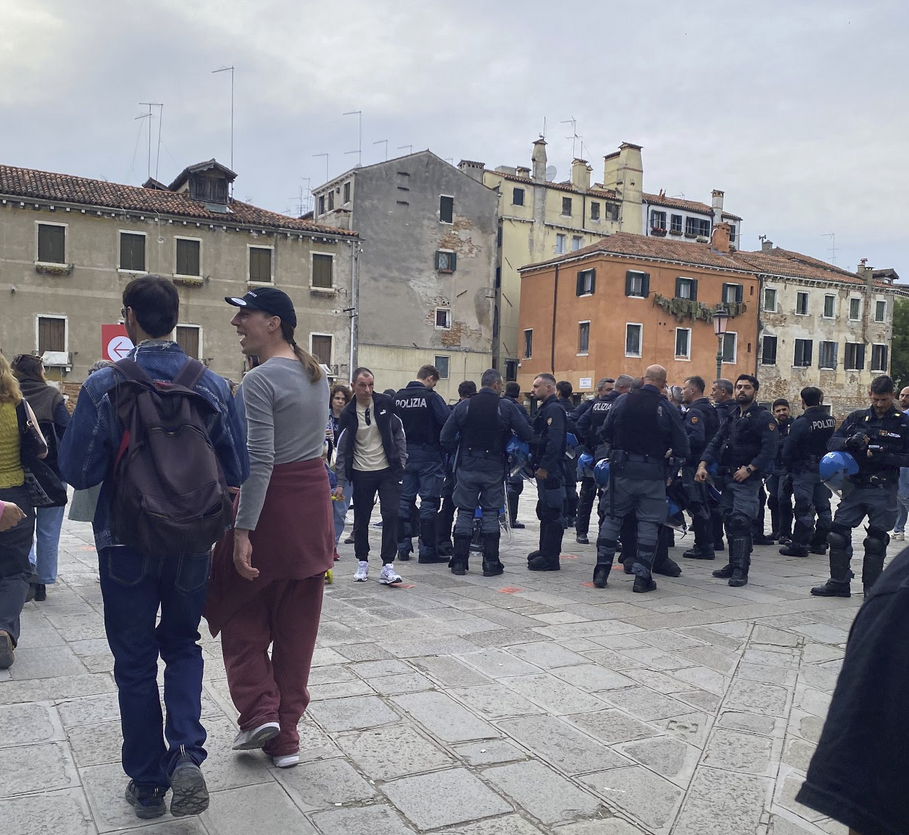
It was one of the founding members of Pussy Riot, Nadya Tolokonnikova, who after demonstrating in front of the Russia Pavilion with a group clad in neon-pink ski masks, spoke most clearly about how the Biennale could have managed to exhibit artists from these countries, if holistic inclusion really was the goal, without capitulating to perpetrating nations: “It’s surprising to me that Europe opened its doors to Russian propaganda [ . . . ] If the Venice Biennale really cared about censorship and censored Russian artists, they would work with artists who are currently incarcerated, standing up to the regime.” She suggests that the Biennale, if representation really is so important, should instead subvert its own selection process to create more channels for artists who refuse to be accessory to messages of violence or erasure—a prescient piece of wisdom from Tolokonnikova, who was sentenced to two years in prison by the Russian government for the performance Punk Prayer (2012) in Moscow. And still, the day after Pussy Riot’s appearance, police officers acted as uncanny docents outside of the pavilion, carefully directing people who weren’t showing an unassuming interest in the exhibition away from the building.
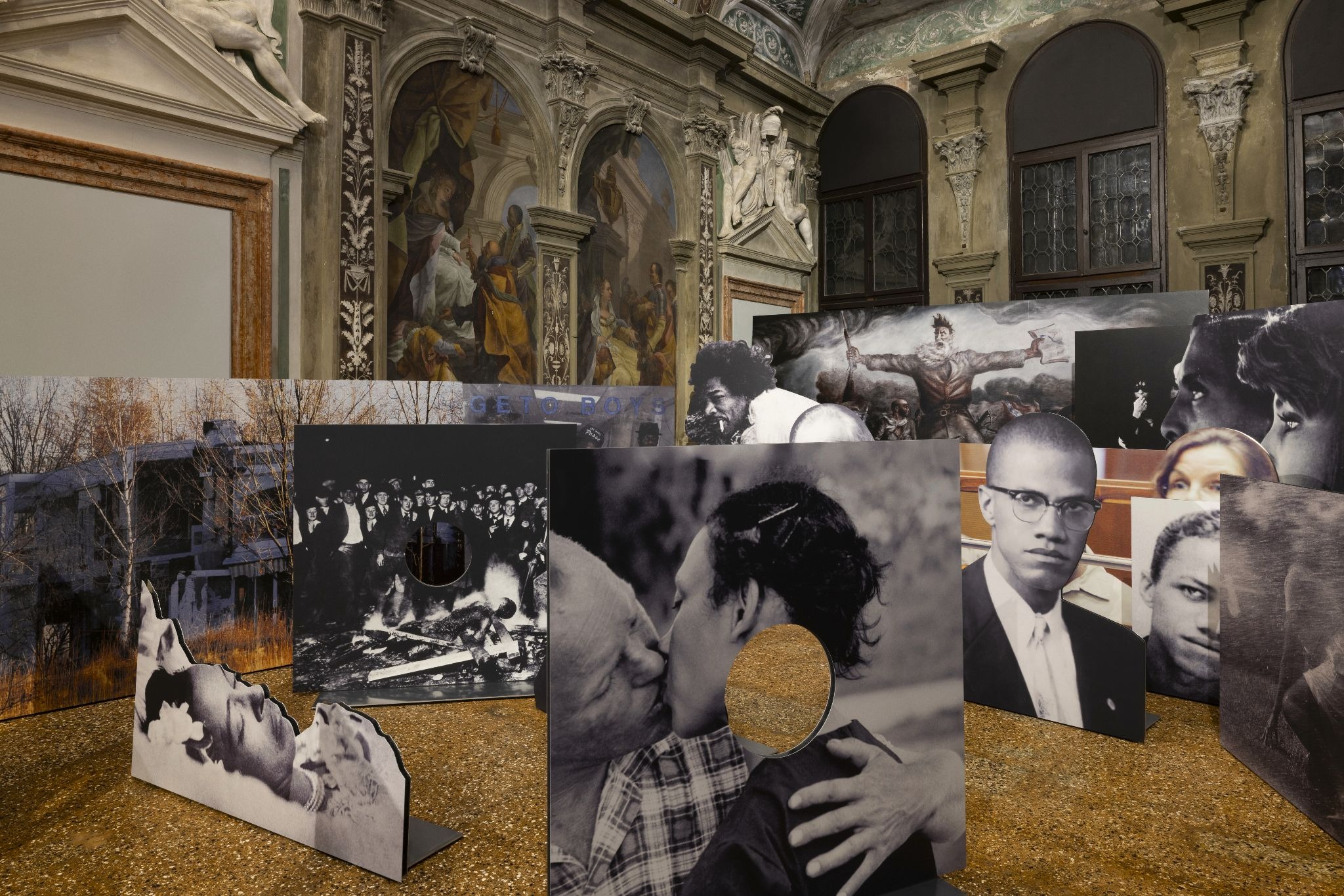
Nevertheless, after pushing past lines and law enforcement, there are exhibitions at the international gathering that provide respite. Alvaro Barrington made a post on his story saying he heard someone say Helter Skelter: Arthur Jafa and Richard Prince, curated by Nancy Spector at Fondazione Prada, is the true American Pavilion. Through films made of found footage, celebrity ephemera, and works from the artist's oeuvre, the exhibition holds a mirror up to the American landscape. The curator of the German Pavilion, Kathleen Reinhardt, who puts the late Henrike Naumann’s work in conversation with Sung Tieu, said in her opening speech to spend time with the Ukraine Pavilion, with the PinchukArtCentre also presenting its official collateral exhibition that collects moments of joy in the face of Russia’s full-scale invasion of Ukraine.
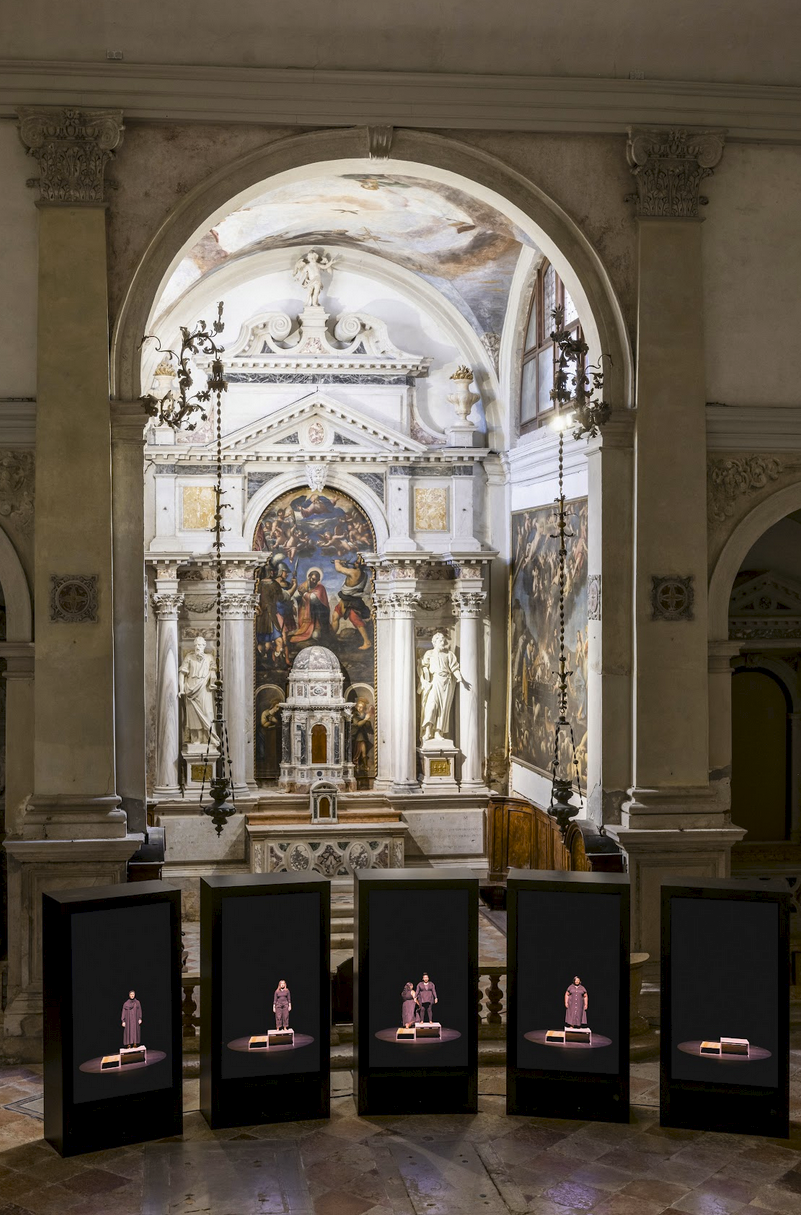
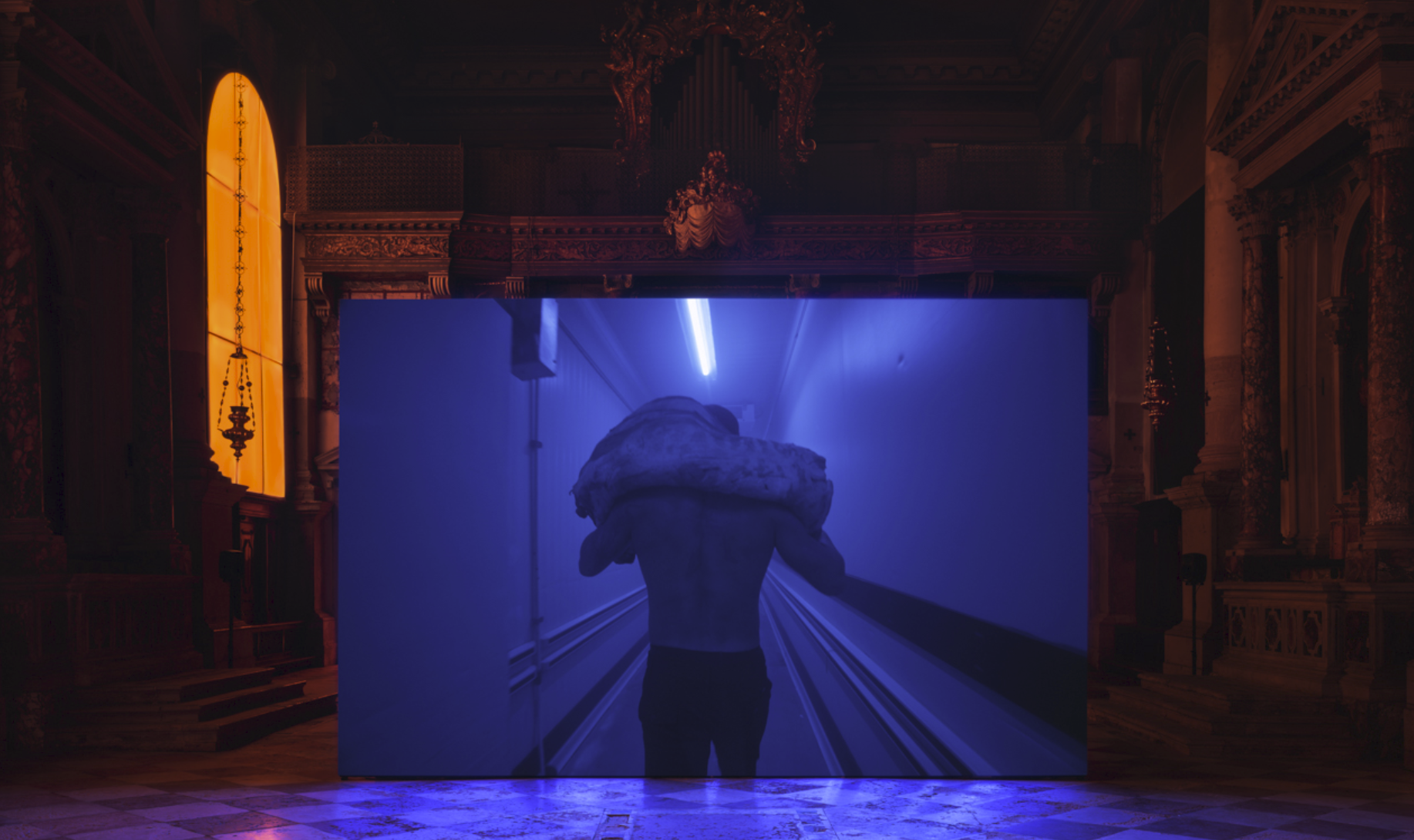
There’s also Gabrielle Goliath’s formidable and moving Elegy (2015–) at Chiesa di Sant’Antonin, exhibiting independently but concurrently with the Biennale after South Africa’s Minister of Culture removed her work from its pavilion for what was called “highly divisive” support of Palestine. Vietnam, El Salvador, and Ecuador have their debut pavilions this year. Canicula, the final installment of Fondazione In Between Art Film’s Trilogy of Uncertainties, is an unsurprisingly fantastic display of video art that surmounts its siblings, Nebula (2024) and Penumbra (2022).
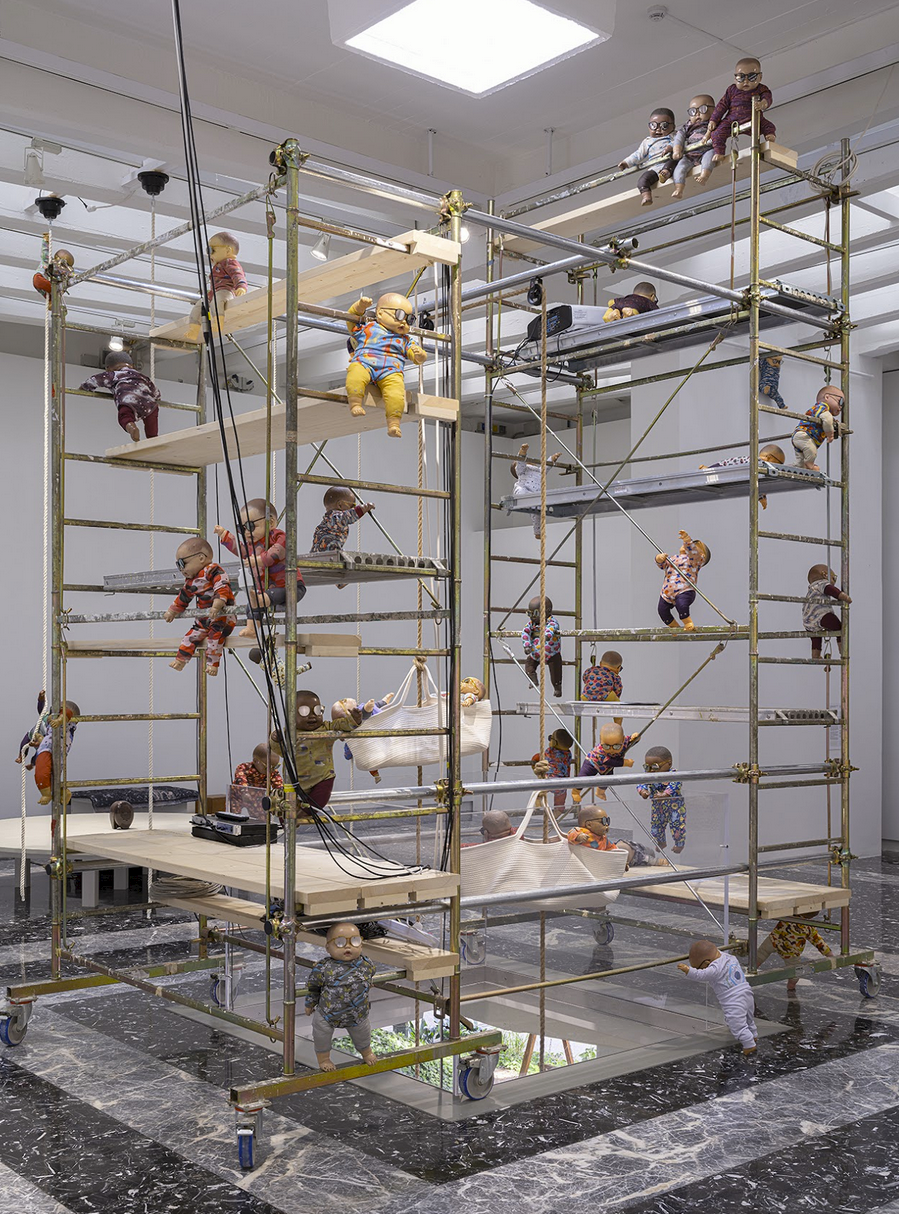
After seeing all the snapshot images of babies wearing reflective sunglasses, it was surprising to read that the Japanese Pavilion was not about raving infants, but about queer parenthood in Japan, a country that has a tenuous relationship with LGBTQ+ rights. At the bottom of the opening exhibition text, Ei Arakawa-Nash hand-writes about his experience as a gay man and the father of twins. He also apologizes for his ignorance and self-victimhood that he was taught in the erasure of Japanese colonialism following the bombings on Hiroshima and Nagasaki. To catch this explanation, one that effectively frames the poetics of the installation, requires viewers to patiently sit with the exhibition text, to block out the FOMO-induced rushing to make it to all the pavilions and collateral events. I couldn’t see everything, and what I could was seen through the haze of institutional conflict and viral moments that marked these opening days.
Leaving the Arsenale on the final day of the opening, I saw a police officer in wrap-around glasses take a picture of Alice Maher’s installation of bright orange heads bobbing in the water, Les Filles d'Ouranos (1996/2025–26), his plastic shield leaning against the wall that it shares with the Italian pavilion. A waning crowd of police officers in riot gear flanks the exit. The last smattering of flyers that had decorated the event’s opening days reading “SHUT DOWN THE 2026 GENOCIDE PAVILION” are trampled underfoot. On the walk back to Venezia Santa Lucia, smaller spaces running official collateral events had their PR teams and catering staff buzzing about to take advantage of the last days of press presence. They were sweating, fervently responding to emails and running aperitivos in the waning days of the opening. The show must go on.
The Venice Biennale runs from May 9 to November 22, 2026.
1 La Biennale di Venezia, "61st International Art Exhibition Procedure for National Participations" (2026), 2.