

.webp)
In Conversation with Amira Gad, Claudia Hart, Larry Achiampong, and Corinna Kirsch
Interview
Raqs Media Collective was formed in 1992 in New Delhi, India, by independent cultural practitioners and theorists Jeebesh Bagchi, Monica Narula, and Shuddhabrata Sengupta. Emerging against the backdrop of the ’90s, when development and modernity were central to public discourse, the trio formed the collective after graduating from the AJK Mass Communication and Research Center at Jamia Millia University. In alignment with their pluralistic vision, Raqs’ work spans multiple genres—installations, media works, essays, and print objects, among others. “Raqs” is an acronym for “rarely asked questions” and also a word that describes the meditative state Sufi practitioners enter when they perform Sufi whirling.
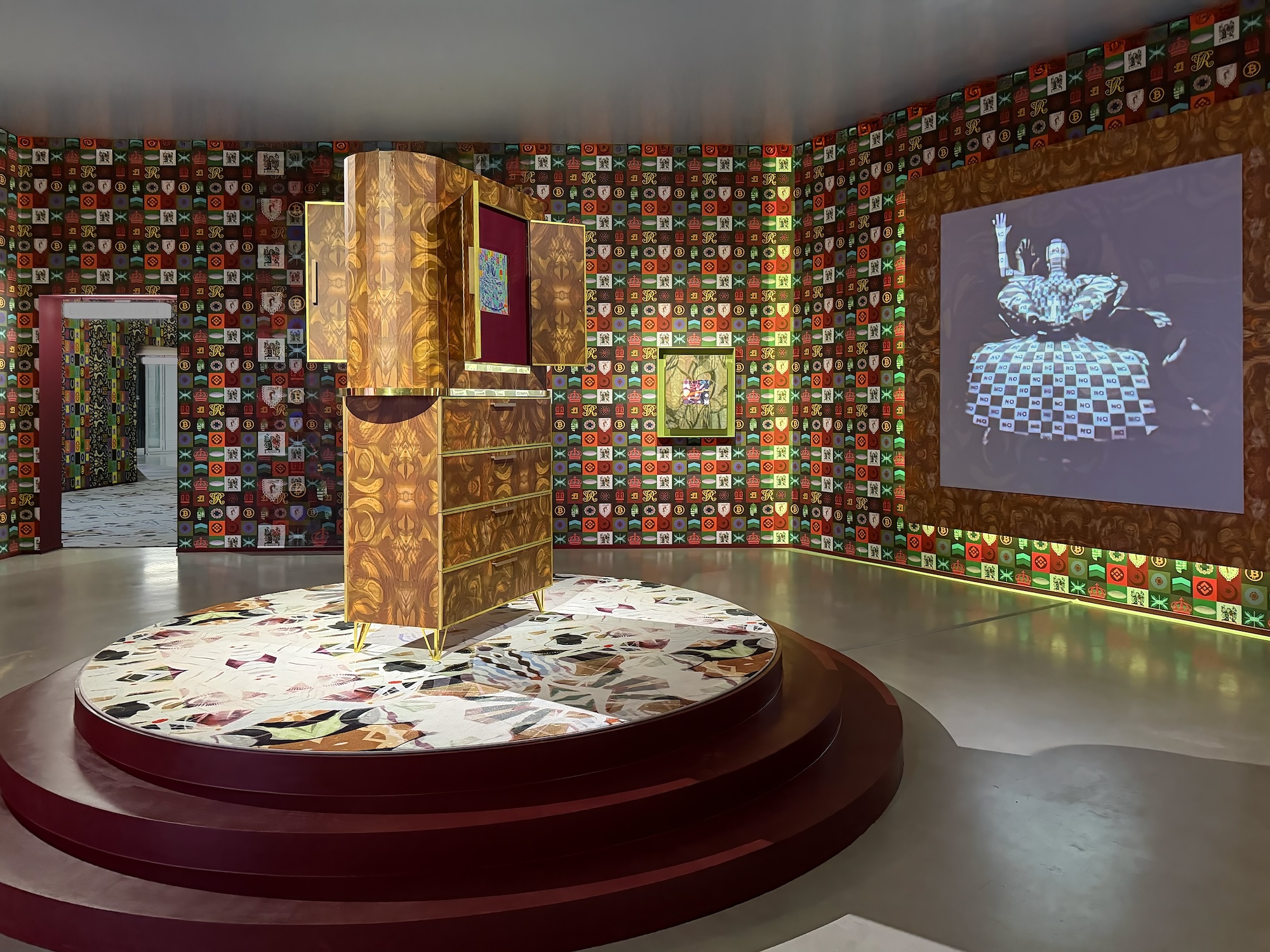
In the last three decades, the exploration of time—and with it, the nature of waiting, desire, expansion, and contraction—has remained a recurring theme for Raqs. This interrogation of time continues at the Ladakh Arts and Media Organisation (LAMO), where the group has returned for their first solo exhibition in India in a decade, a homecoming of sorts. According to curator Qamoos Bukhari’s note, The Time is Never Ripe unpacks two human conditions: “the experience of confronting external factors” and “the strength and solidarity that emerges from those experiences.”
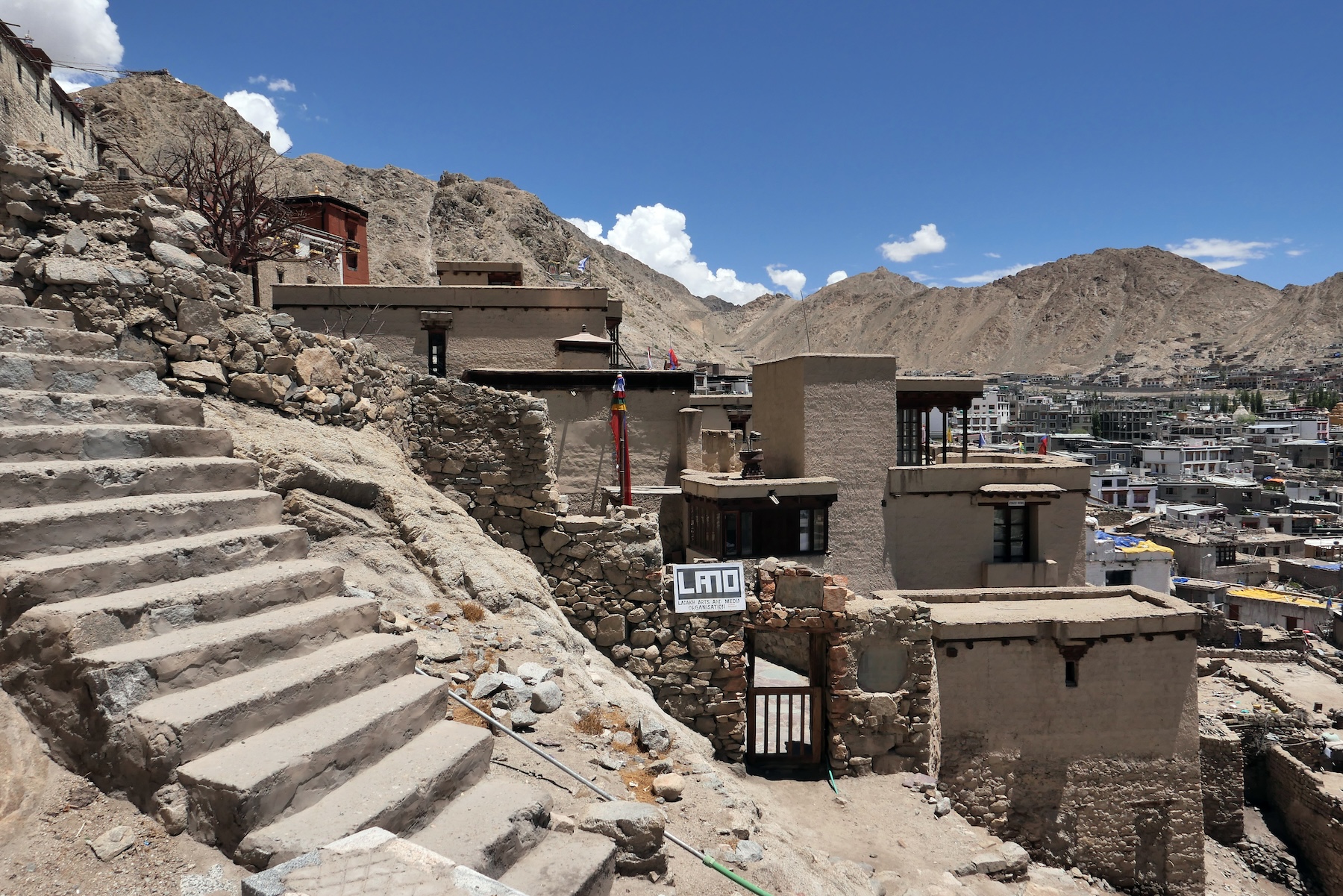
At over 3,000 meters above sea level, Ladakh remains one of the most vulnerable places experiencing rapid effects of climate change, with disrupted agricultural patterns and lifestyles in the region. Writing for Down to Earth, Rinchen Angmo Chumikchan reports that the region recorded “some of their warmest winters in years.” With the sā: Ladakh Biennale also happening during the same time as Raqs’ exhibition, art enters into dialogue with these environmental vulnerabilities and proposes possibilities of reflection and resilience. In this conversation, Raqs speaks about their latest exhibition and what their practice entails.
Alfa M. Shakya: Raqs is back in India with a solo exhibition after more than a decade. What was the catalyst? Since time remains an ongoing theme in your works, how did the timing of this come to be?
Raqs Media Collective: The catalyst for this show was a timely conversation we had with Qamoos Bukhari about what the passage of time meant in different locations. We have known Qamoos for many years, and his evocation of the atmosphere surrounding LAMO’s location in Leh, together with his deeply personal reading of our works and our own memories of Ladakh from earlier visits, brought the region’s particular temporal realities into focus.
AMS: “Waiting is the first act of desire”—this poetic line is from your essay The Parable of the Step Well. And the current exhibition’s title is The Time is Never Ripe. If time is never ripe and we are never ready, then what role might waiting play here?
Raqs: If the time is never ripe, then waiting takes on an added valence. Waiting can mean desire, it can mean anticipation, it can mean apprehension, it can mean excitement, it can mean anxiety, it can mean preparedness—almost an entire lexicon of what it means to both feel for and with the “not yet” that can be imagined. This depends, of course, on the contingent relationship between any specific incarnation of the present and its imagined future. In Raqs, we think in terms of plural futures. The ripeness or unripeness of different versions of the future will yield different kinds of waiting. These different acts of waiting will each have their own effect of emotional savoring and texture.
AMS: Do you think that your “practices” should stand on their own, or are they more intertwined with the placing of textual, curatorial, or other interventions like your “para-practices”?
Raqs: Our collective practice stands in an interdependent relational field, in an elaborate matrix of what we call para- and infra- practices. All these lead up to and radiate from the act of making. They also emerge from and live within a lively context of thinking, talking, and recalling that happens in our studio, sometimes formally, often informally, and which extends to worlds of conversations outside the studio that each of us is embedded in. This has been happening over decades.
In turn, these are linked to our personal and collective methods of the noting of things we observe daily, and also during our travels, in our readings, in our viewing, in cities, in dreams, in archives, in galleries, in museums, in libraries, in reveries that last late into the night, in hangouts, and in the stories we have read or listened to. Practices need to swim—in resonant flows or countercurrents. This is a reason why we prefer the deltaic imagination as a way of thinking, where the submerged, the excess, the broken, and the silted all transform into an enchanting view of the world.
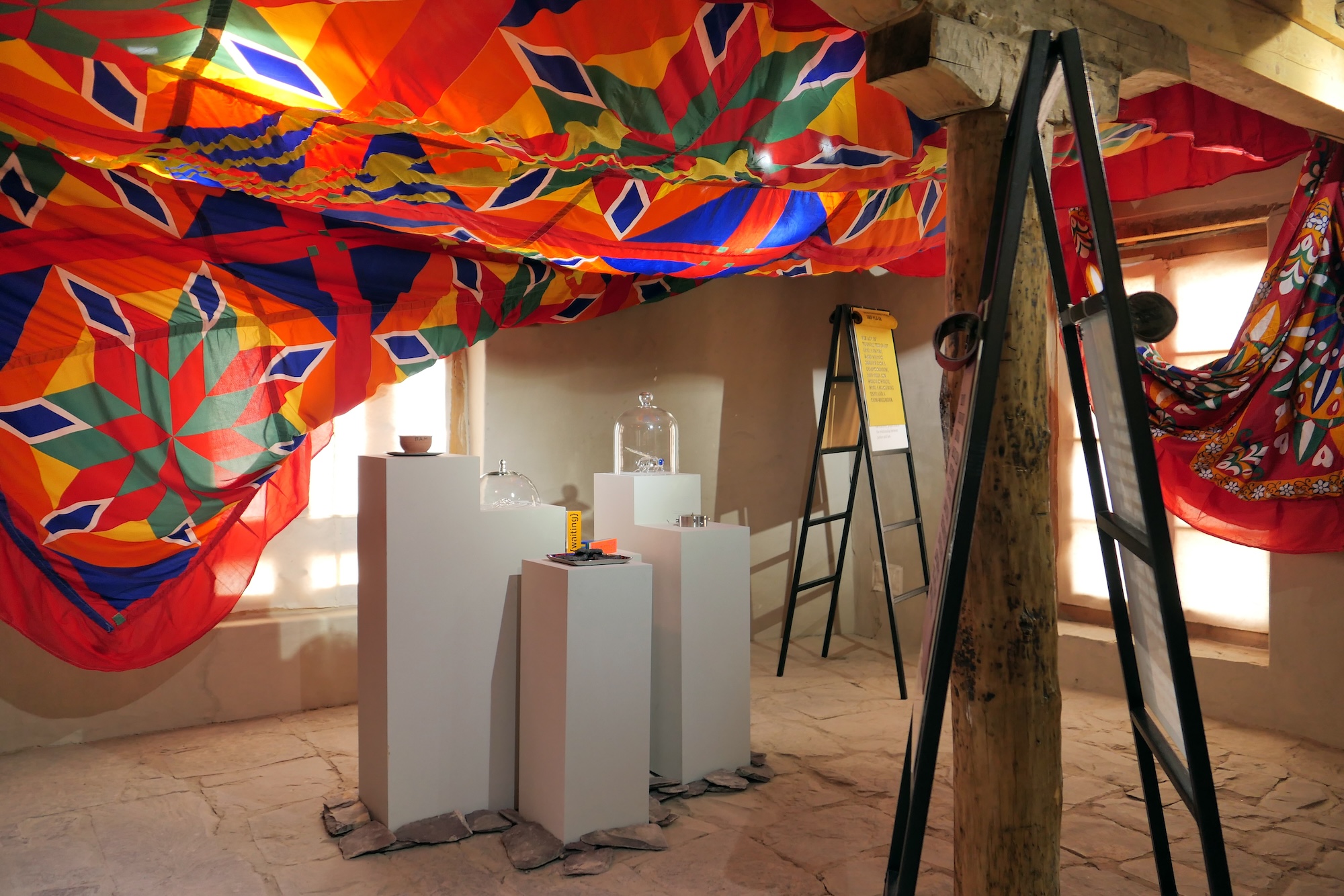
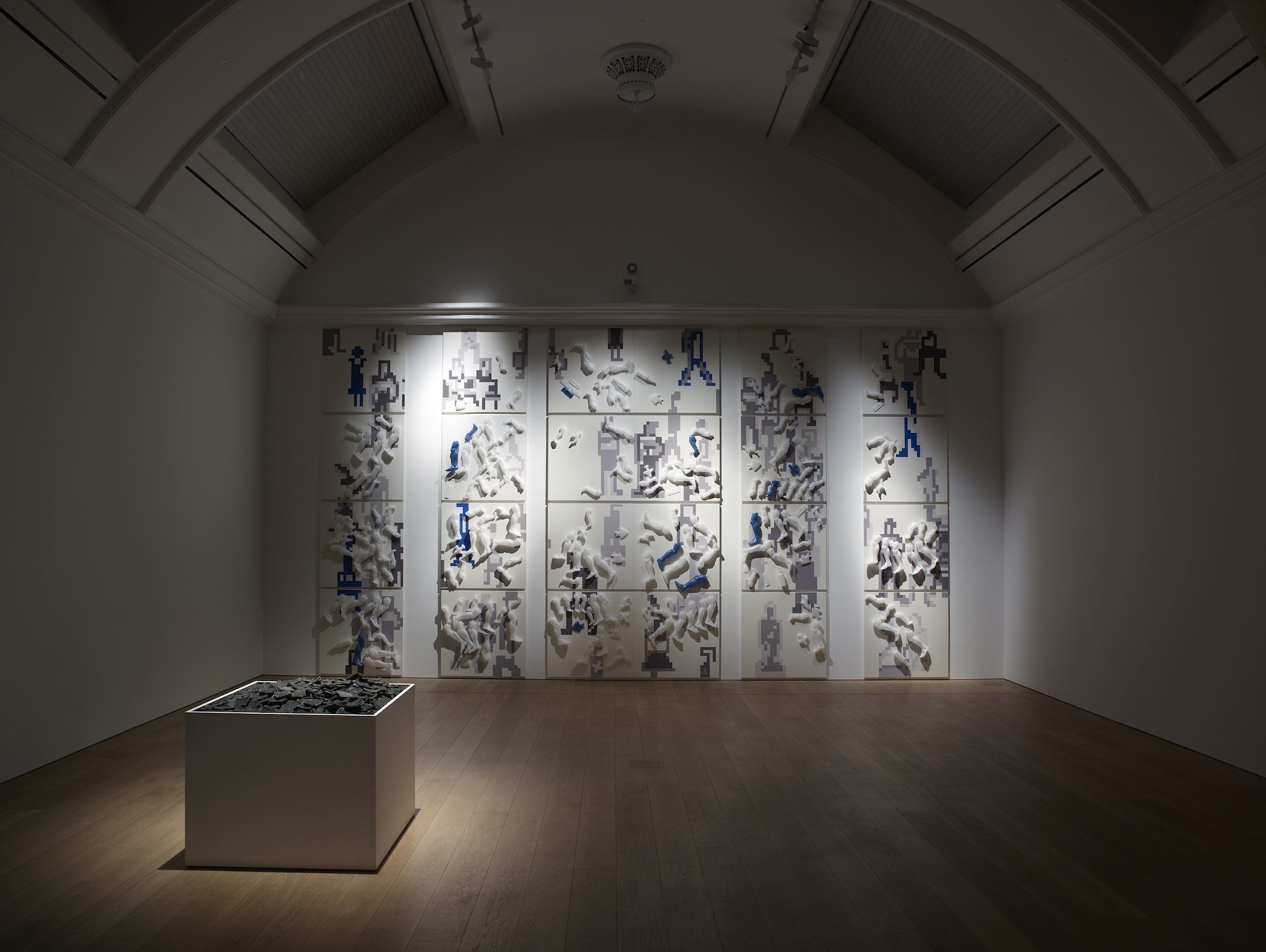
AMS: The exhibition includes some simple everyday objects like stacks of books, clocks, animals—elements from nature as well as mythology. An artwork from the exhibition that made me curious was Parade, in which the animals look like tigers; perhaps it’s because I also come from a country (Nepal) where tigers have a special place. Your work brings mythology into conversation with technologies such as 3D printing. How do you see these timeless stories coming together with new technologies, both in the art world more broadly and within your own practice?
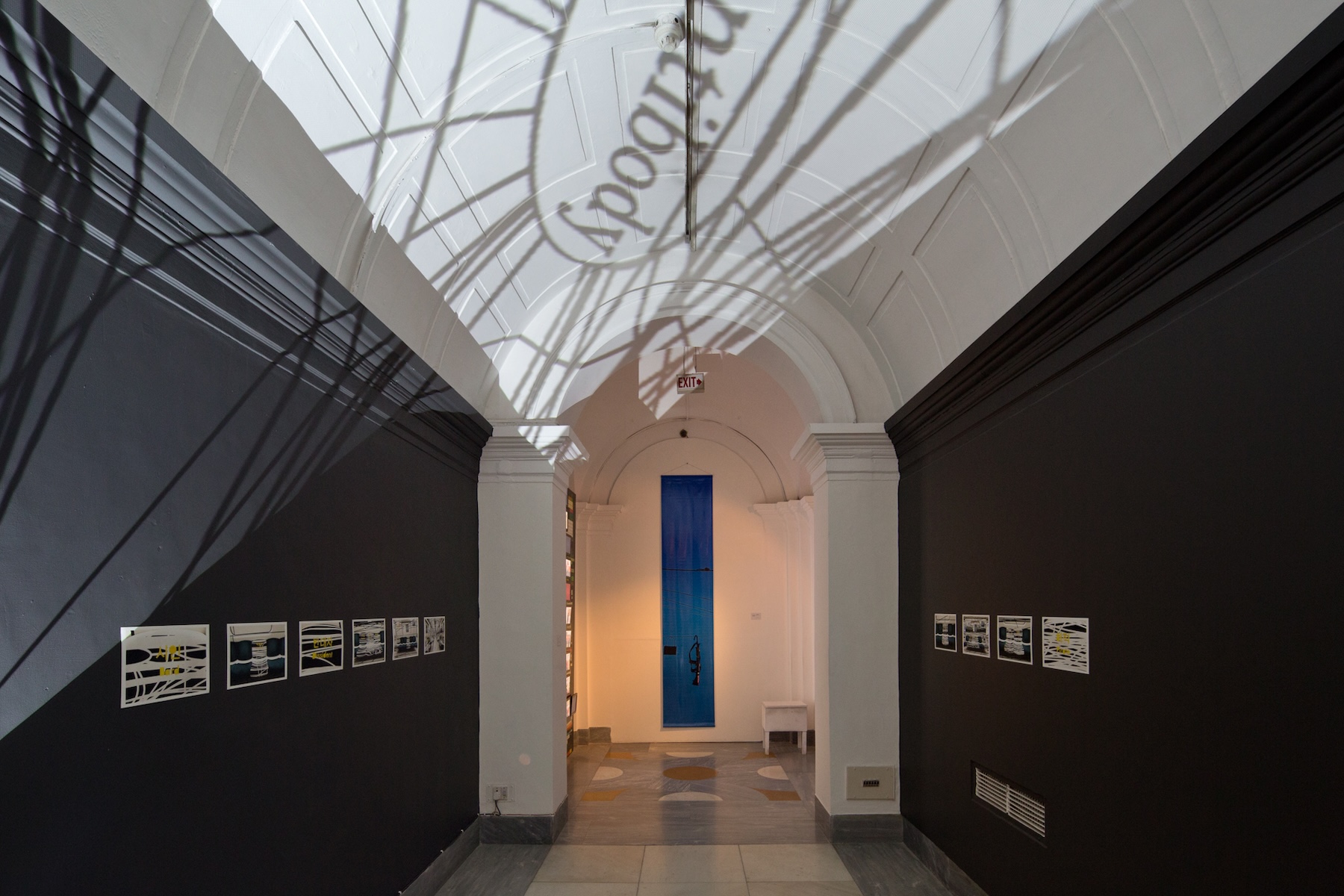
Raqs: It’s wonderful that you think of this work as reflecting a parade of tigers! On a more mundane note, this image started out as a set of silhouettes of canine gatherings. We are quite happy to have our street dogs turn into tigers. Perhaps that is a sign that what we might think of as mundane or ordinary—like dogs or the everyday objects in the exhibition—possesses extraordinary, magical qualities.
We think of mythology as a kind of narrative apparatus—a kind of dream and story machine. You can transpose images, concepts, fragments of stories, and make them connect to each other in a hyperlinked manner. This can be a very contemporary mode of thinking about materials and elements. It is not at all out of place for us to think of augmented technologies of any kind in engagement with different mythological dialects. In the entire Himalayan region, there is a readiness to think of traditional image-making in terms of “yantras”—devices designed for contemplation. We forget that the word “yantra” actually means machine. Yantras are technologies. Mythologies are also technologies.
AMS: When you look back at over three decades of art practice that you have, how do you thread the pieces together, in general but also for this exhibition?
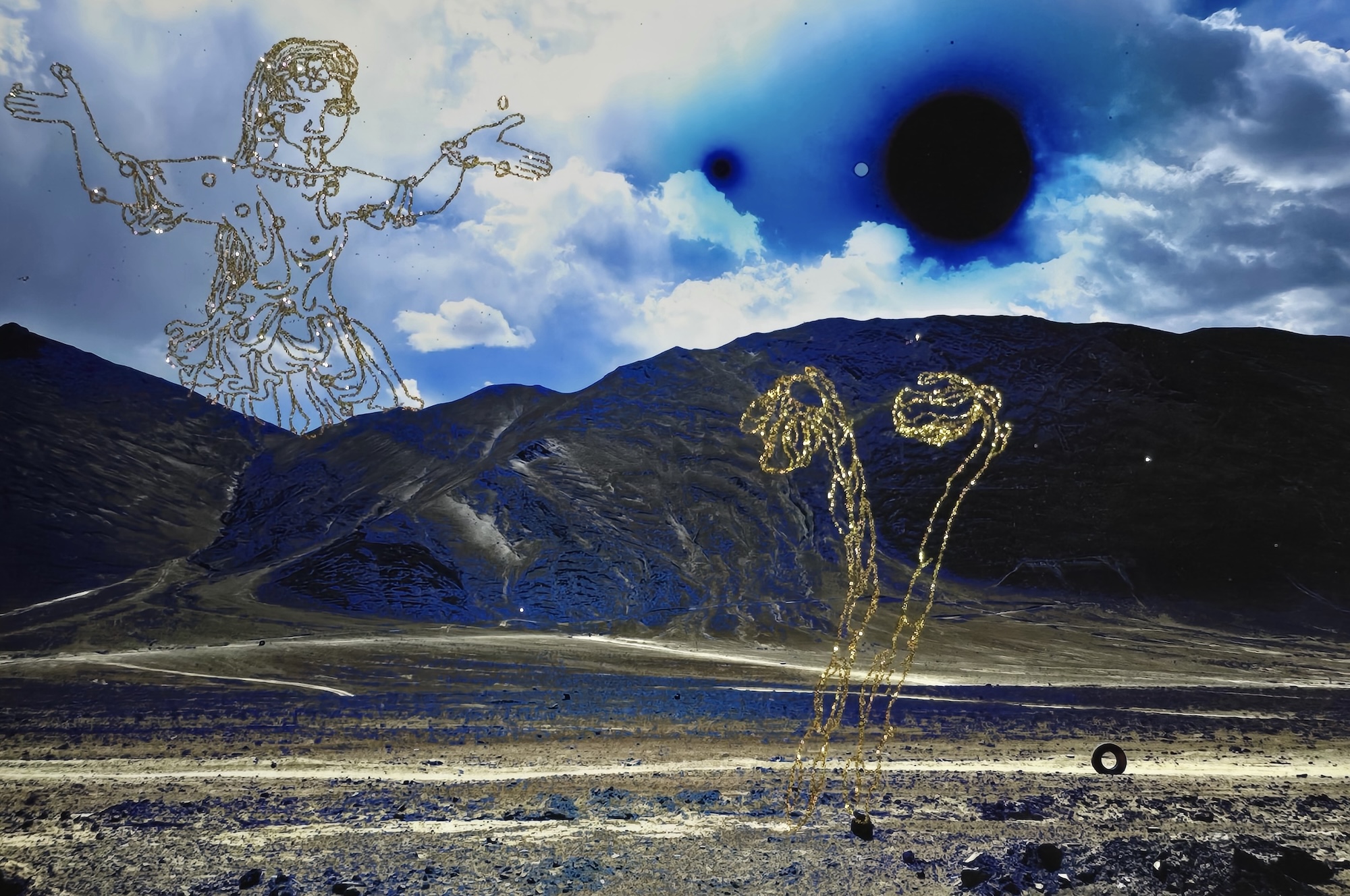
Raqs: Actually, simultaneously with the preparation for The Time is Never Ripe at LAMO, we were working on the making and then installation of another work, Black Waters: An Event Shaped Hole at the Asia Art Archive in Hong Kong.* This work goes right back to the beginning of our practice and revisits the archive (carefully stored in a large painted wooden trunk in our studio in Delhi) of notes, 16 mm film footage, photographic negatives, maps, and many other kinds of materials. All of this was part of the research we did for a film on the history of photography, war, and conflict in the Andaman Islands. This film remained unfinished. But returning to these materials made us keenly aware of how certain questions have stayed with us over the decades: How does the duration of time change the meaning of an image? What is the relationship between power, in terms of both its endurance and its corrosion, and the endurance/circulation of images? How can the life-cycles of different life-forms and historical or planetary processes be made relatable to each other, in a way that helps free us from a myopic foreshortening of time or an anxiety towards enduring the unbearable now?
AMS: How has the response from the public been, especially in Ladakh? What has changed, and what has remained the same, over these decades of your practice as artists and in your conversations with the public/audience? How much thought goes into the audience’s experience when you create your works?
Raqs: We had very intense public engagements when we were in Ladakh. This included a workshop with around twenty-five people, including artists and practitioners from Ladakh as well as visitors. The participants spanned many interests and curiosities—artists, filmmakers, film editors, writers, communication designers, and researchers. We were struck by the personal resonances people found between their own experience and understanding and what they said they were gleaning from the works in the show. It was this concentric folding in of personal, historic, geological, and cosmic time that came up many times during the conversations.
The panel discussion the following day, with Qamoos Bukhari and Monisha Ahmed, the director of LAMO, was deeply moving in terms of the quality of the questions and density of the attentiveness. The discussion addressed different kinds of awareness and domains of thinking.
It seemed to us that the clear, rarefied air of Ladakh had enabled everybody to attend to the work and to our ideas with a kind of focused concentration and generosity. People who attended the workshop took away with them an idea of “time devices” with which they could turn all their experiences into ways of thinking about time. As a consequence of the panel discussion, we had an exceptional conversation with a doctor and an anthropologist who work in the field of palliative care. Their observations about how they could relate our work to their understanding of the transforming experience of time that emerges as patients and their attendants approach mortality were a very moving testament to how artistic work reaches depths in people's experience that even we artists can rarely anticipate.
Sometimes you feel good being an artist!
This interview has been edited for clarity and length.
Raqs Media Collective's solo exhibition, The Time Is Never Ripe, was on view at the Ladakh Arts and Media Organization (LAMO) from July 2 to August 31, 2026. The exhibition was supported by the RMZ Foundation
*Black Waters: An Event Shaped Hole was part of the At 25: Artists’ Early Worlds, Part II presented by Asia Art Archive, which was guided by the question: “What were you doing at 25?”