

.webp)
Unsympathetic Clock: In Conversation with TJ Shin
Interview
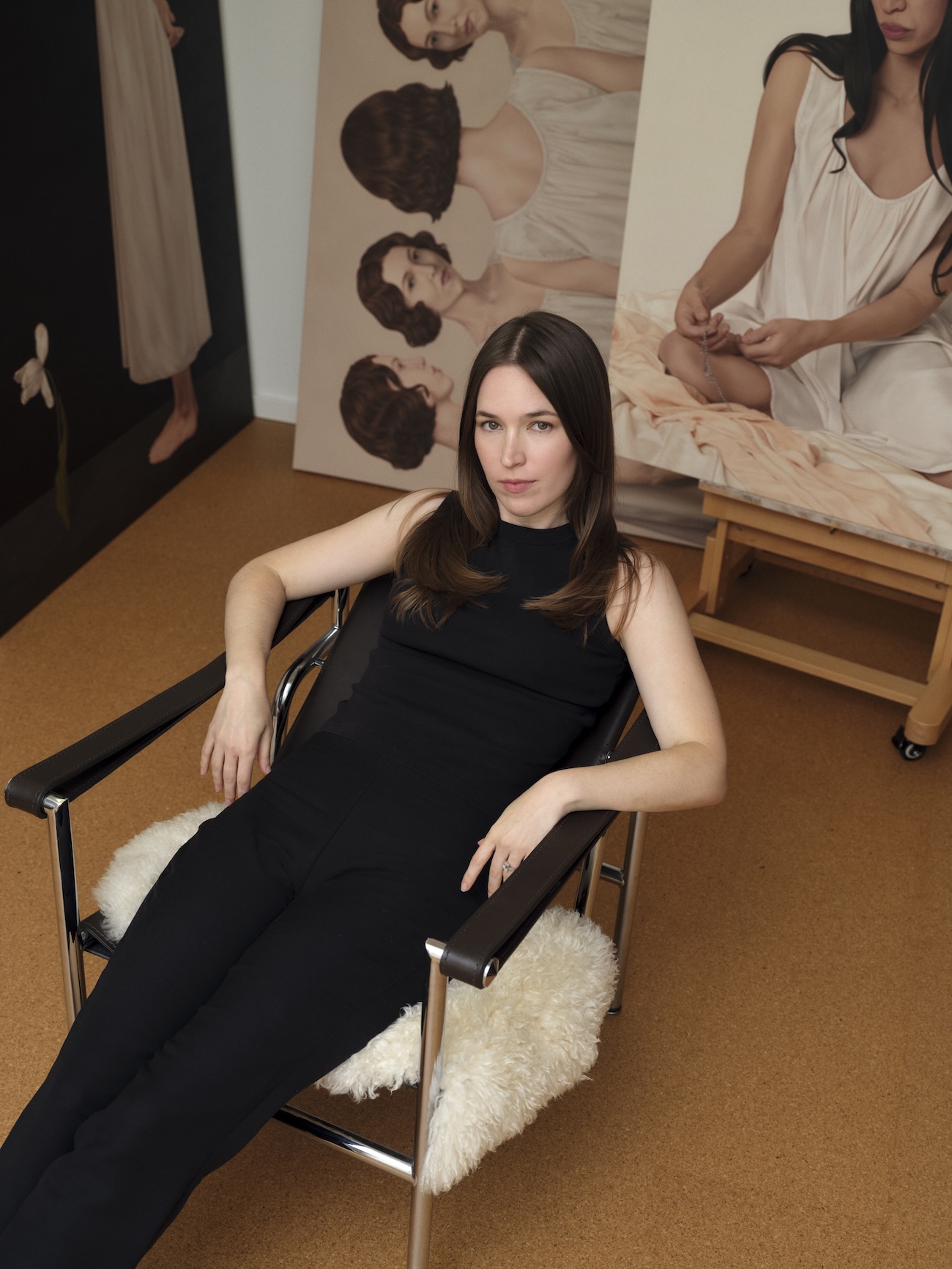
With incredible technical control, a subdued palette, and seemingly simple, still compositions, artist Meghann Stephenson creates fantastically soft painted worlds devoted to the exploration of the feminine. In her upcoming solo exhibition at Half Gallery, Queen of the Neighborhood!, Stephenson follows a new trajectory, organizing paintings around the framework of Dante’s Inferno, posing questions around sin and absolution. Dancing between the subtlety of her visual style and the conceptual intensity of her influences, Stephenson offers her audience a rich world to consider the social realities that condition and frame the feminine body.
Ruby Alexander: What drew you to utilize the allegory of Dante’s Inferno for your upcoming exhibition, Queen of the Neighborhood!? You also take Eve, who is widely considered in Christian texts as the instigator of the original sin, as a reference point—is that an intentional choice or a coincidence?
Meghann Stephenson: My previous two solos examined more of the contemporary feminine experience through relationship dynamics, societal expectations, and the process of forging identity through both internal perception and external scrutiny. With Queen of the Neighborhood!, I found myself asking how we arrived here in the first place. How were these moral and social systems established?
Dante’s Inferno felt like the perfect framework because it creates such a concise map of moral judgment. I thought interpreting these sins through a specifically feminine lens would be the right trajectory for my work. There was a lot of inspiration to play with in terms of what a uniquely feminine sin might be. What does “feminine anger” look like? Would we recognize it if we saw it, or is it quieter, more internalized?
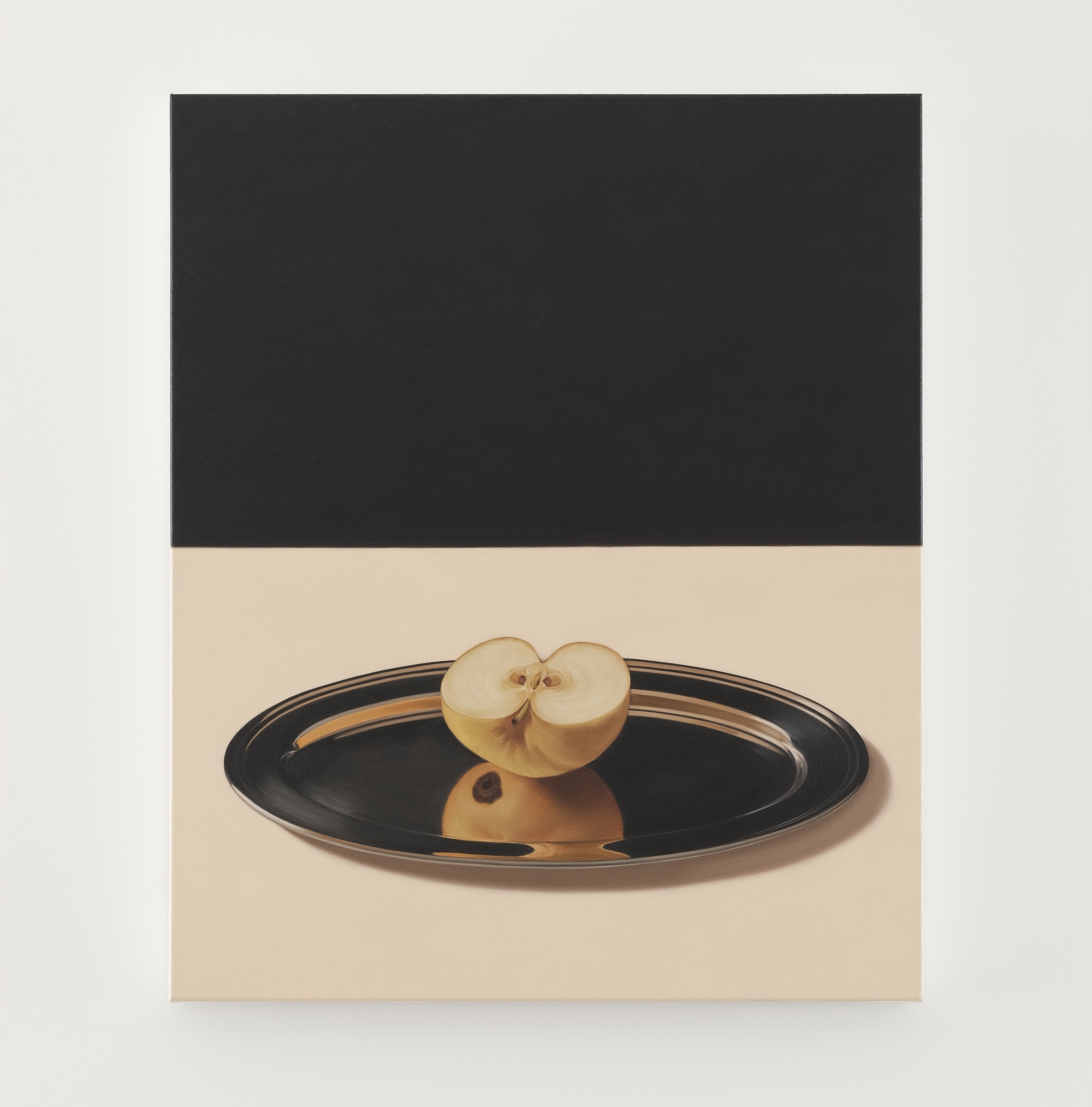
Eve was absolutely a conscious reference. There are several nods to Eve in the Garden throughout the works, specifically a still life of an apple with a hint of rot. Many of the scenes also place the subjects in this tense space between the natural and artificial worlds, the Garden and the suburbs.
RA: You seem to draw a lot of influence from external media—including historical paintings and literature—in your work. Has this always been the case?
MS: Yes, absolutely. I like having a framework to bounce ideas off of and to pull inspiration from. I like the idea that my work is a continuation of a larger dialogue, while also subverting it in some way through the context of who I am as a painter.
RA: Tell us what sin and shame mean to you in relation to occupying a feminine body. Does this body of work feel more focused on the external or internal experience of “sin” as applied to the feminine?
MS: I went to Catholic school through high school, and while I wasn’t raised in an especially religious home, it wasn’t until well into adulthood that I realized how profoundly that experience shaped my sense of self and my understanding of morality, perfection, pleasure, selfishness, and womanhood.
I would say the work is concerned with both the internal and external experience of sin. These foundational moral narratives are deeply embedded in our culture; they shape how we move through the world and how the world, in turn, responds to us, especially when inhabiting a feminine body. I was interested in the quieter, more ambiguous behaviors that might be perceived as sinful, rather than obvious acts of wrongdoing, highlighting how ideas of sin and virtue differ across genders. Each viewer might respond differently based on their own beliefs and values; maybe some will question whether any sin was being committed at all. I wanted to position both subjects and viewers within shifting roles of judgment and complicity.
RA: What draws you to subtlety, stillness, and softness as guiding visual choices?
MS: I think it’s very much my personality. It would feel unnatural for me to work in a loud, dramatic, or abstract way. There is a strength to quiet work that can be underestimated.
RA: Do you ever find yourself frustrated in the studio with the amount of technical control you exercise over depicting such untenable and visceral things as emotions?
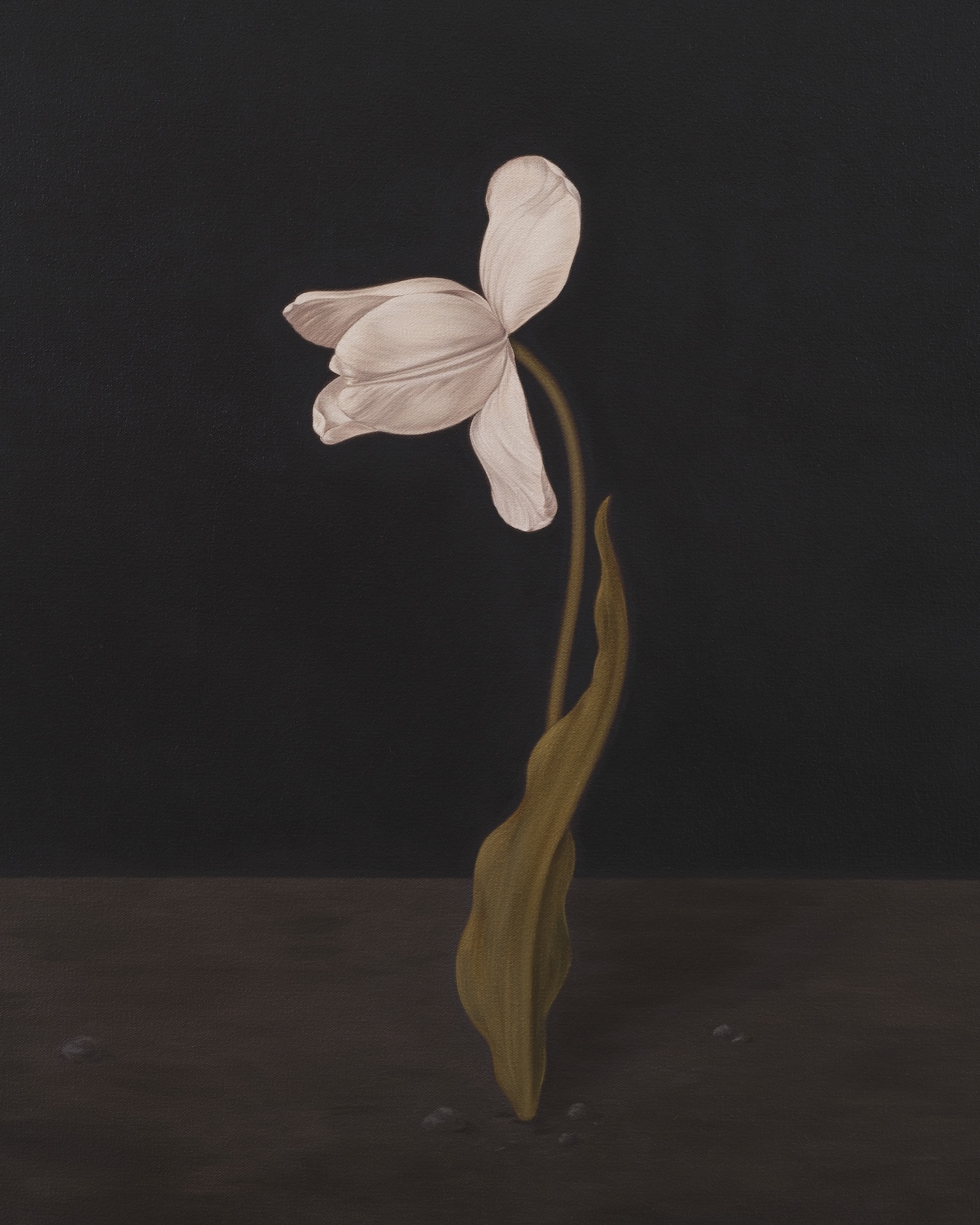
MS: Not very often. The emotions I tend to depict are more quiet and seething. The stillness and discomfort of clarity lend themselves to that. My goal is always to distill an emotion or experience down as much as possible; I just put more pressure on myself to get the imagery right.
RA: Where do you see Queen of the Neighborhood! departing from your other two solo shows—Swan Dive and I’ll Be Your Mirror—in its subversion of the “feminine ideal” most?
MS: I see each show as a prequel to the previous one, with the three bodies of work forming a reverse timeline. Queen of the Neighborhood! looks at the cultural narratives, archetypes, and projections that create the feminine ideal. I’ll Be Your Mirror moves into girlhood, exploring how those expectations become internalized and how identity forms through being seen, judged, and shaped by external perception. Swan Dive examines the consequences of those expectations in womanhood, and the battle between perfection, self-sacrifice, and agency.
Queen of the Neighborhood! departs from my previous shows by moving beyond the individual experience of navigating the feminine ideal and begins to examine its construction. In addition to acting as a direct visual guide for subverting the feminine ideal, the work also highlights its construction. It is a kind of villain origin story, not of a woman becoming a villain, but of the cultural narratives that create one.
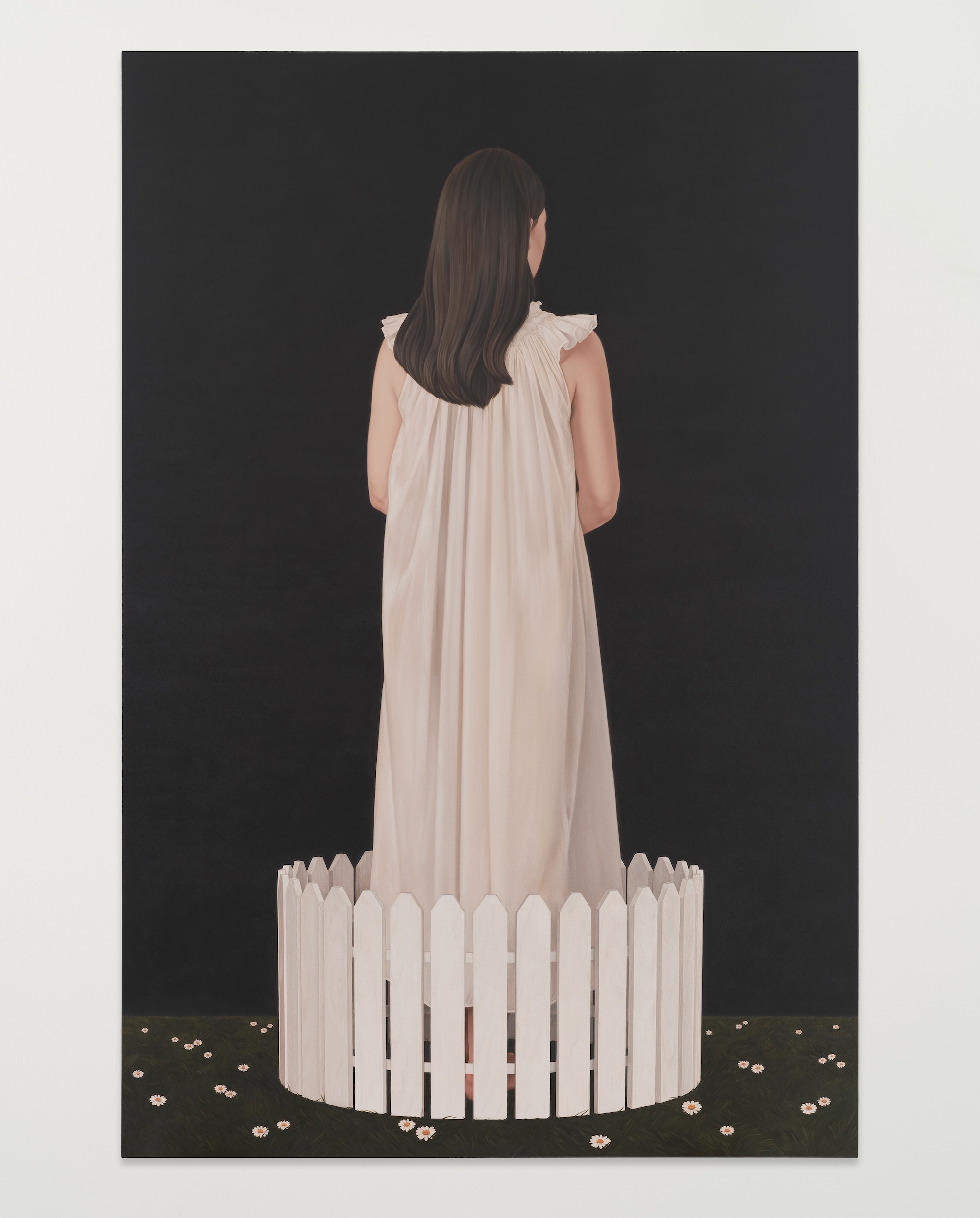
RA: Many of your paintings reference not only womanhood but girlhood specifically. Where did your first urges to create come from in your own girlhood, and what did the work look like? Do you see those first creative impulses reflected in this newest body of work?
MS: I was always reading when I was a kid and thought I might want to be a writer, but that didn’t fit. I started drawing and found a way to express the things I didn’t have the words for. I was also obsessed with building fairy houses and clay figurines, creating small worlds and narratives. I remember being homesick from school one day, and The Virgin Suicides was playing on TV, which, looking back, probably opened the door to my interest in the feminine lens and complexities of girlhood. In college, my work began to solidify around themes of identity and experience, and I can see a direct connection between those early influences and explorations and the work I’m making now.
Meghann Stephenson: Queen of the Neighborhood! will open at Half Gallery, New York, on September 9th, 2026.
This interview has been edited for clarity and length.