.webp)
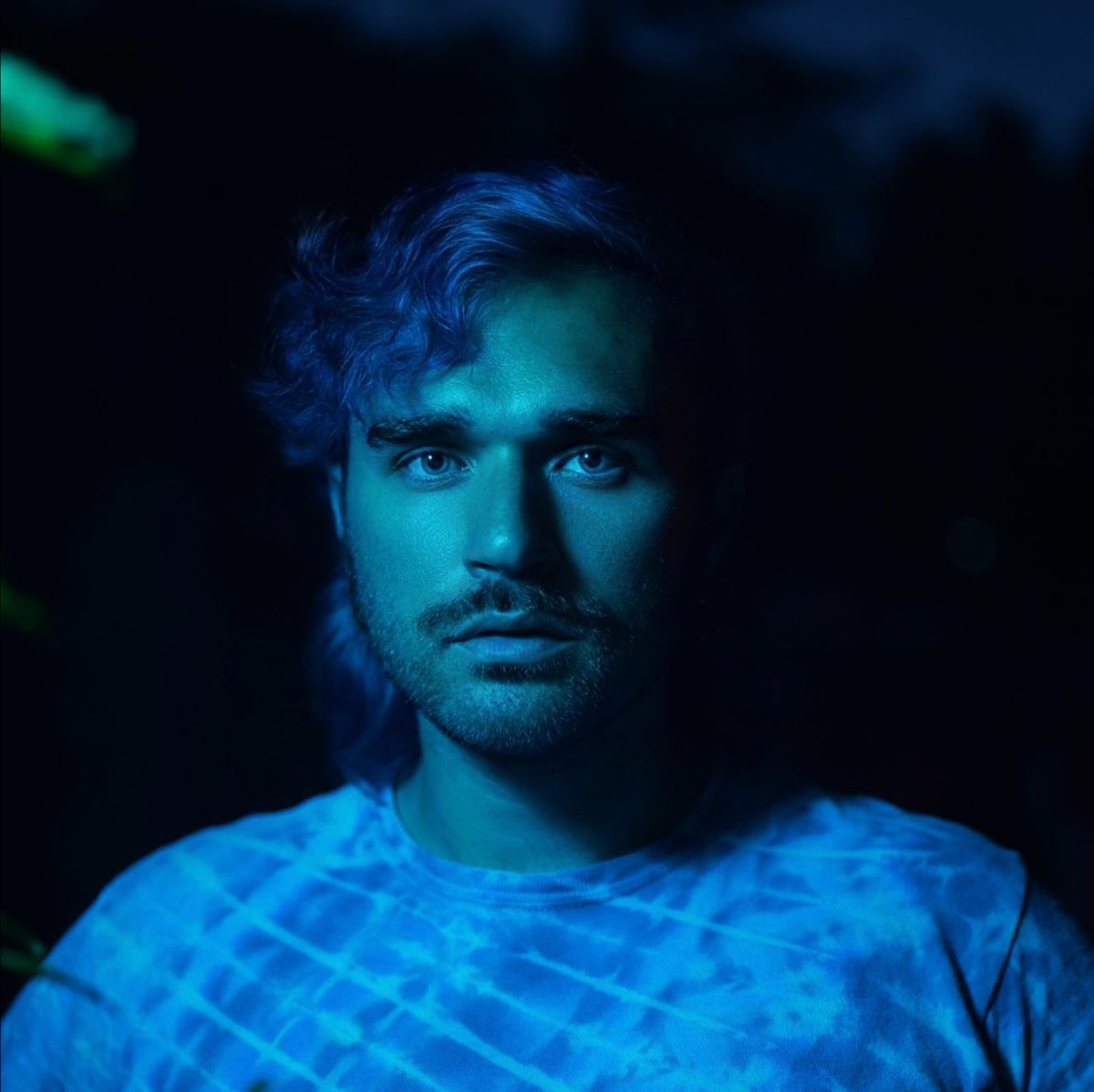
In Conversation with Yvonne Shortt
Interview
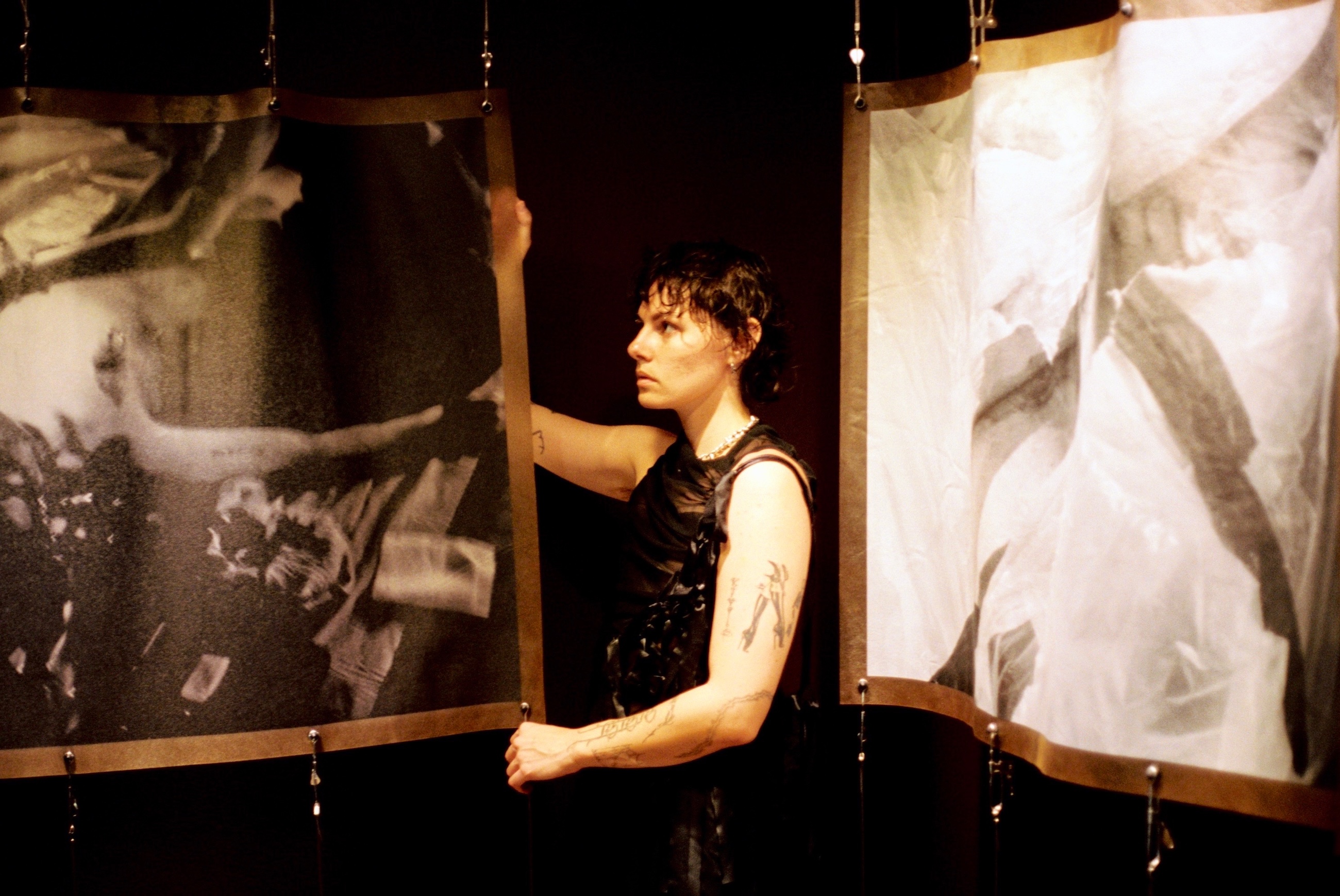
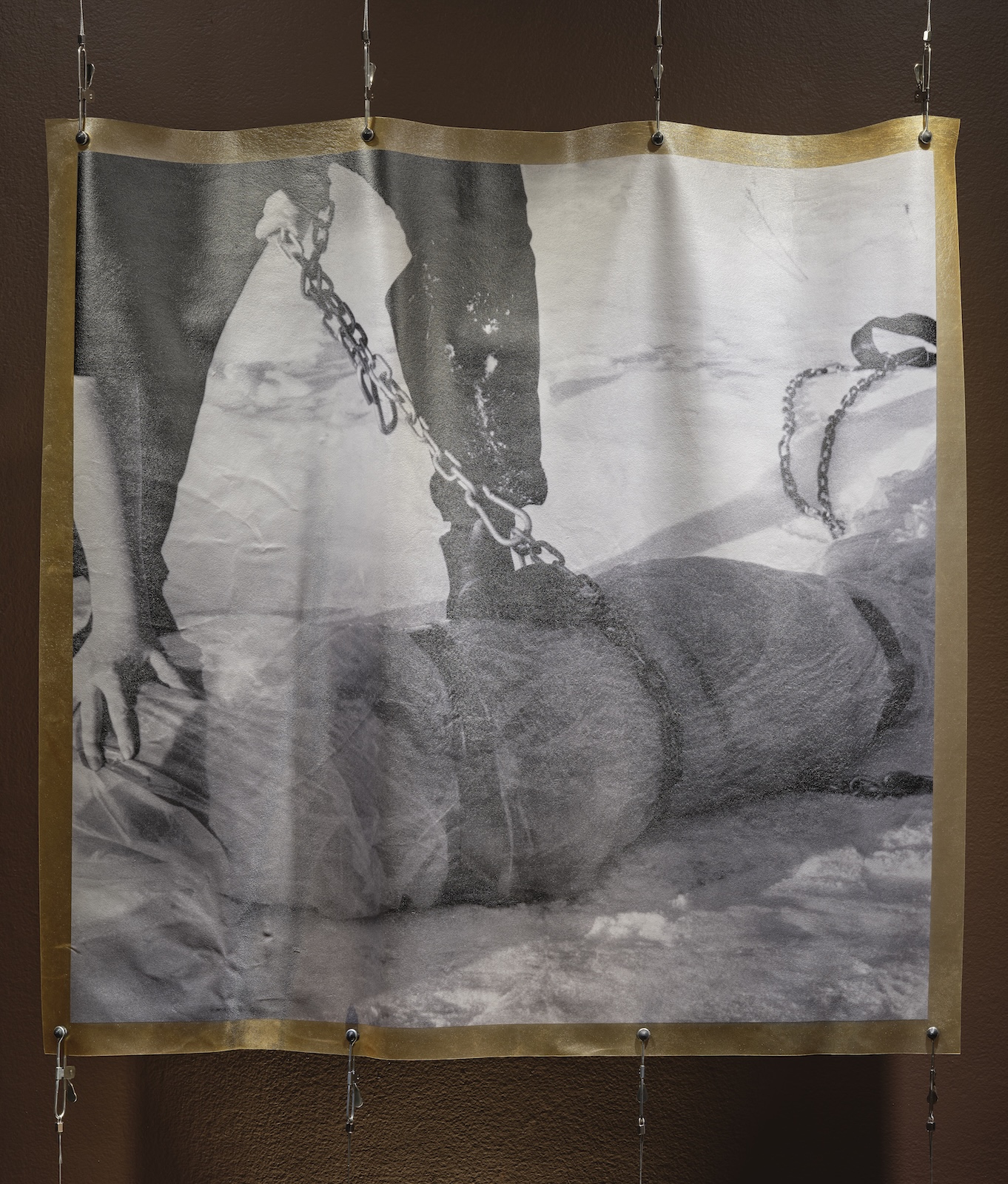
Through a multi-textured practice that includes endurance performance, access consulting, and sculptural assemblage that reframes quotidian medical equipment as a site of charged biopolitical engagement, Mae Howard explores the implicit tension that occurs within relational systems and through deviant contact encounters. In Howard’s debut solo show between the skin and flesh, a thing, six transparent horse leather hides are affixed with airline cables and printed with images of the artist’s tattooed body in various states of bondage, implemented by a revolving network of unidentifiable coauthors/coconspirators/cotops. Here, the many resonances between photochemical development and leather treatment are stretched, grafted, and superimposed over one another. These transdermal provocations make for an assortment of intersecting planes and destabilized surfaces that embrace sociosexual abstraction, crip time, and how leathersex may inform the ethics of collaboration and interdependence.
Kerosene Jones: Your practice across overlapping disciplines shows both reverence and critique of leathersex legacies. Could you speak more to the presence of that interplay or slippage in this latest body of work?
Mae Howard: Leather history, in particular bondage, is so intertwined with the overlap between the medical and carceral industries. I'm often in the studio wondering, “What does it mean to produce imagery or sculptural objects that inevitably invoke this cultural memory?” At the same time that I was making much of this work, there were countless images of wrapped bodies coming out of Palestine. What does it mean to have a show about BDSM when there are people being bound, kidnapped, and tortured by ICE? These are considerations that haunt me at all times.
At the same time, my Leather community and my relationship to leathersex have saved my life—playing with sharps in particular, as someone who has been subject to medical neglect and torture since I was five years old. I have also been shaped by writers whose work contends with questions of racialization, sensation, voyeurism, and witness. This includes the work of theorists, from Jasbir Puar's research around the proliferation of sexually violent images from Abu Ghraib in Terrorist Assemblages, to Amber Jamila Musser's analysis of Bob Flanagan and Audre Lorde in her book Sensational Flesh. The postulation that I'm trying to make with this show encompasses a rejection of me as a solitary artist. The vulnerability and presence required to submit in the ways I did for both scenes in this show were rooted in deep relational effort and trust. Those qualities are inherent to the kind of world-building we need to work toward liberation. This show was made with M. Celeste, Jess Dayan, Blue, Fluent, Gabriella N. Báez, among many other people who are named in the acknowledgments. The acknowledgments are very long for a reason, extending towards Leather community, those who have offered wisdom, and those whose work has been incredibly influential to my development as an artist. The relationships Leather can offer us provide a template for approaching our lives in a more autonomous, less dissociative way.
.jpg)
KJ: The plurality of the word "operational" emerges often in your assemblage of materials, both in its perceived aura of functionality, as well as its usage to signify and trouble the surgical gaze. These affects are purposefully conflated or blurred not only in the materials you use, but also in how the sculptural objects ultimately "perform." What attracts you to this particular convergence?
MH: In this assessment of "operational," I think there is a third quality: the horse hides themselves also come with an entire operation and a political economy. I know that the hides come from Italy, but the process around their production is actually quite opaque. The leather distributor doesn't know their origin story, and something about that lack of disclosure speaks to a capital "O" Operation. What sorts of labor and resources are required to produce these hides and transport them to New York? We lit the show very deliberately to address this operational question. The show is slightly warm, but more than anything, it's mostly spotlit. I wanted to avoid the lighting people go to when talking about disability or medical contexts: operating room lighting. We used spotlights to invoke reverence and reinforce the work as sculptural objects, not just photographs on the wall.
The use of the clamps and the airline cable also attends to this question of "operational." I was invested in letting the hides exist on their own terms, rather than subjecting them to the pretense of being solely Leather accouterments. I’m often trying to move through questions of opacity and transparency around sadomasochism: when is something better left unshared? I find myself drawn to the banality of Leather and BDSM—the hyper-specific moments of exchange that are felt, but sometimes not seen. It's the same as the disability question in the art world. What does it mean to reject being a "disabled artist”? It’s not to say that I’m not disabled and an artist, but I don't consider my work to be in disability art history in the same way, because I'm actually thinking more so about debilitation. I am interested in endurance performance and long-form BDSM scenes as a form of autonomous debilitation.
I say this as I'm looking at Mona Hatoum's Performance Still (1985), where she's walking on the streets of Brixton with the boots tied behind her. It's a poster that I've had in my room since 2016. It's been in every bedroom that I've had since I was a sophomore in college. I think about it constantly, because what does it mean to invoke leather as a materiality and as a politic?
KJ: The phrase "surface tension" comes to mind, in the tension enacted by your material and theoretical interventions, and also in the shadow economies roiling beneath the surface of leather production. How does your approach to skin as a concept and as a medium externalize these tensions?
MH: My fascination with skin, flesh, and body also has to do with the extension of sensorial reality: the photographs printed on the hides require the horseskin itself to shapeshift in form. I have this somatic flattening ritual with them, where I flatten them with my body and with books. Then they go to the printer. They're cut down to size in a certain way, and then when the ink enters the pores of the skin, because horse pores are quite large—imagine your own face and blackheads with heat or with cold, but with a much larger body—the pores oscillate back and forth between being open and being closed, depending on heat, light, and the other elements that they’re being subjected to. Throughout this transformation, the horse skin retains both its transparency and opacity at the same time.
One of my collaborators, M., actually uses the phrase “surface tension” to describe their scenes on a physical and psychological scale. The work we make together often centers on my body as material, and its texture, tension, and sculptural form influence how a piece is meticulously crafted.
KJ: When writing about the show, Tamara Santibañez states of the printed images that "the blurred closeness of the body provides a limitlessness." Do you feel your disinterest in an identitarian politic corresponds with this assessment? Does this impulse manifest in the cropping of the printed images and the relative photographic anonymity of you and your collaborators?
MH: Absolutely. We're in a really precarious moment where identity descriptors in front of artwork put people in a box that then reflects or creates these containers through which the work is understood. The number one descriptor that's put with my work is disability, but this work is not about disability. I am a disabled person, and my disabilities were taken into consideration during these scenes based on the ways that I can and cannot be in bondage. But it's not about me as a disabled artist. It's not even about "care work," and it's not even really about dependency, but rather interdependency and interrelationality. Your point about limitlessness and boundlessness goes back to opacity. My collaborators and I don't need people to understand what's going on in the scene. The importance of this work is not for someone to come look at the wall and be able to identify what happened in the scene in chronological order. I don't want the show to be about the spectacle of S&M or the spectacle of disability or transness. I wanted it to be about the engagement of the materiality, texture, and shadow, not pain and submission. I’ve found that this refusal of narrative can often make people feel more uncomfortable than the content itself.
I hope the show uses these forms of opacity to push the viewer a little. To talk further about the sensorial aspect, while the work can't necessarily be touched in the show, I made physical invitations with parts of the leather hides cut and stripped into little bows so people could literally feel the object. My friend agustine zegers made a scent of hide that really conflicts with the smell of the horse hide in the space, so it creates this interesting olfactory contradiction in the room, to the point that it's nauseating and disturbing. As someone who's vision-impaired, partially deaf, and uses a wheelchair, maybe this is where disability actually comes into play—in the methodology.
.jpg)
KJ: How do you feel about the notion of pain, whether chronic, habitual, or otherwise, as a shared archive? Is it important for you that the show engages with the intersubjectivities of pain as an isolated but also universal experience?
MH: My interest in pain, and specifically with sharps, is autobiographical in a way that is actually kind of uninteresting. I think what’s interesting is that my body, and everyone's body, is constantly in a state of metamorphosis, shedding, and molting. There are so many words that we use to describe our temporal relationships to disability or debilitation that are limiting in our conceptualizations of pain. For me, pain as an archive means actively thinking about the textures of submission. As someone who's been a sharps bottom for many years, my ability to do certain things has drastically changed. My skin has changed now that I’m older, and it was always different because I have EDS, so my skin is super stretchy and takes scalpels and needles differently. As a person whose body was medicalized at a very young age without my consent, pain as an archive is a relational question, not a solitary one. Popular culture, and even psychoanalysis, at times has us computing pain as something that's deeply individual, and that detour is unnecessary. When pain is understood as relational and environmental, it opens up the ways in which we can actually show up for each other.
This interview was edited for clarity and length.
Hero image credits:
Portrait of Mae Howard by Ry Noor.
Mae Howard, Material. III, 2025. Transparent horse leather hide, film photograph, pressure clamp, airline cable, cord grip connector, magnets, crimping loop sleeve, 35 x 42 inches. Made in collaboration with M. Celeste and Jess Dayan. Photographed by Jess Dayan.
Mae Howard, Material. I, 2025. Transparent horse leather hide, film photograph, pressure clamp, airline cable, cord grip connector, magnets, crimping loop sleeve, 32 11/16 x 48 inches. Made in collaboration with M. Celeste and Jess Dayan. Photographed by blue.