
Editors' Selects: November 2026
Review
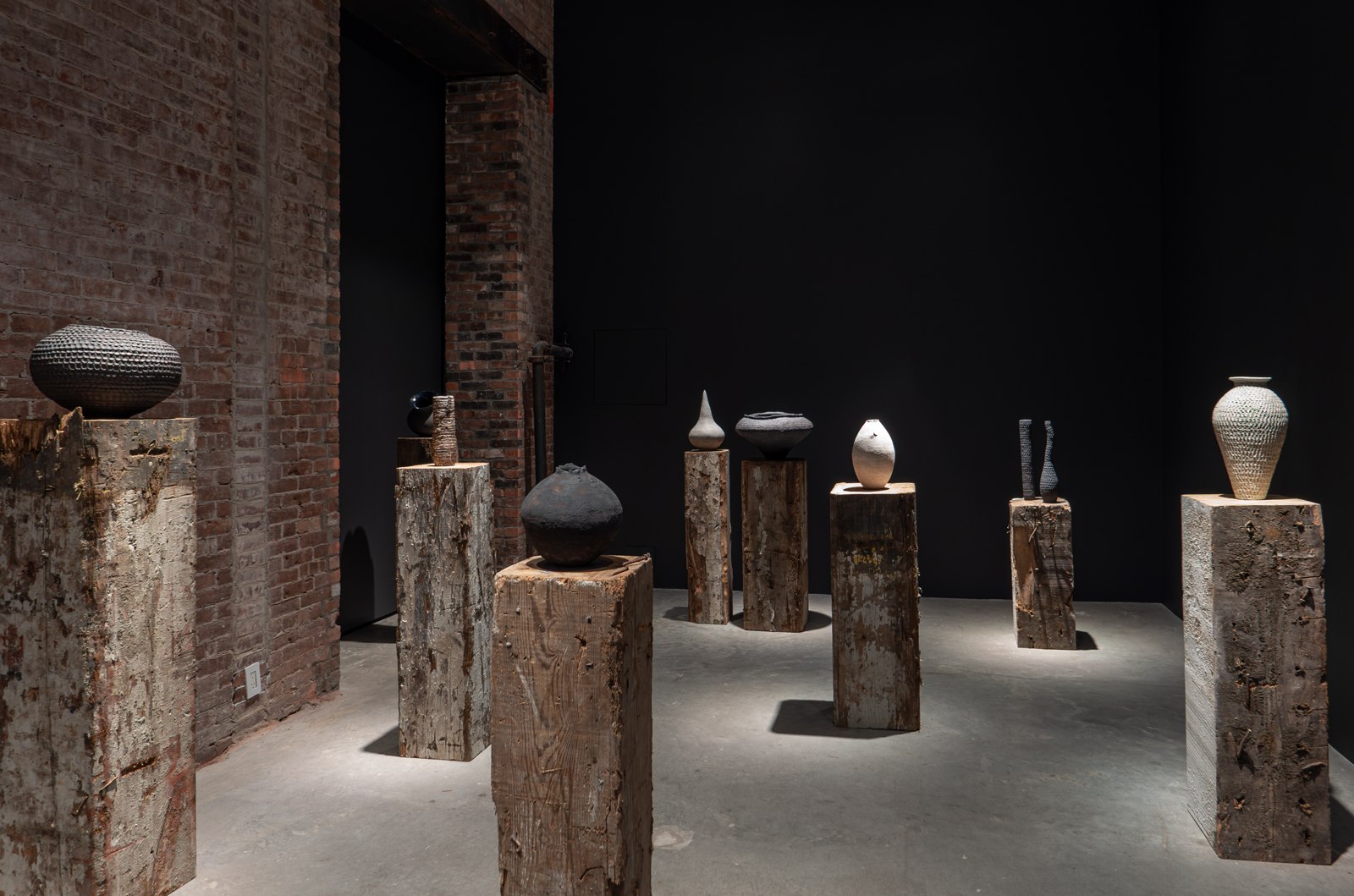
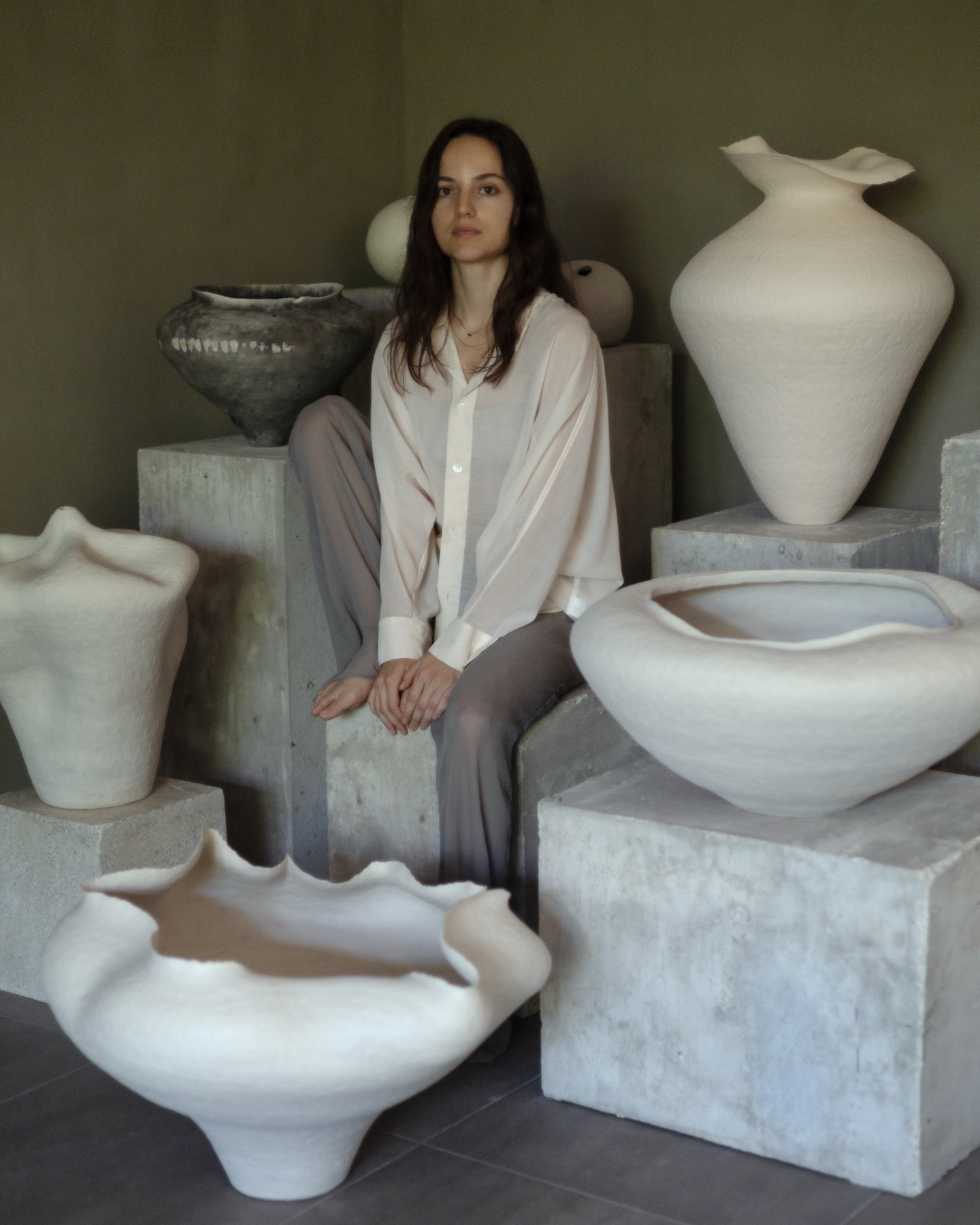
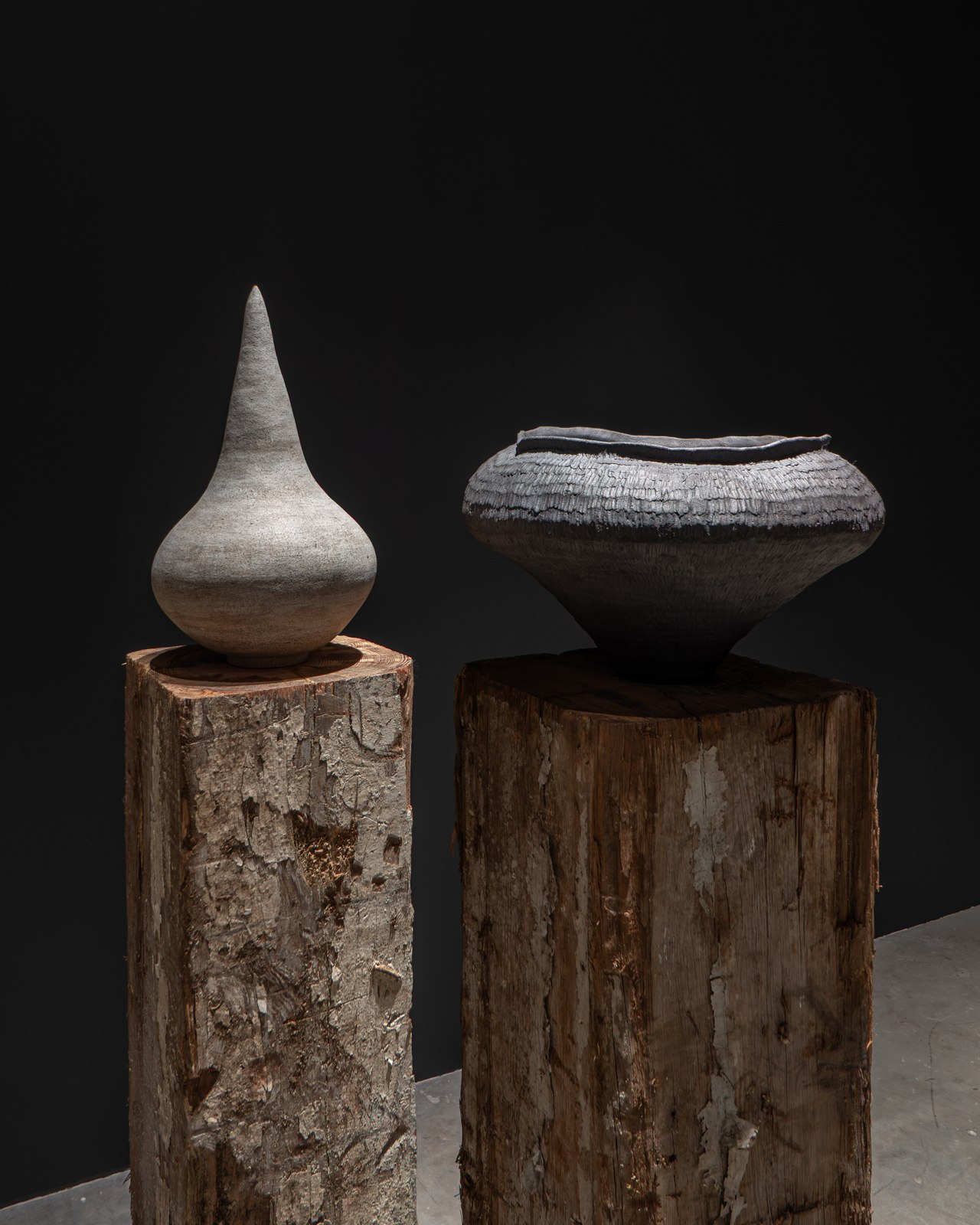
In Lo que saben mis manos (What My Hands Know) at Sofia Sominski Gallery, Ena Boskovic’s work envelops the viewer in immense quietude amid the never-ending rapidity and noise of New York’s urban landscape. Against a dark room and an exposed brick wall, Boskovic’s monochrome ceramic vessels sit atop raw wooden pedestals, emphasizing texture, process, and material monumentality despite their intimate scale. Through meticulous coiling, the artist not only embraces the imperfection and asymmetry of handmade artifacts as art objects, but also treats the clay as an interface through which the body dialogues with nature, which she describes as her “biggest teacher.” On view through December 5, 2026, the exhibition also fits neatly into Sofia Sominski Gallery’s curatorial scope, which investigates how various topologies, ideologies, and material constructs affect our understanding of the urban environment.
Xuezhu Jenny Wang: Your practice focuses on materials’ adjacency to the body and a sense of deliberate slowness. What’s your relationship to precision and tedium? How do you maintain this intentional slowness when the world around us feels so overwhelming and accelerated?
Ena Boskovic: Working with clay means constant contact—the material is always on my skin. It has asked me to develop my sense of touch, a way of understanding what my eyes can’t see: the thickness of a wall, the moisture of the clay, and most importantly, when to stop. For me, precision is how carefully I build. I trust my intuition a lot.
The work is physical and repetitive, and not only the coiling. Running my own studio means preparing clay, making, drying, firing, cleaning, and starting again. There is always something to do, and it moves in cycles. I don’t find it tedious. The repetition quiets my mind, and I’ve come to value that.
The materials also set the pace. Clay dries when it’s ready, and a kiln can’t be rushed. I live in Tulum, between the sea and the jungle, and I keep my days simple, with no social media and little time on screens. The slowness in my work comes naturally from how I live.
XJW: I’d love to learn more about how you achieve the finish of your pieces. Many of them are unglazed, while you've recently developed a few that are colored with smoke. Can you tell us why you chose this kind of finish, and what material experiments you're working on currently?
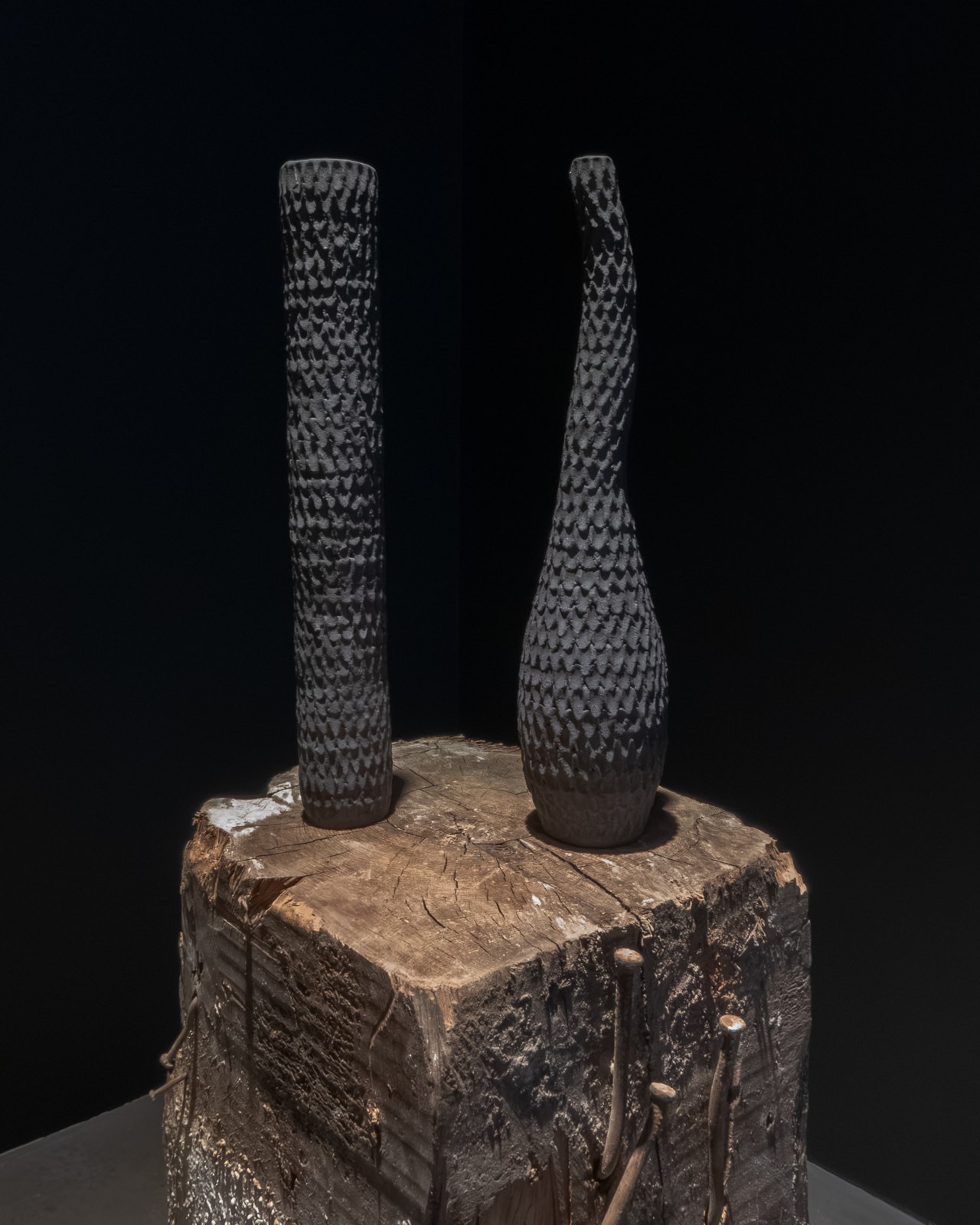
EB: Most of my sculptures are unglazed, which keeps them close to the earth they come from. I brush on many coats of black or white terra sigillata, and when applied thickly, it cracks into fine lines as it dries and again in the kiln. I leave the cracks. I’m a little obsessed with them right now: they make a surface feel alive, like skin or dry earth.
The smoked pieces are a different technique. They are Raku, very hot and never fully predictable, so each piece is the record of an event that can’t be repeated. I smoke them with dried local plants, including sargassum, which we had so much of this year.
Right now I’m experimenting with ashes from the vegetation around me. I find it fascinating how fire turns leaves and branches into ashes, and ashes into glaze. Sometimes, when fired in the kiln, wood and plant ashes give colors remarkably close to those of the living plant itself. That alchemy of how the mineral memory of the landscape survives the fire is a mystery that never leaves me.
XJW: Are your pieces functional? What’s their purpose if not to hold?
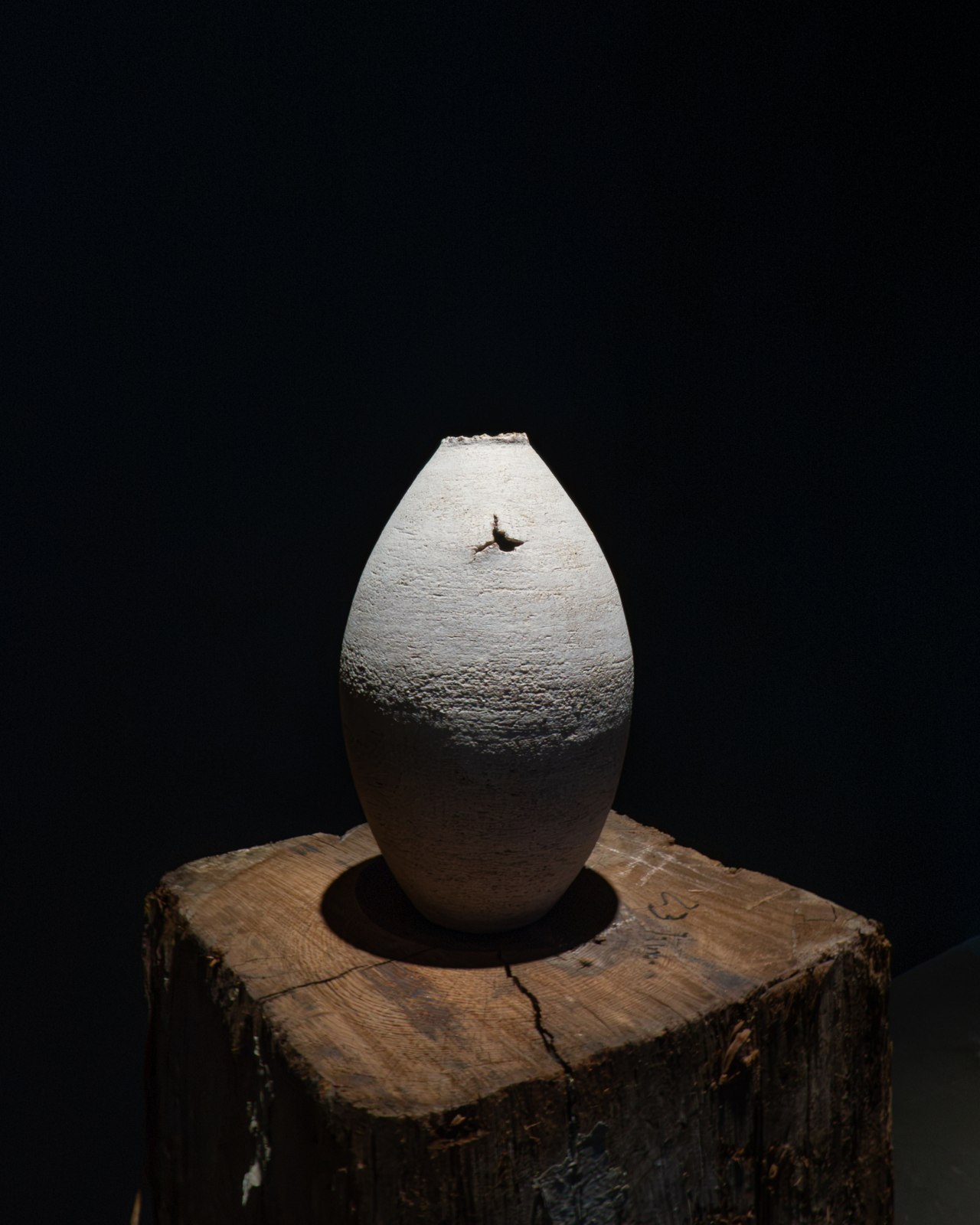
EB: Some of them could hold something, and many can’t, on purpose. When a surface is cracked, or when a form is open, the vessel stops being useful in an everyday way. What is left is the form itself: the curve, the opening, how it sits in a room. I keep coming back to the vessel because it is one of the first things people ever made, and because for me it’s a feminine shape: a circle, a womb, a beginning. If it isn’t there to hold things, I’d say it holds space and whatever the person looking at it brings.
XJW: You have said that nature is your biggest teacher. What are some lessons that nature taught you? Do you think it’s easy to overlook our connection to the environment today? Are there any other sources of inspiration that may not be immediately identifiable behind your work?
EB: Clay is earth, and earth is also what we are made of, so working with it feels less like using a material and more like a conversation with where we come from. Tulum is full of cenotes, which form when limestone slowly dissolves and collapses. Living near cenotes changed how I see cracks and openings: they are part of how things form, not mistakes. Nature also taught me patience. It doesn’t hurry, and it doesn’t draw lines between things the way we do. The image I come back to is mycelium under a forest floor, an invisible network of support.
Some of my inspiration is less visible, coming from writers I love. Mary Oliver is a big one for me, especially her poem where she sleeps in the forest and feels the earth take her back. I also read Rilke, whose idea of living the questions fits how I work in the studio, and John O’Donohue too.
XJW: Do you have any rituals when working in the studio?
EB: I work alone and in silence while the sun is up, and I like hearing the birds around the studio. I begin by lighting a candle and burning some incense, reminding myself what matters, and to stay curious and playful. Before a firing, I pray and make an offering to the fire, since it’s the one part of the process I don’t control. At the end of each day I clean the studio completely. I spend most of my time there, and I think of it as a temple.
XJW: What kind of relationship do you want collectors and viewers to have with the work?
EB: I’d like people to slow down with the work. These pieces are made slowly, by hand, and I hope they’re looked at the same way: following the marks across the surface and noticing the seams where you can see how a vessel was built. Mostly I’d like the work to bring calm into a room, as a small homage to nature, without any heaviness. I show them on rough wooden blocks. Next to something so solid, the fragility of the sculptures reads as strength.
This interview has been edited for clarity and length.
Ena Boskovic: Lo que saben mis manos (What My Hands Know) is on view at Sofia Sominski Gallery, New York, from October 30 to December 5, 2026.