In Conversation with Luke Shannon
Interview
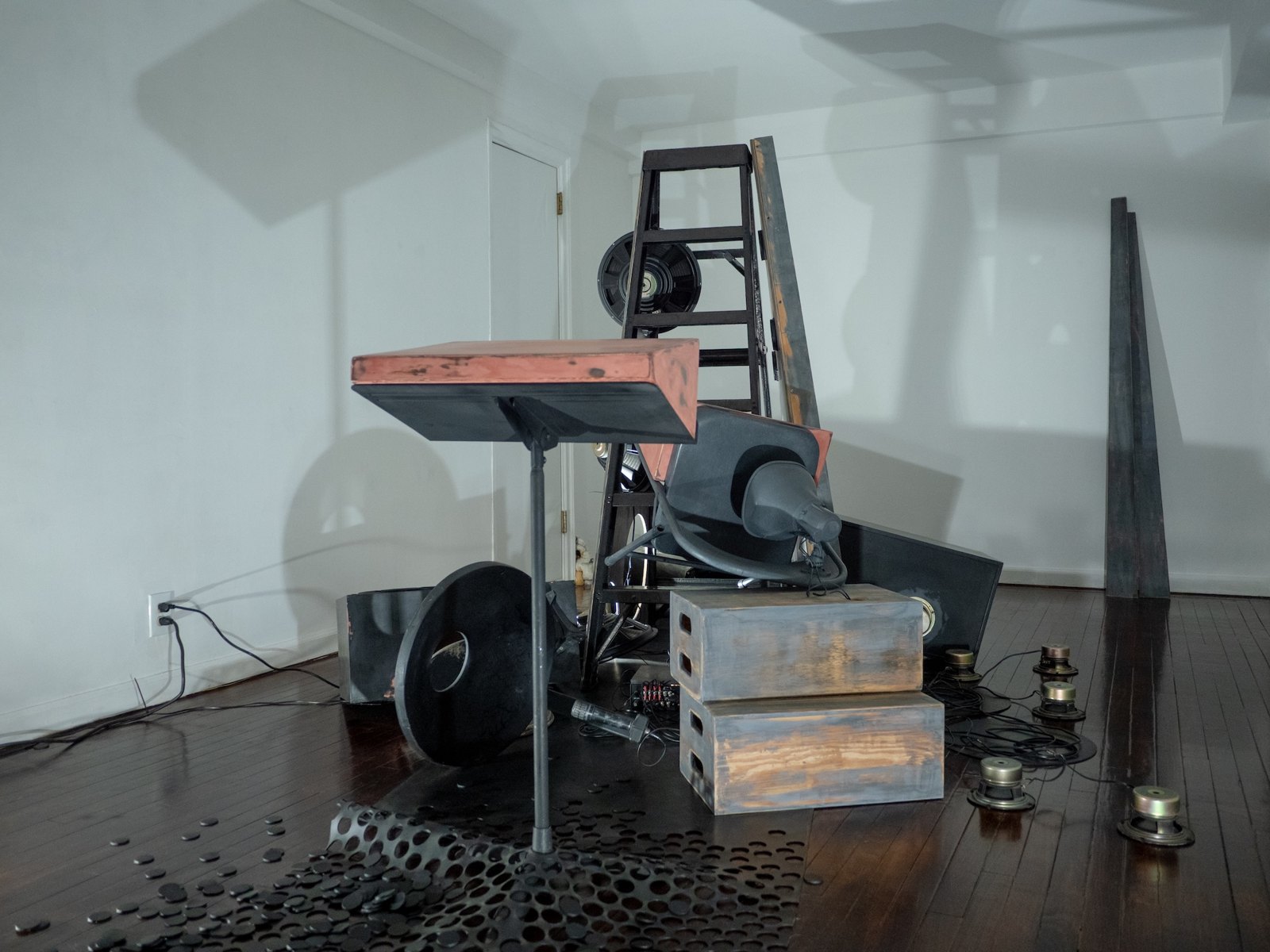
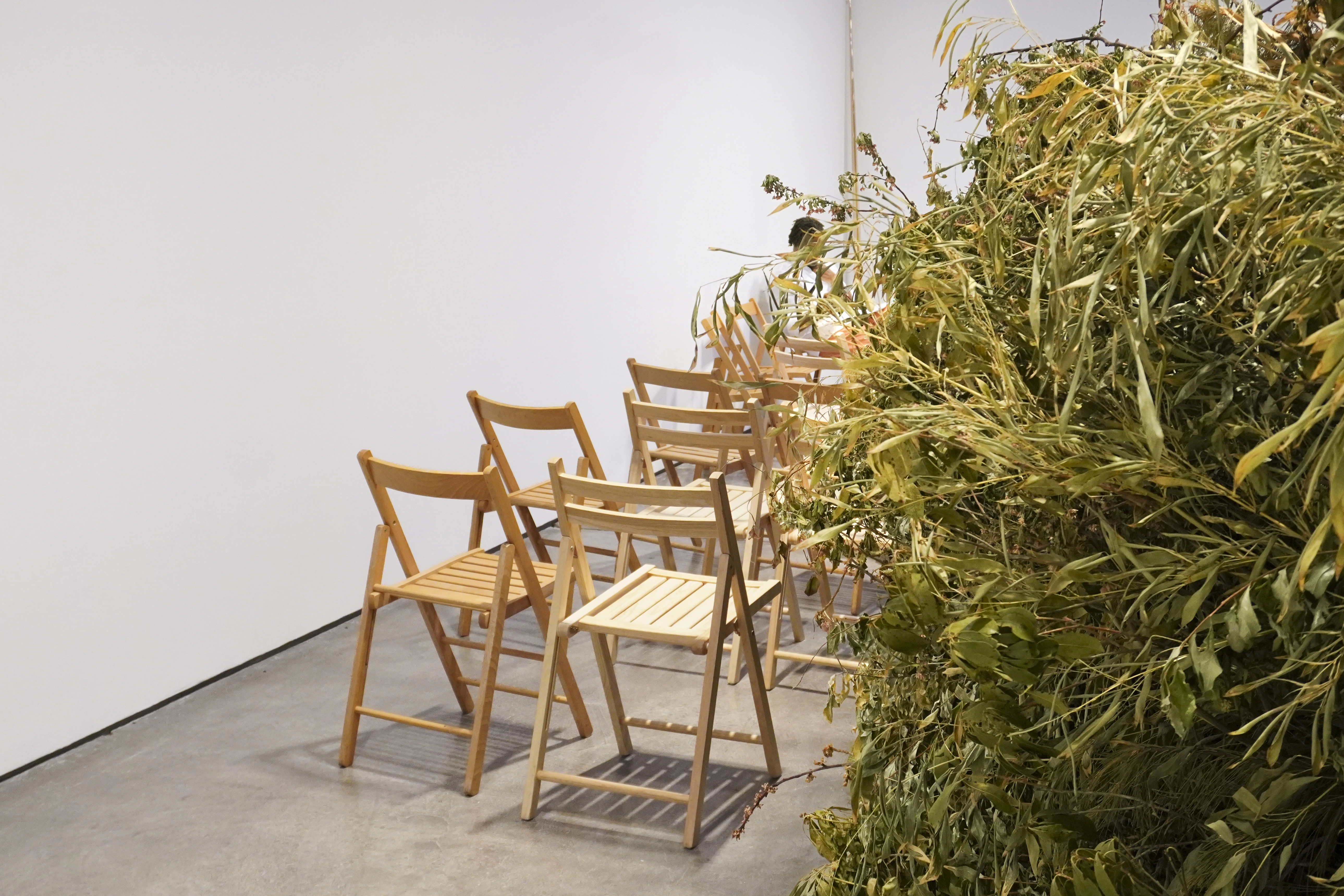
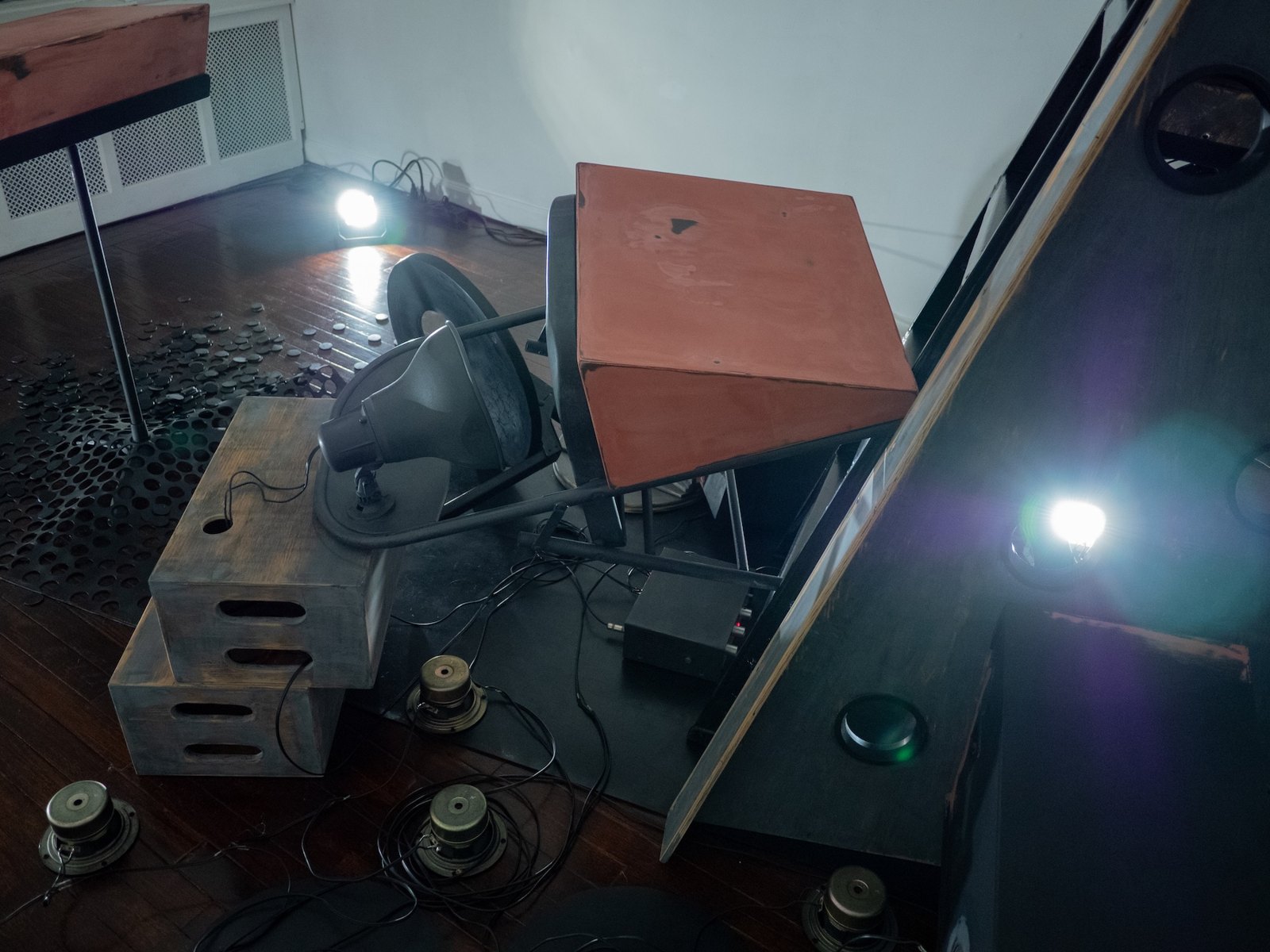
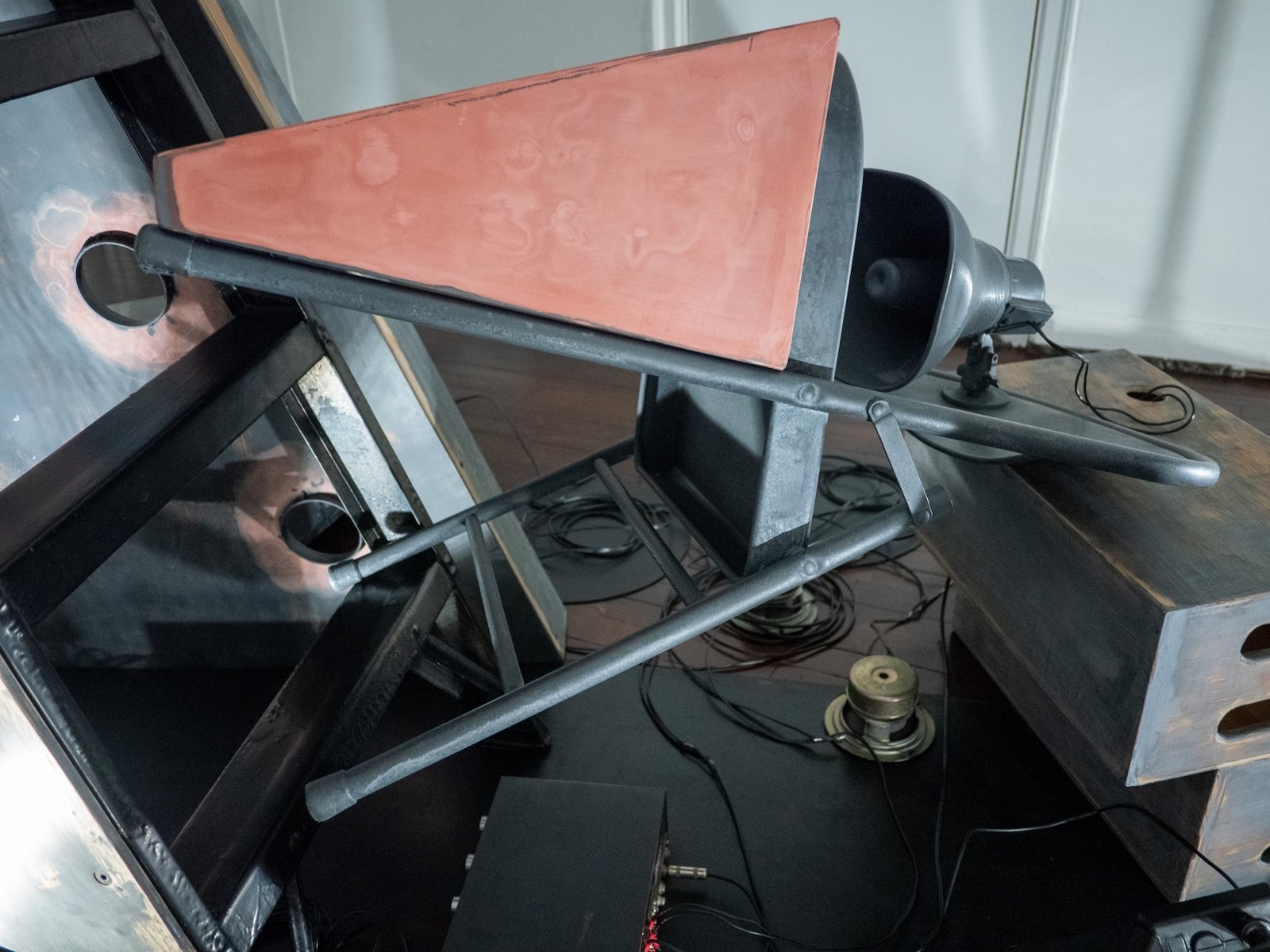
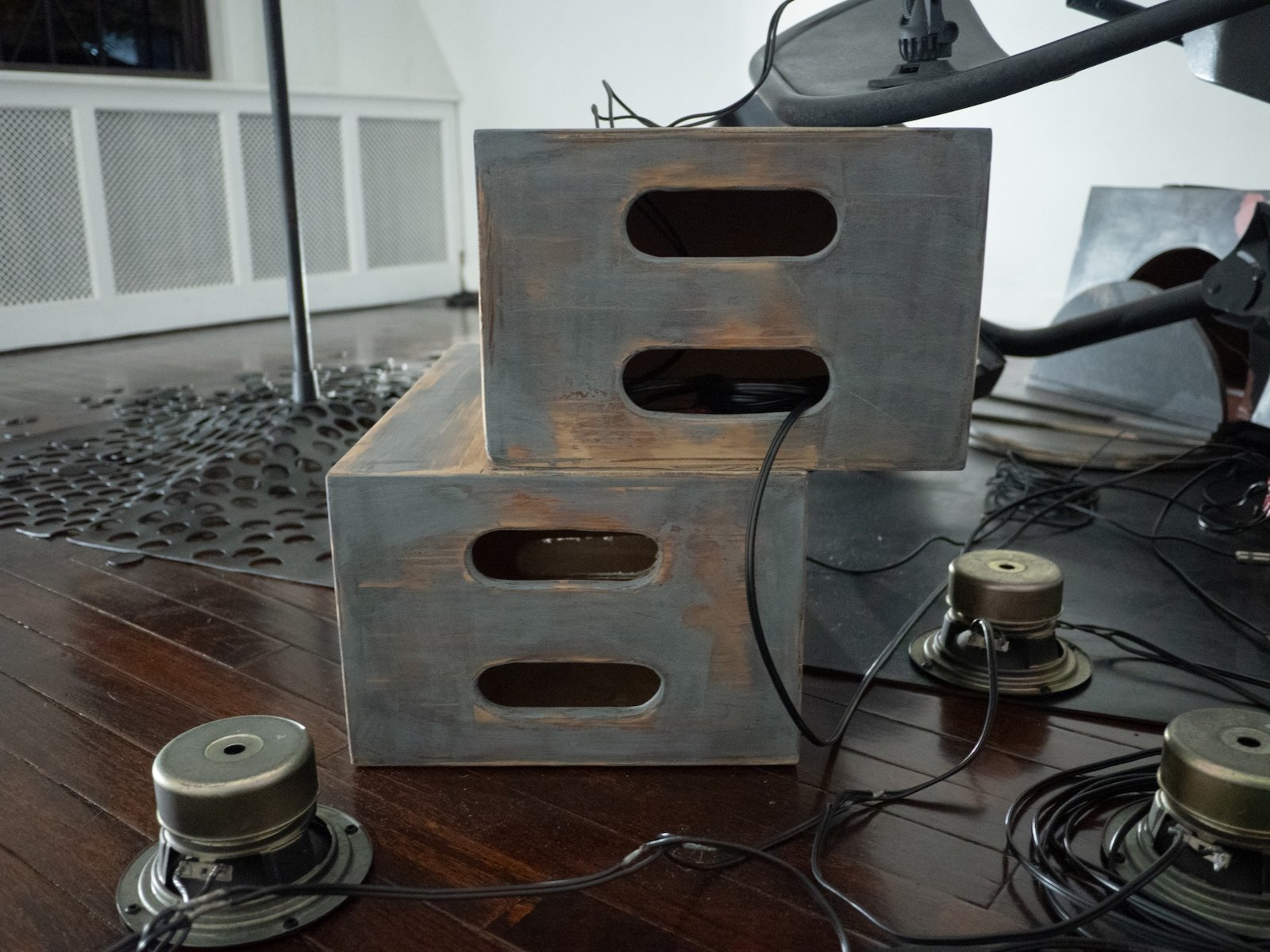
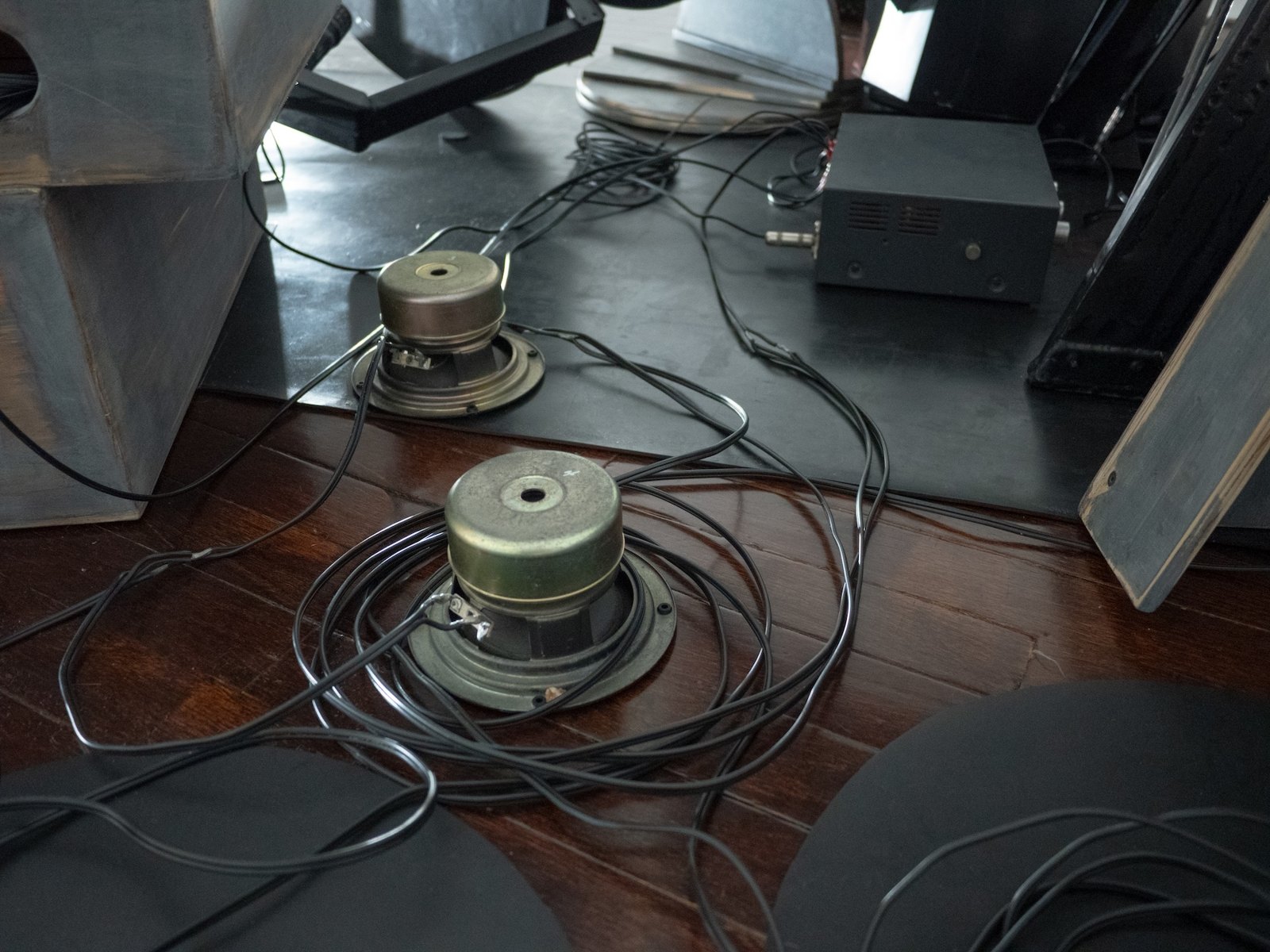
A public address speaker points into the seat of an overturned chair. Disembodied speakers face the floor, and a music stand becomes a podium. In Ann Messner’s raft (2014/2026), familiar objects retain associations with their everyday uses, even as their arrangement redirects those associations. Together, they construct a language of address, reception, and attempts at repair. A slight hum feeds back through the room, its response to surrounding sounds difficult to predict. The title gives these encounters a greater sense of urgency, inviting questions about what holds us up, who is being addressed, and what happens when familiar structures can no longer be relied upon.
Messner began the work in her Williamsburg studio in 2014, before losing the space and packing it away. Completed this year, raft occupies a small room at Echo Extra Echo, an apartment gallery on Manhattan’s Upper West Side. Visitors pass through the living space to reach it, while lights illuminate the work for passersby looking through the street-facing windows on a quiet residential block. This setting places the work between domestic and public space, giving its questions of support and instability a particular location. Repair runs through the conversation as a way of working with objects and finding new relationships among them. Returning to an interrupted work, Messner reconstructs its meaning through making, writing, and listening to what others bring to it. Her experience of working collectively extends the conversation toward the people who encounter raft, whose interpretations and presence enter its changing situation.
Eden Chinn: The speaker, chair, and music stand are recognizable, but the way you arrange them changes what they suggest. How do you think about that language?
Ann Messner: I take objects that are simple and have a certain use. You know what a speaker is, you know what a speaker does. That’s a lot of language, right? Then I take it and structure it into a different type of sentence or situation. It starts to become something else, but it never loses its original identity.
I work slowly, methodically, back and forth, playing with different language configurations. It is language because the objects are recognizable. Everything in here can be named.
EC: That process seems to involve both solving practical problems and making new associations. On either side of the ladder, pieces of wood have circular cutouts fitted with slide-carousel locking rings. How did you arrive at those rings and the pink filler around them?
AM: They’re Kodak carousel locks. I needed something to fit in the holes so I could finish the piece. They fit very well, so I solved that problem. But they’re also signifiers. With the speakers, you think about sound. The carousel locks brought in this idea of the visual slide, the image. I didn’t know a month ago that I was going to use slide-carousel locks. But once they became part of the work, they brought in those associations.
The pink is the color of the material, an auto-body filler. Historically, the catalyst was dark red. Now that’s been replaced by this horrible blue, but I intentionally bought some old stock red. I like the red. It’s flashy.
I’ve been thinking about my work as a series of repairs and inventions. I’m going to fix something. I’m going to invent something. I’m going to fix it. It’s going back and forth. Things are broken, things are taken apart.
EC: What was it like to return to raft after losing the studio where you began it?
AM: I had been doing a series of what I call room-based installations. I just filled my workspace. This was the last one I began in that studio, which I’d had for about thirty years.
By 2014, everything around it was being torn down and built up into a completely different version. I was in one of those buildings where you just knew, this isn’t going to last that long. But I lost the space suddenly, and I was forced to pack the work up.
My whole creative life was in storage for almost a decade. I was doing projects, but I didn’t have a studio. Then I got a workspace, and this work moved in as a pile of boxes. I had a printout of what it had looked like, but I hadn’t actually experienced it in years.
When I unpacked it and put it together, it was foreign to me. It was literally in my way for three months, give or take. I had made it, but I wasn’t at home with it.
EC: How did writing help you find your way back into it?
AM: I started writing the text so I could begin to feel at home with the work and understand what I needed to do to “complete” it.
In 2014, I had labeled it untitled (unfinished in studio). But I no longer had that studio. The work is still tethered to that circumstance.
I don’t think it’s a sculpture, and I don’t think it’s an installation. I don’t really know what to call it. It’s a three-dimensional experience. The text isn’t meant to describe what the work is. It helps me think about it. But when you call something something, it conjures things we’ve either seen or directly experienced.
EC: In the text, the “raft” is something you find yourself on involuntarily. How do you understand the relationship between that image, your own displacement, and the associations other people bring?
AM: You find yourself in a precarious situation without necessarily having chosen it. That’s what the text alludes to. There was the precarity of suddenly losing the space I had come to think I owned. I was there so long. I didn’t own it.
Of course I understand that, given what rafts are urgently used for, people immediately connect the work to refugees. I recognize that association, and I’m not disavowing it. But I think the work is much more interior for me. It can work on multiple levels.
EC: You’ve moved between collective projects and the studio throughout your practice. What changed for you through CoLab and The Real Estate Show (1980), and what brought you back to working independently?
AM: I had been trained to think about the individual creative person, the hoped-for genius. Working collectively was revolutionary for me. That hadn’t even been in my paradigm of possibilities.
I’m very drawn to cultural life taking place on the street, and that continued through decades of temporary public projects. But my tolerance for collaboration ebbs and flows. Before beginning raft, I’d spent about a decade doing very direct political work in small collectives. Then I decided to go back into the studio. That’s a different working process. I do think raft is political speech, but it’s different.
EC: Here, that independent studio work enters a shared living space. Visitors pass through the apartment to reach it, while people outside can look in from the street. How does that setting enter the piece?
AM: It’s a situation. There’s a small room, and there’s something very big in that small room, intentionally. The work is commenting on that situation. To be honest, it belongs here.
Everything I do is site-specific. Even if I were doing a gallery show with four pieces, those four pieces would relate to each other. I’ve never worked by just choosing one thing, and then another thing.
Here, you have a living space and an exhibition space, and you have to go through the living space to get there. I understand this is an exhibition, but I’m trying to distinguish how specific it is to this situation: the work’s location in an apartment gallery, its visibility to the public from the street, and the viewer’s encounter with the work is as essential to the work as the objects in the room.
EC: The room also changes as people make sounds and the hum feeds back into itself. Was the work always plugged in?
AM: I never had it plugged in originally. In other works, plugs or electrical wires are not necessarily functional; to me, they’re umbilical. This particular work was intended to be live. It’s one plug, and the electricity flows through everything. I’ve wired it like a river, which is not necessarily how you would normally wire electricity. For example, the speakers are not wired in the most efficient way, but everything is connected and originates from one singular power source.
The audio feedback loop has to start for the piece to be fully realized. For some reason, the loop has decided to start now, even though we’ve been talking the same way, at the same volume throughout our conversation, so the microphone should have been picking up on the same input. [The installation begins to hum subtly, but almost rhythmically] I love how it’s doing this. To me, it’s like it’s singing.
EC: As people listen to the feedback and make connections among the objects, they bring something to the work themselves. What do you want from that exchange?
AM: The work remains open to interpretation for me, and I would accept that from anyone coming to it. I want to hear what people see and think. It is my method of communication with the world.
EC: So that time spent looking, listening, and questioning has a place in the work. Can making space to pause itself be a form of action?
AM: Making space to reflect? Absolutely. We don’t need mindless action. Just look out there.
This interview was edited for clarity and length.