

"You Can See Everything" (2026) dir. Nathan Fielder and Lance Oppenheim
Review
Anna Heisterkamp is a multi-disciplinary artist from Dublin, Ireland. Heisterkamp’s award-winning non-fiction film, Daylight, premiered at the Kurzfilmtage Oberhausen in April and was recently screened at Architecture Film Festival Rotterdam as part of its "Persistence of Violence" program. The film explores the history and planned future of the Lower Manhattan jail known as The Tombs (most recently as the Manhattan Detention Complex), which has been built and rebuilt four separate times since opening in 1838. Weaving together 3D renderings, archival detritus, interviews with self-identified justice architects, and raw footage of the location’s most recent construction, Heisterkamp interrogates the materials—both linguistic and physical—and perhaps institutional failures that underpin this nearly two-century cycle of architectural change.
Asa Canty: You at one point studied math, correct? I’ve always been curious about how that may play a role in your filmmaking.
Anna Heisterkamp: Yes, for two years in college, though I'd been in film beforehand. College maths is fun, because it’s really about the systems behind mathematics. That's when I realized there's always something behind what you think you're working with. Formally, the way it always comes through in my filmmaking is in the editing. That’s my profession. Maths and editing—and playing drums, which I also like to do—are all similar in my mind. It's a rhythm thing, you're doing it, and you can't really explain why it's right or wrong, but you just know exactly when it is.
AC: That makes sense. There's a real precision to your editing, but you never lose track of the language and music.
AH: I remember in school, I had a maths teacher tell me that I always approached the problems backward. I think that's why I'm also interested in documentary and nonfiction filmmaking. I always have questions going into something—I don’t want the film to just be “this is what's happening, and that's it.” I want the audience to also work it out themselves and be like, okay, if this shot is preceded by this shot as opposed to succeeded by it, how does that change things? And maybe there are other ways into the problem. Like, do you see the humor in this? Is that like a way for you to enter into engagement with it?
AC: Totally. Daylight does that to great effect. There’s an exploratory quality to it, rather than a didactic case being made. You’re navigating this constellation of failed pasts and proposed futures, which at certain points align.
AH: It's very easy to say that the carceral system in America is flawed and violent. But why is the system like that? How is it upheld? And even just in a really logistical sense, I can't go into a jail and interview people who are currently imprisoned. So if I can't go inside, how do I engage with it? Well, an architect is creating a jail, and they’re willing to talk about it. Maybe if I can show how they think about the work they’re doing, then we can peel back what’s really happening. How is each little piece of the police state building itself?
The Quakers decided in the 1800s to mete out punishment in what they viewed as a very democratic way. The only constant would be the room, and then you’re just assigning someone an amount of time in which they stay there. Maybe in theory this sounds like a good way to do it. But in America, there are all these people in jails just awaiting trial. They haven't even been tried yet; they just can't afford bail.
And then you have to ask: what does the room look like? The architects end up wielding so much power. Yet at the same time, they completely lose control of the building as soon as it's constructed. I read this book, Sandfuture, about Minoru Yamasaki, the architect of the Twin Towers, and so much of it was about the way that architects can describe how their building will be used, but that ultimately what ends up happening is often something entirely different. This resonated so deeply with me as I was undertaking the process of making Daylight, as I kept being confronted by the limits of the architectural imagination, where the ideas and language promised by “justice architecture” seemed to ignore the systems these buildings are used by and within.
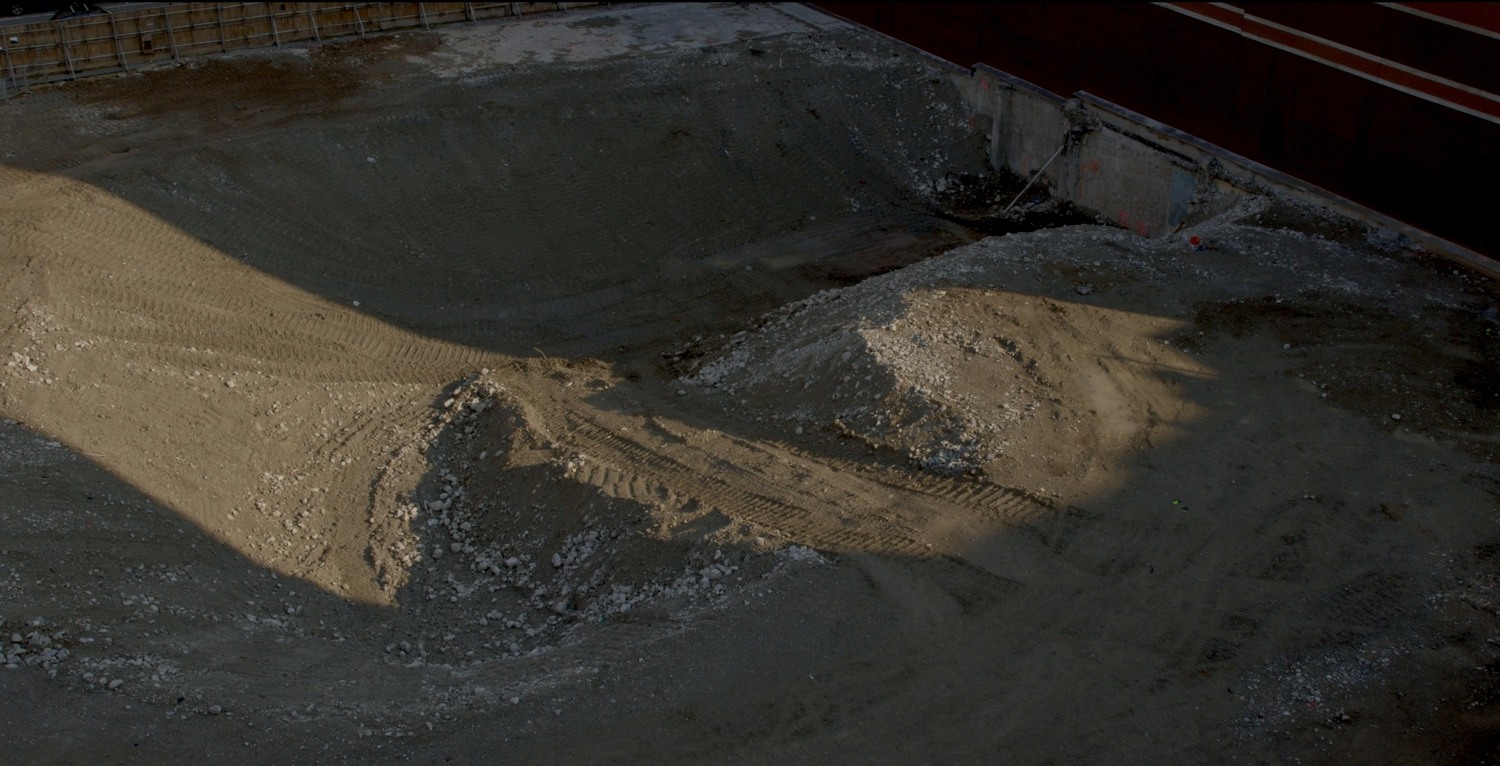
AC: Daylight was recently screened at the Architecture Film Festival Rotterdam as part of the "Persistence of Violence" series. A lot of the other films seem to deal with the repercussions of material violence that has happened or is currently occurring, while Daylight is more temporally complicated, as The Tombs has existed for years in multiple iterations, yet its newest version is still essentially hypothetical.
AH: Yeah, there’s an urge to make a very observational film, but there wasn't anything ready for me to engage with. Daylight isn't just about the carceral state; it’s about the idea of abstracting something and then recognizing these systems of neoliberal language and how they affect not only the carceral system, but also the way that housing is built in cities and the way that gentrification happens—just being able to recognize these patterns and then apply them to other things. What if the blueprints of a jail are doing as much as the prison guard is doing? Is the cop who’s arresting someone doing this because the legislation is there?
AC: There’s so much bizarre 2020s language occurring throughout Daylight: “design excellence, inspiration, facility, justice, inclusive, uplifting.” How did you approach this sort of nefarious utopianism? It’s a slippery form of language that almost works against definition.
AH: I’ve always been interested in archiving. I can capture how this language is being used right now and compare it to the language used in the 1980s. Even though it's fluffed up and there are more graphics, PDFs, and presentations today, it’s very similar. It’s even similar to what was being used in the ’40s. If I can capture now what they said they were going to do and the way that it would be, then we’ll have a record to look back on in 50 years when they inevitably do the same thing again. The challenge was showing that cycle clearly enough. Luckily, there's so much documentation of work right now. So I’d find these architects or contractor firms that would put up videos and renderings of an imagined future, and to me, their imagined future is not the future that I imagine.
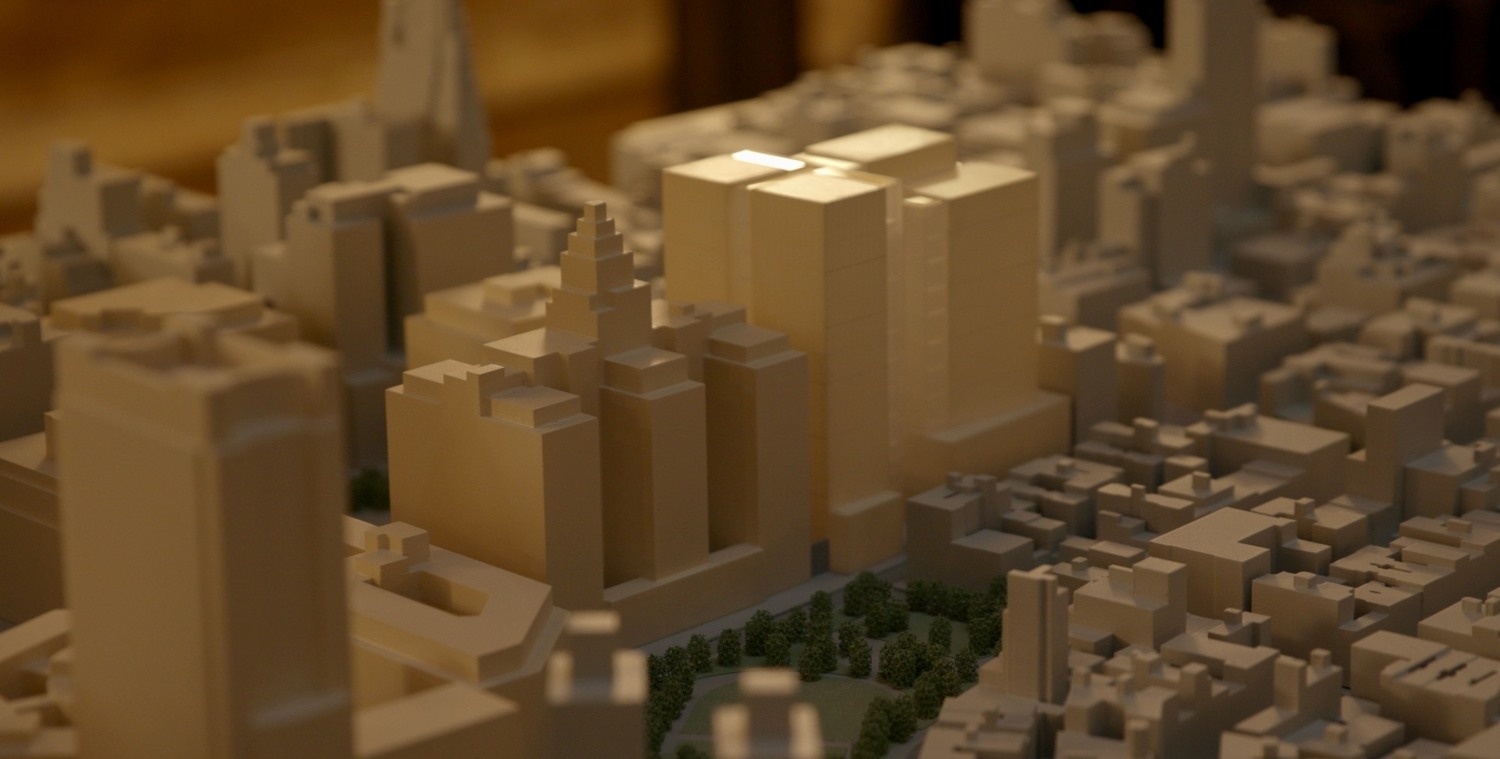
AC: The renderings are surreal. They have this sensual quality to them, which you seem to acknowledge.
AH: Right, they're always going to be beautiful. That’s the point. So then did the rendering persevere in its hope? To consider this, I worked with Mengyao (Cany) Chen, a doctoral student of architecture at Columbia, and Myles Zhang, an architectural historian, to build 3D renderings of past Tombs. Chen created a rendering of the 1941 version of The Tombs from hand-drawn blueprints, while Zhang constructed one of the 1838 version of The Tombs from hand-drawn sketches by architect John Haviland, which I found in Matthew Eli Baigell's 1965 dissertation on Haviland.
And then, I wanted to bring music and rhythm into the nonfiction work as a way of lulling you, in the same way that I think architectural renderings are meant to lull you. You’re flying through a rendering and listening to this amazing song, and it’s a purely aesthetic experience. Leo (cleo walks through glass) and Shane (famous tex)—two musicians who scored this film and with whom I’ve worked on different projects—were perfect for this because they both make music that’s at once incredibly beautiful, but also has this kind of strange, dissonant quality to it.
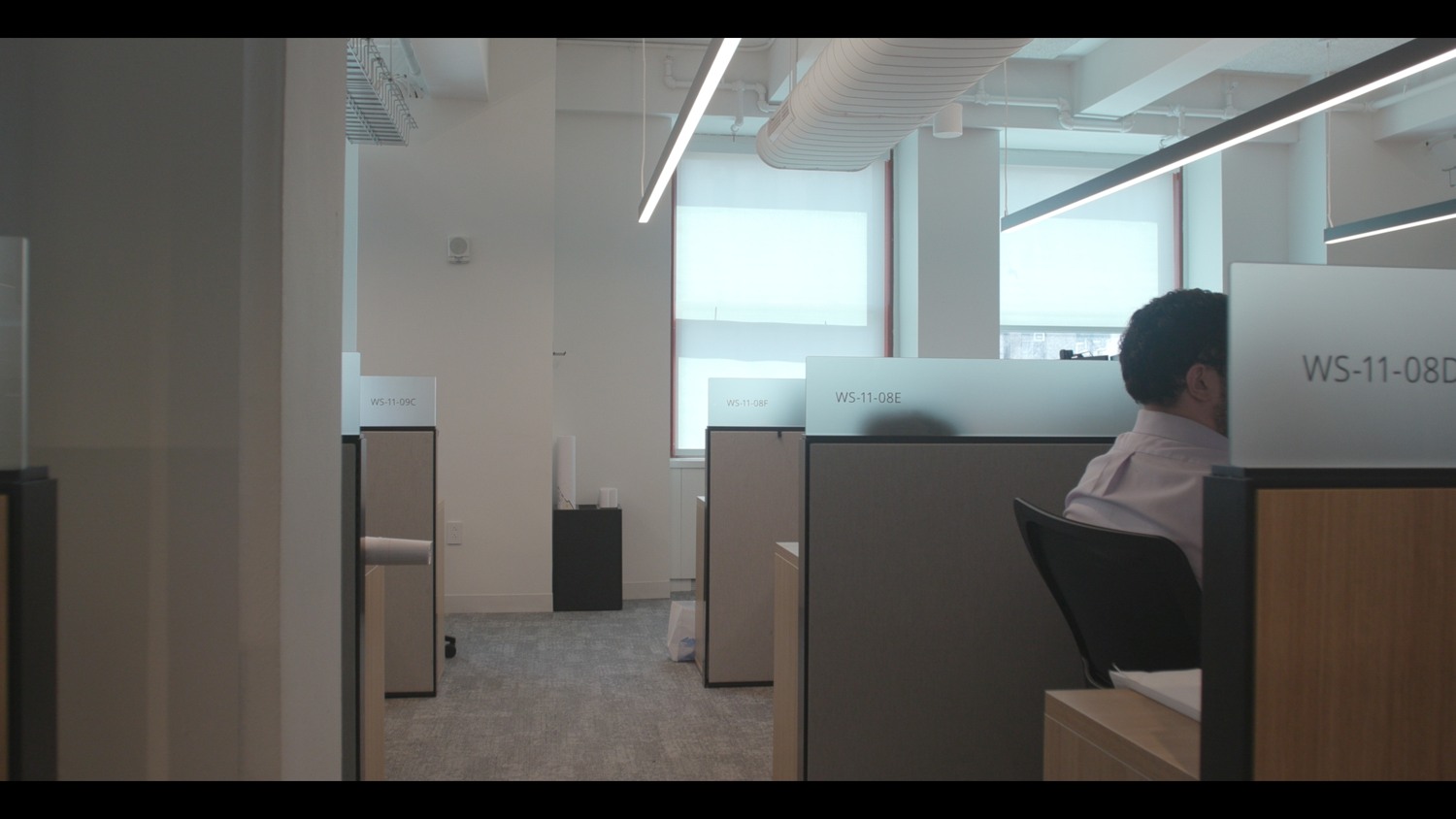
AC: Do you find shooting buildings and architecture to be different in New York versus in Dublin?
AH: One reason I was originally obsessed with The Tombs site was that, in Ireland, we have such a different relationship to plots of land. Our relationship to land and property in Ireland is influenced, I think, by a post-colonial mentality and relatively recent accumulation of wealth and capital brought on by the Celtic Tiger, and so there's a real issue with dereliction and people holding onto something for way longer than is necessary or useful. Whereas here in New York, I was so fascinated by the idea of one site being used again and again and again for the exact same purpose, there being this appetite for demolition and construction on a scale that we simply do not have in Ireland.
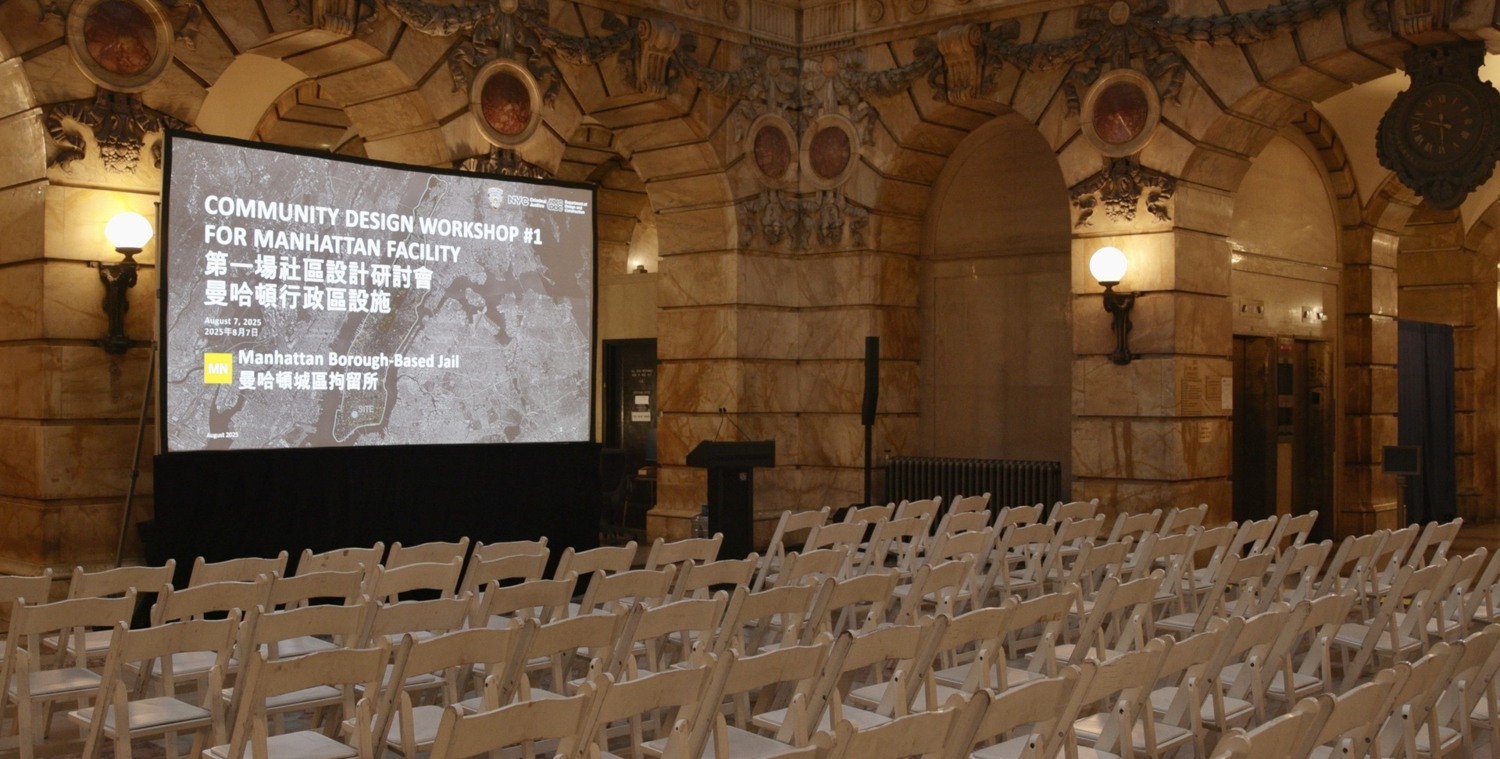
AC: Your work not only shifts between different modes of documentary, and between objectivity and subjectivity, but seems to actively seek out those liminal zones. Do you consciously consider your work on a spectrum like this?
AH: Yeah, how much should be explicit and how much should be implicit? My work is focused on this place that is both non-fiction and intensely subjective, where I think the most interesting documentary work lies. By pointing a camera at this site, I was always the one making it, so even though much of the piece can be described as detached, it’s also a real, personal attempt to work through my thoughts on language, the archive, and how architecture fails us. This film really exists in between pure, journalistic documentary—which I view as incredibly explicit—and art-making, which utilizes more implicit information. The audience can either engage with the references or not, but will still come away from it with some sort of personal experience that's as true as any other.
I’m currently working on a book, photo series, and non-fiction film piece about a specific type of auction. Each of these mediums is a different point of abstraction. What is a book doing that a film cannot? The photos are particularly exciting to me because they’re more in the traditional art territory, where it's like, oh, this can be isolated as a beautiful image—but how does our relationship to that change depending on how much context we’re given? That’s the crux of my work, I think. Presenting a piece of something that someone considers true, but doing so in the manner that I’ve personally thought about it, so as if to ask, “Isn’t this bizarre?”
This interview has been edited for clarity and length.