Editors' Selects: September 2026
Review
As New York City emerges from the strain of art week and prepares to slip into its summer slumber, artist residencies on Governors Island bring a wave of breezy energy. The annual Organizations in Residence program welcomes 25 arts and cultural organizations this year, transforming historic houses into artist residency studios and galleries. Organizations in Residence runs from May 16 through November 2, 2026, offering exhibitions, open studio events, and public programming every weekend for art lovers and spa-goers alike. This annual program carves out a little haven in the New York City art ecosystem, providing artists with physical and mental space to create and residents and tourists with accessible, genuine connections to art.
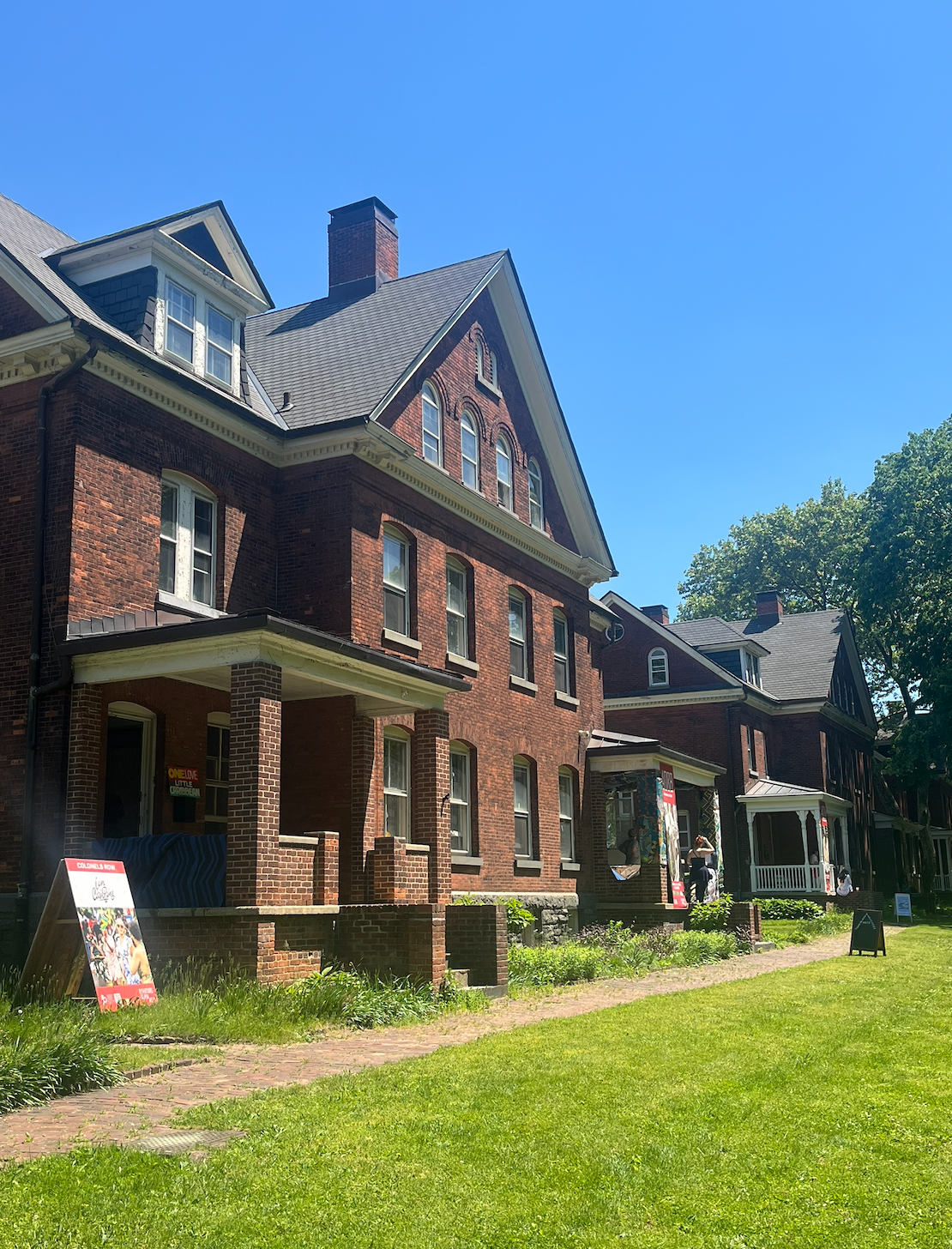
The historic brick houses now hosting Organizations in Residence mark unique sites where the Island’s military past meets its present as a hub for urban sustainability, climate solutions, and public arts. Located in the areas known as Colonel’s Row and Nolan Park on the northern tip of the Island, the houses were built throughout the late 1800s, when the US Army moved officers and offices to the Island and transformed it into an army headquarters. The brick houses served as single and multi-family quarters for Army Officers and their families. The Island’s two-century military role ended in 1996 after control under the Army and the US Coast Guard. Now administered by the National Park Service, the Trust for Governors Island, and the Governors Island Foundation, the Island transitions from a military headquarters to an arts and sustainability center. In Organizations in Residence houses, first-floor spaces are used for exhibitions and second-floor rooms are used for artist residency studios.
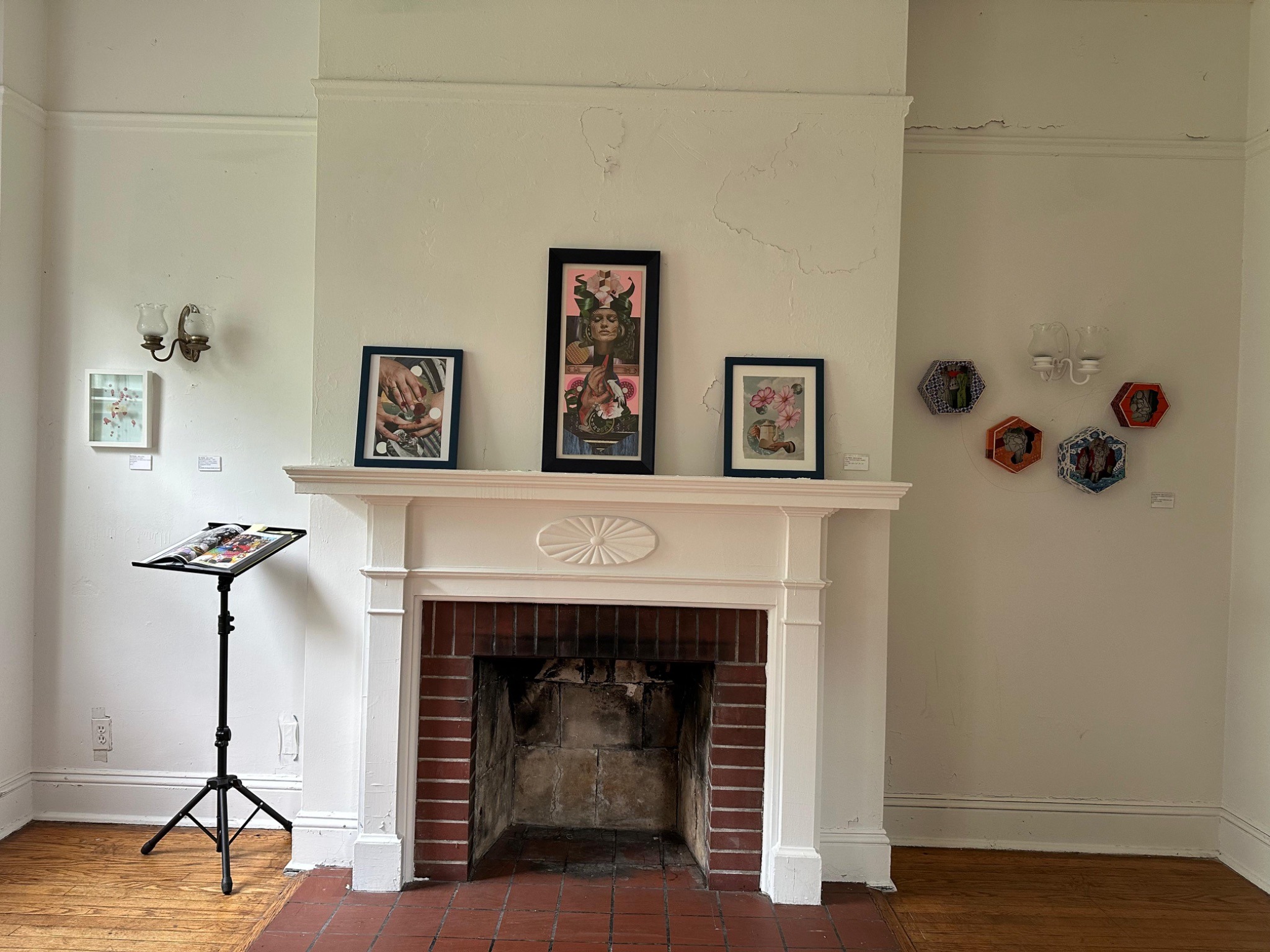
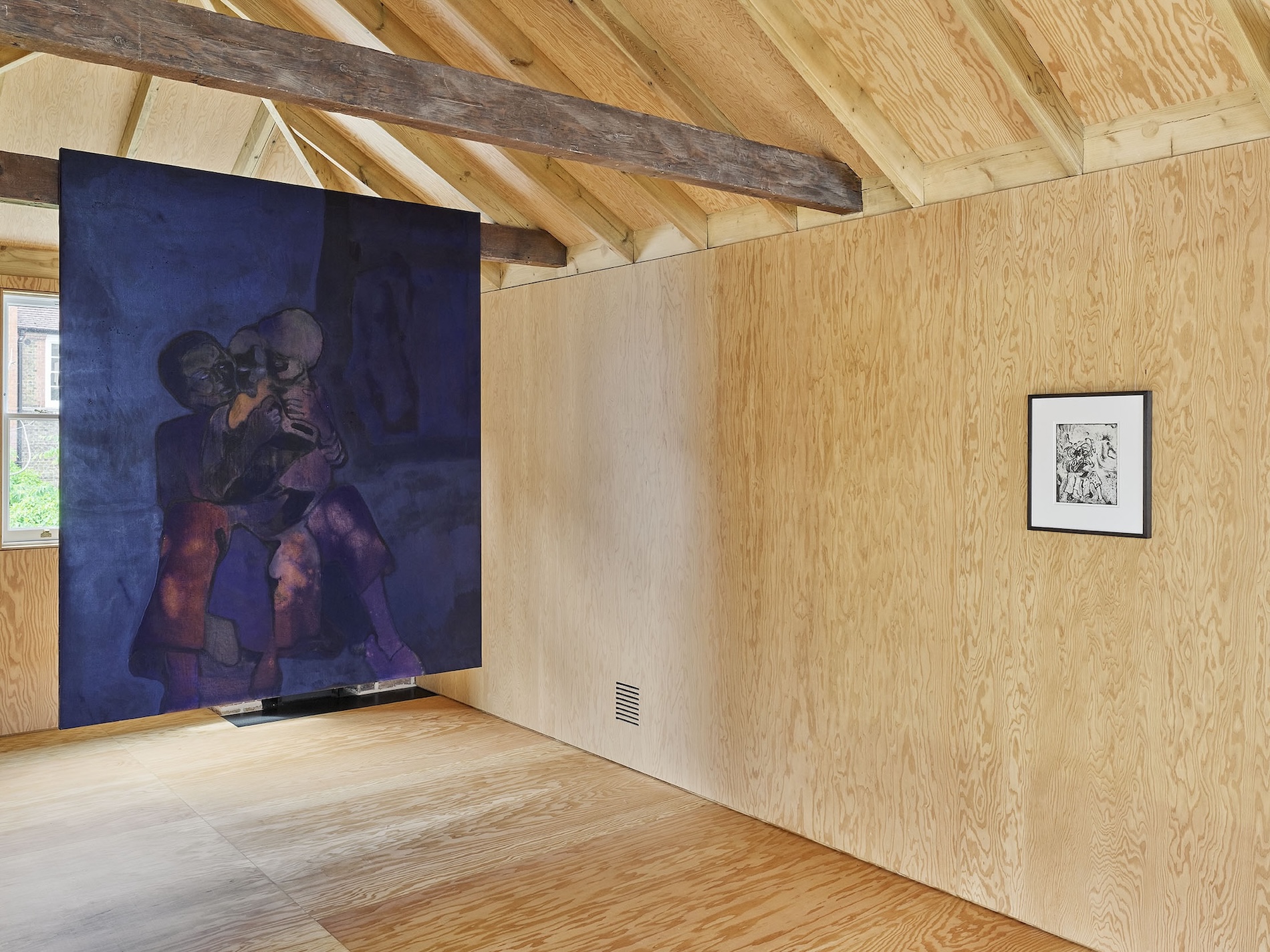
At the Ankhlave Arts Alliance House, Tijay Mohammed’s enchanting porch installation stops any visitor walking down Colonel’s Row. Mohammed wraps the porch with Ghanaian Kente cloth and West African textiles, cut and sewn with scraps of posters, bandanas, and vinyl sheets. With its overlapping rich patterns and charged colors, the porch installation invokes much joy, kinship, and a sense of community. Inside, Like Water, a group exhibition curated by Darlene Deloris, builds on this sense of community through highlighting works by 12 artists that explore personal histories and collective cultural experiences vis-à-vis water. Jency Sekaran’s ഓർമ്മകൾ (Ormakkal) (Translation of Memories) (2025) is an installation with 4 wooden hexagonal prisms covered with sari fabric. Sekaran creates openings on the sari-covered prisms, through which viewers find embroidered family portraits in the center. Among the layered sari, embroidery, and wood, familial memories flow like water. On the adjacent wall are Khari Turner’s mixed media works, Lilies (2026) and Caring for the Family (2026), where Black portraiture is partially obscured by flowers and marbling ink. Turner creates mesmerizing textures by using oil, acrylic, and ink mixed with water and sand from oceans, lakes, and rivers significant to his personal life and to Black history.
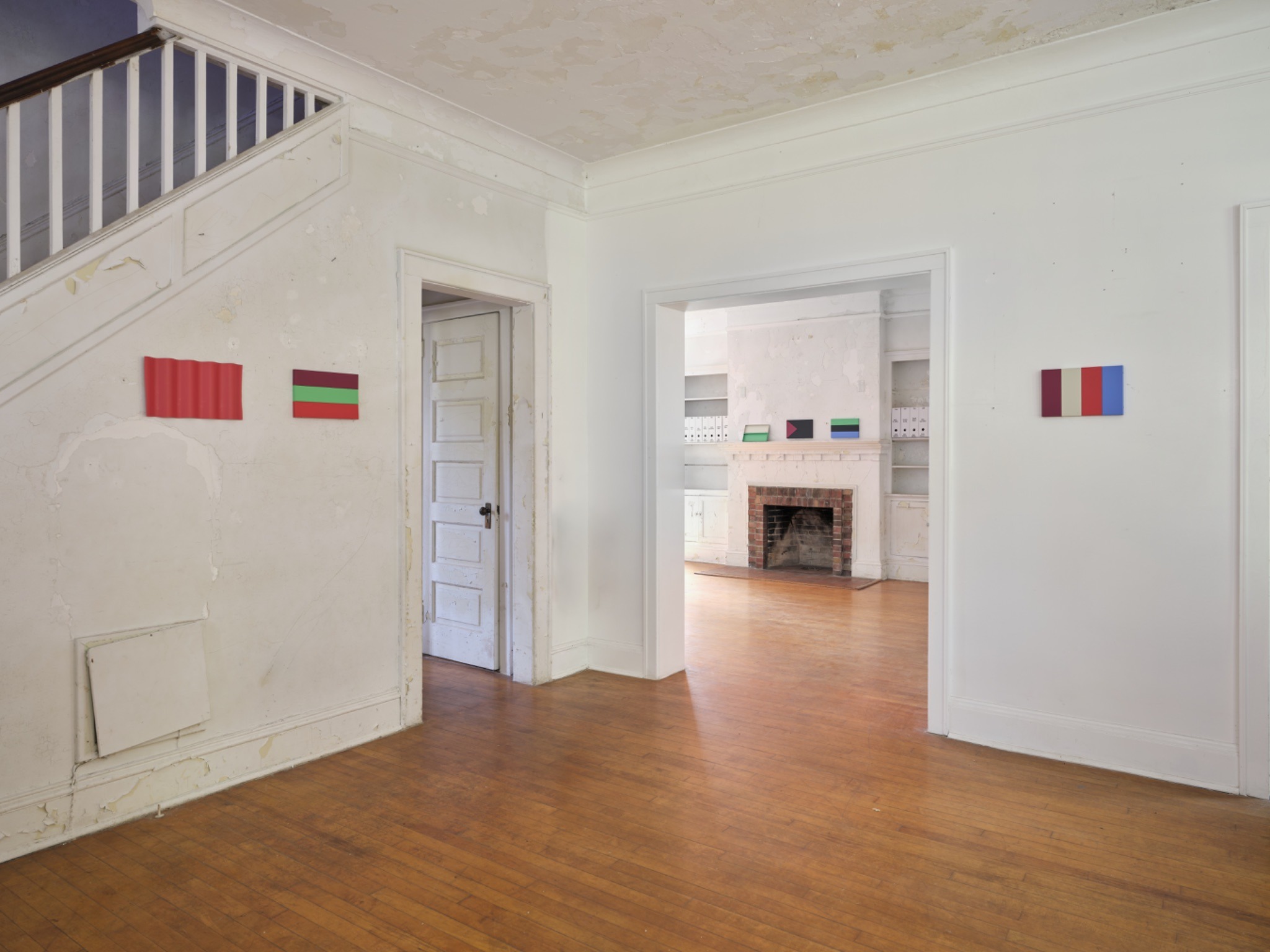
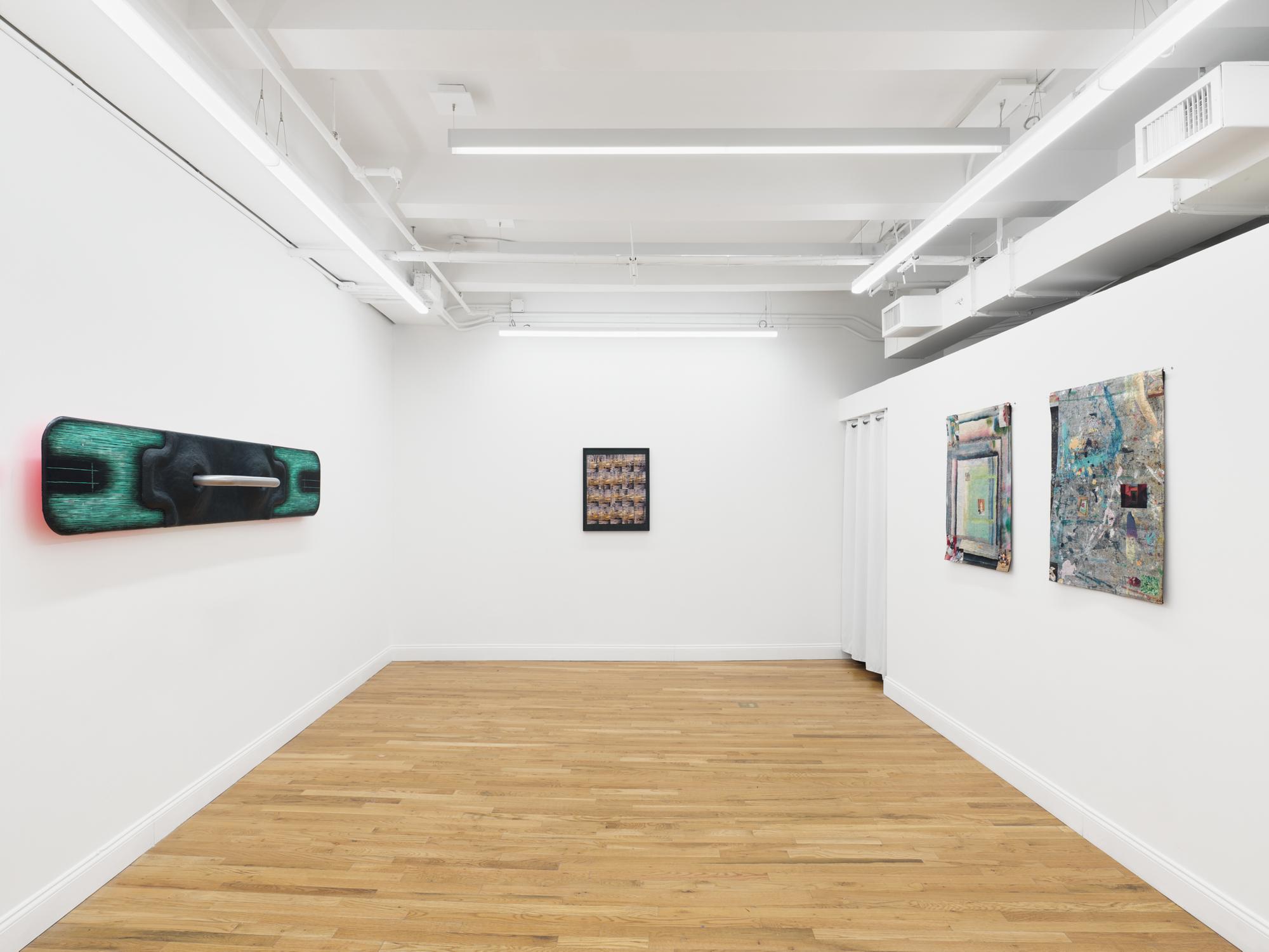
KODA, an organization working with mid-career artists creating conceptual and socially engaged works, is now in its sixth year participating in Organizations in Residence. At KODA House, Anna Barlik's Flags of Non-Existent Countries, curated by Klaudia Ofwona Draber, features KODA’s Fall 2026 artist-in-residence. In the series of small steel panels and accompanying drawings, Barlik intentionally reconfigures and reassigns colors, shapes, and surfaces of national flags to create new flags, or rather, geometric forms that challenge fixed national or political identities. Barlik takes the opticality of a flat color plane into sculptural structures, whether through juxtaposing rich colors, manipulating the surfaces into undulating curves like that of a wind-blown flag, or showing the back of the panels. FLAG 12/30/26 (2026), which consists of two equal-sized horizontal bands of mint green and beige, is intentionally shown at its verso. The exposed cavity of the plates and nails conjoining them further heightens Barlik’s challenge of surface, space, and identity. At the current time of heightened nationalism and decreasing cross-border mobility, Barlik’s “flags” of non-existent countries precisely destabilize notions of fixed identities and borders.
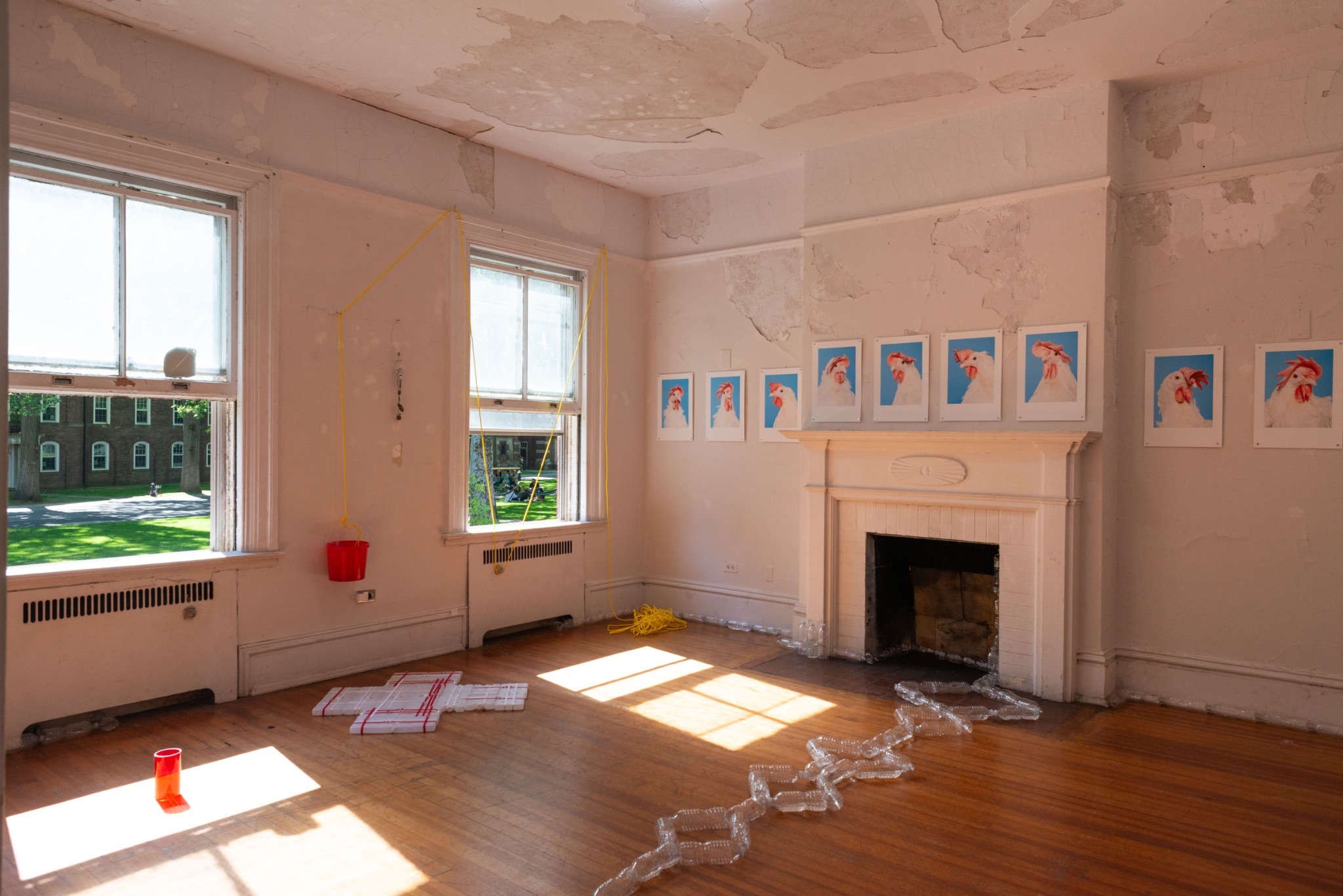
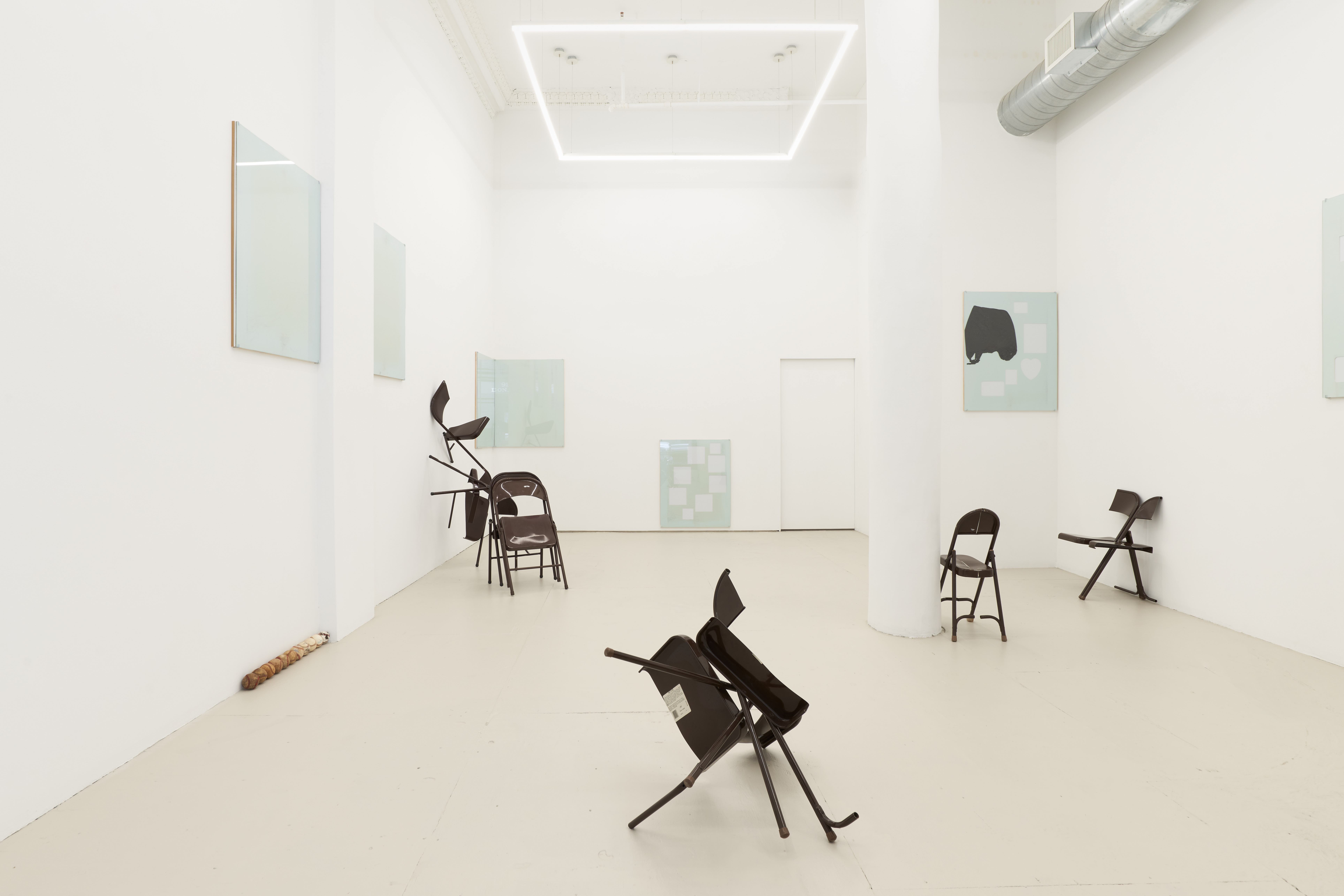
The Residency Unlimited house presents Domesticated, a two-person exhibition featuring artists Erika Malzoni and Dániel Szalai, curated by Data Chigholashvili. Domesticated presents a tongue-in-cheek yet chilling reflection on domestication, containment, and human manipulation. Szalai stages a series of 11 portraits of Novogen White hens, a type of chicken genetically engineered to lay eggs for vaccine production, across the wall above the fireplace. The artist describes the installation as “hung like family portraits,” subversing the domesticating and the domesticated—the chickens bred for human healthcare in rearing systems are now watching over a living room. Below the portraits, Malzoni arranges meandering paths of plastic water bottles filled with water from the shore of the Island throughout the floor. Malzoni thus turns the Island’s surrounding waters into bottled, consumable, and domesticated water—nature packaged into commodities. Chigholashvili notes that because of the unique context of a historic house as an exhibition space, “the barriers, which the public might often have about discussing contemporary art, are less present here.”
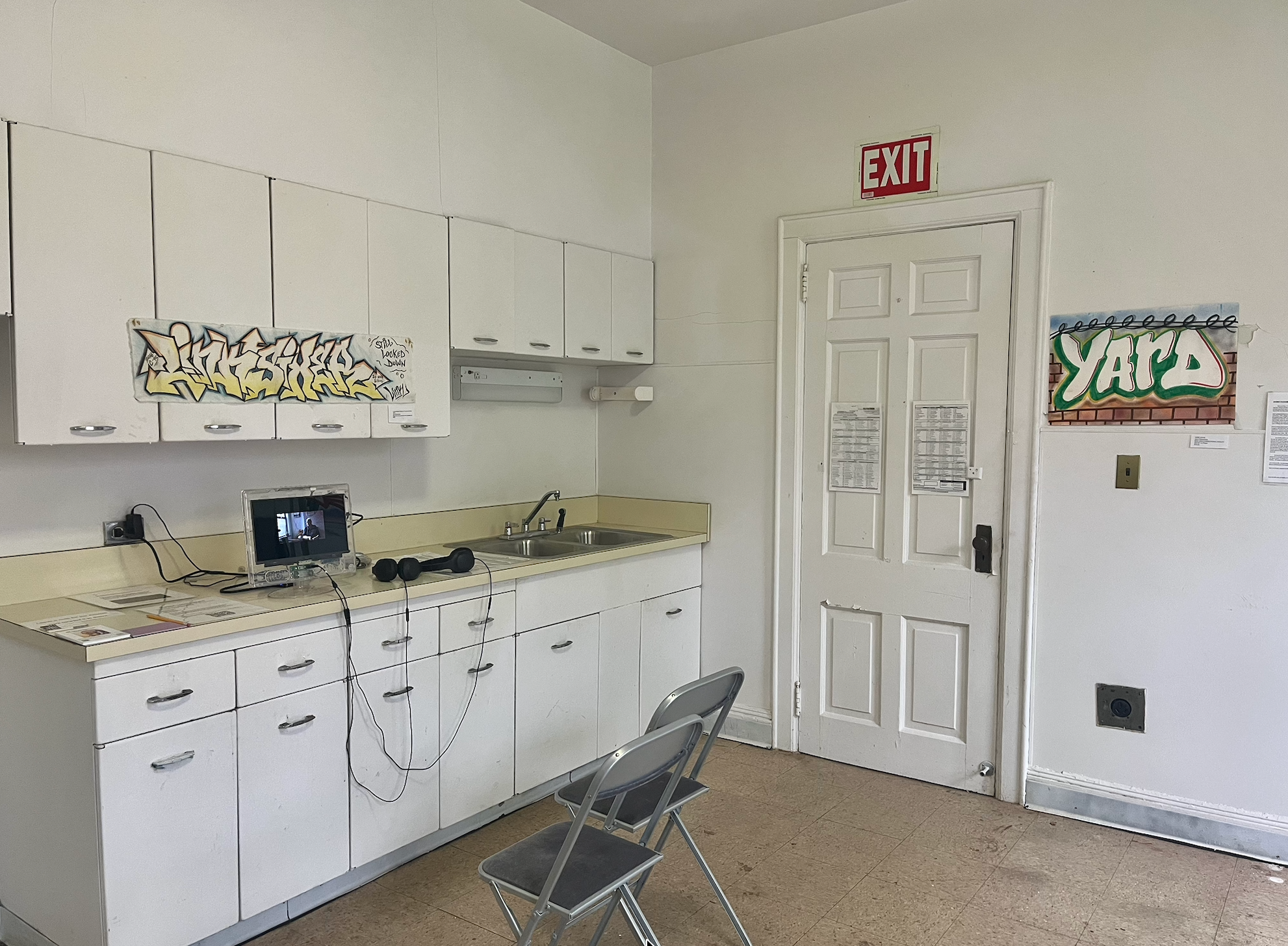
Now in its twelfth year participating in Organizations in Residence, Escaping Time is one of the oldest residents in Nolan Park. Made by currently and formerly incarcerated artists, the collection of works on view, including textile works, graffiti, collages, and charcoal drawings, are sonorous reflections on humanity, creativity, and integrity. Graffiti and mural artist Jairo Pastoressa’s works pulse with intense vibrancy and electricity—blazing sunsets and zooming subway trains overlap with chain-link fences and graffiti name tags. Most of Pastoressa’s works on view were made during his incarceration, when he had limited access to art supplies and used Kool-Aid, coffee, tea, newspaper ink, and toothpaste to paint on bed sheets, pillow cases, and T-shirts. In 6 Years Strong, Waiting for Trial (2016), made on Rikers Island in his sixth year waiting for trial, Pastoressa blazes his graffiti tag “LINK SLICKA” in a robust, unyielding font with spiky edges and thick outlines. As if about to puncture the borders of the work, the graffiti tag carries much of the artist’s resilience. ZEK LINKSIX (2017) is vivacious—Pastoressa depicts a sun-kissed New York City skyline above graffiti-tagged subway trains, which he describes as the “train to freedom.”
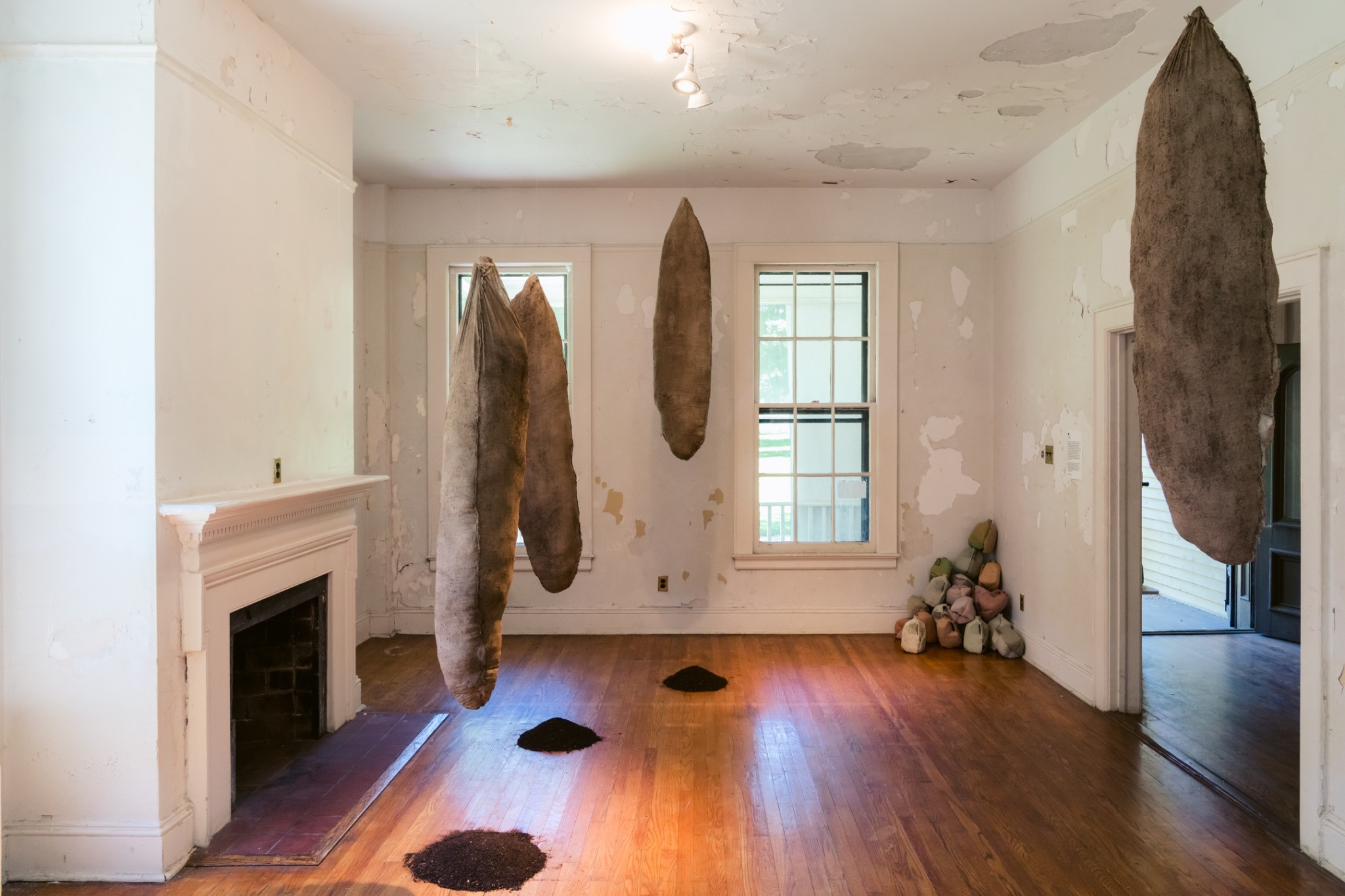
Forest for Trees Collective, a women-led environmental art collective, transforms the abandoned house into a tender space for community care and education. Founding director and artist-in-residence Ana Anu is intentional in creating exhibitions and programming that align with the residency house, which carries “the weight of history, the texture of old walls, and the stories of domicile.” The top floor hosts a library, a family-friendly play space, and a community wardrobe, while the second floor has light-filled studios for four artists-in-residence. CHOW!, a group exhibition reflecting on the themes of earth, seed, and food, is staged on the first floor. After Forms (2025) by Kallie Cassidy is particularly touching, with cocoon-like structures hanging from the ceiling and dirt accumulated on the floor, suspended within the cycle of emergence, decay, and renewal. Nearby is Lorinda John’s Between shadow and wood, two worlds become one (2026), a dreamcatcher sculpture made with cedar harvested by the artist, natural fibers, and materials gathered and woven by community members. At the Forest for Trees Collective house, community care-centered art and education flourish.
Organizations in Residence on Governors Island is open to the public every weekend from May 16 through November 2, 2026.