.webp)
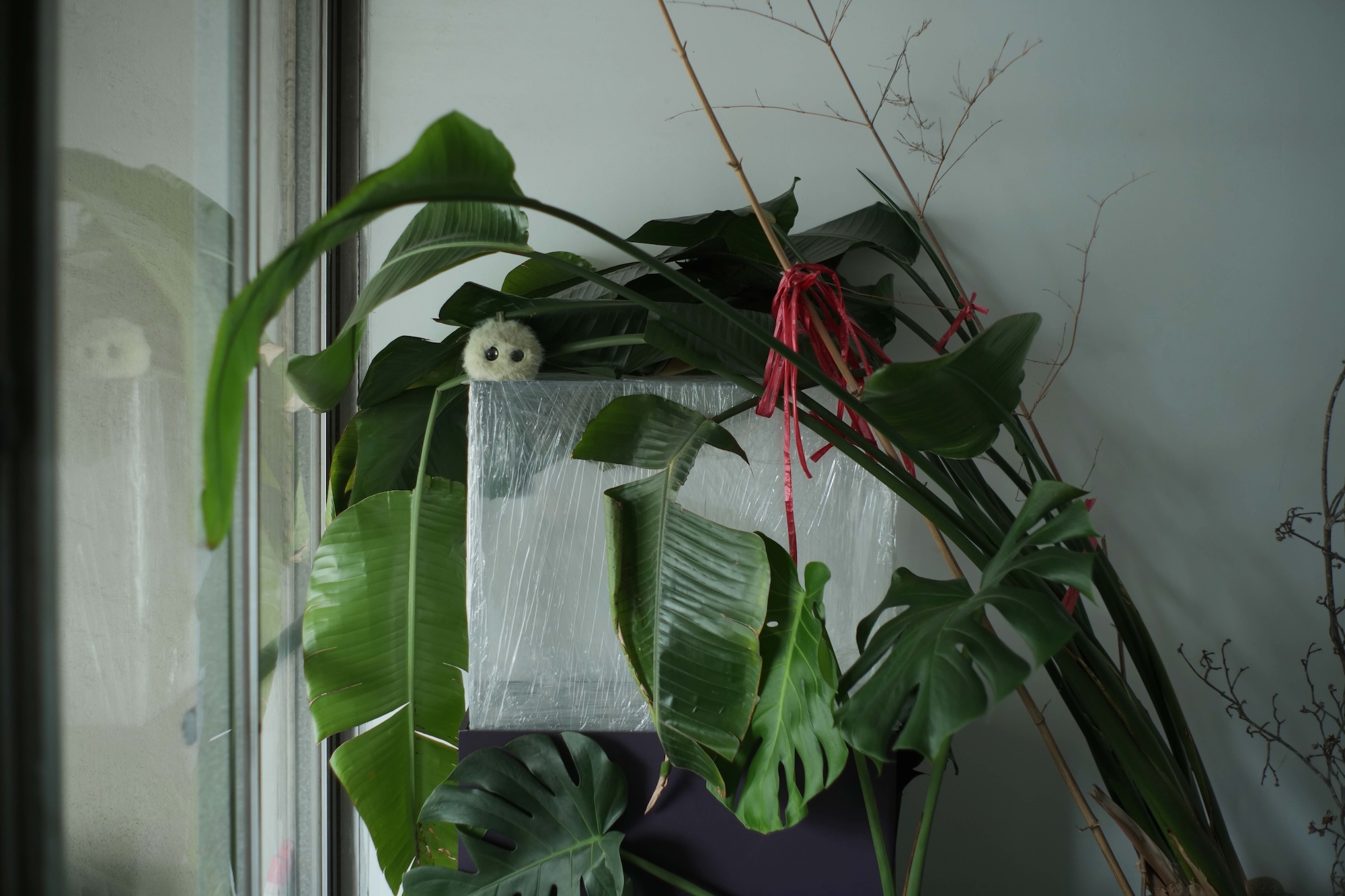
“Love in a Fallen City” at lovers
Review
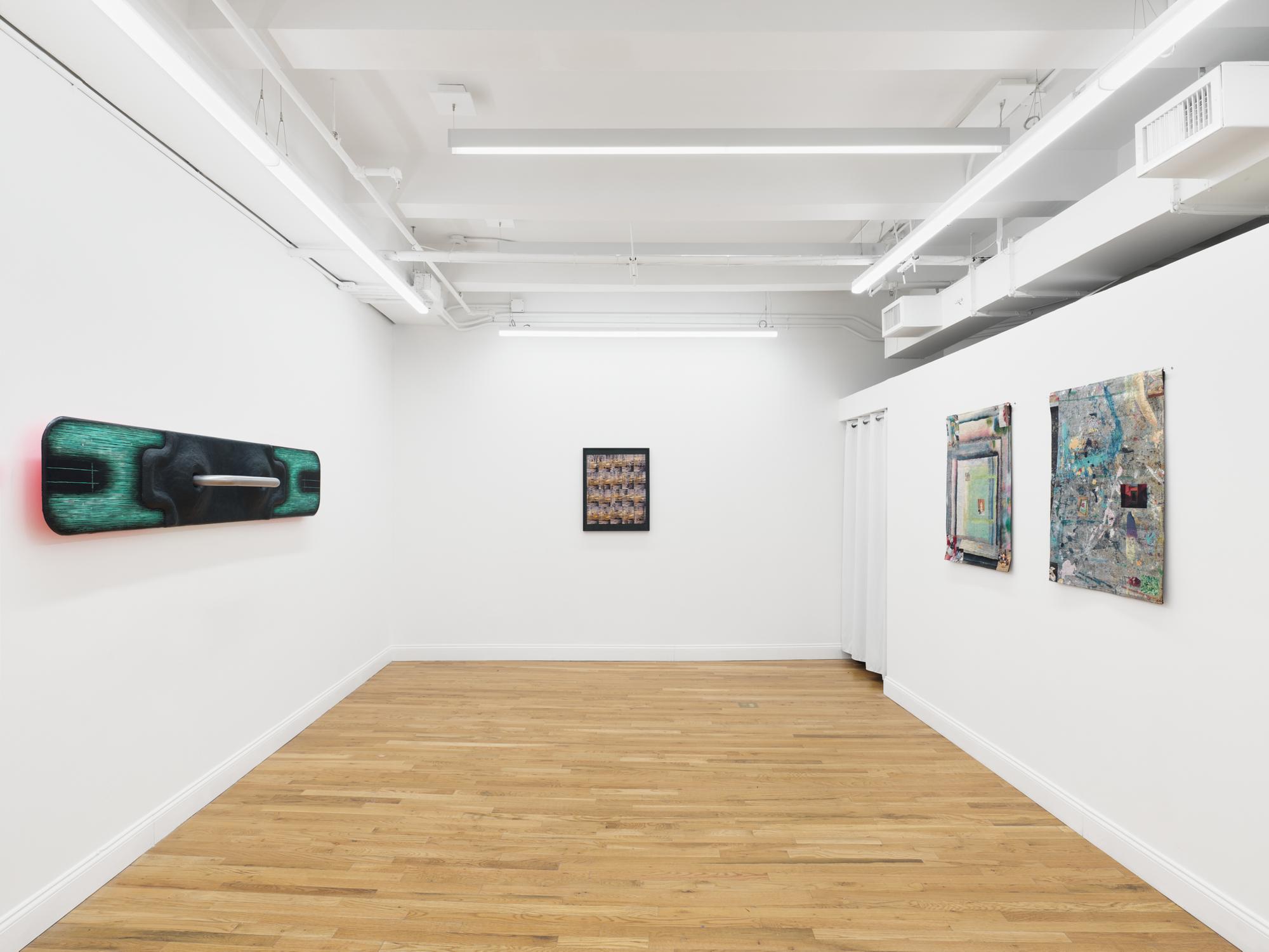
In the exhibition text for Evidence of Contact, curator Ruotai Tang speaks of “the visible aftermath of contact” as the point of departure for the works on view. When the word “aftermath” first originated in the fifteenth century, it meant “a second harvest,” or the growth of grass after the first mowing. Yet over time, the word has come to carry a negative connotation, referring to what remains after a catastrophic event. Featuring artists Kyla Liang, Farrell Mason-Brown, Aileen Yujeong Min, Vera Saldivar de Lira, Beatrix Shelton, Jiangyu Huang, and Yue Zhou, this group show at A Space returns to a generative way of thinking about what an aftermath could be, positing impressions and traces not only as material evidence but also as portals into liminal spaces and systems of speculation. While it considers the material repercussions of a contact, it doesn’t so much focus on traces as a stagnant outcome but instead as a piece of creation that exists in parallel to the action that caused it, capable of taking on an afterlife of their own.
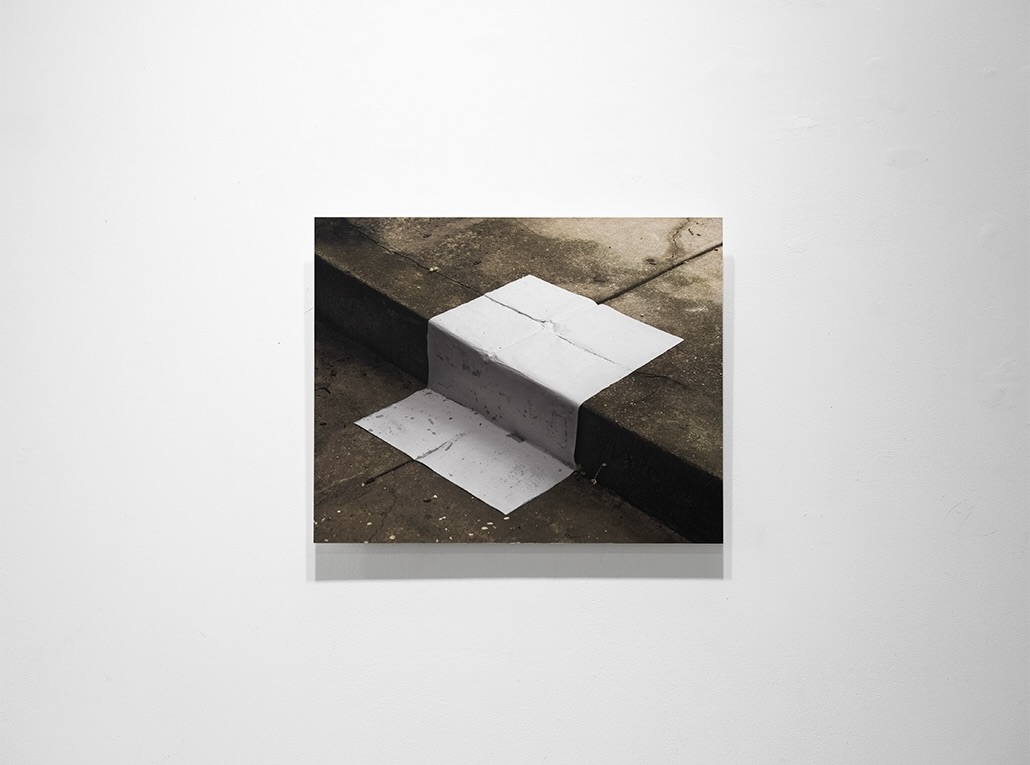
Vera Saldivar de Lira’s Innerspaces [01A] (2019) illustrates “evidence of contact” quite literally—the artist rubs photo rag paper against the often overlooked surfaces she encounters during her everyday commute. She then restores the sheets of paper back in the original context and photographs them. The archival intention behind this gesture is twofold, as both the texture of the encounter and the act of collecting said texture materially are documented. When the artist sheds light on the process through the show, another layer of archiving takes place, which frames that evidence of contact as self-replicating in front of an infinitely expanding audience.
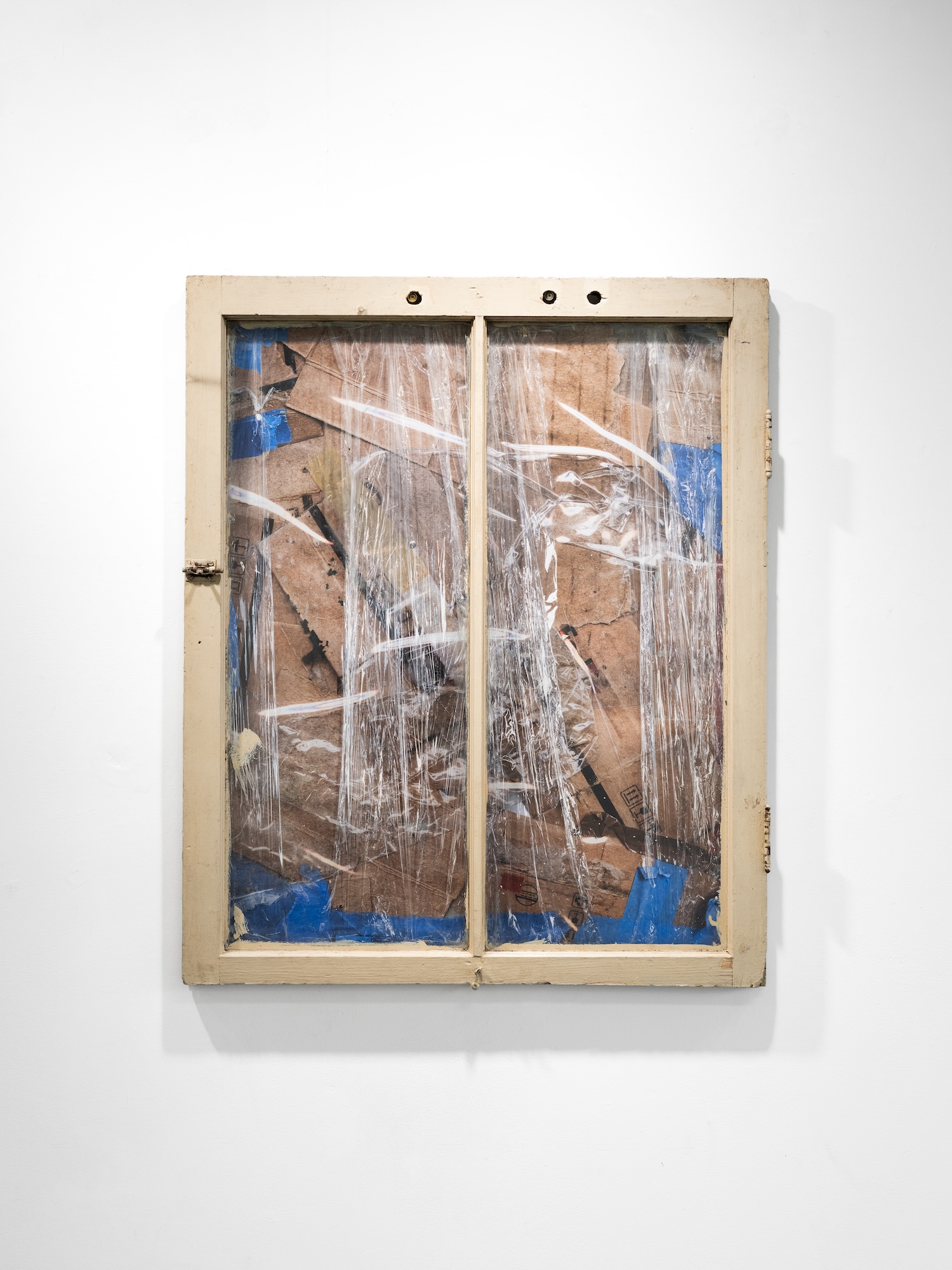
Similarly, in Horizon (2023), Kyla Liang uses image processing as an example of how evidence of encounters can be layered and how our relationship to the image today gives rise to a reality where one image can generate countless renditions, each of which both a cause and an effect. Wrapping overlapping, flattened miniature cardboard boxes in plastic packaging, Liang then scans the arrangement’s surface, prints it out, and repeats the process a few times before setting the resulting image in a found frame. These cycles of production make it nearly impossible for the viewer to make out what individual layers may look like or how the recompositions took place.
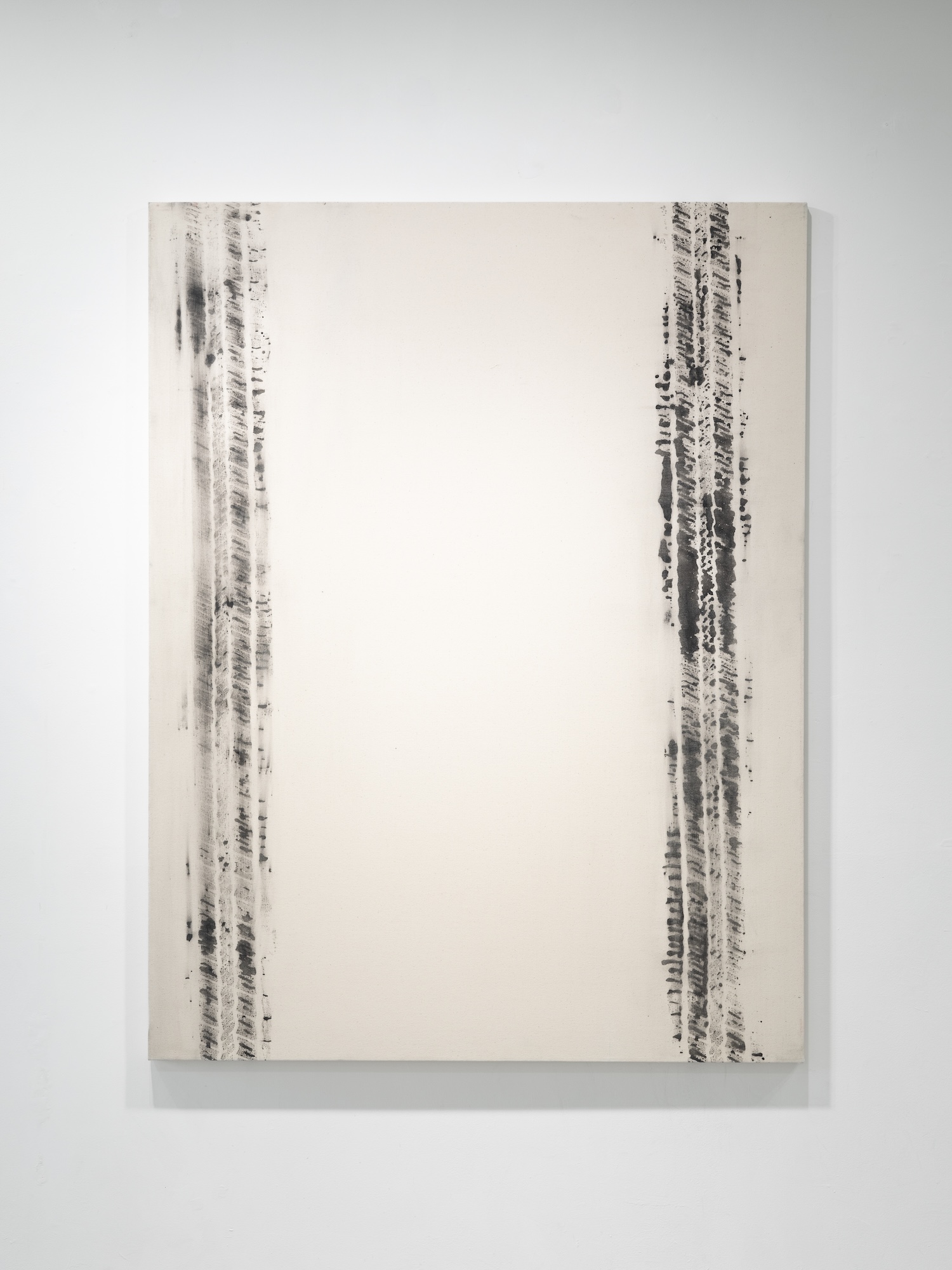
The show also reveals ways in which material traces can bear artifice or deceit. Farrell Mason-Brown’s painting, Passing Through (2025), consists of a pair of parallel tire prints, emphasizing the aesthetic and surface quality of tires’ patterns. Conceptually, the piece nods to Robert Rauschenberg and John Cage’s Automobile Tire Print (1953), displacing the immediate touch of the artist’s hand from the work of art. Instead of actually driving over the canvas, however, Mason-Brown spares the surface of the painting the gravitational violence of a moving vehicle. Contact is stylized and sterile instead of organic, its evidence therefore a product of design.
Beatrix Shelton, Yue Zhou, and Aileen Yujeong Min address what happens when the “contact” takes place between the material and the immaterial; in their works, time and its transience are made collectible in material forms. In Self-Portrait (frame for an unfinished collection) (2026), Shelton has collected her hair in a Ziploc bag and framed it; the work is a cheeky wordplay on “frame” as something that designates art’s artness, segments space, and encloses a period of time. In Traces of a Present Tense (2026), Aileen Yujeong Min captures the shadows that plants cast on a white wall at various points in time and layers them via digital collage. The work collapses temporality somewhat sentimentally. While Yue Zhou’s painting, Another Window (2025), also foregrounds the instability of shadows and the stillness of certain moments in time, this documentarian instinct is rendered more speculative. The painting doesn’t follow strict perspectival rules and instead prioritizes mood and atmosphere, similar to how Jiangyu Huang’s video work teeters on the threshold where psychological spaces blur into the surreal. These works are conceptually simple but remain extremely open, separating the exhibition’s titular premise from notions of finality and closure.
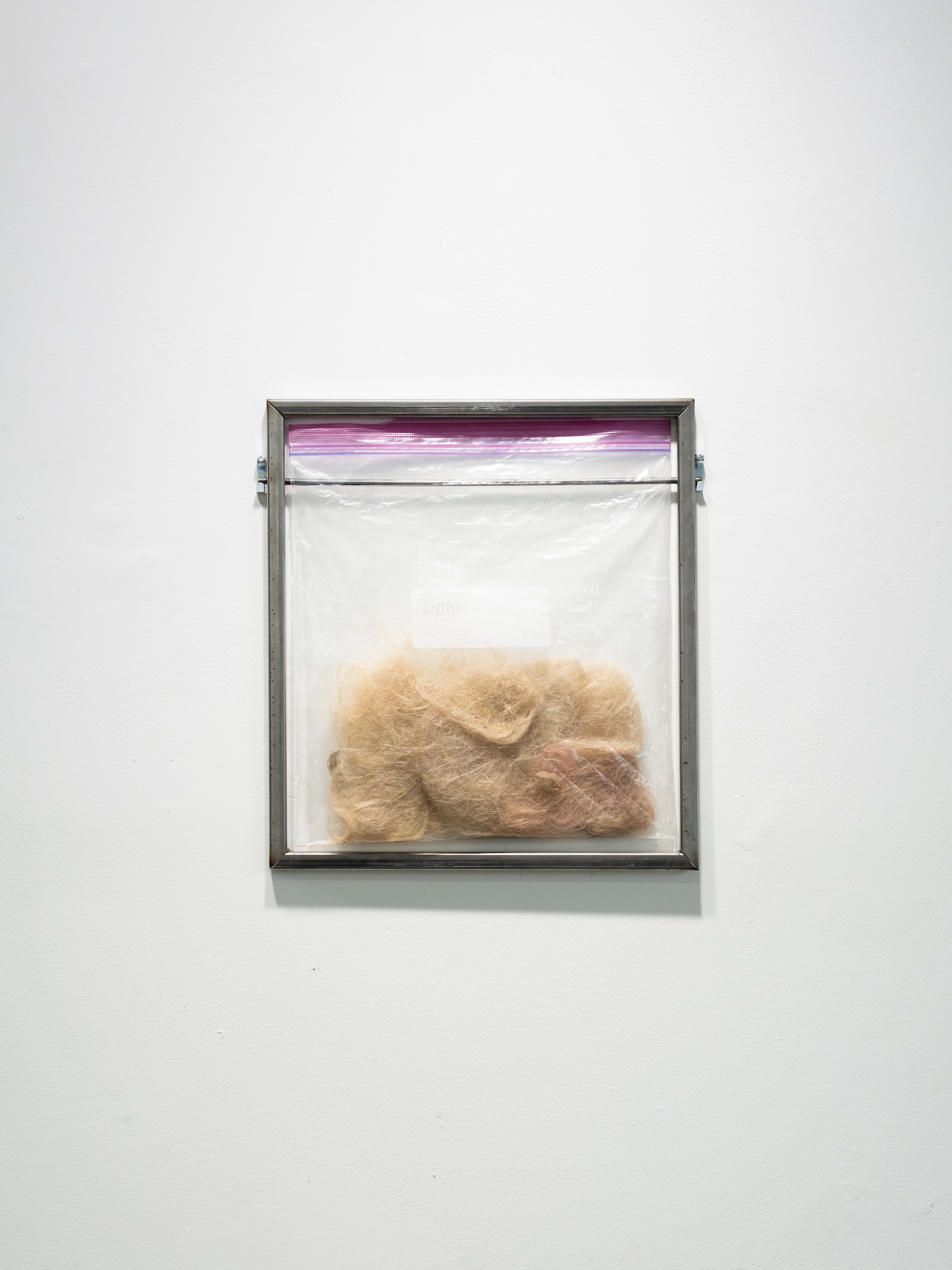
Evidence of contact throughout the show functions as an agent of activating the surface, of directing the viewer’s attention to the causal effects that gave rise to certain topologies, and of forensically annotating the passage of time. It’s easy to curate a show titled Evidence of Contact as entirely materially oriented, but the curator Ruotai Tang’s interpretations are more ambitious and diffuse, which, then, opens up the question: is all art evidence of contact—contact with mediums, surfaces, and ideas?
Evidence of Contact was on view at A Space, Brooklyn, from July 9 to July 12, 2026. The exhibition is curated by Ruotai Tang and features artists Kyla Liang, Farrell Mason-Brown, Aileen Yujeong Min, Vera Saldivar de Lira, Beatrix Shelton, Jiangyu Huang, and Yue Zhou.
The exhibition is presented by P79 Project, which is an independent arts organization established in 2026. Through exhibitions, residencies, public programs, and collaborative projects, it supports artists and cultural practitioners while building a sustained artistic network and community that creates opportunities for presentation, exchange, and collaboration.