


In Conversation with Brittany Adeline King
Interview
Dressing a doll is a peculiar kind of fashion. What does it mean to dress a “body” that is not a body, and when fashion begins with a figure not of our scale? Through the exhibition Doll Dressing at The Museum at FIT, the reciprocal relationship between dolls and fashion proves to be not only longstanding but also generative; what is pronounced in this relationship is the spirited sense of play.
Fashion dolls are a specific type of dolls: their changeable wardrobes establish their formative role in fashion. The exhibition Doll Dressing broadens the definition of fashion dolls while presenting its comprehensive history. Alongside garments by contemporary designers are modern and historical dolls, the oldest of which dates to the late 18th century. Porcelain and ornate, these dolls served to guide women of the time in the latest fashion styles. Notes on cultural significance contextualize the roles of 20th-century dolls, from Boudoir dolls’ function as personal charms to Barbie dolls’ sweeping global demand. Beyond literal dolls, Doll Dressing also invites us to consider alternative definitions of dolls—mannequins serve as a prominent example. Slipping on and off garments, life-sized mannequins embody the ultimate fashion dolls. It is telling that the word “mannequin” can also refer to live models in French. Indeed, as one section of the wall text writes, “we can all be dolls.”
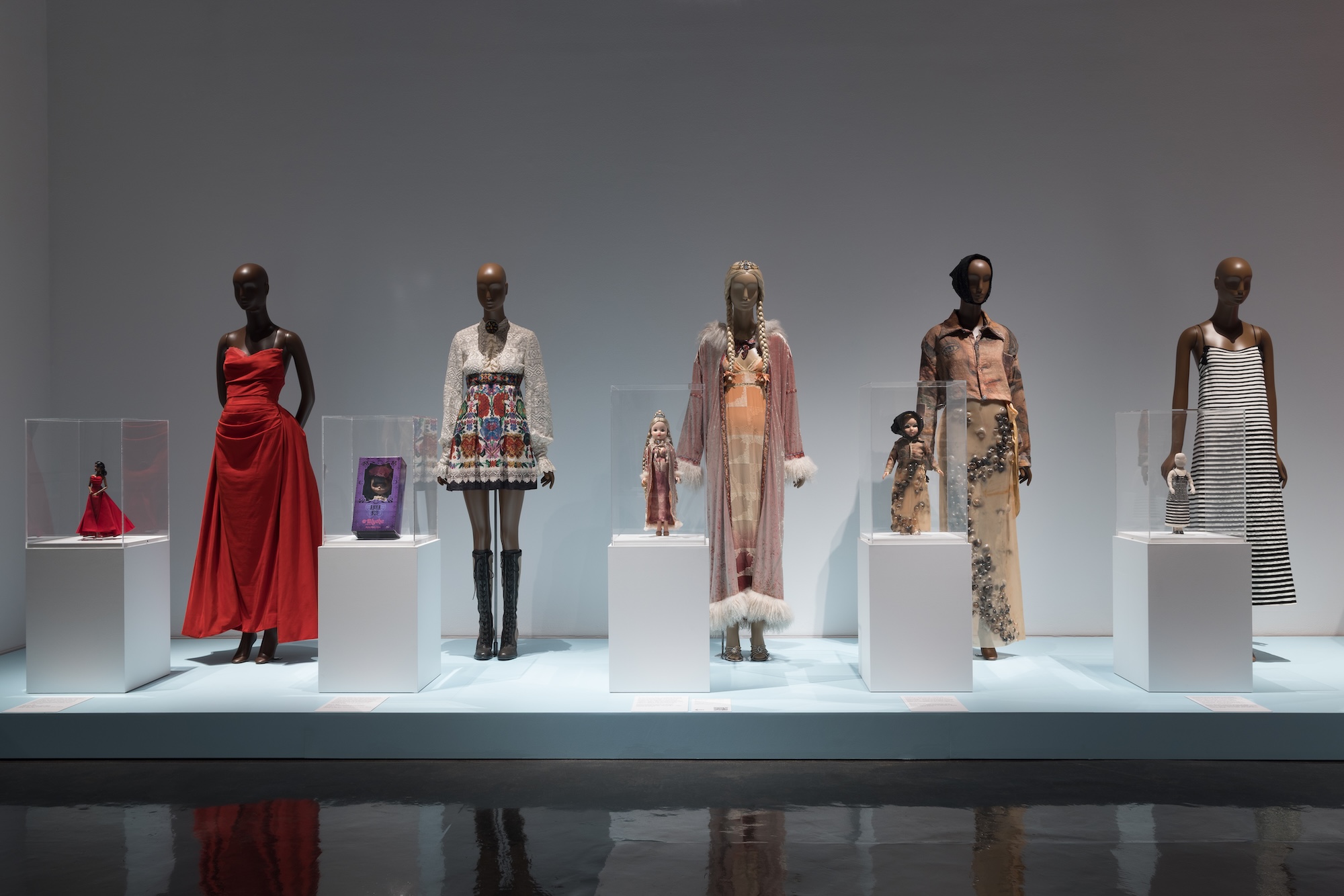
Many contemporary designers seem to agree with the statement. Doll Dressing includes a wide range of designers’ life-sized garments and their miniature doll-sized counterparts. For designers who work in miniatures, dolls are not only a source of inspiration, but also an extension of their creative practice. Designers such as Jason Wu and Anna Sui have decidedly made dolls a central part of their fashion careers, creating doll lines alongside their runway looks. Side by side, these miniatures render the reciprocal relationship between dolls and designers distinctly evident.
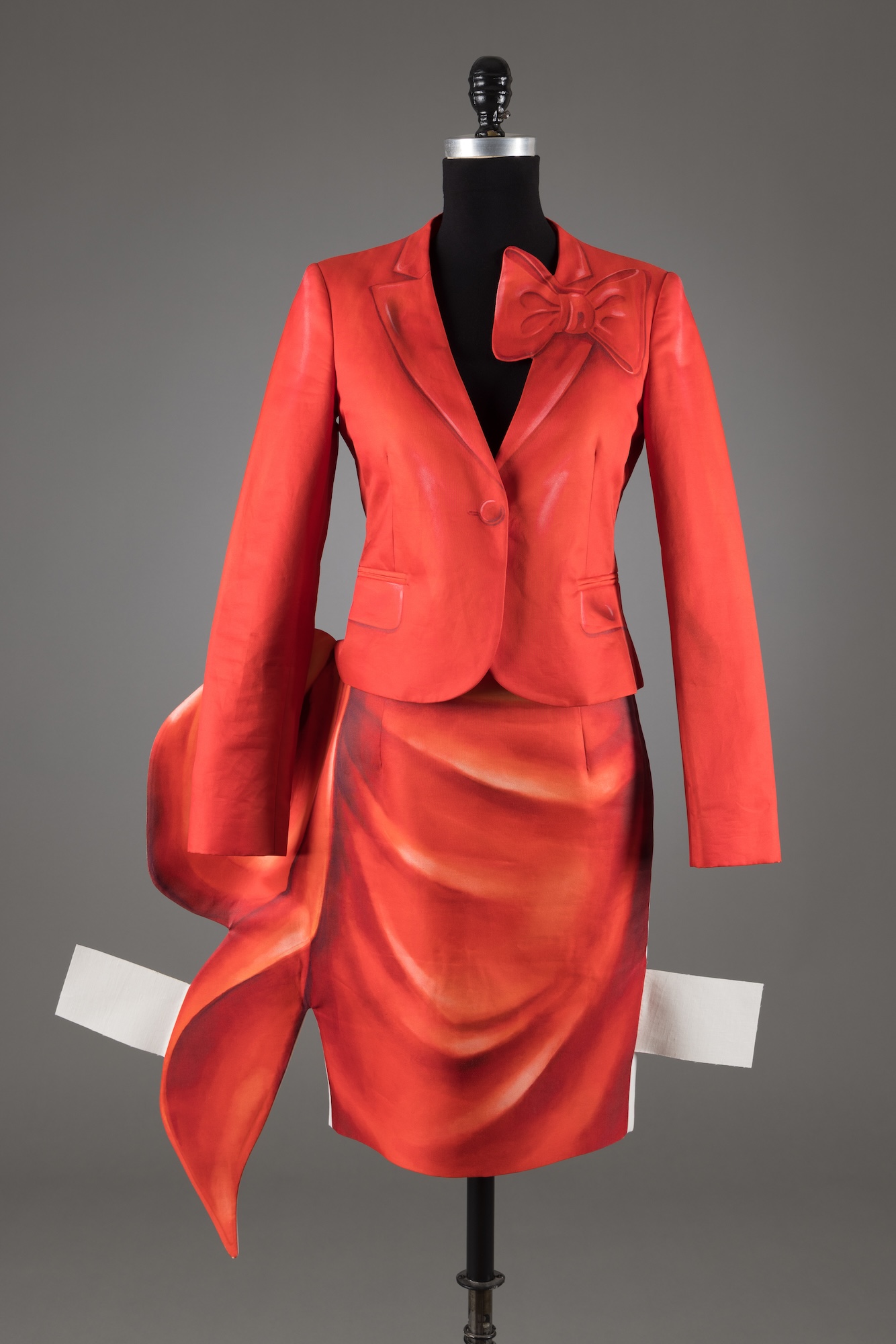
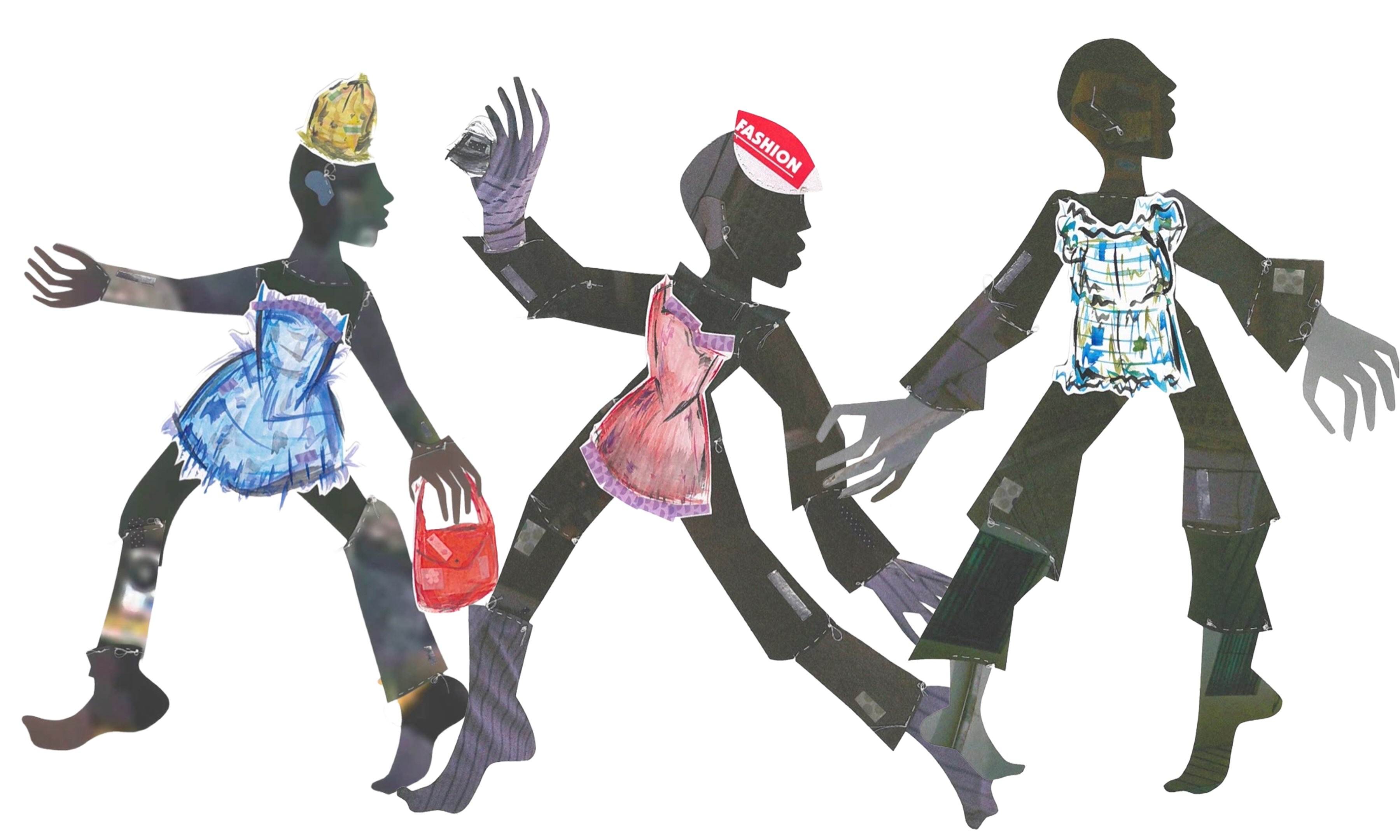
Instead of making dolls, designers take from the visual vocabulary of the fantastical worlds that dolls occupy to elicit a sense of wonder. Inspired by paper dolls and responding to the phenomenon of viewing fashion on screens, Jeremy Scott created the trompe l’oeil ensemble for Moschino’s 2017 Spring collection. Tricking the eye, the pleats and drapes we see are actually printed on, flat rather than three-dimensional. The skirt’s side volume and even the bow on the lapel are but flaps of fabric that trick the eye. For the finishing touches, Scott doesn’t forget to include “doll tags” on the sides of the skirt. Playful and humorous, yet not devoid of commentary, what dolls infuse in fashion is a revitalizing sense of possibility.
Elsewhere on view, we find a necklace by Martin Margiela, made from his childhood G.I. Joe’s dog tag. The tag was enlarged 5.2 times from its original size, and the result amplified its imperfection, its bizarre proportion, and its awkward fit; yet hanging on the mannequin, the absurdly large dog tag becomes an absolute statement piece. Refusing to take fashion overly seriously, dolls, with a childlike imagination, remind us of our original wonder in fashion.
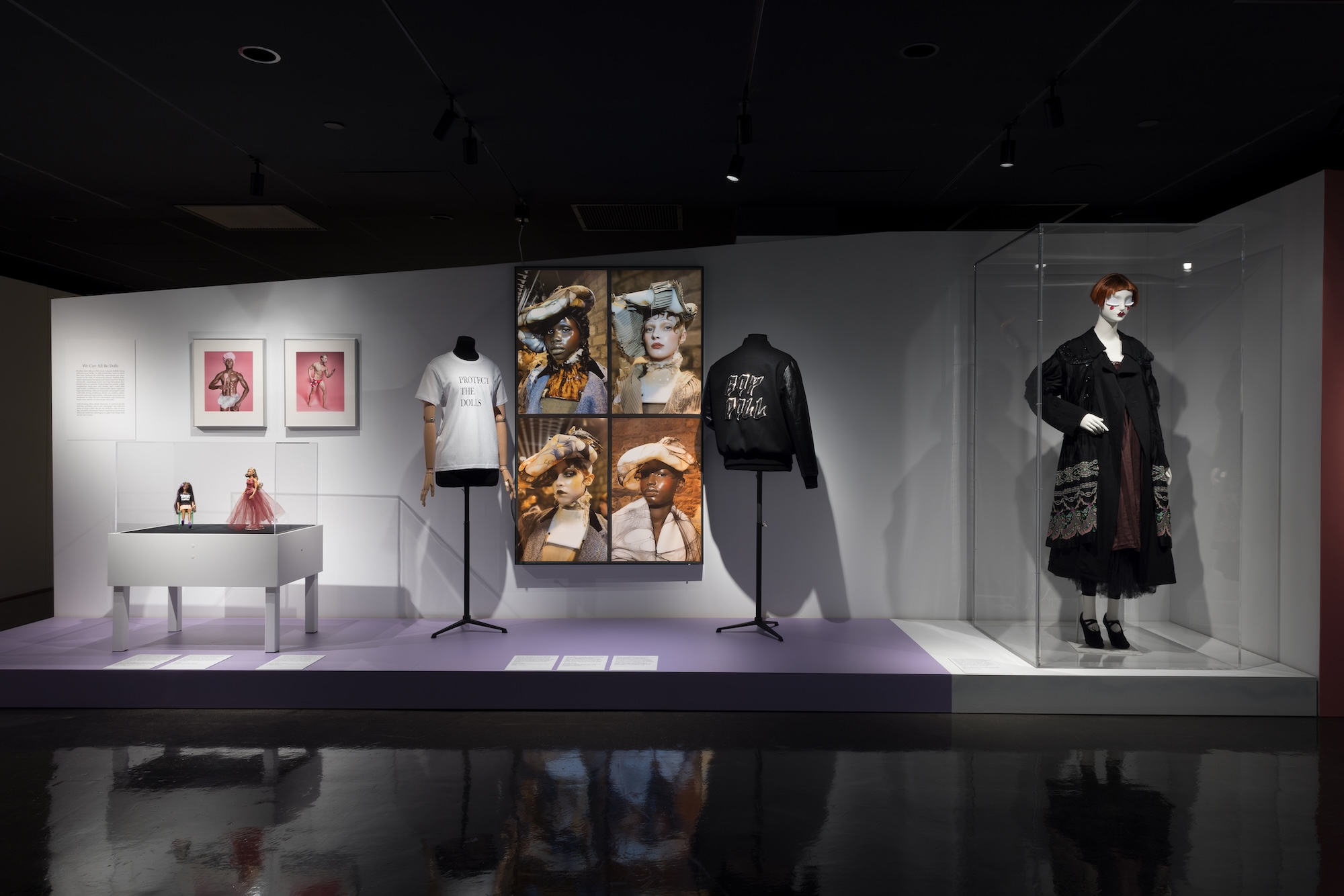
In glimpses, the exhibition acknowledges the troubling aspects of dolls, in particular, their stereotypical representation of women as well as the largely Eurocentric beauty standards they perpetuate—fair complexion, large eyes, rosy cheeks, small nose. “Many women dislike being referred to as ‘dolls,’” one plaque reads. Yet the exhibition doesn’t delve deeply into the subject; instead, it focuses on the designers who reimagine what it can mean to be a “doll,” featuring Black Dolls Matter’s black and brown dolls, Conner Ives’s “Protect the Dolls” trans-empowering t-shirt, Pat McGrath’s inclusive shades of “porcelain skin” makeup (for Maison Margiela), and Hedi Slimane’s gender-subversive “Boy Doll” jacket (for Celine Homme). These works are poetic in the way designers reshape the associations of dolls, but understanding what must be reshaped is no less important: a thorough account of dolls’ less innocent cultural influence can exist alongside these designers’ ingenious reimaginations.
Nevertheless, the exhibition invites us to think back to a time when fashion was fused with play. A dedicated section presents stories of dolls shared by the public. Just as many designers in the exhibition trace their interest in fashion back to childhood dolls, many public storytellers recount discovering the self, fashion, and creativity through early play with dolls. “To be sure, play is always liberating,” Walter Benjamin once said in an essay on toys. Through this spirit of freedom, the exhibition offers a refreshing lens on fashion that brings out the children in us.
Doll Dressing is on view at FIT Museum from September 16, 2026 to January 3, 2027.