
Editors' Selects: October 2026
Review
Brittany Adeline King’s practice spans collage, painting, installation, education, and performance. Over the past several years, her painted and embroidered wallworks have evolved towards woven paper dolls assembled from photographs taken in Liberia and scans from JET Magazine. As King prepares for several fall exhibitions, she’s taken refuge from New York in favor of “the romance of a small, New Jersey town.”
On a warm summer night in August, King drove in from Maple Shade to meet Alex Schmidt in Fort Greene Park. The two sat at the Prison Ship Martyrs Monument, upon which King spoke about her process, practice, and relational attachments while installing a body of new works on the monument itself. The pair spoke as paper dolls blew in the breeze.
Alex Schmidt: You’ve been creating your dolls in your New Jersey hideaway. What’s that like?
Brittany Adeline King: I’ve been producing these dolls and hanging them across the walls surrounding the bed. Every morning I wake up and keep at it. Some days I walk to the library right down the street and rent indie teen books; I look for the covers that really speak to me, like the early 2000s alternative stories about girls from nowheredom. In the one I’m reading now, she's really good at singing and gets discovered. I grew up on these kinds of books. They put butterflies in my stomach. I enjoy stories where anything can happen.
AS: These [gesturing towards King’s rapidly expanding installation of dolls] are made with matte photo paper, and are doll-sized. For your Hunter MFA thesis presentation, the dolls were palm-sized. And in your Long Gallery show, the work was human-sized. Can you share more about medium and scale?
BAK: I like the paper coarse and dry so that it’s accessible for painting, sewing, stamping, adhering, etc. I'm trying to get away with piling on as much medium as I can. Scale, on the other hand, is informed by the ideas around where the dolls are living. I tend to make a new series of dolls for every show.
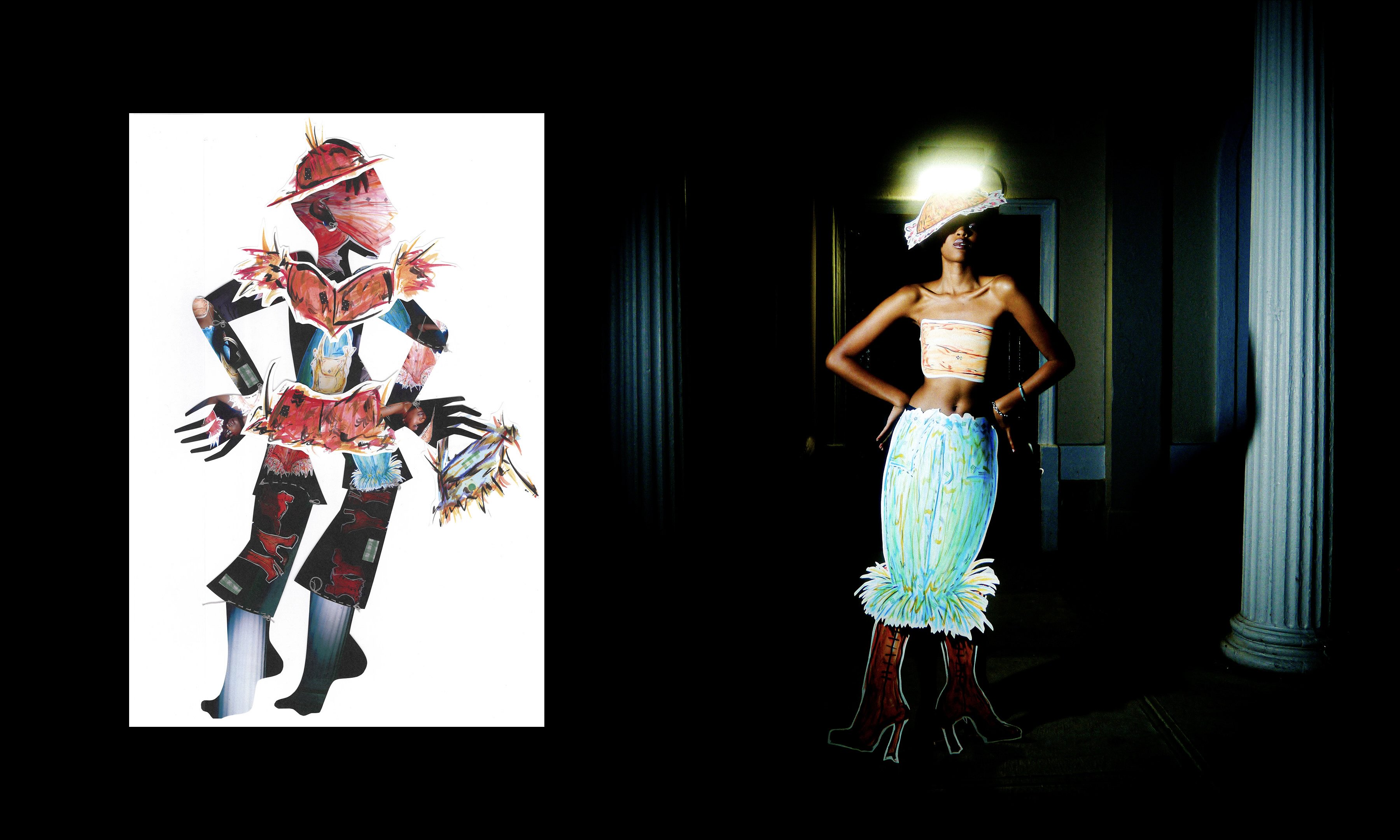
For upcoming projects, I’m thinking about My Scene dolls. In the early 2000s, Mattel realized Barbie was kind of stuffy, so they pivoted to My Scene. They'd come with a CD in the box and were like, Madison hangs out uptown and has big ass boots and a boho bag. She's cooler than Barbie cause she's not home being domestic. My new dolls go uptown. My thesis dolls did not go uptown. They stayed in Tribeca.
AS: Why do you create paper dolls? Is it because of their portability? Do you have a specific relationship to paper?
BAK: Dolls were big in my life when I was younger. When I first started at Hunter, I remember wanting to build an army of them. I didn't know what I wanted that to look like, but I favor endurance-making. Like, how many of my dolls can there be in the world? Paper is the most accessible medium (right now) because I can make them from anywhere. I have my kit with me; I could make some right now. When I go to Liberia, I make them and give them to kids I run into.
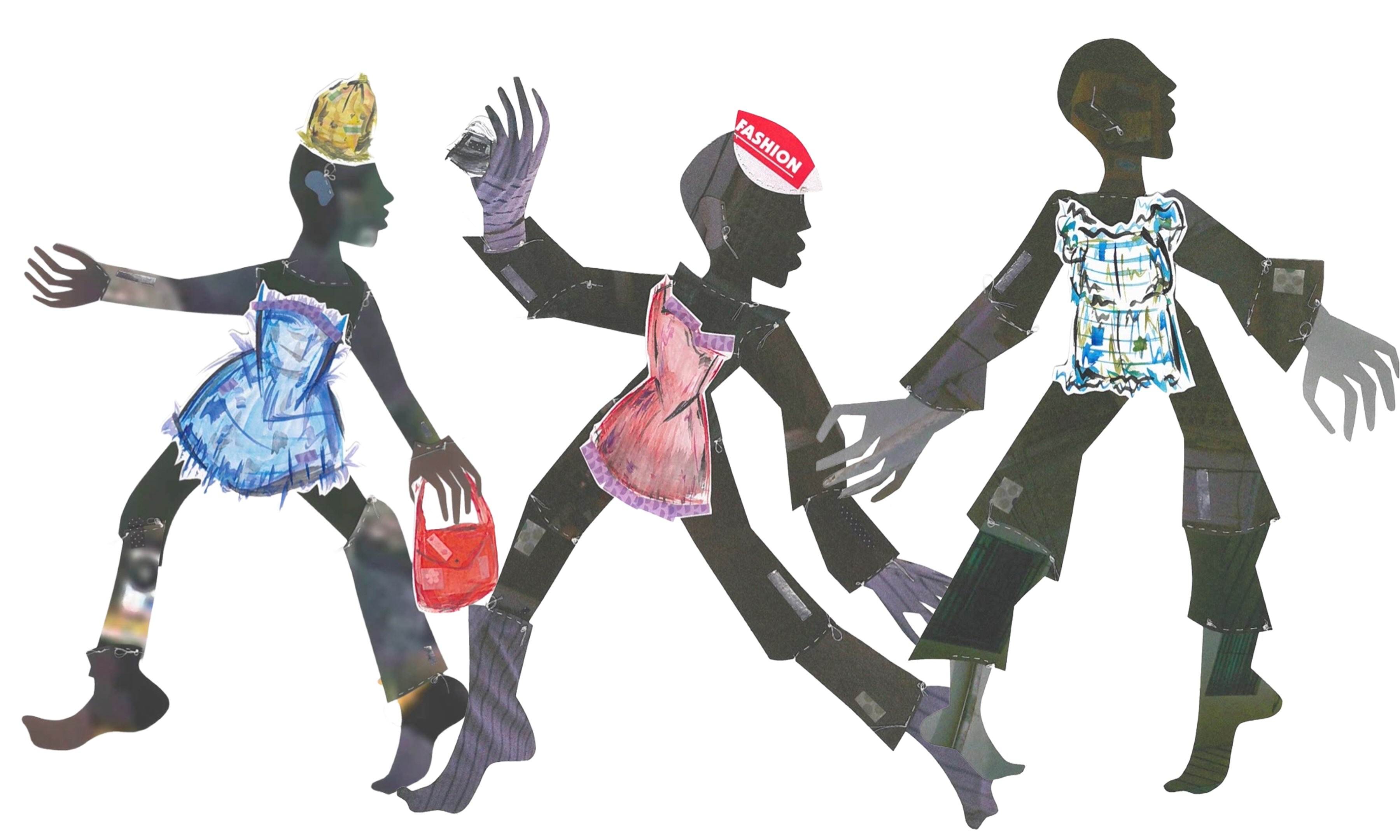
They’re implied by what they’re made of instead of what makes them. This idea is especially important because I use photos I took, my paintings, or magazine clippings I engaged with as a kid for their bodies. Each one contains my memories. An arm is a beach view, a leg is a motorbike tire, and patterned gloves are cut from an image of my cousin Chukwu’s shirt during a long walk in Sinkor.
AS: You created new work for this interview. Can you share a bit about the process?
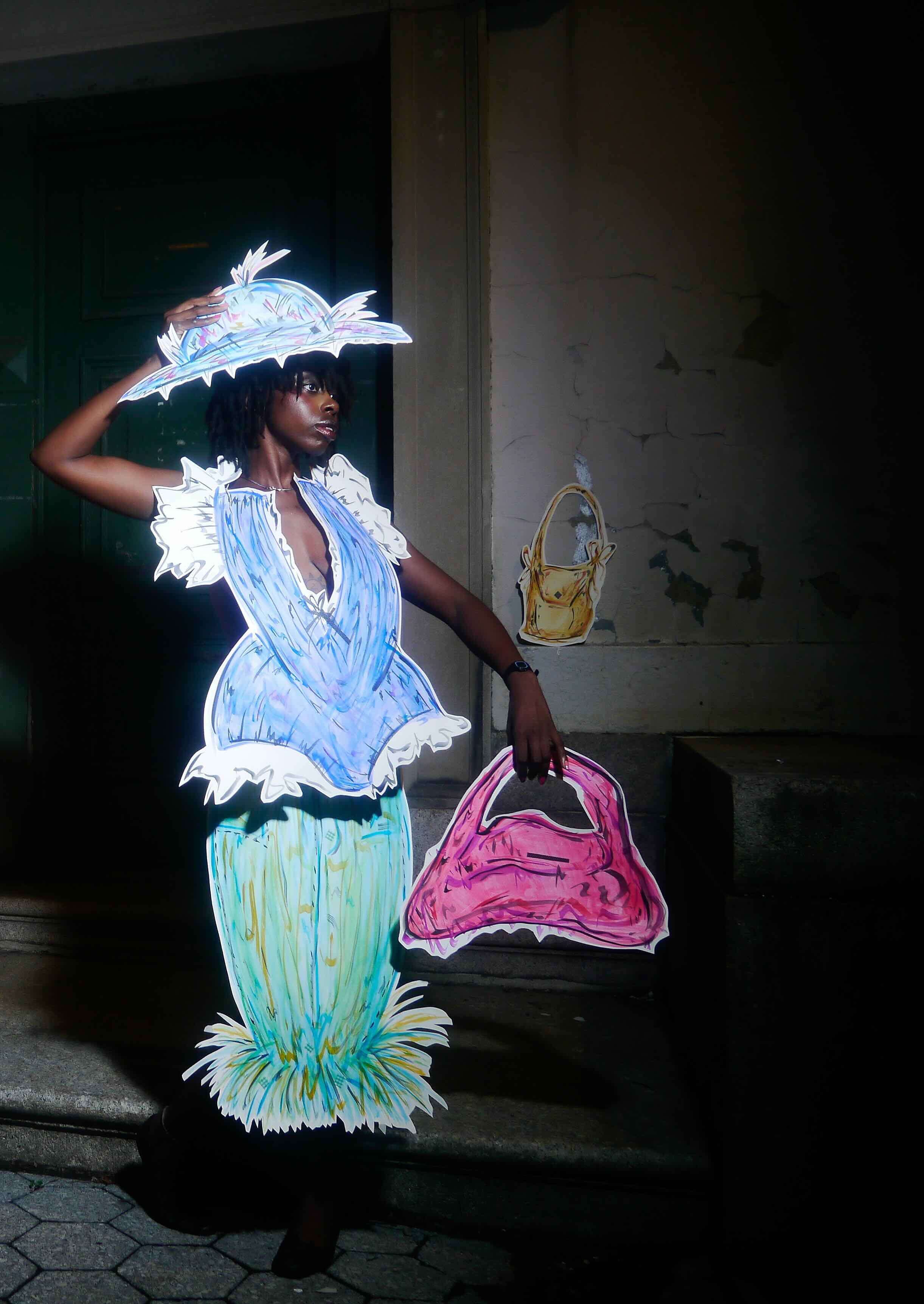
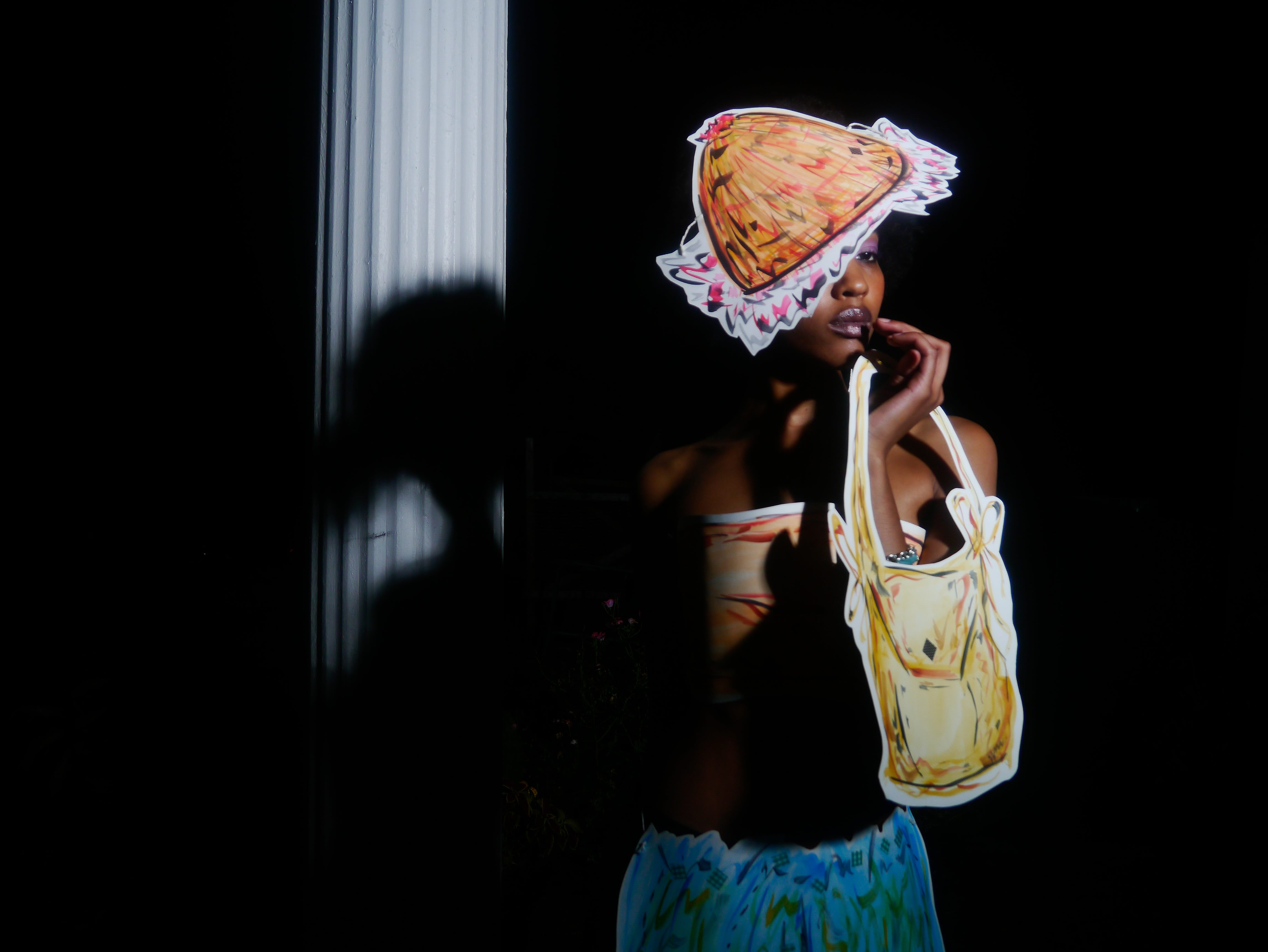
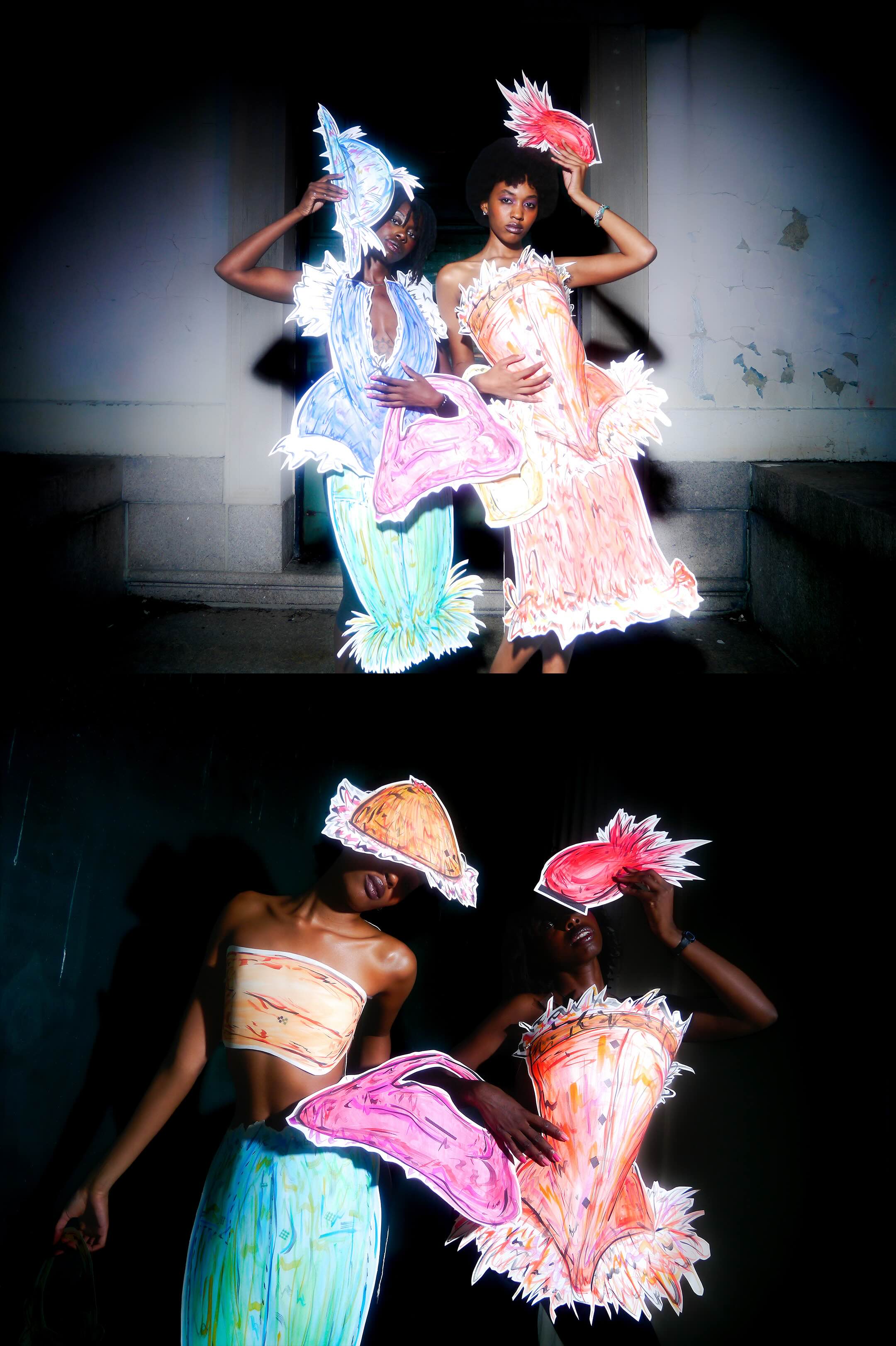
BAK: The idea came together when Gabrielle Archibald (Creative Director of the feature) tapped me to make human-sized paper clothing for a photo shoot with Jalen Turner (Photographer) that would encapsulate what it means for a doll to come to life, like Life-Size (2000) with Lindsay Lohan and Tyra Banks. We did a late-night shoot in Prospect Park, styled by Malachi K. Ward with makeup and lighting by Kia-Patra Allen. There were many mosquitoes. It felt like America's Next Top Model because it was like, lock in. Simultaneously, my buddy ein is creating a stop-motion animation that includes images from the shoot alongside miniature dolls of me and Gabby in smaller doll clothes I made, inspired by my collection of Japanese Washi tape and color palettes from my favorite Studio Ghibli films. This video will be available for viewing at my upcoming exhibitions in the fall.
AS: Are these new modes of working for you? How do you notice your process transforming?
BAK: I’ve always loved working with people whose practices I admire. The shoot and projects behind some of the imagery for this interview showed me a lot about the expansive possibilities of my dolls. I’m really thankful for it and everyone involved. As I begin to think about clothing and accessories more, I become curious about questions like: What do my dolls wear outside of these scans and photographs? It’s a brand new chapter.
AS: What contemporary artists and cultural references are you looking at? I know you love Janet Olivia Henry.
BAK: She's really great. I worked with her in her studio. It was really inspiring.
AS: You worked with her? I didn’t know that!
BAK: Gordon Robichaux hooked it up during my time working there while at Hunter. I was her studio assistant for a bit. Working with her taught me more about miniatures. If she was doing a gallery rendition, she would make tiny, packed art boxes or have a little level hanging around.
AS: Was that for the work itself, or are you referring to a mock-up?
BAK: This was for the art itself. I saw her work for the first time when you and I went to the opening of Just Above Midtown: Changing Spaces at MoMA in 2022. She had this small black artist doll in the studio with this white curator doll, and you could feel the tension. There was even a miniature Evian bottle. After that show, Gordon Robichaux went on to represent her. I got to meet her at the gallery, and things went from there. She’s someone I look up to. I was stoked when she came to my thesis show. Thank you Janet!
Another artist who is really huge for me is Susan Cianciolo. I love how she engages with installation. It all feels very ritualistic, fantastical, and materially promiscuous.

AS: You have worked with young students in Liberia, and we share the experience of working with elders through Brooklyn Art Council’s SU-CASA program. I’m curious about the reciprocal relationship between you and your students.
BAK: When I was home last year, this incredible curator Marcelle G. Yhap connected me with the school that she works with. I showed up with paper, scissors, and different coloring devices for doll-making. I taught preschoolers to fifth graders, going from class to class. I also taught the kids about what contemporary Black artists are doing, so it was an art-historical course paired with making. We studied Faith Ringgold, Romare Bearden, and some of my work.
My students were leaving out things like ears or feet on their dolls. And I told them, how are they gonna walk? How are they gonna hear? They would laugh. When I came back, I started sewing ears onto my dolls because little phenotypes started to matter as the students made me more conscious of thinking about figures in a coming-to-life way.
AS: Where was the senior center you worked at? What was that like?
BAK: It was at a rec center in Borough Park. I taught painting, which I was a little nervous about because I'm cross-medium and not the type of person to lead a conversation about painting with a capital “P.” But when you're in a room full of beginner artists in their 60s, 70s, and 80s, they think you’re the best painter they’ve ever met. It gave me the confidence to start thinking about the medium with a sense of tact again.
AS: How do you respond when your students say “I can't do that”?
BAK: I didn't have that.
AS: What?! You never had it?
BAK: No. Like, I wasn’t having it. When they would hit me with the, “Oh, I'll never be good, I’m a bad artist,” I would tell them, “I have no idea what you're talking about,” “I don't know what that means,” or “I've never met a bad artist in my life.”
I am really patient. I was raised by my grandmother, and she instilled this way of being into me. You can wait things out. I extended this to my students and saw their painting skills grow over our time together. It was great to see.
AS: Do you give yourself and your practice the same grace and patience that you give to others? Do you say to yourself, “I never make a bad thing”?
BAK: No different than others, I am my own worst critic. I've crumpled things and gotten rid of them out of embarrassment. Lately, I'm getting better at the additive. Instead of warding things off, I see what I can do to respond or resuscitate.
AS: Since you began creating within this abundance framework, the pressure is released for individual works and gestures to be perfect on their own.
BAK: In the studio setup I have right now, there are upwards of 50 dolls on the wall. I create the bodies in line with the Mattel build: torso, arm, arm, leg, leg, feet, hands, head. Once I have the body sewn together, I might think of a cute little fashion moment to paint—a hat, a skirt—but I do this all in pacing.
Slowly, I'll place new additions on the wall to assess how they fit into the grand scheme of the family. This element is strong because they are bigger than me now—both physically and metaphorically—especially considering all I've ever made.
AS: They move in relation to each other. They aren’t solitary individuals. They are a body of people.
BAK: Yup. They're the boss now. I listen to what they want, not the other way around. Growing up, I went to Liberian banquet hall parties where everyone wore these crazy outfits. They've got all these sequins and ruching and traditional patterns. You won't see the same outfit twice because everyone's gotten their outfit tailored. My family goes to the tailors religiously; I go every now and again. Every West African person has that person they go to to look their best. I've always been inspired by a room full of unique fashion. These dolls let me express that interest.
AS: In these parties as well as in your work, is everyone generally related? Do they all know each other?
BAK: There is a relatability in these spaces as much as in my doll world. Similar dance moves. Similar designs. A cousin here. An auntie there. No doll is on their own. Exhibitions allow me to organize my mind. The works I made for the Atlanta Contemporary show are the Dokafleh family. The Long Gallery works all belong to a black acrylic paint family deriving from my thesis ideas. When the different families come together, we’re in the banquet hall again.
AS: What about age and time period?
BAK: The thesis family were babies made at a time when I was also a baby, in terms of my practice. The Long Gallery family is older and ancestral; they contain a lot of photos from Liberia in a direct way, wearing textiles and woven from scans of my thesis dolls. They reflect back on themselves.
The My Scene dolls play a lot, especially with their accessories. They’re young with flirty expressions, yet wise enough to be very aware of themselves with deeper imagery in their silhouettes.
Generally speaking, a big time period for me is 2004. I was in the fourth grade. A lot of things happened, and I came to a lot of realizations. When I get frenzies of making, a lot of what I'm remembering is from that time. So technically they all live there.
AS: You’re preparing for a couple of two-person shows. Can you talk a bit about those and the process of working towards them?
BAK: In September, I’ll be exhibiting with Imani Campbell at Pat Reynolds’s Ptolemy in Ridgewood, Queens. I’m really excited about that. Pat and I worked together at Magenta Plains in 2018, and Imani is one of my favorite artists. She works from a place of divine understanding, and her textile expressions are profoundly comforting. There are many surprises to share.
I’m also preparing for a two-person show with Brianna Perry, curated by the amazing Grace Sanabria for Patio, her new space with Anthony Torrano. I'm excited to see what happens when I collaborate with these incredible ladies who work from a sense of girlhood and historical context. Brianna Perry is insane in the best way. The show that they did at Room 3557—you know when something just fizzles in the back of your brain?
Wow, the dolls are getting antsy now.
AS: They're feeling the wind.
BAK: I'm into that. They're very kinetic. I'm gonna let you touch it.
AS: It does have some kind of…
BAK: Body …
AS: My last question is not a question. You are so close with your sister. If there’s anything you want to say about her, I want you to have a space to share it here.
BAK: Chasing art in New York made me such a fallible figure, but as we grew, she always showed me grace. And with time, as your DNA becomes a unique happening in the world, it’s healing to share it. She's always given me safe harbor and cheered for me, and I for her.
She plays classical piano with the speed and grace of Nina Simone. She has fashion brands. She uses her tech knowledge to assist nonprofits in the city. She's doing it all with this balance that honors her and where we come from. Not to mention she’s genuinely the funniest person I know, and I’m pretty funny, so that says a lot.
Sisterly kinship is just like a shooting star; you don’t even know what is really happening. Then suddenly, you have a best friend for life. Thank you Nans.
This interview has been edited for clarity and length.
Alex Schmidt (b. Chicago, lives and works between Brooklyn and Forestburgh, NY) is an artist and educator. They present their solo exhibition Midden at WINNIE in the East Village (September 24 through October 18, 2026), open by appointment only.
Tulein is a Palestinian interdisciplinary artist based in Queens, New York. Her work brings together mixed media animation, collage, puppetry, illustration, photography, and found objects.
kia-patra is an NYC-based photographer and body artist. Her work integrates body art into studio photography through mark-making, texture, and the human form, creating images that explore beauty, nature, and identity.
Malachi K. Ward is a New York–based stylist, event coordinator, and creative director. Through his work, he explores the intersections of fashion, identity, culture, and visual storytelling.
Born and raised in Brooklyn, Gabrielle Archibald is a creative director, stylist, model and law student. Her work is the embodiment of the trials and tribulations of the Caribbean American dream, coupled with running motifs of afro-futurism and surrealism.
Jalen Turner is a photographer with roots in both Texas and NY. His focus is on creating surreal imagery that connects the spiritual with the physical realm of life through color.
Brittany Adeline King will present two-person exhibitions this September at Ptolemy and in October at Patio, both in Ridgewood, Queens.