.webp)
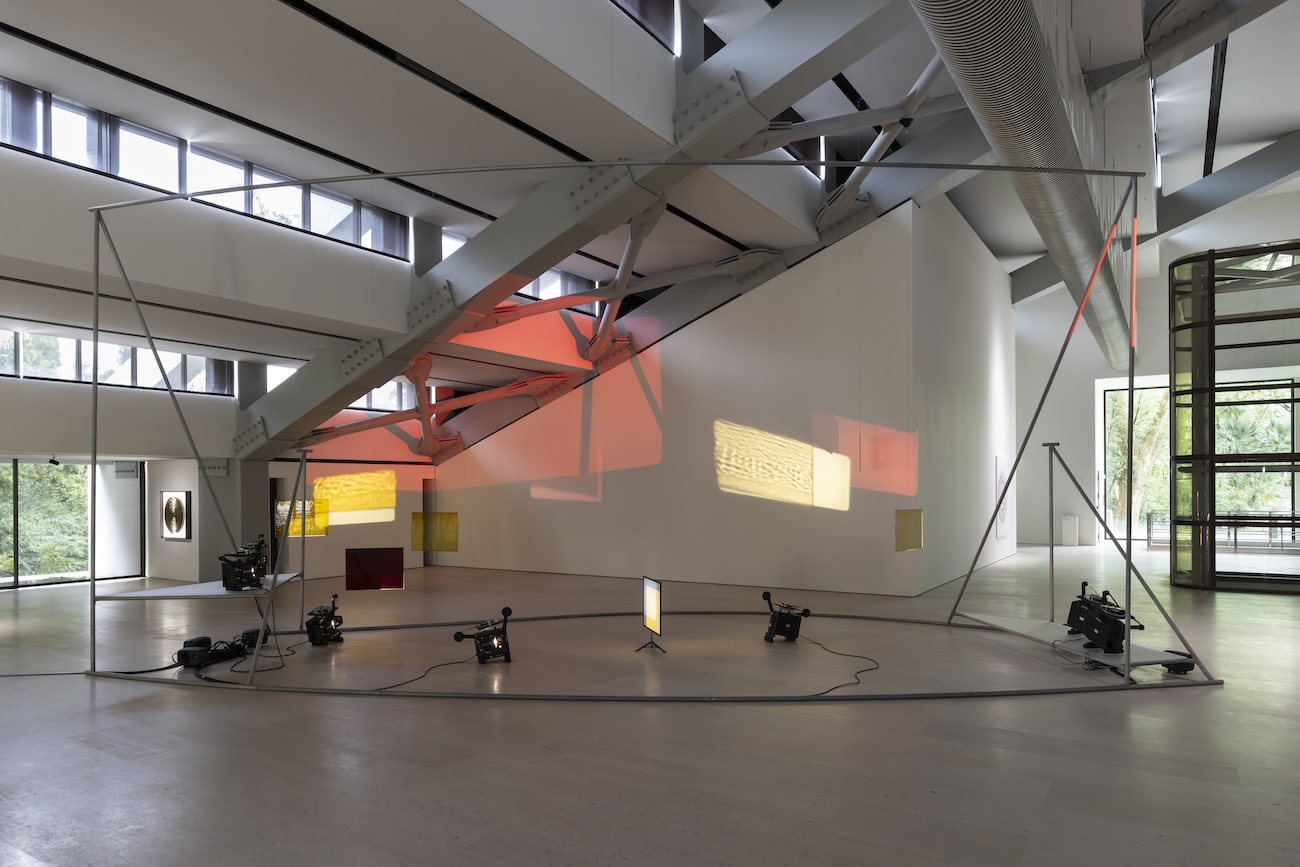
Rosa Barba: “Drawing Vocabularies” at Centro de Arte Moderna Gulbenkian
Review
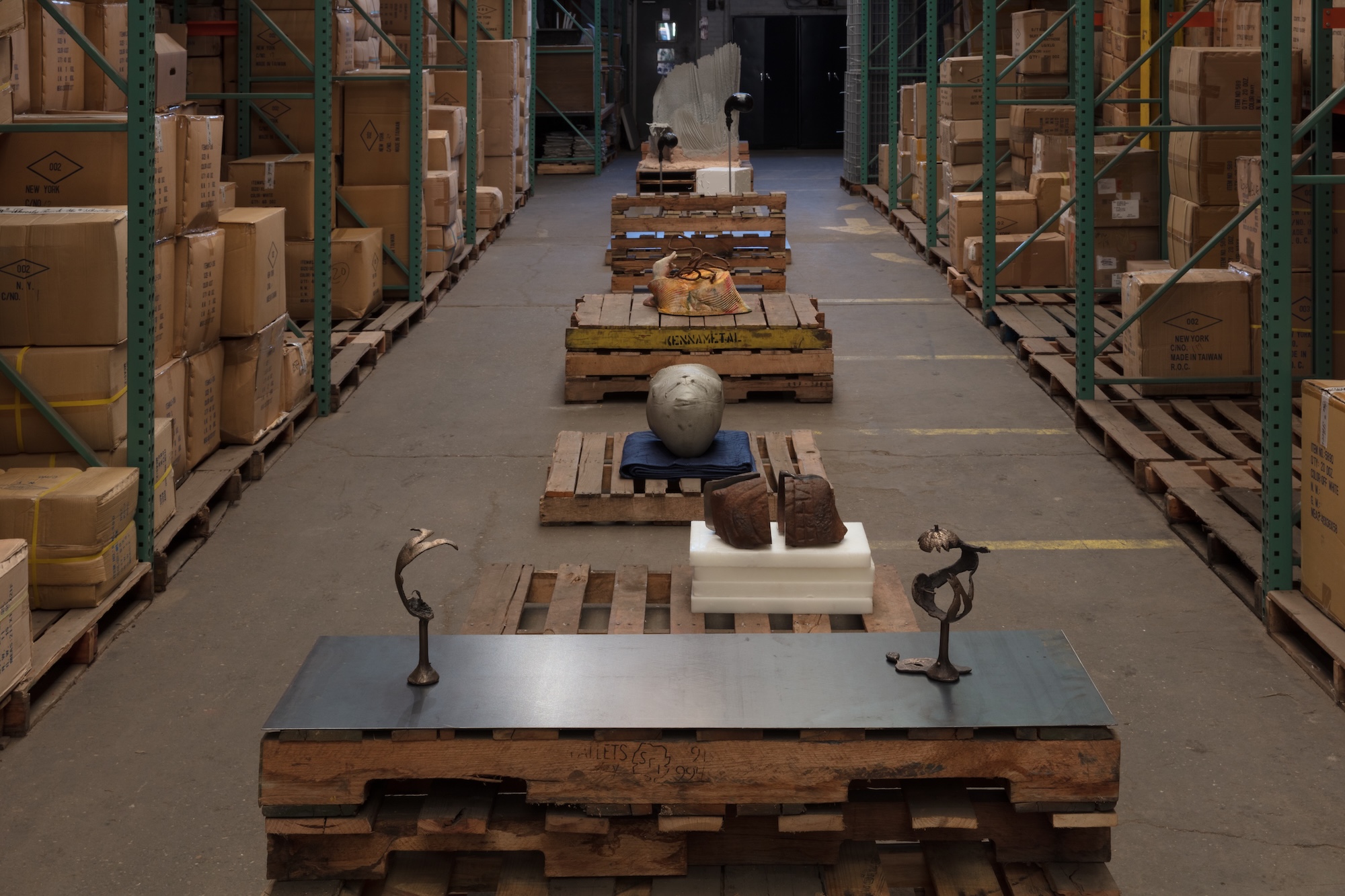
At Sheerly Touch-Ya Warehouse, a distribution facility for a pantyhose company in Glendale, Queens, twenty-five cast sculptures are on view throughout the entire month of June. To see these objects, you must pass a local community garden and walk through the Jewish Theological Seminary’s parking lot, entering through the back of the warehouse. You can glimpse the show through the building’s open loading dock. The works are displayed on shipping pallets sourced from the warehouse, arranged in a line that bisects one aisle. The sculptures loosely correspond to a series of artist molds installed in an adjacent aisle, embedded in the warehouse shelving.
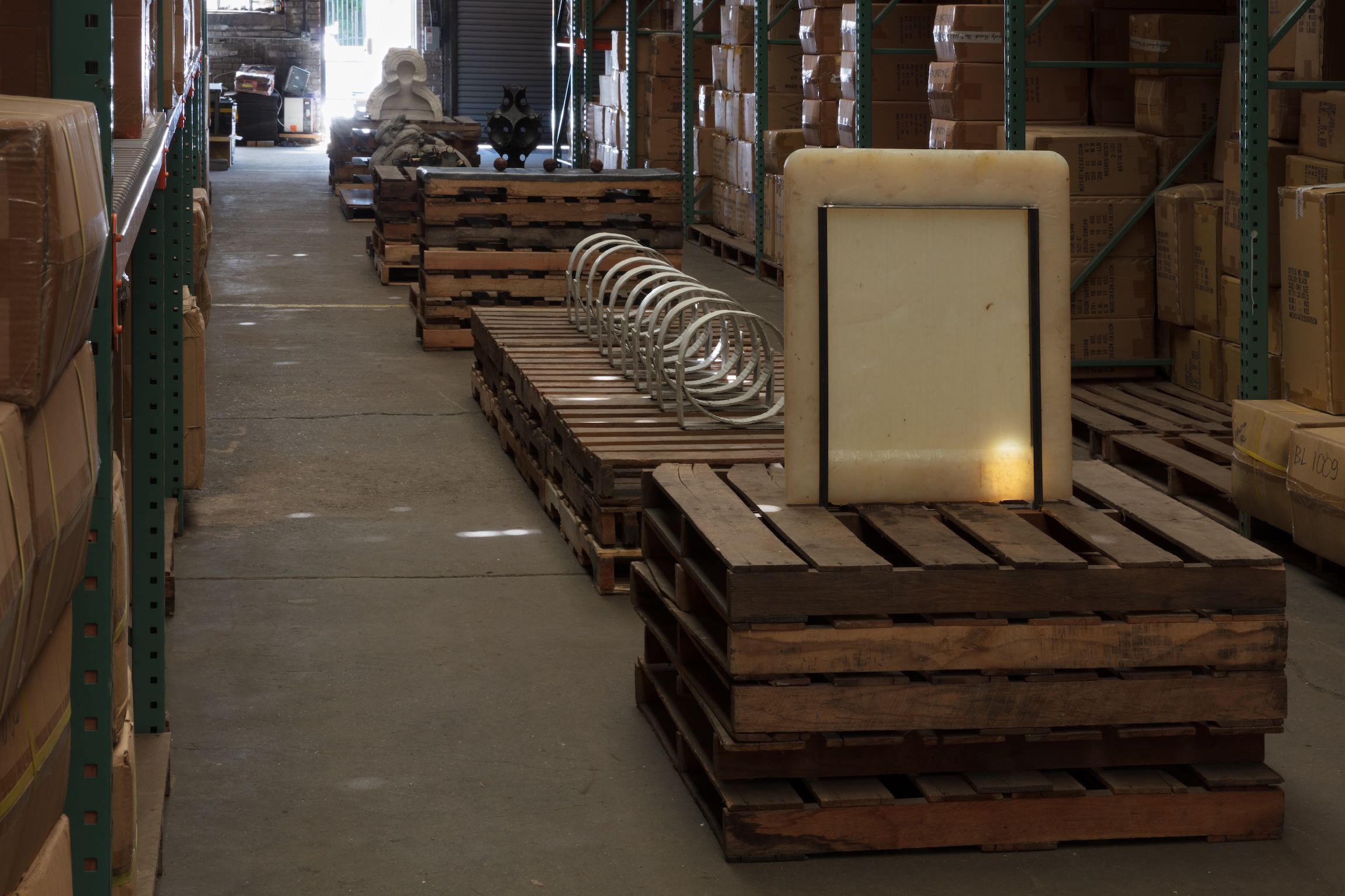
As I entered with the curator of the show, Isabella Achenbach, she gestured up to the warehouse’s skylights coated in a thin layer of paint, diffusing direct sunlight. Over years of wear, the paint has slowly chipped away, and at noon, powerful beams are able to reach Fill’d Them, Emptied Them, dotting the cast forms and muddled shipping pallets with dusty light.
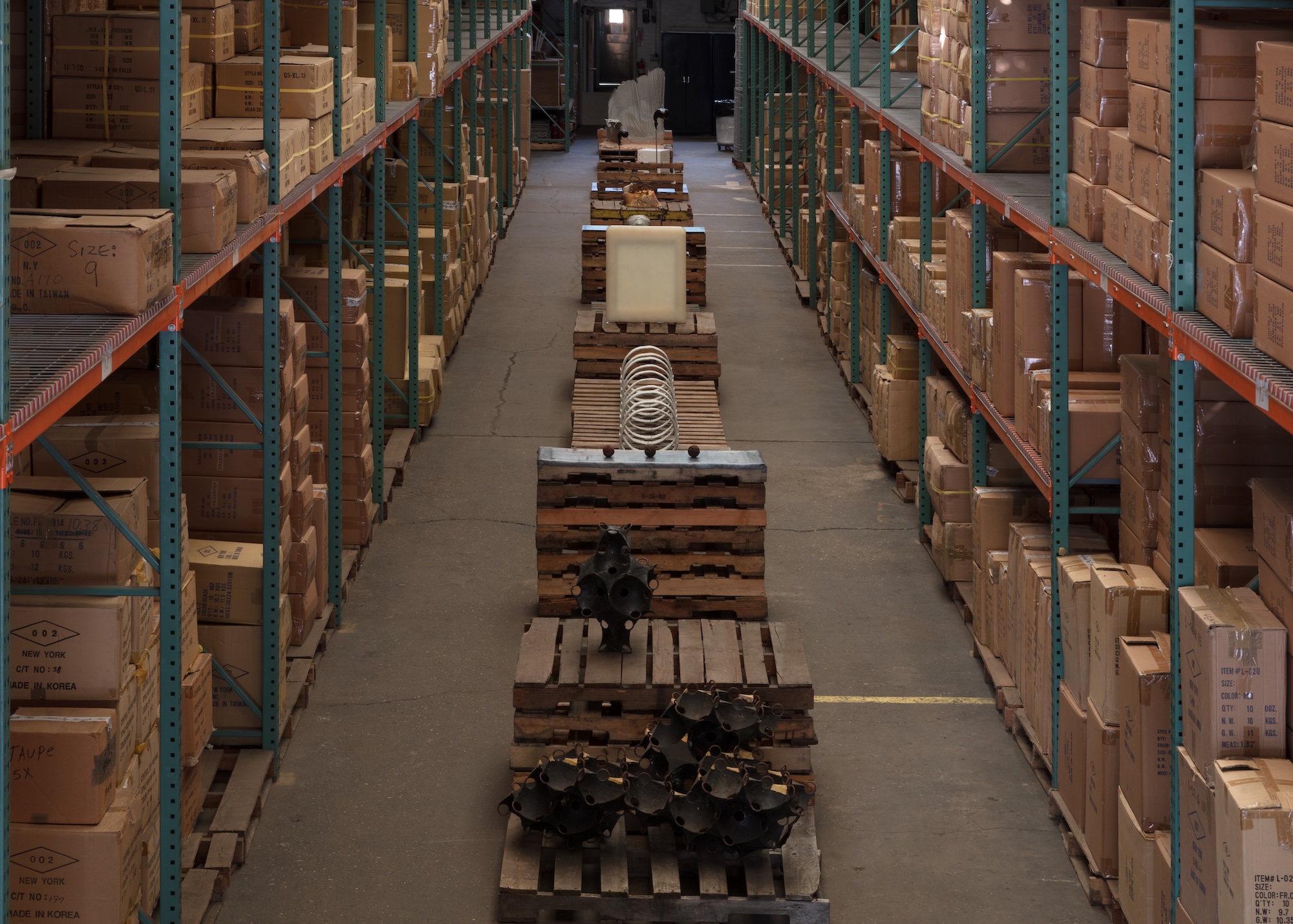
Achenbach was interested in curating a wide range of approaches to casting, from artists working with it conceptually, like Jacob Jackmauh, Lotus Kang, and Grant Mooney, to artists who work with the method as a means to an end, like Dominic Palarchio and John Duff. The varied levels of engagement cohere into a survey that centers emerging artists juxtaposed with more established figures such as Matthew Barney, Jean-Luc Moulène, and Helmut Lang.
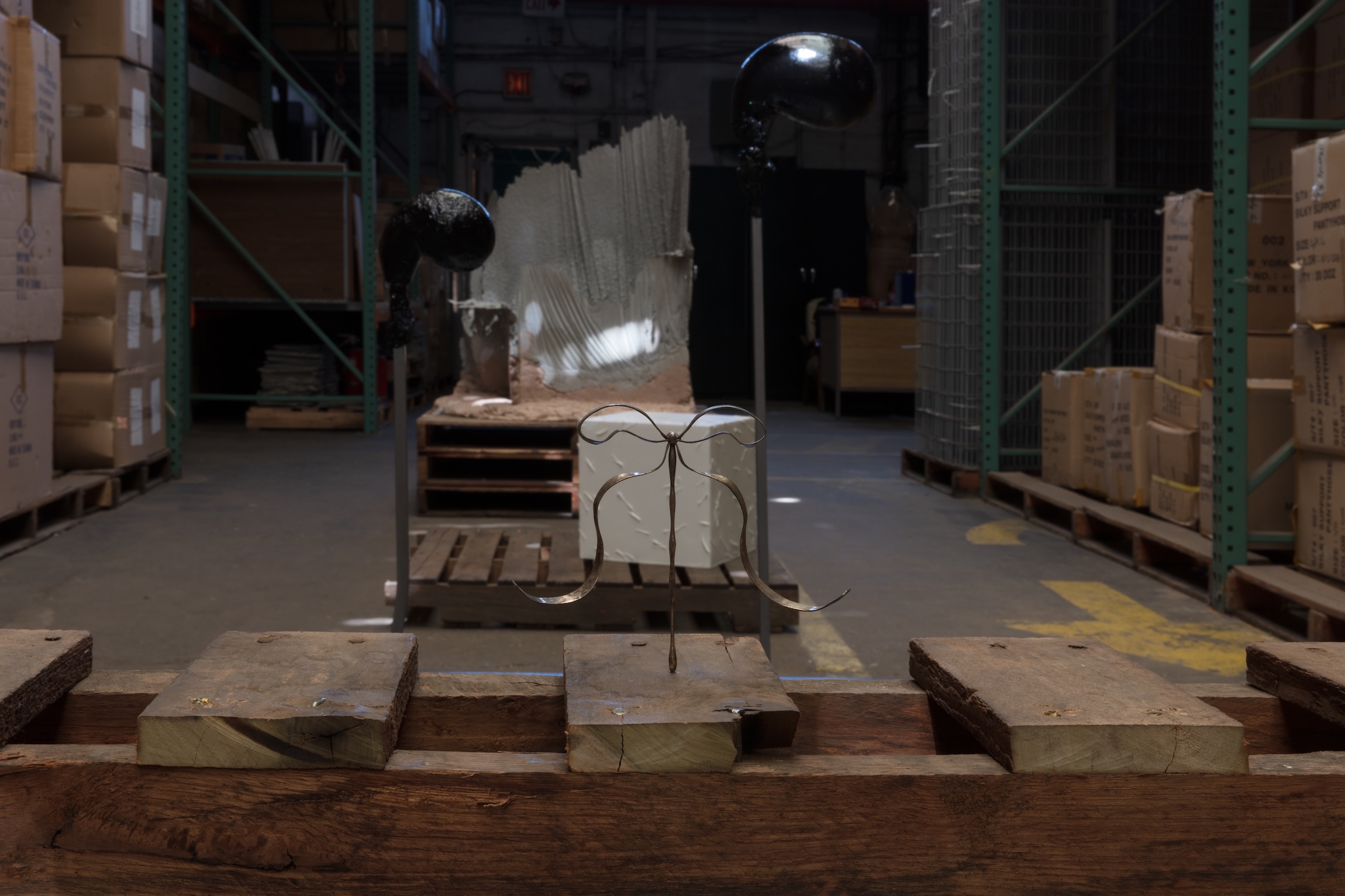
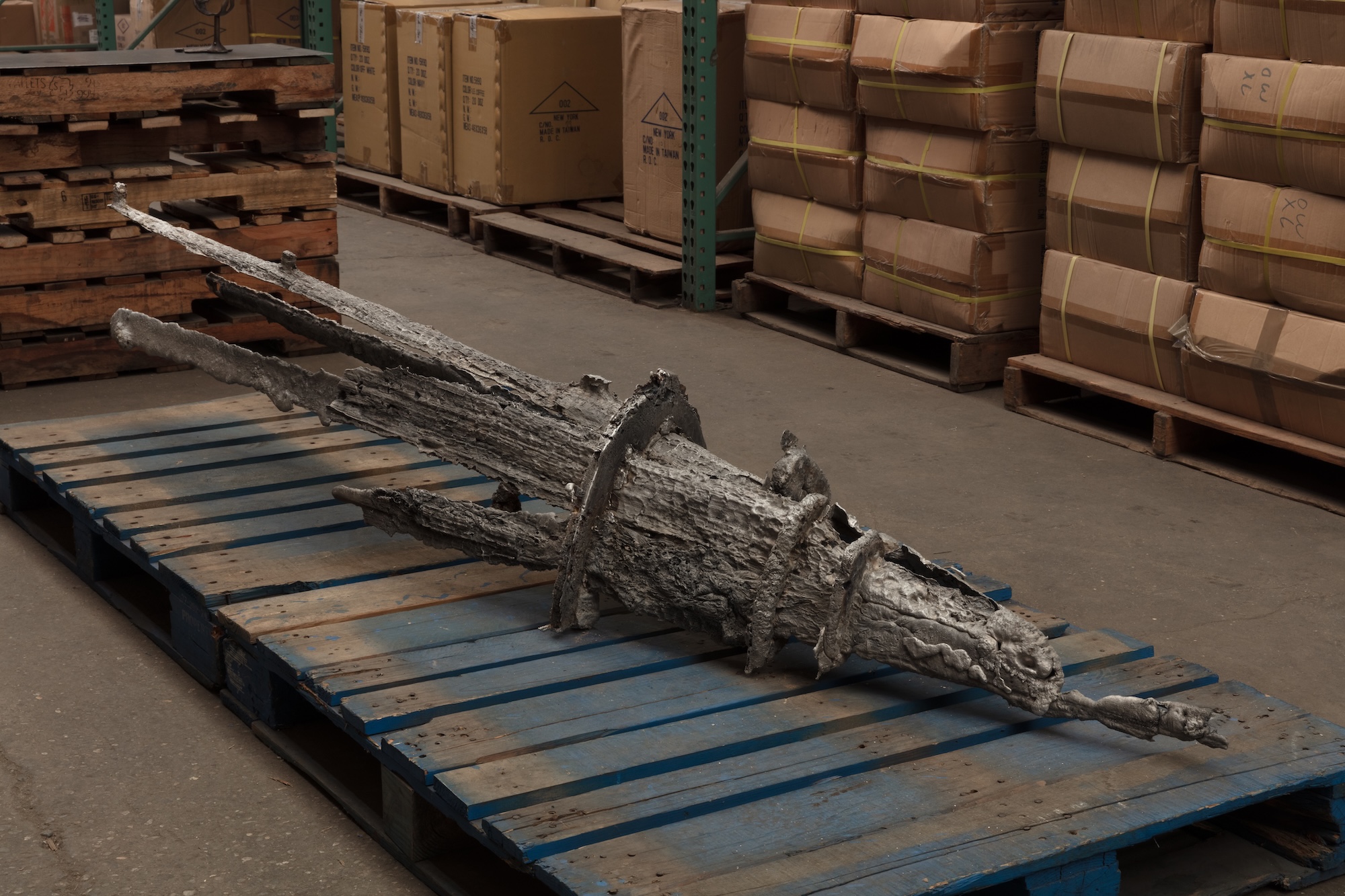
The show is materially rich, dominated by metal: Keith Edmier’s bronze cast of his late father’s finger opens the show, followed by John Duff’s enigmatic resin-and-steel forms, a series of concave impressions that materialize the negative space between now-absent globes. Some artists mobilize casting’s more traditional capacity for replication, like Michaela Bathrick with Os (2024), a set of ten cement-cast arches that join into a vertebral structure. Erik Nilson’s mass of aluminum-cast tree innards and Coco Klockner’s delicate silver bowed sounding rod—invoking traditional jeweler’s casting methods—speak to the enormous breadth of exhibited mold-making techniques.
The shipping pallets act as braces, stabilizing the forms as static objects. Towards the back, Jean-Luc Moulène’s Tronche / Doctor Doom (Paris, 2014) (2014), a solid concrete impression of a Halloween mask, sits carefully on a blue moving blanket. Ben R. Clement’s Enemy Release (Göbekli Tepe) (2025), the only sculpture in the show made of iron, has a heaviness lightened only by a globe’s impression in the object’s interior.
Justin Nalley’s Lifetime Cast (2026), a soap cast of a folding table, bifurcates the aisle in its upright position. Notably, Lifetime Cast resulted from a one-part mold that cast only the table’s top surface. By revealing itself in the round, Nalley’s sculpture subtly addresses casting’s ability to transcend its reference materials, presenting moldmaking as a generative mode of extension. Lifetime Cast, along with Matthew Barney’s Replacement cast for unit BOLUS (1991–present), sweat and sag in the early summer air.
The next aisle over, where visitors are naturally ushered following the main grouping of sculptures, is populated by artist molds tucked intimately into the warehouse’s shelving, interspersed between stacked cardboard boxes. The molds range from complex, multi-part forms, like Yu Ji’s, to ad hoc, found object matrices, like Palarchio’s metal tea sachets, to mere remnants, like Helmut Lang’s shattered glass test tubes. The show proposes a game of reconstructing connections between molds and sculptures, backtracking through the artists’ processes.
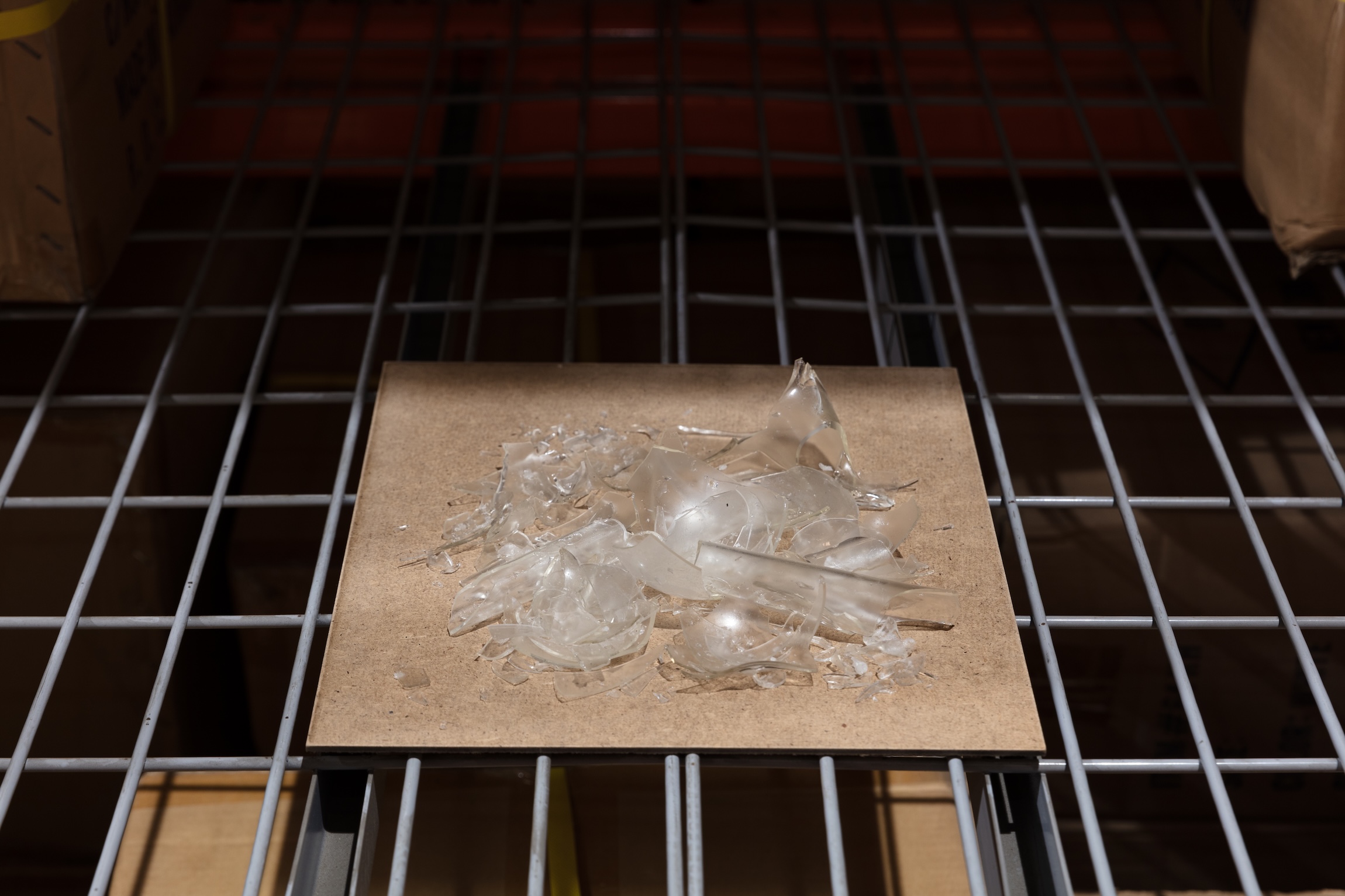
Like printmaking and other forms of art-making involving a matrix, casting complicates art’s value systems. It brings into question what constitutes “the original” through relationships between the matrices and generated objects. The molds in the show operate as tools, some precious objects, others resurrected rubble. While the final sculptures maintain exchange value, the molds have their own use value, carrying the physicality of labor.
But through their inclusion, the molds also take on their own aesthetic quality. Yu Ji, for example, has graciously consigned molds actively in use. Away from the studio, her molds develop a sense of stasis, waiting to be filled again. The show can be understood as a back-and-forth between process and product; however, through the array of casting methods, Fill’d Them, Emptied Them also becomes wholly sculptural—objects that have made contact and been ripped, wrestled, and expelled from each other.
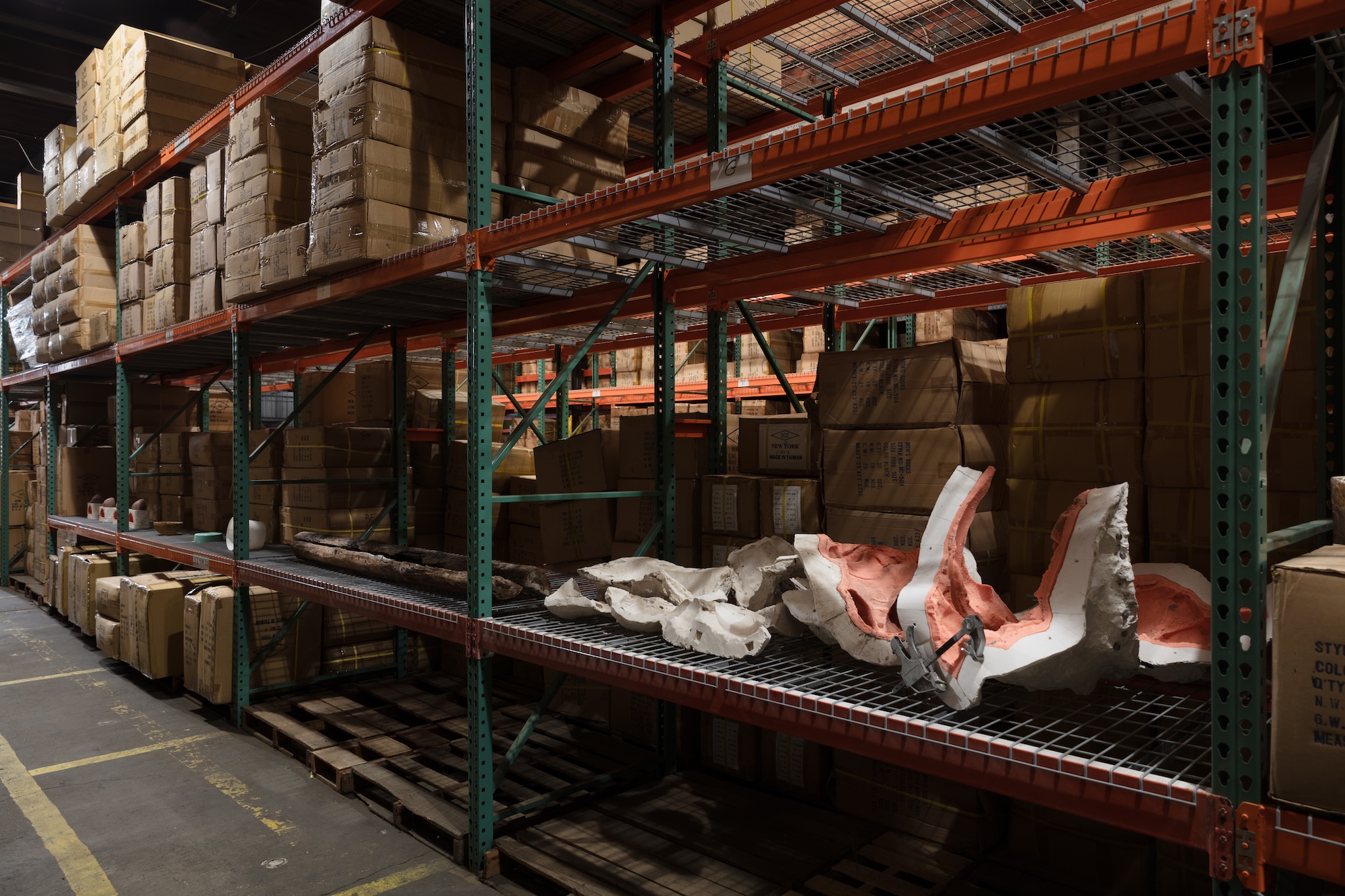
A warehouse is an interstitial space where commodities rest between sites of manufacture and consumption. This venue confronts us with often unnoticed systems underpinning everyday exchanges; here, commodities remain suspended, their value temporarily neutralized in cardboard boxes. Amidst these boxes, artist molds appear as another class of container—objects likewise defined by what they hold and produce.
The art world lives within the parameters of New York’s real estate-industrial complex. Land continues to be spliced, reconfigured, and redistributed. Artists and gallerists compete for property, taking advantage of occasional openings between leases, developing intimate relationships with landlords that yield subsidized rents, albeit with caveats. This climate is integral to any show happening in New York now, even within a white cube vying to divorce its context.
I became interested in Shisanwu as a native of Queens, where conversations around the arts’ future are becoming more common. Shisanwu, a sculpture fabrication business owned and operated by Serena Chang and Aric Grauke, occupies Sheerly Touch-Ya Warehouse’s other half. Chang, the daughter of Sheerly Touch-Ya’s owners, has been organizing programming throughout the building for years, inviting artists and curators to activate this space she grew up in. As we consider art’s future in this city and as the industry becomes increasingly inclusive of the outer boroughs, settings like these become integral. As unconventional spaces are leveraged for exhibition, though, there must be a refusal to paint over layered histories in cool whites with track lighting.
Carefully scheduled between stock shipments, in a moment of stillness for the active warehouse, Fill’d Them, Emptied Them reflects possibilities for an art world in a process of active reconsideration. It returns to the artwork’s materiality as connective tissue, highlighting the labor of art-making as a core concern. We are forced to confront these underlying processes through the addition of the artist’s molds, but we are also forced to confront the sensation of waiting within the warehouse itself: waiting for the stock shipment, for the workday to begin, and to see what the future of this space holds. While we look towards the future, we are seated within the past and its institutions, deciding what we can and want to hold onto.
Fill'd Them, Emptied Them is on view through June 27, 2026.