
.webp)

Marie Lorenz and Jeff Williams: "Roll, Pitch, and Yaw" at International Waters
Review
Are you lonely tonight? I’m so lonesome I could cry at ACCA in Melbourne, Australia, is the first in a three-part series of timely exploration of emotion in art. The Art and Emotion series will present exhibitions on rage in 2027, followed by joy in 2029. Curated by Sophie Prince and Myles Russell-Cook, the group exhibition includes eleven Australian and international artists: Gideon Appah, Polly Borland, Seth Brown, Lucy Liu, Natasha Matila-Smith, Kayla Mattes, Callum McGrath, Nick Mullaly, Melissa Nguyen, Patrick Pound and Kelly Yu. Emphasizing the need for connection amidst alienation, the title takes after the lyrics by Hank Williams, made popular by Elvis Presley.
The premise of the exhibition promises a lot. The contemporary state of loneliness is a vast void ripe for unrelenting digging. Between the rise of AI, digital isolation, the cesspool of online dating, bodily autonomy assault, bed rotting, doomscrolling, and the existential absurdity of the daily grind, can art deliver us from the unbearable weight of loneliness, even for a moment? Perhaps.
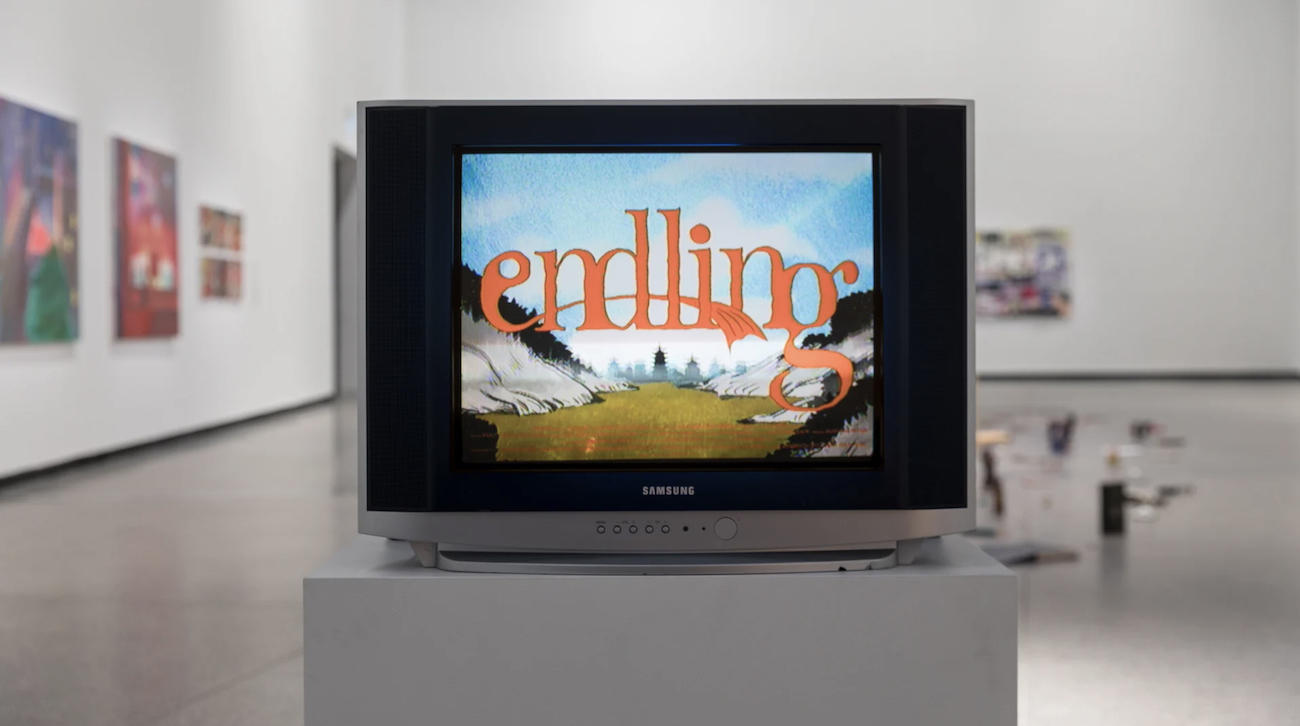
The lonesome living goldfish swimming inside a fish tank greets the audience as an ultimate reminder of our own condition of solitude and isolation. Followed by a comforting setup of a classic Chesterfield couch and a vintage TV, the presence of the fish is explained through the documentary titled Endling (2024) by artist Kelly Yu. The video follows the last surviving goldfish as a film crew interviews the man who cares for it. The work is a tragicomic absurdist mockumentary, and it is somewhat familiar in its desensitized, heartbreaking simplicity.
Setting the tone, the Endling gives way to a sprawling floor-based found object installation by Patrick Pound, titled The museum of loneliness (2026). Select books, figurines, and toys are carefully placed, transforming the gallery into a study of hope through accumulation. Overwhelming us with desire and wishful thinking, each one a “promise of [being] less lonely.” Curiosity notwithstanding, the work feels too contained. What would it be like to give it a full cavernous ACCA gallery, overwhelming us, reminding us of our insatiable ocean of want and satisfaction that masquerades as consumerism, collecting, and hoarding? Chaos in my mind, I am taking respite in the monotone, nakedly large canvases on a wall nearby. Intrigued by the barely-there imagery, I read the label and plunge into a sinking feeling of dread.
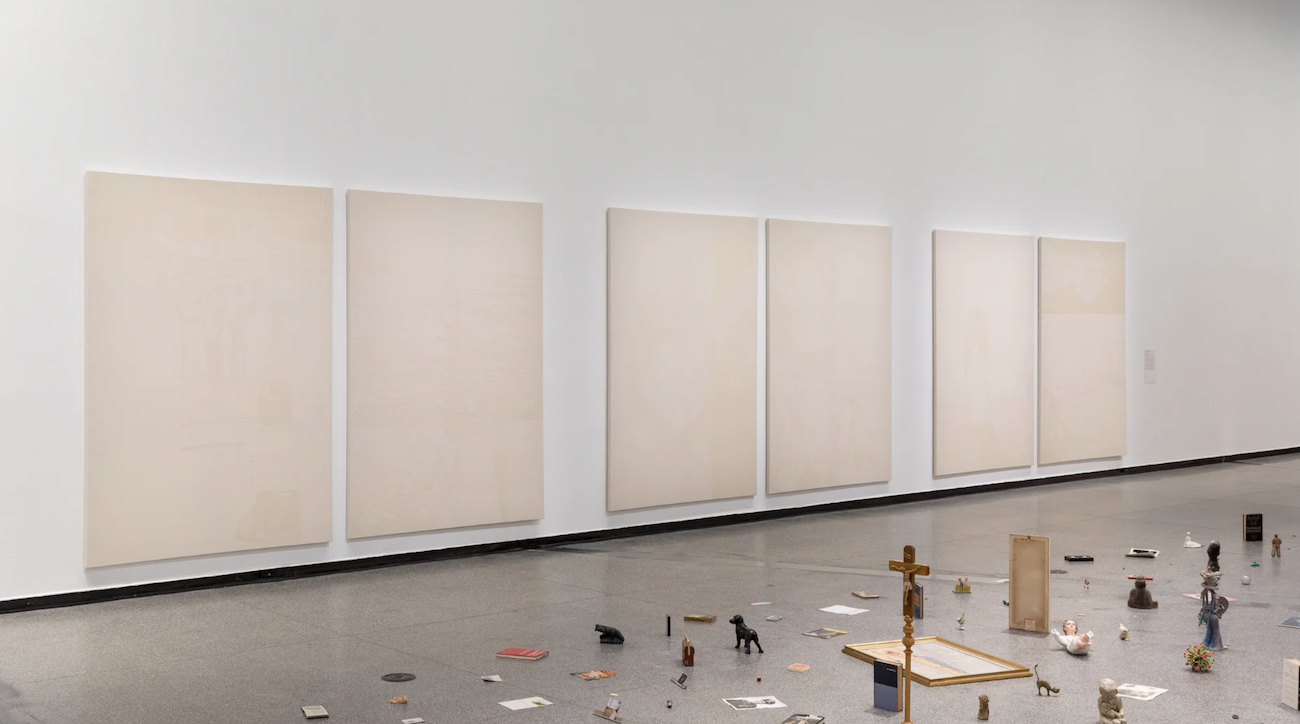
Artist Melissa Nguyen delivers the most poignant work in the exhibition titled A letter to my mother; A letter to your mother (2026). Inspired by the absence of photographs of her mother’s life before she came to Australia, the artist employs a unique approach to explore the collective and personal narrative of displacement and the embedded loneliness within it through white-on-white, rabbit skin glue paintings of found family images, sourced from public archives. Conflating them with her familial inherited memories, the artist’s search for an anchor and legacy speaks to the brutality of migration, via a poetically inclined and emotionally charged process.
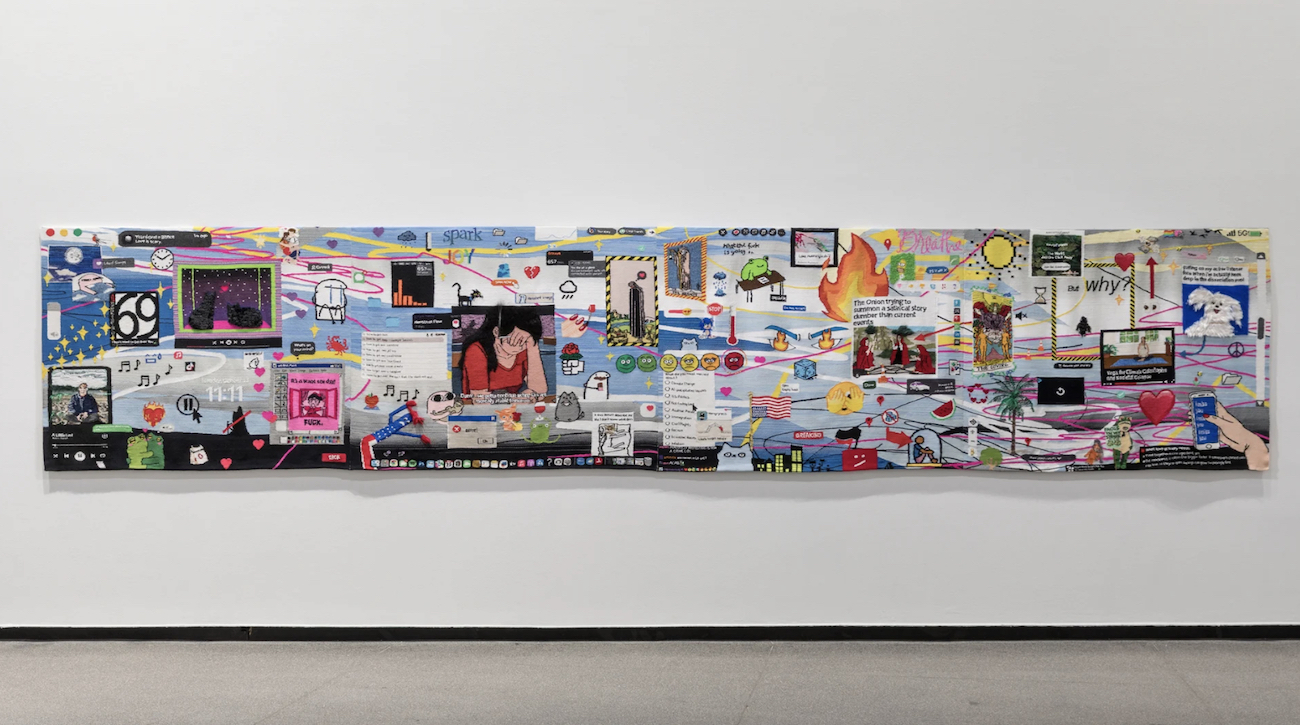
This somewhat subdued emotional travel lands us next inside a large-scale horizontal tapestry by Kayla Mattes. Resembling a screen, it takes us on an early-2000s, aesthetically inclined ride through what seems to be a breakup and subsequent digital coping mechanisms. Produced recently over a year in 2025/26, the work is a scroll of accumulated images, frozen in time. Persistence of longing, slow-oozing wounds of heartbreak amid unanswered texts and tears appear cramped together as a forensic map of the mind in turmoil. We have all reluctantly been there.
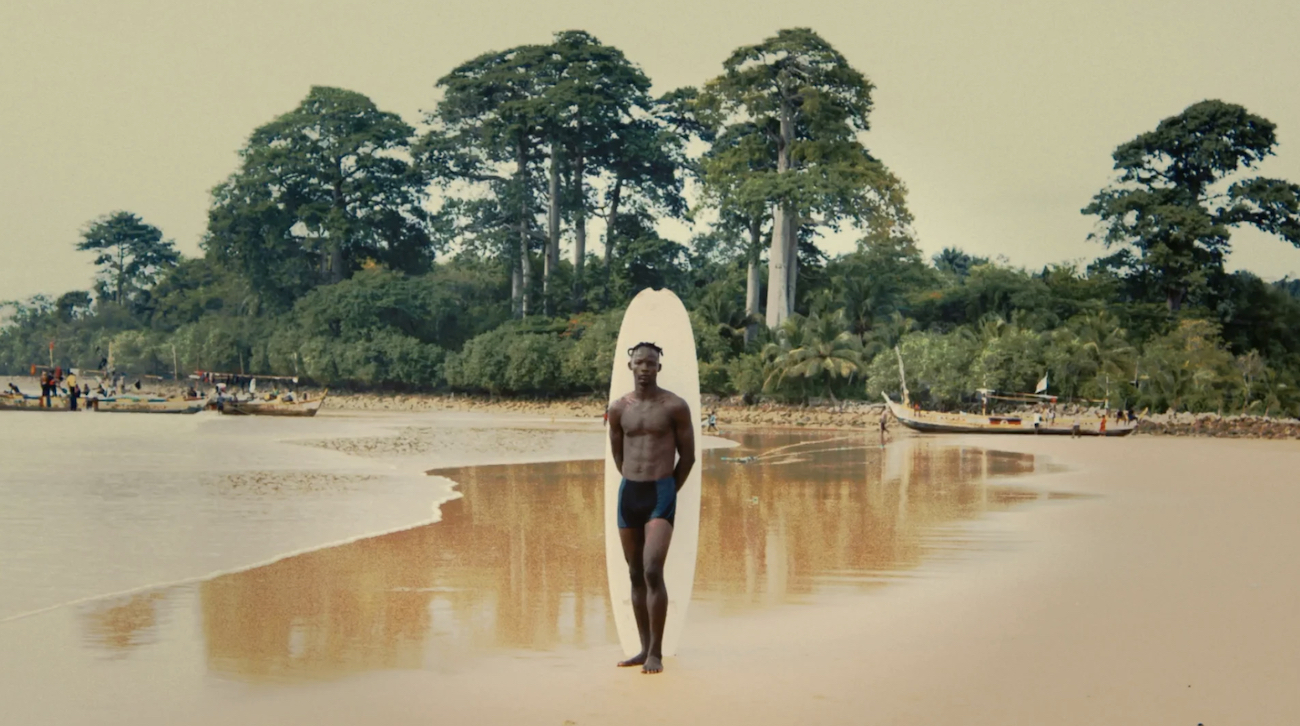
From the psychogeography of the mind, I glide into a place of beautiful alienation in Gideon Appah’s cinematic voyage, Beyond the Shadows: Gideon Appah Poetic Vision (2025), where lone young surfers appear confidently solitary against the vast expanse of the West African coastline. Here, positioned against nature, loneliness becomes a companion in its own right, with the sublime standing in for human company. The work proposes a possibility hidden in plain sight: maybe, just maybe, that is all there needs to be—nature and us.
At this point, I no longer want to be comforted or saved from my own loneliness. I want to be plunged into its depths, to break and cry instead. I am lulled into a room bathed in peach-colored light, where I am greeted by Polly Borland’s now unmistakable, grotesque bodily forms, rendered in various materials and scales. Across from a clean, white, sterile-looking bed—a contemporary nod to Tracey Emin’s chaotic and soiled 1998 My Bed—an always-on laptop displays a lone, all-too-familiar bed-rotting body by Natasha Matila-Smith. Yet the works in this final gallery offer a humorous, detached kind of soothing rather than confronting us with our own despair. A faint chuckle escapes me, and I am left wanting so much more.
Are you lonely tonight? I’m so lonesome I could cry is on view at the Australian Centre for Contemporary Art – ACCA in Melbourne, Australia, from July 3rd to August 30th, 2026.