

.webp)

Marc Kokopeli: “M.Kokopeli CURSED/01” at Gladstone
Review
German artist Anna Leonhardt's fifth solo exhibition, Resonance, at Marc Straus illuminates the gallery with thick, shimmering surfaces, each painting built from layers of oil accumulated and reworked over time. Upon close inspection, the paint gathers into geometric ridges and crusted edges, old canvases emerge beneath fresh passages of color, and imperfections become part of each painting's architecture rather than something to conceal.
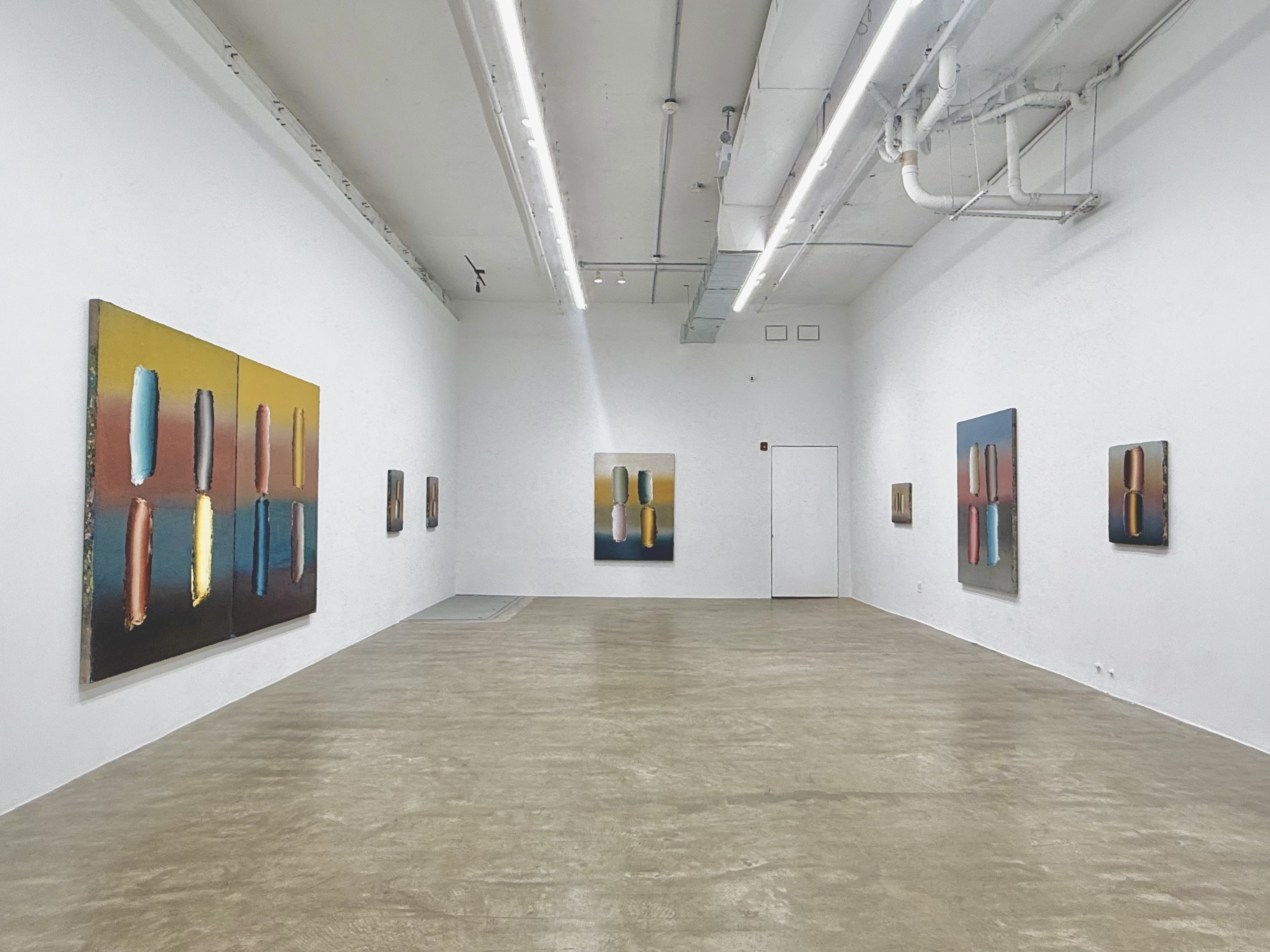
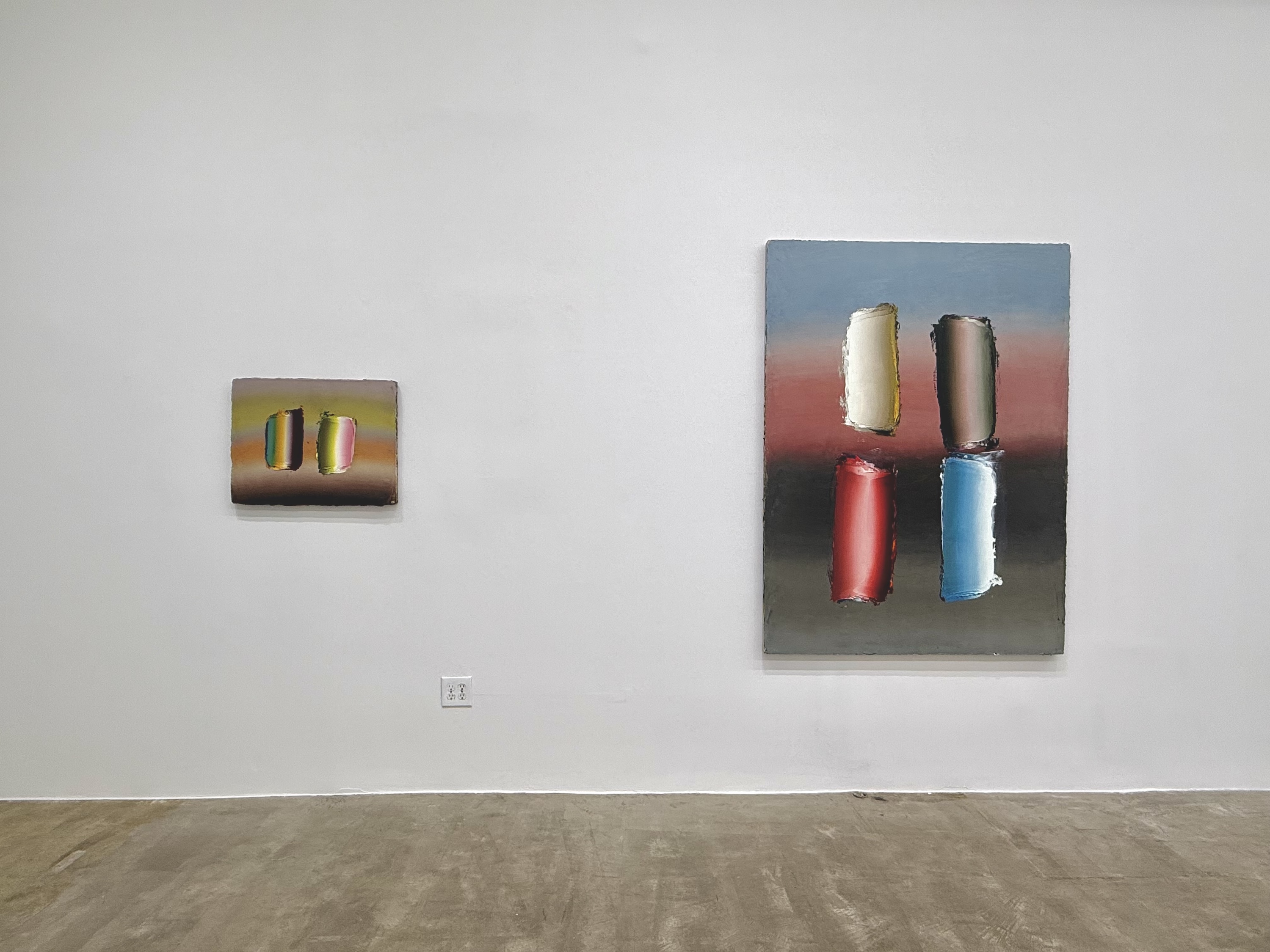
Working primarily with palette knives, Leonhardt approaches each canvas as an evolving surface, built through layering and stratification as opposed to a fixed plan. She begins with a simple inquiry: “What do I see, and how can paint transform it?” The resulting works unfold as abstract landscapes, where horizontal fields support vertical forms that blur the boundary between stillness and motion. Dense ridges of pigment dissolve into luminous gradients, soft transitions of color that modulate the physical labor embedded beneath the surface. Weight and lightness coexist, the paintings becoming mystical metaphors for life that invite viewers to question their own relationship with space.

In PETSY (2026), yellow, blue, pink, and silver forms float across a field oscillating between rose, grey, and warm amber. The silver interrupts the composition with a brilliant flash of light, while the yellow anchors the painting from above. In LB 19 (2026), the exhibition's smallest work, two layered forms emerge from a pale grey-blue and peach ground, their edges rough with impastoed paint, scattered flecks, and exposed traces of earlier revisions. At this intimate scale, every scrape, layer, and revision remains visible. In TOEN (2026), the palette narrows to deep plum, amber, rust, and mauve, drawing the eye into a quieter exchange between two vertical forms held within a field of warm earth tones. They press toward one another with a quiet insistence, as if caught in a conversation cut off mid-sentence.

Throughout Resonance, Leonhardt treats color as both atmosphere and structure. Her elusive forms, which she refers to as Raumzeug, or "Space Stuff," float across the canvas while asserting their own distinct territories. They never fully settle into representation, yet they remain tethered to the experience of landscape and pulsing light. The paintings feel suspended between solidity and dissolution, their shimmering surfaces balancing physical weight with a unique sense of buoyancy.

Born in Pforzheim, Germany, and now living between Berlin and New York, Leonhardt continues a distinct tradition of material abstraction shaped by her training at the Dresden Academy of Fine Arts under Ralf Kerbach. Yet Resonance feels less concerned with lineage than with process itself. The paintings refuse to separate their final appearance from the processes that produced them. Layers, abrasions, and contradictions remain visible as evidence of Leonhardt’s decisions. Instead of presenting the finished canvas as a stable object, the exhibition considers an image as something that must ultimately be relinquished rather than perfected.
A brunch reception celebrating the opening of Resonance was hosted in collaboration with Hatsu. Hatsu, "beginning" in Japanese, is a Colombian tea brand founded in Medellín in 2010. Its identity is built around color and its emotional register, conversing seamlessly with Leonhardt's paintings, which are, at their core, an inquiry into the perception of color and the feeling it carries. The collaboration is part of Marc Straus Gallery's broader effort to build community around its artists, one of a series of intimate gatherings that accompany the gallery's exhibitions.
Resonance is on view at Marc Straus Gallery from July 10 to August 29, 2026.