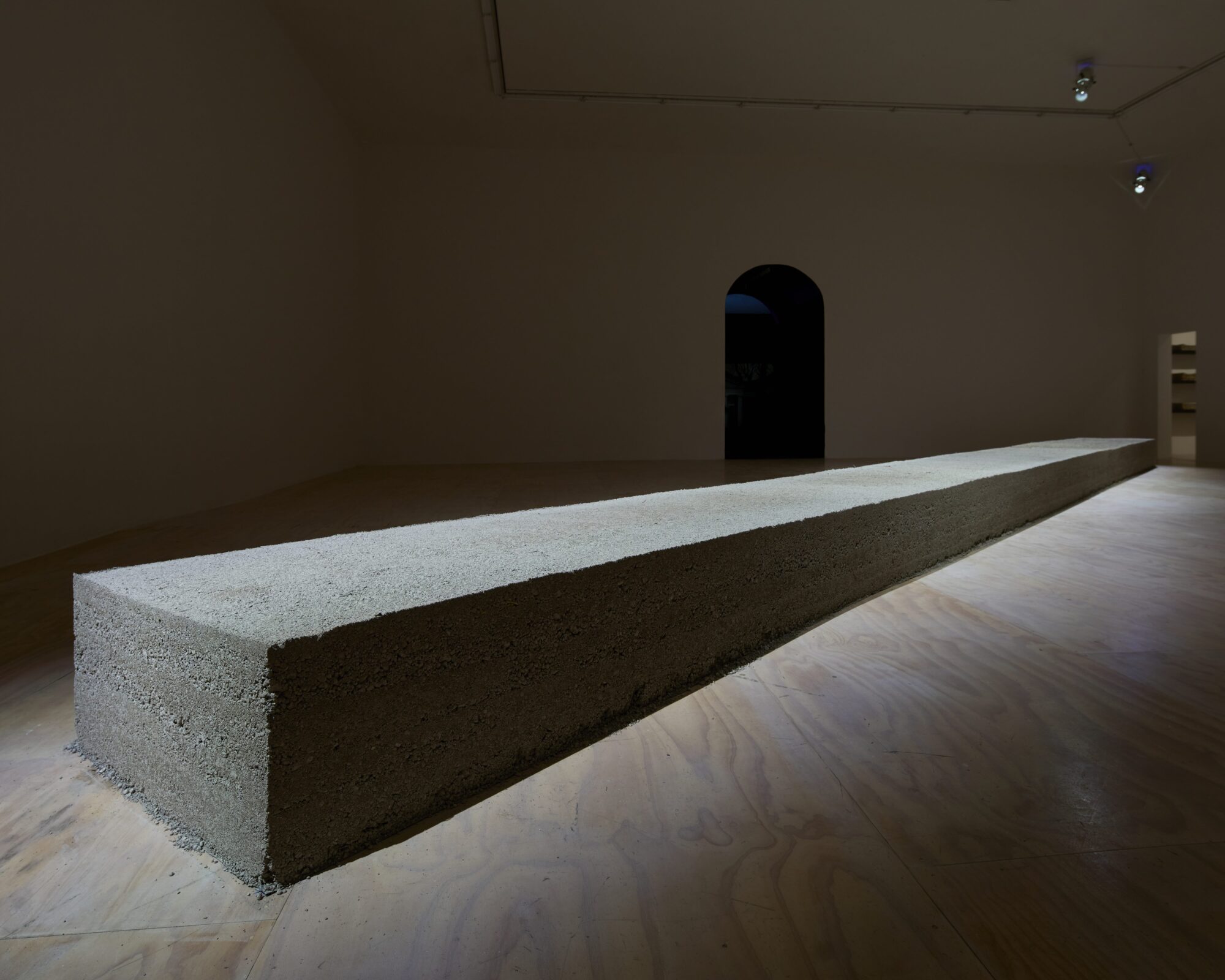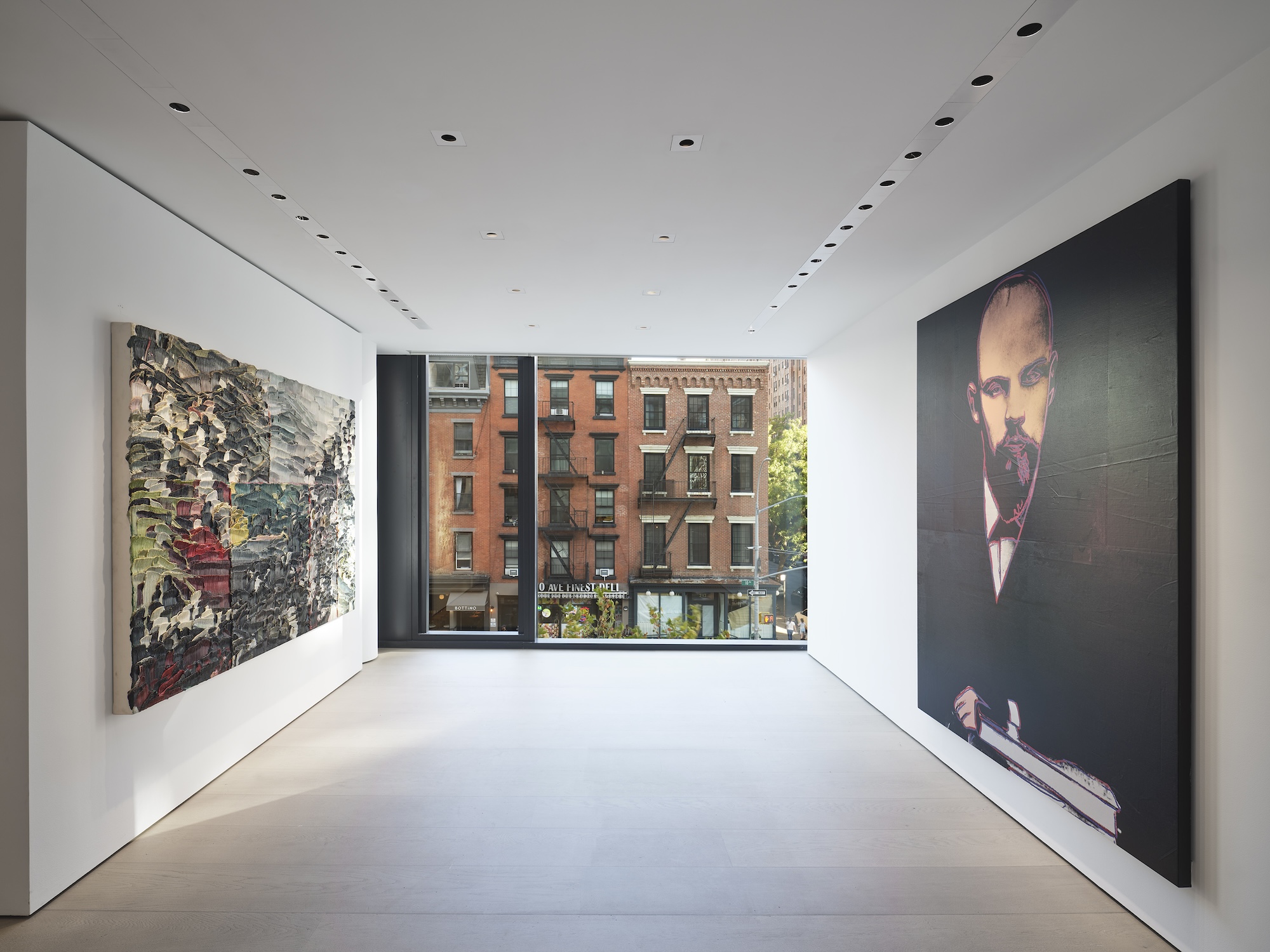

.webp)

Wenfei Quan: “Contemporary Hominin” at TaThaTa
Review
In You Must Change Your Life, now on view at GRIMM Gallery in New York, curator Tom Morton brings together thirteen painters and sculptors under the enduring spell of Rainer Maria Rilke's 1908 poem Archaic Torso of Apollo. While the poem itself never appears in the exhibition materials, its presence is everywhere. Rilke's meditation on a fractured, headless marble sculpture is ultimately less about the object than about the transformative force of looking—how a disfigured piece of stone can radiate an almost unbearable vitality.
The poem traces the paradox of finding fullness in absence: a broken torso that seems to blaze from within, compelling readers to recognize that beauty resides not in completeness but in the intensity of presence. It culminates in one of the most arresting translated lines in modern poetry: “For there is no place that does not see you. You must change your life.”
Stephen Mitchell's celebrated English translation carries such extraordinary sensitivity to Rilke's cadence that it reads almost as a new poem in its own right. Morton's exhibition performs a similar act of translation. Rather than illustrating Rilke's text, the exhibition reimagines its central proposition across thirteen contemporary practices, asking how sculpture and painting might likewise transform matter into revelation and invite the viewer into a changed way of seeing.

It is a sentiment that reverberates throughout GRIMM's cavernous galleries, where even the worn wooden floors seem to participate in Morton's curatorial vision, extending the exhibition's quiet insistence that transformation begins from the ground beneath our feet. Sara Rossberg's You Must Change Your Life (2021) and There (2023) provide one of the exhibition's earliest and most compelling articulations of this premise. Rossberg's paintings are at once luminous and compulsive, their surfaces built from dense accumulations of pigment and acrylic medium that verge on the sculptural while retaining an almost ethereal radiance. In There, a woman sits absorbed in thought, phone in hand, in the middle of a crowd—a distinctly contemporary posture of solitude within proximity. She neither commands the composition nor retreats from it; instead, her interiority settles across the canvas with quiet force. In You Must Change Your Life, Rossberg doubles her subject: one figure, clothed, reaches outward, while her nude counterpart stands with her back to the viewer, as though waiting for an as-yet-unrealized version of herself to arrive.
Though painted at a monumental scale, Rossberg's figures resist monumentality. Instead, they ask for intimacy: a slow, almost meditative attention to gesture, mood, and, above all, the material density of their painted surfaces. That invitation to sustained looking finds an echo in Kinga Bartis's Realities of Seeing (2026), where elongated, languid bodies drift through a muted, cloudlike expanse. Positioned near the exhibition's entrance, their mixed-media work serves as an early meditation on perception itself. If the act of looking has the power to detach consciousness from the body, Bartis proposes the inverse: that vision is inseparable from embodiment, rendering the physical all the more real even as it hovers in a dreamlike, almost immaterial space.
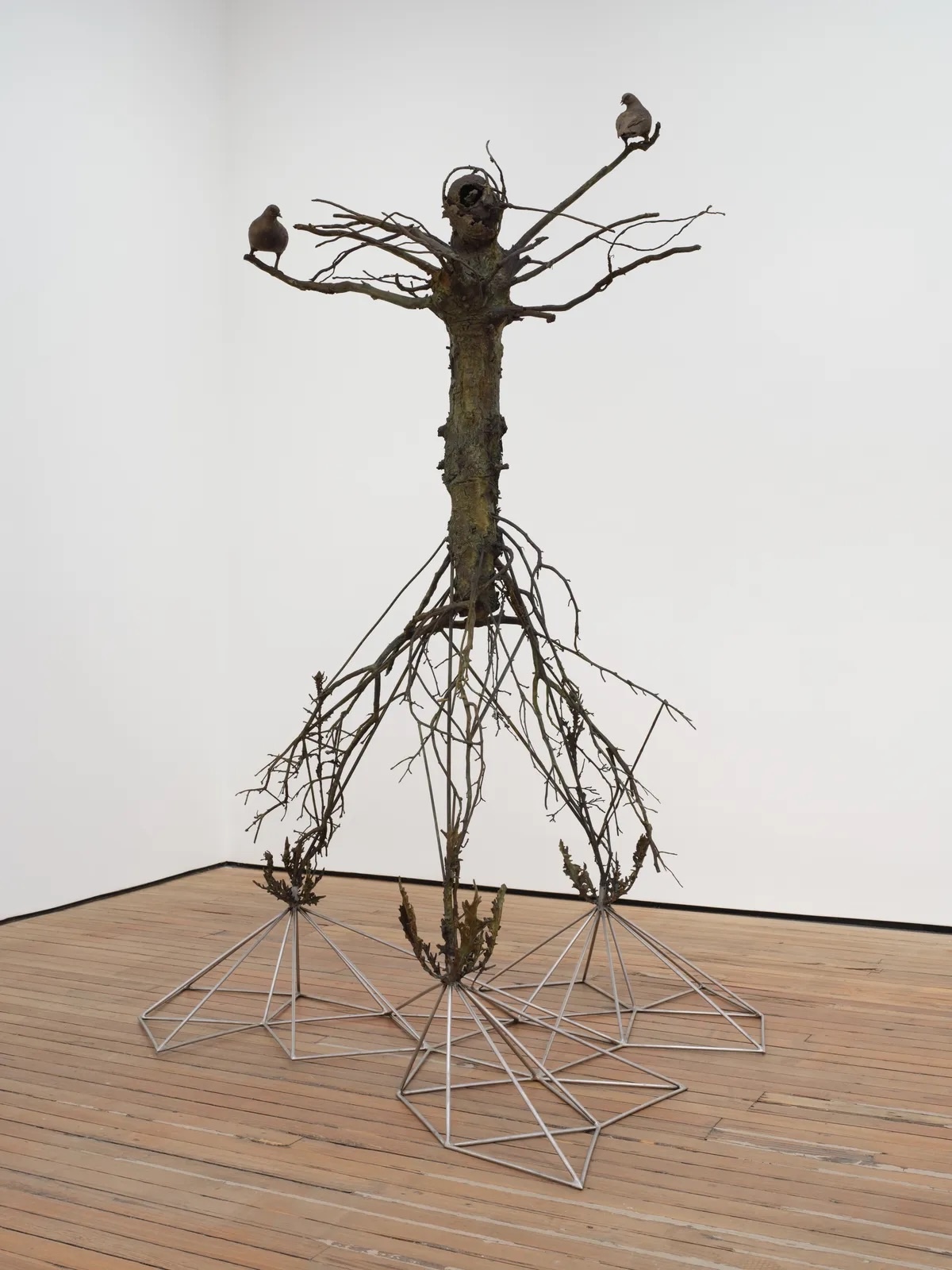
Such ideas of the physical continue across the room in Matthew Day Jackson’s Dynamist (2019-26), an anthropomorphic bronze figure, cast from a dead and leafless tree regarded by Morton himself as perhaps the closest work in the exhibition to Rilke’s statue. The transformation from organic matter into enduring monument collapses all separation between life and relic, granting the tree a second life—one that seems to pulse with the energy Rilke writes within his disfigured stone.
In the adjoining gallery, Anderson Borba's The Hover (2024) and Head Stone (2025) stand together and extend this meditation through wood, a material that Borba bends beyond its expected formal and conceptual limits. Saturated with oils and varnishes, incised with grooves, and scorched in the most uncanny ways, Borba's sculptures oscillate between artifact and organism. Their forms seem to swell and contract as one moves around them, cultivating an ancient presence that makes the gallery feel inhabited by bodies before our time. As trees stand elsewhere in the exhibition, Mahesh Baliga's Tea Time (2026) offers another meditation on existence, where human stories mingle with the lives of everyday objects. A man carrying two cups of tea emerges from behind a rich green curtain, a simple gesture that becomes quietly monumental. The painting is warm, ruminated through the senses, and ultimately transformed onto a different material plane: paint itself. In Baliga's hands, the ordinary is never merely observed but translated, allowing the familiar to take on the quiet brilliance that Rilke locates within the physical world.
Another line from Rilke's poem reads, "And yet his torso is still suffused with brilliance from inside, like a lamp, in which his gaze, now turned to low, gleams in all its power." It is a line that could have also accompanied the exhibition. If the poem's famous closing command—"You must change your life"—has become its most quoted refrain, it is this quieter image of an inner radiance that more precisely captures Morton's curatorial achievement.
Across painting and sculpture, the works assembled at GRIMM locate vitality in matter itself—in pigment layered until it seems to emit light, in wood that appears to breathe and even in bronze and steel that retains the memory of a living tree. The conceptual rigor is there, but it never eclipses the work on view. Instead, the exhibition trusts that sustained looking can become its own form of transformation. Like Rilke's fractured Apollo, these objects do not instruct or persuade so much as they illuminate, leaving viewers with the unsettling recognition that the act of seeing can, however subtly, alter the self who came to look.
You Must Change Your Life is on view at GRIMM, New York, from June 26 to August 7, 2026.