


.webp)

Marc Kokopeli: “M.Kokopeli CURSED/01” at Gladstone
Review
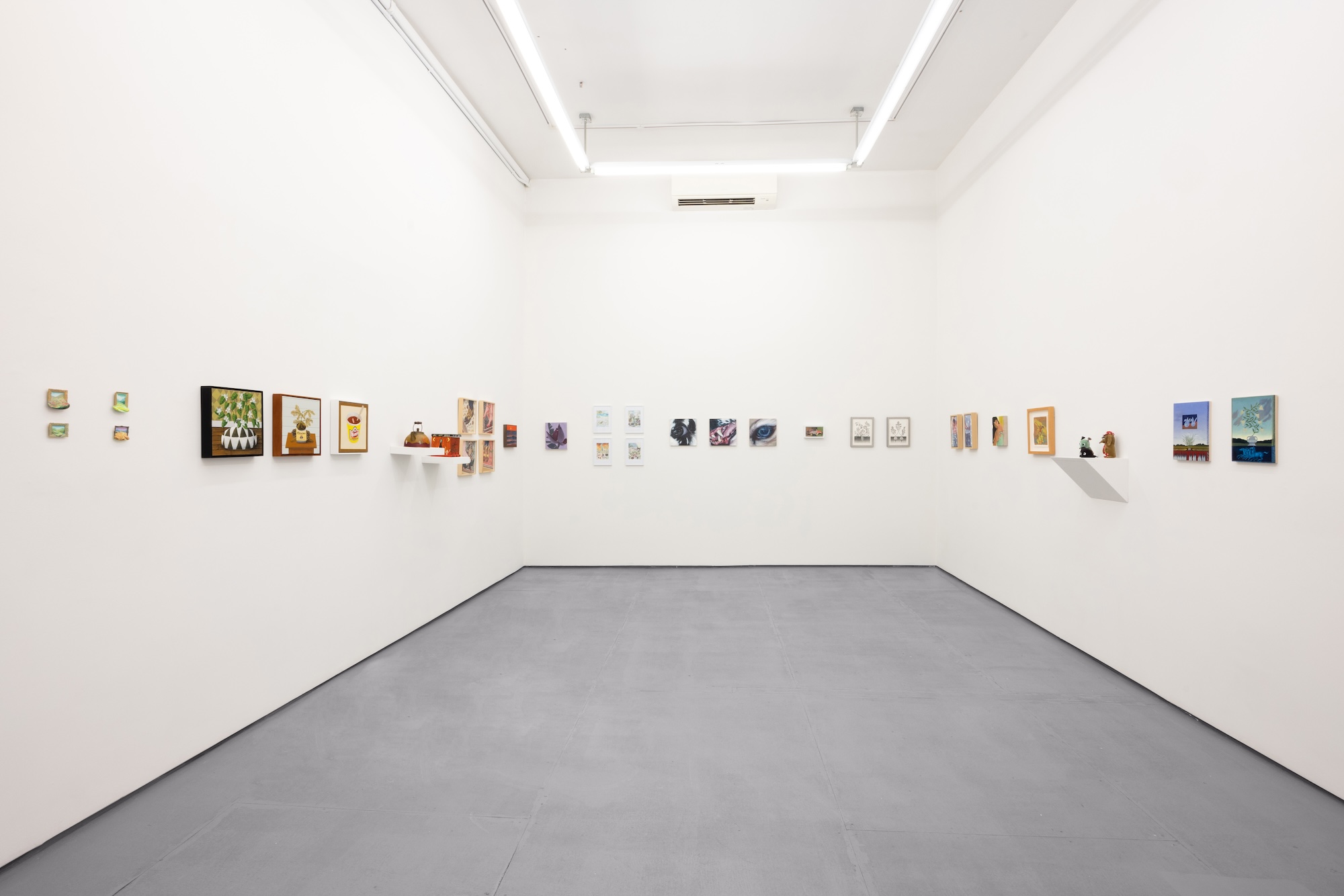
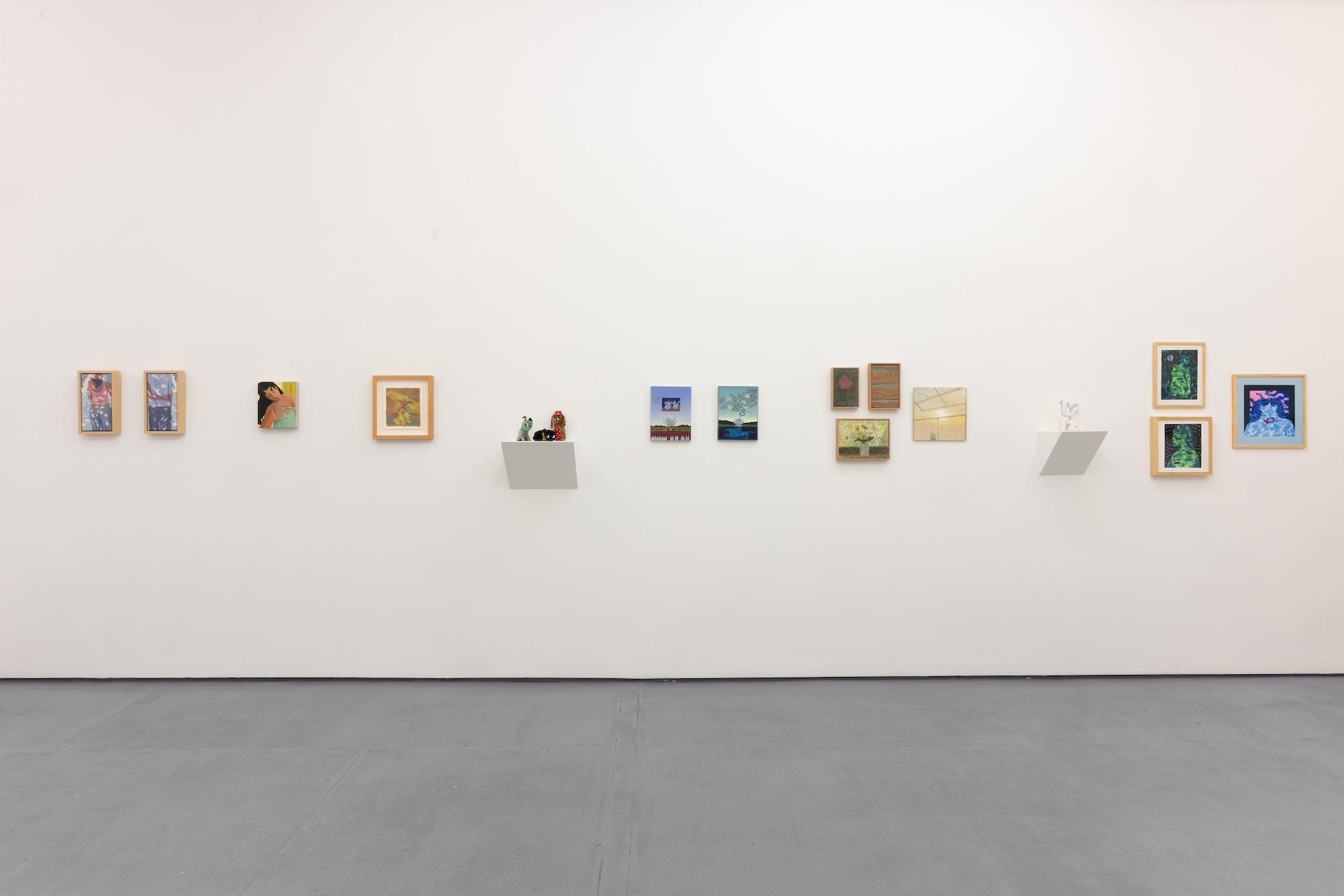
Fascination with the miniature, argues Hashimoto Contemporary’s new group exhibit amuse-bouche, is long-enduring. On view until September 5, the exhibit features 27 artists and over 60 works but manages to contain itself in just one small room—the largest piece, one of Ekaterina Deryugina’s “side eye dogs,” Mi Moka Italiana (2026), is only 13 x 9 1/2 inches. Using a broad range of animal motifs, vibrant colors, and mixed media, the paintings and sculptures collectively ask why the miniature is so widely and perennially adored.
In 1993, the critic Susan Stewart attempted to answer the same question in her book On Longing: Narratives of the Miniature, the Gigantic, the Souvenir, the Collection, perhaps the most expansive scholarship to date on the miniature. In her analysis of micrographia, the tableau, and the dollhouse, she argues that the miniature is not something that occurs, but is invented as a “cultural product”; objective miniatures do not exist in nature, for the miniature can only exist in relation to its bigger observer. Stewart writes that the miniature is “the product of an eye performing certain operations” and that “the miniature assumes an anthropocentric universe for its absolute sense of scale.” Dollhouses accomplish this best, for the miniature subject—the doll and its accompanying furniture—is reminiscent of our everyday social life. Take Abigail Goldman’s All Things in Their Place (2026), a model of a domestic interior. The scene is encased in a plastic bubble that reflects the viewer as they approach. Upon closer inspection, Goldman’s piece is imbued with mystery: a chair is turned over in the kitchen; in the bedroom, a woman blow-dries her blond hair, while a man lies bleeding under the bed. In contrast, the bathroom is perfectly organized, and in the nursery, a baby sleeps peacefully in a crib. Was the chair toppled in a fit of rage? Did the woman kill the man? The miniature “initiates another world, the world of a daydream,” Stewart writes. The narrative may seem ominous, but awe eclipses any possible disturbance when you look into Goldman’s world. At such a small scale, the murder scene loses its sense of horror.
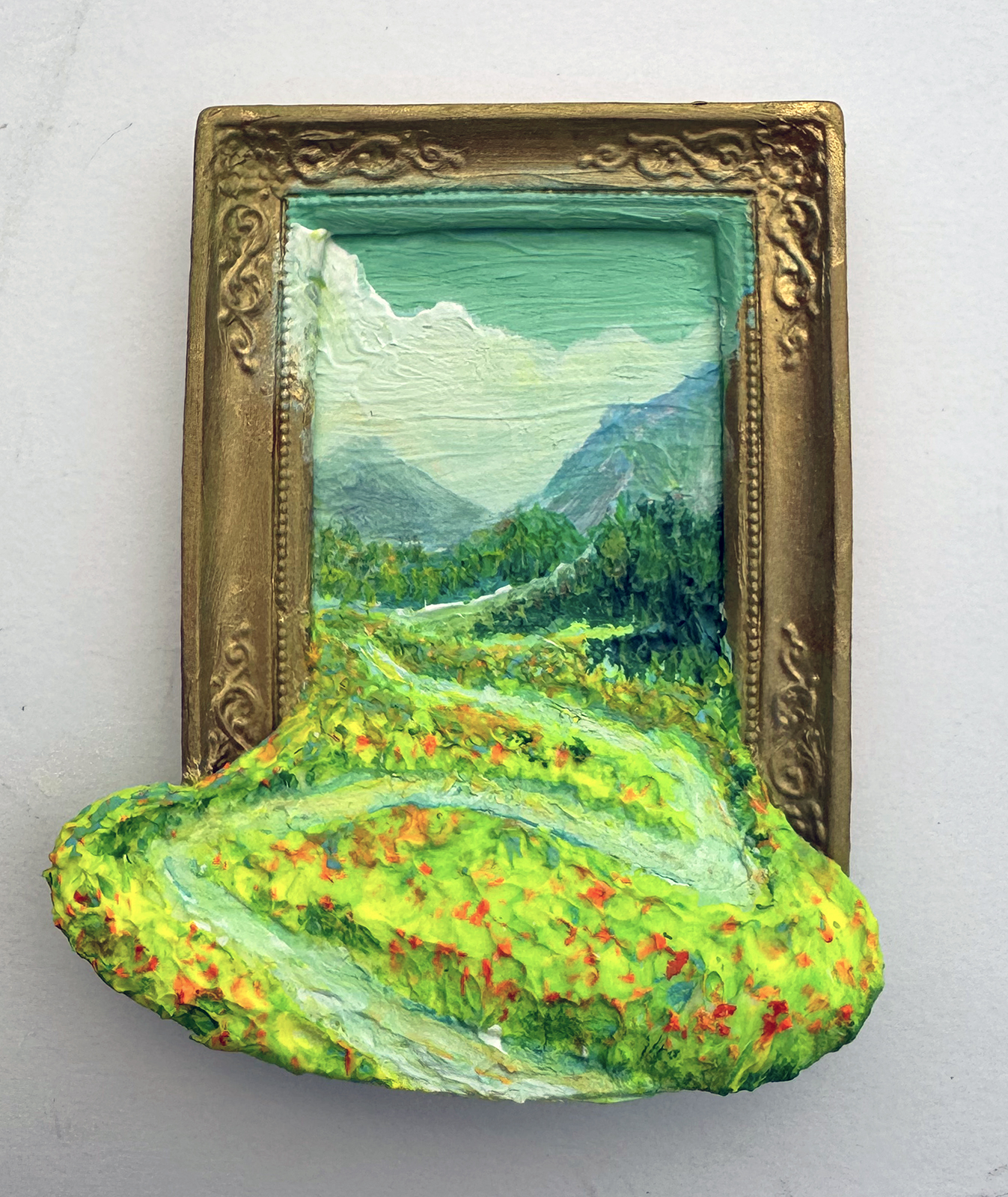
Brooklyn artist Barry Hazard takes a different approach, with landscapes as his subject. Each of his four acrylic paintings of nature seems to be spilling out of its ornate frame. Alpine Stream (2026) is lush with bright shades of green, the winding stream snaking from distant mountains through a valley, whose hues stand out against the gallery’s wall. Field Poppies (2025) is plump with warm purples and reds. The meadow of Backside Meadow (2026), at only 2 x 2 1/2 inches, sags in the middle, the greenery and flower bushes drooping over the edge of the frame; with the background hills, the entire scene resembles a heart. Wanderer (2025) is the only painting set at dusk, the purple sky contrasting with the golden wheat field. It is also the only painting to feature a human subject entering the landscape. Rather than being contained, Hazard’s subjects wish to escape the controlled miniature environment. The frame becomes a site of constant struggle, paint oozing out of the edges with a kind of explosive, defiant energy.
Chicago-based artist Deborah Kraft probes into questions of iterative image-making and speculative knowledge systems. Cathection, Fragments (2026) features 20 tiny sculptures made of found paper, acrylic, vellum, graphite, steel, paint, and archival board, arranged as if specimens on a museum’s wall. Whereas Goldman’s and Hazard’s miniatures are miniatures of something legible, Kraft’s miniature bears possible resemblance to indeterminate species in the natural world—some shapes look like seashells, and others, deformed flowers. A few also resemble biomorphic lamps or vases. Kraft’s second piece, Cathections (2026), is even smaller, organized in four rows of three—a miniature-of-a-miniature, if you will. In dialogue with each other and operating at varying levels of pictorial intimacy, the two pieces raise questions about the infinite collapsibility of the image.
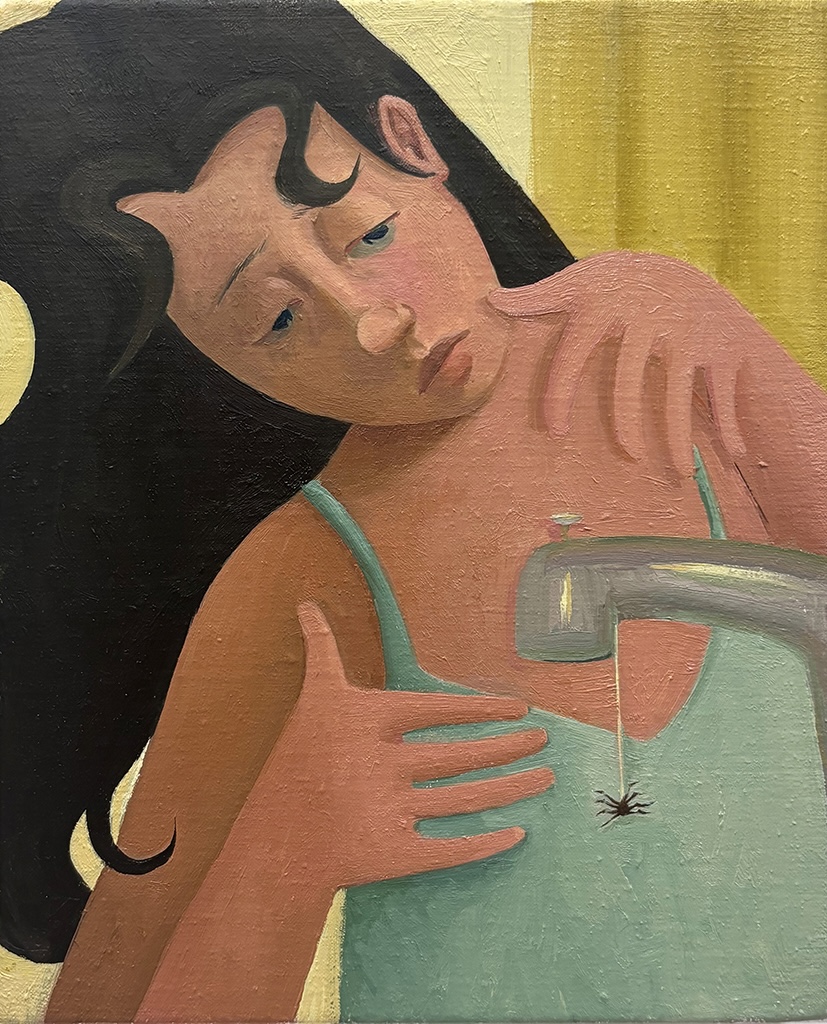
The hand, Stewart points out, is often the measurement by which a miniature is defined, serving as an agent of ownership, an interface for the miniature’s sheer tactility. It’s also the body part that builds, a site where creativity is implicated. In her painting, Sisyphus (2025), Natalie Terenzini calls special attention to the hand: a frowning woman studies a spider hanging from a sink faucet, her hands positioned to capture it. As one of the larger pieces in amuse-bouche at 10 x 8 inches, Sisyphus locates the miniature less in its own dimensions than in its subject. The title suggests an endlessly recurring domestic ritual, while the woman’s hovering hands complicate Stewart’s association between the hand and the miniature, suggesting that what can be held, made, and possessed can just as easily be crushed.
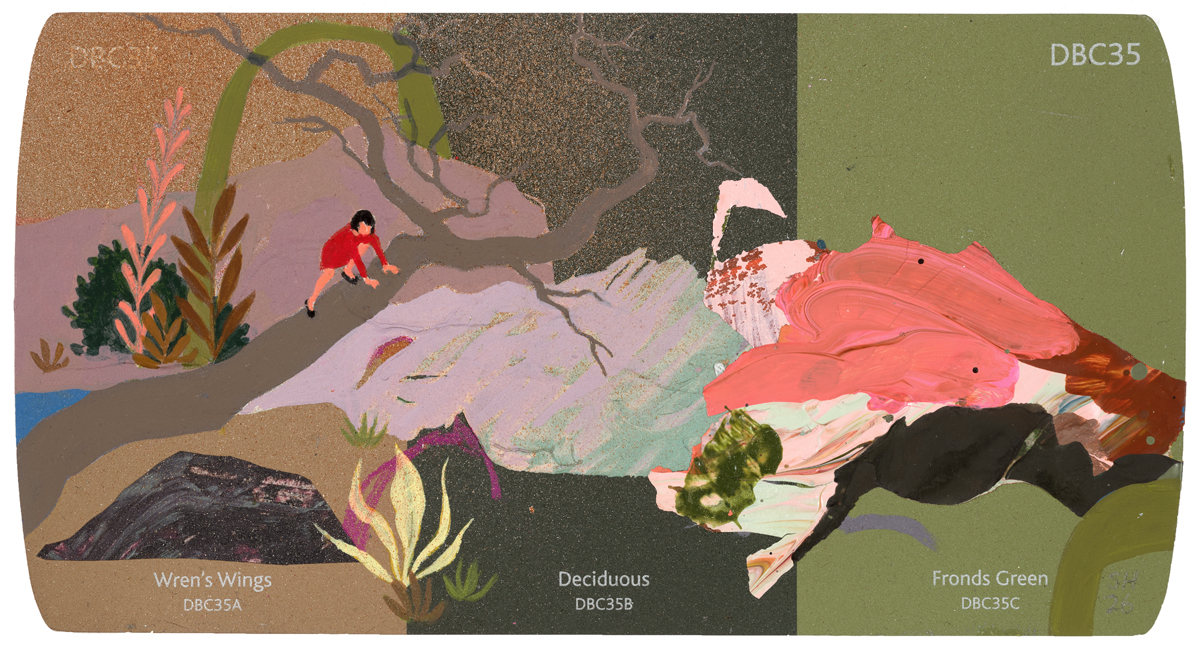
As astute as many of Stewart’s observations are, the conditions under which we encounter the miniature have changed dramatically since she was writing. The universal miniaturization of media through such forms as iPhone screens and app icons have accustomed the viewer to perceiving the miniature as rather expandable. Diminutive scale is also no longer necessarily exceptional or intimate, but an ordinary dimension through which images are consumed. For example, Los Angeles-based artist Seonna Hong’s Deciduous (2026) is just an inch larger in height and width than a standard smartphone turned horizontal. Like its name, it is a piece about transience and change. The rectangular canvas is divided into three parts, the background of each section a different paint swatch labelled with a poetic name that draws from the natural world: “Wren’s Wings,” “Deciduous,” and “Fronds Green.” The labels DBC35A, DBC35B, and DBC35C suggest some form of chronological or narrative progression, while the overlying imagery—a woman climbing a thick, barren tree—moves from tightly delineated to loose and gestural. Poetic and abundant, Hong’s painting shows how a miniature is capable of presenting mulltiple parallel, self-contained narrative logics.
As the significance associated with a diminutive scale undergoes inevitable change, it has become increasingly evident that what remains distinctive about the miniature is not smallness but the attention it demands. If amuse-bouche proves anything, it is that the miniature will continue to endure as an object of affection.
amuse-bouche is on view at Hashimoto Contemporary NYC from August 15th to September 5th, 2026.