

.webp)

Teresa Margolles: "En el lugar de los hechos (At the Scene)"
Review
Bruno Latour once used the term "quasi-object" to describe beings that are neither pure subjects nor passive objects—they do not wait for human use but instead shape human behavior with their materialistic agency.1 But what if this "quasi-object" happens to be a human body? When a person remains still, unresponsive, and does not empathize, do they also slide from "subject" toward some state between human and thing? The group exhibition I'm a Cyborg, but That's OK unfolds in this gray zone. Taking its title from Park Chan-wook's 2006 film of the same name, curators Shuhan Zhang and April Liu draw on the concept of "becoming-object" proposed by gender and queer theorist Eunjung Kim2, inviting us to temporarily set aside our attachments to human-centered agency, rationality, and productivity. The five artists—Sharon Cheuk Wun Lee, Sherly Fan, Silvia Muleo, Olivia Saporito, and Phoebe Kong—each respond in their own medium to the same provocative question: if, in the experience of aesthetic viewing, we no longer strive to "become human," how else might we exist?
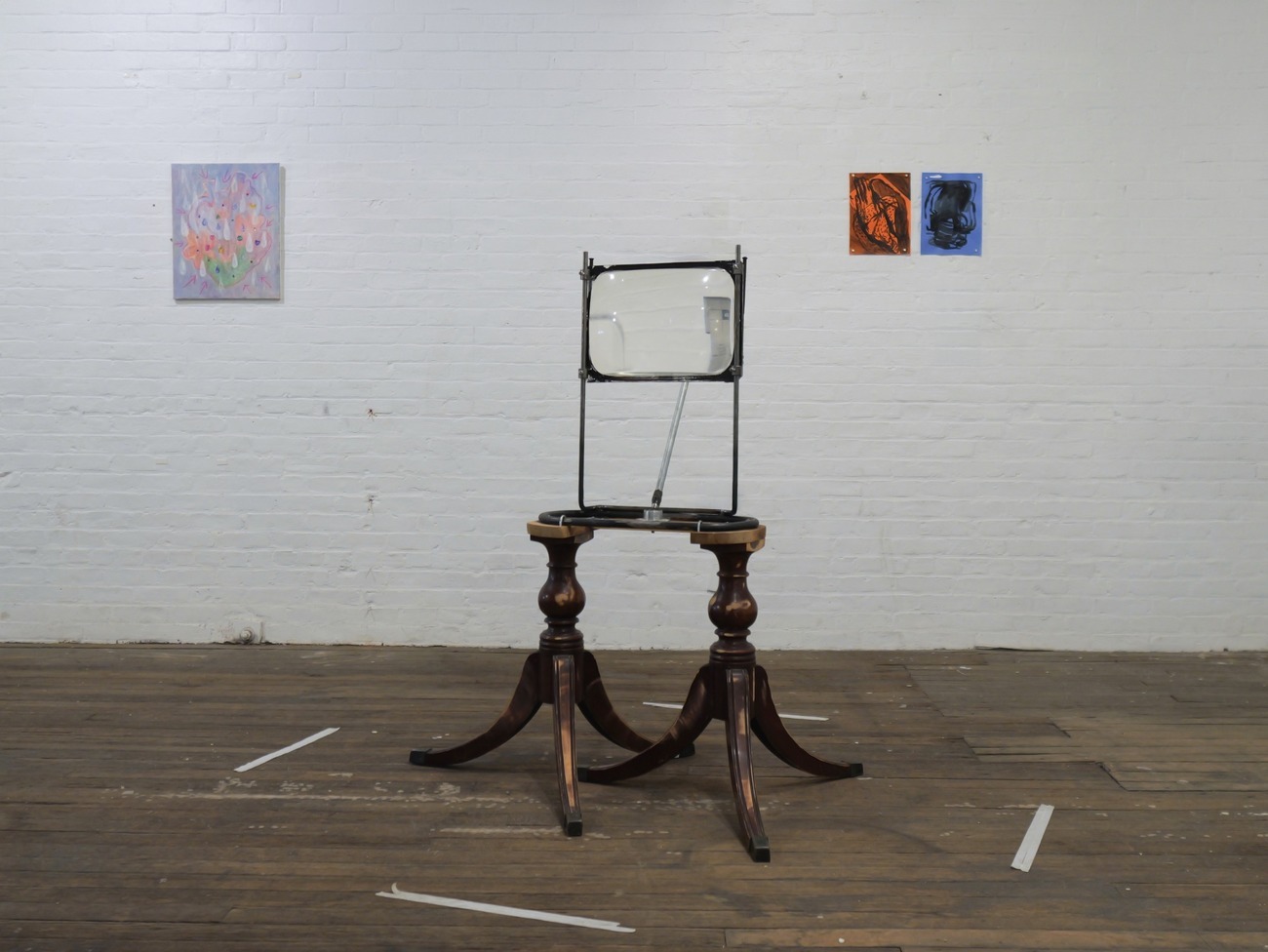
Eunjung Kim's rethinking of objectification tears open the hidden violence within contemporary art viewing: the curation of works is expected to deliver meaning within seconds, to be consumed, to be decoded—such expectations seem to verge on ableist assumptions. She asks in return: if we no longer exercise the ability to determine the legitimacy of a life, might thingness itself become an ethical practice?3 In an exhibition, if we no longer use meaning or purpose to define "human-as-subject's viewing,” if the viewer can also actively suspend their demand for readability and positionality, temporarily relinquishing that violent expectation that a work must be meaningful . . . then viewing itself might cease to be an act of possessive judgment. Kim takes Marina Abramović's performance art and Park Chan-wook's film as examples, showing that for the producer of creativity, surrendering agency is not weakness but a refusal to participate in the domination of others. This exhibition embodies this theory as a perceivable spatial experience. Entering the gallery, you will find no clear narrative thread, nor any pressing sense of meaning-making. In its place is a sluggish temporality: Sherly Fan employs innocent images of pets, flowers, and bows—her rich yet not overwhelming pastels gently and stubbornly refuse to be taken seriously; Phoebe Kong's drawings carry a playful absurdity that is puzzling at first glance, as if "someone has just burped in space," where the inside and outside of a body momentarily become an undifferentiated plane. The exhibition, as a whole, foregrounds this suspension of understanding and aversion against dogmatism.
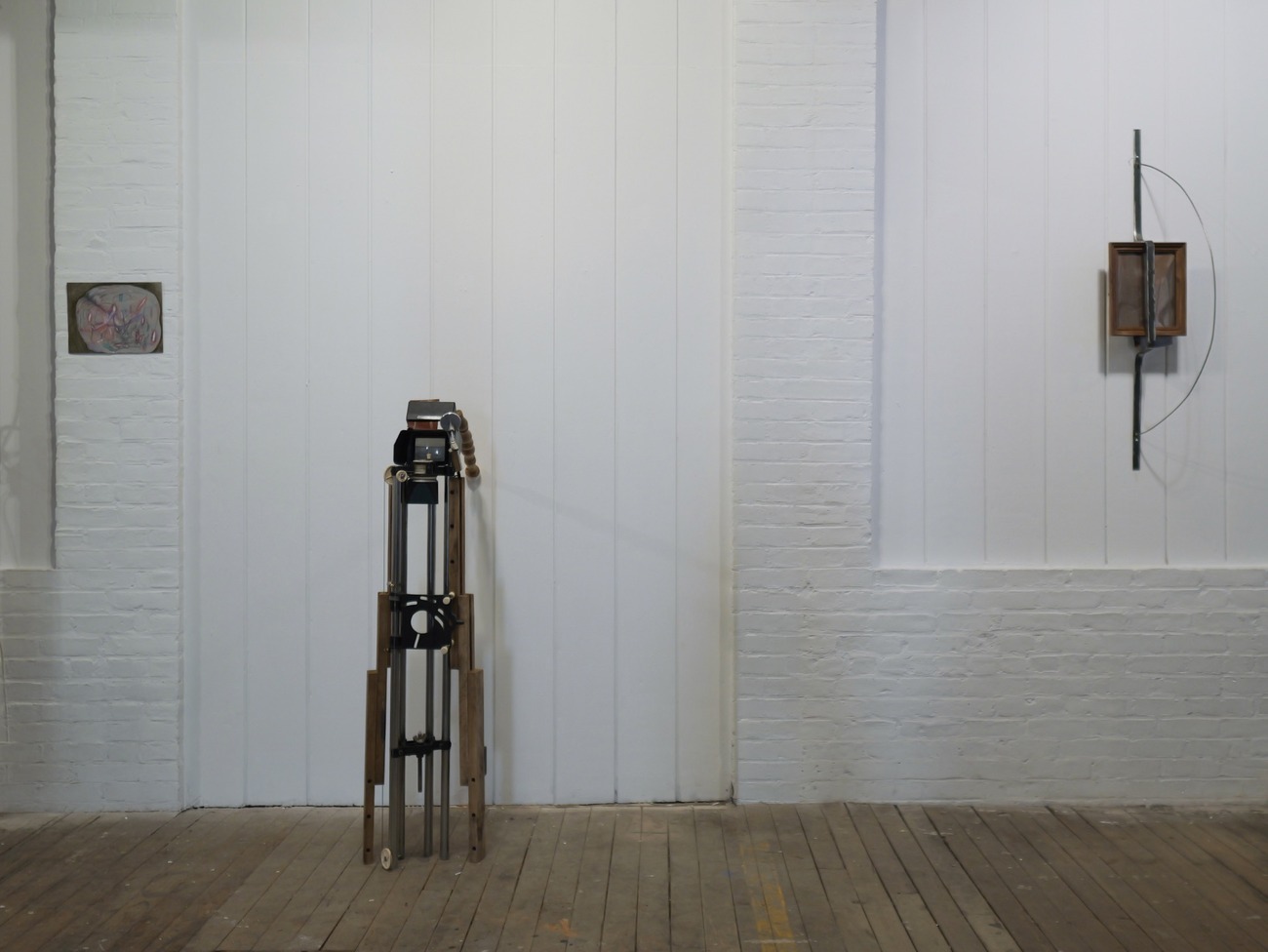
If the first two artists suspend the production of meaning on the picture plane, then Silvia Muleo and Olivia Saporito go further to dismantle the act of viewing itself. Muleo's digital-physical blur and Saporito's perceptual structures built from steel and found objects are precisely Latour's "quasi-objects." The viewer moves their body in front of Saporito's installation, or feels their perception stretched and distorted by Muleo's virtual "screen light"—viewing is no longer something in the subject's possession, but instead becomes a passive, nearly thing-like endurance. Baruch Spinoza's mind-body parallelism finds a concrete artistic footnote here: mind and body are not two substances but two attributes of the same substance; we never use a "mind" to look at a "material" work—in the indivisible state of bodymind4, we are affected by and affect the other, and the human being becomes an element within the larger network of bodies, objects, and material relations. These different artistic languages coexist strangely in this exhibition space. This precisely echoes the "proximity" proposed by Dipesh Chakrabarty, as cited by Kim5: difference is neither reified nor erased, but allowed to coexist within the curatorial structure.
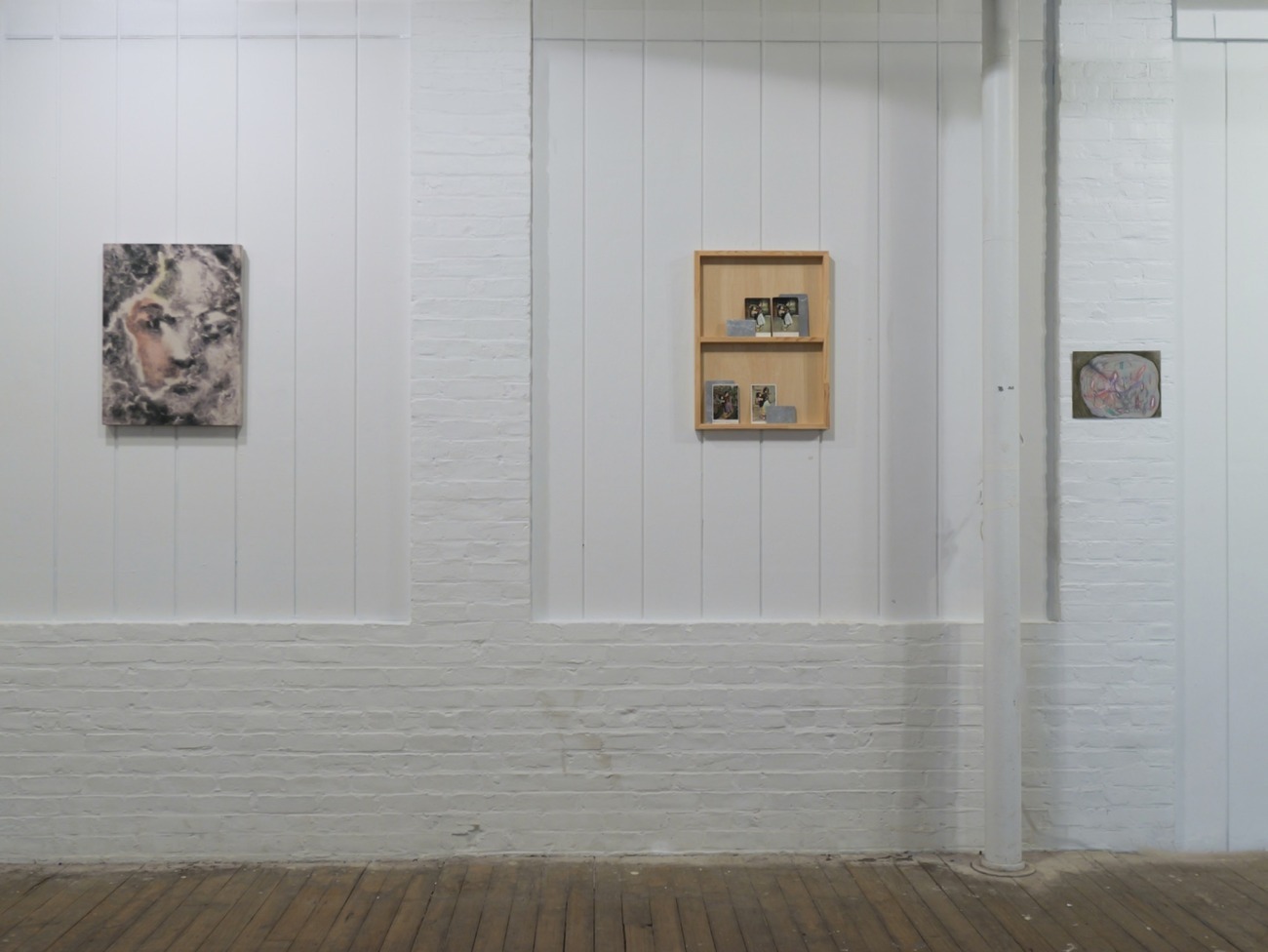
In the hands of two young Chinese curators, the theoretical bases of this exhibition also enter into conversation with the Asian diasporic experience and related histories. Sharon Cheuk Wun Lee's One Face on Thousands Postcards (2024–25) uses rice to build a fragile screen, depicting the faces of Cantonese girls trafficked to San Francisco in the nineteenth century. Each crack is a trace of violent history, and instead of restoring the face to its original state, she lets it continue to crack and shatter. From the Korean factory worker in Park Chan-wook's film to those silent bodies in the white cube, the exhibition quietly maps a genealogy suppressed by the trap of interpretive compulsion and capitalist modernity. It does not claim to have changed the world, nor does it guarantee that every viewing will reach its political core. But it invites us to temporarily set aside the binary attachment to "mind-body" and "human-thing": when the body no longer needs to be governed by the mind, when the “thing” is no longer an object gazed upon by the subject, viewing ceases to be violent, penetrative, and becomes a proximate co-existence. The exhibition insists on a low-volume declaration: when human standards falter, when narratives of cure or awakening lose their hold, remaining in suspension, remaining in a dream, is not failure but a condition that is, in itself, enough.
I'm a Cyborg, but That's OK is on view at Aunty’s House (25 Acorn Street, Building 35, Providence, RI) from May 8 to June 5, 2026.
References:
[1] Bruno Latour, We Have Never Been Modern, trans. Catherine Porter (Cambridge, Mass.: Harvard University Press, 1991): 51-55
[2] Eunjung Kim, “Unbecoming Human: An Ethics of Objects,” GLQ: A Journal of Lesbian and Gay Studies 21, no. 2-3 (January 1, 2015): 297
[3] Kim, “Unbecoming Human”, 298
[4] Benedictus de Spinoza, Ethics, trans. Michael Silverthorne and Matthew J. Kisner (Cambridge: Cambridge University Press, 2018; first published 1677): 94-106
[5] Kim, “Unbecoming Human,” 296