
.webp)
SPLIT LEVEL 2026
Review
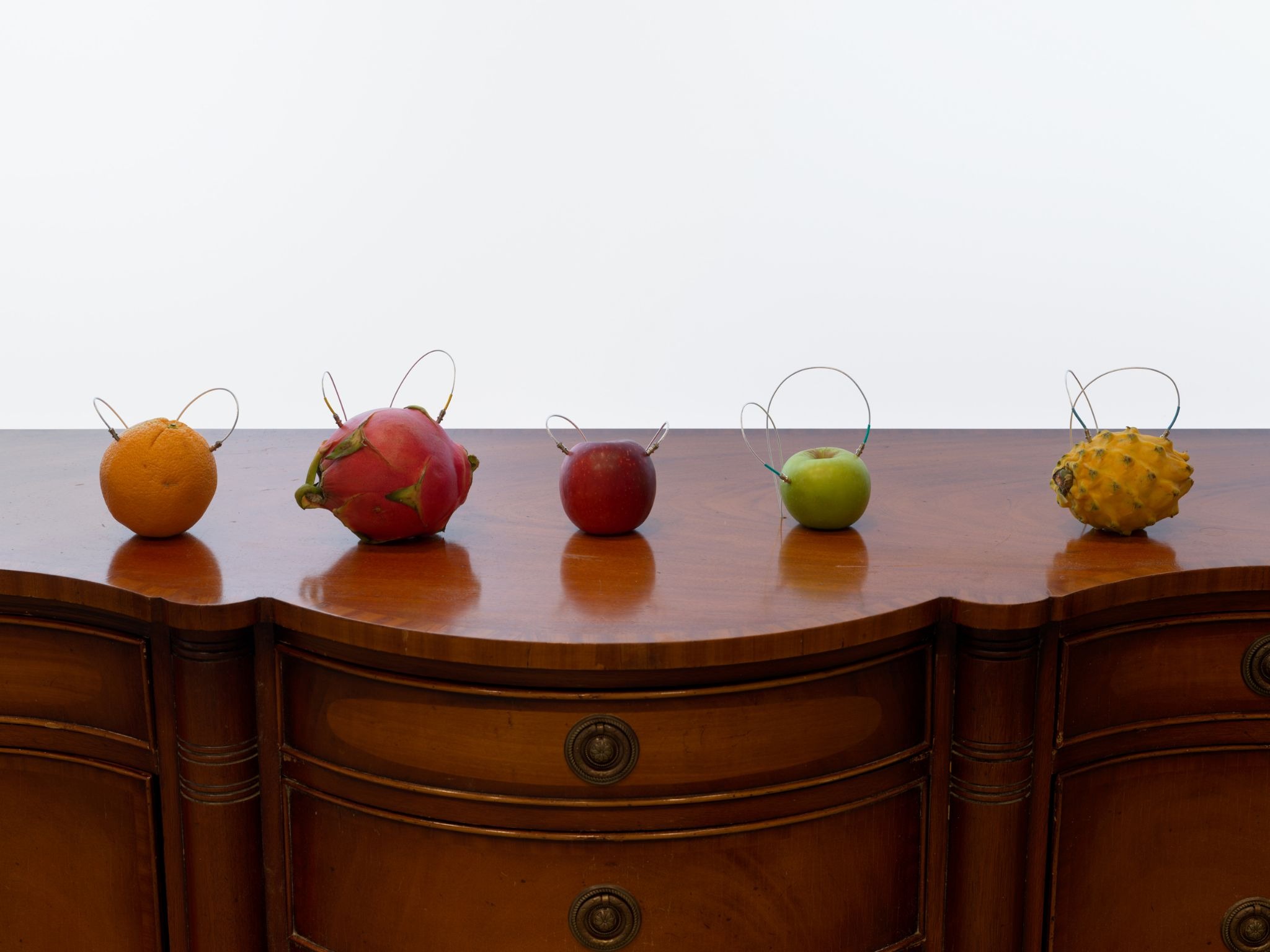
Softly rotting produce is a familiar sight even to those who haven’t laid eyes on the ubiquitous genre of still life painting. Another word for the tradition is nature morte, or the French translation of “dead nature.” Those heaps of inanimate objects, so often edible ones rendered in oil to capture their appetizing inner light, hold the paradox of abundance and transience. Still life compositions remind us of what we already know as humans who gather our food: these apples are good now, but not for long. Japanese artist Yuko Mohri didn’t find a way to immortalize perishables, but she does electrify her still life compositions with the dexterity of a Modern-day Dr. Frankenstein. As part of her first solo exhibition at Tanya Bonakdar gallery in New York, Falling Water Given, Mohri rigged up electrodes to source live transmissions of light and sound from real fruit.
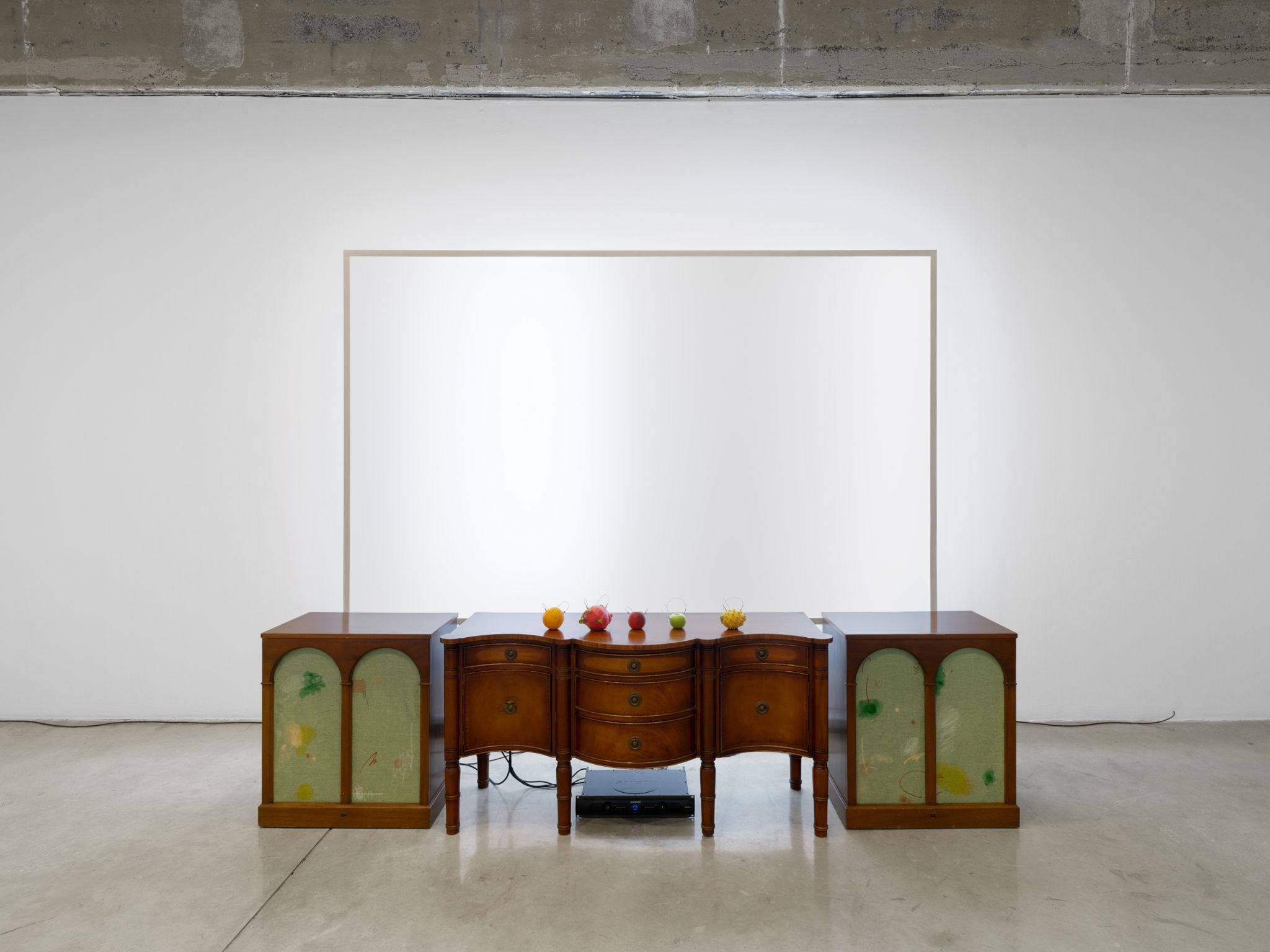
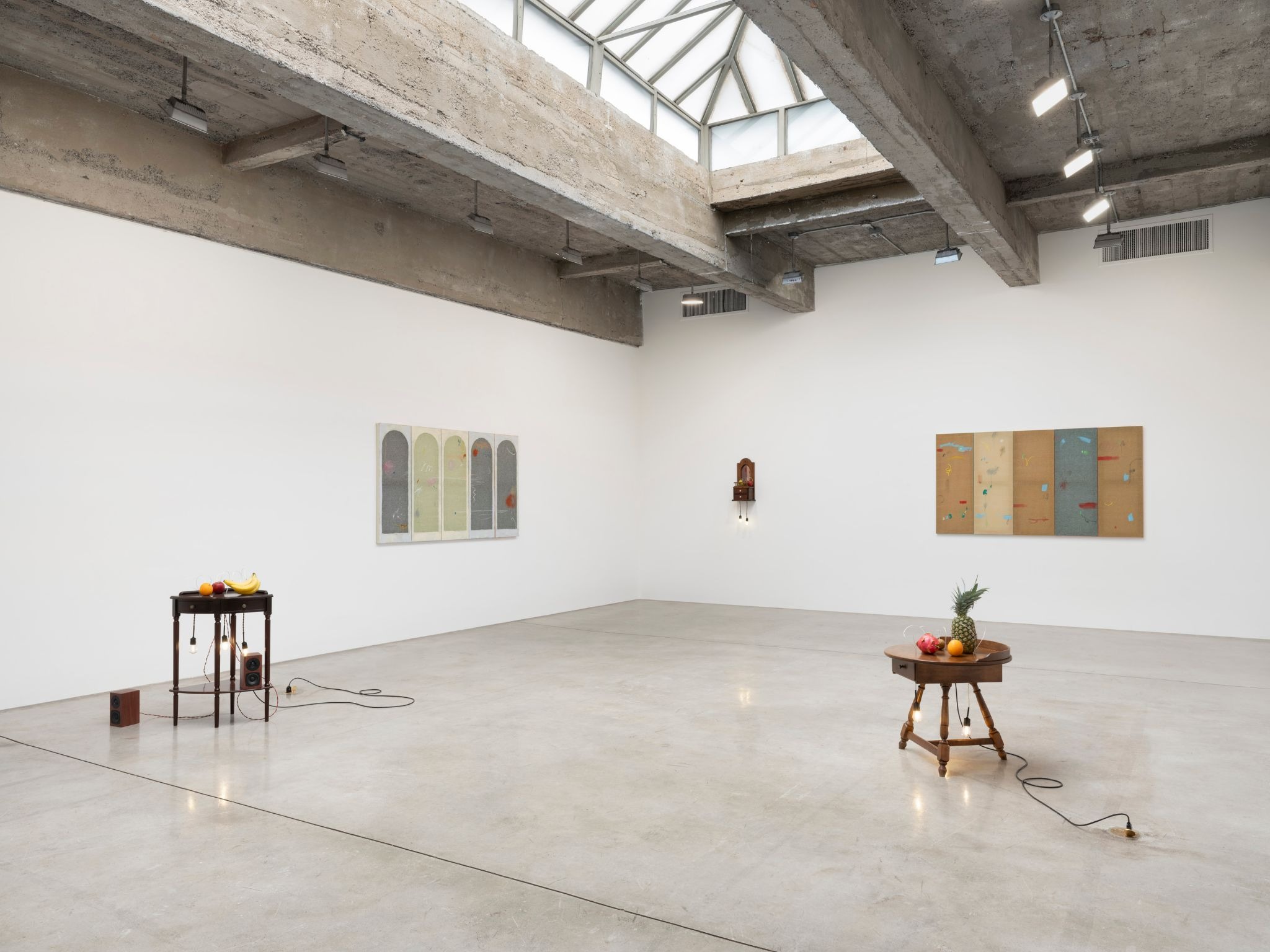
Mohri has furnished the upstairs galleries with antique wooden tables and shelves, perhaps inspired by those seen in a 17th-century Dutch painting. Their surfaces host a mix of apples, pomegranates, pears, oranges, and so on. The fruits’ knobby exteriors have been punctured and threaded with tiny tubes in an otherwise hidden system that allows them to influence the dimming of bare LED lightbulbs suspended from the furniture. As electricity from the fruit is converted into light, the bulbs’ filaments glow in slow, brief patterns. Their intermittent dimming is impossible to predict, but if somewhat eerie, the gentle blinking of lights also creates a meditative environment alongside the sonic harmonies emerging from several small speakers hooked up throughout the galleries. The music’s main source can be found in Bonakdar's “project room,” where Mohri has framed a substantial vintage console with a large LED light panel to replace hanging bulbs. This is another channel for the fruits to emit light as they dry out, like dying stars or supernovas. The trail of five fruits is bathed in this pulsing white light while they communicate, so to speak, in broad sonorous notes. Perhaps it’s an untamed version of Morse code, produced by small shifts in the fruits’ water content as they decompose.
If Mohri uses natural sciences to channel between classic and contemporary technologies, she uses the same tactic to connect sculpture with painting. Her three-dimensional installations are fittingly titled “decompositions,” and she further plays off the word’s polysemous quality by calling her wall works “compositions of decompositions.” With speaker cover cloth as canvases, Mohri’s panels contain moody daubs and scratches of acrylic paint, pen, and crayon. As with natural compounds in decaying fruit, the visual elements of color and form present in the installations are broken down into more simplified forms for the paintings. Mohri’s “compositions of decompositions” suggest a recursive loop between light, sound, and material. They mimic nature’s cycles, in which matter is never destroyed but instead recomposed.
The motif of those enclosed and harmonious systems reverberates in the downstairs portion of the show, which features works inspired by the makeshift water leak solutions one might see in Tokyo subway stations. Mohri’s ongoing Moré Moré (Leaky) series includes two photographic examples from 2021: one print captures a large plastic funnel twisted to direct water into a blue bucket at Hatsudai station, the other a complex system of tubes threaded through the ceiling of Yurakucho station. The source material provides the thrust for Mohri’s kinetic installations, where she rehashes those quiet negotiations between nature and civilization with found objects. Three large wooden frames are suspended from the main gallery’s ceiling, each isolating a network of silicone tubes situated to divert a trickle of water pumped from plastic tanks.
The installations are reminiscent of a Rube Goldberg contraption, but they perform only the task of providing more water for themselves, and in the process, adding to the fruits’ chatter drifting down from upstairs. In Moré Moré (Leaky): Falling Water Given #9, a bundle of fake green apples directs a slight runnel into a tin bucket, whose negligibly shifting weight causes a metal hook to sound against a suspended musical triangle: creating random patterns of drips and metallic rings against the hushed chugging of the pump. Mohri’s precision in arranging seemingly happenstance, random elements provides yet another layer to the artist as “composer,” putting together musical elements generated by the ad-hoc instruments of fruit or water. The wavering rhythms of cyclical passage are as sure, yet precarious, as the ones we might note in our own living bodies.
The sum of the work in Falling Water Given opens up an alternative side to everyday troubles—from food waste to infrastructural slips—that allow us to find an unexpected and graceful sense of organization, of things falling into place, if we would still ourselves enough, if we would listen closely.
Yuko Mohri: Falling Water Given was on view at Tanya Bonakdar from February 19 through April 18, 2026.





%20.jpeg)