.jpg)

.webp)
Tim Kent: “Sojourn” at Hollis Taggart
Review
I am less afraid of the metaphysical after viewing Xingzi Gu’s most recent paintings. In Gu’s acrylic and oil Soft hours or Heart print diary (2026), two human subjects lie in reverie at opposite corners. They could be thinking about one another. Seashells, butterflies, and birds float between them; diaristic pages fly through the dream state. Art that depicts escapism conventionally appears soft and gossamer, yet hard edges in varying shades of blue and purple cut through this composition like the refraction of light passing through an inexplicable plane. Time feels heedlessly smeared across the canvas, leaving viewers to ponder how to capture desire and fondness in a more material state.
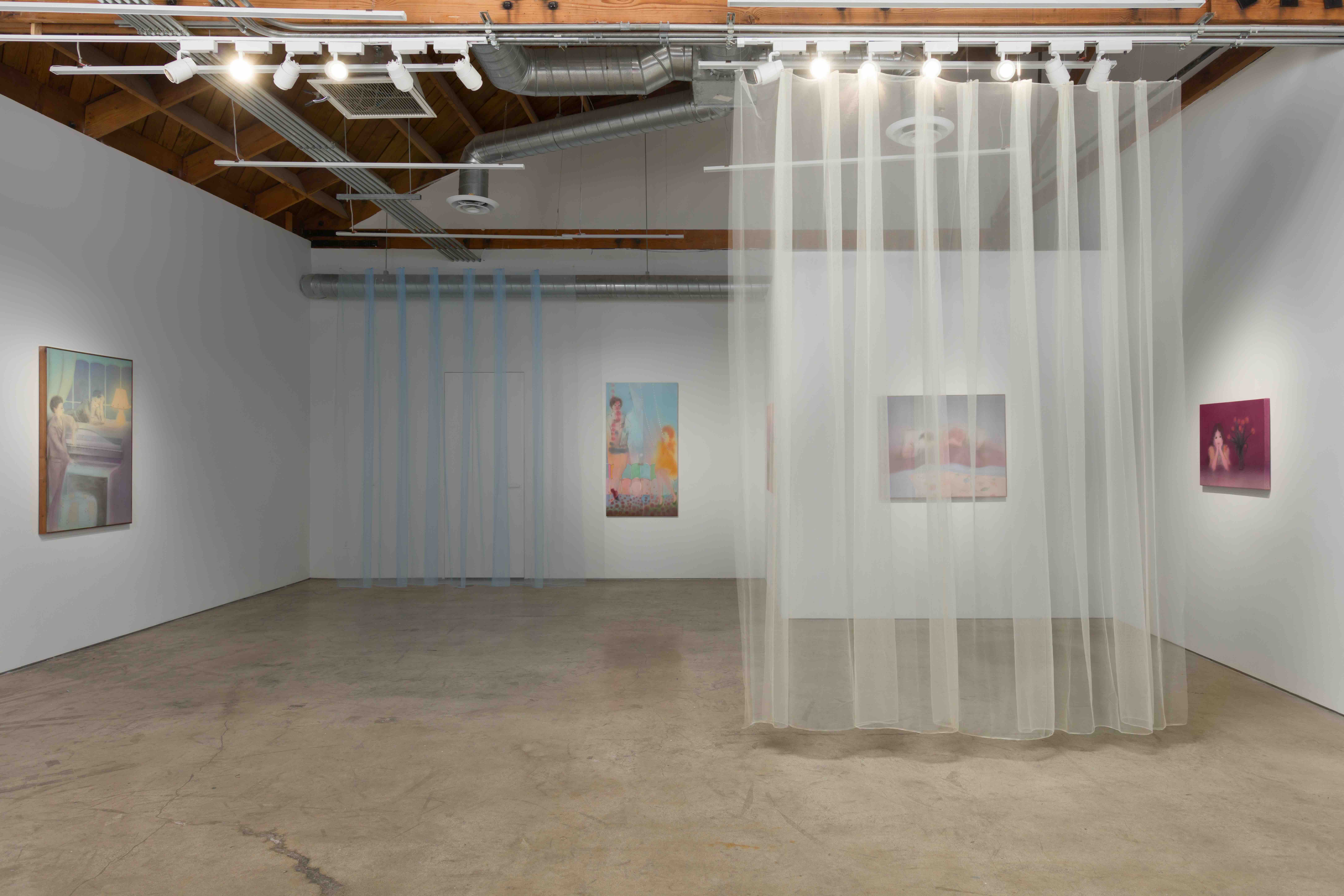
Soft hours or Heart print diary is a part of Gu’s presentation of paintings Periphery Dreaming, currently on view at Make Room in Los Angeles. All nine paintings came together over the last year, inspired by the Brooklyn-based artist’s fixation on the time and space that their subjects occupy instead of the relationships they hold.
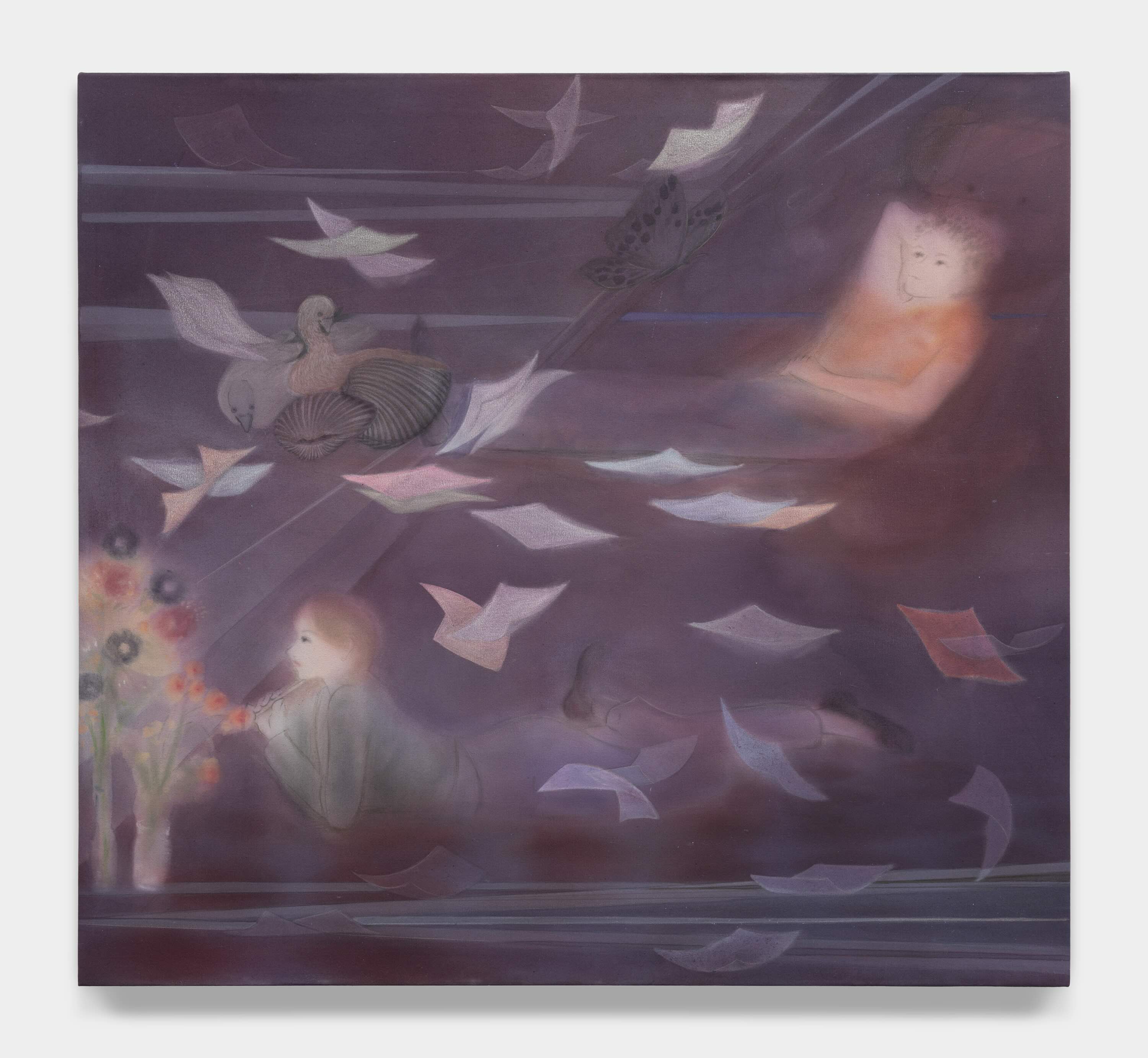
The idea to layer in the sharper refractions in Soft hours or Heart print diary came while Gu stepped away from the painting. After walking away from the work for a month, they returned to add in these abstract elements to evoke unease and uncertainty; the sharper edges that cut the soft palette into different pieces imply that the space between the two figures is falling apart. It sows some doubt in the way we commit our significant other or crush to memory.
“I was interested in how interpersonal, romantic, or familial relationships shape coming of age identities, but everyone has their own experience with time or temporal spaces too,” Gu tells IMPULSE. “I’m curious in that manifestation not necessarily in a corporeal or narrative way, but in a more metaphysical way.”
As a painter, Gu is known to take adolescence seriously. The Nantong-born artist has become well-received for their exploration of the interior lives of subjects on the brink of adulthood. As a self-proclaimed child of the Internet, Gu is no stranger to building inner richness through the cultivation of found images and mixed media behind a computer in one’s bedroom. Their work challenges the notion that entering adulthood equates to the loss of fantasy—in reality, such escapism often follows and even confronts us when we least expect it.
Gu began Periphery Dreaming by gathering sketches, film stills, and photographs before composing their ideas. Beyond these source materials, they relied on their own memories to fill in the gaps in narrative or ideas of how time should be represented. By combining found media with lived experience, Gu asks the viewer what it would be like to let memory exist not just in the past––where the linearity of time would suggest it should be––but right alongside us, even coming toward us, informing our relationships and singular experiences.
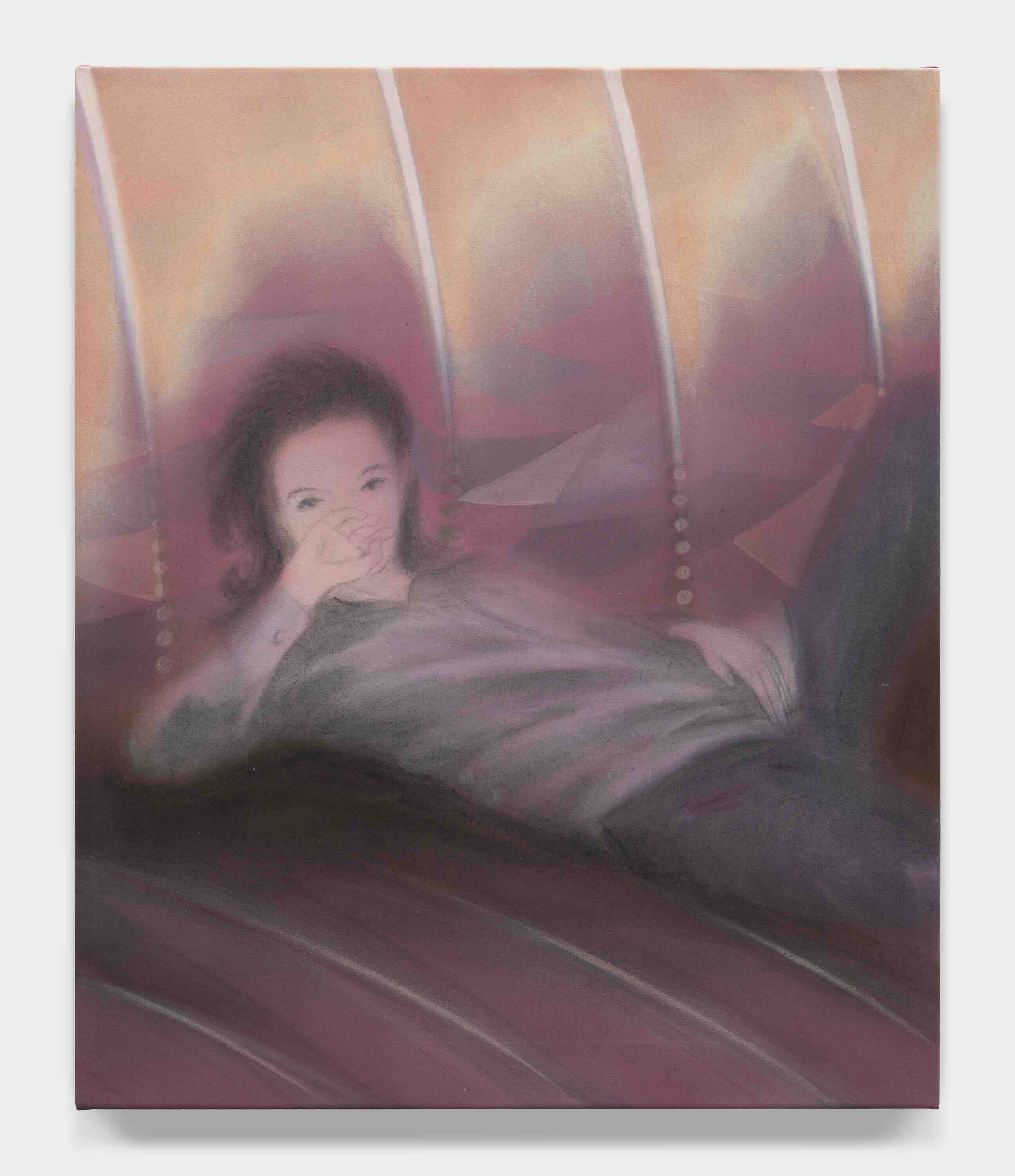
Many of the subjects in Gu’s latest series still feel young, and their experiences continue to appear momentous. In Warm light temporal (2026), a young woman looks directly at the viewer, the back of her hand hiding her nose and lips. Though she appears shy, she still displays a curious openness: reclined against a couch, her legs are slightly splayed in a show of timid vulnerability. Similar to the space between the two subjects in Soft hours or Heart print diary, the area around Warm light temporal’s woman seems to disintegrate into fragments through Gu’s juxtaposition of sharp edges and soft fades. In both formal and conceptual execution, Warm light temporal attempts to capture the precarity of innocence and desire.
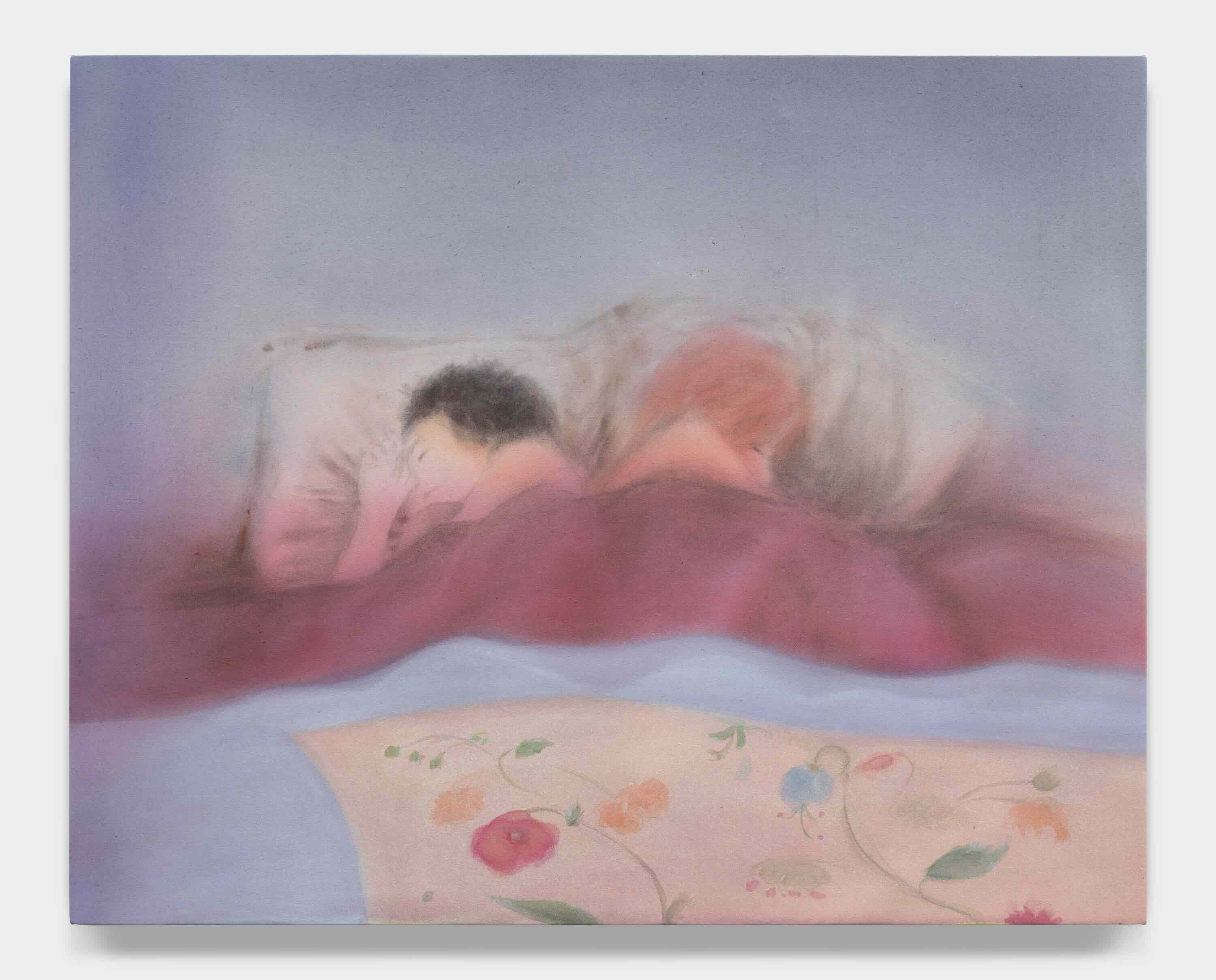
In Bedsheets (2026), two figures share a bed, nestled back-to-back in cool sheets. The space just above their heads is fading away, like vaporous dreams that dissipate when they blink out of their slumber. Bedsheets is loosely inspired by one photograph of a couple from Sophie Calle’s series The Sleepers, but while Calle zooms in on the sleeping couple with a near top-down shot, Gu extends the portrait to include the edges of the couple’s dreaming spaces, giving physicality to the abstractions and stories we conjure in our sleep and making visible their unconscious dimension.
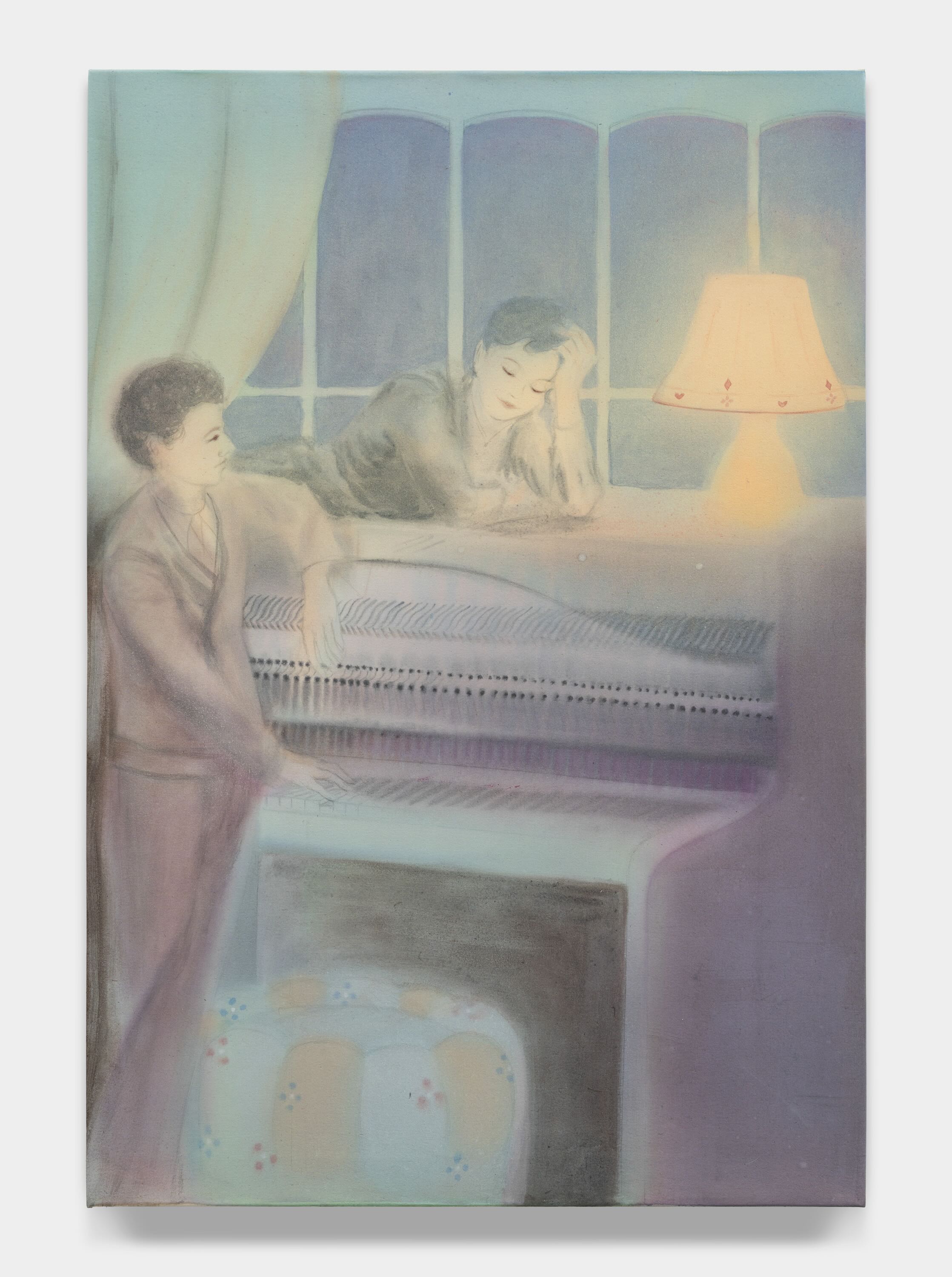
Occupying Make Room’s most visible wall, Nocturne (2026) unites all that Gu has explored around the liminality of time. A figure rests comfortably atop a piano, looking down at its keys as the pianist beside them plays a note while looking up to gauge their response. By centering this listener, the painting accentuates the atmospheric quality of the moment rather than the corporeal experience of two people in love. Gu has chosen a fleeting and muted palette: the retro-style lampshade on the piano emanates a pale yellow glow, washing over the lived-in home furniture in blanched hues of blue. Though the piano cannot be heard, one can sense that it has changed the energy of the room as it gets lighter in tint the farther out from the piano we go. Perhaps it is with Nocturne that Gu most straightforwardly pronounces how to paint a memory in its true fidelity––hazy, uneasy, and evasive. The longer we attempt to get to know this couple, the stranger they become.
Much of our lives are spent in wait. We wait for a kiss, for flowers to bloom, or for adulthood to make sense. In this nebulous space, thoughts and emotions arrive on a metaphysical level that are not concurrent with that act of waiting. Why is it that in an anticipated kiss with someone new, we suddenly remember old lovers? Why is it that in the tedium of growing older, we still dream big? To be honest about this experience as a painter means to recompose all these fragments of time and attempt some coherence beyond the conventional, linear narrative. Periphery Dreaming thus feels like Gu’s exercise in accountability to themselves to capture these spaces and experiences faithfully.
Xingzi Gu: Periphery Dreaming is on view at Make Room Los Angeles from September 12 through October 10, 2026.






%20.jpeg)