"Savdie / Soutine" at NORR COHAN
Review
Just a few blocks away from the bluest of blue-chip galleries in New York, That Was Then, a two-person show featuring Bryony Rose and Molly Wasielewski at Picture Theory, offers a more approachable and intimate viewing experience compared to its Chelsea neighbors. Curated by Rebecca Polanzke, the show unites a series of Wasielewski’s miniature beaded tapestries and Rose’s glazed stoneware. Memory is a craft for both artists, and their craft is undoubtedly fine art. Mining fragments of images—Wasielewski from the public archive and Rose from Scottish national memory—these two artists transform and expand upon flickers of visuals. The fleeting becomes fixed, made permanent through loom-weaving and shaping clay.
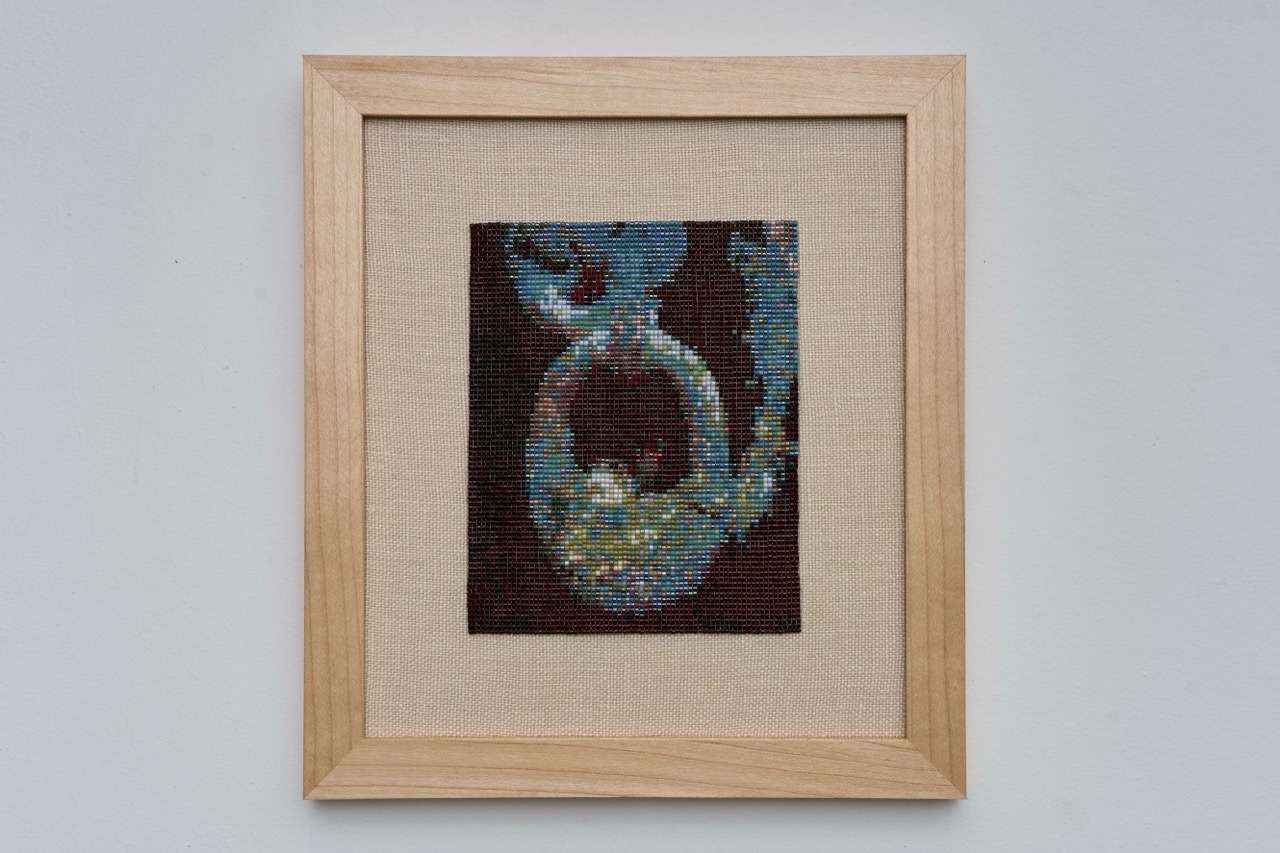
Wasielewski’s works invite up-close admiration. Approximately the size of a standard four-by-six photograph, each tapestry is petite yet packed with vibrancy. In Silkworm I (2024), Silkworm II (2024), and Waldo (2025), the color palette is rich yet reserved. Deep burgundies punctuated with dark greens depict a world that is slightly bizarre but still identifiable. There are chains and cocoons, zoomed in and obscured. Then, as the beads enlarge, so does her experimentation with color and form. Clear motifs vanish, and a mosaic of colors takes its place. Fluorescent pinks and accents of aquamarine appear in Thistle (2025) and The Hood (2026). Ringing (2025) is nearly iridescent, like the gloss of an insect shell.
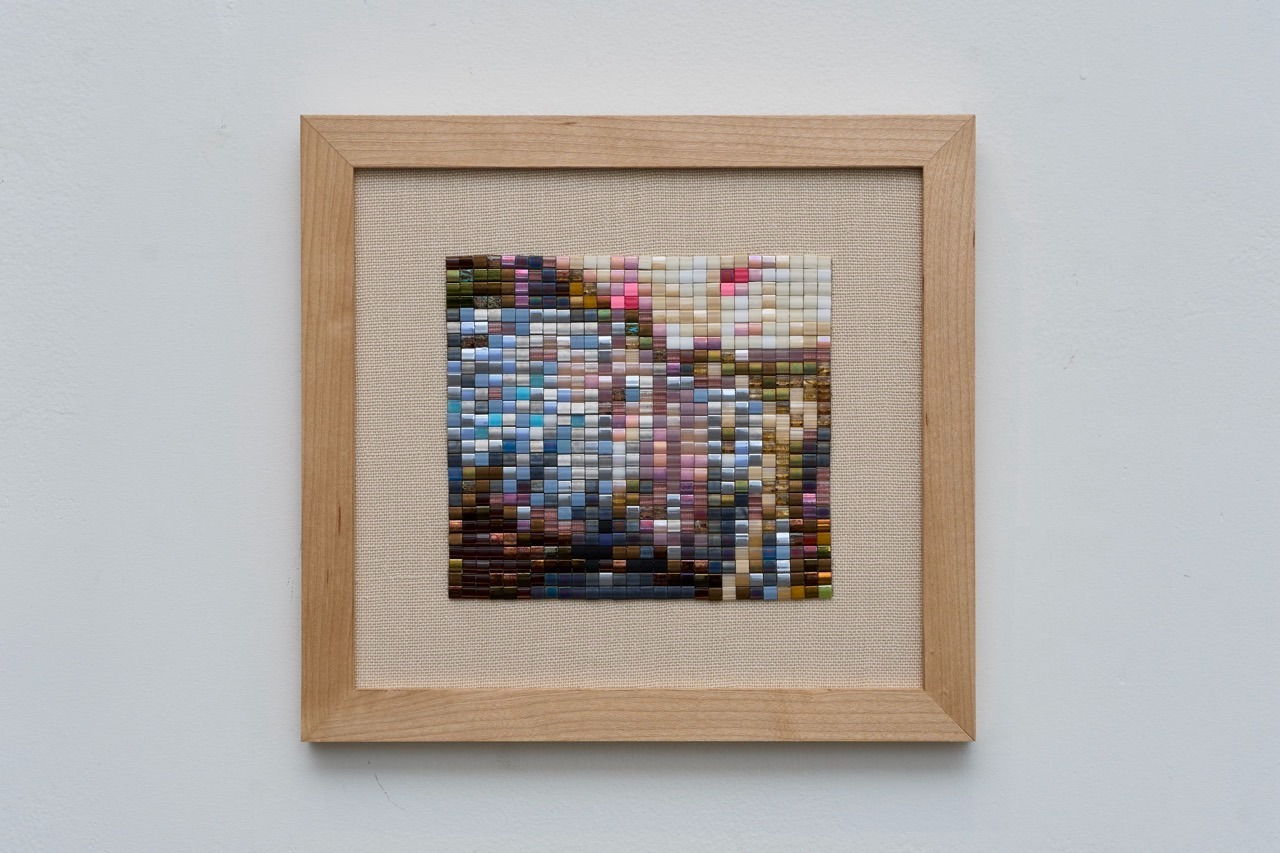
Looking across the eight works, one might feel a sense of déjà vu. There is something familiar about what you’re looking at; you can almost put your finger on it. But unlike a blurry photograph, frustrating and obtuse, the beauty blooms in the blur. Is Red Wing (2025) a bird, a mushroom, or neither? Is Ringing (2025) a butterfly wing? Motifs of birds, cocoons, and cages are sprinkled throughout, but one does not need to discover a throughline, however tempting it may be for the inquisitive viewer. “To me, these motifs are the starting point for a material metamorphosis, and what remains in the final beading is a lingering visual continuity,” Wasielewski says.
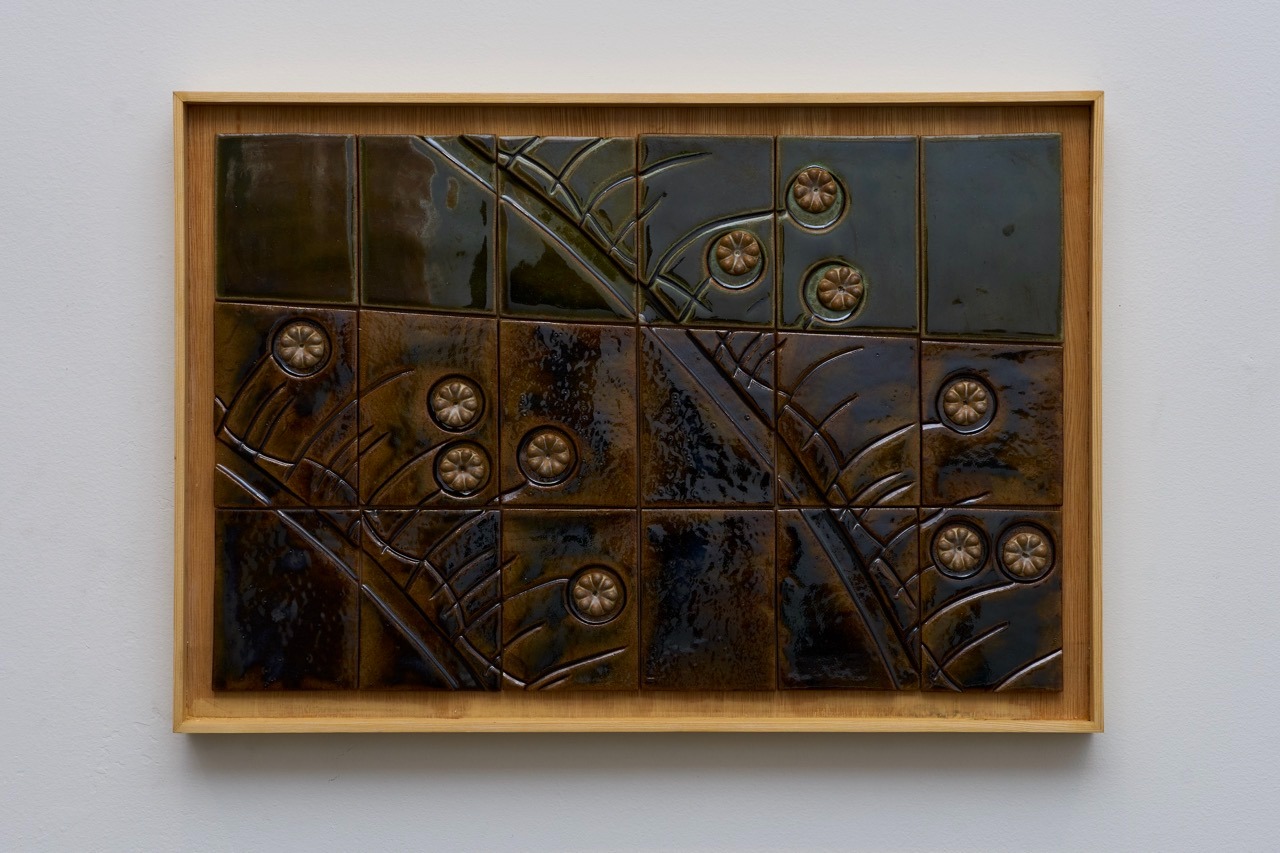
Bryony Rose’s stoneware similarly relies on the repetition of visual motifs. The Scottish lay-by, a temporary stop for drivers along a main road, is the focus of her works. Cars with beaming headlights are the obvious representations of this focus in Tread 1 (2026), Tread 2 (2026), and Haws 1 (2026). The lay-by is further abstracted in Verge 1 (2026), Verge 2 (2026), and Verge 3 (2026). Tire marks and countryside flora are arranged almost geometrically like a textile pattern and then finished in shades one might expect on a rainy, muted day on a Scottish road trip. The sheen of the glaze, in particular, evokes the slickness of the road after a heavy rain. “A tire mark or a hawberry—there’s a real banality to them that I find,” Rose says. “I love seeing what happens when they're given attention.”
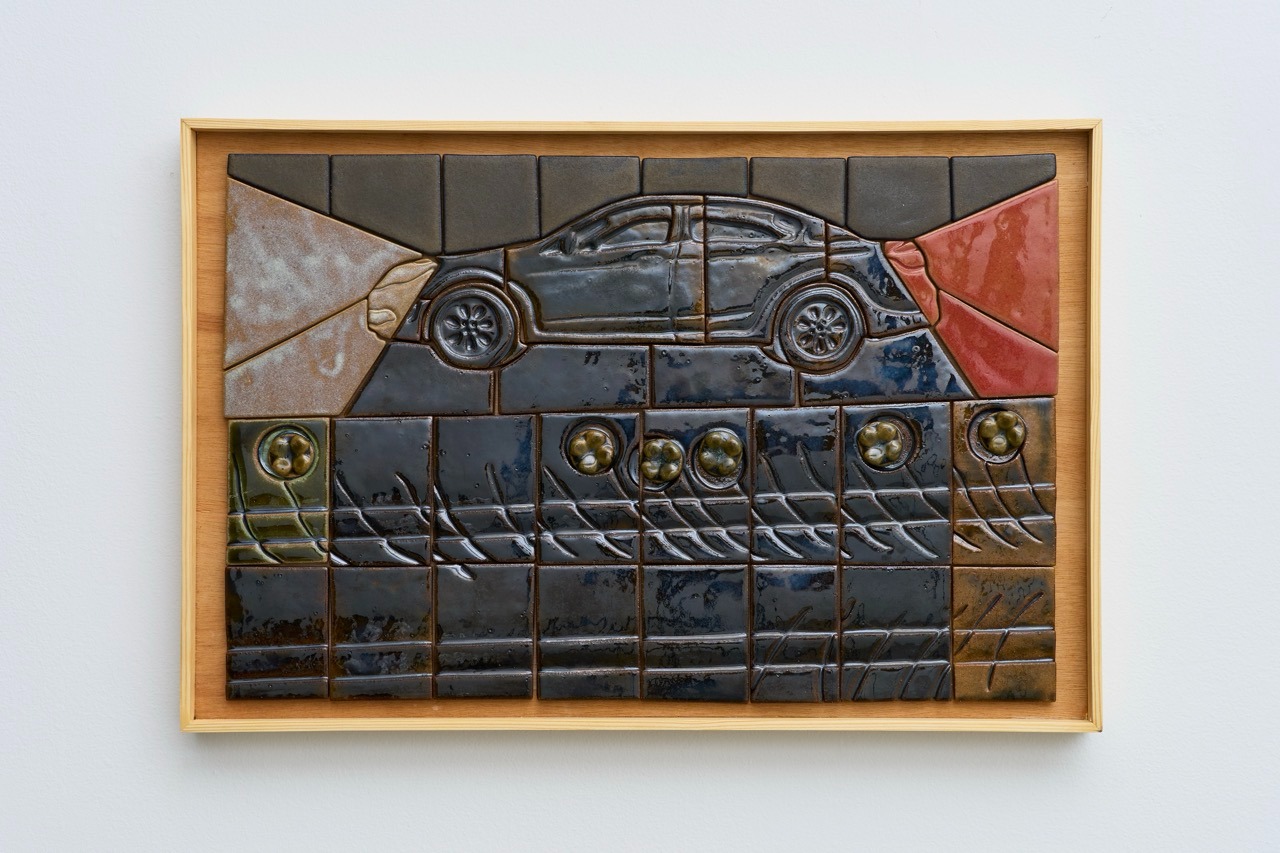
There is, too, the contrast between the utilitarian quality of tile and the works usually found in a gallery. But it is exactly this tension that makes Rose’s work thrum. “We encounter ceramics constantly through tiles, tableware, and architectural details, and I'm interested in using that familiar visual language as a way into the work,” Rose says.
Like tilework, beadwork has often been relegated to the category of craft or decorative art—a distinction shaped, in many contexts, by gendered and colonial hierarchies. However, in many Indigenous communities, women were the principal makers and intergenerational transmitters of beadwork traditions. Often highly esteemed, beadwork carried ceremonial, political, and symbolic meanings while preserving cultural knowledge across generations. Contending with this socio-historical backdrop, Wasielewski’s and Rose’s practices collapse the tension between fine art and craft—if we must separate the two. We are reminded that there was a world before photography and grotesque AI-generated imagery, when images weren’t readily available and when the creation of a memento was slow and tedious. Wasielewski’s tapestries, for instance, take two to three months to create, and she only works on one at a time. A library science graduate student by day, she focuses much of her personal research around the Jacquard loom as an “ancestor to the modern-day computer.” Beginning with a digital photo from the public archive, she then deconstructs it to its pixels, and reconstructs it bead by bead. The digital becomes physical, and the tactile becomes conceptual and wonderfully alive.
That Was Then is on view at Picture Theory from June 11 to July 18, 2026.