


Danielle Ezzo and Marin Sardy: "Psychic Telephone"
Review
Vienna is home to a rich ecosystem of project spaces and artist-run galleries that operate completely independently of commercial structures. During IMPULSE critic Jonah James Romm’s visit, he explored this scene and gathered some different approaches to art programming in the Austrian capital, from long-established alternative spaces to collaborative exhibitions and newly founded sites for political discourse.
Calli Ryan, Marielena Stark: Penumbra
COMMUNE, PILOT | Hans-Sachs–Gasse 27/4, Vienna
September 18 – October 11, 2026
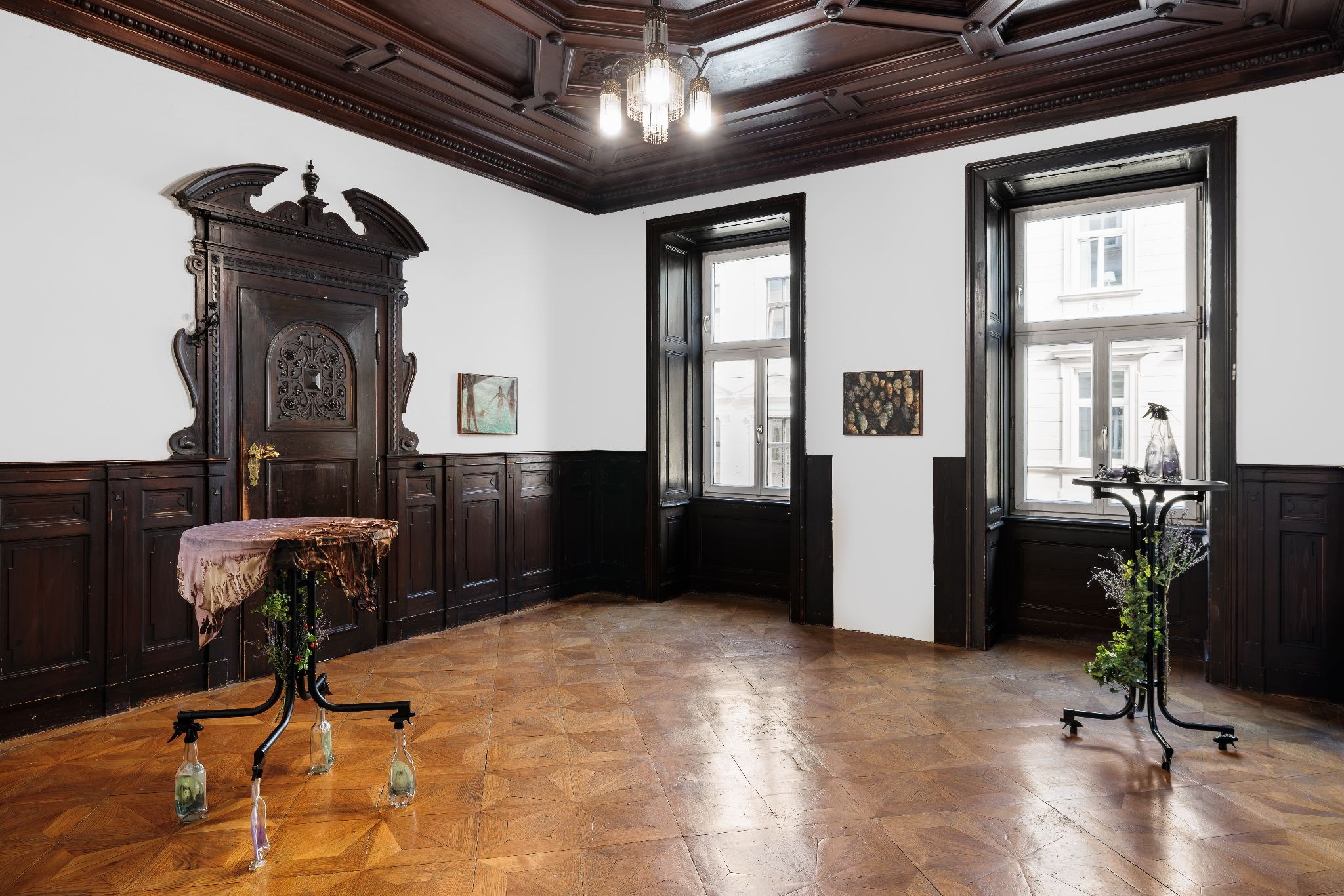
Penumbra is the result of a collaboration between PILOT, a project space based in the living room of a historic Viennese apartment, and COMMUNE, a younger gallery among the city’s relatively longstanding commercial spaces. Vienna has an unusually strong distinction between non-profit and commercial galleries, which typically discourages collaboration between the two groups, making this synthesis particularly exciting. In this case, both directors each proposed an artist and found a fruitful pairing between Calli Ryan and Marielena Stark, whose work is presented in dialogue with the interior architecture of PILOT, the former residence of the architect Ferdinand Feller, who was known for designing theaters around Europe.
Marielena Stark’s sculptures of reclaimed furniture activate the original utility of the room while confusing our sense of time and atmosphere. The industrial, mass-produced tables become frames, supported by delicate glass spray bottles for both artificial and real plants gathered from the flower beds lining the sidewalk outside of the building. One table’s surface is covered with naturally dyed silk, which drapes over the edge. On top of the other rest more warped glass spray bottles, which have been melted in an oven. It’s as if the sculptures deconstruct themselves through the amalgamation of mundane commercial objects, their distorted mimesis, and botanical specimens. They react to and unwind any specific spatiotemporality that PILOT’s interior might suggest, leaving us in a realm where antiquity continues to sprout new growth.
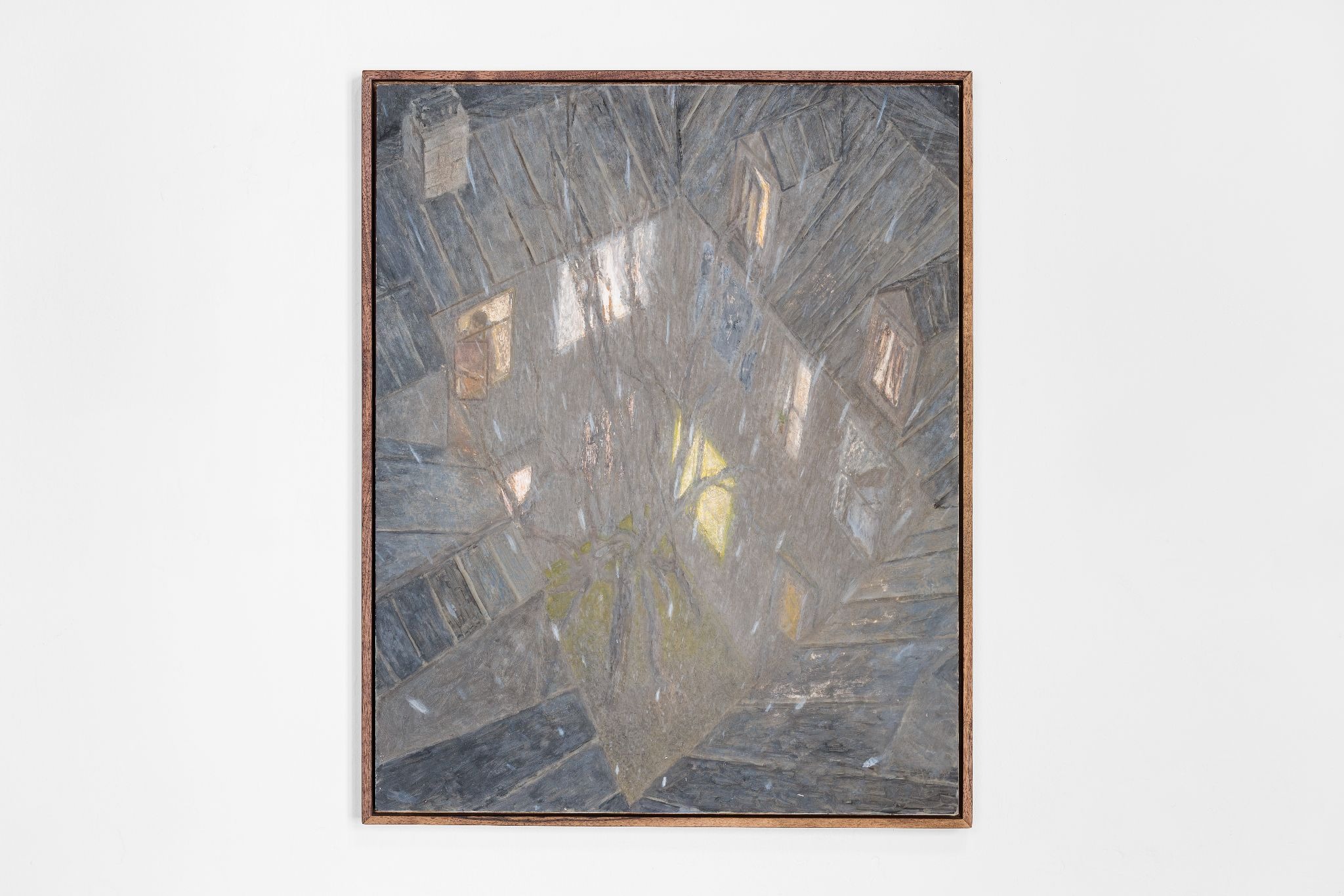
In a completely different formal approach, Calli Ryan’s paintings conjure a spirited atmospheric world. Her process is defined by the attempt to intuitively represent memories, building up and then removing layers of paint until an impression is revealed or channeled. The ultimate image is a reflection of a memory, displaced through layers of association and action. November Rain (2026) shows the courtyard of a building from above as raindrops fall upon a barren tree and a window glows with the silhouette of an illuminated figure. We can imagine this building as the apartment gallery itself, as if we are looking down at ourselves through the window from the perspective of falling rain. The conjunction of Ryan’s and Stark’s work ties threads between the personal, the intimate, and the environmental, and it’s impossible to ignore PILOT’s unconventional setting as arbiter of this site-specific conversation, which leaves more of an affective impression than a neat intellectual conclusion.
Daphne von Schrader: walking frames and the conditions of a flirt
Medienwerkstatt Wien | Neubaugasse 40a, 1070 Vienna
September 30 – October 24, 2026
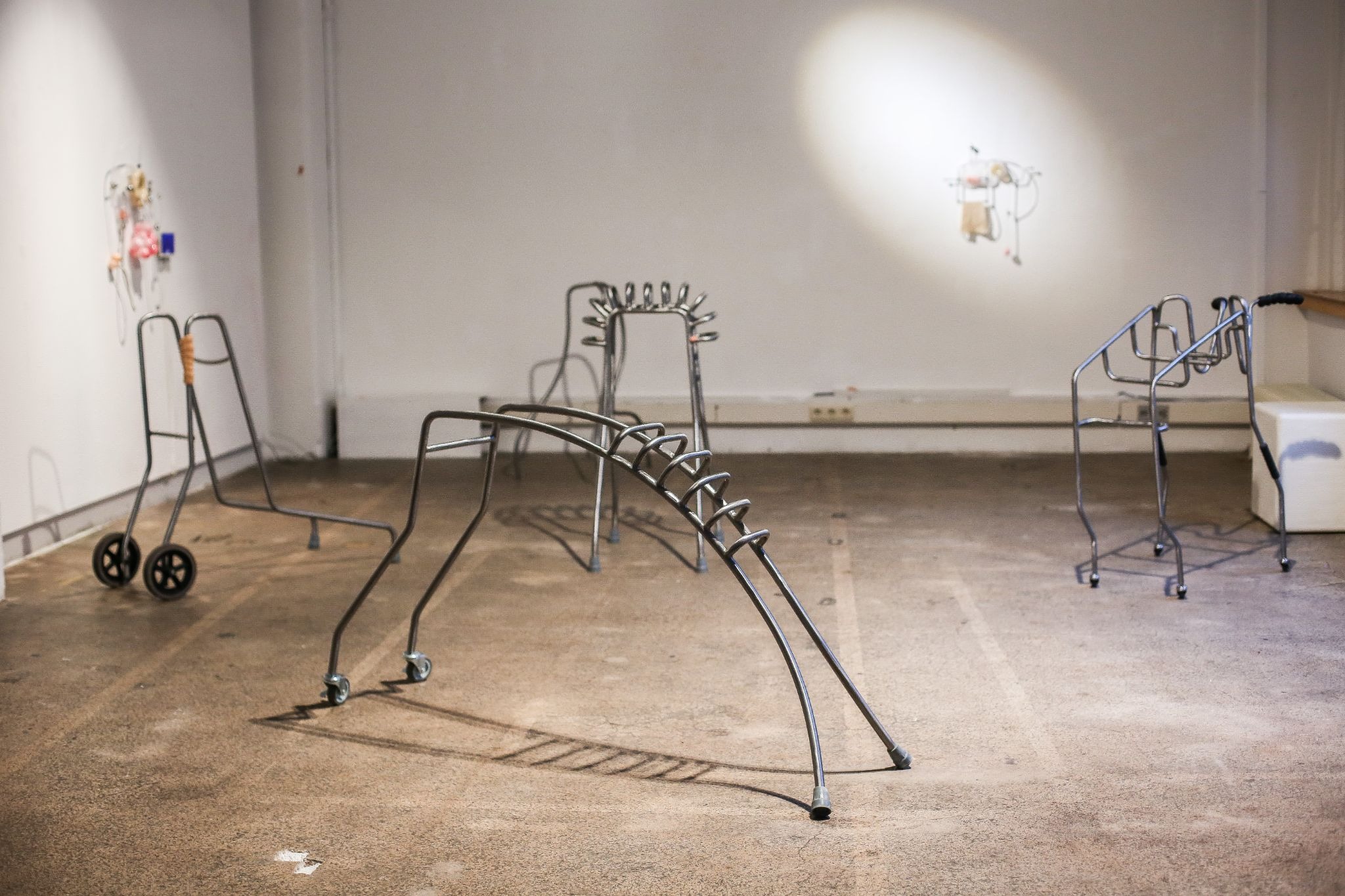
Medienwerkstatt Wien is a non-profit space devoted to video and new media art since 1978, where artists are often given a chance to incorporate digital components into their work. The program encompasses artist residencies, screenings, and performances alongside exhibitions. In walking frames and the conditions of a flirt, Daphne von Schrader presents a body of free-standing, moveable sculptures and wall pieces which include video monitors and an interactive soundscape developed specifically for and in collaboration with Medienwerkstatt Wien and the curator, Magdalena Scheicher.
The exhibition title refers firstly to the steel welded sculptures which populate most of the gallery space. These “walking frames” resemble shopping carts, walkers, and wheelchairs, but with strangely animalistic qualities. Some are set on wheels or have handles that the viewer can use to push, roll, or rock them. Once in motion, a strange moaning sound vibrates through the gallery from an unseen source, changing as the different frames interact with each other through use. It is not long before the gallery, during the opening, is transformed into a kind of adult playground with people pushing and rolling their little vehicles around, triggering different sonic responses. There is something immediately erotic about interacting with the frames, which require a certain thrusting, and they inevitably bring you into contact with another viewer who is engaged in the same peculiar movement. A game of chicken might unfold, each person trying to steer their apparatus away from the other to avoid a collision, or skirting around each other to maintain safe proximity.
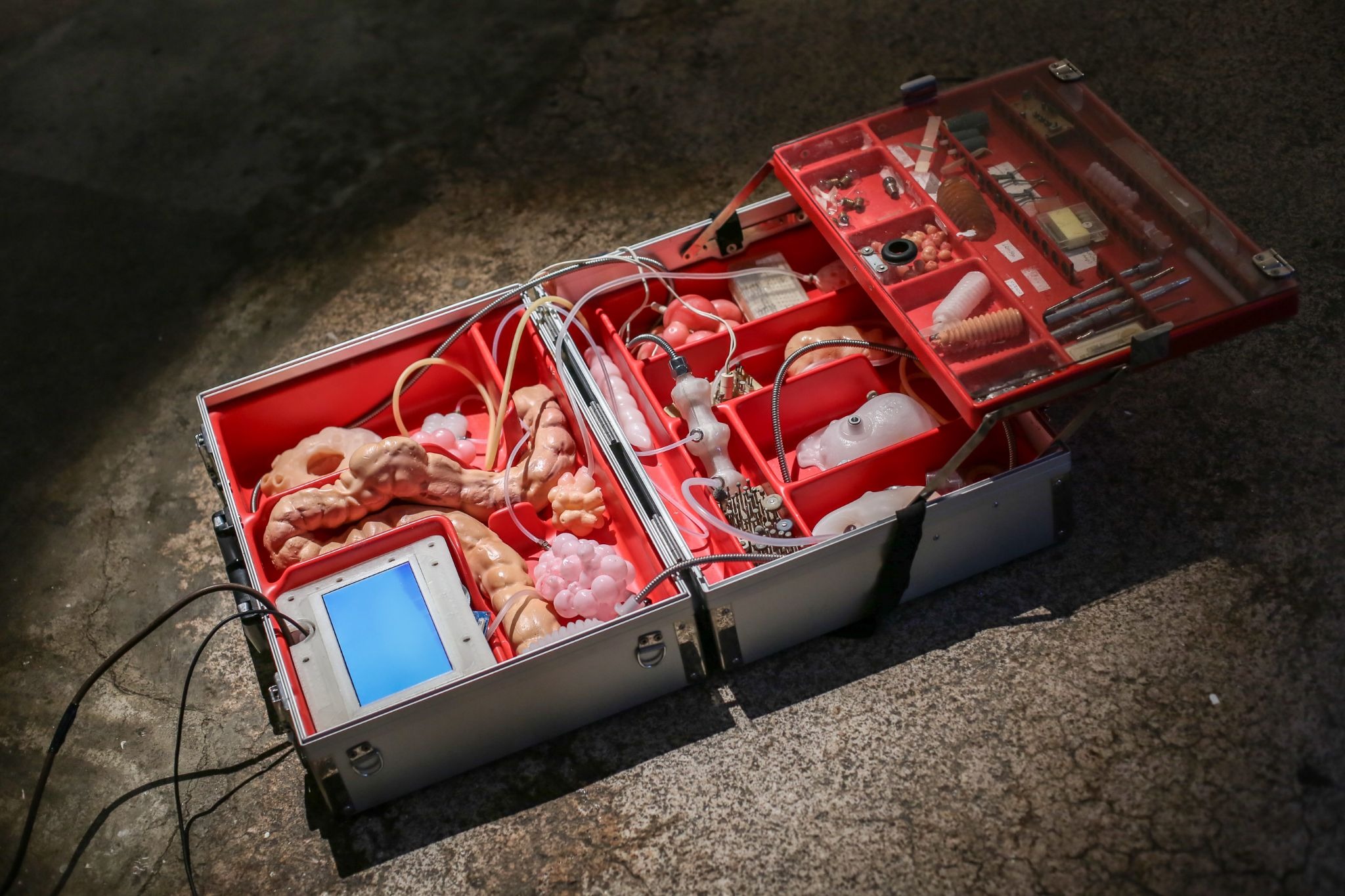
This shifty pattern of back-and-forth movement or veering away from some ultimate collision could be seen as a kind of flirtation, and viewers are immediately solicited into a flirtatious relationship upon interaction. The culmination of the erotic act is withheld, always just beyond reach, so that one becomes stuck in this game of appearances, which we might consider the “conditions of a flirt.” Along with the walking frames, two wall pieces utilize a more delicate steel armature, with tubes, latex, and artificial organs of fantastical origins. On the floor, a toolbox is stuffed with interconnected organic forms and medical equipment, including scalpels, syringes, clippers, and more unidentifiable objects. They create an absurd assemblage of medical apparatuses with bodily material, hybridizing the biological and mechanical. If the frames are more like vehicles for flirtation, then maybe sites are where flirtation is conjured or synthesized through a juncture of self and other.
Cristina Garrido, Luis Gómez Armenteros, Helena Martin Franco: The Best Job in the World
ENTRE | Burggasse 24/4, 1070 Vienna
July 24 – October 15, 2026
Founded in 2021 by artist and curator Marilyn Volkman, ENTRE primarily showcases artists and collectives that deal with the sociopolitical situation in Cuba and Latin America. The project space’s recent exhibition, The Best Job in the World, brings together three artists of different nationalities and geopolitical backgrounds, united by a shared interest in exposing the fundamental paradoxes of pursuing an artistic career in today’s world. They share an ethnographic, research-based approach, demonstrating perspectives that go beyond national borders or political systems and cut straight to the cost of chasing “success” as an artist.
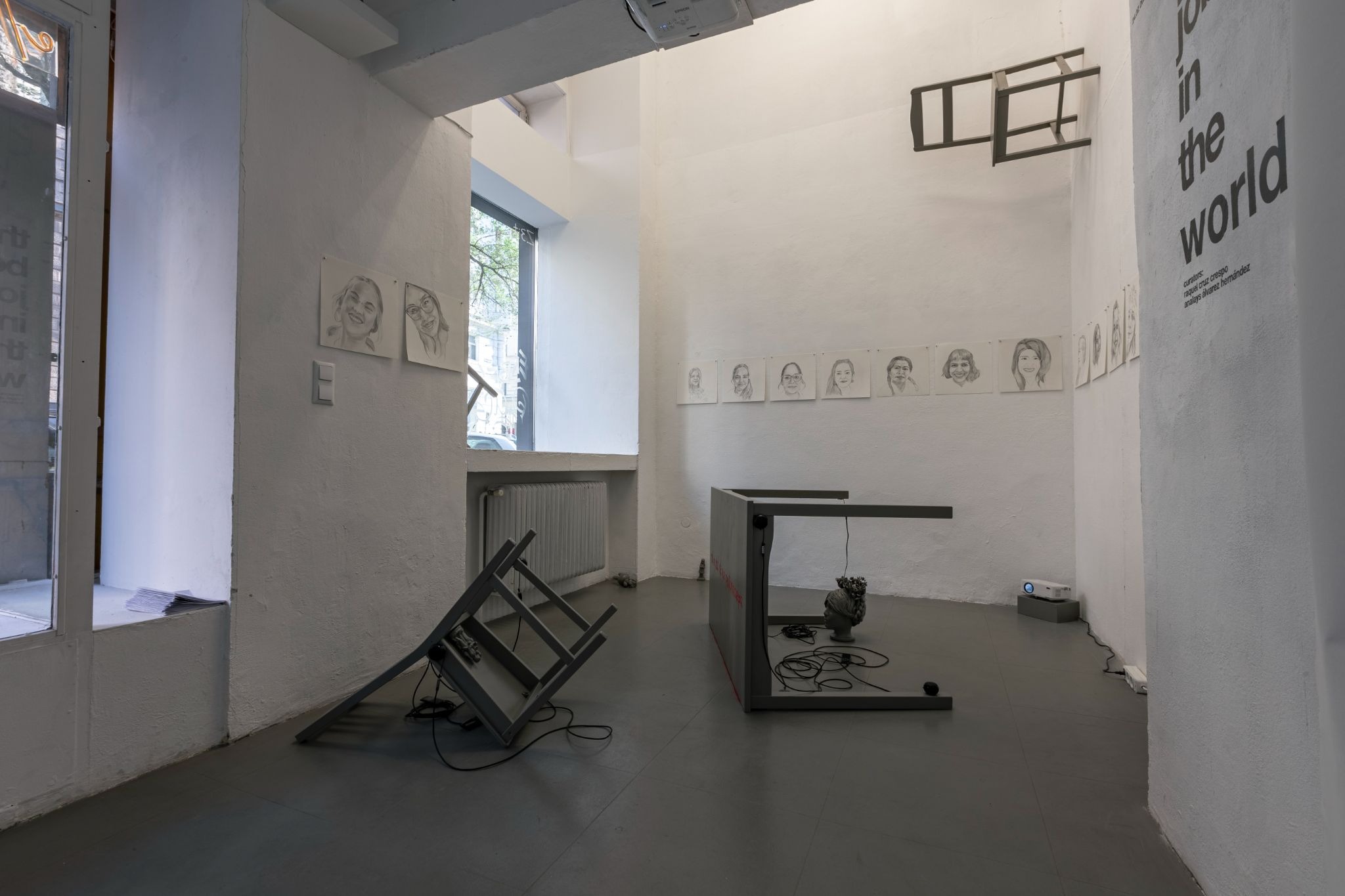
The front room of the gallery is devoted to Helena Martin-Franco’s installation Labyrinthe La visite: un potluck avec La Colectiva Tribu (2026), where an overturned table and chair immediately present the viewer with a barricade to circumnavigate. Drawn portraits of women hang in a consecutive row across the wall, from which another chair protrudes horizontally above. The portraits are of members of La Colectiva Tribu, a group of expatriate women committed to environmental and social justice, of which the Colombian-Canadian artist is a member. Interspersed within the various furniture pieces are video monitors and headphones that play recorded interviews with the group members discussing diasporic identity, hardship, and reinvention. Martin-Franco weaves these collective narratives together with mundane objects that have literally been flipped upside down, submerged into an unfamiliar realm without gravity or color, flattened into grey.
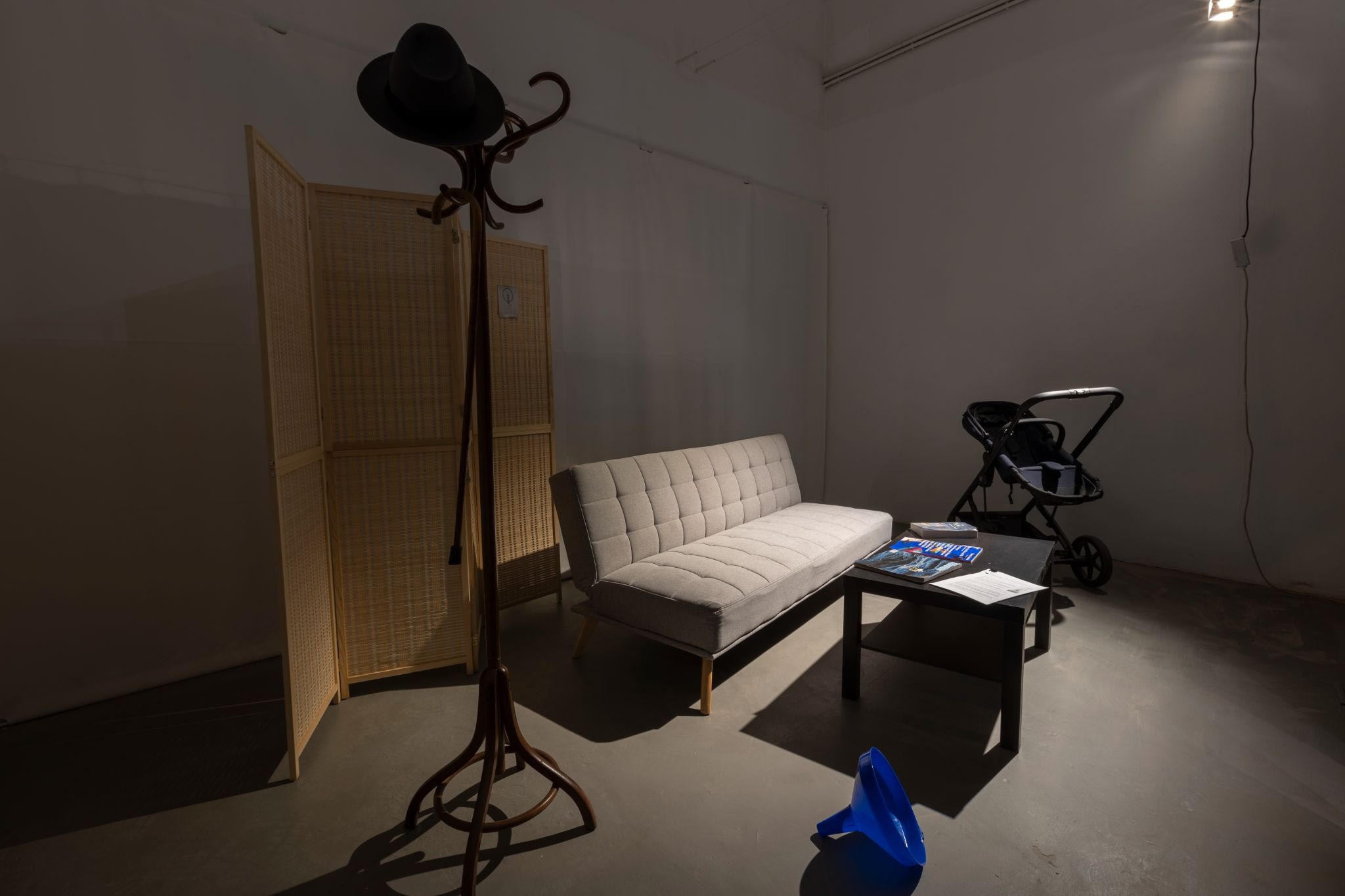
Further into the back of ENTRE, Luis Gomez Armenteros’s piece Un sueño sufí (2026) consists of a single phrase carved into the cement wall: “would you like to buy my misery?” The debris from the bas-relief process remains on the floor beneath, bearing witness to some of the visitors that have passed by, or through it. Nearby, a curtain closes off the rest of the gallery and behind it sits a couch, coffee table, coat rack, and a stroller, all underneath a spotlight. Cristina Garrido’s installation, El mejor trabajo del mundo (2021), presents the artist’s studio as a theatrical set, complete with little details like a copy of Artforum, a Duchamp postcard, and Jacques Rancière’s 1981 work Proletarian Nights. At first, the installation is indistinguishable from a gallery’s private viewing room or back office, but instead, it presents the behind-the-scenes of an artist’s life, who appears to be struggling to balance their family with the demands of their career. Garrido also presents a series of recorded interviews with Spanish artists who have had to give up their practices for one reason or another, transforming the scene into a site of non-production, stagnation, and quitting. Together, these artists examine the precarious conditions that allow an artist to make work, and how easily an artist’s version of success can crumble. The question remains: for whom would being an artist be The Best Job in the World?
Ivana Lazić: saturated soils
Kulturdrogerie | Gentzgasse 86-88, 1180 Vienna
October 2 – November 12, 2026
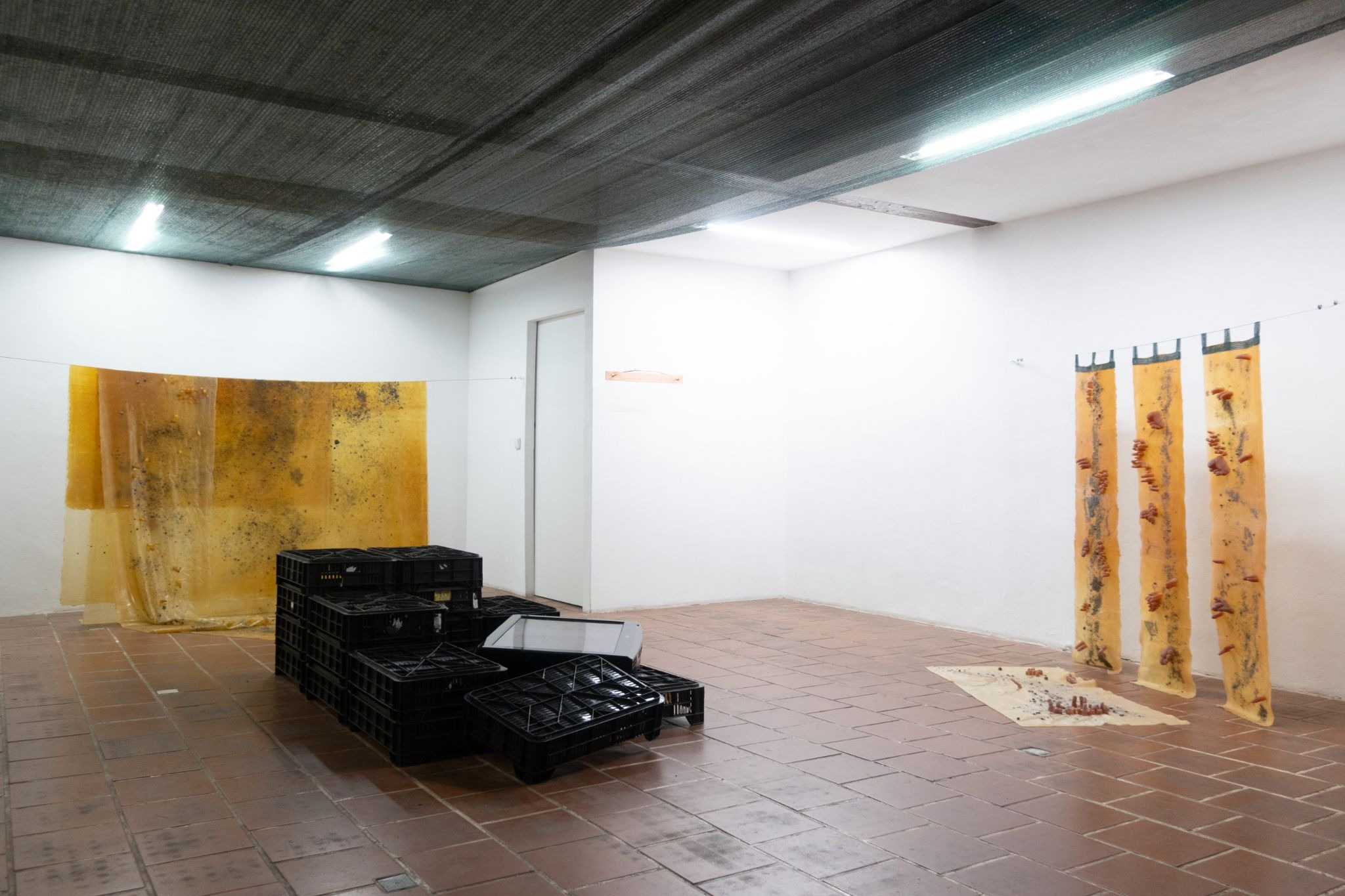
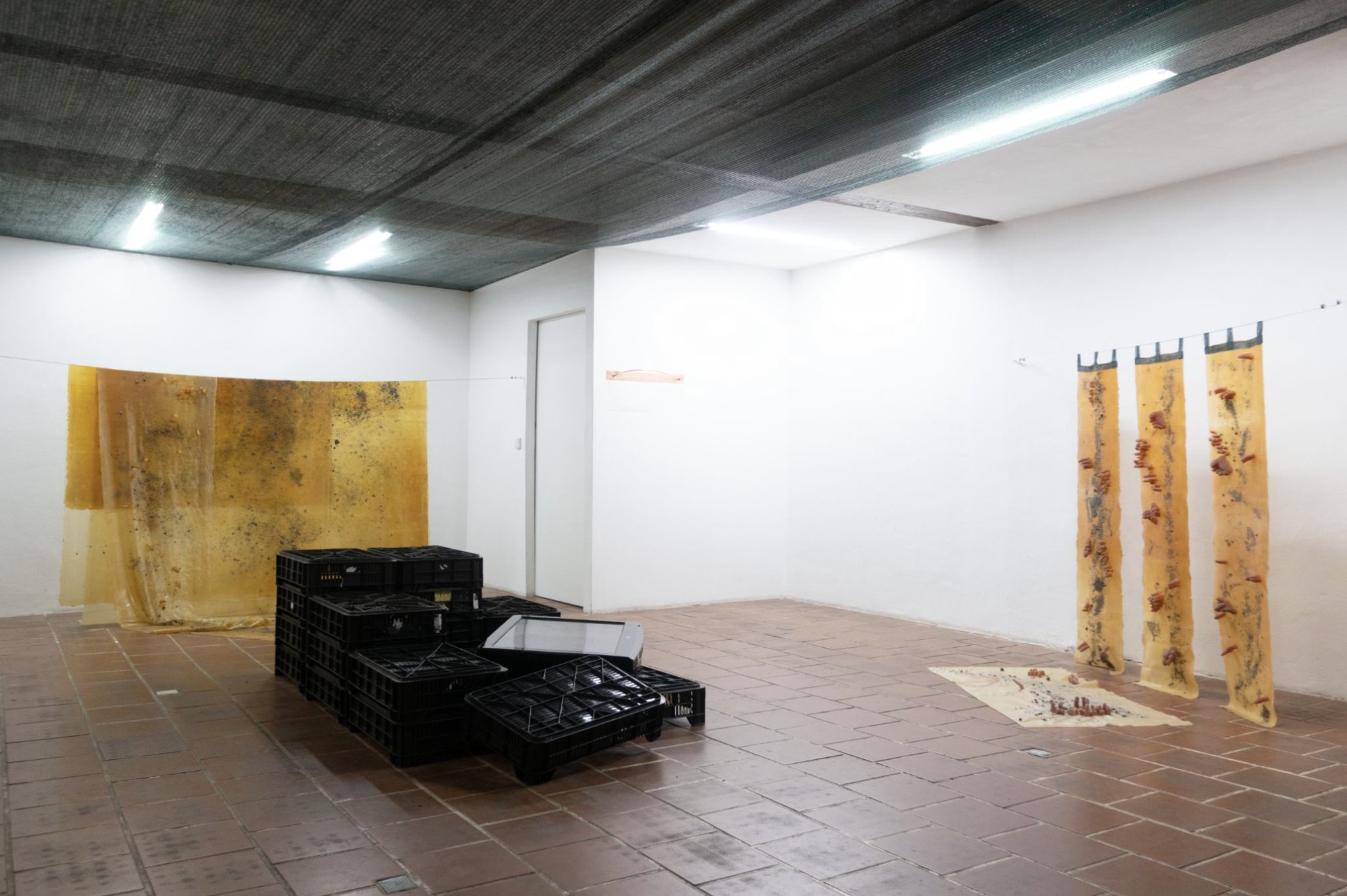
Kulturdrogerie is an artist-run project space founded in 2005 by art students who rented a former drugstore to use as a communal living and studio space. Later on, it developed into a gallery to exhibit artists who otherwise may not have space to take risks and experiment. For saturated soils, Ivana Lazić created a site-specific installation utilizing natural latex, copper, bird netting, soil, and plants harvested from her grandmother’s garden in Serbia. The garden, which has been passed down to and tended by Lazić’s mother and aunt, represents a matriarchal lineage of labor and care. The latex pieces that hang from cords throughout the gallery are made in the precise dimensions of the garden beds, and the plants that are scattered within them correspond to what grows there. Hands and feet cast in latex emerge from the surface like specters of the soil reaching through generations.
Above, Lazić has hung a net typically used to protect crops from birds, further immersing us into this botanical world. In between the panes of the window glass, more latex and soil spread out like mold. During her installation, Lazić removed the windows in order to pour the liquid latex onto the glass horizontally, which followed the contours of the surface and dried in the recessed spaces of the glass. The yellow-brown color darkens and wrinkles with time, aging naturally like human skin.
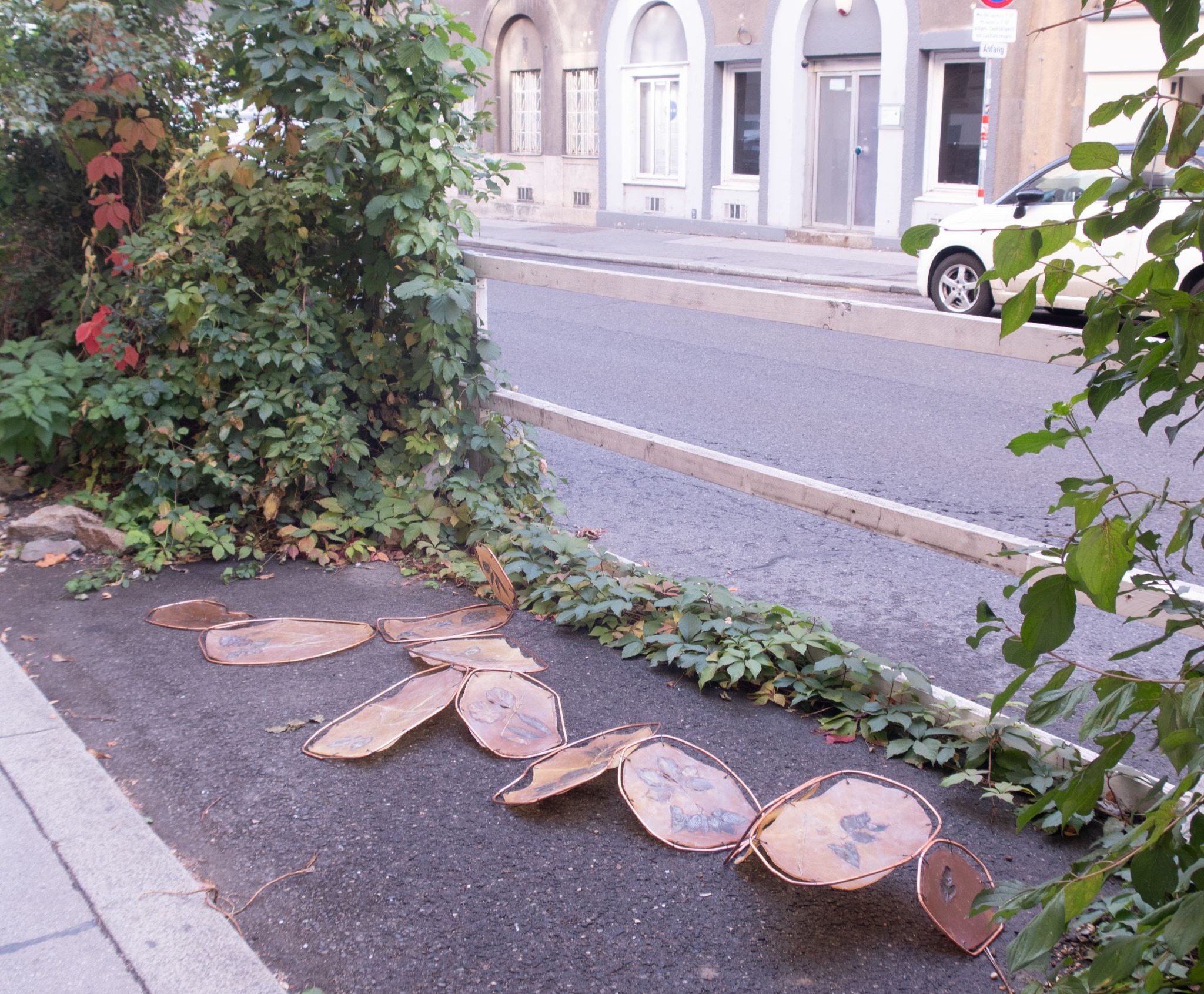
What’s further unique about Kulturdrogerie is its outdoor space, where the front parking spot has been transformed into an extension of the gallery, allowing artists to expand into outdoor installation. Here, Lazić has created a chain of copper wire that frames more latex pieces, within which are the leaves of the plant that grows out of the asphalt and creates a canopy over the sidewalk and the pedestrians. The skins must be stretched onto the wire with string because copper degrades and stains latex. Both latex and copper are reactive materials, sensitive to elements and atmospheric shifts, not only leaving the work in a process of continual development but also pointing to something intangible that is being conducted. Soil is merely the point of departure from which all manner of things coalesce.