.webp)

%20.jpeg)
Face to Face: September 2026
Interview
Niu Systems, curated by Jon Santos at RYAN LEE Gallery, brings together thirteen contemporary artists with close ties to Hawai‘i, either born in the islands or currently living and working there. Taking the niu (coconut palm) as its conceptual departure point, the exhibition considers how cultural heritage, ancestral knowledge, political tension, and questions of place intersect. Following the gallery’s spring exhibition Waves of Knowing, which looked historically at the Metcalf Chateau group's 1960s practice, Niu Systems feels like its contemporary, intergenerational counterpart.
“Niu is a relation, not a resource," the show proposes. More than a plant, niu embodies a network of relationships between ancestry, movement, cultivation, and survival. Brought by early Polynesian voyagers as an essential "canoe plant," the coconut palm was revered as a tree of life, as each part of the plant serves a purpose: husk, shell, water, and flesh reveal different forms of nourishment and material possibility. That logic of transformation runs through the exhibition, as materials become quiet archives of history and labor without announcing themselves. Across the gallery's three rooms, works are dispersed into an archipelagic arrangement rather than grouped by theme—mirroring Hawaiʻi's own island geography as much as Édouard Glissant's archipelagic thinking that emphasizes fluidity and movement—so meaning accumulates through proximity and exchange.
The first and largest room is sparsely hung, its natural light allowing works to converse through sightline. Kainoa Gruspe, whose work is also included in the current Whitney Biennial, presents two paintings alongside doorstop sculptures assembled from niu and materials collected at military bases, golf courses, and other sites marked by extraction. The doorstop sculptures, dispersed throughout the gallery, offer an entry point into the exhibition's reflections on layered histories and extraction shaped by tourism, military occupation, and development.
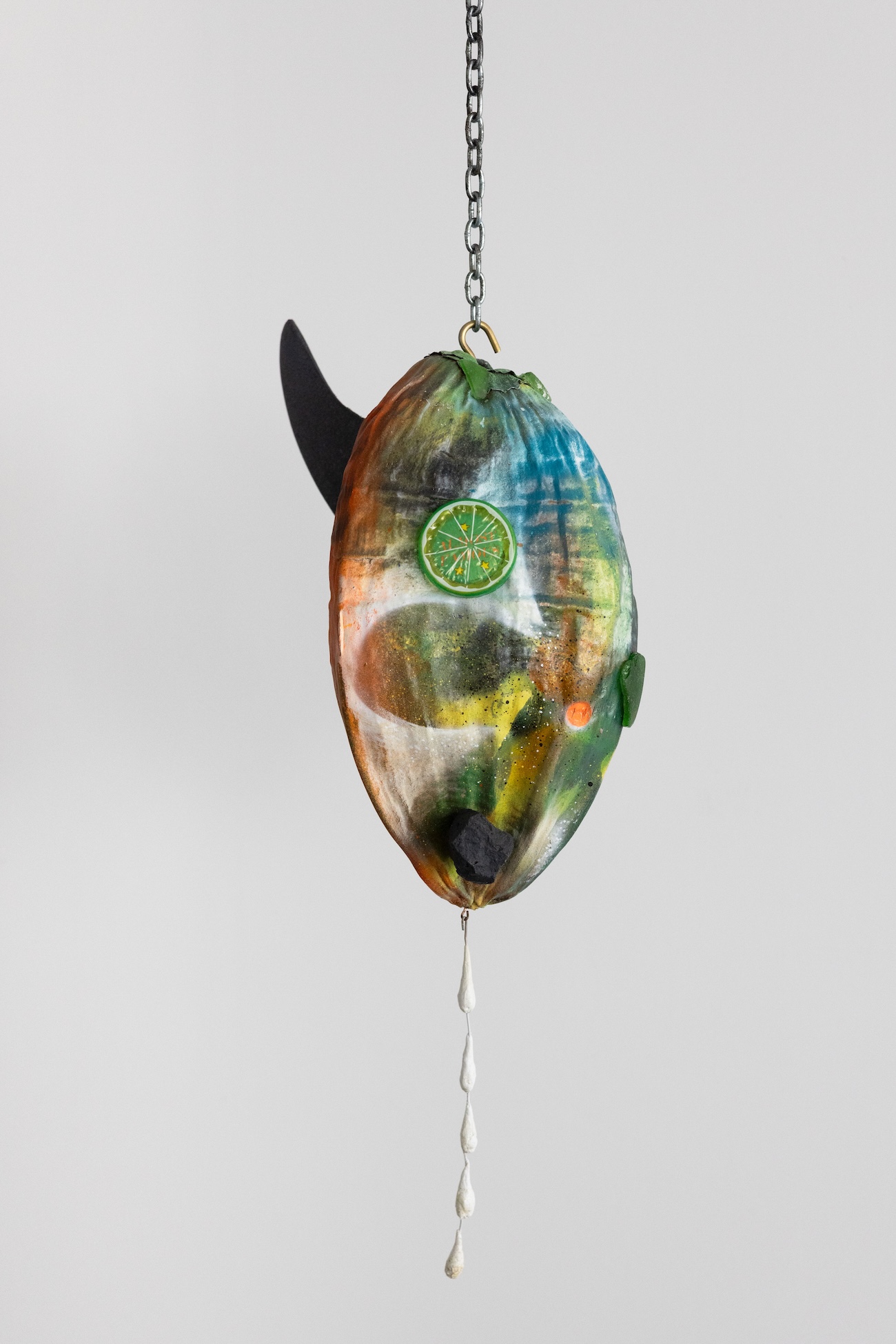
Lawrence Seward's assemblages take a more comic route toward similar territory, pairing niu with neon-colored tourist iconography until the imagery reads almost like fossils of a fantasy of Hawai‘i. Roland Longstreet's painting Golfer (2022) pushes that satire further still: a central figure stumbles awkwardly against a bratty green backdrop, the leisure it depicts curdling slightly at the edges.
Sean Connelly's wooden sculptures pick up that same neon palette in their brightly bound joinery. What first reads as minimalism turns out to hold a structural memory: the works recall ahupuaʻa, the Indigenous system organizing land, water, and stewardship along corridors from mountain to sea. Architecture here becomes a way of holding onto a spatial logic built on reciprocity instead of ownership.
At the threshold of the second room, Kaili Chun's 1843 (2026), an eight-minute single-channel digital animation, interrupts that quieter register, as its digital, screen-based presence marks a sharp break from the handcrafted, telluric feel of the surrounding work. A school of fish shifts from the U.S. flag in black and white to the Hawaiian flag, eventually forming the number 1843, likely referencing the Paulet affair. The work adds another layer to the exhibition's engagement with occupation, sovereignty, and colonial history in Hawai‘i.
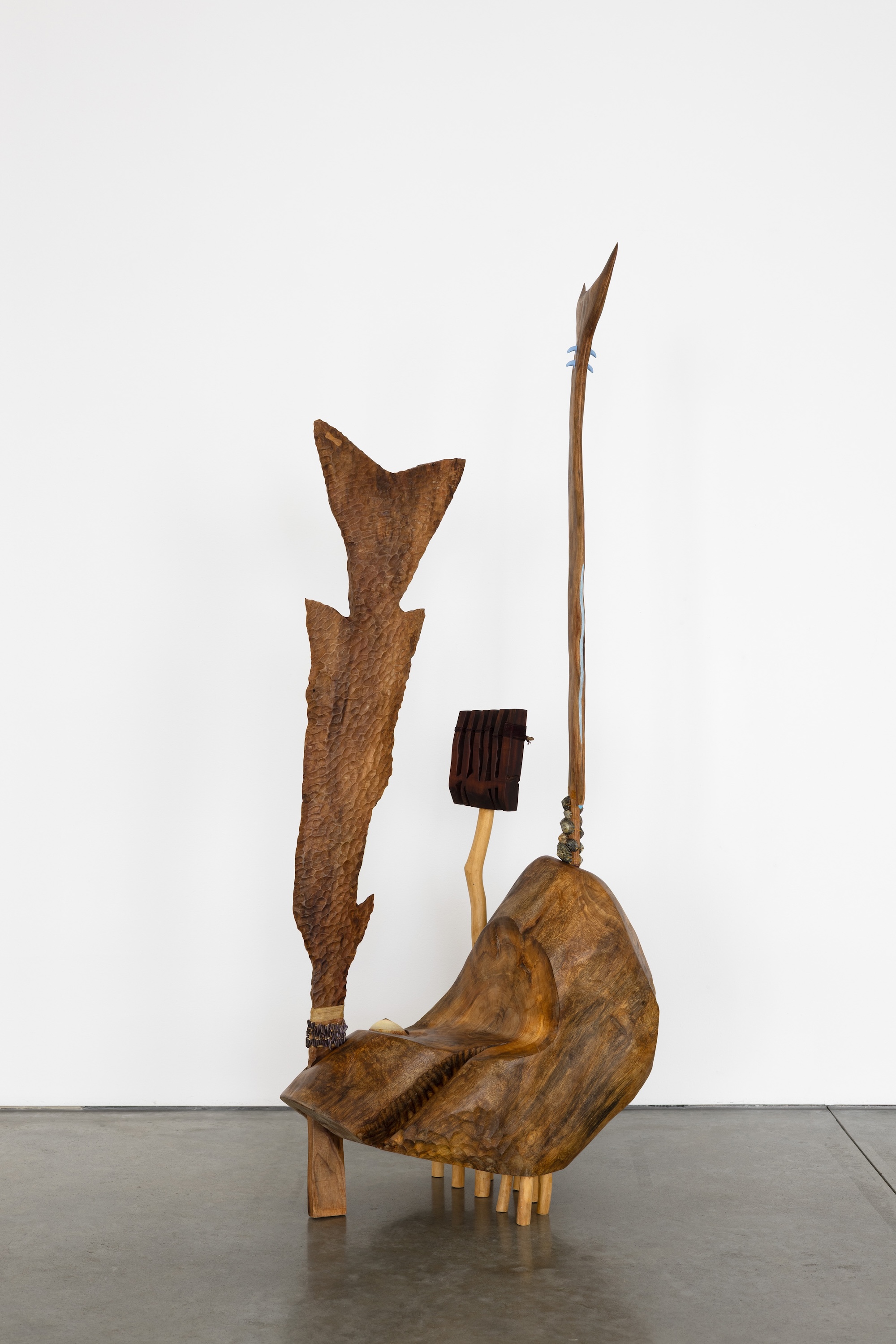
In the second room, Pier Fichefeux and Amber Khan seem to be circling something similar, each imagining a different relationship between humans and environment. On the slopes of Mauna Loa, Fichefeux lays found materials and industrial debris onto paper and exposes them to sun, wind, ash, and rain; the resulting works record the actions of nature over time. Khan's Kala, Manini, and Mākāhā (2025), named for reef fish and a place on Oʻahu, combines hau wood, niu stem, ʻopihi, hāʻukeʻuke, kamani wood, and strawberry guava wood, bound with waxed thread—the niu itself worked directly into the material. Every joint is visibly hand-lashed, the labor left exposed, grounding the piece physically in the room.
Rock, fire, and water—the forces that shaped Hawaiʻi's volcanic terrain—surface throughout the exhibition. Pōhaku, or rock, carries both material and spiritual weight. Nicole Parente-Lopez treats volcanic stone as a site of both physical and cultural investigation, while John Koga's Passing Cloud II (2026) uses subtly iridescent brushwork to catch a cloud crossing a mountain surface, lending the landscape a quiet, almost devotional intensity. Nalani Sato's realistic paintings turn animist, treating pōhaku not as inert matter but as entities embedded within a mid-century domestic setting, geological time folded quietly into everyday life.
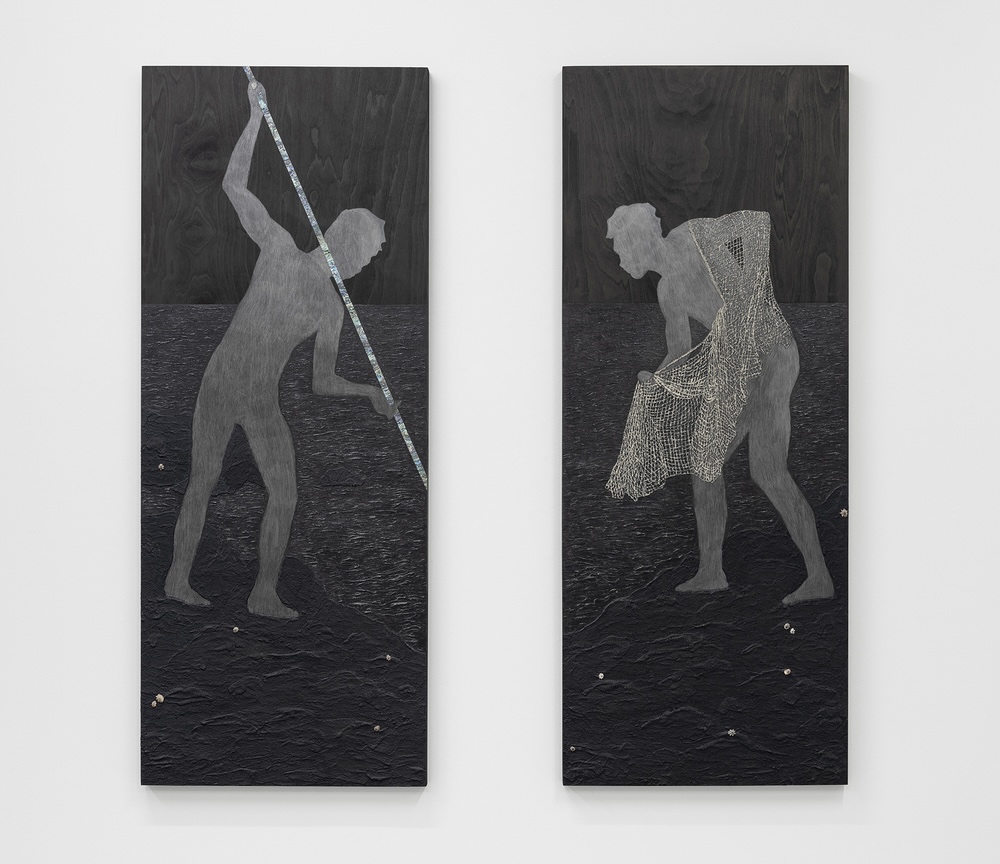
Across Dane Nakama's interdisciplinary practice, symbols, memories, and emotions gather into an often ominous atmosphere. Night Fishing at Puʻuloa (2026)—Puʻuloa being the Native Hawaiian name for what is now Pearl Harbor—is a diptych of black paintings embedded with mother-of-pearl, its apparition-like fishermen caught in a site of violent history that is left to linger as a haunting presence. Nakama's glazed ceramic shells carry their own unease, their meticulous craftsmanship rendering them almost indistinguishable from their natural counterparts. The works seem to invite the viewer to place an ear against them and listen for an oceanic, ancestral sense of belonging, even as they remain mute.
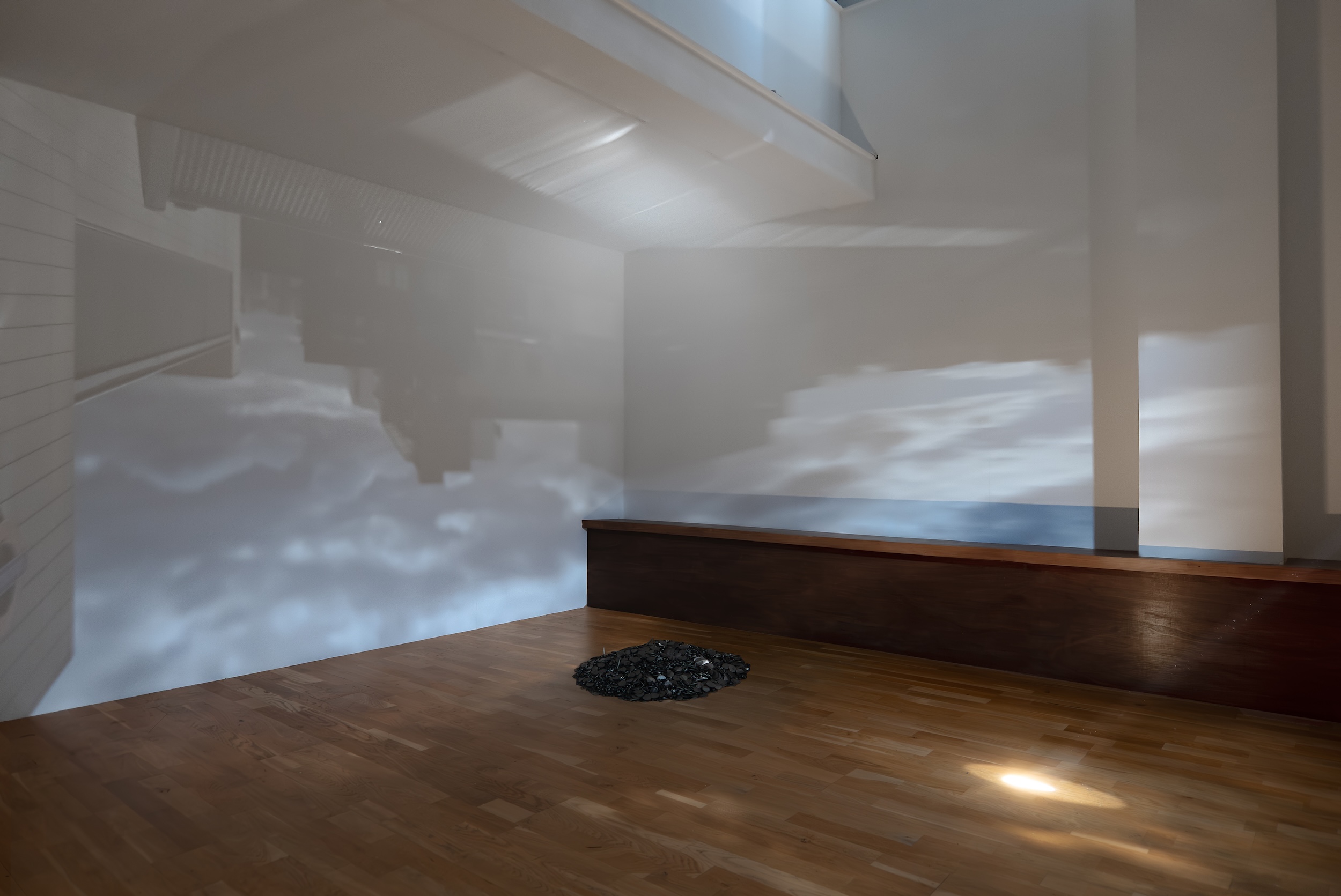
The final room shifts register, unhurried and more immersive. moʻo and pulelehua (2026) houses a moth inside a lamp; its flickering shadow appears almost cinematic. Nanea Lum's video Nuʻuanu Streaming II (2026) slows the room further, allowing kapa-making, moving water, and finished cloth to share a single surface across different timescales. Enoka Phillips's featherwork (hulu) sits quietly near the end of the exhibition. The Native Hawaiian feather artist works within a centuries-old practice, shifting the material and visual language of hulu into the present while maintaining its cultural and symbolic weight.
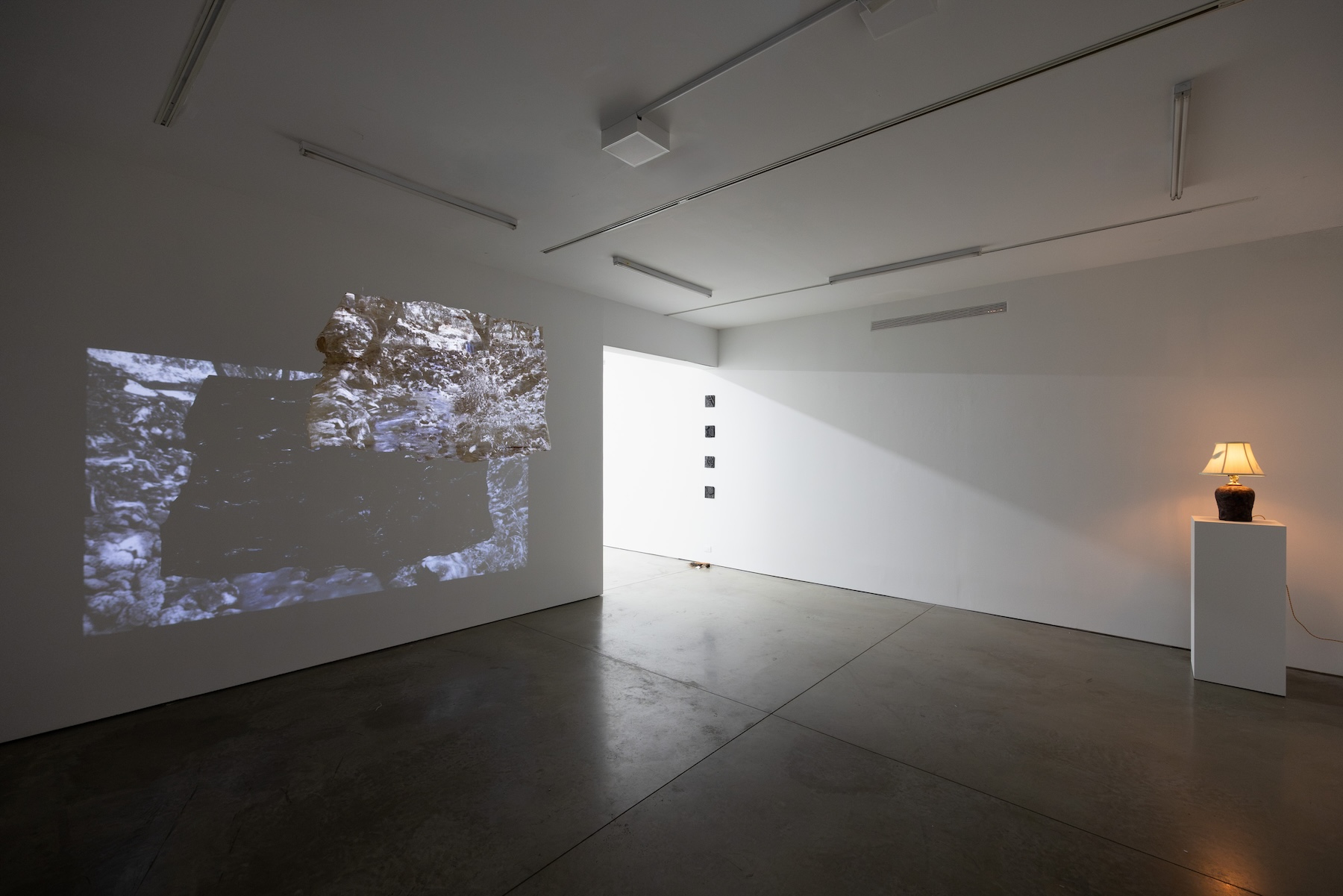
Like the archipelago it takes its curatorial structure from, Niu Systems resists resolving into one shape. Although the show is centered on relations—between ancestry, land, and body—there is remarkably little direct depiction of either landscape or the figure; both remain immanent instead, held in labor, craft, and matter. Taken alongside Waves of Knowing, Niu Systems leaves us with a constellation of histories resurfacing, centering relationships that are sustained through memory, stewardship, and transmission.
Niu Systems is on view at RYAN LEE Gallery from June 25 to August 21, 2026.