
.webp)

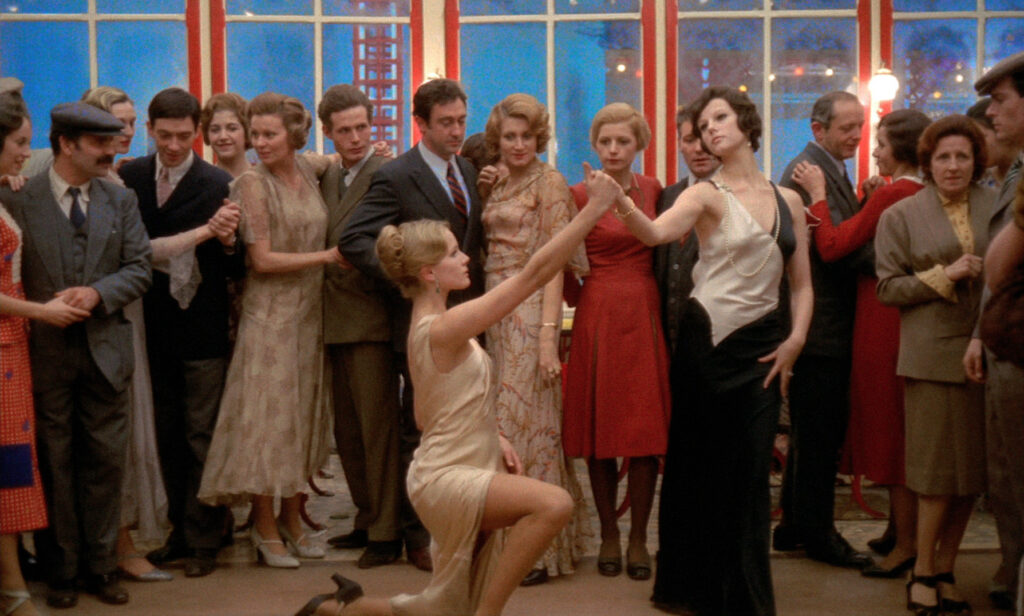
"The Conformist" (1970) dir. Bernardo Bertolucci
Review
Director Jonathan Rosado and executive producer Nicolette Wilkey (also known as the experimental rock group The Suede Hello) approached the two-year production of their avant-garde art film Matador Bolero as they did their music: with creative reckless abandon.
“You hear a Miles Davis song, and you’re not thinking, ‘what did he mean by this?’” said Rosado during the talkback after the second screening of the film at The Roxy, describing his view of the stigma that exists in cinema to have clear, wrapped-up storytelling, resembling a mainstream pop song, whereas music as a medium is more liable to be ahead of the times. “I think we’re in a limited time with movies; I think we need to push the boundaries. I’m trying to present something different, in a sense.”

Matador Bolero, only technically, has a plot: actress Beverly Green (dubbed “the most famous actress in the world” by a paranoid detective played by cult director and actress Kansas Bowling) is shot in the face at New York City nightclub, Club Matador, by an unknown assailant. The case impacts everyone surrounding it, from the human (such as said obsessive detective and the club’s owner, played by Rosado) to the metaphysical (an ancient and elusive being that resides outside time and space called Atom, appropriately played by Yves Tumor in their film debut, and a purple glowing orb that’s also a supercomputer called Bolero). If you’re looking to see Matador Bolero for a cohesive story, that’s not what it’s there for. The film is meant to be enjoyed as a cinematic gallery rather than an immersive experience, presented as a series of visual ideas and fragments strung together as key scenes.
“If someone had stolen my notebook, they would have no idea what I was talking about,” Rosado said regarding the writing of the film, often writing scenes the morning of filming à la Godard, or collaboratively with the cast on set.

Rather than focusing on the plot, the draw of watching Matador Bolero is the visuals, all filmed on Super 8. From the jewel-toned club scenes to nature scenes sparkling like crystal, to isolated grimy apartments, to the neon lights of a New Jersey beach town, Rosado has an eye for capturing otherwise overlooked environmental details that round out the scene. As these images are presented alongside the score, composed by The Suede Hello and featuring shoegaze-y synths, distorted vocals, and strings, the film has a visual appeal similar to a music video for the score, and it feels more like a recreation of distant memories than a clear on-screen image. Given that Rosado and Wilkey’s influences draw more from music and paintings than from films (such as Bosch, Rothko, Bacon, Dali, and de Kooning), they were equally inspired by directors like Jodorowsky and Lynch, leaning into a surrealistic element.

While watching the film, Slava Tsukerman’s 1982 film Liquid Sky kept coming up as a parallel for me; from the speculative element of both films (Liquid Sky with its aliens and Matador Bolero with its metaphysical beings and all-knowing supercomputer), the No Wave influence on Matador Bolero that was of its time in Liquid Sky’s setting of a punk-rock New York City in the 1980s, the intense color palettes and distinctive synth scores, and how both films almost function as scene reports of an underground art world in New York City. Although making New York City a character in the film wasn’t Rosado and Wilkey’s intention, its impact is nonetheless apparent. Drawing from the No Wave scene and 42nd Street Grindhouse cinema of old, and from the uncanny isolation and paranoia that come with living in the city today, Matador Bolero elevates its use of local settings through bold cinematography, lush coloring, and an ever-present score, all of which are part of its distorted worldview.

Although a marvel to look at, the film isn’t perfect; the performances themselves were meant to lean into a kitschy element rather than realism, à la John Waters. However, the bored tones and lack of expressiveness from some performers would take me out of certain scenes, especially when delivering the campier or more dramatic lines. I found this to be the case with Tumor, who definitely looked the part of an otherworldly, all-knowing being, lounging on a crushed-velvet teal bed in leather pants or a red silk robe, but their flat affect failed to convey the character’s power and knowledge.

There was also my personal issue with the amount of female nudity in the film, all portrayed by the same group of women throughout the runtime. There is self-awareness of how the nude female body is used in films like these, particularly in a shot where the women held gold frames before their bodies, almost leaning into how the female body is commodified as art by filmmakers. In that, I understood that it was meant to be seen as partly parodic. The excessiveness did lean into a pet peeve of mine: just simply presenting the naked female body as art, maybe with some pretty set dressing, as though that’s supposed to be a statement in itself. In a world where female sexuality has become less taboo (well, only somewhat) and has even been exploited by mainstream media and corporate advertising, it's one of the only parts of the film that came off as less transgressive and more tired. That said, I have no problem with exploiting nudity in general: just show me an equal amount of cock and balls, then we’ll talk.

Still, alongside pushing boundaries, perhaps pastiche is also the point.
“I like cliches, I like tropes,” Rosado said, who leaned into irony with the pulpy dialogue and kitschy sets, like the diner scene backdropped by candy-red walls, a waitress in a 1950s uniform, or the plastic pastel easter eggs that litter the scenes. “It’s perfectly Lynchian,” added Wilkey, the sets and imagery stemming from both its limited budget and creative vision.
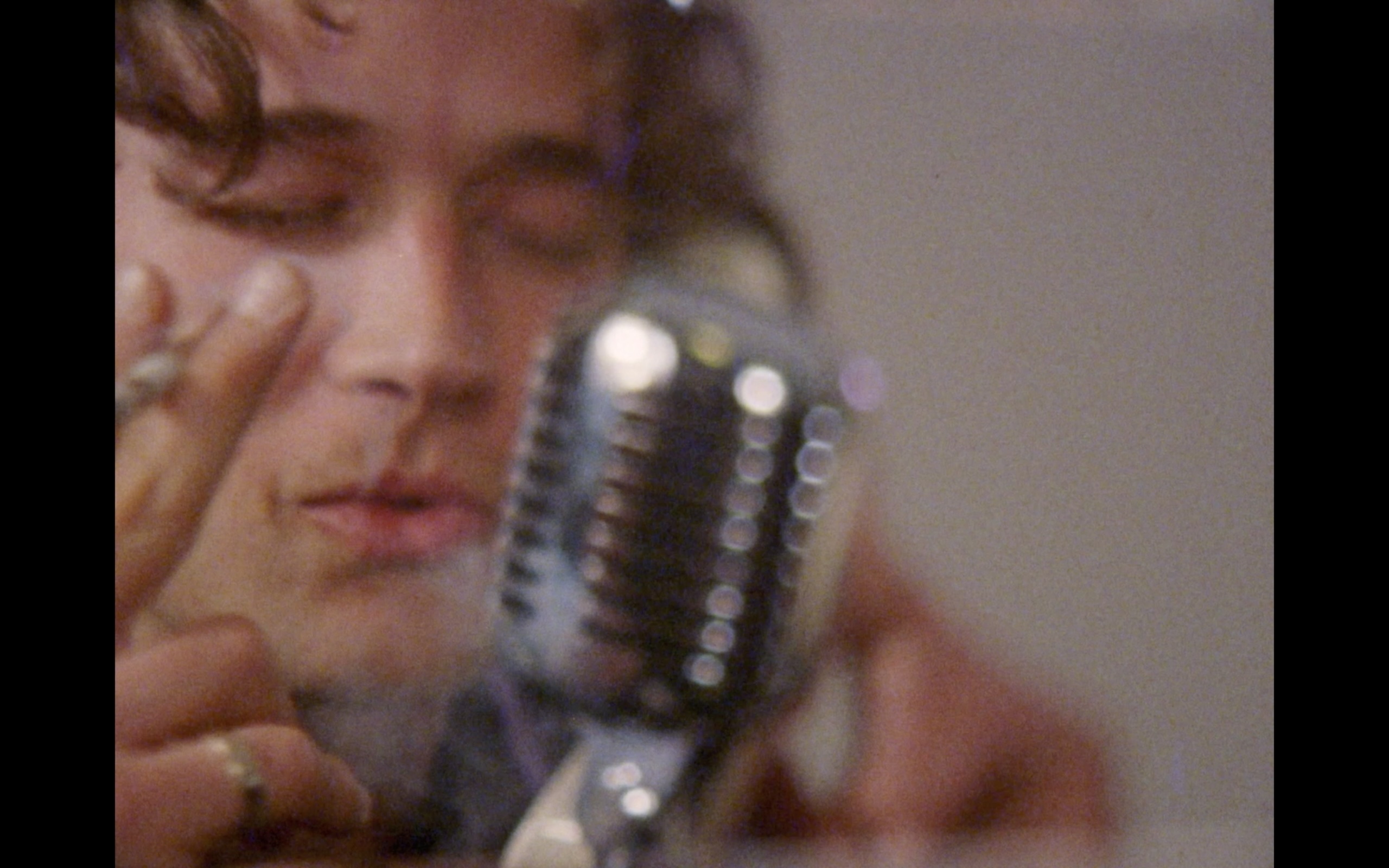
Despite Rosado and Wilkey’s emphasis on pushing the limits on how stories can be told and presented in film, Matador Bolero is ultimately grounded by its obvious appreciation for its inspirations. While less Mulholland Drive and more Inland Empire, Matador Bolero strikes a balance between drawing on its influences and avoiding a perfect copy; instead, it is driven by the avant-garde directors before it to challenge the constraints of film as a medium, as one would with any other art form.
Matador Bolero will be screening on July 9th at PhilaMOCA in Philadelphia, July 18th at Film Noir Cinema in Brooklyn, and August 15th at Guild Cinema in Albuquerque.